UPSC CURRENT AFFAIRS – 22nd July 2025
China starts building world's largest dam, fuelling fears in India
Why in News?
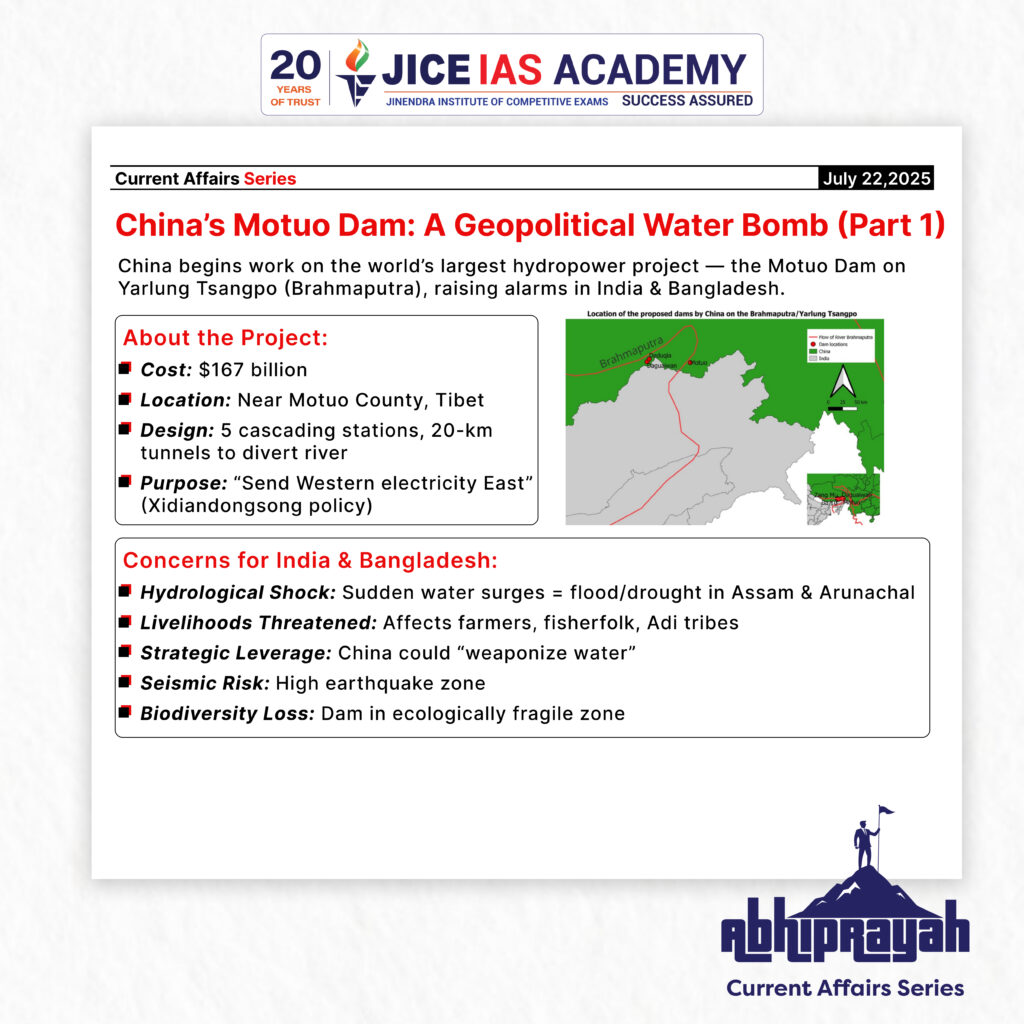
- China has begun constructing the world’s largest hydropower project — the Motuo Dam — on the Yarlung Tsangpo River in Tibet.
Introduction
- China has commenced construction of what is set to become the world’s largest hydropower dam, the Motuo Hydropower Station, on the Yarlung Tsangpo River in the Tibet Autonomous Region.
- The $167 billion project, which aims to surpass the Three Gorges Dam, has sparked deep concerns in downstream countries, especially India and Bangladesh, due to its potential environmental, ecological, and geopolitical impacts.
Geographic and Strategic Significance of the Yarlung Tsangpo River
- Origin and Course:
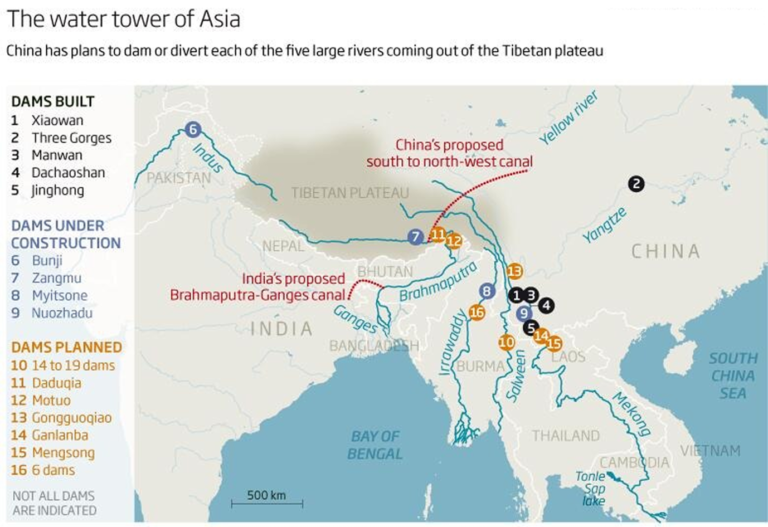
- Originates from the Tibet Plateau, flows eastward as the Yarlung Tsangpo.
- Makes a U-turn at the Great Bend near Namcha Barwa mountain, dropping hundreds of metres.
- Enters India as the Siang River in Arunachal Pradesh, later becoming the Brahmaputra in Assam.
- Continues into Bangladesh as the Jamuna River.
- Hydropower Potential:
- The sharp elevation drop at the Great Bend provides massive hydropower potential.
- The proposed dam could generate three times the electricity of the Three Gorges Dam.
About the Motuo Hydropower Project
- Location: Deep in the Grand Canyon of the Yarlung Tsangpo near Motuo County, Tibet.
- Estimated Cost: 1.2 trillion yuan (~$167 billion).
- Design:
- Includes five cascading power stations.
- Involves 20 km-long tunnels for water diversion and “straightening” the river flow.
- Energy Distribution:
- Fulfills the “xidiandongsong” policy – “Sending Western Electricity Eastwards”.
- Majority of the power to be transmitted to eastern China, not locally consumed.
Concerns for India and Bangladesh
1. Hydrological and Ecological Risks
- India:
- The Siang-Brahmaputra system supports millions of livelihoods in Arunachal Pradesh and Assam.
- Sudden water releases may cause devastating flooding or drought, termed a “water bomb” by Arunachal CM Pema Khandu.
- Tribal communities like the Adi are at risk of loss of land, livelihood, and life.
- Bangladesh:
- Heavily dependent on the Jamuna for agriculture and fisheries.
- Lower riparian state with little upstream leverage.
2. Geopolitical Leverage
- According to a 2020 Lowy Institute report, China’s control over transboundary rivers gives it a “chokehold” over Indian agriculture and economy.
- Strategic experts fear China may weaponize water during conflicts.
3. Environmental and Seismic Risks
- The region is a biodiversity hotspot with rich flora and fauna.
- Located in a seismically active zone, increasing the risk of dam collapse or disaster.
India’s Response
- Diplomatic Efforts:
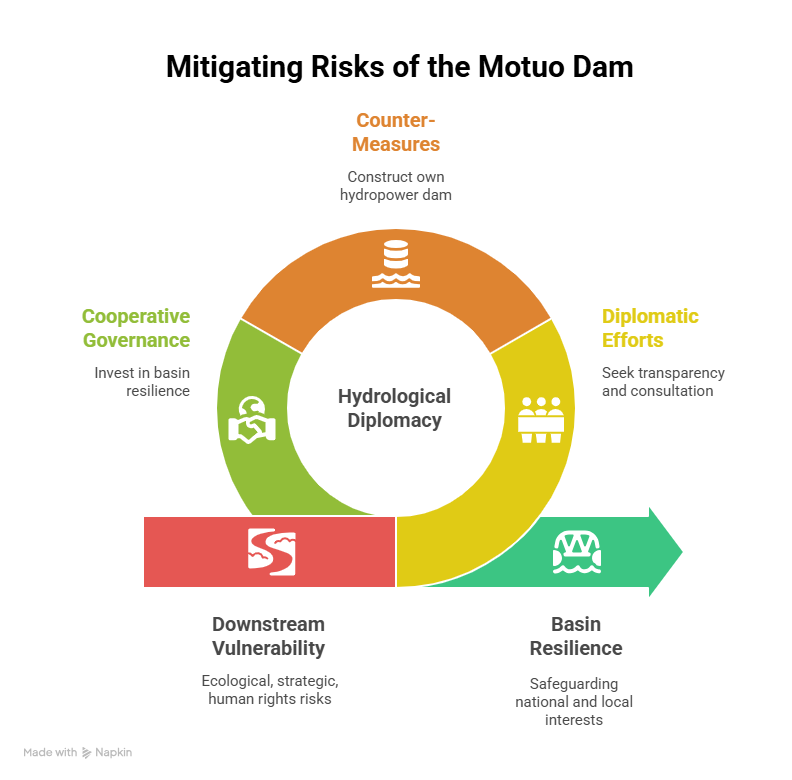
- India’s Ministry of External Affairs has conveyed its concerns to China, seeking transparency and consultation.
- Reiterated the need to protect downstream interests.
- Counter-Measures:
- India plans to construct its own hydropower dam on the Siang River as a buffer to manage sudden surges and mitigate flood risks.
China’s Position and Justification
- Claims a “legitimate right” to build within its territory.
- States that it will prioritize ecological protection and local development.
- Highlights energy benefits under its clean energy and carbon neutrality goals.
Tibetan Concerns and Human Rights Issues
- Tibetan communities have protested against dam projects, fearing cultural erosion and loss of land.
- 2023 reports indicated violent crackdowns on peaceful protests, including arrests and beatings.
- Activists argue that these projects exemplify exploitation under the guise of development.
International Dimensions and Legal Framework
- No binding water-sharing treaty exists between India, China, and Bangladesh.
- Lack of a transboundary river treaty makes downstream states vulnerable.
- There is an urgent need to develop a multilateral basin-level cooperation framework.
Conclusion
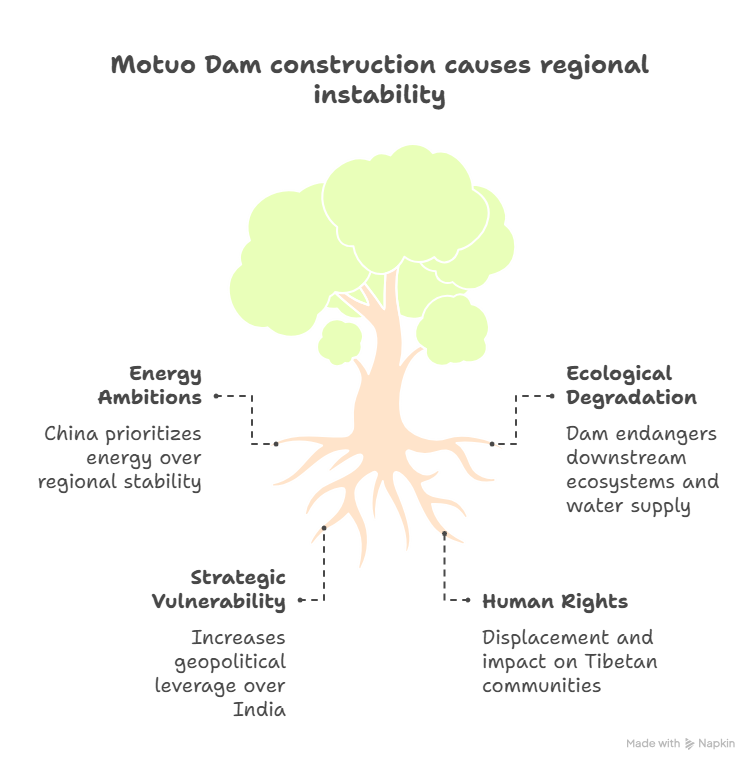
- The construction of the Motuo Hydropower Dam is a classic case of the intersection of development, environment, and geopolitics.
- While China pursues its energy ambitions, the fears of ecological degradation, strategic vulnerability, and human rights violations loom large over the region.
- For India and Bangladesh, this project represents a wake-up call to invest in hydrological diplomacy, basin resilience, and cooperative water governance mechanisms to safeguard national interests.

3rd UN conference on landlocked countries
UPSC CURRENT AFFAIRS – 08th August 2025 Home / 3rd UN conference on landlocked countries Why in News? At the
Issue of soapstone mining in Uttarakhand’s Bageshwar
UPSC CURRENT AFFAIRS – 08th August 2025 Home / Issue of soapstone mining in Uttarakhand’s Bageshwar Why in News? Unregulated
Groundwater Pollution in India – A Silent Public Health Emergency
UPSC CURRENT AFFAIRS – 08th August 2025 Home / Groundwater Pollution in India – A Silent Public Health Emergency Why
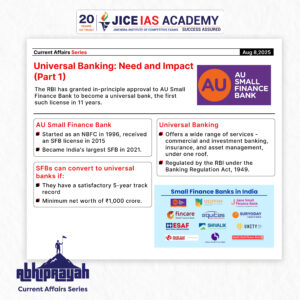
Universal banking- need and impact
UPSC CURRENT AFFAIRS – 08th August 2025 Home / Universal banking- need and impact Why in News? The Reserve Bank
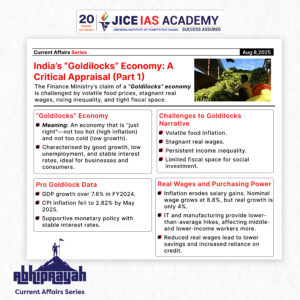
India’s “Goldilocks” Economy: A Critical Appraisal
UPSC CURRENT AFFAIRS – 08th August 2025 Home / India’s “Goldilocks” Economy: A Critical Appraisal Why in News? The Finance
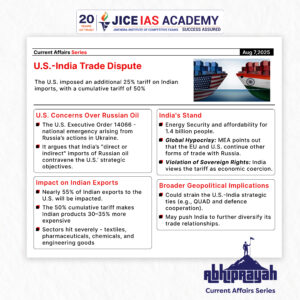
U.S.-India Trade Dispute: Trump’s 50% Tariffs and India’s Oil Imports from Russia
UPSC CURRENT AFFAIRS – 07th August 2025 Home / U.S.-India Trade Dispute: Trump’s 50% Tariffs and India’s Oil Imports from
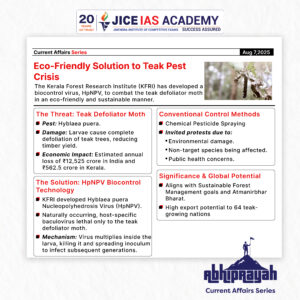
Eco-Friendly Solution to Teak Pest Crisis: KFRI’s HpNPV Technology
UPSC CURRENT AFFAIRS – 07th August 2025 Home / Eco-Friendly Solution to Teak Pest Crisis: KFRI’s HpNPV Technology Why in

New Species of Non-Venomous Rain Snake Discovered in Mizoram
UPSC CURRENT AFFAIRS – 07th August 2025 Home / New Species of Non-Venomous Rain Snake Discovered in Mizoram Why in

Economic Implications
For Indian Exporters
- These reforms reduce transaction costs and compliance hurdles
- Encourage a more competitive and efficient export environment
- Promote value addition in key sectors like leather
For Tamil Nadu
- The reforms particularly benefit the state’s leather industry, a major contributor to employment and exports
- Boost the marketability of GI-tagged E.I. leather, enhancing rural and traditional industries
For Trade Policy
- These decisions indicate a shift from regulatory controls to policy facilitation
Reinforce the goals of Make in India, Atmanirbhar Bharat, and India’s ambition to become a leading export power
Recently, BVR Subrahmanyam, CEO of NITI Aayog, claimed that India has overtaken Japan to become the fourth-largest economy in the world, citing data from the International Monetary Fund (IMF).
India’s rank as the world’s largest economy varies by measure—nominal GDP or purchasing power parity (PPP)—each with key implications for economic analysis.