UPSC CURRENT AFFAIRS – 29th May 2025
Developing nations face 'tidal wave' of China debt
Why in News?
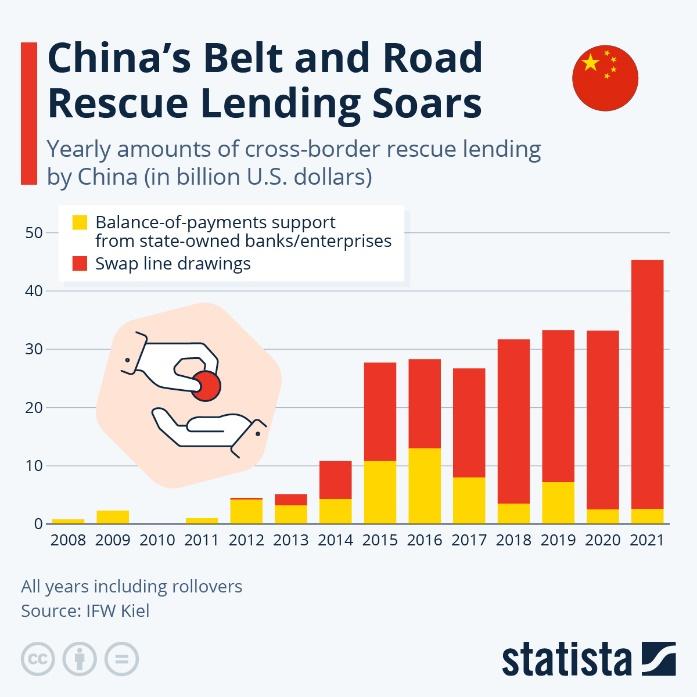
In 2025, developing nations are facing record-high debt repayments to China due to past Belt and Road Initiative (BRI) loans, posing fiscal challenges and raising concerns over geopolitical leverage.
Introduction
- The international financial landscape is undergoing a significant shift as developing countries find themselves burdened by soaring debt repayments to China.
- A recent report by Australia’s Lowy Institute has raised alarms about the unsustainable debt levels faced by the world’s poorest 75 countries, with a projected record high repayment of US$22 billion to China in 2025.
- This crisis is rooted in China’s aggressive overseas lending under its Belt and Road Initiative (BRI) during the 2010s, which is now evolving from development financing into debt collection.
Background:
China launched the Belt and Road Initiative (BRI) in 2013, aiming to build infrastructure and connectivity across Asia, Africa, and Latin America. It financed:
- Roads, ports, and railways in Sub-Saharan Africa
- Infrastructure in Pacific Island nations
- Energy projects in South Asia
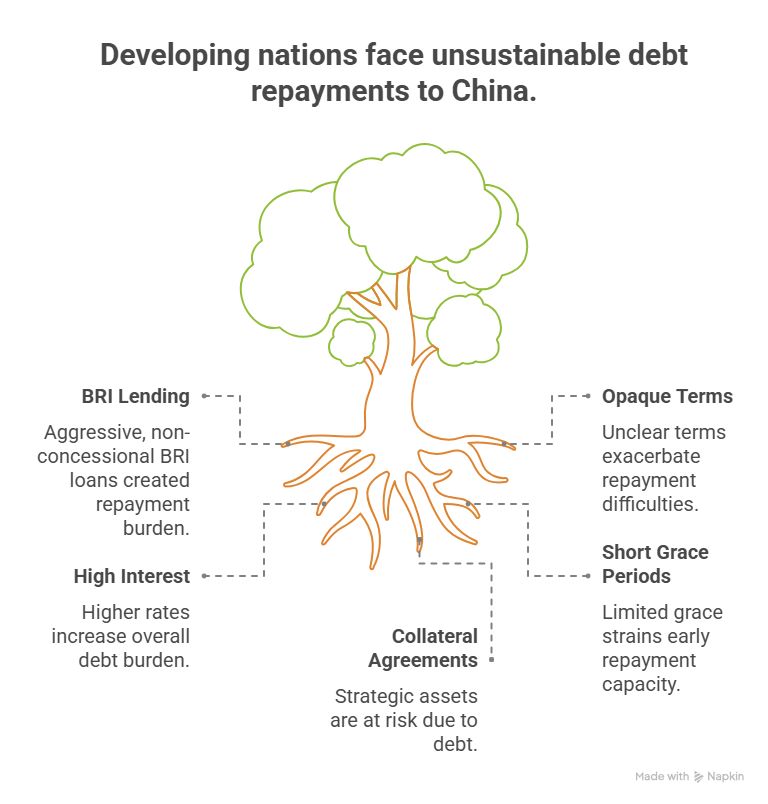
However, many of these loans were non-concessional, and repayment terms were opaque. Unlike Western aid or multilateral funding (like from the World Bank), Chinese loans often had higher interest rates, shorter grace periods, and collateral-based agreements tied to strategic assets.
Lowy Institute's Key Findings
- Debt Repayment Surge in 2025:
- The poorest 75 nations will repay $22 billion to China — a historic high.
- Many of these nations had borrowed heavily during the BRI surge of the 2010s, and the grace periods are ending.
- Shift in China’s Role:
- China is no longer a net lender to these nations.
- It has transformed into a net collector, demanding more in repayments than disbursing in fresh loans.
- Impact on Social Spending:
- Rising repayments are diverting critical funds from social sectors like:
- Healthcare
- Education
- Climate adaptation and infrastructure
- This raises concerns about developmental stagnation and social unrest.
- Rising repayments are diverting critical funds from social sectors like:
- Geopolitical Implications:
- The report warns that China may use debt as geopolitical leverage.
- This is particularly concerning as Western powers, including the United States, have reduced foreign aid and concessional financing.
Emerging Trends in Chinese Lending
- Strategic Lending to Nations Switching Diplomatic Ties:
- Countries like Honduras and Solomon Islands received massive loans after recognizing Beijing over Taiwan.
- Suggests a diplomatic quid pro quo, raising ethical and sovereignty concerns.
- Focus on Critical Minerals:
- In countries like Indonesia and Brazil, new loans are targeted at battery metals and critical mineral sectors.
- Indicates a resource-oriented shift, possibly tied to China’s green industrial strategy.
China’s Response
The Chinese Foreign Ministry has responded defensively:
- Claimed to abide by international norms.
- Accused some countries and analysts of spreading “falsehoods”.
- Emphasized that China’s cooperation with developing nations is mutually beneficial.
However, China has also refused to participate in the G20’s Common Framework for Debt Restructuring, which limits coordinated global efforts to assist heavily indebted nations.
Broader Implications for the Global South
- Debt Sustainability Crisis:
- Developing nations may face defaults, similar to Sri Lanka’s economic collapse in 2022, partly attributed to Chinese debt.
- Challenge to Multilateralism:
- As debt burdens grow, multilateral institutions like the IMF and World Bank may be pressured to intervene, though often with stringent austerity conditions.
- Erosion of Sovereignty:
- Debt-for-assets swaps and strategic encroachments risk undermining national control over infrastructure (e.g., Hambantota Port in Sri Lanka leased to China).
Conclusion
- The Lowy Institute’s report underscores a looming debt crisis for the developing world. While China’s BRI loans once promised infrastructure-led growth, the lack of transparency, rigid repayment structures, and geopolitical ambitions now threaten to reverse decades of development gains. There is an urgent need for:
- Greater global debt relief coordination
- Transparent lending norms
- Responsible borrowing and fiscal discipline
- A more equitable international financial order
The global community must recognize that unsustainable debt impedes development just as surely as lack of capital, and work towards a more balanced and inclusive financial system.

3rd UN conference on landlocked countries
UPSC CURRENT AFFAIRS – 08th August 2025 Home / 3rd UN conference on landlocked countries Why in News? At the
Issue of soapstone mining in Uttarakhand’s Bageshwar
UPSC CURRENT AFFAIRS – 08th August 2025 Home / Issue of soapstone mining in Uttarakhand’s Bageshwar Why in News? Unregulated
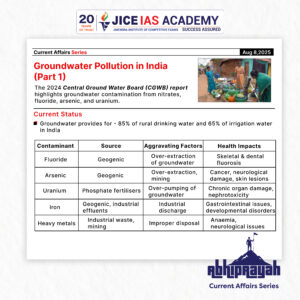
Groundwater Pollution in India – A Silent Public Health Emergency
UPSC CURRENT AFFAIRS – 08th August 2025 Home / Groundwater Pollution in India – A Silent Public Health Emergency Why
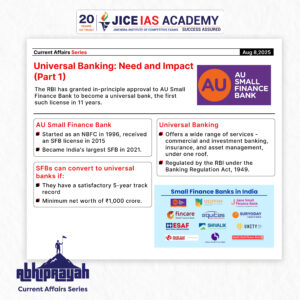
Universal banking- need and impact
UPSC CURRENT AFFAIRS – 08th August 2025 Home / Universal banking- need and impact Why in News? The Reserve Bank
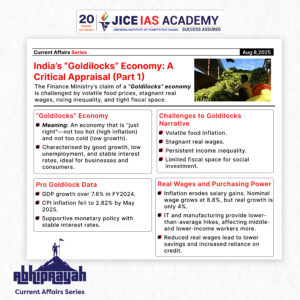
India’s “Goldilocks” Economy: A Critical Appraisal
UPSC CURRENT AFFAIRS – 08th August 2025 Home / India’s “Goldilocks” Economy: A Critical Appraisal Why in News? The Finance
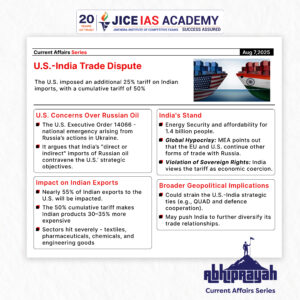
U.S.-India Trade Dispute: Trump’s 50% Tariffs and India’s Oil Imports from Russia
UPSC CURRENT AFFAIRS – 07th August 2025 Home / U.S.-India Trade Dispute: Trump’s 50% Tariffs and India’s Oil Imports from
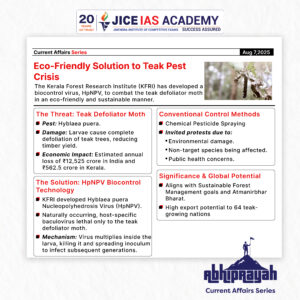
Eco-Friendly Solution to Teak Pest Crisis: KFRI’s HpNPV Technology
UPSC CURRENT AFFAIRS – 07th August 2025 Home / Eco-Friendly Solution to Teak Pest Crisis: KFRI’s HpNPV Technology Why in

New Species of Non-Venomous Rain Snake Discovered in Mizoram
UPSC CURRENT AFFAIRS – 07th August 2025 Home / New Species of Non-Venomous Rain Snake Discovered in Mizoram Why in

For Indian Exporters
- These reforms reduce transaction costs and compliance hurdles
- Encourage a more competitive and efficient export environment
- Promote value addition in key sectors like leather
For Tamil Nadu
- The reforms particularly benefit the state’s leather industry, a major contributor to employment and exports
- Boost the marketability of GI-tagged E.I. leather, enhancing rural and traditional industries
For Trade Policy
- These decisions indicate a shift from regulatory controls to policy facilitation
Reinforce the goals of Make in India, Atmanirbhar Bharat, and India’s ambition to become a leading export power
Recently, BVR Subrahmanyam, CEO of NITI Aayog, claimed that India has overtaken Japan to become the fourth-largest economy in the world, citing data from the International Monetary Fund (IMF).
India’s rank as the world’s largest economy varies by measure—nominal GDP or purchasing power parity (PPP)—each with key implications for economic analysis.