
UPSC CURRENT AFFAIRS – 13th June 2025

Home / UPSC / Current Affairs / Easing food inflation and its implications

Easing food inflation and its implications

Why in News?

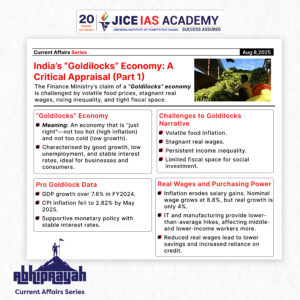
  • Retail inflation in India dropped to a multi-year low of 2.82% in May 2025, primarily due to easing food prices and aligning with the RBI’s inflation projections.

Introduction

  • India’s retail inflation, as measured by the Consumer Price Index (CPI), fell to a multi-year low of 2.82% in May 2025, marking the lowest recorded inflation since February 2019, according to the latest data from the National Statistics Office (NSO)
  • With this print, average retail inflation for Q1 FY26 (April-May) has remained just under 3%, aligning closely with the Reserve Bank of India’s (RBI) projections.
  • In its June Monetary Policy Committee (MPC) meeting, the RBI had estimated inflation at 2.9% for the first quarter.

Drivers of the Decline: Food Inflation and Agricultural Output

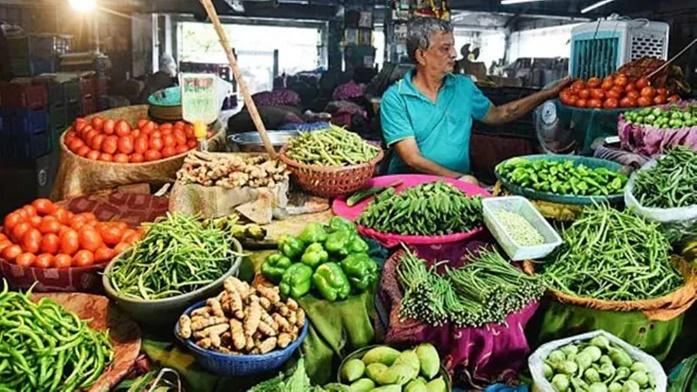
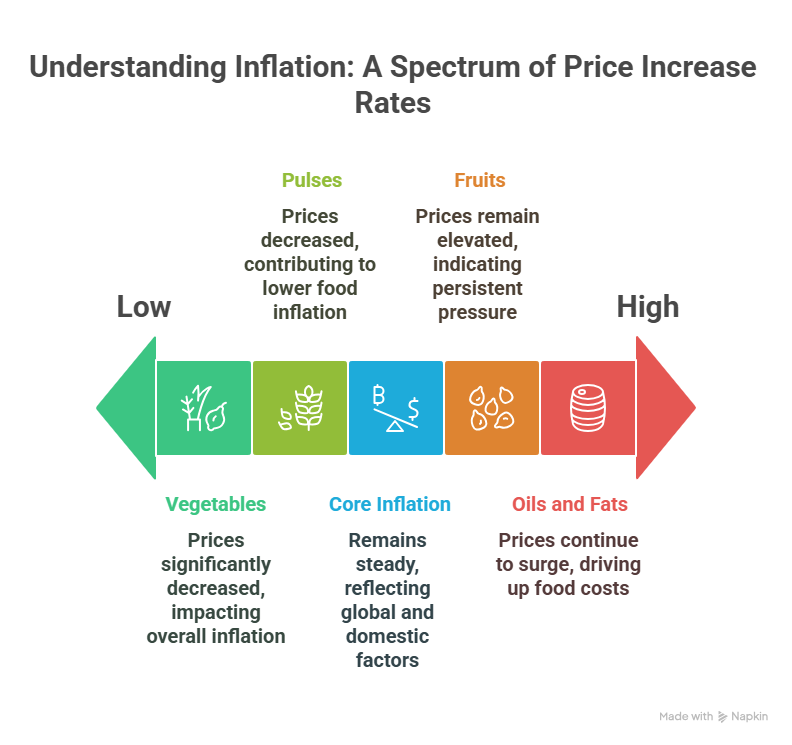
The recent moderation in inflation has largely been attributed to the easing of food prices. Notably, the food price index showed significant decline in components such as:

  • Vegetables: -13.7%
  • Pulses: -8.22%
  • However, inflation in oils, fats, and fruits remained in double digits, indicating continued price pressure in certain segments.
  • The decline in food inflation is partly the result of robust agricultural performance in the previous year, with the sector growing at 4.6%, positively impacting the rabi crop. Looking ahead, attention will shift to the southwest monsoon, which is critical for kharif sowing.
  • As of June 12, rainfall is 33% below the long-term average, creating uncertainty around food output and potentially impacting inflation going forward.

Core Inflation Trends and Structural Factors

While food inflation eased, core inflation (excluding food and fuel) remained stable at 4.3%. Specific categories like personal care and effects continue to exhibit elevated inflation. According to analysts at Nomura, the subdued nature of core inflation reflects:

  • Lower global commodity prices
  • Increased reliance on Chinese imports
  • Weak domestic demand conditions
  • Anchored household inflation expectations
  • Modest wage growth

This suggests limited second-round effects, indicating stability in underlying inflationary trends.

Monetary Policy Response and Future Outlook

In response to the low inflation environment, the RBI’s MPC has adopted an accommodative monetary policy stance. In its recent decisions:

  • Repo rate was cut by 50 basis points, taking the cumulative rate cut since February to 100 basis points, with the current rate at 5.5%.
  • Cash Reserve Ratio (CRR) was also reduced by 100 basis points, to improve liquidity transmission.
  • Despite the easing measures, RBI Governor Sanjay Malhotra cautioned that “monetary policy has limited space left to support growth”
  • As inflation remains below the RBI’s 4% target for four consecutive months, the central bank is expected to adopt a wait-and-watch approach in the coming months.
  • The RBI projects inflation to gradually rise to 3.7% by the end of the year, though some analysts foresee a lower trajectory. The performance of the southwest monsoon, global commodity trends, and domestic growth dynamics will be key determinants of future inflation and monetary policy direction.

Conclusion

  • The current inflation trajectory provides a window of opportunity for macroeconomic stability, though uncertainties around the monsoon and food prices persist.
  • The RBI’s cautious approach, amid constrained policy space, reflects the delicate balance between stimulating growth and anchoring inflation expectations in a post-pandemic recovery environment.

Economic Implications

For Indian Exporters

  • These reforms reduce transaction costs and compliance hurdles
  • Encourage a more competitive and efficient export environment
  • Promote value addition in key sectors like leather

For Tamil Nadu

  • The reforms particularly benefit the state’s leather industry, a major contributor to employment and exports
  • Boost the marketability of GI-tagged E.I. leather, enhancing rural and traditional industries

For Trade Policy

  • These decisions indicate a shift from regulatory controls to policy facilitation

Reinforce the goals of Make in India, Atmanirbhar Bharat, and India’s ambition to become a leading export power

Recently, BVR Subrahmanyam, CEO of NITI Aayog, claimed that India has overtaken Japan to become the fourth-largest economy in the world, citing data from the International Monetary Fund (IMF). 

India’s rank as the world’s largest economy varies by measure—nominal GDP or purchasing power parity (PPP)—each with key implications for economic analysis.

Significance and Applications

Leave a Reply

Your email address will not be published. Required fields are marked *

Call Us Now !

Copyright © JICE ACADEMY FOR EXCELLENCE PRIVATE LIMITED