UPSC CURRENT AFFAIRS – 22th May 2025
Gaza Crisis and isolation of Israel
Why in News?
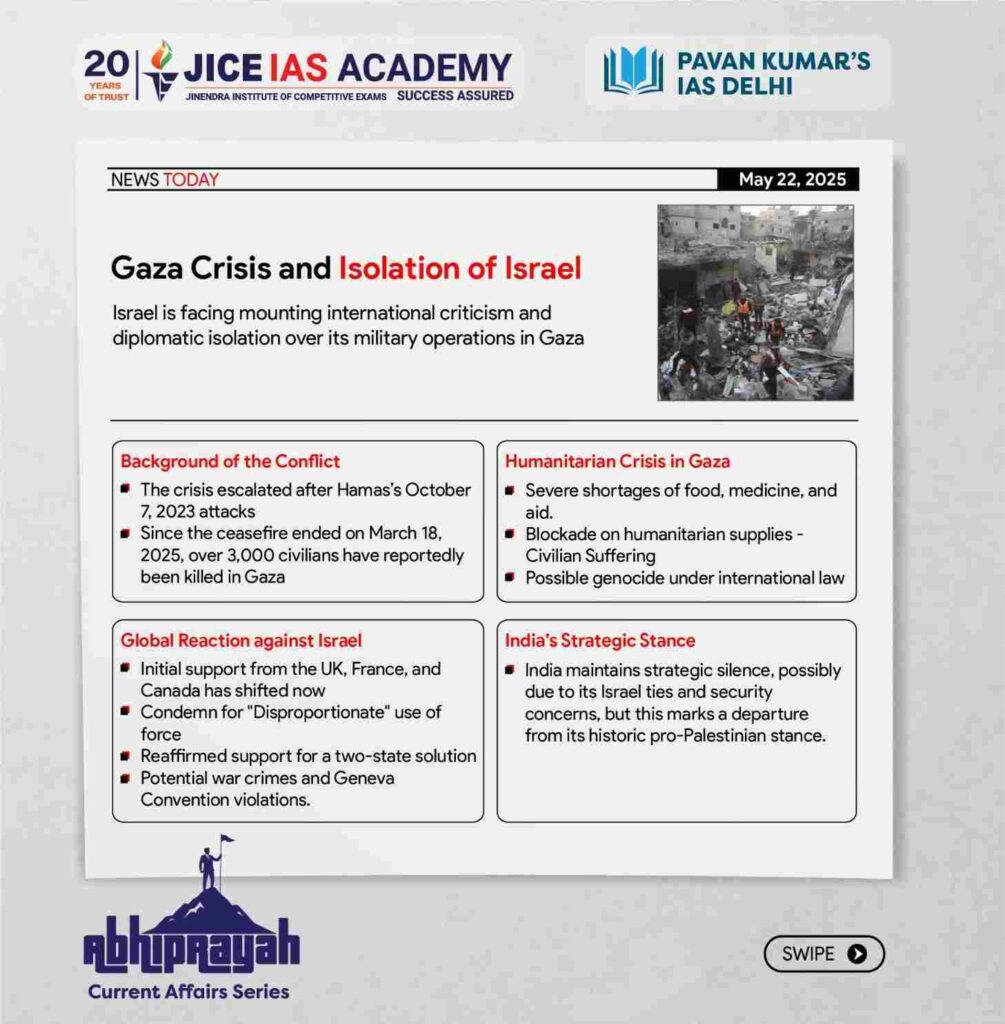
The growing international criticism and diplomatic isolation of Israel over its military operations in Gaza reflect rising concerns over humanitarian law violations, prompting a renewed global call for a two-state solution.
Background of the Gaza War
- The ongoing conflict between Israel and Hamas, which escalated following the October 7, 2023 attacks by Hamas, continues to draw intense global scrutiny.
- The Israeli military campaign, launched in response to the attacks, has resulted in widespread civilian casualties in the Gaza Strip.
- According to the Gaza Health Ministry, over 3,000 residents have been killed since the end of the temporary ceasefire on March 18, 2025.
Humanitarian Crisis in Gaza
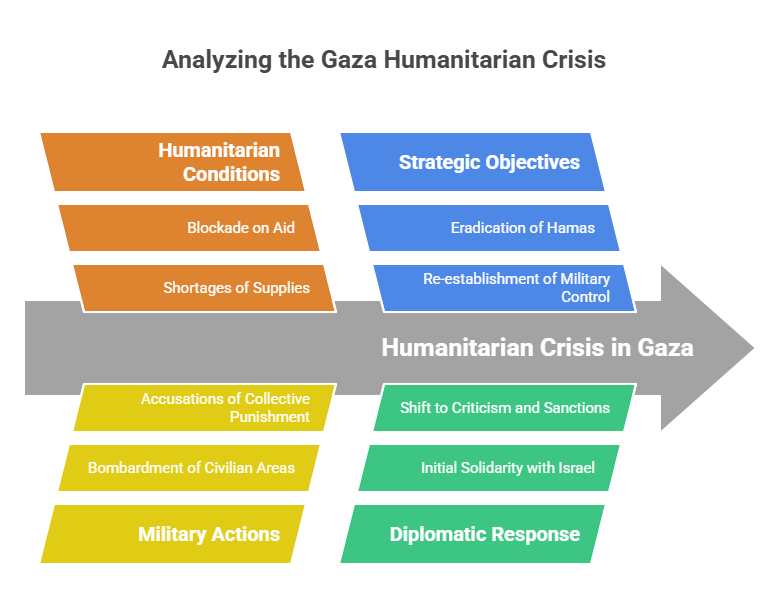
- The situation in Gaza has reached alarming proportions, with widespread shortages of food, medicine, and humanitarian supplies.
- Israel’s blockade on aid entry into Gaza has been described by multiple international organizations as a potential violation of humanitarian law.
- The continued bombardment in densely populated civilian areas has led to accusations of collective punishment, raising concerns of a possible genocide under international law.
Israel's Strategic Position and Military Objectives
- Prime Minister Benjamin Netanyahu has defended Israel’s actions as necessary for national security, stating the goal is the complete eradication of Hamas.
- He also announced intentions to re-establish full military control over the Gaza Strip, a territory from which Israeli forces had withdrawn in 2005.
- However, these actions have drawn criticism, as they have neither ensured the return of Israeli hostages nor eliminated Hamas’s presence entirely.
Evolving Global Response and Diplomatic Isolation
- Initially, Western nations including the United Kingdom, France, and Canada expressed solidarity with Israel following the October 2023 attacks.
- However, with the scale of destruction and humanitarian suffering increasing, these same countries have now condemned the Israeli offensive as “disproportionate.”
- Leaders such as Keir Starmer (UK), Emmanuel Macron (France), and Mark Carney (Canada) have issued a joint statement criticising Israel’s continued operations, describing the human cost as “intolerable.”
- They have also reaffirmed their commitment to a two-state solution and signaled possible sanctions, marking a significant shift in diplomatic posture.
U.S. Position and Strategic Nuances
- Former U.S. President Donald Trump’s recent visit to West Asia notably excluded Israel, which was interpreted as a symbolic expression of dissatisfaction with Prime Minister Netanyahu’s policies.
- While the United States continues to be a key ally of Israel, internal political discourse is increasingly critical of the humanitarian toll in Gaza.
India’s Diplomatic Silence
- India has thus far not issued a statement on the recent escalation in Gaza.
- Analysts suggest this may be due to India’s strategic ties with Israel, especially after its public support during India’s Operation Sindoor, and its parallel security concerns involving Pakistan.
- However, the Israeli-Palestinian situation is a distinct geopolitical issue, and New Delhi’s continued silence may be interpreted as a deviation from its traditional stance supporting a two-state solution and respect for international law.
Legal and Ethical Dimensions
- Multiple UN bodies and humanitarian agencies have warned that Israel’s actions may violate provisions of the Geneva Conventions.
- Allegations of targeting civilians and denying aid access may fall under definitions of war crimes or crimes against humanity.
- The concept of proportionality in armed conflict, a cornerstone of international humanitarian law, appears to be under strain in the current operations.
Way Forward
- The growing diplomatic backlash against Israel, including the suspension of trade talks by the UK and EU, signals increasing global pressure.
- Prime Minister Netanyahu’s continued military escalation risks further isolating Israel and undermining long-term peace prospects.
- The international community, including emerging powers like India, must reassert support for a rules-based international order, uphold humanitarian norms, and encourage a sustainable resolution through dialogue and negotiation.
- The humanitarian crisis in Gaza is not just a regional issue but a test of the global commitment to human rights, international law, and the legitimacy of multilateral institutions.

3rd UN conference on landlocked countries
UPSC CURRENT AFFAIRS – 08th August 2025 Home / 3rd UN conference on landlocked countries Why in News? At the

Issue of soapstone mining in Uttarakhand’s Bageshwar
UPSC CURRENT AFFAIRS – 08th August 2025 Home / Issue of soapstone mining in Uttarakhand’s Bageshwar Why in News? Unregulated

Groundwater Pollution in India – A Silent Public Health Emergency
UPSC CURRENT AFFAIRS – 08th August 2025 Home / Groundwater Pollution in India – A Silent Public Health Emergency Why
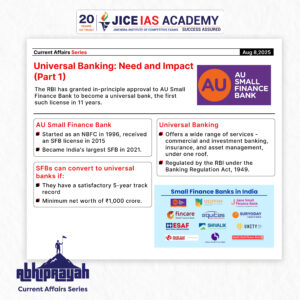
Universal banking- need and impact
UPSC CURRENT AFFAIRS – 08th August 2025 Home / Universal banking- need and impact Why in News? The Reserve Bank
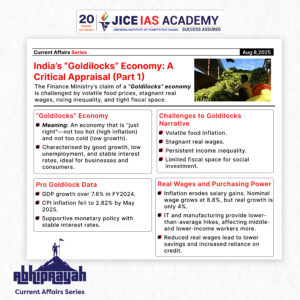
India’s “Goldilocks” Economy: A Critical Appraisal
UPSC CURRENT AFFAIRS – 08th August 2025 Home / India’s “Goldilocks” Economy: A Critical Appraisal Why in News? The Finance

U.S.-India Trade Dispute: Trump’s 50% Tariffs and India’s Oil Imports from Russia
UPSC CURRENT AFFAIRS – 07th August 2025 Home / U.S.-India Trade Dispute: Trump’s 50% Tariffs and India’s Oil Imports from
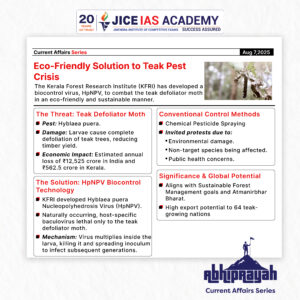
Eco-Friendly Solution to Teak Pest Crisis: KFRI’s HpNPV Technology
UPSC CURRENT AFFAIRS – 07th August 2025 Home / Eco-Friendly Solution to Teak Pest Crisis: KFRI’s HpNPV Technology Why in

New Species of Non-Venomous Rain Snake Discovered in Mizoram
UPSC CURRENT AFFAIRS – 07th August 2025 Home / New Species of Non-Venomous Rain Snake Discovered in Mizoram Why in