UPSC CURRENT AFFAIRS – 1st June 2025
Goa Achieves Full Functional Literacy Under ULLAS Scheme
Why in News?
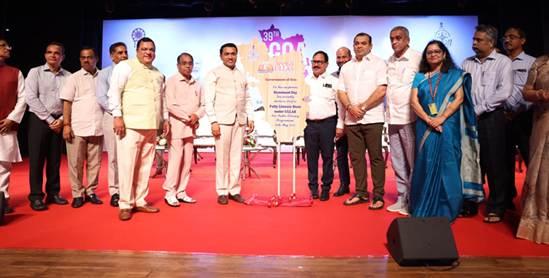
On May 30, 2025, Goa was officially declared fully functionally literate under the ULLAS – Nav Bharat Saaksharta Karyakram, during its 39th Statehood Day celebrations. Goa became the second Indian state to cross the national benchmark of 95% functional literacy, aligning with the NEP 2020 goal of achieving full literacy by 2030.
Key Highlights:
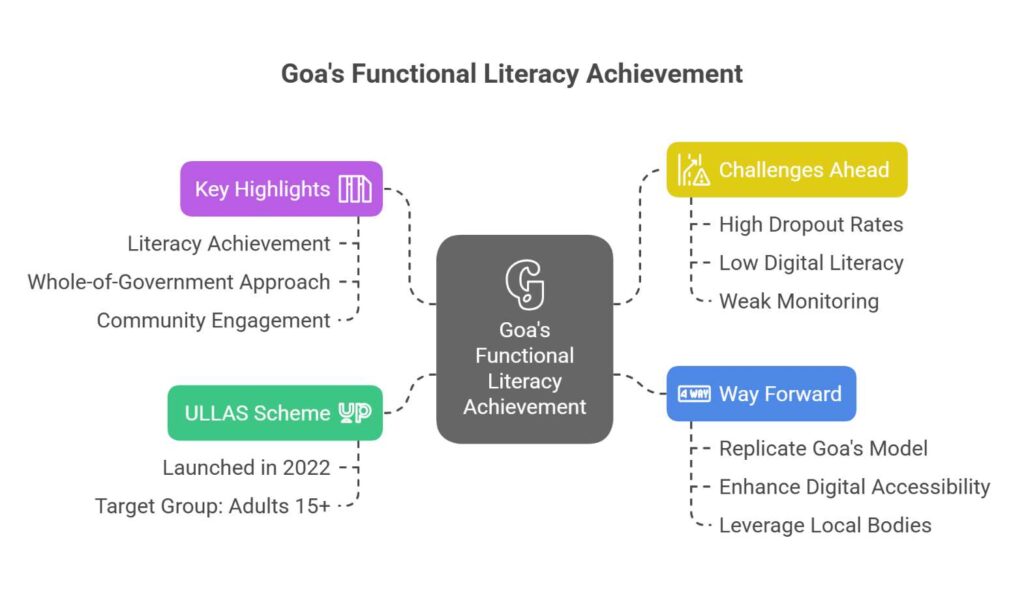
- Literacy Achievement:
- As per Goa’s internal survey, the state has surpassed the PLFS 2023–24 figure of 93.60% to achieve full functional literacy.
- Achieved through inter-departmental collaboration, mass mobilisation, and targeted outreach.
- Whole-of-Government Approach:
- Coordination among departments: Panchayats, Municipal Administration, Social Welfare, Women & Child Development, and Planning & Statistics.
- Identification of non-literates and facilitation of enrolment into literacy modules.
- Community Engagement:
- Swayampurna Mitras conducted awareness drives and facilitated learner enrolments.
- Field workers and volunteers enabled certification and learner integration.
- SCERT, local administration, and school heads were central to campaign success.
About ULLAS – Nav Bharat Saaksharta Karyakram:
- Launched: 2022 (2022–27)
- Type: Centrally Sponsored Scheme
- Target Group: Adults aged 15 years and above, especially non-literates outside the formal school system.
- Vision: Jan-Jan Sakshar (Every Citizen Literate), aligned with NEP 2020 and Viksit Bharat @2047.
- Based on: Kartavya Bodh (sense of duty) and volunteerism.
- Five Key Components:
- Foundational Literacy and Numeracy
- Critical Life Skills
- Basic Education
- Vocational Skills
- Continuing Education
- Progress So Far:
- 1.77 crore learners appeared in FLNAT.
- 2.40 crore learners and 41 lakh volunteer teachers registered on the ULLAS app.
Constitutional & Policy Context:
- Article 21A: Right to Education (fundamental right for children 6–14 years), indirectly reinforcing adult literacy as a lifelong learning need.
- Directive Principles (Article 45, 46): Mandate promotion of education and literacy for weaker sections.
- NEP 2020: Advocates universal literacy and lifelong learning as key goals.
Significance of Goa’s Achievement:
- Demonstrates how localised, volunteer-driven, and tech-supported literacy campaigns can deliver results.
- A scalable model for community-led adult education.
- Reinforces the role of states in achieving SDG 4 (Quality Education) and NEP targets.
- Promotes inclusive development, especially for women, elderly, and economically disadvantaged adults.
Challenges Ahead (for other states):
- High dropout rates in adult literacy programmes.
- Low digital literacy in remote areas may hinder tech-based platforms like ULLAS App.
- Monitoring and evaluation of functional literacy levels is often weak or inconsistent.
- Need for incentives and training for volunteers to maintain momentum.
Way Forward:
- Replicate Goa’s model in other states, with region-specific customisation.
- Ensure digital accessibility and multilingual content through the ULLAS app.
- Leverage local bodies and civil society for sustainable literacy drives.
- Enhance monitoring and certification mechanisms for functional literacy.
Conclusion:
Goa’s functional literacy milestone under the ULLAS scheme is a landmark achievement in India’s human capital development. It reflects the success of inter-departmental synergy, grassroots mobilisation, and community participation in realising NEP 2020 goals. As India marches toward 100% literacy by 2030, Goa offers a replicable model of inclusive and integrated literacy governance.

3rd UN conference on landlocked countries
UPSC CURRENT AFFAIRS – 08th August 2025 Home / 3rd UN conference on landlocked countries Why in News? At the
Issue of soapstone mining in Uttarakhand’s Bageshwar
UPSC CURRENT AFFAIRS – 08th August 2025 Home / Issue of soapstone mining in Uttarakhand’s Bageshwar Why in News? Unregulated
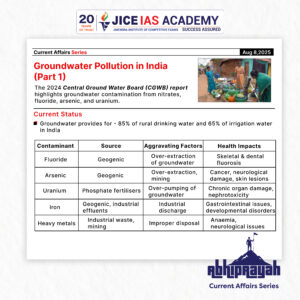
Groundwater Pollution in India – A Silent Public Health Emergency
UPSC CURRENT AFFAIRS – 08th August 2025 Home / Groundwater Pollution in India – A Silent Public Health Emergency Why
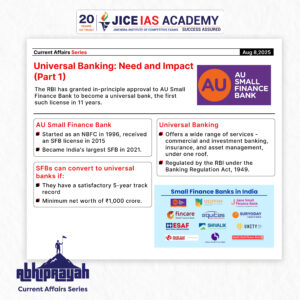
Universal banking- need and impact
UPSC CURRENT AFFAIRS – 08th August 2025 Home / Universal banking- need and impact Why in News? The Reserve Bank
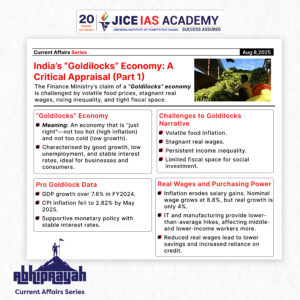
India’s “Goldilocks” Economy: A Critical Appraisal
UPSC CURRENT AFFAIRS – 08th August 2025 Home / India’s “Goldilocks” Economy: A Critical Appraisal Why in News? The Finance
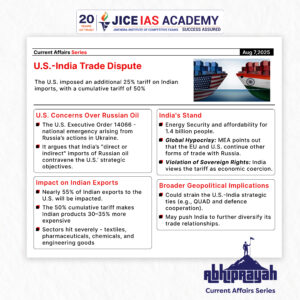
U.S.-India Trade Dispute: Trump’s 50% Tariffs and India’s Oil Imports from Russia
UPSC CURRENT AFFAIRS – 07th August 2025 Home / U.S.-India Trade Dispute: Trump’s 50% Tariffs and India’s Oil Imports from
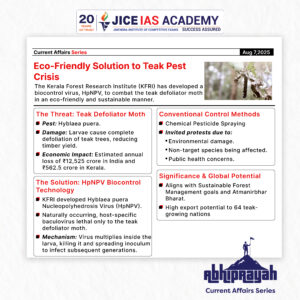
Eco-Friendly Solution to Teak Pest Crisis: KFRI’s HpNPV Technology
UPSC CURRENT AFFAIRS – 07th August 2025 Home / Eco-Friendly Solution to Teak Pest Crisis: KFRI’s HpNPV Technology Why in

New Species of Non-Venomous Rain Snake Discovered in Mizoram
UPSC CURRENT AFFAIRS – 07th August 2025 Home / New Species of Non-Venomous Rain Snake Discovered in Mizoram Why in
Economic Implications
For Indian Exporters
- These reforms reduce transaction costs and compliance hurdles
- Encourage a more competitive and efficient export environment
- Promote value addition in key sectors like leather
For Tamil Nadu
- The reforms particularly benefit the state’s leather industry, a major contributor to employment and exports
- Boost the marketability of GI-tagged E.I. leather, enhancing rural and traditional industries
For Trade Policy
- These decisions indicate a shift from regulatory controls to policy facilitation
Reinforce the goals of Make in India, Atmanirbhar Bharat, and India’s ambition to become a leading export power
Recently, BVR Subrahmanyam, CEO of NITI Aayog, claimed that India has overtaken Japan to become the fourth-largest economy in the world, citing data from the International Monetary Fund (IMF).
India’s rank as the world’s largest economy varies by measure—nominal GDP or purchasing power parity (PPP)—each with key implications for economic analysis.