
UPSC CURRENT AFFAIRS – 25th June 2025

Home / UPSC / Current Affairs / India Rises to 99th Rank in the 2025 SDG Index

India Rises to 99th Rank in the 2025 SDG Index

india rises to 99th rank in 2025 sdg index

Why in News?

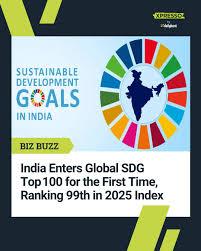
  • India ranked 99th out of 167 countries in the 2025 SDG Index, marking its first entry into the top 100.

Introduction

  • India has, for the first time, entered the top 100 countries in the Sustainable Development Goals (SDG) Index.
  • India secured the 99th rank out of 167 nations in the 2025 edition of the Sustainable Development Report (SDR) released by the United Nations Sustainable Development Solutions Network (UNSDSN)
  • With a score of 67, this marks a substantial improvement from its 109th rank in 2024, reflecting consistent progress in multiple development indicators.

About the SDG Index

  • The SDG Index measures the overall progress of countries towards achieving the 17 Sustainable Development Goals adopted by UN member states in 2015.
  • It uses a scale where 100 denotes complete achievement of all goals.
  • The report is authored by a team led by economist Jeffrey Sachs and serves as a key global benchmark for sustainable development.

India’s Performance: Steady Climb in Rankings

Year

SDG Index Rank

2021

120

2022

121

2023

112

2024

109

2025

99

  • India has shown consistent improvement year-on-year since 2021.
  • This reflects enhanced performance in key SDG domains such as access to electricity (SDG 7), mobile broadband (SDG 9), and reduction in under-five and neonatal mortality (SDG 3).
top sdg performers 2025

Comparison with Global and Regional Peers

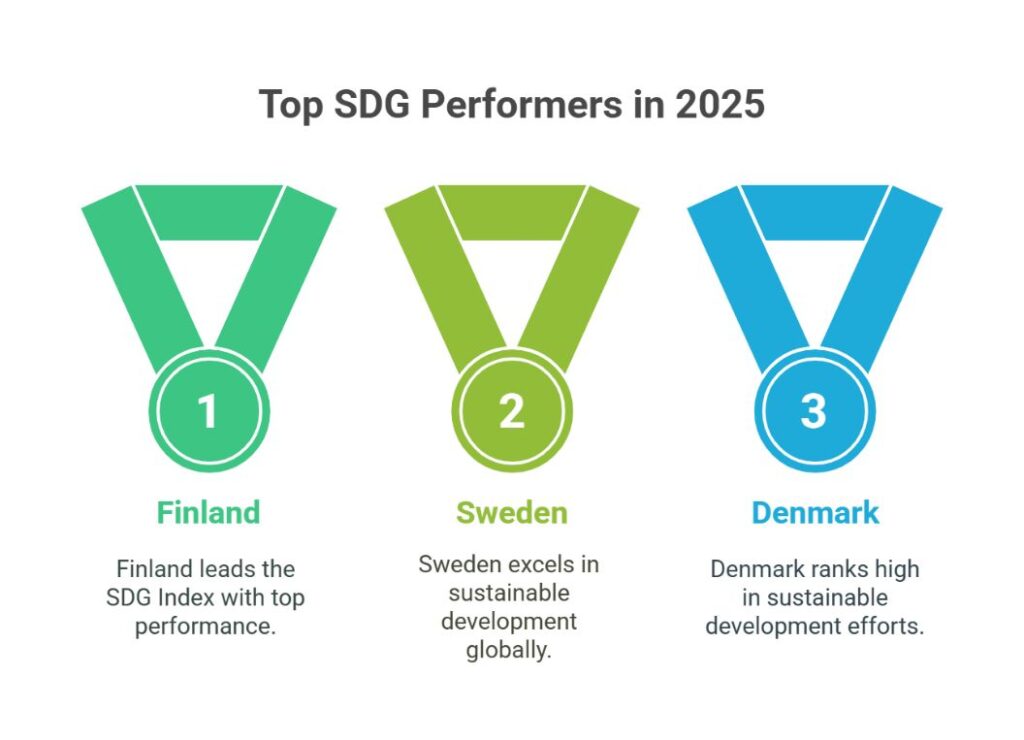
  • Top Performers: Finland, Sweden, and Denmark dominate the index. 19 of the top 20 countries are from Europe.
  • India’s Neighbours:
    • Bhutan – 74th (70.5)
    • Nepal – 85th (68.6)
    • Bangladesh – 114th (63.9)
    • Pakistan – 140th (57)
    • Sri Lanka – 93rd
    • Maldives – 53rd
  • China ranks 49th (74.4), USA ranks 44th (75.2) but is last in commitment to the SDGs (193rd).

Global Trends: Stalling Progress and Emerging Challenges

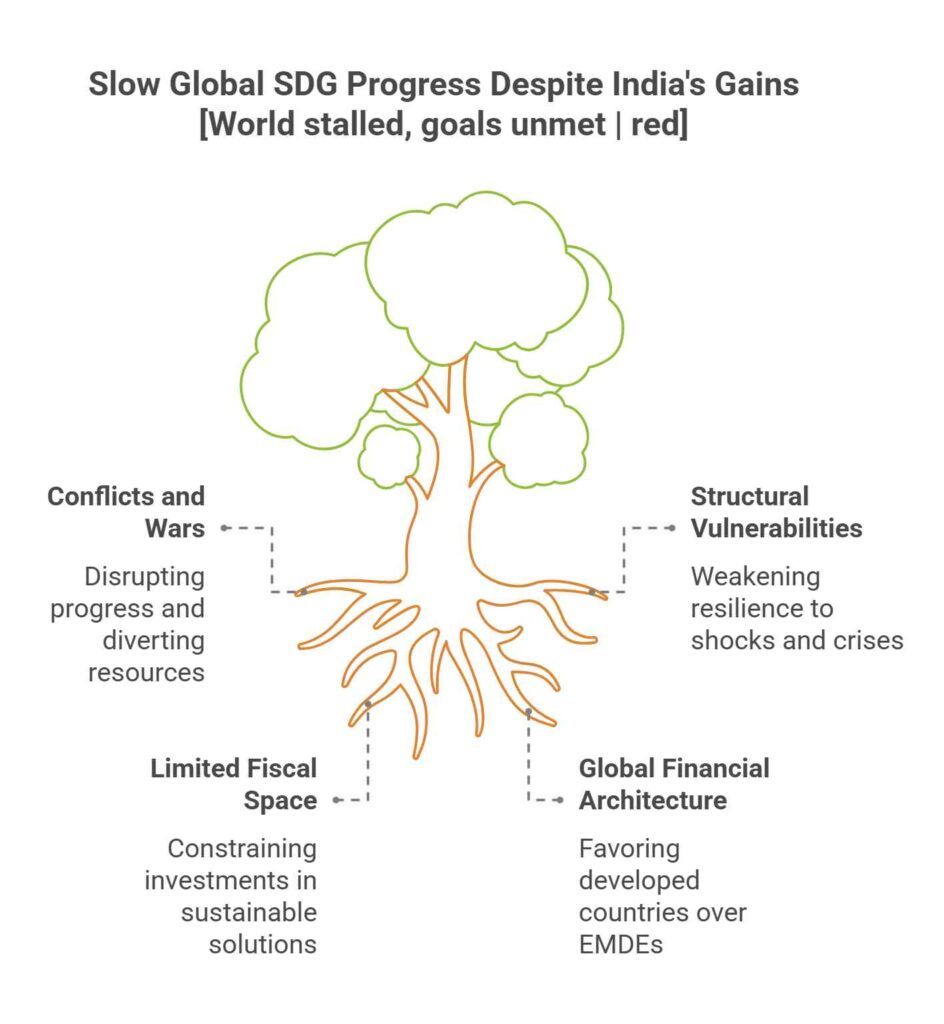
Despite regional gains, the report warns that global progress has largely stalled:

  • Only 17% of SDG targets are on track to be achieved by 2030.
  • Key challenges include:
    • Conflicts and wars
    • Structural vulnerabilities
    • Limited fiscal space in developing countries

Areas of Global Regression:

  • Obesity rates (SDG 2)
  • Decline in press freedom (SDG 16)
  • Biodiversity loss (Red List Index – SDG 15)
  • Sustainable nitrogen management (SDG 2)
  • Rising corruption (SDG 16)

Regional and Country-Level Highlights

  • Fastest Improving Countries (since 2015):
    • Nepal (+11.1)
    • Cambodia (+10)
    • Bangladesh (+8.3)
    • Mongolia (+7.7)
    • Philippines (+8.6)
    • Benin (+14.5), UAE (+9.9), Uzbekistan (+12.1), Peru (+8.7), Costa Rica (+7)
  • Infrastructure and Services: Noticeable gains in mobile broadband, internet usage, electricity access, and health indicators.
slow global sdg progress despite india gains

India’s Achievements and Challenges

Achievements:

  • Continued progress in:
    • Health (SDG 3) – Reduction in neonatal and under-five mortality
    • Energy (SDG 7) – Expansion of electricity access
    • Digital access (SDG 9) – Mobile and internet penetration

Challenges Ahead:

  • Managing sustainable nitrogen usage in agriculture
  • Addressing environmental degradation and biodiversity loss
  • Tackling rising inequality and corruption (SDG 10, 16)

Global Call for Financial Reform

The report sets the stage for the Fourth International Conference on Financing for Development (FfD4) to be held in Seville, Spain (June 30 – July 3, 2025):

  • Emphasizes urgent reform of the global financial architecture (GFA)
  • Highlights disparity in capital flows, which favor developed countries over Emerging and Developing Economies (EMDEs)
  • Urges that GFA reform be placed at the top of the FfD4 agenda

Conclusion

  • India’s entry into the top 100 of the SDG Index in 2025 is a significant milestone that reflects its persistent efforts toward sustainable development. 
  • However, the global slowdown in SDG progress and emerging challenges call for strengthened domestic policies and greater international cooperation, especially in the run-up to key global platforms like the FfD4. 
  • India’s role as a large, fast-developing country will be crucial in shaping the future of sustainable development at both regional and global levels.

Economic Implications

For Indian Exporters

  • These reforms reduce transaction costs and compliance hurdles
  • Encourage a more competitive and efficient export environment
  • Promote value addition in key sectors like leather

For Tamil Nadu

  • The reforms particularly benefit the state’s leather industry, a major contributor to employment and exports
  • Boost the marketability of GI-tagged E.I. leather, enhancing rural and traditional industries

For Trade Policy

  • These decisions indicate a shift from regulatory controls to policy facilitation

Reinforce the goals of Make in India, Atmanirbhar Bharat, and India’s ambition to become a leading export power

Recently, BVR Subrahmanyam, CEO of NITI Aayog, claimed that India has overtaken Japan to become the fourth-largest economy in the world, citing data from the International Monetary Fund (IMF). 

India’s rank as the world’s largest economy varies by measure—nominal GDP or purchasing power parity (PPP)—each with key implications for economic analysis.

Significance and Applications

Leave a Reply

Your email address will not be published. Required fields are marked *

Call Us Now !

Copyright © JICE ACADEMY FOR EXCELLENCE PRIVATE LIMITED