
UPSC CURRENT AFFAIRS – 18th May 2025

Home / UPSC / Current Affairs / Higher Defence Spending Unlikely to Derail Fiscal Consolidation Path

Higher Defence Spending Unlikely to Derail Fiscal Consolidation Path

india defence spending vs fiscal discipline

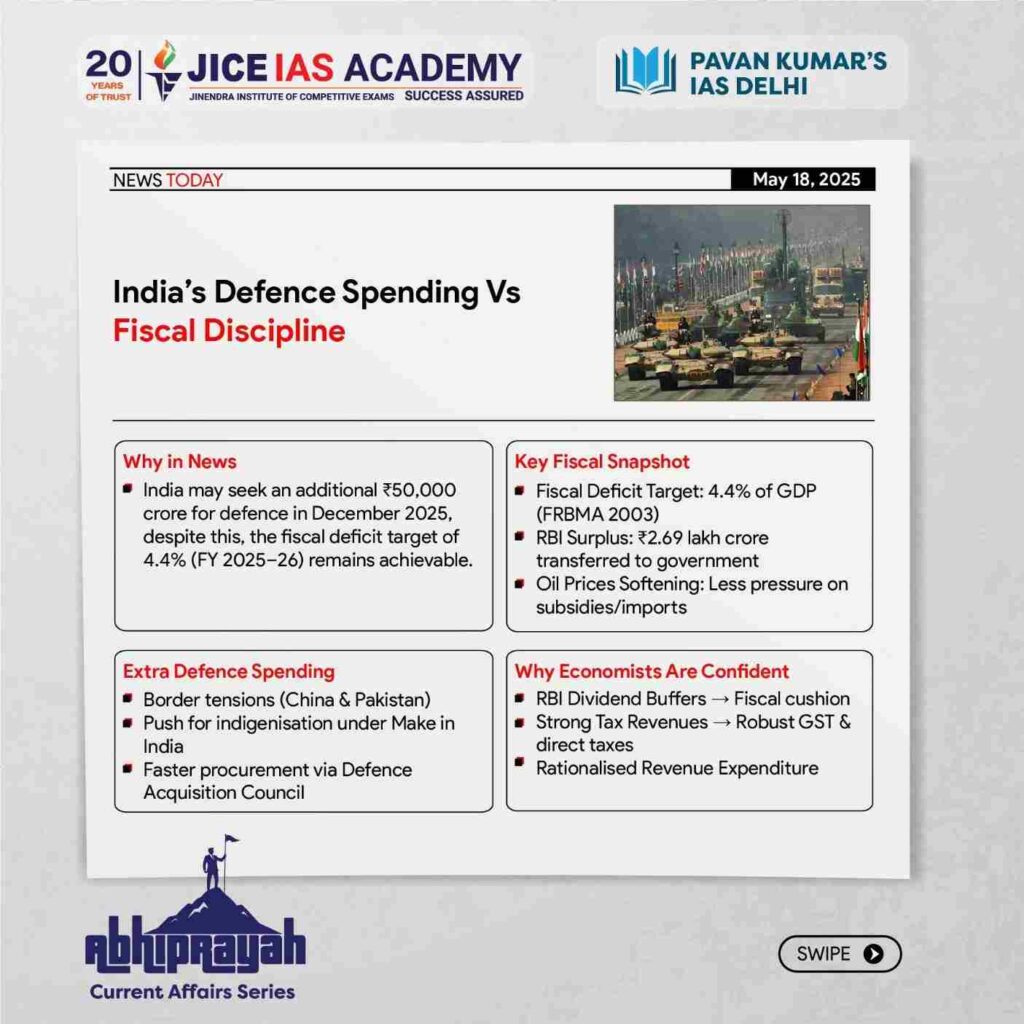
Why in News?

India is considering a ₹50,000 crore increase in defence expenditure through a Supplementary Demand for Grants in December 2025. Economists assert that despite this, India’s fiscal deficit target of 4.4% of GDP for FY2025–26 is likely to remain intact, due to higher revenues and prudent fiscal management.

Key Highlights

  • MoD to seek ₹50,000 crore additional budget amid defence modernization needs.
  • India’s fiscal deficit target stands at 4.4% of GDP for 2025–26.
  • RBI dividend transfers and oil prices act as buffers:
    • RBI transferred ₹2.1 lakh crore in 2023–24 (141% jump over previous year).
  • Historical precedence shows India’s deficit remained controlled during tensions unless compounded by wars or global crises.
  • Expenditure cuts will likely affect revenue expenditure, not capital investment in defence.
  • As geopolitical tensions flare, Pakistan’s fragile economy faces a major credibility crisis, risking its access to crucial international funds. In contrast, India’s stable economic fundamentals and proactive diplomacy provide it with insulation from regional shocks.

Background

  • India’s growing defence needs stem from:
    • Border tensions with China and Pakistan.
    • Push for indigenous military production.
    • Faster procurement timelines approved by the Defence Acquisition Council.

Important Fiscal Instruments and Policies

Fiscal Deficit refers to the shortfall between the total revenue (excluding borrowings) and total expenditure of the government in a financial year. It indicates how much the government needs to borrow to meet its expenditure requirements.

Fiscal Responsibility and Budget Management (FRBM) Act:

  • Enacted in 2003, the FRBM Act aims to ensure long-term fiscal discipline.
  • It mandates the Central Government to limit the fiscal deficit, reduce revenue deficit, and maintain macroeconomic stability.
  • The current medium-term target is to reduce the fiscal deficit to below 4.5% of GDP by 2025–26.
india fiscal consolidation amid defence spending

Supplementary Demand for Grants (Article 115 of Constitution):

  • A constitutional provision that enables the government to seek Parliamentary approval for additional expenditure during the financial year.
  • Used when allocated funds under the Union Budget fall short or new demands arise (like enhanced defence spending).
  • Must be approved by Parliament just like the annual budget.

Reasons for Fiscal Confidence

  1. RBI Surplus Transfers:
    • ₹2.1 lakh crore transferred in 2023–24; another bumper transfer likely in FY2025–26.
  2. Softening Global Oil Prices:
    • Brings down subsidy and import bills.
  3. Robust Tax Revenues:
    • GST collections and direct tax buoyancy remain steady.
  4. Historical Trends:
    • Fiscal deficit has remained within limits during national security crises (barring global economic shocks).
  5. Scope for Reprioritisation:
    • Revenue expenditure may be optimised across schemes to absorb additional defence costs.

Challenges

  • Social Sector Trade-offs:
    • Any cuts in revenue expenditure may affect welfare schemes.
  • Interest Burden:
    • Debt servicing remains a pressure point due to previous high borrowings.
  • Volatile External Conditions:
    • Any crude oil spike or global financial tightening could affect fiscal balance.
  • Pre-election Populism:
    • Pressure for subsidies and welfare schemes ahead of 2026 general elections.

Way Ahead

  • Strict Adherence to FRBM Targets:
    • Continue the glide path to reduce fiscal deficit.
  • Transparent Use of Supplementary Grants:
    • Ensure accountability and parliamentary scrutiny.
  • Focus on Defence Indigenisation:
    • Boost ‘Make in India’ to offset import dependency and promote exports.
  • Prudent Resource Reallocation:
    • Spread any required cuts to minimise impact on growth.
  • Institutional Financial Reforms:
    • Move toward multi-year defence budgeting and outcome-based allocations.

Conclusion

  • India’s potential increase in defence expenditure is fiscally sustainable, provided the government continues its commitment to the FRBM framework and leverages instruments like Supplementary Grants judiciously. With stable revenue inflows and strategic prioritisation, India can secure both its national security and fiscal stability — an essential balance in an era of global volatility.

Leave a Reply

Your email address will not be published. Required fields are marked *

Call Us Now !

Copyright © JICE ACADEMY FOR EXCELLENCE PRIVATE LIMITED