UPSC CURRENT AFFAIRS – 10th July 2025
International Climate Negotiations Under UNFCCC
Why in News?
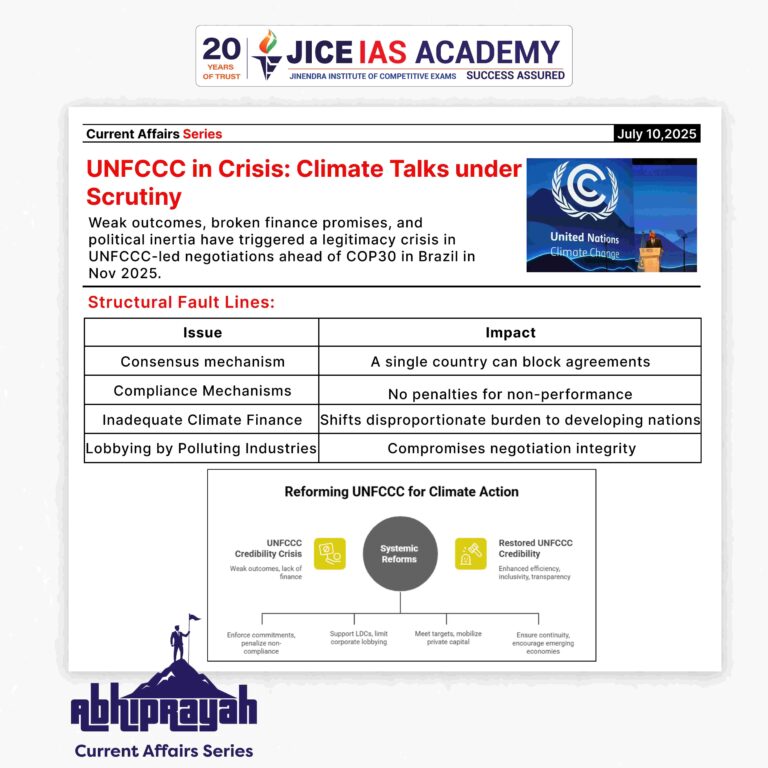
The UNFCCC climate negotiations are facing a credibility crisis due to weak outcomes, inadequate climate finance, and lack of accountability, prompting calls for systemic reforms ahead of COP30 in Brazil.
Introduction
- The United Nations Framework Convention on Climate Change (UNFCCC) has served as the primary global forum for negotiating international climate action.
- However, over the past few years, its effectiveness and credibility have come under scrutiny.
- With underwhelming outcomes, delayed implementation of commitments, and increasing mistrust among nations—particularly developing and vulnerable countries—the UNFCCC process is facing a significant crisis of legitimacy.
Challenges Confronting the UNFCCC Process
- Lack of Accountability Mechanisms
- One of the core criticisms is the absence of enforcement mechanisms. Developed countries have frequently missed their emission reduction targets and failed to deliver on climate finance commitments without facing any penalties.
- This has severely undermined trust in the system, especially from the Global South.
- Marginalisation of Developing Countries’ Concerns
- Least developed countries (LDCs), small island developing states (SIDS), and other vulnerable nations have repeatedly voiced that their concerns are not taken seriously.
- These nations are often the least responsible for climate change but are the most affected.
- The principle of climate justice—which demands equitable responsibilities based on historical emissions and current capabilities—has not been adequately addressed.
- Withdrawal of the United States
- The return of Donald Trump to the White House in 2025 led to another withdrawal of the United States from the Paris Agreement.
- As one of the world’s largest emitters and a key financial contributor, the U.S. exit has cast doubt on the credibility and effectiveness of the UNFCCC framework and has the potential to derail global climate momentum.
Recent Efforts at Reform: The Bonn Climate Talks, June 2025
- The mid-year climate meeting in Bonn, Germany, acknowledged the growing complexity and inefficiency of the climate negotiation process. Several suggestions were put forth to reform and streamline the process:
Proposals Discussed by Parties
- Streamlining the number of agenda items to eliminate redundancy.
- Restricting the length of country and observer statements to ensure more effective use of time.
- Limiting the size of negotiating delegations to enhance inclusivity, especially for smaller nations with limited capacity.
These proposals were largely procedural and did not address the deeper structural challenges facing the climate negotiation process.
Civil Society Demands for Deeper Reforms
More than 200 climate advocacy groups and civil society organisations submitted a letter outlining five key demands for systemic reform:
- Adoption of majority-based decision-making when consensus is unattainable.
- Prohibiting countries with poor climate records from hosting COP meetings.
- Restricting the participation of fossil fuel industry representatives in negotiations.
- Increasing transparency and civil society engagement.
- Enhancing accountability mechanisms for non-compliant nations.
Currently, the UNFCCC operates on a consensus basis, where even a single country can block a decision. This has resulted in watered-down outcomes and limited ambition in climate action.
Brazil’s Role as COP30 Host
Brazil, as the host of the upcoming COP30 meeting in November 2025, has taken an active role in attempting to rebuild trust in the negotiation process. In a letter to all parties, Brazil acknowledged the pressing need for reform and proposed several initiatives:
- Addressing structural issues such as overlapping agenda items, time management inefficiencies, and participation barriers for small delegations.
- Promoting the integration of climate concerns across other multilateral forums, including within financial institutions and UN agencies.
- Proposing the creation of additional multilateral platforms to complement the UNFCCC and accelerate the implementation of decisions.
- Collaborating with other nations on a 30-point priority agenda to expedite climate action.
Brazil has positioned itself as a bridge-builder between developed and developing countries and aims to restore confidence in multilateral climate governance.
Climate Finance: The Central Flashpoint
The Finance Gap
- A key source of contention remains the issue of climate finance. Under the 2015 Paris Agreement, developed countries pledged to mobilise at least $100 billion annually to assist developing countries in mitigation and adaptation efforts. However, this target has not been met consistently.
- Recent assessments indicate that the actual financial needs of developing countries are closer to $1.3 trillion per year. In response, developed countries have proposed raising $300 billion annually—but only starting from 2035.
- This is seen as grossly inadequate and further deepens mistrust.
Developments at the Bonn Meeting
- Developing countries, frustrated by the lack of concrete financial commitments, stalled proceedings during the Bonn meeting.
- They succeeded in forcing a special session on finance, although it ended without resolution. The issue is expected to dominate the COP30 agenda.
BRICS Perspective on Climate Finance
The BRICS group—comprising nine major emerging economies—issued a separate declaration on climate finance at their recent summit in Brazil. They called for:
- Full delivery of existing financial commitments under the UNFCCC and Paris Agreement.
- Greater focus on adaptation finance, in addition to mitigation.
BRICS has also highlighted the need for structural reform in global climate finance institutions to ensure fair representation and responsiveness to developing country needs.
Structural Problems with UNFCCC
Issue | Impact |
Consensus-based decision-making | Slows down progress; allows a single country to block global agreements |
Weak compliance mechanisms | No consequences for non-performance |
Inadequate climate finance | Disproportionate burden on developing nations |
Host nation controversies | Undermines trust if fossil-fuel-reliant states host COP |
Lobbying by polluting industries | Risk of diluted climate outcomes |
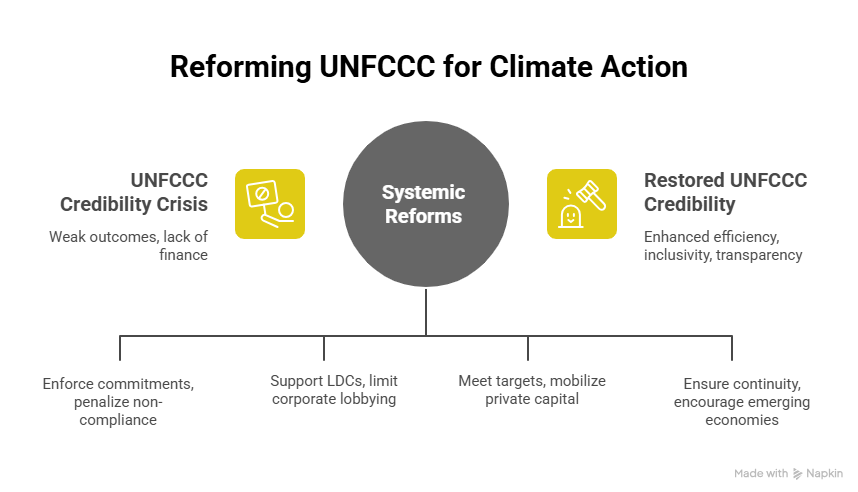
The Way Forward
- Institutional and Procedural Reforms
- Shift from pure consensus to qualified majority voting in select areas.
- Set criteria for COP host selection based on climate performance.
- Establish independent monitoring and accountability mechanisms.
- Inclusive Negotiation Practices
- Provide financial and technical assistance to enable meaningful participation by LDCs and SIDS.
- Limit corporate lobbying and ensure transparency in sponsorship and participation.
- Climate Finance Expansion
- Fulfil and surpass the $100 billion target with grant-based, predictable, and accessible finance.
- Encourage mobilisation of private capital, green bonds, and contributions from multilateral development banks.
- Create a dedicated global fund for adaptation, loss, and damage.
- Strengthen Global Leadership
- Ensure continuity of climate action across electoral cycles in major economies.
- Encourage emerging economies, especially in the Global South, to take leadership roles in shaping climate diplomacy.
Conclusion
- The credibility of international climate negotiations under the UNFCCC is under serious threat.
- COP30 in Brazil offers a crucial opportunity to address this crisis through meaningful reforms, strengthened finance mechanisms, and a renewed focus on equity and accountability.
- Unless significant changes are introduced to enhance efficiency, inclusivity, and transparency, the ability of the international community to meet its climate goals will remain in jeopardy.
- Restoring faith in the UNFCCC process is not merely a diplomatic necessity—it is a planetary imperative.

3rd UN conference on landlocked countries
UPSC CURRENT AFFAIRS – 08th August 2025 Home / 3rd UN conference on landlocked countries Why in News? At the

Issue of soapstone mining in Uttarakhand’s Bageshwar
UPSC CURRENT AFFAIRS – 08th August 2025 Home / Issue of soapstone mining in Uttarakhand’s Bageshwar Why in News? Unregulated
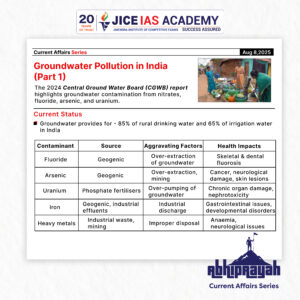
Groundwater Pollution in India – A Silent Public Health Emergency
UPSC CURRENT AFFAIRS – 08th August 2025 Home / Groundwater Pollution in India – A Silent Public Health Emergency Why
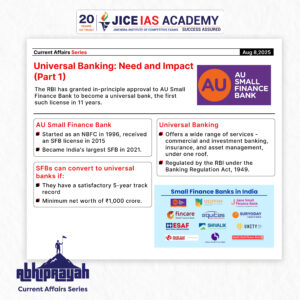
Universal banking- need and impact
UPSC CURRENT AFFAIRS – 08th August 2025 Home / Universal banking- need and impact Why in News? The Reserve Bank
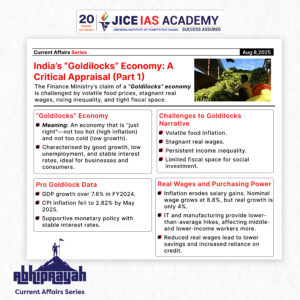
India’s “Goldilocks” Economy: A Critical Appraisal
UPSC CURRENT AFFAIRS – 08th August 2025 Home / India’s “Goldilocks” Economy: A Critical Appraisal Why in News? The Finance
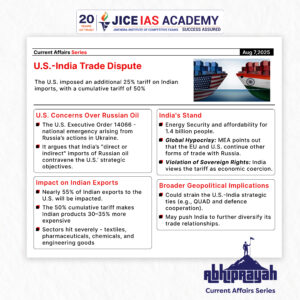
U.S.-India Trade Dispute: Trump’s 50% Tariffs and India’s Oil Imports from Russia
UPSC CURRENT AFFAIRS – 07th August 2025 Home / U.S.-India Trade Dispute: Trump’s 50% Tariffs and India’s Oil Imports from
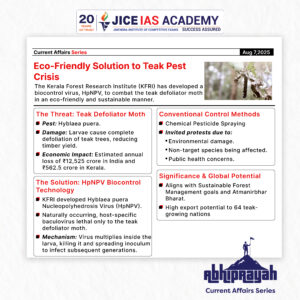
Eco-Friendly Solution to Teak Pest Crisis: KFRI’s HpNPV Technology
UPSC CURRENT AFFAIRS – 07th August 2025 Home / Eco-Friendly Solution to Teak Pest Crisis: KFRI’s HpNPV Technology Why in

New Species of Non-Venomous Rain Snake Discovered in Mizoram
UPSC CURRENT AFFAIRS – 07th August 2025 Home / New Species of Non-Venomous Rain Snake Discovered in Mizoram Why in

Economic Implications
For Indian Exporters
- These reforms reduce transaction costs and compliance hurdles
- Encourage a more competitive and efficient export environment
- Promote value addition in key sectors like leather
For Tamil Nadu
- The reforms particularly benefit the state’s leather industry, a major contributor to employment and exports
- Boost the marketability of GI-tagged E.I. leather, enhancing rural and traditional industries
For Trade Policy
- These decisions indicate a shift from regulatory controls to policy facilitation
Reinforce the goals of Make in India, Atmanirbhar Bharat, and India’s ambition to become a leading export power
Recently, BVR Subrahmanyam, CEO of NITI Aayog, claimed that India has overtaken Japan to become the fourth-largest economy in the world, citing data from the International Monetary Fund (IMF).
India’s rank as the world’s largest economy varies by measure—nominal GDP or purchasing power parity (PPP)—each with key implications for economic analysis.