
UPSC CURRENT AFFAIRS – 30th July 2025

Home / UPSC / Current Affairs / Jhalawar School Tragedy Highlights Public School Infrastructure Crisis

Jhalawar School Tragedy Highlights Public School Infrastructure Crisis

Why in News?

  • The collapse of a school building in Rajasthan’s Jhalawar district exposed the severe neglect of government school infrastructure.

Introduction

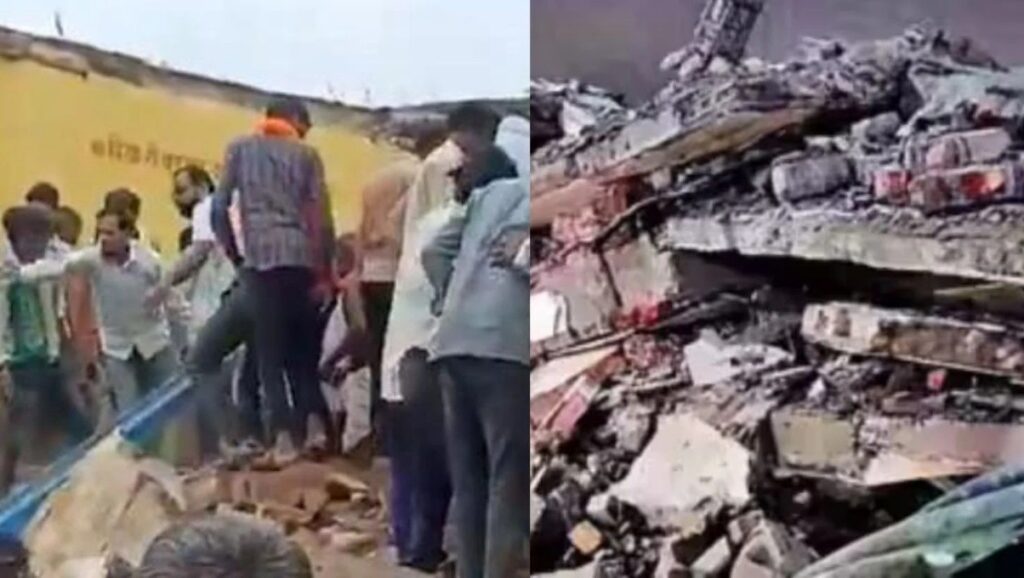
  • A tragic incident at the Piplodi Government School in Rajasthan’s Jhalawar district led to the death of seven students from Classes 6 and 7, mostly from tribal communities, after a part of the school building collapsed during morning assembly.
  • A similar incident was narrowly avoided in Nagaur district the next day, only because it was a holiday.
  • These incidents have thrown a sharp spotlight on the deteriorating infrastructure of government schools in India, especially in underserved and marginalised regions.

Immediate Context and Structural Neglect

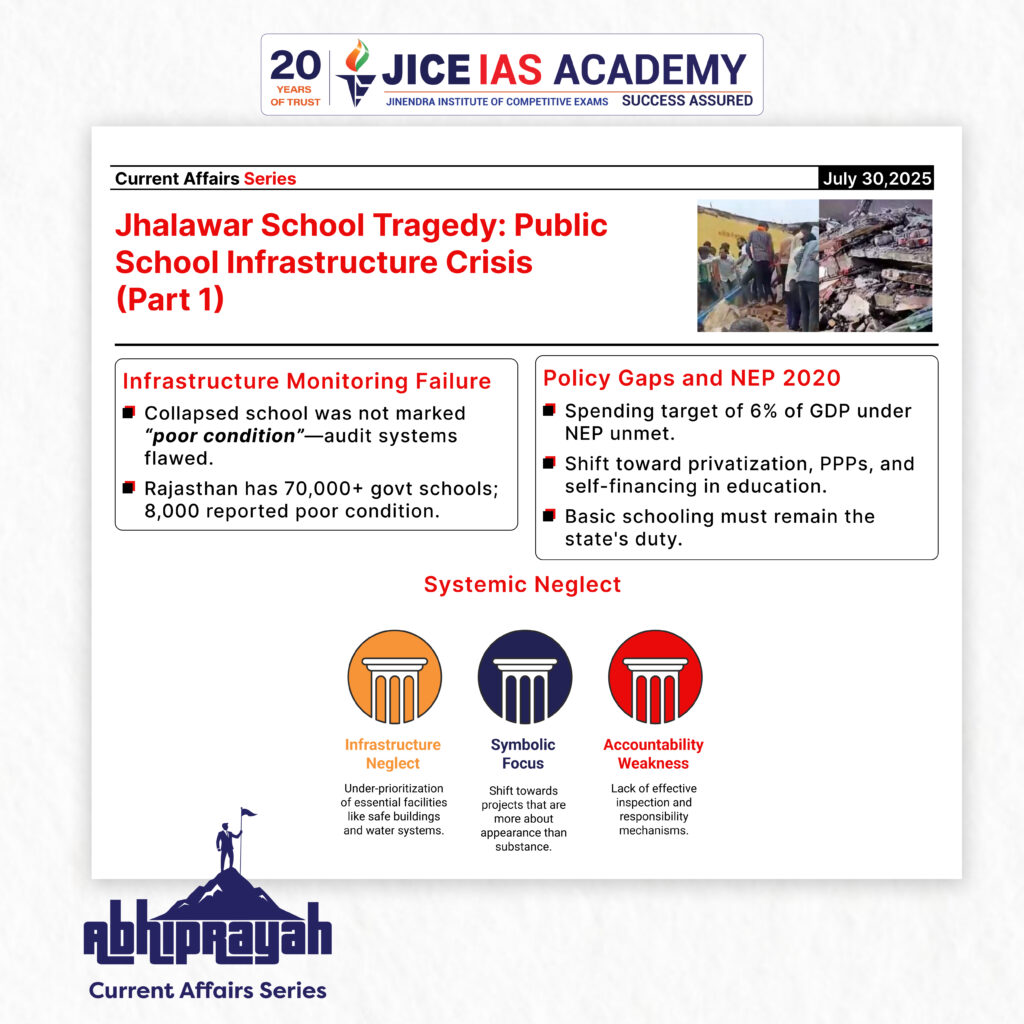
  • The Piplodi school building was not classified as “in poor condition”, suggesting that the monitoring and audit mechanisms are insufficient to detect latent structural vulnerabilities.
  • Rajasthan has over 70,000 government schools catering to nearly 84 lakh students, primarily from poor and marginalised backgrounds.
  • According to the UDISE 2023-24 data, around 8,000 schools were identified as being in poor condition. However, the Jhalawar school’s collapse shows that the real number may be higher or misdiagnosed.
  • Though ₹650 crore was allocated over two budgets to improve school infrastructure, government inefficiencies and lack of execution meant that results on the ground were negligible.

Systemic Issues in Government Schooling

  1. Neglect of Infrastructure as a Core Priority
    • Basic school infrastructure (safe buildings, toilets, classrooms, drinking water) is foundational to education.
    • Yet, state governments and even the Centre have deprioritized such investment, focusing more on symbolic or high-visibility projects like “model schools” or digital initiatives.
  2. Failure of Monitoring and Accountability
    • The collapse of a school not flagged as “poorly maintained” reflects failure in inspection protocols, lack of preventive maintenance, and weak accountability mechanisms in the bureaucracy.
  3. Demographic and Social Impact
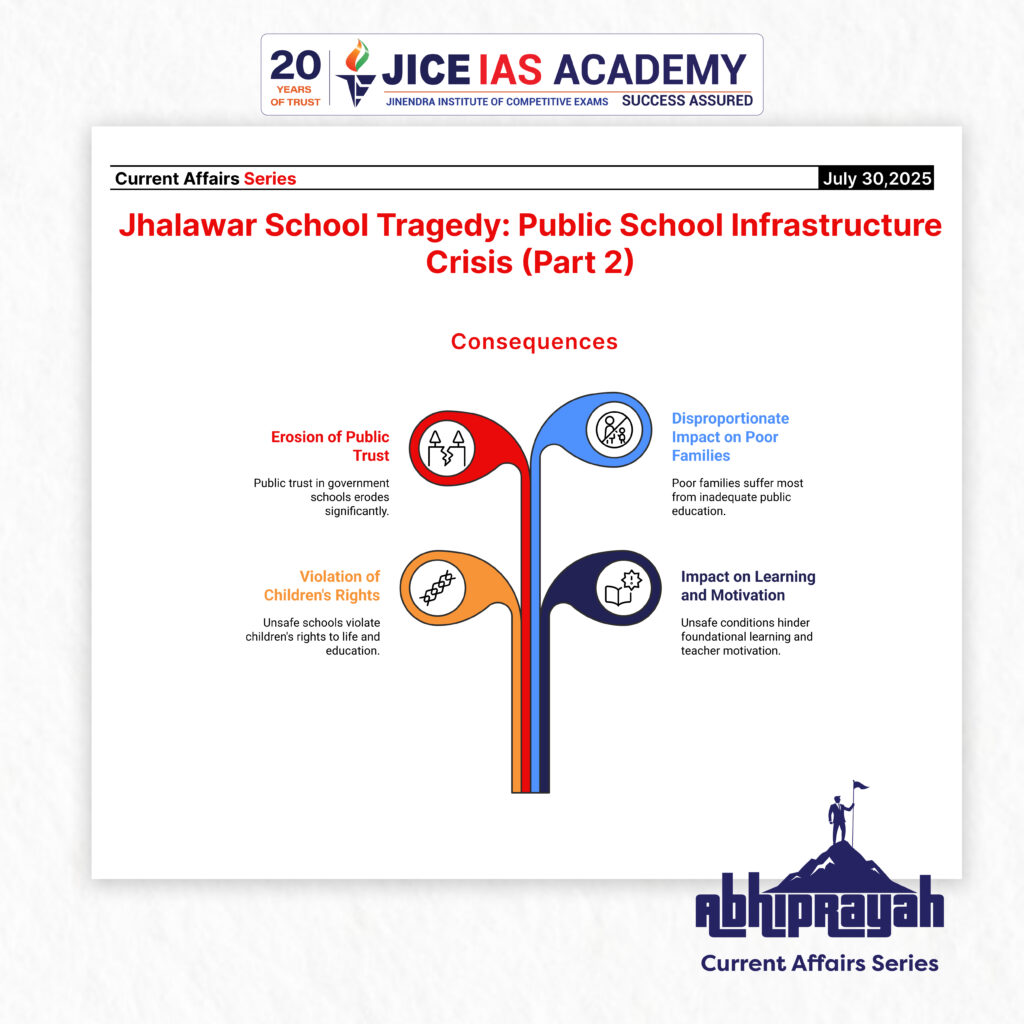
    • Most students affected were from tribal and disadvantaged communities, indicating how inequality of access and safety still persists.
    • Poor school environments disproportionately affect children from Scheduled Tribes (STs), Scheduled Castes (SCs) and economically weaker sections, compounding intergenerational disadvantages.

Policy Concerns: NEP 2020 and Ground Reality

  • The National Education Policy (NEP) 2020 had envisioned increasing public investment in education from 4.6% to 6% of GDP, with one-time infrastructure investments being a priority.
  • Five years after NEP, there has been little actual increase in education spending, and basic infrastructure remains neglected.
  • Instead, policy direction has increasingly moved towards:
    • Privatisation and Public-Private Partnerships (PPP)
    • Self-financing models in higher education
    • Reduced emphasis on public provisioning of basic schooling

Critique: While privatisation may support higher education, basic school education is a public good — and must remain a constitutional duty of the State under Article 21A (Right to Education).

Key Implications

  1. Safety and Dignity in Schools
    • Education cannot be delivered meaningfully without providing safe physical spaces. Incidents like the Jhalawar tragedy directly violate children’s right to life and education.
  2. Foundational Learning at Risk
    • Foundational Literacy and Numeracy (FLN), a central goal of the NIPUN Bharat Mission, cannot succeed without safe, functional, and well-resourced schools.
    • Teacher motivation and student attendance are directly influenced by basic infrastructure.
  3. Loss of Trust in Public Education
    • Such incidents erode parental trust in government schools, further encouraging migration to low-cost private schools — which may also be unregulated or unsafe.
  4. Reaping Demographic Dividend
    • India’s demographic dividend is a time-sensitive opportunity. Without a robust public education system to harness young potential, this dividend could turn into a demographic burden.

Way Forward

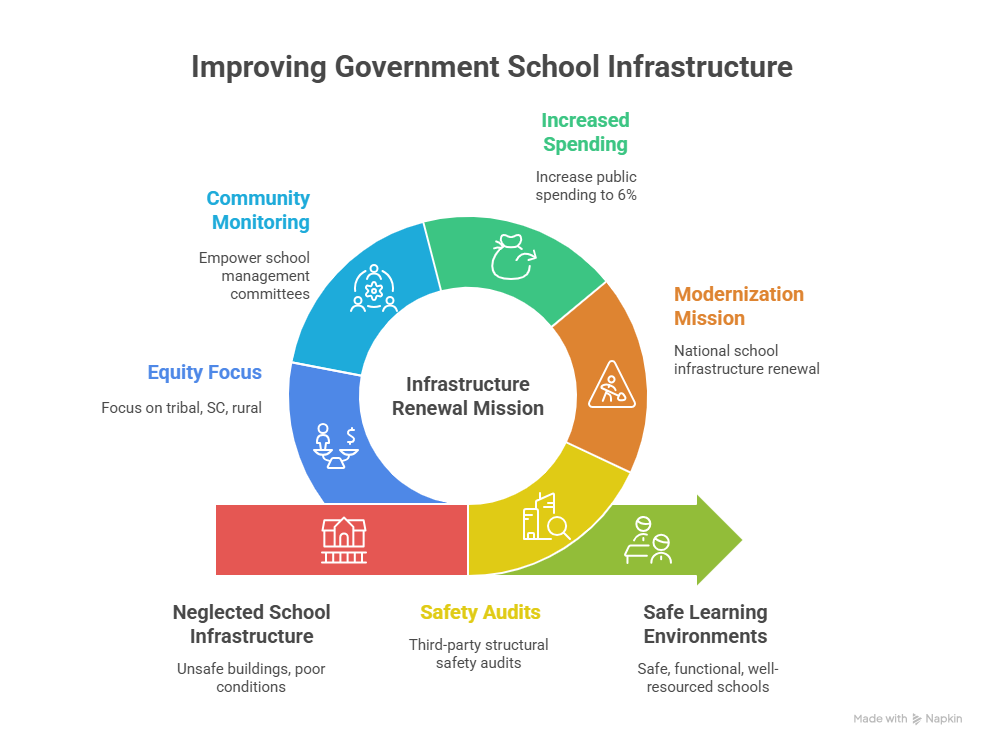
  • Urgent Safety Audit of All Schools; Conduct third-party structural safety audits for all government schools, prioritising older and rural structures.
  • Infrastructure Modernisation Mission: Launch a National School Infrastructure Renewal Mission on the lines of PMGSY or Jal Jeevan Mission, with dedicated funds, timelines, and transparent reporting.
  • Increased Education Spending: Actualise NEP’s vision by increasing public spending to 6% of GDP, with earmarked funds for infrastructure, teacher recruitment, and maintenance.
  • Community Monitoring and Decentralised Accountability: Empower School Management Committees (SMCs) to monitor infrastructure and escalate issues, with clear response timelines.
  • Equity in Education: Focus on tribal, SC, and rural populations, ensuring equity in access to quality and safe education — aligning with SDG 4 (Quality Education).


Introduction

Economic Implications

For Indian Exporters

  • These reforms reduce transaction costs and compliance hurdles
  • Encourage a more competitive and efficient export environment
  • Promote value addition in key sectors like leather

For Tamil Nadu

  • The reforms particularly benefit the state’s leather industry, a major contributor to employment and exports
  • Boost the marketability of GI-tagged E.I. leather, enhancing rural and traditional industries

For Trade Policy

  • These decisions indicate a shift from regulatory controls to policy facilitation

Reinforce the goals of Make in India, Atmanirbhar Bharat, and India’s ambition to become a leading export power

Recently, BVR Subrahmanyam, CEO of NITI Aayog, claimed that India has overtaken Japan to become the fourth-largest economy in the world, citing data from the International Monetary Fund (IMF). 

India’s rank as the world’s largest economy varies by measure—nominal GDP or purchasing power parity (PPP)—each with key implications for economic analysis.

Significance and Applications

Leave a Reply

Your email address will not be published. Required fields are marked *

Call Us Now !

Copyright © JICE ACADEMY FOR EXCELLENCE PRIVATE LIMITED