UPSC CURRENT AFFAIRS – 27th July 2025
Kargil to Pahalgam: India’s Security Doctrine Gets a Strategic Overhaul
Why in News?
- Following the April 2025 Pahalgam terror attack and the launch of Operation Sindoor, India is witnessing a strategic revamp in its national security thinking.
- Drawing lessons from the 1999 Kargil conflict, recent developments underscore the integration of institutional reforms with operational preparedness.
Kargil Legacy & Strategic Reforms
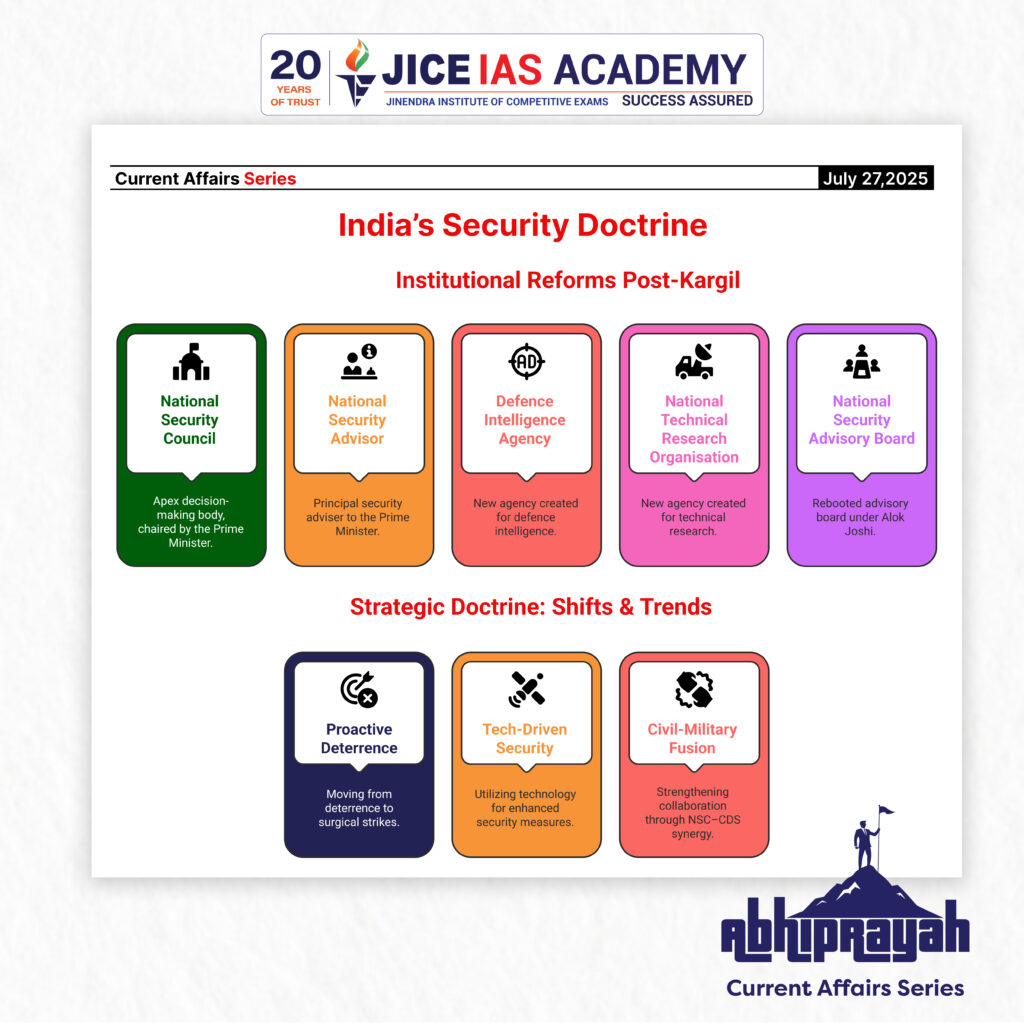
- The Kargil Review Committee (KRC) led to significant overhauls in India’s defence and intelligence structure.
- Key outcomes:
- Creation of the National Security Council (NSC) to act as the apex body for political, strategic, and intelligence coordination.
- Appointment of the National Security Advisor (NSA) as principal adviser to the Prime Minister on internal and external security matters.
- Establishment of specialized bodies like:
- Defence Intelligence Agency (DIA) for tri-service intelligence.
- National Technical Research Organisation (NTRO) for technical and cyber intelligence.
- National Security Advisory Board (NSAB) to bring in independent strategic expertise.
Pahalgam Attack & Operation Sindoor
- On April 22, 2025, a terrorist ambush in Pahalgam, Kashmir claimed 26 civilian lives, sparking nationwide outrage.
- India responded with Operation Sindoor (May 7–10), targeting terror launchpads across the LoC through precision strikes.
- The incident triggered:
- Enhanced border surveillance and rapid troop deployment.
- Activation of civil defence protocols and media misinformation counters.
- Revamp of strategic advisory and intelligence review mechanisms.
Role of NSAB and NSC in Strategy Formulation
- The National Security Council (NSC), chaired by the Prime Minister, is responsible for coordinating national security policy and decision-making across ministries.
- The NSAB, a part of the NSC structure, was reconstituted after Pahalgam under former RAW chief Alok Joshi.
- It advises the NSA and NSC on strategic planning, long-term threat assessments, and doctrinal development.
It has been tasked with helping draft a formal National Security Strategy (NSS).
Chief of Defence Staff (CDS) and Military Coordination
- The CDS, created in 2019, acts as:
- The principal military adviser to the government.
- Head of the Department of Military Affairs (DMA) under the Ministry of Defence.
- Coordinator for joint theatre commands, tri-service synergy, and resource optimization.
- Post-Pahalgam, the CDS plays a crucial role in ensuring joint readiness, cross-border response, and defensive posturing across both land and maritime borders.
Strategic Doctrine: Shifts & Evolution
- The current doctrine combines Kargil-era reform with modern counter-terror capabilities, focusing on:
- Proactive deterrence, including surgical strikes and cross-border precision responses.
- Real-time intelligence integration, UAV surveillance, and satellite-based monitoring.
- Strengthening civil-military coordination through institutional mechanisms like NSC and CDS.
Challenges Ahead
- The absence of a published National Security Strategy (NSS) results in ambiguity across agencies and services.
- Rising challenges from Pakistan’s proxy networks and China’s assertiveness along the northern borders require sustained dual-front preparedness.
- Ensuring civilian oversight, data privacy, and transparency in a heightened security environment remains critical.
Broader Implications
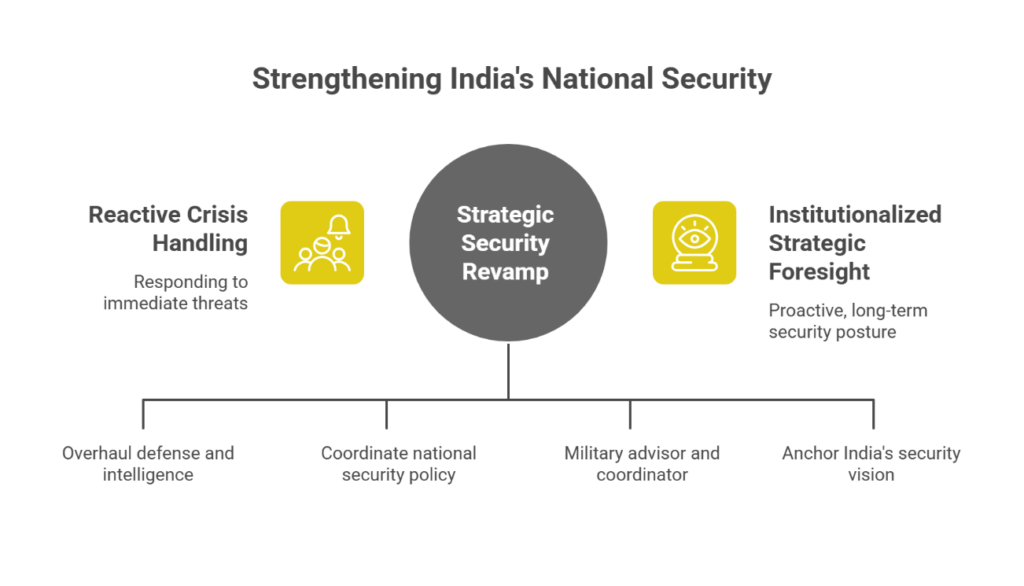
- From Kargil to Pahalgam, India’s shift reflects a transition from reactive crisis handling to institutionalized strategic foresight.
- Bodies like the NSC, NSAB, and CDS are central to building a long-term, technology-enabled, and globally aligned security posture.
- The push for an NSS would help anchor India’s security vision in the face of evolving regional and global threats.

3rd UN conference on landlocked countries
UPSC CURRENT AFFAIRS – 08th August 2025 Home / 3rd UN conference on landlocked countries Why in News? At the
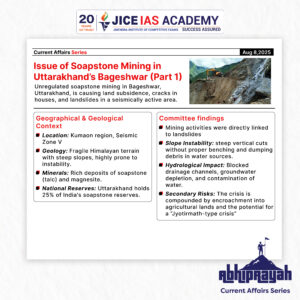
Issue of soapstone mining in Uttarakhand’s Bageshwar
UPSC CURRENT AFFAIRS – 08th August 2025 Home / Issue of soapstone mining in Uttarakhand’s Bageshwar Why in News? Unregulated

Groundwater Pollution in India – A Silent Public Health Emergency
UPSC CURRENT AFFAIRS – 08th August 2025 Home / Groundwater Pollution in India – A Silent Public Health Emergency Why
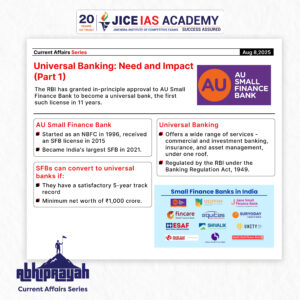
Universal banking- need and impact
UPSC CURRENT AFFAIRS – 08th August 2025 Home / Universal banking- need and impact Why in News? The Reserve Bank

India’s “Goldilocks” Economy: A Critical Appraisal
UPSC CURRENT AFFAIRS – 08th August 2025 Home / India’s “Goldilocks” Economy: A Critical Appraisal Why in News? The Finance
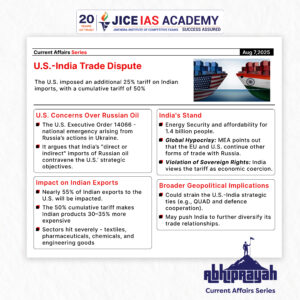
U.S.-India Trade Dispute: Trump’s 50% Tariffs and India’s Oil Imports from Russia
UPSC CURRENT AFFAIRS – 07th August 2025 Home / U.S.-India Trade Dispute: Trump’s 50% Tariffs and India’s Oil Imports from
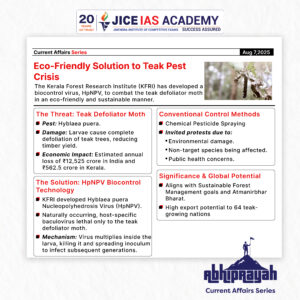
Eco-Friendly Solution to Teak Pest Crisis: KFRI’s HpNPV Technology
UPSC CURRENT AFFAIRS – 07th August 2025 Home / Eco-Friendly Solution to Teak Pest Crisis: KFRI’s HpNPV Technology Why in

New Species of Non-Venomous Rain Snake Discovered in Mizoram
UPSC CURRENT AFFAIRS – 07th August 2025 Home / New Species of Non-Venomous Rain Snake Discovered in Mizoram Why in

Introduction
Economic Implications
For Indian Exporters
- These reforms reduce transaction costs and compliance hurdles
- Encourage a more competitive and efficient export environment
- Promote value addition in key sectors like leather
For Tamil Nadu
- The reforms particularly benefit the state’s leather industry, a major contributor to employment and exports
- Boost the marketability of GI-tagged E.I. leather, enhancing rural and traditional industries
For Trade Policy
- These decisions indicate a shift from regulatory controls to policy facilitation
Reinforce the goals of Make in India, Atmanirbhar Bharat, and India’s ambition to become a leading export power
Recently, BVR Subrahmanyam, CEO of NITI Aayog, claimed that India has overtaken Japan to become the fourth-largest economy in the world, citing data from the International Monetary Fund (IMF).
India’s rank as the world’s largest economy varies by measure—nominal GDP or purchasing power parity (PPP)—each with key implications for economic analysis.