
UPSC CURRENT AFFAIRS – 27th July 2025
Landmark Partnership: NASA–ISRO NISAR Satellite to Revolutionize Earth Observation
Why in News?
- The NASA–ISRO Synthetic Aperture Radar (NISAR) mission is set to launch on July 30, 2025, from India using the GSLV-F16 rocket.
- This is a historic Earth observation mission jointly developed by India and the U.S., combining advanced radar imaging technology to monitor environmental and geological changes globally.
About ISRO and NASA
- ISRO (Indian Space Research Organisation) is India’s national space agency, established in 1969, known for its cost-effective and innovative missions like Chandrayaan, Mangalyaan, and Cartosat series. It is headquartered in Bengaluru and operates under the Department of Space.
- NASA (National Aeronautics and Space Administration) is the United States’ premier space agency, established in 1958, and based in Washington, D.C. It leads global efforts in space exploration, Earth sciences, and advanced aerospace technologies.
Key Features & Highlights
- NISAR is the world’s first dual-frequency radar satellite, using both L-band and S-band Synthetic Aperture Radar (SAR) to capture precise Earth imagery.
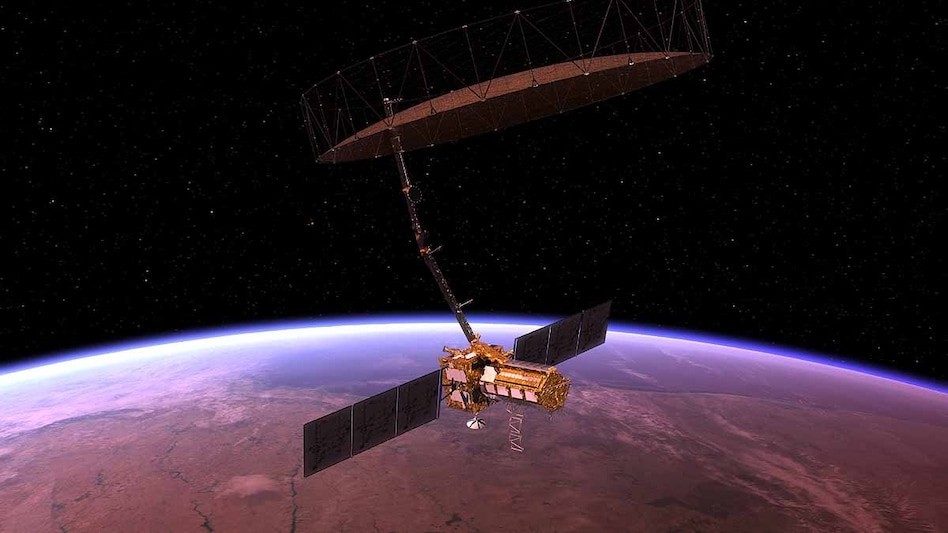
- The satellite weighs approximately 2,392 kg and features a 12-meter-wide deployable radar reflector.
- It will revisit and scan almost all land and ice surfaces every 12 days, ensuring near real-time monitoring.
- The mission is among the most expensive Earth-observation satellite projects, estimated at around $1.5 billion.
Core Concepts
- Synthetic Aperture Radar (SAR) is a radar system that creates high-resolution images of the Earth by simulating a large antenna using satellite motion.
- The dual-frequency advantage allows:
- L-band to penetrate vegetation and forest canopies—useful for biomass and geological surveys.
- S-band to detect surface-level changes like soil moisture, crop conditions, and landslides.
Scientific & Practical Importance
- Tracks natural hazards such as earthquakes, landslides, volcanic activity, and tsunamis with sub-centimeter accuracy.
- Enables climate monitoring, including glacial retreat, wetland shifts, and coastal erosion.
- Assists in agriculture and water management, observing soil moisture, crop growth, and groundwater fluctuations.
Mission Architecture & Roles
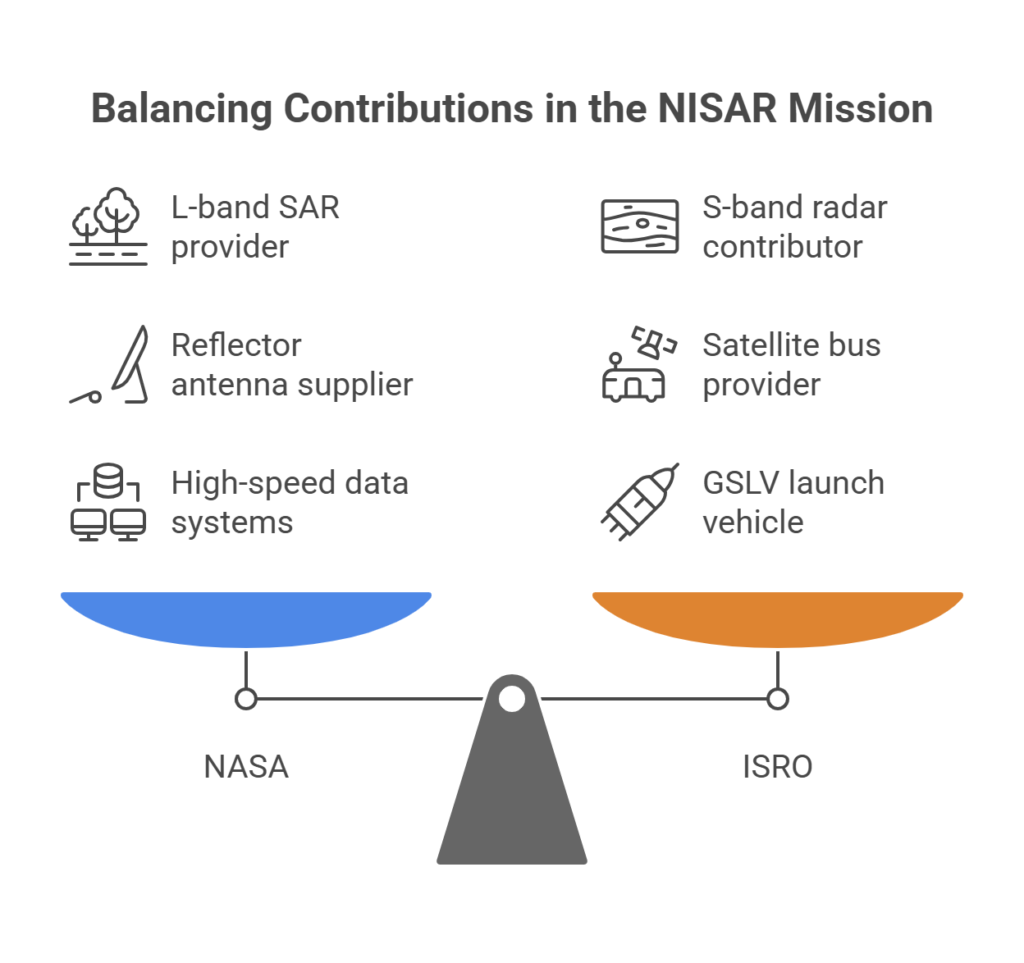
- NASA is providing the L-band SAR, deployable reflector antenna, high-speed data systems, and onboard data storage.
- ISRO is contributing the S-band radar, satellite bus (I-3K platform), GSLV launch vehicle, and mission operations from India.
- The satellite will be placed in a sun-synchronous polar orbit at approximately 747 km altitude, with a minimum operational life of 3–5 years.
Relevance
- NISAR will enhance the world’s capability to monitor Earth with weather-independent, day–night imaging.
- Supports early disaster detection, climate adaptation, and biodiversity protection.
- Represents a milestone in India–U.S. space cooperation, showcasing scientific diplomacy and shared environmental goals.

3rd UN conference on landlocked countries
UPSC CURRENT AFFAIRS – 08th August 2025 Home / 3rd UN conference on landlocked countries Why in News? At the

Issue of soapstone mining in Uttarakhand’s Bageshwar
UPSC CURRENT AFFAIRS – 08th August 2025 Home / Issue of soapstone mining in Uttarakhand’s Bageshwar Why in News? Unregulated

Groundwater Pollution in India – A Silent Public Health Emergency
UPSC CURRENT AFFAIRS – 08th August 2025 Home / Groundwater Pollution in India – A Silent Public Health Emergency Why

Universal banking- need and impact
UPSC CURRENT AFFAIRS – 08th August 2025 Home / Universal banking- need and impact Why in News? The Reserve Bank

India’s “Goldilocks” Economy: A Critical Appraisal
UPSC CURRENT AFFAIRS – 08th August 2025 Home / India’s “Goldilocks” Economy: A Critical Appraisal Why in News? The Finance

U.S.-India Trade Dispute: Trump’s 50% Tariffs and India’s Oil Imports from Russia
UPSC CURRENT AFFAIRS – 07th August 2025 Home / U.S.-India Trade Dispute: Trump’s 50% Tariffs and India’s Oil Imports from

Eco-Friendly Solution to Teak Pest Crisis: KFRI’s HpNPV Technology
UPSC CURRENT AFFAIRS – 07th August 2025 Home / Eco-Friendly Solution to Teak Pest Crisis: KFRI’s HpNPV Technology Why in

New Species of Non-Venomous Rain Snake Discovered in Mizoram
UPSC CURRENT AFFAIRS – 07th August 2025 Home / New Species of Non-Venomous Rain Snake Discovered in Mizoram Why in
Introduction
Economic Implications
For Indian Exporters
- These reforms reduce transaction costs and compliance hurdles
- Encourage a more competitive and efficient export environment
- Promote value addition in key sectors like leather
For Tamil Nadu
- The reforms particularly benefit the state’s leather industry, a major contributor to employment and exports
- Boost the marketability of GI-tagged E.I. leather, enhancing rural and traditional industries
For Trade Policy
- These decisions indicate a shift from regulatory controls to policy facilitation
Reinforce the goals of Make in India, Atmanirbhar Bharat, and India’s ambition to become a leading export power
Recently, BVR Subrahmanyam, CEO of NITI Aayog, claimed that India has overtaken Japan to become the fourth-largest economy in the world, citing data from the International Monetary Fund (IMF).
India’s rank as the world’s largest economy varies by measure—nominal GDP or purchasing power parity (PPP)—each with key implications for economic analysis.