UPSC CURRENT AFFAIRS – 5th June 2025

Home / UPSC / Current Affairs / India Adds Two Rajasthan Wetlands to Ramsar List

India Adds Two Rajasthan Wetlands to Ramsar List

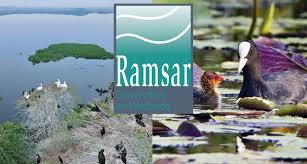
ramsar

Why in News?

  • India added Khichan and Menar wetlands to the Ramsar List, raising its total to 91 and reaffirming its commitment to wetland conservation under the 1971 Ramsar Convention.

Introduction

  • On the eve of World Environment Day, India marked a significant achievement in its environmental conservation efforts by adding two more wetlandsKhichan in Phalodi and Menar in Udaipur (both in Rajasthan)—to the Ramsar List of Wetlands of International Importance
  • With these inclusions, India’s Ramsar Site tally rises to 91, continuing its proactive role in global wetland conservation.

What Are Wetlands?

  • Wetlands are ecosystems where water saturates the land, either permanently or seasonally. They include marshes, swamps, bogs, estuaries, lakes, floodplains, mangroves, and even some man-made reservoirs. 
  • They are transition zones between terrestrial and aquatic systems and are among the most productive ecosystems on Earth.

Ecological Importance of Wetlands

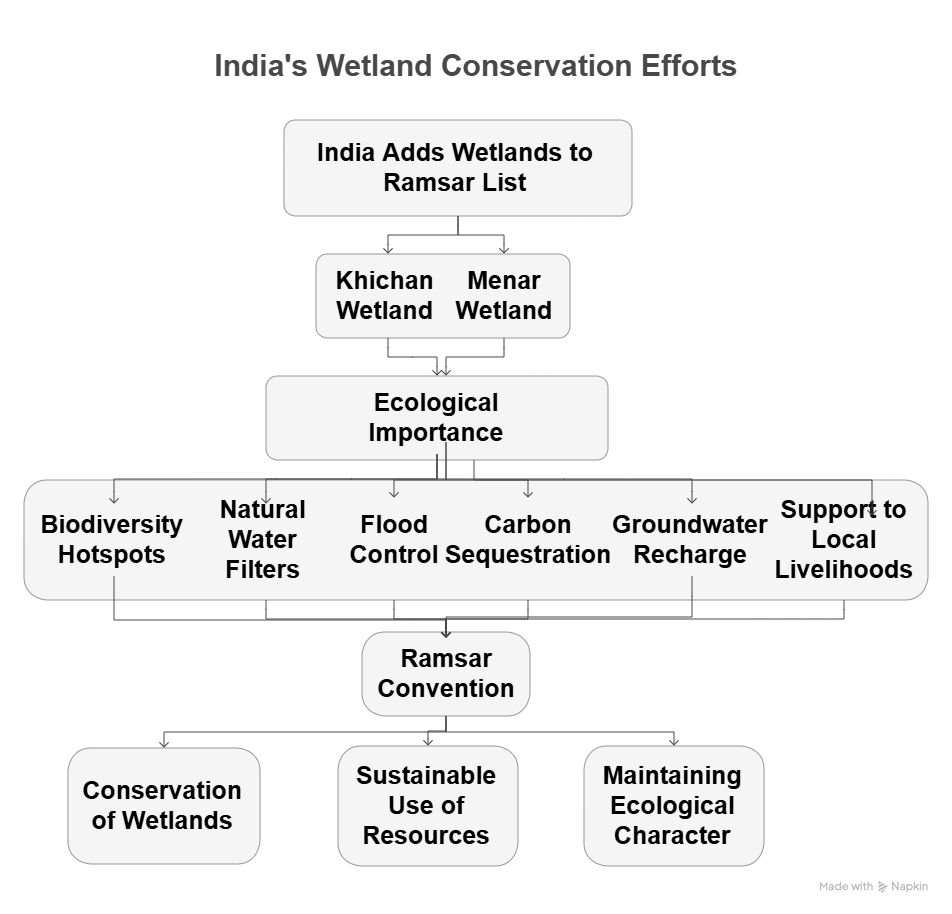
  • Biodiversity Hotspots: Wetlands provide habitat for a wide range of flora and fauna, including endangered species, migratory birds, fish, and amphibians.
  • Natural Water Filters: Wetlands help remove pollutants and purify surface and groundwater.
  • Flood Control: Acting as natural sponges, wetlands absorb excess rainwater, reducing the severity of floods.
  • Carbon Sequestration: Wetlands store large amounts of carbon in their biomass and soil, helping mitigate climate change.
  • Groundwater Recharge: Wetlands aid in replenishing aquifers.
  • Support to Local Livelihoods: Wetlands are vital for agriculture, fishing, and ecotourism in surrounding communities.
india wetland conservation efforts

What is a Ramsar Site?

A Ramsar Site is a wetland designated to be of international importance under the Ramsar Convention, an intergovernmental treaty adopted in 1971 in Ramsar, Iran. The convention came into force in 1975 and aims at:

  • Conservation of wetlands
  • Sustainable use of their resources
  • Maintaining ecological character through national and international cooperation

As of 2025, over 2,500 wetlands across the world have Ramsar status.

Ramsar Convention: Key Features

  • Contracting Parties: 172 countries (including India, since 1982)
  • Three Pillars of the Convention:
    1. Wise use of wetlands
    2. Designation and conservation of Ramsar Sites
    3. International cooperation on shared wetlands, species, and water systems

New Additions: Khichan and Menar Wetlands

  1. Khichan Wetland (Phalodi, Rajasthan)
    • Known for hosting large flocks of Demoiselle Cranes, a migratory bird species revered in local tradition.
    • Plays a vital role in local biodiversity and bird-based tourism.
  2. Menar Wetland (Udaipur, Rajasthan)
    • A significant bird-watching destination, attracting over 150 bird species.
    • A local community-driven success story in wetland restoration and ecotourism.

Significance of India’s Achievement

  • With 91 Ramsar Sites, India ranks among the top countries globally in wetland recognition.
  • Reflects India’s commitment to international environmental conventions.
  • Demonstrates community participation in ecological restoration and conservation.
  • Enhances the country’s eco-tourism potential and climate resilience.

Way Forward

  • Strengthen Monitoring: Regular ecological assessments of Ramsar Sites.
  • Promote Community Stewardship: Encourage local participation in managing wetlands.
  • Sustainable Tourism: Balance tourism with ecosystem conservation.
  • Address Threats: Curb encroachments, pollution, and unsustainable development.
  • Integrate Wetlands into Urban Planning: Especially important for flood-prone areas.

Economic Implications

For Indian Exporters

  • These reforms reduce transaction costs and compliance hurdles
  • Encourage a more competitive and efficient export environment
  • Promote value addition in key sectors like leather

For Tamil Nadu

  • The reforms particularly benefit the state’s leather industry, a major contributor to employment and exports
  • Boost the marketability of GI-tagged E.I. leather, enhancing rural and traditional industries

For Trade Policy

  • These decisions indicate a shift from regulatory controls to policy facilitation

Reinforce the goals of Make in India, Atmanirbhar Bharat, and India’s ambition to become a leading export power

Recently, BVR Subrahmanyam, CEO of NITI Aayog, claimed that India has overtaken Japan to become the fourth-largest economy in the world, citing data from the International Monetary Fund (IMF). 

India’s rank as the world’s largest economy varies by measure—nominal GDP or purchasing power parity (PPP)—each with key implications for economic analysis.

Significance and Applications

Leave a Reply

Your email address will not be published. Required fields are marked *

Call Us Now !

Copyright © JICE ACADEMY FOR EXCELLENCE PRIVATE LIMITED