
UPSC CURRENT AFFAIRS – 4th June 2025
No Contempt for Lawmaking: Supreme Court Clarifies on Legislature's Role
Why in News?
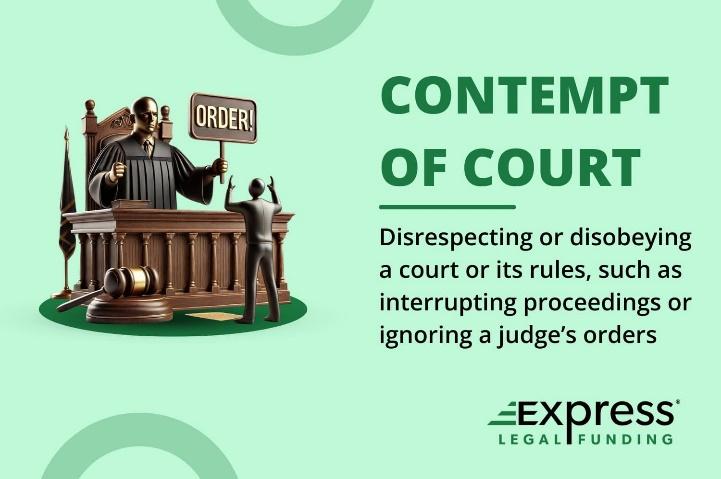
The Supreme Court of India clarified that no law made by Parliament or a State Legislature can be held as contempt of court.
Introduction
- Recently, the Supreme Court of India clarified that no law made by Parliament or a State legislature can be held as contempt of court merely for legislating, even if it appears to contradict a previous judicial direction.
- This observation was made while disposing of a 2012 contempt petition filed by sociologist Nandini Sundar and others regarding the Chhattisgarh government’s support to vigilante groups like Salwa Judum and the use of Special Police Officers (SPOs) in anti-Naxal operations.
Background of the Case
- In 2011, the Supreme Court had ordered the Chhattisgarh government to cease support to vigilante groups and disarm SPOs, citing serious concerns about human rights and unconstitutional actions.
- Despite this, the Chhattisgarh Auxiliary Armed Police Force Act, 2011 was passed to regularize SPOs and grant them legal status, effectively legitimizing the very force the court had disapproved of.
- The petitioners alleged contempt of court, arguing that the State government defied the 2011 judgment by passing this law.
Key Observations by the Supreme Court
Legislation Not Contempt
- “Any law made by Parliament or a State Legislature cannot be held as contempt of court simply by enacting it.”
- The court emphasized the legislature’s plenary powers under the Constitution to make or amend laws.
- Unless such a law is struck down as unconstitutional by a competent court, it holds the force of law.
Judicial Review Is the Correct Remedy
- If a citizen or petitioner feels that a law violates constitutional provisions, the appropriate remedy is to challenge the law on grounds of constitutional validity or legislative competence, not to allege contempt.
Doctrine of Separation of Powers
- The verdict reinforced the separation of powers, a basic feature of the Constitution:
- Legislature: empowered to make/amend laws.
- Judiciary: empowered to interpret laws and test their constitutionality.
- A legislature can enact laws to override the basis of a judicial decision, but this does not amount to contempt, unless it violates constitutional provisions.
Implications of the Judgment
Reinforces Legislative Supremacy within Constitutional Bounds
- Legislatures retain the freedom to pass laws, even in response to judicial decisions, as long as due process and constitutional limits are respected.
Defines Limits of Contempt Jurisdiction
- The judgment limits the scope of contempt proceedings against elected bodies, preventing judicial overreach into legislative functions.
Maintains Checks and Balances
- The ruling promotes institutional harmony and avoids confrontation between the judiciary and legislature by upholding constitutional boundaries of each organ.
Guidance on Legal Remedies
- Citizens are guided to use judicial review mechanisms to challenge the validity of laws, rather than relying on contempt petitions.
Key Constitutional Provisions Involved
Provision | Description |
Article 129 & 215 | Empower the SC and HCs respectively to punish for contempt of themselves. |
Article 245-246 | Deal with legislative powers of Union and States. |
Article 13 | Allows judicial review of laws inconsistent with Fundamental Rights. |
Article 315 | Deals with public service commissions, invoked by the court in emphasizing State responsibility. |
Doctrine of Separation of Powers | Implicit in the Constitution, ensuring mutual respect and balance between the organs of government. |
Conclusion
- The Supreme Court’s ruling in the Nandini Sundar contempt petition marks a significant reaffirmation of the doctrine of separation of powers.
- It clarifies that legislative acts cannot be treated as contempt of judicial directions, reinforcing institutional balance in a constitutional democracy.
- However, it also underscores that legislation is not immune from judicial scrutiny, and any aggrieved party must pursue constitutional remedies through judicial review rather than invoking contempt jurisdiction.

3rd UN conference on landlocked countries
UPSC CURRENT AFFAIRS – 08th August 2025 Home / 3rd UN conference on landlocked countries Why in News? At the

Issue of soapstone mining in Uttarakhand’s Bageshwar
UPSC CURRENT AFFAIRS – 08th August 2025 Home / Issue of soapstone mining in Uttarakhand’s Bageshwar Why in News? Unregulated

Groundwater Pollution in India – A Silent Public Health Emergency
UPSC CURRENT AFFAIRS – 08th August 2025 Home / Groundwater Pollution in India – A Silent Public Health Emergency Why

Universal banking- need and impact
UPSC CURRENT AFFAIRS – 08th August 2025 Home / Universal banking- need and impact Why in News? The Reserve Bank

India’s “Goldilocks” Economy: A Critical Appraisal
UPSC CURRENT AFFAIRS – 08th August 2025 Home / India’s “Goldilocks” Economy: A Critical Appraisal Why in News? The Finance

U.S.-India Trade Dispute: Trump’s 50% Tariffs and India’s Oil Imports from Russia
UPSC CURRENT AFFAIRS – 07th August 2025 Home / U.S.-India Trade Dispute: Trump’s 50% Tariffs and India’s Oil Imports from

Eco-Friendly Solution to Teak Pest Crisis: KFRI’s HpNPV Technology
UPSC CURRENT AFFAIRS – 07th August 2025 Home / Eco-Friendly Solution to Teak Pest Crisis: KFRI’s HpNPV Technology Why in

New Species of Non-Venomous Rain Snake Discovered in Mizoram
UPSC CURRENT AFFAIRS – 07th August 2025 Home / New Species of Non-Venomous Rain Snake Discovered in Mizoram Why in

Economic Implications
For Indian Exporters
- These reforms reduce transaction costs and compliance hurdles
- Encourage a more competitive and efficient export environment
- Promote value addition in key sectors like leather
For Tamil Nadu
- The reforms particularly benefit the state’s leather industry, a major contributor to employment and exports
- Boost the marketability of GI-tagged E.I. leather, enhancing rural and traditional industries
For Trade Policy
- These decisions indicate a shift from regulatory controls to policy facilitation
Reinforce the goals of Make in India, Atmanirbhar Bharat, and India’s ambition to become a leading export power
Recently, BVR Subrahmanyam, CEO of NITI Aayog, claimed that India has overtaken Japan to become the fourth-largest economy in the world, citing data from the International Monetary Fund (IMF).
India’s rank as the world’s largest economy varies by measure—nominal GDP or purchasing power parity (PPP)—each with key implications for economic analysis.