UPSC CURRENT AFFAIRS – 24th July 2025

Home / UPSC / Current Affairs / Paika Rebellion (1817)

Paika Rebellion (1817)

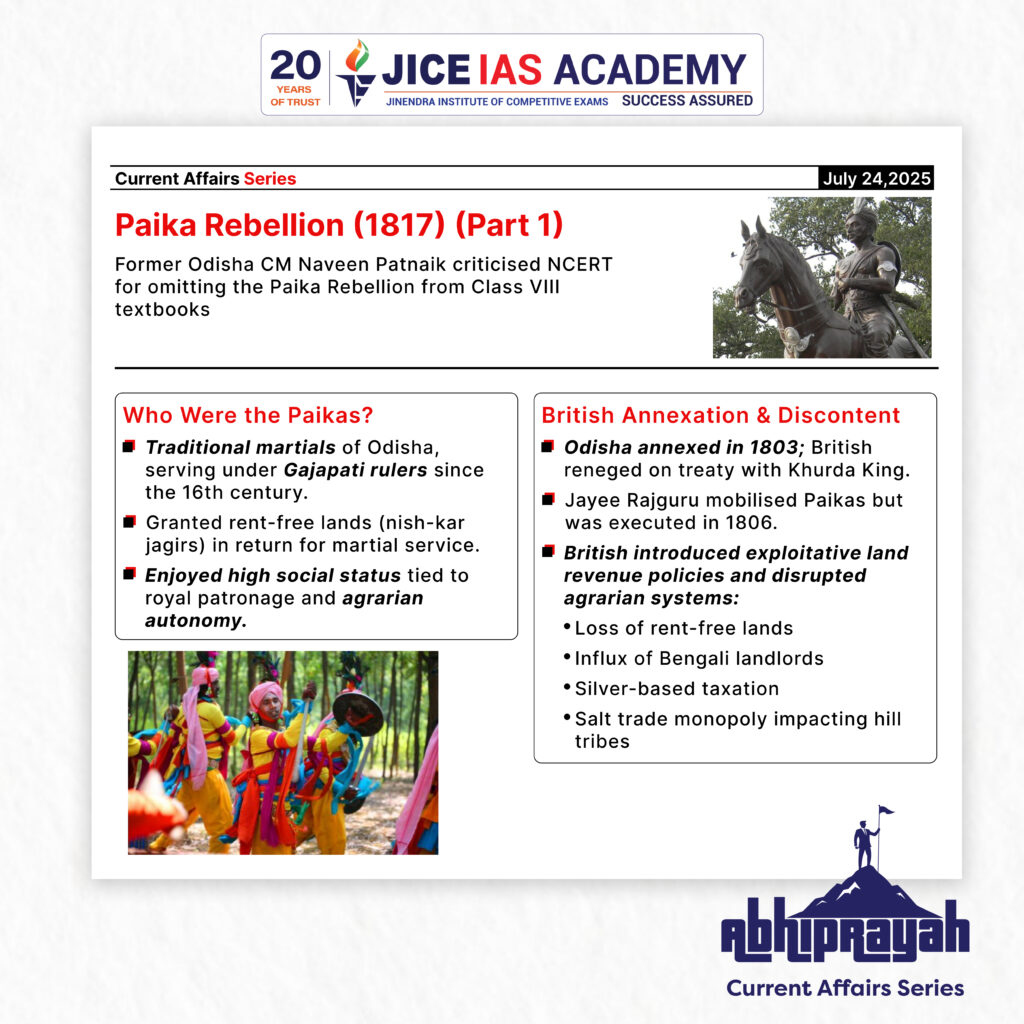
Why in News?

  • Former Odisha CM Naveen Patnaik recently termed the omission of the 1817 Paika Rebellion from National Council of Educational Research and Training (NCERT)’s new Class VIII history textbook a “huge dishonour” to the brave Paikas. NCERT clarified the event will feature in the second volume, due for release in September–October.
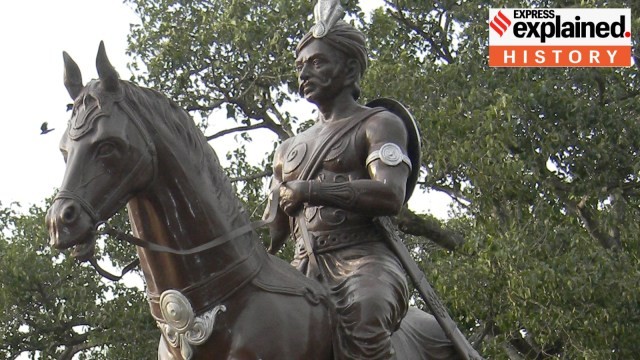
A statue of Bakshi Jagabandhur Bidyadhar Mahapatra

Introduction

  • The Paika Rebellion of 1817, also known as the Paika Bidroha, stands as a significant yet often overlooked chapter in India’s anti-colonial resistance.
  • Recent controversy over its omission from NCERT’s Class VIII history textbook has revived debate on the rebellion’s legacy and its role in shaping Odia identity and nationalist discourse.

Who Were the Paikas?

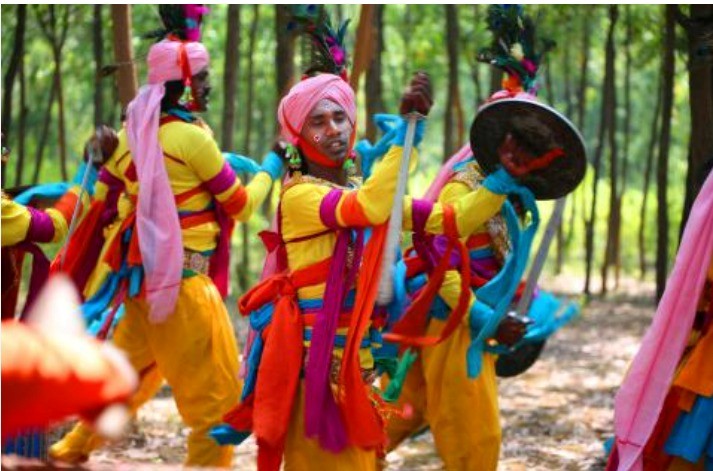
  • The Paikas (literally “foot soldiers”) were a class of traditional militia in Odisha, originally recruited by the Gajapati rulers since the 16th century.
  • In exchange for their martial services, they were granted hereditary rent-free lands (nish-kar jagirs), which they cultivated during peacetime.
  • Their social standing and livelihood were intrinsically tied to royal patronage and local political autonomy.

British Annexation and Rising Discontent

The British East India Company annexed Odisha in 1803 with minimal resistance.

  • An agreement was reached with Mukunda Deva II, king of Khurda, for safe passage through his territory in return for Rs 1 lakh and control over four parganas.
  • When the British reneged on the deal, Jayee Rajguru, the king’s advisor, mobilized Paikas to pressure the Company but was captured and executed in 1806.

Following this, the British dethroned the king, seized royal lands, demolished the Barunei fort, and imposed new land revenue settlements, which caused severe economic hardship.

The Paikas lost their privileged landholdings and were further alienated by:

  • Transfer of land to Bengali absentee landlords
  • Introduction of silver-based revenue payments
  • Monopolisation of the salt trade, affecting hill tribes

These changes disrupted traditional agrarian relations and sparked resentment among both Paika militia and tribal communities.

The Rebellion of 1817

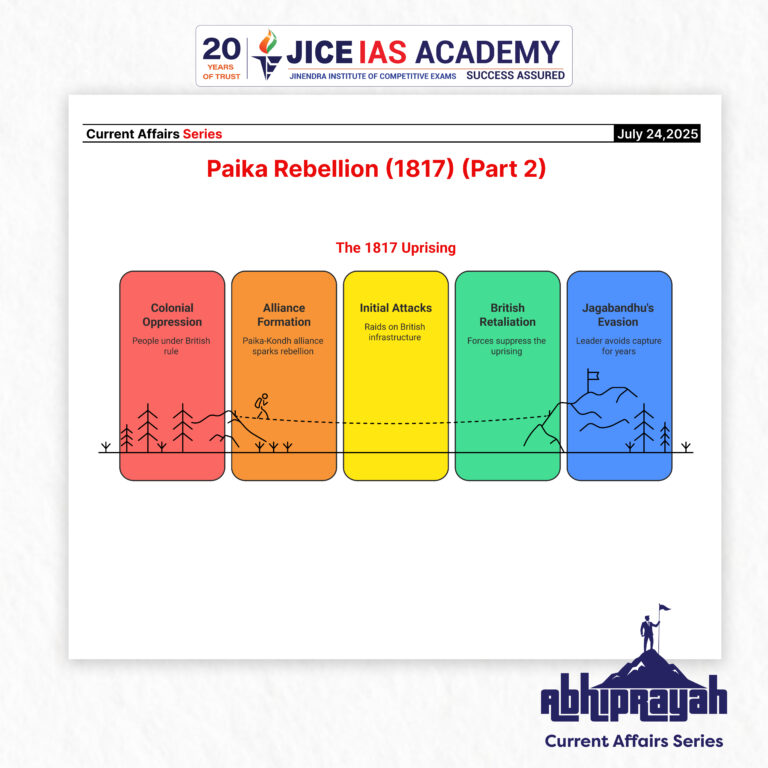
The full-scale rebellion erupted in March 1817, when around 400 Kondh tribals from Ghumusar, equipped with traditional weapons, joined forces with Paika troops led by Bakshi Jagabandhu Bidyadhar Mahapatra Bhramarabar Ray, the former commander-in-chief of Khurda.

Key events of the uprising included:

  • Attack on Banpur police station
  • Burning of government buildings and looting of treasuries
  • Armed engagements across Khurda and surrounding regions
  • Killing of several British officials

Though initially successful, the rebellion was gradually suppressed. Jagabandhu evaded capture until 1825, when he surrendered under negotiated terms.

Legacy and Political Relevance

  • The Paika Rebellion is remembered as a symbol of Odia pride and resistance. In 2017, the Odisha government, under Naveen Patnaik, demanded that the rebellion be recognised as India’s first war of independence, predating the 1857 Sepoy Mutiny by four decades.
  • While the Centre did not grant this status, it acknowledged the rebellion as “one of the earliest popular uprisings”.

Efforts to memorialise the rebellion include:

  • 2017: PM Modi felicitated descendants of Paika warriors
  • 2019: President Kovind laid the foundation stone for the Paika Memorial at Barunei
  • 2024: Odisha CM Mohan Charan Majhi announced plans to expedite the establishment of the Paika Academy and Memorial

The recent textbook controversy—where the rebellion was initially missing from the revised NCERT Class VIII history textbook—has once again brought the issue to the fore.

  • NCERT clarified that the second volume, expected in September–October 2025, will include regional resistances like the Paika Rebellion.

Conclusion

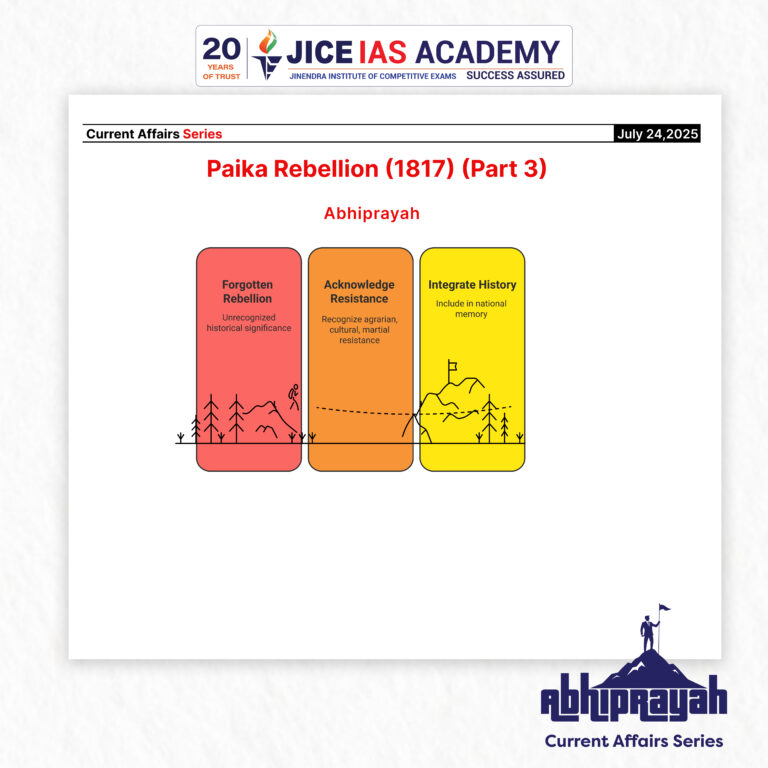
  • The Paika Bidroha reflects not just a regional rebellion but also the broader agrarian, cultural, and political resistance to early British rule in India.
  • Its inclusion in the national historical narrative is essential to recognising the diversity of India’s freedom struggle.

Introduction

Economic Implications

For Indian Exporters

  • These reforms reduce transaction costs and compliance hurdles
  • Encourage a more competitive and efficient export environment
  • Promote value addition in key sectors like leather

For Tamil Nadu

  • The reforms particularly benefit the state’s leather industry, a major contributor to employment and exports
  • Boost the marketability of GI-tagged E.I. leather, enhancing rural and traditional industries

For Trade Policy

  • These decisions indicate a shift from regulatory controls to policy facilitation

Reinforce the goals of Make in India, Atmanirbhar Bharat, and India’s ambition to become a leading export power

Recently, BVR Subrahmanyam, CEO of NITI Aayog, claimed that India has overtaken Japan to become the fourth-largest economy in the world, citing data from the International Monetary Fund (IMF). 

India’s rank as the world’s largest economy varies by measure—nominal GDP or purchasing power parity (PPP)—each with key implications for economic analysis.

Significance and Applications

Leave a Reply

Your email address will not be published. Required fields are marked *

Call Us Now !

Copyright © JICE ACADEMY FOR EXCELLENCE PRIVATE LIMITED