UPSC CURRENT AFFAIRS – 18th May 2025
Revamped Multi-Agency Centre (MAC): Strengthening India’s Counter-Terror Architecture
Why in News?
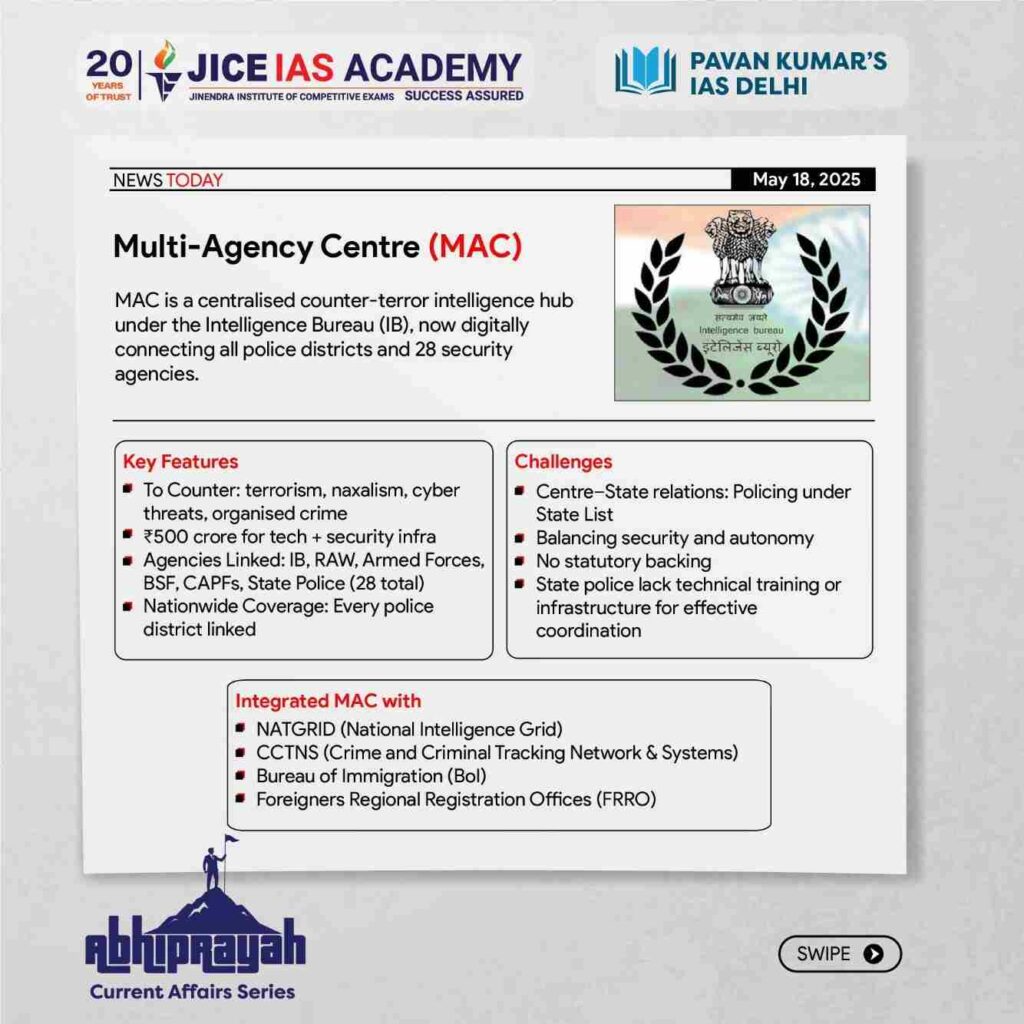
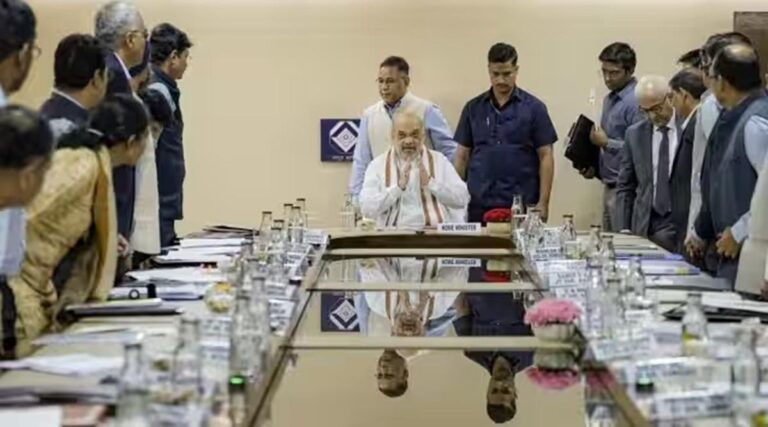
On May 16, 2025, Union Home Minister Amit Shah inaugurated a revamped ₹500 crore Multi-Agency Centre (MAC)—a centralized counter-terror intelligence grid under the Intelligence Bureau (IB). It now connects all police districts nationwide and brings together 28 agencies including RAW, armed forces, CAPFs, and State police for real-time intelligence sharing.
Key Highlights
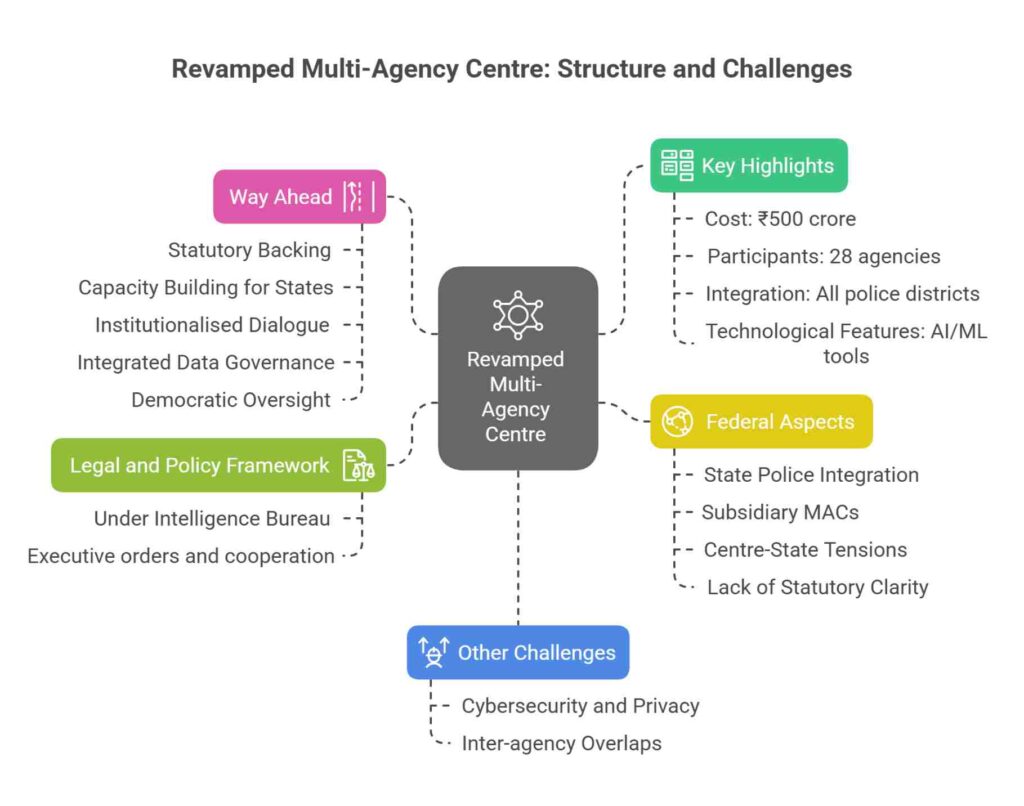
- Cost: ₹500 crore allocated for infrastructure, software, and secure communication.
- Participants: 28 agencies including IB, RAW, armed forces, state police, CAPFs, BSF.
- Integration: All police districts across India now connected through MAC.
- Technological Features: Embedded AI/ML tools, GIS services, and predictive analytics.
- Purpose: Counter terrorism, organised crime, cyber threats, and naxalism through seamless inter-agency collaboration.
Background
- Post-Kargil Reforms: MAC was conceptualised in 2001 after recommendations of the Kargil Review Committee and Group of Ministers on National Security.
- Post-26/11 Enhancements: Following the 2008 Mumbai attacks, Subsidiary MACs (SMACs) were established in states to decentralize intelligence collection.
- Operation Sindoor (2025) and recent anti-Naxal operations have showcased the need for real-time, integrated threat response.
Legal and Policy Framework
MAC under Intelligence Bureau (IB), which functions under the Ministry of Home Affairs.
- While not backed by a dedicated statute, MAC functions through executive orders and inter-agency cooperation.
Kargil Review Committee and GoM (2001):
- Recommended centralised intelligence coordination and a multi-tier structure for counter-terrorism.
FRBM Act and Budget Allocation:
- ₹500 crore expenditure on MAC fits within national security allocations under capital expenditure plans.
Federal Aspects in Internal Security
Positive Developments:
- State Police Integration: All police districts now directly linked to MAC—a major milestone in vertical federal coordination.
- Subsidiary MACs (SMACs): Present in state capitals; act as nodes for sharing intelligence from districts to the national level.
Federal Challenges:
- Centre-State Tensions:
- Policing and public order fall under the State List (Seventh Schedule).
- States may view central data-sharing mandates as encroachments on their autonomy.
- Lack of Statutory Clarity:
- MAC operates without a specific legislative framework, raising concerns about transparency and accountability in Centre-State coordination.
- Resource and Capacity Gaps:
- Many state police forces lack the technical training or infrastructure to fully leverage advanced tools like AI/GIS.
Other Challenges
- Cybersecurity and Privacy:
- Centralised databases with sensitive information are high-value cyber targets.
- Inter-agency Jurisdictional Overlaps:
- Lack of clarity in roles may delay operational response during crises.
Way Ahead
- Statutory Backing:
- Consider passing a comprehensive National Counter-Terrorism Coordination Act to define MAC’s role and federal safeguards.
- Capacity Building for States:
- Upgrade state police infrastructure and intelligence analysis capabilities.
- Institutionalised Centre-State Dialogue:
- Regular security coordination meetings to foster cooperative federalism.
- Integrated Data Governance:
- Merge MAC with NATGRID, CCTNS, and immigration databases, while ensuring data protection frameworks.
- Democratic Oversight:
- Introduce oversight through a parliamentary standing committee on intelligence or independent review board.
Conclusion
The upgraded Multi-Agency Centre (MAC) represents a significant leap in India’s counter-terrorism framework by leveraging technology, integration, and inter-agency coordination. However, to truly strengthen national security in a federal democracy, it is crucial to balance central control with state autonomy, enact legal safeguards, and embed the system in a framework of cooperative federalism and institutional accountability.

3rd UN conference on landlocked countries
UPSC CURRENT AFFAIRS – 08th August 2025 Home / 3rd UN conference on landlocked countries Why in News? At the

Issue of soapstone mining in Uttarakhand’s Bageshwar
UPSC CURRENT AFFAIRS – 08th August 2025 Home / Issue of soapstone mining in Uttarakhand’s Bageshwar Why in News? Unregulated
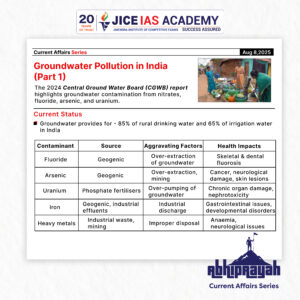
Groundwater Pollution in India – A Silent Public Health Emergency
UPSC CURRENT AFFAIRS – 08th August 2025 Home / Groundwater Pollution in India – A Silent Public Health Emergency Why

Universal banking- need and impact
UPSC CURRENT AFFAIRS – 08th August 2025 Home / Universal banking- need and impact Why in News? The Reserve Bank

India’s “Goldilocks” Economy: A Critical Appraisal
UPSC CURRENT AFFAIRS – 08th August 2025 Home / India’s “Goldilocks” Economy: A Critical Appraisal Why in News? The Finance

U.S.-India Trade Dispute: Trump’s 50% Tariffs and India’s Oil Imports from Russia
UPSC CURRENT AFFAIRS – 07th August 2025 Home / U.S.-India Trade Dispute: Trump’s 50% Tariffs and India’s Oil Imports from
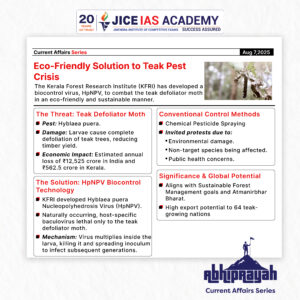
Eco-Friendly Solution to Teak Pest Crisis: KFRI’s HpNPV Technology
UPSC CURRENT AFFAIRS – 07th August 2025 Home / Eco-Friendly Solution to Teak Pest Crisis: KFRI’s HpNPV Technology Why in

New Species of Non-Venomous Rain Snake Discovered in Mizoram
UPSC CURRENT AFFAIRS – 07th August 2025 Home / New Species of Non-Venomous Rain Snake Discovered in Mizoram Why in