UPSC CURRENT AFFAIRS – 04th July 2025
Russia’s recognition of the Taliban government in Afghanistan
Why in News?
Russia became the first country to officially recognize the Taliban-led government in Afghanistan.
Geopolitical Relevance
1. Shift in Regional Power Dynamics
- Russia’s move effectively ends the diplomatic isolation of the Taliban that has persisted since they seized control of Afghanistan in August 2021.
- This step may trigger a change in the regional balance of power, especially in South and Central Asia, where several countries have maintained unofficial relations with the Taliban.
2. Expanding Strategic Influence
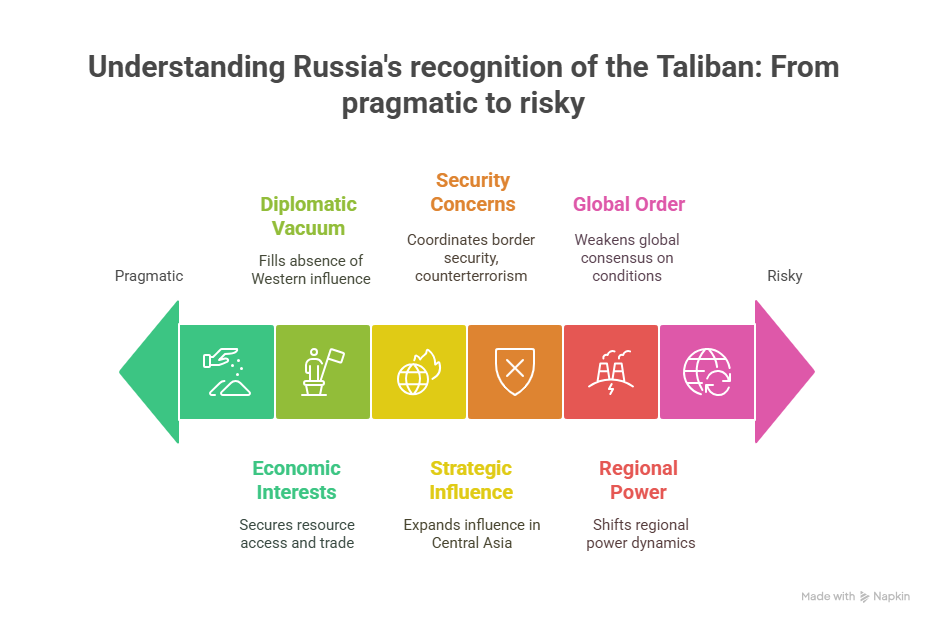
- By recognizing the Taliban, Russia seeks to expand its strategic influence in Central Asia. Afghanistan serves as a geographical pivot between Central and South Asia, and Russia is keen to play a greater role in shaping political outcomes in this region, particularly in the absence of Western influence following the US and NATO withdrawal.
3. Addressing Security Concerns
- Russia has longstanding concerns about instability in Afghanistan spilling over into Central Asia and the spread of extremist groups like ISIS-K.
- Engagement with the Taliban could allow Russia to coordinate efforts on border security and counterterrorism with the regime.
Reasons for Recognition
1. Legal Clearance through Decriminalization
- Russia removed the Taliban from its official list of banned terrorist organizations.
- This legal step cleared the path for formal diplomatic recognition, enabling Russia to accept the credentials of the Taliban’s newly appointed ambassador.
2. Pragmatic Diplomacy
- Despite ideological differences, Russia has maintained an open line of communication with the Taliban through various multilateral forums like the Moscow Format.
- Formal recognition allows Russia to pursue a pragmatic, interest-based foreign policy.
3. Filling the Diplomatic Vacuum
- The vacuum created by the absence of Western diplomatic presence in Afghanistan has left space for regional powers to step in.
- Russia’s recognition positions it as a key stakeholder in shaping Afghanistan’s future.
4. Economic and Resource Interests
- Afghanistan holds significant untapped mineral reserves, including rare earth elements and lithium.
- Early recognition may grant Russia preferential access to natural resources and enable participation in infrastructure and trade projects.
Significance
For Afghanistan
- The recognition by Russia lends formal legitimacy to the Taliban regime and could set a precedent for other countries to follow.
- It may open doors to foreign aid, investments, and diplomatic normalization. It also strengthens the Taliban’s domestic claim to authority.
For Russia
- Russia emerges as a regional power willing to take independent diplomatic initiatives, even if they contradict the dominant international consensus.
- This step reinforces its image as a country willing to challenge Western norms and institutions.
For India
- Russia’s recognition presents a diplomatic challenge to India. India has not officially recognized the Taliban and has concerns about Pakistan’s growing influence in Kabul.
- India may need to recalibrate its Afghanistan policy to secure its strategic and security interests, including trade routes like Chabahar Port and regional connectivity through the International North-South Transport Corridor (INSTC).
For the Global Order
- Russia’s recognition weakens the global consensus that conditionalities—such as human rights protections, inclusive governance, and women’s education—must be met before engaging with the Taliban.
- This move could encourage other regional powers like China, Iran, Turkey, and some Gulf countries to extend formal recognition as well, thereby undermining efforts led by the United Nations and Western countries to isolate the Taliban diplomatically.
Legal and Political Challenges
- UN Sanctions: Many Taliban leaders remain under United Nations sanctions, which complicates international engagement.
- Human Rights Record: The Taliban’s human rights record, especially concerning women and minorities, continues to be a major obstacle to broader global recognition.
- Precedent Setting: Recognition of regimes that come to power without democratic legitimacy may set a dangerous precedent, potentially encouraging similar takeovers elsewhere.

3rd UN conference on landlocked countries
UPSC CURRENT AFFAIRS – 08th August 2025 Home / 3rd UN conference on landlocked countries Why in News? At the
Issue of soapstone mining in Uttarakhand’s Bageshwar
UPSC CURRENT AFFAIRS – 08th August 2025 Home / Issue of soapstone mining in Uttarakhand’s Bageshwar Why in News? Unregulated
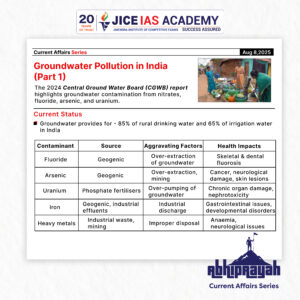
Groundwater Pollution in India – A Silent Public Health Emergency
UPSC CURRENT AFFAIRS – 08th August 2025 Home / Groundwater Pollution in India – A Silent Public Health Emergency Why
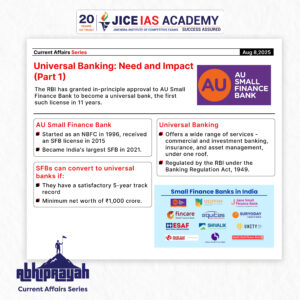
Universal banking- need and impact
UPSC CURRENT AFFAIRS – 08th August 2025 Home / Universal banking- need and impact Why in News? The Reserve Bank
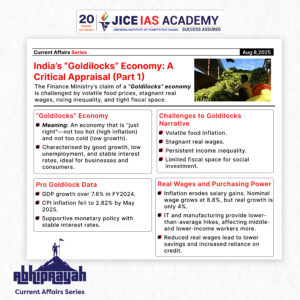
India’s “Goldilocks” Economy: A Critical Appraisal
UPSC CURRENT AFFAIRS – 08th August 2025 Home / India’s “Goldilocks” Economy: A Critical Appraisal Why in News? The Finance
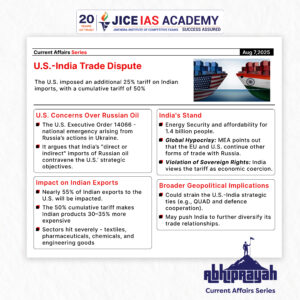
U.S.-India Trade Dispute: Trump’s 50% Tariffs and India’s Oil Imports from Russia
UPSC CURRENT AFFAIRS – 07th August 2025 Home / U.S.-India Trade Dispute: Trump’s 50% Tariffs and India’s Oil Imports from
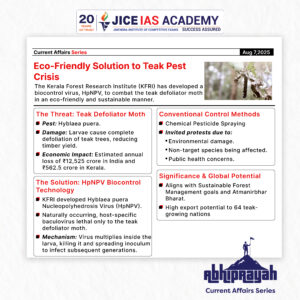
Eco-Friendly Solution to Teak Pest Crisis: KFRI’s HpNPV Technology
UPSC CURRENT AFFAIRS – 07th August 2025 Home / Eco-Friendly Solution to Teak Pest Crisis: KFRI’s HpNPV Technology Why in

New Species of Non-Venomous Rain Snake Discovered in Mizoram
UPSC CURRENT AFFAIRS – 07th August 2025 Home / New Species of Non-Venomous Rain Snake Discovered in Mizoram Why in

Economic Implications
For Indian Exporters
- These reforms reduce transaction costs and compliance hurdles
- Encourage a more competitive and efficient export environment
- Promote value addition in key sectors like leather
For Tamil Nadu
- The reforms particularly benefit the state’s leather industry, a major contributor to employment and exports
- Boost the marketability of GI-tagged E.I. leather, enhancing rural and traditional industries
For Trade Policy
- These decisions indicate a shift from regulatory controls to policy facilitation
Reinforce the goals of Make in India, Atmanirbhar Bharat, and India’s ambition to become a leading export power
Recently, BVR Subrahmanyam, CEO of NITI Aayog, claimed that India has overtaken Japan to become the fourth-largest economy in the world, citing data from the International Monetary Fund (IMF).
India’s rank as the world’s largest economy varies by measure—nominal GDP or purchasing power parity (PPP)—each with key implications for economic analysis.