UPSC CURRENT AFFAIRS – 09th April 2025
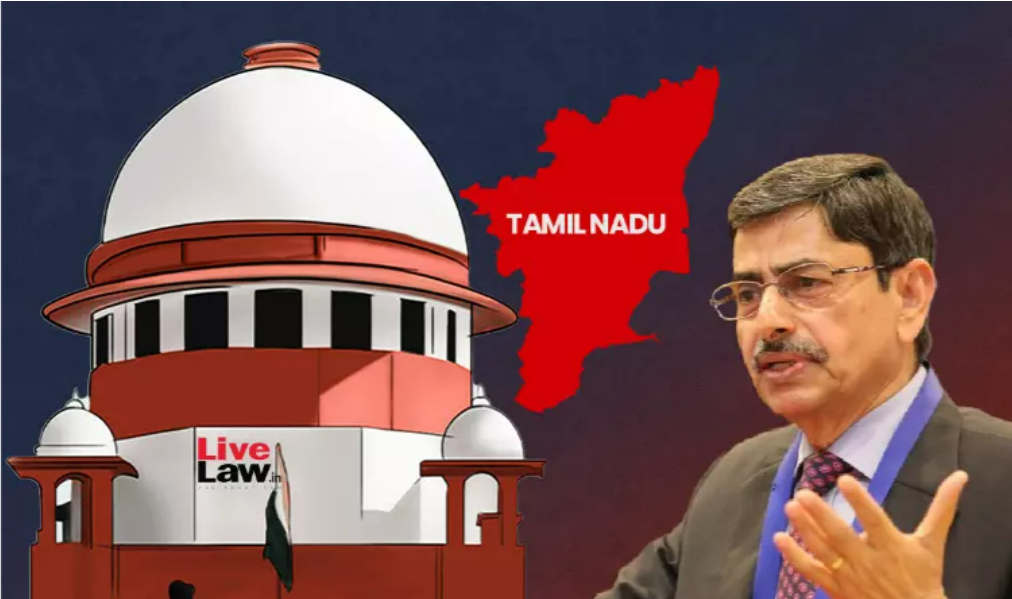
SC ruling on Tamil Nadu Governor
Why in News?
The Supreme Court invoked Article 142 to grant assent to 10 Tamil Nadu Bills, curbing the Governor’s delay and reinforcing limits on gubernatorial discretion.
Introduction
- In a historic judgment, the Supreme Court of India exercised its exceptional powers under Article 142 to effectively give assent to ten Bills awaiting action by the Tamil Nadu Governor, R. N. Ravi.
- This exceptional exercise of judicial power reflects the Court’s growing role in breaking constitutional logjams between the Executive and the Governor, and establishes important precedents in Centre-State relations and the interpretation of the Governor’s discretionary powers.
Background
- Presidentially appointed Governors are the nominal heads of states according to Article 153 of the Constitution.
- Though they are subject to the aid and advice of the Council of Ministers (Article 163), cases of withholding or delaying assent by Governors to Bills passed by State Legislatures have resulted in political and constitutional crises in recent times.
- The Tamil Nadu case concerned ten Bills enacted by the State Legislature but left pending without assent by the Governor for long durations.
- The Supreme Court, annoyed, assumed the constitutional role of the Governor and ordered that the Bills be taken to have received assent.
- Originally, 12 Bills of Tamil Nadu, mostly dealing with appointments of Vice-Chancellors in state-run universities, were sent by the State Legislature for consent to the Governor between January 2020 and April 2023. The Governor sat on them indefinitely.
- When the Tamil Nadu government approached the apex court in November 2023 against the Governor’s perceived inaction, the latter had quickly referred two of the Bills to the President and proceeded to withhold consent on the remaining 10.
Bills withheld by T.N. Governor, now assented by Supreme Court
- Tamil Nadu Fisheries University (Amendment) Bill, 2020
- Tamil Nadu Veterinary and Animal Sciences University (Amendment) Bill, 2020
- The Tamil Nadu Universities Laws (Amendment) Bill 2022
- The Tamil Nadu Siddha Medical University Bill, 2022
- The Tamil Nadu Dr. M.G.R. Medical University, Chennai (Amendment) Bill, 2022
- The Tamil Nadu Agricultural University (Amendment) Bill, 2022
- The Tamil University (Second Amendment) Bill, 2022
- The Tamil Nadu Universities Laws (Second Amendment) Bill, 2022
- The Tamil Nadu Siddha Medical University Bill, 2022
- The Tamil Nadu Fisheries University (Amendment) Bill, 2023
- The Tamil Nadu Veterinary and Animal Sciences University (Amendment) Bill, 2023
Significance of the Judgment
- Invocation of Article 142
- Article 142 vests the Supreme Court with the authority to issue any order that will enable it to do “complete justice” in any case.
- The Court does not resort to this provision against other constitutional bodies very often. Its application in this case highlights the seriousness of the circumstances.
- Setting a Time Limit for Governor’s Assent
- The Court, for the first time, set a one-month time limit for Governors to respond to Bills received from the State Legislature.
- This evolution captures judicial reluctance to impose similar timelines on Speakers in disqualification proceedings under the Tenth Schedule, but reflects a bold move in exercising constitutional accountability.
- Impact on Other States
- The ruling will likely impact similar cases, such as an ongoing challenge pertaining to former Governor of Kerala Arif Mohammad Khan’s action to deny assent to several Bills.
Evolution of Judicial Approach on Governor's Powers
- Shamsher Singh v. State of Punjab (1974)
- Held that the Governor has to act on the aid and advice of the Council of Ministers, with very little discretionary power.
- Rameshwar Prasad v. Union of India (2006)
- Held that personal views of the Governor cannot legitimize imposition of President’s Rule.
- Mercy Powers under Article 161
- In Epuru Sudhakar v. Government of A.P. (2006), the Court held that the pardoning powers of the Governor are subject to limited judicial review.
- Nabam Rebia v. Deputy Speaker (2016)
- Clarified that the summoning of the Assembly is not merely in the Governor’s discretion and has to be done on the advice of Cabinet.
Contemporary Constitutional Concerns
- Refusal to Summon Assembly Sessions
- In 2023, the Punjab Government approached the Supreme Court against the Governor’s refusal to summon the Budget Session, representing increasing Executive-Governor tensions.
- Granting Sanction for Prosecution
- The Karnataka case concerning Governor Thawar Chand Gehlot’s approval to prosecute CM Siddaramaiah raises constitutional issues regarding the Governor’s independent discretion.
- Formation of Government
- In the 2017 Karnataka case, Governor Vajubhai Vala’s invitation to the single-largest party (BJP) instead of a post-poll alliance resulted in a legal challenge. Although the Court directed a floor test, the bigger constitutional issues are still pending.
Conclusion
- The recent Supreme Court judgment is a landmark moment in Indian constitutional law.
- It not only remaps the boundaries of the Governor’s function in a parliamentary system but also asserts federal principles by affirming the primacy of elected state legislatures.
- With instances of constitutional confrontations between Raj Bhavans and elected state governments increasing, this judgment comes as a timely reminder of the boundaries of discretion and the necessity of accountability in a democratic

3rd UN conference on landlocked countries
UPSC CURRENT AFFAIRS – 08th August 2025 Home / 3rd UN conference on landlocked countries Why in News? At the
Issue of soapstone mining in Uttarakhand’s Bageshwar
UPSC CURRENT AFFAIRS – 08th August 2025 Home / Issue of soapstone mining in Uttarakhand’s Bageshwar Why in News? Unregulated
Groundwater Pollution in India – A Silent Public Health Emergency
UPSC CURRENT AFFAIRS – 08th August 2025 Home / Groundwater Pollution in India – A Silent Public Health Emergency Why
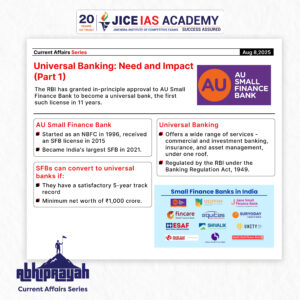
Universal banking- need and impact
UPSC CURRENT AFFAIRS – 08th August 2025 Home / Universal banking- need and impact Why in News? The Reserve Bank
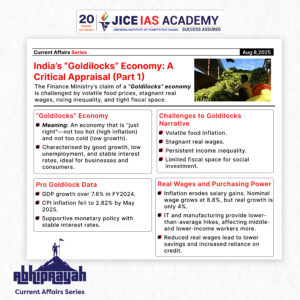
India’s “Goldilocks” Economy: A Critical Appraisal
UPSC CURRENT AFFAIRS – 08th August 2025 Home / India’s “Goldilocks” Economy: A Critical Appraisal Why in News? The Finance

U.S.-India Trade Dispute: Trump’s 50% Tariffs and India’s Oil Imports from Russia
UPSC CURRENT AFFAIRS – 07th August 2025 Home / U.S.-India Trade Dispute: Trump’s 50% Tariffs and India’s Oil Imports from
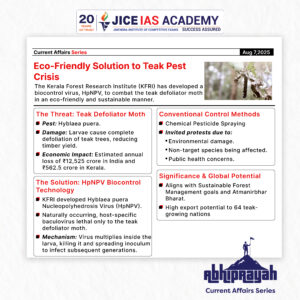
Eco-Friendly Solution to Teak Pest Crisis: KFRI’s HpNPV Technology
UPSC CURRENT AFFAIRS – 07th August 2025 Home / Eco-Friendly Solution to Teak Pest Crisis: KFRI’s HpNPV Technology Why in

New Species of Non-Venomous Rain Snake Discovered in Mizoram
UPSC CURRENT AFFAIRS – 07th August 2025 Home / New Species of Non-Venomous Rain Snake Discovered in Mizoram Why in