UPSC CURRENT AFFAIRS – 13th July 2025
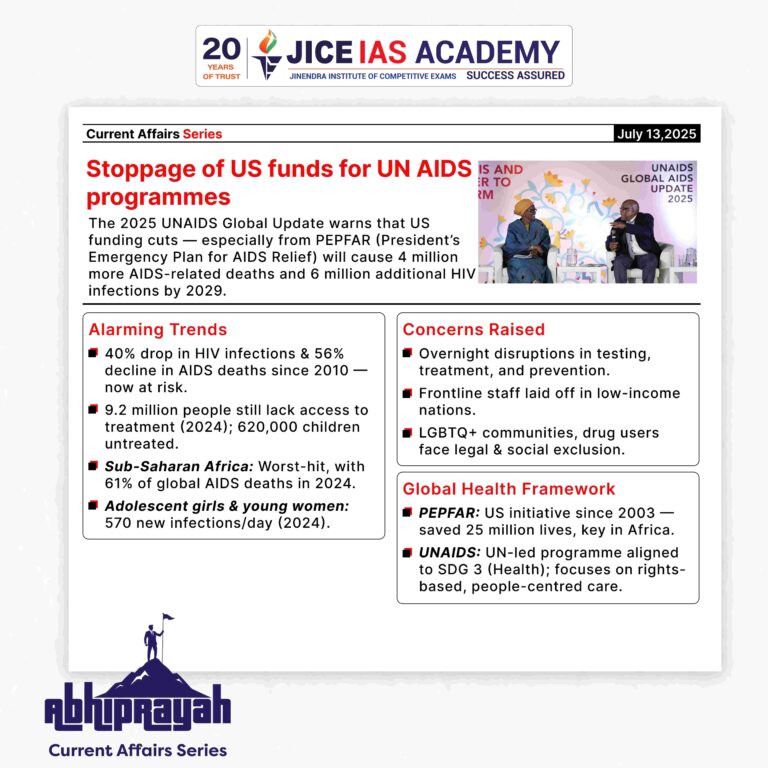
Stoppage of US funds likely to lead to more than 4 million AIDS deaths, says UN
Why in News?
- According to the 2025 Global AIDS Update by UNAIDS, the permanent discontinuation of major US funding could result in over 4 million additional AIDS-related deaths and about 6 million additional new HIV infections by 2029.
- The US has historically been the single largest contributor to global HIV/AIDS programmes, particularly through initiatives like PEPFAR (President’s Emergency Plan for AIDS Relief).
- The sudden halt has already triggered major disruptions: services have vanished overnight, frontline health workers have been sent home, and vulnerable groups are being pushed out of care.
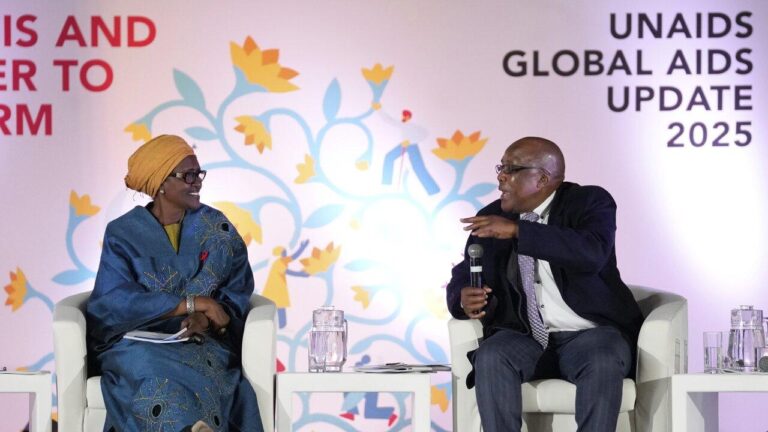
- UNAIDS Executive Director Winnie Byanyima called the situation “not just a funding gap – it’s a ticking time bomb.”
Key Data Highlights
- Since 2010, new HIV infections have reduced by 40% and AIDS-related deaths by 56% — gains now under threat.
- In 2024 alone, 9.2 million people with HIV were still not accessing life-saving treatment.
- Of these, 620,000 children aged 0–14 were untreated, contributing to 75,000 child deaths from AIDS-related causes in 2024.
- Sub-Saharan Africa remains worst-affected: 61% of total AIDS deaths occurred there in 2024.
- Adolescent girls and young women (15–24 years) remain highly vulnerable — over 210,000 new infections in 2024 (570 infections daily).
Concerns Raised
- Service Disruptions: Large-scale cuts have jeopardised treatment, prevention, and testing services.
- Health Workforce: Funding gaps have led to mass layoffs of frontline health workers.
- Marginalised Groups: Rising punitive laws against same-sex relationships, gender identity, and drug use are worsening stigma and blocking access to HIV services.
- Domestic Financing: While 25 of 60 low- and middle-income countries have raised domestic HIV budgets for 2026, it’s not enough to replace international funding shortfalls.
UNAIDS (Joint United Nations Programme on HIV/AIDS):
- A UN programme established in 1996 to lead and coordinate the global response to the HIV/AIDS epidemic.
- Works with governments, civil society, and international partners to achieve the goal of ending AIDS as a public health threat by 2030, which is directly aligned with SDG 3 (Good Health and Well-being).
- Provides strategic data, funding support, and technical expertise to help countries strengthen prevention, treatment, and care services.
Conclusion:
- UNAIDS warns that halting global funding could undo decades of hard-won gains in HIV/AIDS treatment and prevention.
- The crisis highlights the need for sustained, equitable, and rights-based financing, including protecting community-led responses.

3rd UN conference on landlocked countries
UPSC CURRENT AFFAIRS – 08th August 2025 Home / 3rd UN conference on landlocked countries Why in News? At the

Issue of soapstone mining in Uttarakhand’s Bageshwar
UPSC CURRENT AFFAIRS – 08th August 2025 Home / Issue of soapstone mining in Uttarakhand’s Bageshwar Why in News? Unregulated
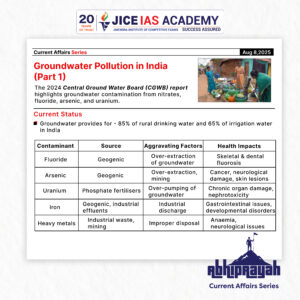
Groundwater Pollution in India – A Silent Public Health Emergency
UPSC CURRENT AFFAIRS – 08th August 2025 Home / Groundwater Pollution in India – A Silent Public Health Emergency Why
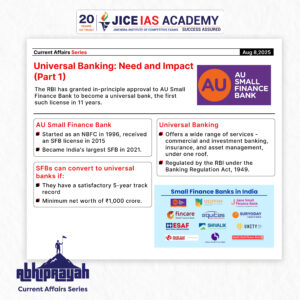
Universal banking- need and impact
UPSC CURRENT AFFAIRS – 08th August 2025 Home / Universal banking- need and impact Why in News? The Reserve Bank

India’s “Goldilocks” Economy: A Critical Appraisal
UPSC CURRENT AFFAIRS – 08th August 2025 Home / India’s “Goldilocks” Economy: A Critical Appraisal Why in News? The Finance
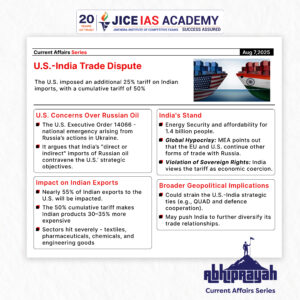
U.S.-India Trade Dispute: Trump’s 50% Tariffs and India’s Oil Imports from Russia
UPSC CURRENT AFFAIRS – 07th August 2025 Home / U.S.-India Trade Dispute: Trump’s 50% Tariffs and India’s Oil Imports from
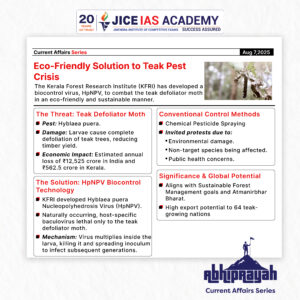
Eco-Friendly Solution to Teak Pest Crisis: KFRI’s HpNPV Technology
UPSC CURRENT AFFAIRS – 07th August 2025 Home / Eco-Friendly Solution to Teak Pest Crisis: KFRI’s HpNPV Technology Why in

New Species of Non-Venomous Rain Snake Discovered in Mizoram
UPSC CURRENT AFFAIRS – 07th August 2025 Home / New Species of Non-Venomous Rain Snake Discovered in Mizoram Why in

Economic Implications
For Indian Exporters
- These reforms reduce transaction costs and compliance hurdles
- Encourage a more competitive and efficient export environment
- Promote value addition in key sectors like leather
For Tamil Nadu
- The reforms particularly benefit the state’s leather industry, a major contributor to employment and exports
- Boost the marketability of GI-tagged E.I. leather, enhancing rural and traditional industries
For Trade Policy
- These decisions indicate a shift from regulatory controls to policy facilitation
Reinforce the goals of Make in India, Atmanirbhar Bharat, and India’s ambition to become a leading export power
Recently, BVR Subrahmanyam, CEO of NITI Aayog, claimed that India has overtaken Japan to become the fourth-largest economy in the world, citing data from the International Monetary Fund (IMF).
India’s rank as the world’s largest economy varies by measure—nominal GDP or purchasing power parity (PPP)—each with key implications for economic analysis.