UPSC CURRENT AFFAIRS – 17th May 2025

Home / UPSC / Current Affairs / What is Total Allowable Catch (TAC)?

What is Total Allowable Catch (TAC)?

what is total allowable catch

Definition:

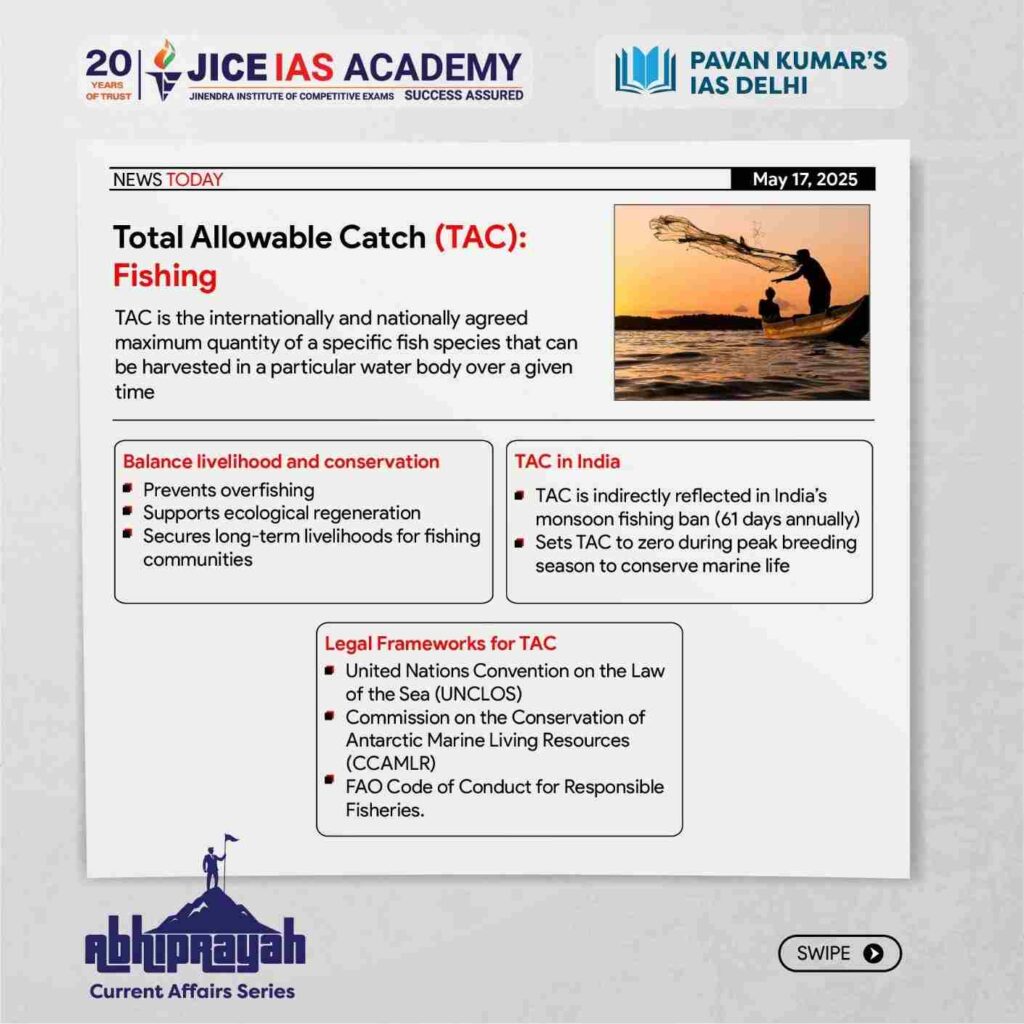
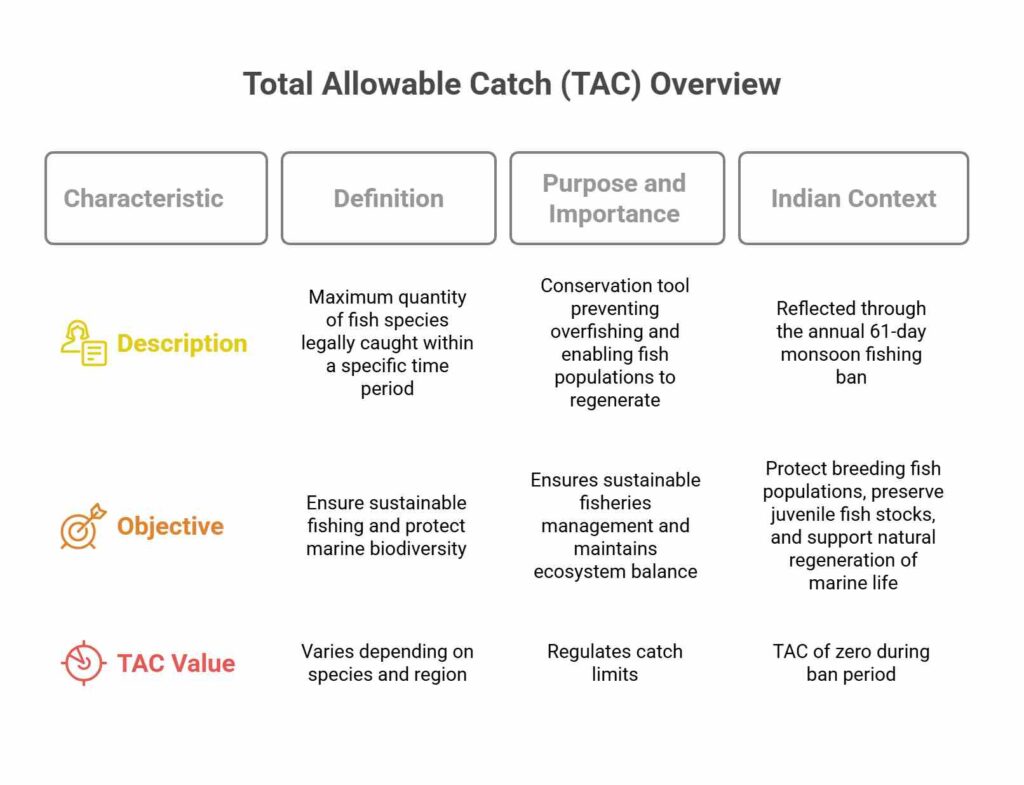
The Total Allowable Catch (TAC) refers to the maximum quantity of a particular fish species that can be legally caught in a defined water body (sea, lake, or ocean region) within a specific time period. It is imposed to ensure sustainable fishing and protect marine biodiversity.

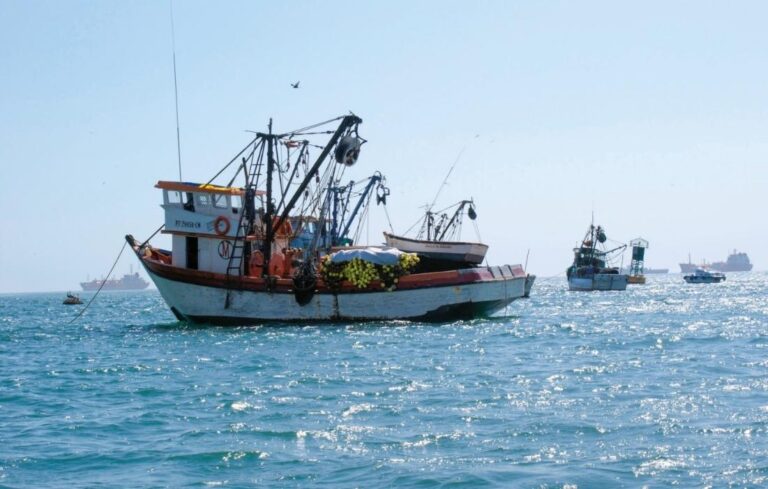
fishing boats at sea

Purpose and Importance of Total Allowable Catch (TAC):

  • TAC serves as a conservation tool by preventing overfishing and enabling fish populations to regenerate to ecologically sustainable levels.
  • It ensures sustainable fisheries management by regulating catch limits, thereby supporting the long-term livelihood security of fishing communities.
  • TAC contributes to maintaining ecosystem balance by preventing the depletion of key fish species, which in turn preserves marine biodiversity and food chains.

TAC in the Indian Context:

  • In India, the concept of TAC is reflected through the annual 61-day monsoon fishing ban, which is implemented to conserve marine resources during their peak breeding season.
  • The ban is observed from April 15 to June 14 on the east coast and from June 1 to July 31 on the west coast, effectively setting a TAC of zero during this period.
  • The primary objectives of this ban are to protect breeding fish populations, preserve juvenile fish stocks, and support the natural regeneration of marine life, thereby aligning with the principles of sustainable fisheries management.
total allowable catch overview

International Example – U.S.–Russia Dispute over TAC:

  • A significant international dispute has emerged regarding the Patagonian toothfish fishery in the South Atlantic Ocean.
  • Since 2021, Russia has refused to recognize the Total Allowable Catch (TAC) set by the Commission on the Conservation of Antarctic Marine Living Resources (CCAMLR) for this species in the region.
  • In response to Russia’s non-compliance, other CCAMLR members, such as the United Kingdom, opted to impose their own lower TAC limits to uphold conservation standards.
  • Most recently, a U.S. federal judge issued an order blocking the import of Patagonian toothfish caught in this area, citing a lack of adherence to the agreed international conservation standards set by CCAMLR.
  • This case illustrates the geopolitical challenges of enforcing TAC agreements and the importance of multilateral cooperation in managing transboundary marine resources.

Legal and Institutional Frameworks Governing TAC:

  • The United Nations Convention on the Law of the Sea (UNCLOS) obliges member states to prevent the overexploitation of marine resources within their Exclusive Economic Zones (EEZs) and promote sustainable fishing practices.
  • The Commission on the Conservation of Antarctic Marine Living Resources (CCAMLR) is an international body established under the Antarctic Treaty System. It regulates fishing in the Southern Ocean, primarily through science-based TACs and ecosystem monitoring.
  • In India, the Marine Fisheries (Regulation and Management) Bill, if enacted, is expected to incorporate provisions for science-based catch limits (TACs), aligning with international frameworks such as the FAO Code of Conduct for Responsible Fisheries.

Conclusion:

The concept of Total Allowable Catch (TAC) is a globally accepted scientific and legal tool for regulating fishing pressure. India’s adaptation through seasonal bans complements such strategies. However, global enforcement and cooperation are crucial—especially in disputed or international waters—to ensure that marine conservation goals are not undermined by geopolitical tensions or commercial interests.

Conclusion

Leave a Reply

Your email address will not be published. Required fields are marked *

Call Us Now !

Copyright © JICE ACADEMY FOR EXCELLENCE PRIVATE LIMITED