UPSC CURRENT AFFAIRS – 21th June 2025
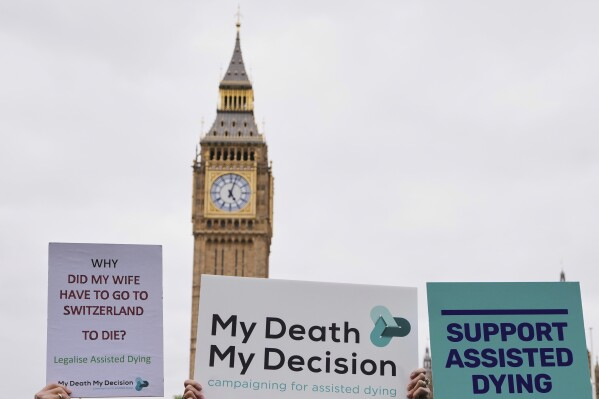
UK House of Commons Passes Assisted Dying Bill for Terminally Ill Adults
Why in News?
- The UK House of Commons passed the Assisted Dying Bill on June 20, 2025, allowing terminally ill adults in England and Wales to legally end their lives under strict safeguards.
Background
- The UK House of Commons narrowly passed the Terminally Ill Adults (End of Life) Bill, commonly known as the Assisted Dying Bill, with 314 votes in favour and 291 against.
- The bill permits terminally ill individuals in England and Wales to legally choose to end their lives under strict medical and legal safeguards.
- The bill now proceeds to the House of Lords for consideration.
Key Features of the Assisted Dying Bill
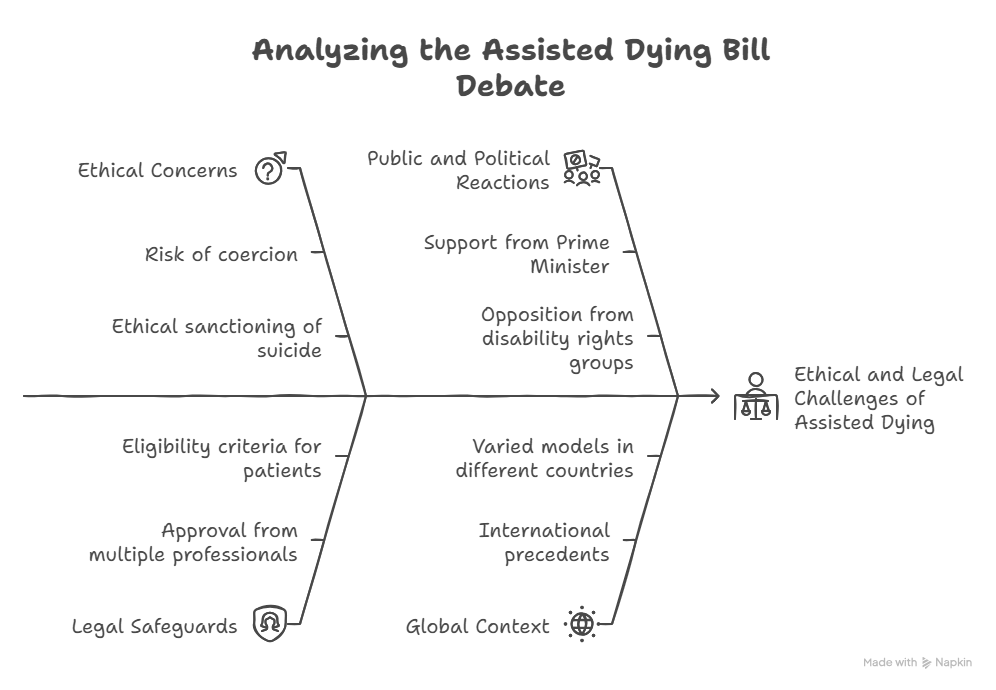
- Applicability: Restricted to patients diagnosed with a terminal illness and having a life expectancy of less than six months.
- Eligibility Criteria:
- The individual must be of sound and competent mind.
- The decision must be voluntary and free from external pressure.
- Safeguards:
- Approval from two doctors, a psychiatrist, a senior lawyer, and a social worker is mandatory before assisted dying is permitted.
- Scope: Applies only in England and Wales; Scotland and Northern Ireland are not covered under this legislation.
Parliamentary Debate and Vote
- The bill was introduced by Kim Leadbeater, a Labour MP, who argued that the legislation was about giving terminally ill people a choice over how they die, not whether they live or die.
- MPs were allowed a free vote, i.e., they voted based on personal conscience rather than party positions.
- UK Prime Minister Keir Starmer supported the bill, while Opposition leader Kemi Badenoch opposed it.
Public and Political Reactions
- The bill sparked intense public and parliamentary debate, drawing attention from disability rights groups, religious organisations, legal experts, and healthcare professionals.
- Proponents’ Arguments:
- Emphasised personal autonomy, dignity in death, and relief from unbearable suffering.
- Cited international precedents such as Canada, Switzerland, some U.S. States, New Zealand, Australia, and Belgium, which have similar legislation.
- Opponents’ Concerns:
- Risk of coercion or misinformed decisions, especially for the disabled and elderly.
- Ethical concerns over sanctioning suicide.
- Potential burden on the NHS, legal complexities, and psychological pressures on vulnerable individuals.
- Religious Perspective:
- The Bishop of London, Sarah Mullaly, expressed concerns over the bill’s implications for the most vulnerable, warning of ethical and moral risks.
- Disability Rights Viewpoint:
- Labour MP Vicky Foxcroft withheld support, citing insufficient consensus among disabled individuals and calling for improvements in the NHS and social care first.
Global Context of Assisted Dying Laws
Countries with legal assisted dying frameworks include:
- Switzerland: Home to the Dignitas clinic, which has aided several Britons, including 37 individuals in 2024 alone.
- Canada, Australia, New Zealand, Belgium, and some U.S. states (e.g., Oregon, California).
These countries follow varied models, often with safeguards similar to or more stringent than those proposed in the UK bill.
Ethical, Legal, and Sociological Implications
- Bioethical Concerns: The bill raises profound questions about the value of life, patient autonomy, and the limits of state-sanctioned medical intervention.
- Sociological Angle: Reflects changing societal attitudes towards death, dignity, and individual rights, while highlighting persistent tensions around medical ethics and religion.
- Legal Safeguards vs Vulnerability: Balancing compassion with the risk of abuse remains a central policy challenge.
Conclusion
The Assisted Dying Bill marks a historic moment in the UK’s healthcare and legal policy landscape, reflecting evolving attitudes toward end-of-life choices. As the bill advances to the House of Lords, the debate will likely deepen around how best to protect the rights of terminally ill individuals while ensuring vulnerable populations are not exposed to unintended harm.

3rd UN conference on landlocked countries
UPSC CURRENT AFFAIRS – 08th August 2025 Home / 3rd UN conference on landlocked countries Why in News? At the

Issue of soapstone mining in Uttarakhand’s Bageshwar
UPSC CURRENT AFFAIRS – 08th August 2025 Home / Issue of soapstone mining in Uttarakhand’s Bageshwar Why in News? Unregulated

Groundwater Pollution in India – A Silent Public Health Emergency
UPSC CURRENT AFFAIRS – 08th August 2025 Home / Groundwater Pollution in India – A Silent Public Health Emergency Why
Universal banking- need and impact
UPSC CURRENT AFFAIRS – 08th August 2025 Home / Universal banking- need and impact Why in News? The Reserve Bank

India’s “Goldilocks” Economy: A Critical Appraisal
UPSC CURRENT AFFAIRS – 08th August 2025 Home / India’s “Goldilocks” Economy: A Critical Appraisal Why in News? The Finance

U.S.-India Trade Dispute: Trump’s 50% Tariffs and India’s Oil Imports from Russia
UPSC CURRENT AFFAIRS – 07th August 2025 Home / U.S.-India Trade Dispute: Trump’s 50% Tariffs and India’s Oil Imports from
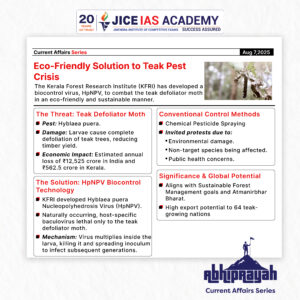
Eco-Friendly Solution to Teak Pest Crisis: KFRI’s HpNPV Technology
UPSC CURRENT AFFAIRS – 07th August 2025 Home / Eco-Friendly Solution to Teak Pest Crisis: KFRI’s HpNPV Technology Why in

New Species of Non-Venomous Rain Snake Discovered in Mizoram
UPSC CURRENT AFFAIRS – 07th August 2025 Home / New Species of Non-Venomous Rain Snake Discovered in Mizoram Why in

Economic Implications
For Indian Exporters
- These reforms reduce transaction costs and compliance hurdles
- Encourage a more competitive and efficient export environment
- Promote value addition in key sectors like leather
For Tamil Nadu
- The reforms particularly benefit the state’s leather industry, a major contributor to employment and exports
- Boost the marketability of GI-tagged E.I. leather, enhancing rural and traditional industries
For Trade Policy
- These decisions indicate a shift from regulatory controls to policy facilitation
Reinforce the goals of Make in India, Atmanirbhar Bharat, and India’s ambition to become a leading export power
Recently, BVR Subrahmanyam, CEO of NITI Aayog, claimed that India has overtaken Japan to become the fourth-largest economy in the world, citing data from the International Monetary Fund (IMF).
India’s rank as the world’s largest economy varies by measure—nominal GDP or purchasing power parity (PPP)—each with key implications for economic analysis.