New Insights into Iron Opacity in the Sun
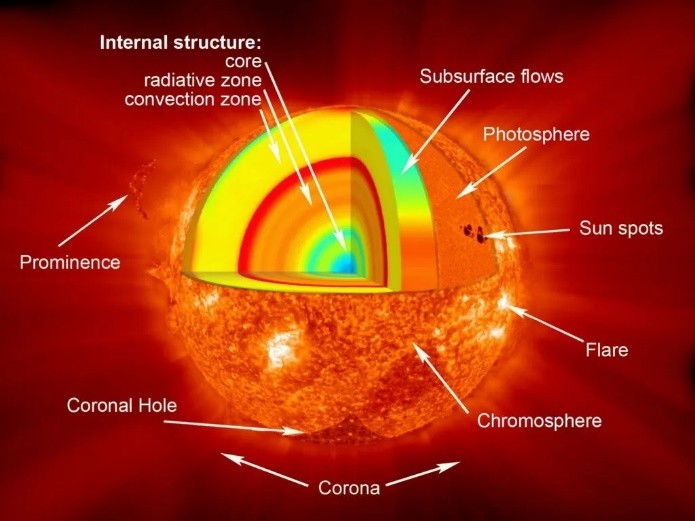
UPSC CURRENT AFFAIRS – 08th April 2025 Home / New Insights into Iron Opacity in the Sun Why in News? Recent tests have demonstrated that the opacity of iron under solar conditions is much greater than previously approximated, calling into question current solar models. Introduction Stars are the drivers of the universe — they give us light and energy, define planetary systems, and impact galactic structure. Among them, the Sun is the most examined object because it’s relatively close to our planet. But with half a century of observations and advanced modeling, essential inconsistencies persist in our picture of its internal characteristics. A recent scientific breakthrough has shed new light on a long-standing mystery in solar physics — the role of opacity in explaining elemental abundances and energy transport within the Sun. Why Study the Sun? Scientists study the Sun at two levels: Theoretical Understanding: By observing electromagnetic radiation, solar flares, sunspots, and charged particles, researchers test and refine theories that explain solar processes. Stellar Models: The Sun is used as a standard for simulating other stars. These models mimic: Heat and energy production Magnetic fields and stellar rotation Sunquakes and solar flares Evolution of the stellar atmosphere Star cluster and galaxy formation Knowledge of stellar behavior assists scientists in deciphering the structure and evolution of the universe. The Opacity Discrepancy in Solar Models Until the mid-2010s, solar models consistently predicted 30–50% less carbon, oxygen, and nitrogen in the Sun than had actually been observed. This was a basic problem since solar models, although intricate and supercomputer-dependent, had otherwise been successful at predicting. Solar brightness Initially, scientists suspected measurement errors in elemental abundances. In 2015, a groundbreaking study suggested that the opacity (i.e., energy absorption) of certain elements, particularly iron, was underpredicted. Key Findings: Iron’s Opacity Up to 400% Higher Scientists exposed iron’s plasma to solar-like conditions near the radiation-convection boundary (around 30% within the Sun’s radius). Results indicated: Iron’s opacity was 30–400% greater than theoretical expectations Opacity variations according to radiation frequency A 15% rise in mean opacity would resolve the abundance discrepancy That is, errors in how much energy elements such as iron absorb will skew solar model predictions. Helioseismic and Experimental Reinforcement These results have been confirmed by recent research with helioseismic data (helioseismology, the study of sound waves within the Sun) and laboratory experiments: Seismic opacity profiles indicated ~10% more opacity than theory at 2 million K, although lower by 35% than some recalculated models. Sandia National Laboratories scientists utilized cutting-edge ultrafast X-ray spectrometry to measure the opacity of changing plasmas with previously unprecedented accuracy. This verified that temporal gradients in the plasma were not a possible explanation for the model-data discrepancy — the issue resides in theoretical opacity assumptions. Technological Challenges and Future Directions To measure opacity under conditions similar to the Sun requires: Electron energies ≥ 180 eV Particle densities > 30,000 billion billion per millilitre Employment of magnesium tracers to derive energy and density Precise measurement of line optical depth (shadow darkness) to make an estimate of radiation absorption The second step is absolute opacity measurements with formal uncertainty estimates, which are now being researched. Astrophysics and Cosmology Significance Solving the opacity problem will enhance solar models so that solar activity can be predicted better. Improved stellar models can be used to model star formation, planetary system dynamics, and galactic evolution with precision. Facilitates the understanding of exoplanet habitability, star lifecycle, and element formation in the universe.
Jaya Sri Maha Bodhi: Living Testament to Buddhist Heritage and History

UPSC CURRENT AFFAIRS – 08th April 2025 Home / Jaya Sri Maha Bodhi: Living Testament to Buddhist Heritage and History Why in News? As part of his trip to Sri Lanka, Prime Minister of India visited the Jaya Sri Maha Bodhi temple at the historic city of Anuradhapura. What is the Jaya Sri Maha Bodhi tree? The Jaya Sri Maha Bodhi tree is considered the oldest living cultivated plant in the world, and is believed to have grown from a branch that an Indian princess carried to Sri Lanka. This Bo (Ficus religiosa, Pipal in Hindi) tree is believed to have grown from a branch of the tree in Bodhgaya (in present-day Bihar) under which Gautam Buddha attained enlightenment. The branch was carried to Sri Lanka by Sanghamitta (or Sanghamitra), the Mauryan king Ashoka’s daughter and Buddhist nun. Her arrival in Sri Lanka with the tree is still celebrated as Uduvapa Poya, an annual festival observed on a full moon night in December. The tree, along with the other Buddhist shrines in the ancient city of Anuradhapura, is a major pilgrimage centre for Buddhists. Anuradhapura is now a UNESCO World Heritage Site. “Anuradhapura, a Ceylonese political and religious capital that flourished for 1,300 years, was abandoned after an invasion in 993 CE. Hidden away in dense jungle for many years, the splendid site, with its palaces, monasteries and monuments, is now accessible once again,” the UNESCO website says. The invasion in 993 CE was by the Chola empire of south India. Why did Sanghamitta travel to Sri Lanka? On the invitation of the king, and the suggestion of her brother, Mahendra or Mahinda. During the reign of Ashoka, the Third Buddhist Council is believed to have met, where it was decided to send missionaries to different regions to propagate Buddhism. Missions left for Gandhara, Kashmir, south India, some Greek kingdoms, and Sri Lanka. The very successful mission to Sri Lanka was led by prince Mahendra, or Mahinda, Ashoka’s son. Mahinda met King Devanampiya Tissa, whose capital was Anuradhapura, and converted him to Buddhism. After a number of royal ladies also wished to join the Buddhist monastic order, Mahinda sent for his sister, Sanghamitta, to come and initiate them. Both Mahinda and Sanghamitta lived in Anuradhapura for the rest of their lives. How has the Jaya Sri Maha Bodhi tree survived for so long? Through dedicated care and the fact that the Pipal tree can regrow from its roots and seeds. The tree has not been immune to attacks — in 1929, a man tried to chop it off in an act of vandalism, while in 1985, LTTE militants went on a rampage in Anuradhapura, gunning down 146 people in the vicinity of the tree. Mahabodhi tree in Gaya While the original tree under which Lord Buddha meditated was destroyed (in some legends, by one of Ashoka’s wives, Tishyarakshita), the existing Pipal tree at the site is believed to have descended from the germplasm (genetic material) of that original tree.
‘Oscars of Science’- Breakthrough Prize 2025 Awarded

UPSC CURRENT AFFAIRS – 08th April 2025 Home / ‘Oscars of Science’- Breakthrough Prize 2025 Awarded Why in News? The 2025 Breakthrough Prize in Fundamental Physics was awarded to 13,508 physicists across four collaborative projects at CERN Introduction The 2025 Breakthrough Prize in Fundamental Physics has recognised 13,508 physicists from four collaborative projects at CERN. This prestigious award, often referred to as the Oscars of Science, was announced on April 5, 2025. It marks advancements in life sciences, mathematics, and fundamental physics. About Breakthrough Prizes The Breakthrough Prize was set up in 2013. Its founders include Mark Zuckerberg, Priscilla Chan, Sergey Brin, Anne Wojcicki, and Yuri and Julia Milner. The awards celebrate scientific achievements and inspire future generations. They promote a vision of science for the benefit of all as a global and apolitical initiative. Breakthrough Prize in Life Sciences Three groups of scientists received this award. First, five scientists developed weight-loss drugs, Ozempic and Wegovy, through their research on the GLP-1 hormone. Daniel J. Drucker, Joel Habener, Jens Juul Holst, Lotte Bjerre Knudsen and Svetlana Mojsov share the Breakthrough Prize in Life Sciences. Second, Alberto Ascherio and Stephen L. Hauser were recognised for their work on Multiple Sclerosis, identifying B-cells’ role and linking Epstein-Barr virus to the disease. Third, David R Liu was awarded for his innovations in gene-editing technologies, particularly base and prime editing, allowing precise DNA modifications. GLP-1 Hormone Glucagon-like peptide-1 (GLP-1) is an incretin hormone secreted by the intestines in response to food intake. It plays a key role in regulating blood sugar by stimulating insulin release, inhibiting glucagon secretion, and slowing gastric emptying. GLP-1 also promotes a feeling of fullness, making it important in weight management and the treatment of type 2 diabetes and obesity. Synthetic GLP-1 receptor agonists, such as semaglutide and liraglutide, have become prominent in medical therapies due to their effectiveness in lowering blood glucose and aiding weight loss. Multiple Sclerosis (MS) Multiple Sclerosis is a chronic autoimmune disorder in which the immune system mistakenly attacks the protective myelin sheath covering nerve fibers in the central nervous system (brain and spinal cord). This leads to disrupted nerve signals, causing symptoms like muscle weakness, vision problems, fatigue, and difficulty with coordination. The disease progresses in different forms, including relapsing-remitting and progressive types. Though MS has no cure, treatments such as immunomodulators, physiotherapy, and disease-modifying drugs can slow its progression and manage symptoms effectively. Gene Editing Gene editing refers to technologies that enable scientists to alter DNA sequences within living organisms. The most widely known method is CRISPR-Cas9, which allows for precise, targeted changes to the genome by cutting and repairing DNA. Gene editing holds immense promise for treating genetic disorders like sickle cell anemia, certain cancers, and inherited blindness. While it offers revolutionary possibilities in medicine, agriculture, and biotechnology, ethical concerns—especially around germline editing and potential misuse—have led to global debates and the call for strict regulatory frameworks. Breakthrough Prize in Fundamental Physics This prize was awarded to four collaborations at CERN’s Large Hadron Collider (LHC) – ALICE, ATLAS, CMS, and LHCb. Their research focused on the Higgs boson, crucial for understanding mass in fundamental particles. Their findings confirm the symmetry-breaking mechanism of mass generation and explore new particle interactions. The prize money supports further research and grants for doctoral students at CERN. CERN’s Large Hadron Collider (LHC) Located beneath the France–Switzerland border, the LHC is the world’s largest and most powerful particle accelerator, housed in a 27-km tunnel. It collides protons at near-light speeds to study fundamental particles and recreate conditions similar to those just after the Big Bang. Major detectors like ATLAS, CMS, ALICE, and LHCb are used for different experiments. CERN is also planning a much larger Future Circular Collider (FCC) to further explore unanswered questions in particle physics beyond the Standard Model. Breakthrough Prize in Mathematics Dennis Gaitsgory received the Mathematics Breakthrough Prize for his very important role in proving the geometric Langlands conjecture. This work bridges various mathematical fields and reflects over thirty years of dedication to developing new tools in derived algebraic geometry. The Langlands Program is often called the “grand unified theory of mathematics,” was started in 1967 by Robert Langlands. The goal of this program is to connect different areas of mathematics, especially number theory and harmonic analysis. In the 1990s, a similar link was found between geometry and harmonic analysis, leading to the birth of the geometric Langlands Program. In 2024, Dennis Gaitsgory from the Max Planck Institute for Mathematics in Germany, along with eight other researchers, made a major breakthrough. In five detailed research papers (around 1,000 pages), they proved that many geometric shapes are connected to ideas from calculus. For this big achievement, Gaitsgory was awarded the Breakthrough Prize in Mathematics, which includes a reward of $3 million. Other Awards The Breakthrough Prize Foundation also awarded six New Horizons Prizes, each valued at $100,000, to early-career physicists and mathematicians. Additionally, the Maryam Mirzakhani New Frontiers Prize was given to three women mathematicians pursuing their PhD, each receiving $50,000.
Electrified railway- changing track to hydrogen

UPSC CURRENT AFFAIRS – 07th April 2025 Home / Electrified railway- changing track to hydrogen Why in News? Indian Railways is nearing 100% electrification, raising questions about the economic and strategic rationale of investing in hydrogen-powered locomotives. Introduction Indian Railways, one of the largest rail networks in the world, is nearing 100% electrification, marking a significant milestone in India’s transport decarbonisation journey. While the global interest in hydrogen-powered locomotives is growing, the question arises — does this align with India’s present infrastructure and climate priorities? Electrification as a Strategic Climate and Economic Move Decarbonisation Goal: Electrification is a central component of India’s commitment under its Nationally Determined Contributions (NDCs) to reduce greenhouse gas emissions. With an increasing share of electricity drawn from renewable energy sources (solar, wind), Indian Railways is fast becoming a green transport giant. Economic Efficiency: Electrification has brought down traction costs considerably compared to diesel locomotion. It has also reduced dependency on imported fossil fuels, saving foreign exchange and enhancing energy security. Network Readiness: Over 85% of the rail network is already electrified, and nearing complete electrification, Indian Railways has established a robust and integrated electric traction ecosystem including substations, maintenance yards, and operational protocols. Hydrogen Locomotives: A Premature Investment? Early-stage Technology: Hydrogen-powered rail technology remains experimental, with limited operational use globally (e.g., in Germany and parts of Japan). The technology’s costs are high, and efficiency remains lower than direct electrification in grid-connected systems. Redundancy Concern: With almost full electrification already in place, hydrogen trains could lead to duplicative investments in infrastructure (e.g., hydrogen fuelling stations, storage units), which may not yield proportional returns. Better Use Cases Elsewhere: Hydrogen trains are more relevant in non-electrified, remote, or mountainous regions where grid access is challenging — a situation no longer applicable to India’s largely electrified routes. Conclusion While innovation in hydrogen technology should continue for potential niche applications and energy diversification, India’s present priorities lie in maximising returns on its near-complete electrification. For Indian Railways, the goal should be to strengthen electrified infrastructure, integrate more renewables into the grid, and explore hydrogen only where electrification is not feasible.
Wikimedia and the free flow of information

UPSC CURRENT AFFAIRS – 07th April 2025 Home / Wikimedia and the free flow of information Why in News? The Delhi High Court’s order directing Wikipedia to reverse edits on ANI’s page raises concerns over judicial overreach, digital free speech, and the safe harbour protections under the IT Act, 2000. Introduction In a significant development with implications for digital freedom and platform governance, the Delhi High Court directed the Wikimedia Foundation to reverse edits made to the Wikipedia page of Asian News International (ANI) amid a defamation suit filed by the agency in 2024. The court’s stance raised concerns about judicial overreach, freedom of expression, and the future of collaborative knowledge platforms like Wikipedia in India. Wikipedia’s Operating Model and the Court’s Observations: Wikipedia is a free, open-source encyclopedia written and edited by a global community of volunteers. It functions based on strict community guidelines, emphasizing neutrality, verifiability, and attribution to reputable sources. Importantly, the platform does not produce original content but compiles existing information with due citations. However, in the ANI case, the Delhi High Court made several concerning observations: It sought the identities of anonymous editors, challenging Wikipedia’s practice of preserving volunteer anonymity to protect contributors from retaliation. It warned of blocking Wikipedia in India and questioned Wikimedia Foundation’s operations, making remarks such as, “If you don’t like India, please don’t work in India.” It dismissed the Foundation’s appeal to safe harbour protections under the Information Technology Act, 2000, by claiming the content cited editorials and opinionated pieces. Key Issues and Implications: Safe Harbour and Platform Liability: Under Section 79 of the IT Act, 2000, intermediaries like Wikipedia are granted “safe harbour” — legal immunity for user-generated content, provided they follow due diligence and comply with takedown notices. The court’s decision challenges this principle by holding the platform accountable for content sourced and edited by volunteers. Threat to Volunteer-Driven Models: By demanding the identities of Wikipedia editors, the order may deter civic participation in decentralised digital platforms. Anonymity is critical for contributors who fear backlash for editing politically or socially sensitive content. Credibility vs. Control: While the court emphasized the need to protect ANI’s credibility, it blurred the distinction between fact-based aggregation and personal opinions. Wikipedia relies on referencing secondary sources like news editorials, and dismissing such citations may undermine the platform’s neutrality standards. Risk of Censorship: The threat of state-imposed restrictions or blocking highlights a shift towards centralised information control, echoing concerns raised globally about digital censorship. It also reflects a growing discomfort among institutions with participatory, decentralised knowledge production. Broader Concerns: Chilling Effect on Free Speech: Judicial warnings and the threat of government intervention may discourage open discourse and democratic critique on the internet. Undermining Civic Tech Platforms: Public distrust in crowd-sourced platforms due to isolated content disputes could reverse gains made in accessible knowledge sharing. Need for Judicial Sensitivity: Courts must balance reputational rights with democratic values and the unique nature of global digital platforms. Conclusion The Delhi High Court’s approach to the ANI-Wikipedia episode reflects growing friction between traditional institutions and decentralised digital collaborations. While addressing misinformation and defamation is crucial, India’s judiciary and state apparatus must recognize and respect the nuanced role that platforms like Wikipedia play. Instead of seeking punitive control, engagement with their governance models, promoting media literacy, and ensuring proportional response will better serve democratic values in the digital age.
What is the Hadean Protocrust?

UPSC CURRENT AFFAIRS – 07th April 2025 Home / What is the Hadean Protocrust? Why in News? A new study has challenged the belief that geochemical signatures associated with plate tectonics originated only after subduction began, suggesting they may have existed in Earth’s Hadean protocrust. Introduction A new international study led by Macquarie University, Australia, has challenged the long-held assumption that unique geochemical signatures in Earth’s crust are solely a result of plate tectonic processes. The study finds that these signatures may have existed even before subduction began, during the Hadean aeon. What is the Hadean Protocrust? The Hadean protocrust refers to the earliest form of Earth’s crust that formed during the Hadean aeon, which spans from Earth’s formation (~4.6 billion years ago) to 4 billion years ago. During this time: The Earth’s surface was partially molten. Heavy meteorite bombardment and rampant volcanism created a hellish environment. Cooling of the magma ocean led to the formation of the first crustal fragments, though they were unstable and dynamic. Over time, thicker and more stable parts of this early crust formed the first continental blocks. Plate Tectonics and Geochemical Signatures As the lithosphere cooled and thickened: These early continental blocks began moving atop the asthenosphere — a semi-fluid layer extending about 400 km beneath the surface. Interactions like subduction (one plate diving beneath another) and collision generated chemical signatures in rocks, often used to trace the history of tectonic activity. Traditionally, these chemical markers were believed to have originated only after the onset of modern plate tectonics. New Findings: Rewriting the Geological Timeline The new study, combining geochemical modelling and lab-based simulations, has found that: The geochemical signatures previously attributed to subduction-related processes were already present in the Hadean protocrust. This suggests that plate tectonic-like processes or their chemical fingerprints may have pre-dated the onset of classical plate tectonics. Implications and Future Directions This discovery questions a foundational principle in geology — that subduction-driven plate tectonics are responsible for certain geochemical markers in Earth’s crust. It may indicate that proto-tectonic or non-subduction processes during the Hadean era could explain early chemical patterns. The findings need further validation by independent research and peer review before they can be integrated into mainstream geological theory. Conclusion If confirmed, this research could significantly reshape our understanding of early Earth dynamics, including the origin of continents and the onset of plate tectonics. The study highlights the evolving nature of scientific inquiry and the importance of revisiting established assumptions with new data and methods.
CAPTCHA: a digital border between humans and bots

UPSC CURRENT AFFAIRS – 07th April 2025 Home / CAPTCHA: a digital border between humans and bots Why in News? CAPTCHA is a security mechanism used to distinguish human users from bots by presenting tasks easy for humans but difficult for machines. Introduction In the dynamic and rapidly evolving landscape of the internet, ensuring user safety and verifying identities has become paramount. One of the most significant tools developed to address this concern is CAPTCHA—an acronym for Completely Automated Public Turing test to tell Computers and Humans Apart. It presents challenges that are easy for humans to solve but difficult for machines, thereby creating a first line of defence against automated threats. Origin and Evolution of CAPTCHA CAPTCHA emerged in the early 2000s as a response to the proliferation of malicious bots that flooded websites with spam, created fake accounts, and engaged in data theft. The system was developed by computer scientists Luis von Ahn, Manuel Blum, Nicholas J. Hopper, and John Langford. In 2003, they filed the first patent for CAPTCHA, which initially relied on distorted characters that humans could decipher, but machines could not. The foundational concept of CAPTCHA is rooted in the Turing Test, proposed by British mathematician Alan Turing in the 1950s. The test was designed to determine whether a machine could imitate human behaviour convincingly. CAPTCHA operationalised this concept by introducing tests that differentiate humans from machines through cognitive and perceptual tasks. Working Mechanism CAPTCHA functions by challenging users to perform tasks that, while trivial for humans, remain difficult for bots. Classic CAPTCHA forms included recognizing and typing distorted text. With advancements in technology, modern CAPTCHA challenges involve image recognition—such as selecting images containing traffic lights or vehicles—and behavioural analysis, like tracking mouse movements or click patterns. These tests rely on the human brain’s superior pattern recognition and contextual understanding, which remain challenging areas for artificial intelligence. Transformations Over Time As bots became more sophisticated, CAPTCHA had to evolve. The launch of reCAPTCHA in 2009 marked a significant milestone. This version not only enhanced digital security but also contributed to the digitisation of books. Users would type words from scanned texts that optical character recognition (OCR) software failed to interpret, thereby helping preserve literary heritage. In 2014, Google introduced ‘Invisible reCAPTCHA’, which silently analysed user interactions to distinguish bots from humans without active user engagement. This innovation enhanced user experience by reducing friction while maintaining security. Applications and Impact CAPTCHA is now an integral component of internet security. It is deployed in: User registration and login pages to prevent credential stuffing and account takeovers. Online forms and comment sections to avoid spam and phishing. E-commerce and financial transactions to block automated data harvesting and fraud. Survey and polling platforms to ensure authenticity of responses. CAPTCHA acts as a gatekeeper, protecting sensitive data and preserving the integrity of digital interactions. Challenges and Limitations Despite its widespread use, CAPTCHA is not without limitations: Accessibility Issues: For visually impaired users, deciphering distorted text or images can be highly challenging. Even audio CAPTCHAs are not fully inclusive, particularly for individuals with hearing impairments. User Frustration: CAPTCHAs can slow down the user experience, especially on mobile devices. Complex or poorly designed CAPTCHA interfaces can deter users from completing actions. Bot Advancements: As artificial intelligence and machine learning technologies improve, bots are increasingly able to bypass traditional CAPTCHA mechanisms. This has necessitated the development of more complex and dynamic verification tools. The Road Ahead CAPTCHA has played a critical role in securing the internet from malicious automation. However, its future lies in striking a balance between security, usability, and accessibility. The integration of artificial intelligence in both CAPTCHA design and bot creation presents a continuous cat-and-mouse game. Moving forward, digital security frameworks must include adaptive CAPTCHAs, biometric authentication, and behavioural analytics to ensure robust protection without compromising user experience.
Prime Minister inaugurated the New Pamban Bridge, enhancing connectivity to Rameswaram Island

UPSC CURRENT AFFAIRS – 07th April 2025 Home / Prime Minister inaugurated the New Pamban Bridge, enhancing connectivity to Rameswaram Island Why in News? On April 6, 2025, Prime Minister Narendra Modi inaugurated the newly built Pamban rail bridge, linking Rameswaram Island with the mainland at Ramanathapuram in Tamil Nadu. Developed by Rail Vikas Nigam Limited (RVNL) at an estimated cost of ₹531 crore, the 2.07-kilometre-long bridge spans the Palk Strait. It includes a 72.5-metre vertical lift section capable of rising up to 17 metres, allowing maritime traffic to pass beneath while enhancing rail transport in the region. New Pamban Bridge The New Pamban Bridge is a state-of-the-art vertical lift railway bridge connecting Mandapam on India’s mainland with Rameswaram on Pamban Island, Tamil Nadu. Inaugurated on April 6, 2025, by Prime Minister Narendra Modi, it replaces the century-old Pamban Bridge, enhancing connectivity and maritime navigation in the region. Key Features of the New Pamban Bridge Length and Structure: Spanning 2.07 kilometers (1.29 miles), the bridge comprises 100 spans, each measuring 18.3 meters (60 feet). Vertical Lift Mechanism: A notable feature is its 72-meter (236-foot) vertical lifting section, the first of its kind in India. This design allows the central span to be raised, enabling ships up to 22 meters (72 feet) in height to pass through, thereby facilitating maritime traffic. Elevation: Positioned approximately 12.5 meters (41 feet) above sea level, it stands about 3 meters (9.8 feet) higher than the old bridge, providing improved clearance for vessels. Track Capacity: Engineered to support double-track railway lines, the bridge is designed to accommodate increased rail traffic and future electrification plans. Background and Construction The original Pamban Bridge, operational since 1914, faced structural challenges over time, leading to the suspension of rail traffic in December 2022 due to significant corrosion. Recognizing the need for a modern replacement, the Government of India initiated the construction of the new bridge in February 2020, with Rail Vikas Nigam Limited overseeing the project. Strategic Significance The New Pamban Bridge is poised to significantly boost regional connectivity by providing a reliable link to Rameswaram, a prominent pilgrimage destination. Its advanced design not only ensures the safe passage of maritime vessels but also enhances the efficiency of rail transport, contributing to the socio-economic development of the area. Rail Vikas Nigam Limited (RVNL) RVNL is a Navratna Central Public Sector Enterprise (CPSE) under the Ministry of Railways, Government of India. Established on January 24, 2003, RVNL serves as the construction arm of Indian Railways, focusing on the development and implementation of rail infrastructure projects across the country. Mandate and Operations: RVNL is tasked with executing a diverse range of rail infrastructure projects, including: Doubling and Tripling of Railway Lines: Enhancing capacity on existing routes to accommodate increased traffic. Gauge Conversion: Transforming meter-gauge tracks to broad-gauge to ensure uniformity and efficiency. New Line Construction: Expanding the railway network to improve connectivity to unserved regions. Railway Electrification: Implementing electrification projects to promote energy efficiency and reduce carbon emissions. Bridge Construction: Building major bridges, including specialized structures like cable-stayed bridges and vertical lift bridges. Workshops and Production Units: Establishing facilities for manufacturing and maintaining rolling stock and other railway equipment. The organization undertakes projects from conception to commissioning, often creating Special Purpose Vehicles (SPVs) to mobilize extra-budgetary resources through equity and debt instruments. Notable Projects: Vembanad Rail Bridge: Spanning 4.62 kilometers over Vembanad Lake in Kerala, this is the second-longest railway bridge in India, enhancing connectivity to the Vallarpadam International Container Transshipment Terminal. Marathwada Rail Coach Factory, Latur: Commissioned in December 2020, this state-of-the-art facility was established to manufacture self-propelled trains, including the Vande Bharat Express.
Inauguration of India-Aided Railway in Sri Lanka and New Pamban Bridge in Tamil Nadu

UPSC CURRENT AFFAIRS – 07th April 2025 Home / Inauguration of India-Aided Railway in Sri Lanka and New Pamban Bridge in Tamil Nadu Why in News? On the occasion of Ram Navami 2025, Prime Minister Narendra Modi and Sri Lankan President Anura Kumara Dissanayake jointly inaugurated two key railway infrastructure projects in Sri Lanka Key Infrastructure Projects Refurbishment of Maho–Omanthai Railway Line Length: 128 km Assistance: Financial support of USD 91.27 million from India Objective: To strengthen north-south rail connectivity and improve passenger and freight movement across Sri Lanka. Advanced Railway Signalling System (Maho–Anuradhapura) Assistance: USD 14.89 million from India Purpose: To modernise Sri Lanka’s rail network for improved safety and efficiency. These projects are part of the broader India–Sri Lanka Development Partnership aimed at fostering economic and infrastructural development in the island nation. Cultural and Religious Engagements Prime Minister Modi visited the Jaya Sri Mahabodhi Temple in Anuradhapura, a UNESCO World Heritage Site and an important pilgrimage site in Buddhism. The Bodhi tree at the temple is believed to have grown from a sapling of the original tree under which Gautama Buddha attained enlightenment. The sapling was brought to Sri Lanka by Sangamitta Maha Theri, daughter of Emperor Ashoka, in the 3rd century BCE. On his return journey, the Prime Minister had an aerial view of the Ram Setu, coinciding with the Surya Tilak celebration in Ayodhya, which he described as a “divine coincidence.” Significance Strategic Diplomacy: Reinforces India’s role as a regional infrastructure partner, especially in South Asia, aligning with the “Neighbourhood First” and SAGAR (Security and Growth for All in the Region) policies. Cultural Diplomacy: Highlights the deep civilizational and spiritual linkages between India and Sri Lanka, particularly through shared Buddhist heritage. Economic and Infrastructure Development: Supports Sri Lanka’s rail modernisation, economic recovery, and internal connectivity. Soft Power Projection: Combines development assistance with cultural engagement, enhancing India’s image as a benevolent regional leader.
Emergency in India’s Cotton Economy

UPSC CURRENT AFFAIRS – 07th April 2025 Home / Emergency in India’s Cotton Economy Why in News? India’s cotton production has declined sharply due to pink bollworm resistance against Bt cotton, prompting renewed trials of next-generation GM cotton hybrids under regulatory scrutiny. Introduction India is the world’s largest producer of cotton and has historically enjoyed a competitive edge in cotton and textile exports. However, the country’s cotton economy is currently facing a serious downturn marked by declining production, rising imports, and pest-induced crop failures. Despite relatively lower export tariffs under the US “reciprocal tariff” regime, India’s cotton sector is struggling due to structural and biological challenges. Declining Production: A Cause for Concern India’s cotton output for the 2024-25 marketing year is projected at just 294 lakh bales, the lowest since 2008-09. This marks a significant fall from the peak of 398 lakh bales in 2013-14, threatening the viability of cotton farming and the associated textile value chain. This downturn comes despite technological advancements and favorable export tariffs compared to competitors like China and Bangladesh. Bt Cotton and Its Initial Success The introduction of genetically modified (GM) Bt cotton hybrids in 2002 led to a transformative increase in production and exports: Cotton output rose from 136 lakh bales (2002-03) to 398 lakh bales (2013-14). Cotton exports soared from 0.8 lakh bales to 117 lakh bales in the same period. The hybrids used genes (cry1Ac and cry2Ab) derived from Bacillus thuringiensis (Bt), which proved effective against major cotton pests like the American bollworm. The Pink Bollworm Crisis The resurgence of the Pink Bollworm (PBW) has emerged as a critical threat: PBW larvae infest cotton bolls, destroying seeds and lint. Being a monophagous pest, PBW exclusively feeds on cotton, accelerating resistance development to Bt toxins. Resistance to Bt genes was first recorded in 2014, leading to widespread crop damage across major cotton-growing states in successive years. This pest resistance has coincided with a sharp drop in average lint yield from 566 kg/hectare (2013-14) to 436-437 kg/hectare (recent years), significantly impacting farmer incomes. India: From Exporter to Importer India, once a net exporter of cotton, is witnessing a reversal: Cotton imports in 2024-25 are projected at 30 lakh bales, surpassing expected exports of just 17 lakh bales. This trend underlines a structural imbalance and signals declining self-sufficiency. New Biotechnological Interventions Several Indian seed companies are attempting to develop next-generation Bt cotton hybrids to combat PBW resistance: Bioseed Research India (DCM Shriram Group): Developing hybrids with the cry8Ea1 gene. Rasi Seeds Pvt Ltd: Using synthetic cry1c gene variants. Ankur Seeds (in partnership with NBRI): Working on a chimeric Bt protein through ‘Event 519’. Ajeet Seeds Pvt Ltd: Received permission for trials with cry2Aa gene-based lines. These developments, however, are still in Biosafety Research Level-1 (BRL-1) or event selection stages and require further multi-year trials before commercialization. Regulatory Bottlenecks India has not approved any new GM crop after Monsanto’s Bollgard-II in 2006, due to: Lengthy and multi-stage regulatory processes. Opposition from environmental groups. Requirement of state government approval for field trials. These hurdles have prevented timely adaptation to evolving pest threats and technological needs. Policy Response: Mission for Cotton Productivity In response to the growing crisis, the Union Government announced a five-year “Mission for Cotton Productivity” in the 2025-26 Union Budget. The mission aims to: Provide cutting-edge scientific and technological support to cotton farmers. Ensure a steady supply of quality cotton to the textile industry. Enhance yield sustainability through better pest management and quality seeds. This mission could mark a turning point if supported by proactive regulatory reforms, public-private partnerships, and farmer-centric innovation. Conclusion The crisis in India’s cotton economy highlights the limitations of technological stagnation in the face of evolving biological threats. While Bt cotton delivered significant early gains, the emergence of resistant pests like PBW, combined with regulatory inertia, has pushed the sector into a downward spiral. The recently announced Mission for Cotton Productivity presents a timely opportunity to revive cotton farming, but its success will depend on timely approval of new GM technologies, effective extension services, and robust farmer support systems.