Billions needed to save forests, but funding fuelling their destruction, reveals UNDP report
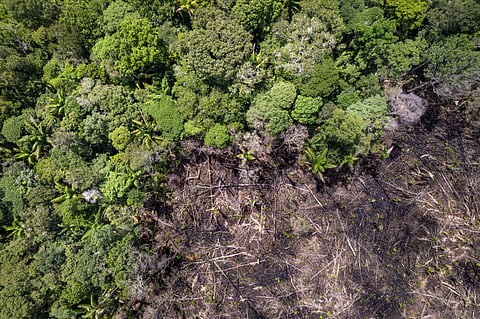
UPSC CURRENT AFFAIRS – 21st March 2025 Home / Billions needed to save forests, but funding fuelling their destruction, reveals UNDP report About the Report A recent report, Transforming Forest Finance, released on March 20, 2025 was released by the Forest Declaration Assessment and supported by the United Nations Development Programme (UNDP). It highlights a severe shortfall in global financial support for forest conservation. The report warns that, instead of preventing deforestation, financial flows are actively contributing to environmental destruction. The findings come ahead of the International Day of Forests on March 21, emphasizing the urgent need for financial reforms in forest conservation. Funding Gap and Misallocation of Resources The report reveals that while approximately $460 billion annually is required to halt deforestation, actual financial support falls significantly short. Moreover, for every $1 allocated to forest protection, $6 is directed towards industries that drive deforestation, such as industrial agriculture and logging. In 2023, private financial institutions invested $6.1 trillion in sectors linked to deforestation. Governments provided $500 billion annually in subsidies that encourage environmental destruction rather than conservation. This financial misallocation underscores the systemic failure in global forest finance, where unsustainable economic activities receive greater financial backing than conservation efforts. Debt Burden and Policy Failures The report highlights that many developing nations, burdened by a collective debt of $11 trillion, are compelled to exploit forest resources for short-term economic gains. Debt-driven deforestation emerges as a significant challenge, making financial reform an essential aspect of sustainable forest management. According to Imogen Long, lead author from Climate Focus, the current financial system prioritizes short-term profits over long-term sustainability. Similarly, Pablo Pacheco from WWF stresses that Indigenous Peoples and local communities—who are the best forest stewards—receive only a fraction of climate finance, which must change. Criticism of REDD+ Programme The report critiques the REDD+ (Reducing Emissions from Deforestation and Forest Degradation) programme, which compensates countries for reducing deforestation. However, it argues that the financial incentives provided under REDD+ are inadequate: Payments range between $5–$10 per tonne of carbon dioxide reduced. The actual cost of reducing emissions is estimated at $30–$50 per tonne. This financial shortfall weakens the incentive for forest-rich nations to prioritize conservation over economic exploitation. Successful Conservation Models The report also highlights successful funding mechanisms that have shown positive conservation outcomes: Mesoamerican Territorial Fund and Podáali Fund have demonstrated that direct funding to Indigenous communities leads to better conservation efforts. These models emphasize the need for decentralization of financial support to those who directly protect forest ecosystems. Key Recommendations for Financial Reform To address the challenges of inadequate and misallocated funding, the report proposes six key reforms: Reforming Public and Multilateral Finance – Institutions like the World Bank should increase funding for forest conservation. Overhauling Sovereign Debt Systems – High debt levels force countries to exploit forests for economic survival; debt restructuring is essential. Redirecting Harmful Subsidies – Governments must shift subsidies away from industries that drive deforestation toward sustainable alternatives. Increasing Direct Funding for Local Communities – Indigenous Peoples and local groups should receive more financial support to protect their lands. Strengthening Financial Regulations – Banks and investors should be required to account for deforestation risks in their portfolios. Developing New Financing Models – Initiatives like the Tropical Forest Forever Facility could provide stable, long-term funding for conservation. Global Implications and Way Forward With the 30th Conference of Parties (COP30) to the United Nations Framework Convention on Climate Change approaching, these findings are expected to influence global discussions on forest finance. The report warns that without urgent financial reforms, the world risks losing forests—one of its most crucial natural defences against climate change. Addressing financial misallocations, strengthening institutional frameworks, and prioritizing sustainable funding models are essential to reversing deforestation trends and ensuring the long-term health of global forest ecosystems.
Multilateralism and international law under seige

UPSC CURRENT AFFAIRS – 21st March 2025 Home / Multilateralism and international law under seige Why in News: The U.S. shift towards isolationism under the “America First” policy threatens multilateral institutions like the UN, ICC, and WTO, impacting global governance while creating opportunities for India to assert leadership in international affairs. Introduction The “America First” policy under U.S. President Donald Trump’s administration has marked a significant shift towards isolationism, challenging multilateral institutions and international law. Recent actions, including calls to withdraw from the United Nations (UN), the World Health Organization (WHO), and the Paris Climate Agreement, signal a retreat from global cooperation. The Disengaging Entirely from the United Nations Debacle (DEFUND) Act, introduced in the U.S. Senate, further reinforces this trend. These measures threaten the rules-based international order and pose challenges to global governance. DEFUND Act and the UN Withdrawal Threat The DEFUND Act proposes to: Repeal the United Nations Participation Act of 1945 and the United Nations Headquarters Agreement of 1947. Halt U.S. financial contributions to the UN. Restrict U.S. involvement in UN peacekeeping operations. Revoke immunity of UN officials in the U.S. Impact: Weakens the legitimacy of the UN, the primary forum for global diplomacy and conflict resolution. Hampers the UN’s ability to protect human rights, maintain peace, and address climate change. Reduces the U.S.’s influence in shaping international policies. U.S. Sanctions on the International Criminal Court (ICC) On February 6, 2025, the U.S. imposed sanctions on the ICC in response to its investigations into alleged war crimes involving U.S. and Israeli forces. The U.S. never ratified the Rome Statute, which established the ICC, yet now actively undermines its legitimacy. Contradiction: The U.S. played a key role in establishing the Nuremberg Trials post-WWII, emphasizing justice for war crimes. Impact: Weakens accountability for war crimes and crimes against humanity. Signals a disregard for international human rights law. Risks retaliation from other countries supporting the ICC’s role. U.S. Trade Protectionism and WTO Crisis The U.S. has imposed aggressive tariffs under the guise of national security, echoing the protectionist Smoot-Hawley Tariff Act of 1930, which worsened the Great Depression. The U.S. blockade on WTO’s Appellate Body appointments has created a crisis in dispute resolution, threatening the existence of the multilateral trade system. Impact: Destabilizes global trade governance. Encourages economic fragmentation. Pushes countries to seek regional trade agreements, bypassing the WTO. Implications of U.S. Isolationism Erosion of the Rules-Based International Order Institutions like the UN, ICC, WHO, and WTO rely on cooperation and shared sovereignty. U.S. disengagement weakens global frameworks for human rights, public health, and climate action. Risk of Global Retaliation Other nations may adopt countermeasures against U.S. policies. Multilateral cooperation may shift towards regional alliances, reducing U.S. influence. Strategic Opportunities for India India, a strong advocate of multilateralism, can fill the leadership vacuum left by the U.S. India’s Role in the G-20 (2025): At the G-20 Foreign Ministers’ Meeting in Johannesburg, External Affairs Minister S. Jaishankar emphasized international law, peaceful resolution of disputes, and an inclusive global approach. India’s UNSC Reform Demand: The U.S. withdrawal from multilateral institutions presents an opportunity for India to push for permanent membership in the UN Security Council (UNSC). Conclusion The U.S. retreat from multilateralism threatens global governance, economic stability, and international law. While this shift poses challenges, it also creates strategic opportunities for emerging powers like India to play a greater role in shaping global institutions. As nations resist unilateralism, India can position itself as a bridge between the Global North and South, reinforcing its commitment to a multipolar world order.
Manipur’s long road to recovery

UPSC CURRENT AFFAIRS – 21st March 2025 Home / Manipur’s long road to recovery Why in News: The Manipur crisis, marked by ethnic violence between Meitei and Kuki-Zo communities, led to President’s Rule, with the government implementing a 13-point roadmap for peace, disarmament, and economic recovery. Introduction The ongoing ethnic conflict in Manipur, which began in May 2023, has displaced over 62,000 people and led to large-scale violence, extortion, and economic collapse. The Meitei and Kuki-Zo communities remain deeply divided, with buffer zones and security forces attempting to maintain order. On February 13, 2025, the State was placed under President’s Rule following a political crisis, with a roadmap being developed to restore peace and rehabilitate displaced communities. Ethnic and Political Landscape of Manipur Ethnic Composition and Geography Meitei Community (64% of the population): Primarily Hindu, concentrated in the valley region, which covers only 10% of Manipur’s land area but holds 40 Assembly seats. Kuki-Zo and Naga Communities: Predominantly Christian, inhabiting the hill districts, which make up 90% of the State’s land area but have only 20 Assembly seats. Political Developments Leading to President’s Rule February 9, 2025: Chief Minister N. Biren Singh was summoned to Delhi amidst rising tensions within the BJP-led government. February 13, 2025: The State Assembly was dissolved, and Governor Ajay Kumar Bhalla took charge under President’s Rule. Security Situation 288 companies of Central Armed Police Forces (CAPF) are deployed. Buffer zones separate the Meitei-dominated valley and Kuki-Zo-inhabited hills, secured by the Army and CAPF but not the State Police. Key Issues and Government Response Displacement and Relief Camps Over 62,000 people remain in relief camps under poor living conditions, lacking privacy, healthcare, and basic amenities. Both Meitei and Kuki-Zo communities demand safe return to their homes, but mutual distrust remains high. Security and Arms Surrender Looted Police Weapons: Since May 2023, over 6,020 weapons and lakhs of rounds of ammunition were stolen, mostly from Meitei-dominated areas. Post-President’s Rule Crackdown: February 20, 2025: Governor urged armed groups to surrender weapons within seven days. By March 6, 2025: 1,063 weapons, 15,027 rounds of ammunition, and 684 IEDs were surrendered. 90 individuals arrested for extortion-related activities. Law and Order Situation Rise in Extortion and Abductions: Armed groups, particularly in the valley, have targeted traders and civilians. Integrated Anti-Extortion Cell: Established on January 26, 2025, to combat rising extortion threats. Bunker Removal: Over 500 bunkers (sandbag and tin shelters) used by armed groups have been dismantled to reduce conflict. Economic Collapse Markets and Trade Disruptions: Daily turnover at Ima Keithel (Imphal’s all-women market) has dropped from ₹10,000 to ₹2,000 per vendor. Private hospitals, schools, and tourism businesses are struggling due to the exodus of Kuki-Zo people. Many businesses are relocating to Guwahati, Assam, due to rampant extortion. Financial Distress: Manipur Chamber of Commerce is pushing for an RBI-backed financial package to prevent businesses from becoming Non-Performing Assets (NPA). Daily blockades and extortion fees have made transport costly and unreliable. Road to Peace: Government’s 13-Point Plan To address the crisis, the Central Government has introduced a roadmap focusing on: Disarmament: Complete surrender of illegal arms. Arrest of miscreants and extortionists. Rehabilitation of displaced people. Restoration of destroyed religious places. Ensuring free movement on highways. Deployment of security forces in sensitive areas. Improvement of relief camps and medical aid. Crackdown on armed groups violating peace agreements. Buffer zones demilitarization. Employment schemes for affected families. Encouragement of inter-community dialogue. Tackling hate speech and online misinformation. Formation of a reconciliation committee for long-term peace. Challenges Ahead Community Distrust and Political Uncertainty Kuki-Zo and Meitei communities remain deeply divided, with retaliatory violence still occurring. Uncertainty over political leadership under President’s Rule delays policy implementation. Armed Groups and Insurgency Meitei groups demand protection similar to the Kuki-Zo insurgents under the Suspension of Operations (SoO) agreement with the Centre. Frequent rebuilding of illegal bunkers challenges peacekeeping efforts. Economic Recovery Without major financial intervention, Manipur’s businesses and workforce face an uncertain future. Conclusion The Manipur crisis remains a complex humanitarian, security, and political challenge. While President’s Rule has restored some stability, long-term peace requires disarmament, rehabilitation, economic revival, and inter-community dialogue. The Government of India must act as a neutral facilitator to ensure sustainable peace through political dialogue and reconciliation efforts.
Should immigrants have the same right to protest as citizens?

UPSC CURRENT AFFAIRS – 21st March 2025 Home / Should immigrants have the same right to protest as citizens? Why in News: The U.S. crackdown on foreign student protests, including the deportation of Indian doctoral student raises concerns over free speech, immigration laws, and national security policies. U.S. Crackdown on Foreign Student Protests Indian doctoral student Ranjani Srinivasan left the U.S. on March 11, 2025, after her visa was revoked following an ICE raid accusing her of being a “pro-Hamas sympathizer.” This follows the arrest of Palestinian student Mahmoud Khalil for alleged ties to a U.S.-designated terrorist group, raising concerns over immigrants’ rights to protest and free speech restrictions. Do Immigrants Have the Right to Protest? Article 19 of ICCPR grants freedom of expression to all, including immigrants, but allows restrictions for national security and public order. In the U.S., First Amendment protections extend to non-citizens but are uncertain in deportation cases. U.S. Legal Justifications Immigration and Nationality Act, 1952 allows deportation for supporting terrorist activities. Trump’s 2025 executive order cracks down on antisemitism on campuses but raises constitutional concerns. Section 212(a)(3)(C) of the Act allows deportation for “adverse foreign policy consequences”, criticized as vague and arbitrary. Judicial and Policy Concerns U.S. immigration judges operate under the Department of Justice, raising concerns of political influence over deportation cases. Holder v. Humanitarian Law Project (2010) protects mere membership in a group, requiring proof of material support for criminal prosecution. Impact on U.S. Soft Power & Higher Education Crackdowns could undermine U.S. credibility in promoting free speech and democracy globally. $400 million funding cuts for Columbia University could deter international students from studying in the U.S. Constitutional Basis While the Right to Protest is not explicitly mentioned as a Fundamental Right, it is derived from Article 19 of the Constitution, which guarantees the Right to Freedom of Speech and Expression. Key Provisions Under Article 19 Article 19(1)(a): The Right to Free Speech and Expression allows individuals to express opinions on government actions and policies. Article 19(1)(b): The Right to Association enables people to form political groups or organizations to challenge government decisions. Article 19(1)(c): The Right to Peaceful Assembly allows citizens to organize protests, demonstrations, and public meetings to hold the government accountable. These rights collectively empower citizens to protest peacefully against government policies, actions, or inaction. Significance of the Right to Protest Acts as a Democratic Watchdog: Ensures that the government remains accountable to the people. Provides Feedback Mechanism: Enables public participation in governance and policy correction. Strengthens Democracy: Encourages public discourse, consultations, and discussions on laws and policies. Restrictions on the Right to Protest The Right to Protest is not absolute and is subject to reasonable restrictions under Article 19(2), which allows limitations in the interests of: Sovereignty and integrity of India Security of the State Friendly relations with foreign states Public order Decency or morality Contempt of court Defamation Incitement to an offense Additionally, violence during protests violates Article 51A, which makes it a fundamental duty to safeguard public property and abstain from violence. Key Supreme Court Judgments Shaheen Bagh Protests Case (2019): The SC upheld the right to peaceful protest but ruled that public spaces cannot be occupied indefinitely. Mazdoor Kisan Shakti Sangathan Case (2018): The SC balanced the rights of local residents and protesters, directing the police to designate areas for protests. Ramlila Maidan Incident v. Home Secretary (2012): The SC ruled that citizens have a fundamental right to peaceful protest, which cannot be arbitrarily restricted by the executive or legislature.
Decoding the new routes of Tiger traders
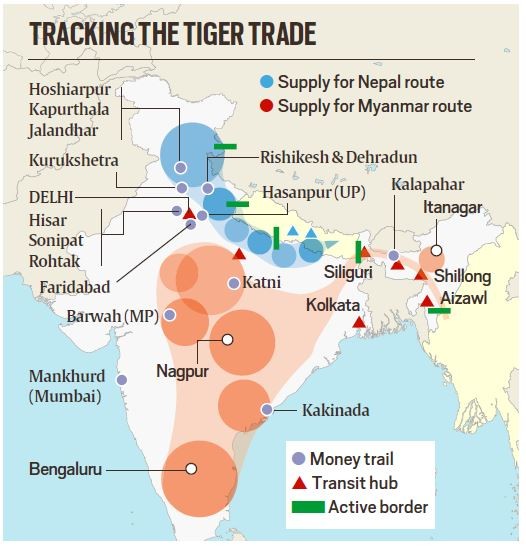
UPSC CURRENT AFFAIRS – 21st March 2025 Home / Decoding the new routes of Tiger traders Why in News: The resurgence of tiger poaching in India, facilitated by advanced technology, digital transactions, and shifting trafficking routes through Myanmar. Introduction India, home to more than 75% of the world’s tiger population, has long battled poaching and illegal wildlife trade. Despite conservation successes, a new-age poaching mafia has emerged, leveraging technology, digital payments, and hawala networks to evade law enforcement. The shift from traditional Nepal-Tibet routes to Myanmar has further complicated enforcement efforts. Weak institutional capacity, poor inter-agency coordination, and lack of political will hinder effective action against these wildlife crimes. Changing Trends in Tiger Poaching and Trafficking Shift in Trafficking Routes Historically, tiger parts were smuggled via Nepal and Tibet to meet Chinese market demands. However, post-2020, traffickers increasingly use Myanmar as a major exit channel to China, Vietnam, and possibly Laos. Traditional Routes: Nepalese and Tibetan traffickers used routes via Pithoragarh (Uttarakhand), Maharajganj (UP), and Siliguri (West Bengal) to reach Tibet through Taklakot, Gyirong, and Tatopani. New Routes: Post-pandemic, syndicates have realigned towards Myanmar, making it a key exit point for tiger bone and skins. Integration of Advanced Technologies Poachers use social media and encrypted messaging platforms for coordination. Digital transactions, including cryptocurrency and hawala networks, facilitate payments. GPS and drone surveillance help track enforcement movements. Increased Coordination Among Wildlife Trafficking Networks Traditional tiger traders now collaborate with rhino horn smugglers who have long used the northeastern route. Syndicates operate across multiple states, exploiting the lack of inter-state coordination among law enforcement agencies. Institutional Challenges in Tackling Wildlife Crime Fragmented Law Enforcement Multiple agencies (WCCB, CBI, DRI, state forest departments) operate in silos, lacking coordination. State forest departments rarely share intelligence, despite poaching networks spanning multiple states. Weak Capacity of Wildlife Crime Control Bureau (WCCB) Sanctioned strength of only 10 trained wildlife inspectors, with 4 posts vacant. Overall, 24% vacancy rate within the bureau. Lack of domain expertise among deputed officers from paramilitary forces. Low Conviction Rates and Weak Prosecution Of 1,400 poaching suspects tracked by WPSI (1992-2005), only 14 convictions were recorded. Even when convicted, offenders often return to poaching, as wildlife crime remains a lucrative trade. Prosecution remains slow and ineffective, leading to lengthy trials and low deterrence. Policy Recommendations and the Way Forward Strengthening Law Enforcement and Inter-Agency Coordination WCCB should be expanded with increased staffing, funding, and training. Establish a centralized wildlife crime database for seamless intelligence sharing. Enhance coordination between state forest departments, border agencies, and cybercrime units. Technology-Driven Anti-Poaching Measures AI-based tracking systems to monitor poaching hotspots. Drones and satellite surveillance for real-time monitoring of tiger reserves. Strengthen cyber monitoring of digital transactions linked to wildlife trade. Strengthening Legal Framework and Fast-Tracking Prosecutions Amend the Wildlife (Protection) Act, 1972, to increase penalties and introduce minimum sentencing guidelines. Establish special fast-track courts for wildlife crime cases. Implement strict financial investigations to dismantle wildlife crime funding networks. Regional and International Cooperation Strengthen transboundary cooperation with Nepal, Myanmar, and China through diplomatic engagement. Expand collaboration with INTERPOL, CITES, and regional wildlife enforcement networks. Conclusion India’s tiger conservation success is under serious threat from highly organized poaching syndicates that exploit institutional weaknesses and digital networks. To combat this, India needs strong political will, enhanced enforcement capacity, and advanced technological interventions. Only through a coordinated, intelligence-driven approach can India secure its tiger population and combat the growing menace of wildlife crime.
International Day of Forests 2025

UPSC CURRENT AFFAIRS – 21st March 2025 Home / International Day of Forests 2025 Why in News: On International Day of Forests 2025, India reaffirms its commitment to forest conservation, sustainable agriculture, and climate resilience through initiatives like the Green India Mission, National Agroforestry Policy, and Van Dhan Yojana. Introduction Forests are essential for ecological balance, providing oxygen, food, medicine, and livelihoods to millions. They play a crucial role in global food security, supporting indigenous and rural communities with natural resources like fruits, seeds, and roots. Recognizing their importance, the United Nations (UN) declared March 21 as the International Day of Forests (IDF) in 2012, with a new theme each year. The 2025 theme, “Forests and Food,” highlights the deep connection between forests and sustainable agriculture, nutrition, and rural economies. In India, forests are intertwined with cultural, economic, and biodiversity aspects, making their protection an environmental and national priority. To promote forest conservation and sustainable use, the Ministry of Environment, Forest, and Climate Change (MoEF&CC) has implemented several initiatives linking forests to food security, livelihoods, and climate resilience. National Agroforestry Policy (2014) Agroforestry integrates trees and crops to enhance soil fertility, increase farm productivity, and generate additional income for farmers. The National Agroforestry Policy (NAP), launched in 2014, aims to promote tree plantation on farmlands to support climate resilience and economic sustainability. Objectives: Encourage farmers to adopt agroforestry for climate adaptation. Promote tree-based farming to improve biodiversity and carbon sequestration. Implementation Strategy: Establishment of Quality Planting Material (QPM) nurseries for farmers. Technical support provided by the ICAR-Central Agroforestry Research Institute (CAFRI). Collaboration with ICFRE, CSIR, ICRAF, and state agricultural universities. Economic Support: Price guarantees and buy-back options for farm-grown trees. Private sector involvement in marketing and value addition of agroforestry products. Integration with millet promotion to enhance food security. Green India Mission (GIM) – A Climate Action Strategy The Green India Mission (GIM) is a critical component of India’s National Action Plan on Climate Change (NAPCC). Launched in 2015-16, GIM aims to expand forest cover, restore ecosystems, and mitigate climate change impacts. Mission Goals: Expand forest/tree cover by 5 million hectares (mha). Improve the quality of another 5 mha of forests. Enhance biodiversity and carbon storage. Improve livelihoods of 3 million forest-dependent households. Sub-Missions: Enhancing Forest Cover – Improving forest quality and ecosystem services. Ecosystem Restoration – Reforesting degraded lands. Urban Greening – Increasing tree cover in cities. Agroforestry & Social Forestry – Promoting carbon sequestration. Wetland Restoration – Revitalizing critical wetlands. Funding and Implementation: ₹909.82 crores allocated to 17 states and 1 Union Territory for forest restoration. Ecosystem Services Improvement Project (ESIP), a World Bank-funded initiative, is being implemented in Chhattisgarh and Madhya Pradesh. Forest Fire Prevention & Management Scheme Forest fires pose a significant threat to biodiversity, climate, and livelihoods. The Forest Fire Prevention & Management Scheme (FFPM) is a Centrally Sponsored Scheme aimed at preventing and controlling forest fires. Objectives: Reduce forest fire incidents through community participation. Develop early warning systems using Remote Sensing, GPS, and GIS technology. Strengthen forest fire detection with satellite-based monitoring. Implementation Strategy: Forest Survey of India (FSI) provides real-time fire alerts via SMS and email. A Crisis Management Group under MoEF&CC coordinates fire response. Development of a National Action Plan on Forest Fire in consultation with State Forest Departments and the National Disaster Management Authority (NDMA). Van Dhan Yojana – Empowering Tribal Communities Launched in 2018 by the Ministry of Tribal Affairs and TRIFED, the Pradhan Mantri Van Dhan Yojana (PMVDY) promotes sustainable livelihoods for tribal communities by enhancing the value of Minor Forest Produce (MFPs). Key Features: Establishment of Van Dhan Vikas Kendras (VDVKs) for processing and marketing forest products. Each VDVK consists of 300 tribal members from 15 Self-Help Groups (SHGs). Financial Support: ₹15 lakh allocated per Kendra. Tribal members contribute ₹1,000 each to ensure ownership and sustainability. Two-Stage Implementation: Stage I: Establish 6,000 Kendras across tribal districts. Stage II: Scale up successful Kendras with better storage and processing infrastructure. Impact: Enhances tribal income and reduces migration. Promotes sustainable forest management and biodiversity conservation. Conclusion India’s commitment to forest conservation and sustainable development is reflected in initiatives like the National Agroforestry Policy, Green India Mission, Forest Fire Prevention Scheme, and Van Dhan Yojana. These programs restore ecosystems, support livelihoods, and combat climate change, aligning with global sustainability goals.
What are the different risks and rewards of using UAVs?

UPSC CURRENT AFFAIRS – 21st March 2025 Home / What are the different risks and rewards of using UAVs? Why in News: The increasing use of UAVs for surveillance and cross-border activities necessitates a strategic response from India to balance national security with cost-effective countermeasures. Introduction The recent sighting of two Chinese Unmanned Aerial Vehicles (UAVs) near Okinawa and Japan’s measured response highlights the evolving dynamics of aerial security. Unlike piloted aircraft, UAVs are often perceived as a lesser threat due to their unmanned nature and limited offensive capabilities. However, this perception also emboldens states to deploy UAVs for reconnaissance and covert operations without significant fear of escalation. For India, UAV incursions—especially from Pakistan and Bangladesh—pose unique security challenges, requiring a strategic response that balances deterrence with cost-effectiveness. Why Are UAVs Seen as Less of a Threat? Several factors contribute to UAVs being perceived as a lower threat compared to piloted fighter jets: Limited Offensive Capabilities: While some UAVs can carry weapons, they are generally less capable than fighter jets. Many UAVs serve non-combat roles such as reconnaissance and surveillance. Absence of Human Presence: The lack of a pilot reduces the political and military costs of losing an aircraft. Shooting down a UAV does not lead to the loss of human life, making states less hesitant to deploy them near foreign airspace. Lower Economic Costs: UAVs are more expendable than piloted aircraft. Countries may use them for intelligence-gathering missions or low-risk provocations without risking expensive military assets. Minimal Retaliatory Consequences: Past incidents, such as Iran’s downing of a U.S. surveillance drone in 2019 and Russia’s destruction of an American MQ-9 Reaper in 2023, did not lead to major military escalations, reinforcing the notion that UAVs can be intercepted without severe repercussions. The Dual-Edged Nature of UAV Operations While the lower perceived threat of UAVs prevents immediate escalation, it also incentivizes risk-taking behavior by states. Countries are more likely to conduct UAV missions near contested borders or within adversarial airspace, knowing that the response will likely be restrained. This creates challenges for national security and aerial defense. India’s UAV Challenge Pakistan’s Use of UAVs for Cross-Border Activities Pakistan has frequently used small, propeller-powered UAVs for illegal activities such as smuggling arms and drugs across the border. Since the Pakistani government does not take accountability for these incursions, India must address the issue through cost-effective countermeasures. In 2019, India used an expensive air-to-air missile launched from a Su-30 fighter jet to shoot down a UAV—a financially unsustainable approach for routine UAV threats. Instead, India must explore cheaper alternatives such as: Jamming and electronic warfare (EW) systems to disable UAV communications. Dedicated counter-drone technology like anti-drone lasers and drone-hunting UAVs. Ground-based air defense systems optimized for low-cost interception. Bangladesh’s Deployment of UAVs Near the Indian Border Recently, Bangladesh deployed Turkish Bayraktar TB-2 UAVs for surveillance near the Indian border. The TB-2, a large fixed-wing UAV, has endurance and size comparable to piloted aircraft. In the unlikely event of such UAVs entering Indian airspace, India must assess the risk level and respond proportionally to prevent escalation. Potential responses could include: Diplomatic Engagement: Raising concerns through diplomatic channels before resorting to military action. Non-Lethal Interception: Deploying UAVs to shadow and warn intruding drones rather than shooting them down immediately. Layered Defense Strategies: Utilizing radars and surface-to-air missiles (SAMs) for selective engagement based on the threat level. Strategic Evolution: Integrating UAVs into India’s Defense Doctrine As UAVs become an integral part of modern warfare, India must enhance its drone warfare capabilities. Steps to strengthen UAV strategy include: Indigenous UAV Development: Investing in domestic UAV programs to reduce dependence on foreign technology. Advanced Surveillance Networks: Deploying high-resolution radar and AI-based tracking systems for improved UAV detection. Offensive Drone Capabilities: Developing armed UAVs for deterrence and retaliatory strikes if needed. Collaboration with Allies: Strengthening UAV-based intelligence-sharing with strategic partners. Conclusion The increasing use of UAVs in military and security operations necessitates a well-calibrated approach from India. While UAVs present a lower risk of direct military escalation, their use for surveillance, smuggling, and cross-border provocations poses strategic challenges. A balanced response combining technological innovation, cost-effective defense systems, and diplomatic engagement will be crucial in securing India’s airspace while avoiding unnecessary conflicts.
Human Evolution- Modern humans likely descended from two ancient populations

UPSC CURRENT AFFAIRS – 20 March 2025 Home / Human Evolution- Modern humans likely descended from two ancient populations Why in News: Recent research published in Nature Genetics challenges the conventional belief that modern humans originated from a single ancestral population. Instead, the study suggests that Homo sapiens evolved from two distinct ancient populations, which intermingled approximately 300,000 years ago. This finding has significant implications for understanding human evolutionary history and the genetic contributions of early hominins. Key Findings of the Study Two Ancestral Populations: One group contributed 80% and another 20% of the modern human genome. These populations coexisted and later merged, shaping the genetic diversity seen today. Use of Advanced Genetic Models: The study utilized data from the 1000 Genomes Project, which includes DNA sequences from populations across Africa, Asia, Europe, and the Americas. A computational model called COBRAA was used to analyze genetic mutations and reconstruct ancestral population dynamics. Evolutionary Implications: The larger ancestral group was likely the common ancestor of Neanderthals and Denisovans, who later diverged. Genetic mixing was more extensive than previously believed, with modern humans receiving ten times more genetic material from these early populations than from Neanderthals and Denisovans. Fossil evidence suggests that Homo erectus and Homo heidelbergensis may have been the primary ancestors of Homo sapiens. Significance of the Research Challenges the “Single-Origin” Hypothesis: Earlier models suggested that modern humans arose from a single African population. This study indicates that human evolution was more complex, involving multiple interacting populations. Reinforces the Role of Genetic Mixing: Previous studies found 2-5% Neanderthal DNA in non-African modern humans. This new research shows that earlier interbreeding events contributed a much higher proportion of genetic material to modern humans. Fossil Evidence and Further Research: Homo erectus and Homo heidelbergensis lived in Africa and other regions during this period, but their exact role in human ancestry remains uncertain. Further ancient DNA analysis and fossil discoveries are needed to confirm these findings. Conclusion The study presents a new paradigm in human evolutionary history, suggesting that modern humans emerged through genetic contributions from multiple ancestral populations rather than a single lineage. This research highlights the need for further investigations into ancient DNA, fossil records, and advanced genetic modeling to refine our understanding of human origins.
Rare Earths: Indispensable to Modern Tech, A Geopolitical Quandary

UPSC CURRENT AFFAIRS – 20 March 2025 Home / Rare Earths: Indispensable to Modern Tech, A Geopolitical Quandary Why in News: Rare Earth Elements (REEs) are 17 critical metals essential for electronics, renewable energy, defence, and high-tech industries, with India holding the fifth-largest global reserves but facing extraction and processing challenges. Introduction Rare Earth Elements (REEs) are a group of 17 chemically similar elements comprising 15 lanthanides along with scandium and yttrium. Despite being moderately abundant in the Earth’s crust, their economic extraction is challenging due to their low concentration in ores. REEs play a crucial role in high-tech industries, renewable energy, defence, and electronics, making them strategically significant for global economies. Types and Characteristics of Rare Earth Elements Classification of REEs: REEs are categorized into two groups based on their atomic numbers and chemical properties: Light Rare Earth Elements (LREEs) (Atomic Numbers 57-63): Examples: Lanthanum (La), Cerium (Ce), Praseodymium (Pr), Neodymium (Nd), Promethium (Pm), Samarium (Sm), Europium (Eu) More abundant and easier to extract Heavy Rare Earth Elements (HREEs) (Atomic Numbers 64-71): Examples: Gadolinium (Gd), Terbium (Tb), Dysprosium (Dy), Holmium (Ho), Erbium (Er), Thulium (Tm), Ytterbium (Yb), Lutetium (Lu) Scarcer but critical for advanced technologies Scandium (Sc) and Yttrium (Y): Classified with HREEs due to similar chemical and physical properties Key Properties: High density, high melting points, and excellent thermal conductivity Strong magnetic, catalytic, and luminescent properties Trivalent charge (+3) and similar ionic radii, leading to comparable chemical behavior Principal Sources of REEs: Monazite (Phosphate-based, contains thorium & uranium) – Found in India’s coastal sands Bastnaesite (Fluorocarbonate) – Major source in China & USA Xenotime (Yttrium Phosphate) – Found in mineral sand deposits Loparite (Titanate-based, found in igneous rocks) Global Distribution and India’s Position China holds the largest reserves (37%) and dominates REE production (~90% of global supply). India ranks fifth globally in REE resources, with deposits mainly found in monazite-rich beach sands of Kerala, Odisha, Tamil Nadu, and Andhra Pradesh. Other major reserve holders include Brazil (18%), Vietnam (18%), and Russia (10%). Strategic Importance and Applications of REEs Electronics & High-Tech Devices Used in smartphones, laptops, hard disks, cameras, and LED displays Lanthanum contributes to 50% of digital camera lenses Erbium is essential for fiber-optic communication Green Technologies Neodymium-Iron-Boron (Nd-Fe-B) magnets for wind turbines and electric vehicles (EVs) Lanthanum-based alloys in Nickel-metal hydride batteries used in hybrid cars Cerium-based catalysts in automobile catalytic converters Defence & Space Technologies Critical in radar systems, missile guidance, satellite communications, and fighter jets Samarium-cobalt magnets for high-temperature resistance in military applications Energy & Nuclear Sector Cerium-based catalysts in petroleum refining Thorium-based nuclear reactors, leveraging India’s monazite reserves Healthcare & Medical Devices Used in MRI machines, laser scalpels, antiseptic dressings, and cancer drugs Steel & Glass Industry Lanthanum, neodymium, praseodymium in special steel alloys Cerium-based polishing agents in glass manufacturing Challenges and Concerns Environmental Impact (Rare Earth Dilemma) Toxic waste generation – For every 1 ton of REE extraction, 2,000 tons of hazardous waste is produced Water and soil contamination due to radioactive elements like thorium and uranium Monopoly of China China controls 90-95% of global REE supply, affecting geopolitical stability Increasing efforts by Australia, USA, Brazil, and Russia to counter China’s dominance Extraction & Processing Challenges India lacks advanced refining technology, leading to dependence on imports High capital costs for REE separation and processing Way Forward: Strengthening India’s REE Capabilities Policy & Strategic Initiatives National Rare Earth Policy: Develop a strategic roadmap for sustainable REE mining Public-Private Partnerships (PPP): Encourage private investment in REE processing infrastructure Sustainable Mining & Recycling Develop eco-friendly extraction technologies to minimize environmental damage REE recycling initiatives from e-waste and industrial byproducts Strengthening Indigenous Research & Manufacturing Establish Centres of Excellence for REE research under CSIR and ISRO Promote domestic processing units to reduce import dependence Enhancing Global Cooperation Collaborate with Japan, USA, Australia, and EU nations for technology-sharing Secure long-term REE supply agreements with resource-rich nations Conclusion Rare Earth Elements (REEs) are indispensable for modern technology, driving advancements in renewable energy, electronics, defence, and healthcare. While India holds vast REE reserves, challenges like environmental risks, China’s monopoly, and lack of refining capabilities need urgent policy attention. Strategic investments in sustainable mining, recycling, and global partnerships will be crucial for India’s self-reliance in critical mineral resources and its vision of Atmanirbhar Bharat.
PEPSU Muzhara Movement- a review

UPSC CURRENT AFFAIRS – 20 March 2025 Home / PEPSU Muzhara Movement- a review Why in News: The Muzhara Movement was an agrarian struggle in Punjab where tenant farmers (muzharas) fought for land ownership rights, leading to land reforms in 1952 and marking March 19 as a symbol of resistance. Introduction The Muzhara Movement was a significant agrarian struggle in Punjab, marking the fight of landless tenant farmers (muzharas) for ownership rights over the land they had cultivated for generations. It played a crucial role in shaping land reforms in post-independence India, ultimately leading to the redistribution of land to tenant farmers. Historical Background The movement originated in the 1930s in the princely state of Patiala and continued after independence when princely states were reorganized into the Patiala and East Punjab States Union (PEPSU). It was later renamed the PEPSU Muzhara Movement, gaining widespread participation from 784 villages across modern-day Patiala, Barnala, Mansa, Sangrur, Bathinda, Mohali, Fatehgarh Sahib, Faridkot, and Jind (now in Haryana). Muzharas, who were tenant farmers, worked under the oppressive feudal system of biswedars (landlords), who took a share of their produce while paying revenue to the ruling kings and the British. Even after independence, landlords continued to demand their share, leading to intensified protests by tenant farmers. Significance of March 19 The turning point in the movement occurred in March 1949, when biswedars attempted to reclaim land from the muzharas in Kishangarh village (Mansa district, Punjab). The tenant farmers resisted, leading to violent confrontations. March 17, 1949: A standoff with Patiala police resulted in the death of a police officer, leading to the arrest of 35 muzharas, who were later acquitted in February 1950. March 19, 1949: The army surrounded Kishangarh village, leading to the death of four muzharas in a violent clash. Since 1953, March 19 has been observed annually as a symbol of resistance and martyrdom in Punjab’s agrarian struggles. Key Leaders of the Muzhara Movement Several prominent figures played a crucial role in mobilizing tenant farmers and leading the resistance: Jagir Singh Joga – A key organizer who mobilized tenant farmers against landlords. Buta Singh – A prominent activist advocating for land rights and redistribution. Teja Singh Sutantar – A revolutionary associated with multiple peasant movements, supporting the Muzhara struggle. Sewa Singh Thikriwala – A leader whose anti-princely rule ideology influenced the movement. Bhai Jodh Singh – A grassroots activist who helped strengthen the movement through awareness campaigns. Impact of the Muzhara Movement Land Reforms: The movement led to land ownership rights being granted to tenant farmers by 1952, ending feudal exploitation in Punjab. Farmers’ Resistance Legacy: It inspired later agrarian movements, including the recent farmer protests against agricultural reforms. Commemoration: The village Kishangarh has a memorial dedicated to Muzhara martyrs, symbolizing their contribution to Punjab’s agrarian history. Observance of the Movement Traditionally, a three-day conference was held annually in Kishangarh, attended by farmers traveling on bicycles and carts to participate in speeches and discussions. Over the years, it has been reduced to a one-day event, organized by farmers’ unions and political groups, including BKU Dakaunda, Jamhoori Kisan Sabha, and CPI-affiliated organizations. The entry gate of Kishangarh village bears an inscription dedicated to the martyrs of the Muzhara Movement, and a memorial hall was constructed on land formerly occupied by a landlord’s haveli. Conclusion The Muzhara Movement remains a landmark in India’s agrarian history, demonstrating farmers’ resilience against feudal oppression. Its legacy continues to inspire contemporary struggles for farmers’ rights and land reforms, reinforcing the importance of grassroots movements in shaping socio-economic policies.