Dowry Deaths in India
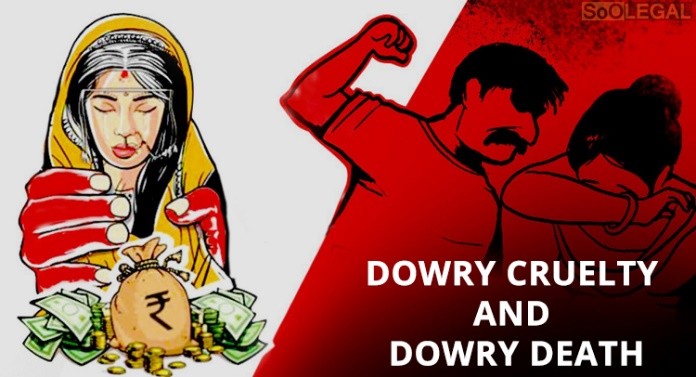
UPSC CURRENT AFFAIRS – 17th July 2025 Home / Dowry Deaths in India Why in News? Despite legal bans, dowry-related violence persists in India are marked by high death rates, slow investigations, and low conviction rates. Introduction Despite being outlawed for decades, the practice of dowry continues to claim the lives of thousands of women in India. In the past three months alone, multiple heart-wrenching cases have emerged from various parts of the country allegedly caused by dowry harassment. These tragic incidents are not isolated but symptomatic of a deeper societal malaise and systemic failure in addressing dowry-related violence. Recent Incidents: A Grim Picture The following recent cases illustrate the continued brutality faced by women in matrimonial homes: In Aligarh, Uttar Pradesh, a woman died after being tortured with a hot iron due to dowry demands. In Pilibhit, also in Uttar Pradesh, a woman was allegedly burned alive by her in-laws for not fulfilling dowry expectations. In Chandigarh, a newlywed died by suicide allegedly due to dowry harassment. In Ponneri, Tamil Nadu, a bride ended her life four days after her wedding, citing harassment from her in-laws. Another woman in Tiruppur, Tamil Nadu, also took her life within two months of marriage due to similar reasons. These incidents span across diverse regions and underline a harsh reality: dowry-related violence is a pan-India issue, cutting across geography, caste, and class. Legal Framework Against Dowry India has several laws to prohibit dowry and protect women: Dowry Prohibition Act, 1961: Prohibits the giving or taking of dowry. Section 80 of BNS: Deals with dowry deaths, mandating a minimum of 7 years to life imprisonment. Section 85 of BNS: Punishes cruelty to a woman by her husband or his relatives. Protection of Women from Domestic Violence Act, 2005: Provides civil remedies in addition to criminal laws. Despite this legal infrastructure, the data suggests poor implementation and weak judicial outcomes. NCRB Data: Underreporting and Low Conviction According to the National Crime Records Bureau (NCRB): Average of 7,000 dowry deaths reported annually between 2017 and 2022. These are only reported cases—many more remain hidden due to fear, stigma, or family pressure. Over 6,100 murders were directly attributed to dowry during this period. Geographical Concentration: 80% of all dowry deaths occurred in Uttar Pradesh, Bihar, Madhya Pradesh, Rajasthan, Haryana, West Bengal, Odisha, and Jharkhand. Among cities, Delhi alone accounted for 30% of all urban dowry death cases, followed by Kanpur, Bengaluru, Lucknow, and Patna. Systemic Failures: From FIR to Conviction Slow Investigation and Charge-Sheeting Of the 7,000 annual cases, only about 4,500 are charge-sheeted. Reasons for delay include: Cases pending for over 6 months. Investigations closed due to “insufficient evidence” or “false complaint”. 70% of charge-sheets in 2022 were filed after more than two months of investigation. Poor Conviction Rate Of the average 6,500 cases sent for trial, only around 100 result in conviction. 90%+ cases remain pending in courts. Other outcomes: Acquittals due to lack of evidence Compromises, plea bargains, or withdrawal Discharges before trial or quashing Delayed Justice Cases drag on for years. Witnesses turn hostile, evidence weakens, and victims’ families often lose faith in the legal process. Underlying Causes of Persistence Patriarchal norms: Marriage is still seen as a financial transaction in many communities. Social pressure: Women are encouraged to “adjust” rather than report harassment. Stigma: Families fear social ostracization, leading to underreporting. Economic dependency: Women often lack the financial independence to walk away from abusive marriages. Weak enforcement: Police often hesitate to act promptly in domestic violence or dowry cases. Way Forward: Multi-Pronged Approach Strengthening Legal Mechanisms Fast-track courts for dowry and domestic violence cases. Time-bound investigation and trial mandates under Section 304B IPC. Police and Judicial Reforms Sensitization of police to treat dowry complaints with urgency. Use of technology for better evidence collection (e.g., body cams, forensic tools). Witness protection mechanisms to prevent hostility in courts. Social Reforms Nationwide awareness campaigns against dowry and for women’s rights. Inclusion of anti-dowry and gender sensitization in school curricula. Promoting financial literacy and employment for women. Community and Family Counseling Government-backed counseling centers in rural and urban areas. Engagement with religious and community leaders to combat social acceptance of dowry. Economic Implications For Indian Exporters These reforms reduce transaction costs and compliance hurdles Encourage a more competitive and efficient export environment Promote value addition in key sectors like leather For Tamil Nadu The reforms particularly benefit the state’s leather industry, a major contributor to employment and exports Boost the marketability of GI-tagged E.I. leather, enhancing rural and traditional industries For Trade Policy These decisions indicate a shift from regulatory controls to policy facilitation Reinforce the goals of Make in India, Atmanirbhar Bharat, and India’s ambition to become a leading export power Recently, BVR Subrahmanyam, CEO of NITI Aayog, claimed that India has overtaken Japan to become the fourth-largest economy in the world, citing data from the International Monetary Fund (IMF). India’s rank as the world’s largest economy varies by measure—nominal GDP or purchasing power parity (PPP)—each with key implications for economic analysis. Significance and Applications
Genocide, International Law, and the Banality of Evil
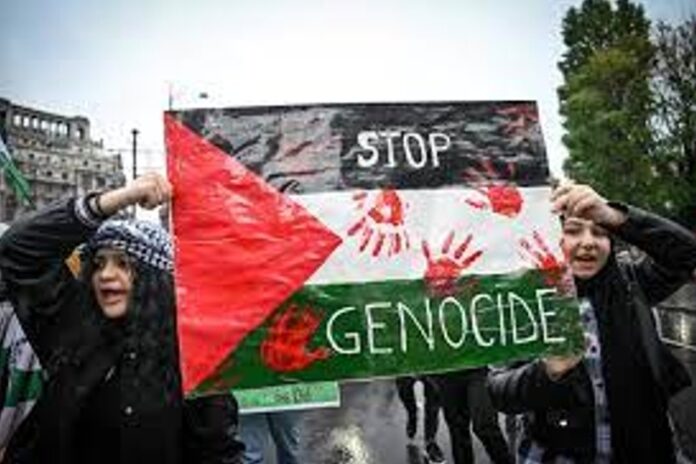
UPSC CURRENT AFFAIRS – 17th July 2025 Home / Genocide, International Law, and the Banality of Evil Why in News? UN Special Rapporteur Francesca Albanese has called Israel’s actions in Gaza a form of genocide linked to settler colonialism. Introduction The ongoing conflict in Gaza has drawn serious international scrutiny, with UN Special Rapporteur Francesca Albanese calling it a stage of a “settler colonial process of erasure” and labeling Israeli actions as potential genocide. This raises urgent legal, moral, and philosophical questions about how the international community defines, responds to, and prevents such atrocities. Understanding Origins of Genocide: The term genocide was coined by Raphael Lemkin, a Polish-Jewish lawyer, in his 1944 work Axis Rule in Occupied Europe. He formed the word using the Greek genos (race or tribe) and Latin cide (killing). Lemkin’s personal loss during the Holocaust — where he lost 49 family members — intensified his efforts to codify genocide into international law. Post-War Codification After World War II, Lemkin advocated for genocide to be recognized as a unique and prosecutable crime. His efforts culminated in the 1948 UN Convention on the Prevention and Punishment of the Crime of Genocide. The Convention defines genocide using two elements: Mental element: Intent to destroy, in whole or in part, a national, ethnical, racial, or religious group. Physical element: Acts like killing, inflicting serious harm, or forcibly transferring children. Challenges in Application and Jurisprudence Legal Limitations The Genocide Convention excludes political and social groups from its definition — a limitation criticized by genocide scholars. Proving genocidal intent is difficult, as perpetrators rarely declare such intent openly. Nonetheless, patterns of systematic action have been accepted in jurisprudence, notably in the Rwanda (1994) and Srebrenica (1995) genocides. Rome Statute and the ICC The 2002 Rome Statute gives the International Criminal Court (ICC) jurisdiction over genocide cases. However, geopolitical biases and power imbalances have led to selective enforcement, undermining justice. Colonial Genocide and Unacknowledged Atrocities Historical and ongoing atrocities against indigenous peoples — such as the Aboriginal child removals in Australia — remain under-recognized. The colonial erasure of populations through slavery, forced deportation, and cultural destruction remains inadequately addressed in international legal discourse. Moral Responsibility and the Role of Thinking Hannah Arendt and the Banality of Evil Philosopher Hannah Arendt introduced the concept of the “banality of evil” in her report on the trial of Adolf Eichmann, a Nazi bureaucrat. Arendt argued that evil can be perpetrated by ordinary people who suspend their capacity to think and reflect morally. Eichmann’s crime was not monstrous intentions, but his thoughtless obedience to the Nazi regime for bureaucratic efficiency. Judith Butler’s Reflection Philosopher Judith Butler emphasized that Arendt’s critique extended beyond Eichmann to the systemic erosion of thinking. When thinking disappears, mass violence becomes routinized and acceptable, as seen in the ongoing normalization of violence in Gaza. Contemporary Implications: Gaza and Global Conscience Francesca Albanese’s report asserts that Israel’s military actions in Gaza reflect a pattern of intent and destruction meeting the threshold of genocide. The international community’s moral and legal obligation is not just to debate terminology but to prevent and act under the Genocide Convention. The real challenge lies in overcoming political inertia and recognising evil when it disguises itself as national interest or routine policy. Conclusion The evolution of genocide as a legal and moral concept underscores humanity’s struggle to name and act against extreme violence. From Lemkin’s legal framework to Arendt’s philosophical insights, the call is clear: it is not enough to condemn genocides of the past; one must think, act, and intervene against those unfolding in the present. As Gaza burns under global gaze, the question is not whether it is genocide — but whether the world will respond to it as such. Economic Implications For Indian Exporters These reforms reduce transaction costs and compliance hurdles Encourage a more competitive and efficient export environment Promote value addition in key sectors like leather For Tamil Nadu The reforms particularly benefit the state’s leather industry, a major contributor to employment and exports Boost the marketability of GI-tagged E.I. leather, enhancing rural and traditional industries For Trade Policy These decisions indicate a shift from regulatory controls to policy facilitation Reinforce the goals of Make in India, Atmanirbhar Bharat, and India’s ambition to become a leading export power Recently, BVR Subrahmanyam, CEO of NITI Aayog, claimed that India has overtaken Japan to become the fourth-largest economy in the world, citing data from the International Monetary Fund (IMF). India’s rank as the world’s largest economy varies by measure—nominal GDP or purchasing power parity (PPP)—each with key implications for economic analysis. Significance and Applications
Prime Minister Dhan-Dhaanya Krishi Yojana (PMDDKY)
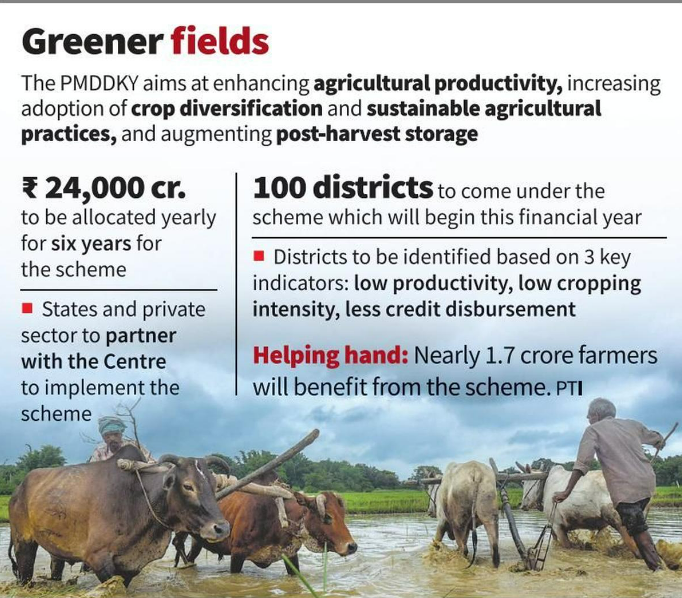
UPSC CURRENT AFFAIRS – 17th July 2025 Home / Prime Minister Dhan-Dhaanya Krishi Yojana (PMDDKY) Why in News? The Union Cabinet approved the Prime Minister Dhan-Dhaanya Krishi Yojana (PMDDKY) to enhance agricultural productivity and promote sustainable farming through convergence of existing schemes. Introduction The Union Cabinet approved the Prime Minister Dhan-Dhaanya Krishi Yojana (PMDDKY), a comprehensive initiative aimed at enhancing agricultural productivity, promoting sustainable practices, and improving the resilience of India’s agricultural sector. Announced earlier in the Union Budget 2025-26, the scheme seeks to transform the under-performing agricultural districts of India through convergence, innovation, and localized planning. Key Features of PMDDKY Massive Scheme Convergence 36 schemes from 11 Ministries merged under one umbrella scheme. Annual outlay of ₹24,000 crore for six years, starting from 2025-26. Target beneficiaries: 1.7 crore farmers across India. Modelled on Aspirational District Programme PMDDKY follows the framework of the Aspirational District Programme (ADP) and focuses exclusively on agriculture and allied sectors. Prioritizes local needs and decentralized planning. District Selection Criteria 100 districts to be selected using: Low agricultural productivity, Low cropping intensity, Low credit disbursement. At least one district per State/UT will be selected. Districts allocated based on Net Cropped Area and operational holdings. Planning and Monitoring Mechanism District Dhan Dhaanya Samiti to prepare District Agriculture and Allied Activities Plans. Committees at district, State, and national levels to ensure effective planning and implementation. Progress monitoring on a monthly basis. Core Focus Areas Post-harvest infrastructure at panchayat/block level. Irrigation enhancement and credit facilitation. Promotion of natural and organic farming. Emphasis on crop diversification, soil and water conservation, and self-sufficiency in agriculture. Expected Outcomes Increased productivity and value addition in agriculture and allied sectors. Enhanced local livelihoods and domestic self-reliance in food production. Transition towards a resilient, sustainable farming system through diversification and better resource use. Significance of the Scheme Agricultural Transformation: PMDDKY marks a structural shift from fragmented schemes to a unified, outcome-driven model. Inclusive Development: With special attention to low-performing districts, the scheme aims to bridge regional gaps in agricultural development. Alignment with National Goals: Supports Doubling Farmers’ Income, Atmanirbhar Bharat, and the UN Sustainable Development Goals (SDGs) on food security and climate resilience. Conclusion The Prime Minister Dhan-Dhaanya Krishi Yojana represents a strategic effort to modernize India’s agriculture sector by leveraging convergence, community involvement, and sustainability. If implemented effectively, the scheme has the potential to revitalize rural economies, empower farmers, and lay the foundation for a resilient agricultural future. Economic Implications For Indian Exporters These reforms reduce transaction costs and compliance hurdles Encourage a more competitive and efficient export environment Promote value addition in key sectors like leather For Tamil Nadu The reforms particularly benefit the state’s leather industry, a major contributor to employment and exports Boost the marketability of GI-tagged E.I. leather, enhancing rural and traditional industries For Trade Policy These decisions indicate a shift from regulatory controls to policy facilitation Reinforce the goals of Make in India, Atmanirbhar Bharat, and India’s ambition to become a leading export power Recently, BVR Subrahmanyam, CEO of NITI Aayog, claimed that India has overtaken Japan to become the fourth-largest economy in the world, citing data from the International Monetary Fund (IMF). India’s rank as the world’s largest economy varies by measure—nominal GDP or purchasing power parity (PPP)—each with key implications for economic analysis. Significance and Applications
Union Government selects 24 part-time National Medical Commission members
UPSC CURRENT AFFAIRS – 17th July 2025 Home / Union Government selects 24 part-time National Medical Commission members Why in News? The Union Health Ministry selected 24 part-time members of the National Medical Commission (NMC) and its autonomous boards. Introduction The Union Health Ministry finalized the selection of 24 part-time members to the National Medical Commission (NMC) and its four autonomous boards through a draw of lots This marks a significant step in reconstituting the NMC after several key posts, including full-time members and board presidents, remained vacant for over nine months. About the National Medical Commission (NMC) The NMC was constituted under the National Medical Commission Act, 2019, replacing the Medical Council of India (MCI). It functions as the apex regulatory body for medical education and profession in India. NMC aims to: Improve access to quality and affordable medical education, Ensure availability of adequate and high-quality medical professionals, Promote equitable healthcare, Set standards for medical institutions, Regulate fees and other charges for 50% of seats in private medical colleges. Composition of NMC (as per NMC Act, 2019) The NMC consists of: Chairperson 10 Ex-officio Members 22 Part-time Members Representatives from States/UTs, State Medical Councils, and experts in medical education and public health. Additionally, NMC oversees four autonomous boards: Undergraduate Medical Education Board (UGMEB) Postgraduate Medical Education Board (PGMEB) Medical Assessment and Rating Board (MARB) Ethics and Medical Registration Board (EMRB) Recent Appointment Highlights Part-time Members Appointed from States/UT Nominees: 10 members selected from State/UT Government nominees in the Medical Advisory Council (MAC) through draw of lots: States/UTs Represented: Gujarat, Rajasthan, Himachal Pradesh, Andaman and Nicobar Islands, Andhra Pradesh, Mizoram, Meghalaya, Jharkhand, Chandigarh, Madhya Pradesh Part-time Members Appointed from State Medical Council Nominees: 9 members selected from nominees of State Medical Councils in MAC (initially appointed in 2022): States Represented: West Bengal, Karnataka, Nagaland, Chhattisgarh, Tripura, Jammu & Kashmir, Assam, Manipur, Uttarakhand Significance of the Appointments These appointments aim to restore functionality to the NMC and its boards after a long vacancy period of full-time members, affecting regulatory efficiency. It is crucial for maintaining standards in: Medical education, Institutional assessments, Ethical practices of medical professionals, Issuing and maintaining medical registration. Issues and Concerns Delay in Appointments: Key posts like Presidents of three out of four autonomous boards remained vacant for over nine months, impacting the functioning of medical regulation. Transparency and Representation: Though the draw of lots ensures transparency, it may not fully account for merit or regional balance in expertise. Forward Outlook With the new appointments, the NMC is expected to expedite medical curriculum reforms, National Exit Test (NExT) implementation, Regulation of new medical colleges and PG seats, and Digitalization of medical registers and grievance redressal. Economic Implications For Indian Exporters These reforms reduce transaction costs and compliance hurdles Encourage a more competitive and efficient export environment Promote value addition in key sectors like leather For Tamil Nadu The reforms particularly benefit the state’s leather industry, a major contributor to employment and exports Boost the marketability of GI-tagged E.I. leather, enhancing rural and traditional industries For Trade Policy These decisions indicate a shift from regulatory controls to policy facilitation Reinforce the goals of Make in India, Atmanirbhar Bharat, and India’s ambition to become a leading export power Recently, BVR Subrahmanyam, CEO of NITI Aayog, claimed that India has overtaken Japan to become the fourth-largest economy in the world, citing data from the International Monetary Fund (IMF). India’s rank as the world’s largest economy varies by measure—nominal GDP or purchasing power parity (PPP)—each with key implications for economic analysis. Significance and Applications
India’s Energy Transition Milestone

UPSC CURRENT AFFAIRS – 17th July 2025 Home / India’s Energy Transition Milestone Why in News? India has achieved 50% installed power capacity from non-fossil sources, but actual generation remains below 30% due to low-capacity utilization. Introduction India has achieved a landmark in its energy transition journey by sourcing 50% of its total installed electricity capacity from non-fossil fuel sources as of June 30, 2025 — a target originally set for 2030 under its Nationally Determined Contributions (NDCs) to the Paris Agreement. However, this milestone comes with important nuances regarding actual power generation and energy utilization, which continue to depend significantly on fossil fuels, especially coal. Understanding Installed Capacity vs Actual Electricity Generation Installed Capacity: Installed Capacity refers to the maximum potential electricity that can be generated if all power plants operate at full capacity. As of June 30, 2025, India’s total installed electric capacity is 484 GW, with 50% (≈242 GW) from non-fossil fuel sources: Solar Wind Biomass Hydro (large and small) Nuclear Actual Generation: Despite the 50% installed capacity, only about 28% of the electricity actually generated came from clean sources in 2024–25, up from 17% in 2014–15. In terms of volume, clean energy generation rose from 190 billion units in 2014–15 to 460 billion units in 2024–25. Key Challenge: Capacity Utilisation Factor (CUF) What is CUF? The Capacity Utilisation Factor is the ratio of actual energy produced to the maximum possible energy that could have been produced if the plant operated at full capacity throughout the year. Source Approx. CUF Solar 20% Wind 25-30% Coal 60% Nuclear 80% Implication: Clean energy sources, especially solar and wind, have low CUFs due to their intermittent nature (solar energy is not available at night, wind is seasonal). Hence, even with high installed capacity, contribution to actual electricity supply is lower. Policy and Technological Solutions Grid Flexibility and Smart Management Presently, consumers pay the same per-unit price for electricity regardless of time. Introduction of time-of-day pricing or differential tariffs (e.g., cheaper day rates) can incentivize solar usage. Requires smart grids, real-time monitoring, and dynamic pricing mechanisms. Battery Storage and Hybrid Energy Projects Storage systems can absorb surplus solar/wind energy and discharge it during evening peaks. Hybrid Projects (solar + wind + storage) are emerging as promising solutions. Example: A hybrid system can integrate solar (daytime) and wind (night-time) with battery backup, enabling round-the-clock renewable power supply. Challenges in Deployment: Land aggregation issues High cost of battery storage Lack of coordinated transmission infrastructure Regulatory delays and funding constraints Strategic Steps: Strengthen and expand national grid capacity Incentivize renewable storage infrastructure Promote private sector investment in hybrid and storage technologies Revise tariff policies to encourage demand-side management Increase R&D in energy storage solutions (like lithium-ion, pumped hydro) Conclusion India’s achievement of 50% non-fossil installed electricity capacity, five years ahead of schedule, marks a critical milestone in its climate action journey. However, the disparity between installed capacity and actual generation underscores the need for strategic interventions in grid flexibility, energy storage, and smart policy reforms. As India aims for net zero by 2070, focusing on quality, not just quantity of clean energy capacity will be essential for a sustainable and resilient energy future. Economic Implications For Indian Exporters These reforms reduce transaction costs and compliance hurdles Encourage a more competitive and efficient export environment Promote value addition in key sectors like leather For Tamil Nadu The reforms particularly benefit the state’s leather industry, a major contributor to employment and exports Boost the marketability of GI-tagged E.I. leather, enhancing rural and traditional industries For Trade Policy These decisions indicate a shift from regulatory controls to policy facilitation Reinforce the goals of Make in India, Atmanirbhar Bharat, and India’s ambition to become a leading export power Recently, BVR Subrahmanyam, CEO of NITI Aayog, claimed that India has overtaken Japan to become the fourth-largest economy in the world, citing data from the International Monetary Fund (IMF). India’s rank as the world’s largest economy varies by measure—nominal GDP or purchasing power parity (PPP)—each with key implications for economic analysis. Significance and Applications
India’s first tribal genome project launched
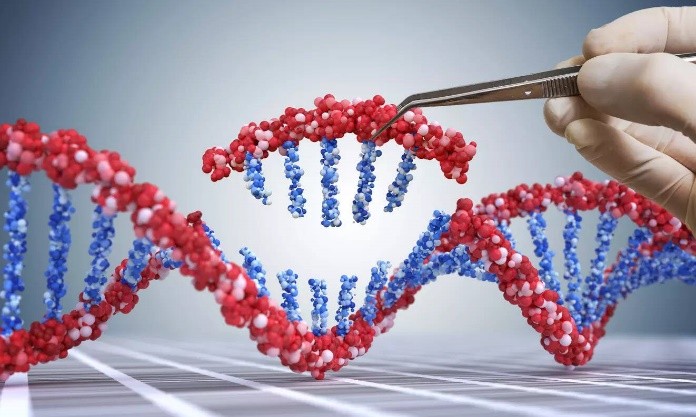
UPSC CURRENT AFFAIRS – 17th July 2025 Home / India’s first tribal genome project launched Why in News? India’s first tribal genome sequencing project to build a genetic reference database for tribal populations was launched recently by Gujarat government. Introduction Gujarat has become the first Indian state to initiate a genome sequencing project exclusively focused on its tribal communities. The project, titled “Creation of Reference Genome Database for Tribal Population in Gujarat,” was announced during a high-level consultation chaired by State Tribal Development Minister Kuber Dindor. What is Genome Sequencing? Genome sequencing refers to the process of decoding the complete DNA sequence of an organism’s genome. It identifies genetic variants that may contribute to disease, resistance, or particular traits, and provides a foundation for personalized medicine Key Features of the Gujarat Tribal Genome Project Feature Details Title Creation of Reference Genome Database for Tribal Population in Gujarat Implementing Agency Gujarat Biotechnology Research Centre (GBRC) Scope Sequencing of genomes of 2,000 tribal individuals from 17 districts Budget Part of the 2025–26 Gujarat State Budget Targeted Disorders Sickle cell anaemia, thalassaemia, hereditary cancers Objective Early detection, targeted treatment, personalized healthcare for tribal populations Significance of the Project Public Health Impact Tribal communities are often disproportionately affected by genetic disorders. This project enables early detection of diseases like sickle cell anaemia, which has a high prevalence among Indian tribal populations. Supports precision medicine, allowing for treatments tailored to individual genetic profiles. Scientific Milestone Aims to create a comprehensive genetic reference database for tribal communities. Will contribute to national-level databases for population genomics. Enhances India’s capability in bioinformatics, personalised healthcare, and medical research. Empowerment through Technology Tribal communities often lack access to advanced healthcare. This project aims not just at research, but also technology-driven empowerment of vulnerable groups. Includes infrastructure for sample collection, sequencing, and genetic interpretation. Wider Implications For Science & Technology Boosts India’s genomic research capacity. Aligns with initiatives like Genome India Project. Encourages innovation in biotechnology and health informatics. For Health Addresses long-standing health inequities in tribal areas. Lays the foundation for a preventive healthcare model using genetics. Helps reduce the burden on healthcare systems through early interventions. For Welfare of Tribals First of its kind initiative tailored to the needs of Scheduled Tribes, fulfilling constitutional obligations for tribal welfare under Article 46. Reflects commitment to inclusive development, as envisioned in schemes like Vanbandhu Kalyan Yojana and Adivasi Vikas Yojana. Challenges Ahead Ethical Concerns: Ensuring informed consent, data privacy, and community participation. Infrastructure Limitations: Need for adequate medical, IT, and lab infrastructure in remote tribal areas. Skilled Workforce: Requirement of trained personnel in genomics, bioinformatics, and healthcare delivery. Way Forward Community Engagement: Involving tribal leaders and NGOs in awareness and implementation. Data Security Protocols: Strict guidelines for handling and storing sensitive genetic data. Replication Nationwide: Use Gujarat’s model to implement pan-India tribal genome initiatives, especially in areas with high prevalence of genetic disorders. Conclusion The Gujarat Tribal Genome Sequencing Project is a pathbreaking step in integrating science with social justice. By using advanced genomics to address health disparities in tribal communities, the project represents a convergence of technology, governance, and welfare — a model that other states can emulate to create an inclusive and health-secure India. Economic Implications For Indian Exporters These reforms reduce transaction costs and compliance hurdles Encourage a more competitive and efficient export environment Promote value addition in key sectors like leather For Tamil Nadu The reforms particularly benefit the state’s leather industry, a major contributor to employment and exports Boost the marketability of GI-tagged E.I. leather, enhancing rural and traditional industries For Trade Policy These decisions indicate a shift from regulatory controls to policy facilitation Reinforce the goals of Make in India, Atmanirbhar Bharat, and India’s ambition to become a leading export power Recently, BVR Subrahmanyam, CEO of NITI Aayog, claimed that India has overtaken Japan to become the fourth-largest economy in the world, citing data from the International Monetary Fund (IMF). India’s rank as the world’s largest economy varies by measure—nominal GDP or purchasing power parity (PPP)—each with key implications for economic analysis. Significance and Applications
South Asia Achieves Historic Immunization Milestone; India Reduces Zero-Dose Children by 43%

UPSC CURRENT AFFAIRS – 16th July 2025 Home / South Asia Achieves Historic Immunization Milestone; India Reduces Zero-Dose Children by 43% Why in News? As per the WHO–UNICEF 2024 data released on July 15, 2025, South Asia recorded its highest-ever childhood immunization rates. Background and Context Immunization as a Public Health Priority: Immunization remains one of the most cost-effective public health interventions, preventing millions of deaths annually worldwide. South Asia, with its large and diverse population, has historically faced challenges like rural outreach, vaccine hesitancy, and infrastructural gaps. Key Highlights of the Report Record High Coverage: DTP3 Coverage: South Asia achieved its highest-ever DTP3 (Diphtheria, Tetanus, Pertussis) coverage at 92% in 2024. First-dose DTP: Improved to 95%, surpassing pre-pandemic levels. Reduction in Zero-dose Children: Regional drop by 27% (from 2.5 million in 2023 to 1.8 million in 2024). India alone reduced its zero-dose children by 43% (from 1.6 million to 0.9 million). Progress in Measles Control: 93% of infants received the first dose; 88% received the second dose. Measles cases fell by 39% regionally, but coverage was still below the 95% herd immunity threshold. HPV Vaccination Gains: Regional HPV coverage rose from 2% to 9%. Bangladesh vaccinated over 7.1 million girls; Nepal launched its national HPV campaign vaccinating 1.4 million girls. Bhutan, Maldives, Sri Lanka also saw notable increases. Country-wise Trends: India and Nepal are leading the gains. Pakistan achieved its highest-ever DTP3 coverage (87%). Afghanistan remains a concern with lowest coverage and slight decline. Enablers of Progress Strong Political Will: Sustained commitment by governments. Frontline Workers: Tireless work of community health workers, especially women. Digital Tools: Better data systems and targeted outreach campaigns. Donor and Partner Support: Consistent financial and technical backing from global agencies. Challenges Ahead Coverage Gaps: Despite gains, 2.9 million children in the region remain un- or under-vaccinated. HPV Vaccination: Still low; India and Pakistan yet to fully roll out national HPV programmes. Equity Issues: Hard-to-reach rural, conflict-affected, and marginalized communities continue to lag behind. Surveillance Needs: Strengthening systems to detect and control vaccine-preventable disease outbreaks remains vital. Way Forward -Policy Implications Sustain Political Commitment: Immunization must remain a top priority in health budgets. Invest in Frontline Workers: Training, incentives, and safety for community health workers need continued attention. Expand HPV Programmes: Timely rollout in India and Pakistan is critical for cervical cancer prevention. Bridge Equity Gaps: Focus on rural, tribal, and conflict-prone areas to reach ‘zero-dose’children. Strengthen Surveillance: Robust data systems to monitor coverage and disease trends. Public Awareness: Combat vaccine hesitancy through community trust-building and clear communication. Economic Implications For Indian Exporters These reforms reduce transaction costs and compliance hurdles Encourage a more competitive and efficient export environment Promote value addition in key sectors like leather For Tamil Nadu The reforms particularly benefit the state’s leather industry, a major contributor to employment and exports Boost the marketability of GI-tagged E.I. leather, enhancing rural and traditional industries For Trade Policy These decisions indicate a shift from regulatory controls to policy facilitation Reinforce the goals of Make in India, Atmanirbhar Bharat, and India’s ambition to become a leading export power Recently, BVR Subrahmanyam, CEO of NITI Aayog, claimed that India has overtaken Japan to become the fourth-largest economy in the world, citing data from the International Monetary Fund (IMF). India’s rank as the world’s largest economy varies by measure—nominal GDP or purchasing power parity (PPP)—each with key implications for economic analysis. Significance and Applications
Concerns with Corporate Investment in India

UPSC CURRENT AFFAIRS – 16th July 2025 Home / Concerns with Corporate Investment in India Why in News? Despite policy measures like tax cuts and capex push, corporate investment in India remains sluggish due to low demand and uncoordinated private sector response. Introduction Despite favourable policy moves such as corporate tax cuts, increased government capital expenditure, and accommodative monetary policy, corporate investment in India continues to lag. The Index of Industrial Production (IIP) growth slowed to a nine-month low of 1.2% in June 2025, raising concerns about industrial recovery and job creation in the post-pandemic era. Understanding Investment in a Capitalist Economy Investment is not an autonomous activity; it is fundamentally driven by the demand for goods and services. This classical observation has deep theoretical underpinnings, particularly in Marxist economics. To understand the sluggishness in corporate investment, one must revisit the structural dynamics of how investment decisions are made under capitalism. Theoretical Background: Luxemburg vs. Baranovsky Tugan Baranovsky argued that investment could sustain itself if capitalists maintain a balance between production of consumption and capital goods. For him, investment creates its own market; machines can be made to produce more machines in a closed loop of capital accumulation. Rosa Luxemburg, on the other hand, emphasized that individual capitalists’ base investment decisions on expected demand. While theoretically investment can drive profit, in real-world capitalism, investment decisions are uncoordinated. No individual firm will invest in the absence of perceived market demand, especially if existing capacity remains underutilized. Thus, investment requires an exogenous stimulus — it cannot initiate growth cycles on its own in times of economic slowdown. India’s Current Scenario: Policy Measures Taken Corporate Tax Cuts (2019): Reduction from 30% to 22% intended to boost post-tax profitability and incentivize private investment. Public Capital Expenditure: Massive infrastructure push over successive Union Budgets. Monetary Easing by RBI: Repo rate cuts and liquidity support through various instruments to lower the cost of borrowing. Despite these measures, Gross Fixed Capital Formation (GFCF) by the private sector in machinery, equipment, and intellectual property has grown only 35% cumulatively between FY20 and FY23. Why Investment Remains Low 1. Lack of Aggregate Demand Investment decisions are primarily governed by the expected demand for final goods. With private consumption demand still recovering, especially post-COVID, businesses see no reason to expand production capacity. The economy suffers from underutilization of existing infrastructure, further deterring new investment. 2. Misreading of the Investment-Profit Relationship The government assumed that higher profits would lead to higher investment, but the causality runs the other way — investment leads to profits, not vice versa. Investment needs the confidence of a revival, not just financial capacity. 3. Limitations of Public Capital Expenditure While public capex is expected to crowd-in private investment, the following factors reduce its effectiveness: Long Gestation Periods: Infrastructure projects like roads and ports take time to generate spillover effects. High Import Content: If capital goods are imported, the demand stimulus leaks out of the domestic economy. Low Labour Intensity: Use of capital-intensive methods reduces employment generation and hence curtails consumption demand. 4. Ineffectiveness of Monetary Policy Alone Low interest rates or surplus liquidity cannot drive investment unless speculative confidence returns. As Keynes noted, both credit availability and business confidence must revive to trigger a turnaround. Way Forward: Given that private investment is unlikely to pick up on its own in a slowing economy, government spending remains the most potent tool to jumpstart the investment cycle. This includes: Boosting direct income support and employment schemes to raise consumption. Enhancing labour-intensive infrastructure projects to improve immediate employment and consumption. Targeted fiscal spending that generates local demand and avoids high import dependence. With global demand slowing and export markets weakening due to geopolitical tensions and trade protectionism, domestic demand revival must be the central strategy. Conclusion Corporate investment in India remains subdued not due to lack of profitability or financing options, but due to structural constraints in demand revival. Policymakers must recognize that investment is not a self-sustaining engine in capitalist economies. Without exogenous interventions — especially government expenditure that raises effective demand — India’s industrial revival will remain elusive. A coordinated fiscal-monetary approach rooted in realistic expectations of capitalist behaviour is essential for sustained growth and employment generation. Economic Implications For Indian Exporters These reforms reduce transaction costs and compliance hurdles Encourage a more competitive and efficient export environment Promote value addition in key sectors like leather For Tamil Nadu The reforms particularly benefit the state’s leather industry, a major contributor to employment and exports Boost the marketability of GI-tagged E.I. leather, enhancing rural and traditional industries For Trade Policy These decisions indicate a shift from regulatory controls to policy facilitation Reinforce the goals of Make in India, Atmanirbhar Bharat, and India’s ambition to become a leading export power Recently, BVR Subrahmanyam, CEO of NITI Aayog, claimed that India has overtaken Japan to become the fourth-largest economy in the world, citing data from the International Monetary Fund (IMF). India’s rank as the world’s largest economy varies by measure—nominal GDP or purchasing power parity (PPP)—each with key implications for economic analysis. Significance and Applications
Headline Inflation Falls, But Household Costs Continue to Rise
UPSC CURRENT AFFAIRS – 16th July 2025 Home / Headline Inflation Falls, But Household Costs Continue to Rise Why in News? Despite headline CPI inflation falling to a 77-month low of 2.1% in June 2025, essential non-food items continue to experience high inflation. Introduction The decline of headline retail inflation to a 77-month low of 2.1% in June 2025 may appear to be a major victory for economic policymakers. At first glance, it suggests price stability, macroeconomic control, and a supportive environment for economic recovery. However, this statistical milestone conceals a more nuanced and sobering reality. For the average Indian consumer, particularly in urban and lower-income households, inflation is far from over. A closer look at the sectoral components of inflation reveals disparities in price pressures, raising questions about how well headline inflation metrics represent the real cost of living. Headline vs. Core Reality: Dissecting the Inflation Figures While food prices — traditionally the most volatile component of the Consumer Price Index (CPI) — saw a welcome easing, the trend is seasonal, not structural. In June 2025, food and beverage prices contracted by 0.2% on a high base effect of 8.4% from the previous year. Prices of essential food items such as vegetables, pulses, spices, and meat declined year-on-year. However, other categories crucial to daily life witnessed sharp inflationary pressures: Education and stationery: Inflation rose to 4.4%, a 15-month high, driven by rising costs in school and private tuition fees. Health care: Prices saw persistent increases, also touching a 15-month high, indicating rising out-of-pocket health expenditures. Personal care items: Inflation soared to 14.8%, the eighth month in nine that this category saw double-digit inflation. Everyday products like soap, shampoo, toothpaste, and sanitary napkins have become increasingly expensive. This uneven inflation landscape means that while overall CPI inflation looks subdued, non-food essentials — which account for a growing share of household expenditure — are burdening consumers, especially those outside the rural poor demographic that traditionally spends more on food. Structural Problems in CPI Weightage A central issue is the disproportionate weight of food in the CPI. Presently, food and beverages account for 46% of the overall CPI basket, making the index highly sensitive to food price movements. In contrast, the recent Household Consumption Expenditure Survey (HCES) data suggest that food comprises only around 30% of actual household spending, especially in urban and middle-income households. The Ministry of Statistics and Programme Implementation (MoSPI) is currently in the process of updating the base year of the CPI from 2011–12 to a more recent period. This revision will also include an update of the category-wise weights to better reflect evolving consumption patterns. However, until this revision is completed and implemented, monetary policy, inflation targeting, and welfare measures continue to be guided by an outdated index. Policy Implications and the Need for Nuanced Inflation Management The implications of relying on an outdated inflation metric are considerable: Monetary Policy Mismatch: The RBI’s inflation targeting framework, which hinges on headline CPI, may misjudge actual demand-side pressures and the inflation pain experienced by households. A low headline figure may discourage rate cuts even as real purchasing power declines for essential non-food goods. Misleading Economic Narratives: A headline inflation figure of 2.1% suggests economic relief, but it masks the real burden on the poor and middle class, who are paying more for health care, education, and personal care. Fiscal and Social Policy Blind Spots: Welfare schemes, subsidies, and tax relief policies designed to offset inflation must be informed by disaggregated inflation data, not just the headline number. Undermining Public Trust: When the public’s lived experience of inflation diverges from official data, it erodes trust in institutions, particularly in the credibility of government statistics and central bank actions. The Way Forward To make inflation metrics more relevant, representative, and useful, the following steps are essential: Accelerate the CPI revision process: MoSPI must urgently complete the base year update, incorporating new weights based on recent HCES data to reflect current spending habits more accurately. Develop a dual-index model: Consider the development of a core inflation index that strips away food and fuel volatility but adds weight to health, education, housing, and personal care, especially in urban CPI. Supplement CPI with alternate data: Use tools like the Consumer Confidence Survey, real-time retail price indices, and region-specific price indicators to supplement the CPI and get a finer picture of inflation dynamics. Targeted welfare interventions: Government schemes aimed at inflation relief must take into account category-specific inflation (e.g., sanitary products, tuition fees), ensuring that assistance is targeted, not generalised. Conclusion The fall in headline inflation to 2.1% may look impressive in macroeconomic terms, but it does not adequately reflect the pain experienced by Indian households. Policymaking based solely on this headline number risks becoming disconnected from ground realities. As India moves toward becoming a more consumption-driven economy, it is imperative that inflation metrics evolve to capture the diversity of household experiences, especially in urban and semi-urban India. A more dynamic, updated CPI is not just a statistical necessity — it is an economic and social imperative. Economic Implications For Indian Exporters These reforms reduce transaction costs and compliance hurdles Encourage a more competitive and efficient export environment Promote value addition in key sectors like leather For Tamil Nadu The reforms particularly benefit the state’s leather industry, a major contributor to employment and exports Boost the marketability of GI-tagged E.I. leather, enhancing rural and traditional industries For Trade Policy These decisions indicate a shift from regulatory controls to policy facilitation Reinforce the goals of Make in India, Atmanirbhar Bharat, and India’s ambition to become a leading export power Recently, BVR Subrahmanyam, CEO of NITI Aayog, claimed that India has overtaken Japan to become the fourth-largest economy in the world, citing data from the International Monetary Fund (IMF). India’s rank as the world’s largest economy varies by measure—nominal GDP or purchasing power parity (PPP)—each with key implications for economic analysis. Significance and Applications
Prime Minister Professorships under ANRF

UPSC CURRENT AFFAIRS – 16th July 2025 Home / Prime Minister Professorships under ANRF Introduction ANRF harnesses the expertise of retired and overseas scientists to mentor emerging research institutions in India. To leverage the experience of retired and overseas scientists, the Anusandhan National Research Foundation (ANRF) has launched the Prime Minister Professorships, aimed at strengthening research capabilities in State universities with emerging research ecosystems. Objective of the Programme Strengthen research capacity in State universities with nascent ecosystems Facilitate relocation of distinguished scientists to host institutions for sustained engagement Provide academic and research mentorship to faculty and students Promote equitable growth in national R&D capacity Key Features of the Prime Minister Professorships AdministeringBody:The programme is launched by ANRF, which has subsumed the Science and Engineering Research Board (SERB). Fellowship & Grant: Annual Fellowship: ₹30 lakh Research Grant: ₹24 lakh (for consumables, domestic travel, contingencies, equipment, etc.) Overhead Provision: ₹1 lakh per annum to the host institution Eligibility Criteria: Retired scientists with a distinguished r ecord Overseas scientists, including: Non-Resident Indians (NRIs) Persons of Indian Origin (PIOs) Overseas Citizens of India (OCIs) Industry professionals and Professors of Practice with proven expertise in research and innovation Institutional Linkage through PAIR Programme Professors must be based at State universities identified as “spoke” institutions under the Promoting Advanced and Inclusive Research (PAIR) programme. PAIR Framework: Links emerging institutions (“spokes”) with top-ranked institutions (“hubs”) Hubs: Institutions ranked 25 or below in the National Institutional Ranking Framework (NIRF) Spokes: State universities, some NITs, IIITs, and select Central Universities Significance Encourages brain circulation by attracting overseas talent Fosters inclusive innovation by investing in under-resourced institutions Supports India’s goal of becoming a global knowledge superpower by promoting mentorship-driven research growth Conclusion The Prime Minister Professorships mark a paradigm shift in India’s research funding model, focusing not only on excellence but also on inclusivity. By tapping into the wisdom of experienced scientists and professionals, the scheme aims to nurture talent and create vibrant research cultures in universities that have historically remained on the fringes of India’s scientific landscape. Economic Implications For Indian Exporters These reforms reduce transaction costs and compliance hurdles Encourage a more competitive and efficient export environment Promote value addition in key sectors like leather For Tamil Nadu The reforms particularly benefit the state’s leather industry, a major contributor to employment and exports Boost the marketability of GI-tagged E.I. leather, enhancing rural and traditional industries For Trade Policy These decisions indicate a shift from regulatory controls to policy facilitation Reinforce the goals of Make in India, Atmanirbhar Bharat, and India’s ambition to become a leading export power Recently, BVR Subrahmanyam, CEO of NITI Aayog, claimed that India has overtaken Japan to become the fourth-largest economy in the world, citing data from the International Monetary Fund (IMF). India’s rank as the world’s largest economy varies by measure—nominal GDP or purchasing power parity (PPP)—each with key implications for economic analysis. Significance and Applications