EU’s Age Verification Plan to Protect Children Online

UPSC CURRENT AFFAIRS – 19th July 2025 Home / EU’s Age Verification Plan to Protect Children Online Why in News? The European Commission is piloting a privacy-preserving age verification app to restrict children’s access to harmful online content, sparking a debate over adult privacy and digital rights. What Is the EU’s Age Verification Plan? Under the Digital Services Act (DSA), the European Commission is developing a secure age verification app to prevent minors from accessing harmful content such as pornography or unsafe social media platforms. The app is designed to verify if users are 18+ without revealing their exact age or identity. It is based on the European Digital Identity (eID) Wallet framework and will use zero-knowledge proof technology for privacy. Pilot Countries Denmark, Greece, Spain, France, and Italy are the first to test national versions of the app. These versions will operate in local languages and integrate with national systems. Why Is Age Verification Being Introduced? To protect minors from: Explicit or harmful content Digital addiction and manipulative platform design Cyberbullying Unwanted contact from strangers The initiative aligns with the EU’s broader legislative push to regulate big tech, enhance user safety, and ensure child protection online. How Will It Work? Users can prove they’re over 18 via the app without disclosing identity or other personal data. No tracking or content reconstruction will be possible. Open-source specifications are published for transparency. Concerns About Adult Privacy Critics argue the plan could: Lead to mass surveillance Enable data breaches Be misused for tracking online behavior The Commission claims it ensures full control to users and no access logs for individual content. Broader Implications France may go further by banning social media for under-15s. The move raises questions about: Classification of platforms like X (formerly Twitter) as adult content providers Balancing child protection and digital freedoms Economic Implications For Indian Exporters These reforms reduce transaction costs and compliance hurdles Encourage a more competitive and efficient export environment Promote value addition in key sectors like leather For Tamil Nadu The reforms particularly benefit the state’s leather industry, a major contributor to employment and exports Boost the marketability of GI-tagged E.I. leather, enhancing rural and traditional industries For Trade Policy These decisions indicate a shift from regulatory controls to policy facilitation Reinforce the goals of Make in India, Atmanirbhar Bharat, and India’s ambition to become a leading export power Recently, BVR Subrahmanyam, CEO of NITI Aayog, claimed that India has overtaken Japan to become the fourth-largest economy in the world, citing data from the International Monetary Fund (IMF). India’s rank as the world’s largest economy varies by measure—nominal GDP or purchasing power parity (PPP)—each with key implications for economic analysis. Significance and Applications
EU sanctions Gujarat refinery as it targets Russia’s energy sector

UPSC CURRENT AFFAIRS – 19th July 2025 Home / EU sanctions Gujarat refinery as it targets Russia’s energy sector Why in News? The European Union imposed sanctions on Gujarat’s Nayara refinery for links to Russia’s Rosneft, as part of its 18th sanctions package targeting Russia’s energy and military networks amid the Ukraine war. Background On July 18, 2025, the European Union (EU) announced its 18th sanctions package against Russia, targeting the energy sector, financial institutions, and military-industrial suppliers, with India’s Nayara Energy refinery in Gujarat included for the first time. The move coincides with the U.S. Congress debating tighter sanctions on Russian crude buyers like India, China, and Brazil. Reason for sanction: 1. Rosneft’s stake makes it a proxy entity aiding Russian energy exports. 2. Oil Price Cap Revised The oil price cap for Russian crude, applicable if G7-based services like shipping or insurance are used, has been lowered from $60 to $47.6 per barrel. Aims to reduce Russia’s revenue from oil exports. 3. Ban on Refined Products and Pipelines EU-wide import ban on refined petroleum products made from Russian oil. Full transaction ban on Nord Stream 1 and 2 pipelines between Russia and Germany. India’s Response and Global Implications The sanctions come amid India’s increasing energy ties with Russia. India warned against “double standards” regarding oil imports, emphasizing its right to ensure energy security. Nayara Energy is reportedly in talks with Reliance Industries regarding a possible stake sale, which could be accelerated due to sanctions pressure. Significance and Strategic Implications First EU sanction on an Indian-based refinery, reflecting broader scrutiny of countries perceived as bypassing or indirectly supporting Russian energy exports. Highlights increasing geopolitical complexities in energy trade, especially for countries like India balancing strategic autonomy with global alliances. May affect India-EU and India-U.S. energy and trade relations, especially if secondary sanctions are enforced. Economic Implications For Indian Exporters These reforms reduce transaction costs and compliance hurdles Encourage a more competitive and efficient export environment Promote value addition in key sectors like leather For Tamil Nadu The reforms particularly benefit the state’s leather industry, a major contributor to employment and exports Boost the marketability of GI-tagged E.I. leather, enhancing rural and traditional industries For Trade Policy These decisions indicate a shift from regulatory controls to policy facilitation Reinforce the goals of Make in India, Atmanirbhar Bharat, and India’s ambition to become a leading export power Recently, BVR Subrahmanyam, CEO of NITI Aayog, claimed that India has overtaken Japan to become the fourth-largest economy in the world, citing data from the International Monetary Fund (IMF). India’s rank as the world’s largest economy varies by measure—nominal GDP or purchasing power parity (PPP)—each with key implications for economic analysis. Significance and Applications
U.S. Designates The Resistance Front (TRF) as Foreign Terrorist Organisation

UPSC CURRENT AFFAIRS – 19th July 2025 Home / U.S. Designates The Resistance Front (TRF) as Foreign Terrorist Organisation Why in News? The United States designated The Resistance Front (TRF) as a Foreign Terrorist Organisation and Specially Designated Global Terrorist, endorsing India’s global counter-terrorism campaign following the deadly Pahalgam attack. Background On July 17, 2025, the U.S. Department of State officially listed The Resistance Front (TRF) as a Foreign Terrorist Organisation (FTO) and a Specially Designated Global Terrorist (SDGT). TRF is a proxy of the Pakistan-based Lashkar-e-Taiba (LeT), a group already designated as a global terror outfit by the United Nations and multiple countries. This decision follows the April 22, 2025, terror attack in Pahalgam, Jammu and Kashmir, in which 26 civilians were killed—the deadliest civilian attack in India since the 2008 Mumbai attacks. India’s Reaction and Diplomatic Efforts External Affairs Minister S. Jaishankar called the designation a “strong affirmation” of the India-U.S. counter-terrorism partnership. The Ministry of External Affairs (MEA) described it as a “timely and important step” reflecting deep bilateral cooperation and India’s zero-tolerance policy on terrorism. India had launched a global diplomatic campaign post-Pahalgam: Multi-party delegations sent to key international capitals. Technical evidence team sent to present proof to the UN 1267 Sanctions Committee. Concerns over TRF and the Pahalgam attack were raised in the Quad Foreign Ministers’ Meeting on July 1, 2025. U.S. Justification for the Designation U.S. Secretary of State Marco Rubio stated the designation: Demonstrates the U.S. administration’s commitment to counter-terrorism. Responds to President Trump’s call for justice for victims of the Pahalgam attack. Aims to hold TRF and its backers accountable for repeated attacks on Indian civilians and security forces. Significance of the Designation Enhances international legal and financial restrictions on TRF. Strengthens counter-terror cooperation between India and the U.S. Paves the way for multilateral action, including potential UN sanctions in the future. Supports India’s narrative of Pakistan’s state sponsorship of terror through proxies like TRF. India’s Zero Tolerance Policy India reiterated its commitment to holding terrorist organisations and their proxies accountable. India’s counter-offensive, Operation Sindoor, targeted terror camps across the Line of Control. MEA emphasized continued engagement with international partners to isolate and ban global terror outfits. Economic Implications For Indian Exporters These reforms reduce transaction costs and compliance hurdles Encourage a more competitive and efficient export environment Promote value addition in key sectors like leather For Tamil Nadu The reforms particularly benefit the state’s leather industry, a major contributor to employment and exports Boost the marketability of GI-tagged E.I. leather, enhancing rural and traditional industries For Trade Policy These decisions indicate a shift from regulatory controls to policy facilitation Reinforce the goals of Make in India, Atmanirbhar Bharat, and India’s ambition to become a leading export power Recently, BVR Subrahmanyam, CEO of NITI Aayog, claimed that India has overtaken Japan to become the fourth-largest economy in the world, citing data from the International Monetary Fund (IMF). India’s rank as the world’s largest economy varies by measure—nominal GDP or purchasing power parity (PPP)—each with key implications for economic analysis. Significance and Applications
India calls for time-bound UNSC reforms, backs ‘Pact for the Future’ agreement
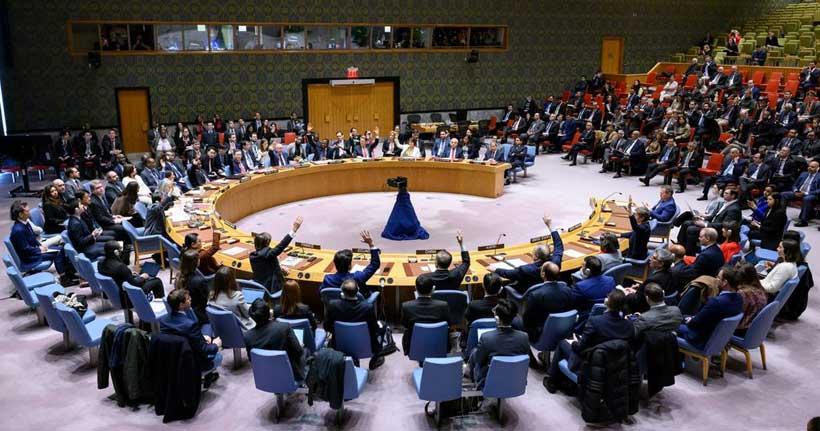
UPSC CURRENT AFFAIRS – 19th July 2025 Home / India calls for time-bound UNSC reforms, backs ‘Pact for the Future’ agreement Why in News? India reaffirmed its commitment to the Pact for the Future while demanding urgent and time-bound reforms in the UN Security Council (UNSC) to reflect current geopolitical realities. Introduction India has reiterated its longstanding demand for urgent and time-bound reforms in the United Nations Security Council (UNSC) while expressing strong support for the implementation of the Pact for the Future, an agreement adopted during the United Nations Summit of the Future in September 2024. What is the Pact for the Future? The Pact for the Future is a comprehensive agreement adopted by member states of the United Nations during the Summit of the Future in 2024. It is aimed at strengthening multilateralism and enhancing international cooperation to address a broad array of contemporary and emerging global challenges. The Pact includes commitments in the following thematic areas: Global peace and security Sustainable development and climate action Reform of international financial institutions and global governance Digital cooperation and technology governance Human rights and gender equality Intergenerational equity, including issues related to youth and future generations It also outlines the need for the transformation of international institutions to make them more effective, representative, and responsive to modern challenges. India’s Position on the Pact for the Future India has expressed strong support for the effective implementation and regular review of the Pact. Ambassador Harish emphasized India’s commitment to working with all stakeholders to ensure that the agreement delivers meaningful outcomes. He stressed that the 2028 review of the Pact should be results-oriented and forward-looking, rather than symbolic or procedural. In a gesture that highlights India’s emphasis on inclusive global dialogue, he also presented a Hindi translation of the Pact to the President of the United Nations General Assembly, Philemon Yang. India’s Call for UNSC Reform India used the opportunity to reiterate its long-standing position that the UNSC must undergo urgent and substantial reforms. Ambassador Harish stated that: The UNSC should reflect contemporary geopolitical realities, which are vastly different from those when the Council was originally formed after World War II. Reform should focus on both expansion in permanent and non-permanent categories. Efforts to maintain the status quo must be resisted, as they hinder the credibility and legitimacy of the Council. India has consistently argued that its growing global stature and contributions to international peacekeeping and global governance make it a deserving candidate for permanent membership in a reformed UNSC. International Financial Architecture Reform In addition to UNSC reform, India emphasized the need for reforms in the global financial governance framework, including the World Bank, International Monetary Fund (IMF), World Trade Organization (WTO), and G20. The objective is to make these institutions more representative, democratic, and responsive to the needs of developing countries. Economic Implications For Indian Exporters These reforms reduce transaction costs and compliance hurdles Encourage a more competitive and efficient export environment Promote value addition in key sectors like leather For Tamil Nadu The reforms particularly benefit the state’s leather industry, a major contributor to employment and exports Boost the marketability of GI-tagged E.I. leather, enhancing rural and traditional industries For Trade Policy These decisions indicate a shift from regulatory controls to policy facilitation Reinforce the goals of Make in India, Atmanirbhar Bharat, and India’s ambition to become a leading export power Recently, BVR Subrahmanyam, CEO of NITI Aayog, claimed that India has overtaken Japan to become the fourth-largest economy in the world, citing data from the International Monetary Fund (IMF). India’s rank as the world’s largest economy varies by measure—nominal GDP or purchasing power parity (PPP)—each with key implications for economic analysis. Significance and Applications
Israel-Syria Conflict and the Sweida Clashes Involving the Druze Community
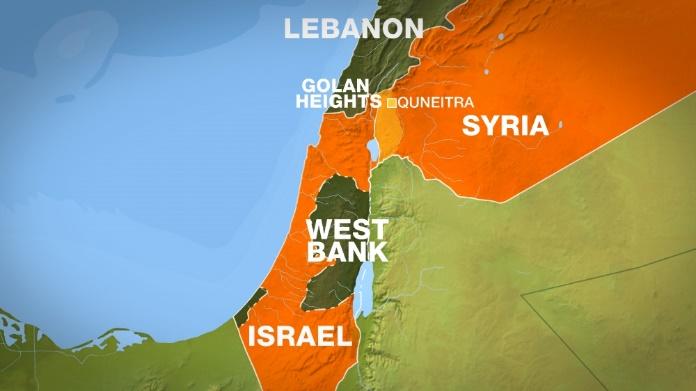
UPSC CURRENT AFFAIRS – 18th July 2025 Home / Israel-Syria Conflict and the Sweida Clashes Involving the Druze Community Why in News? Israel has launched airstrikes in Syria’s capital and Sweida province, citing the protection of the Druze minority amid escalating sectarian violence in southern Syria. Introduction In a sharp escalation of regional tensions, Israeli fighter jets struck several sites in Syria’s capital, Damascus, including the Syrian Defence Ministry compound and locations near the presidential palace. The strikes coincided with fierce clashes in Sweida, a southern Syrian province and the heartland of the Druse minority, highlighting the increasingly complex dynamics post-Assad in Syria. What Did Israel Hit in Syria? Targets: Israeli airstrikes focused on central Damascus, targeting: The Syrian Defence Ministry compound and General Staff Headquarters, allegedly used for coordinating offensives in Sweida. Casualties: At least one civilian was killed and 18 injured, according to the Syrian Health Ministry. Eyewitness Accounts: There were reports of chaos and panic during the strikes. A ministry employee confirmed multiple successive attacks, stating that some victims were trapped under rubble. Sweida Strikes: Israel also conducted dozens of strikes in Sweida itself, focusing on Syrian military personnel and infrastructure. Why Is Israel Involved in Sweida? Protection of Druze Minority: Sweida is the cultural and political center of Syria’s Druze minority. Israel has a significant Druze population (~152,000), many of whom serve in the Israeli military. Recent Trigger: Clashes began when Bedouin tribesmen attacked a Druze man, prompting unrest. Syrian government troops moved in, allegedly supporting the Bedouins. Israel’s Position: Prime Minister Benjamin Netanyahu said Israel is acting to “protect our Druze brothers”. Urged Israeli Druze not to cross into Syria to join the fighting. Who are the Druze? Religious Identity: The Druze are an Arabic-speaking, ethno-religious community, whose faith emerged in the 11th century as an offshoot of Shia Islam. It incorporates elements of Gnosticism, Greek philosophy, and Islamic monotheism. Geographical Spread: Roughly one million Druze live across Syria, Lebanon, Israel, and the Golan Heights. In Syria: Comprising about 3% of the population, Druze communities have historically maintained autonomy, especially in Sweida, resisting both the Assad regime and Islamist rebels. In Israel: Druze are recognized as a loyal minority, integrated into the army and public service, unlike many other Arab citizens. The Political Context in Syria Change in Leadership: President Ahmed al-Shara assumed power in December 2024, after overthrowing Bashar al-Assad, who was closely aligned with Iran. New Government’s Agenda: Aims to reassert state control over fragmented provinces. Faces resistance in Sweida where Druze militias have enjoyed de facto autonomy for over a decade. Rebel Connections: Some anti-Assad rebels who supported al-Shara are now reportedly in contact with Israel, facilitated by the United States. What’s Happening in Sweida? Widespread Conflict: Ongoing battles between Druze militias and Bedoun fighters and Syrian troops. Reports of summary executions of Druze civilians by government forces. Humanitarian crisis: hospitals lack medical supplies, and blackouts affect communication and healthcare. Ceasefire Announced: A new ceasefire was brokered with local leaders. Involves: Immediate cessation of hostilities Withdrawal of Syrian government forces Restoration of state authority in a negotiated form US Involvement: Secretary of State Marco Rubio stated the US helped mediate the truce. Strategic and Geopolitical Implications Israel’s Strategic Goals: Counter Iranian proxies in Syria. Secure the northern border and Golan Heights. Protect ethnic kin minorities, especially Druse. Domestic Pressure in Israel: Growing solidarity movements among Israeli Druze. Calls for more direct protection of Syrian Druze. Regional Realignments: Syria’s new regime is attempting to balance between past allies (like Iran) and new partners (like the US and possibly Israel). US mediation signals a geopolitical shift in Syria’s post-Assad realignment. Humanitarian Fallout: Potential refugee outflows from Sweida. Risk of sectarian reprisals and internationalized civil conflict. Conclusion The recent Israeli airstrikes and ongoing unrest in Sweida reflect a deeply complex and evolving regional crisis rooted in sectarian identity, post-conflict reconstruction, and strategic rivalry. The Druze community stands at the heart of this conflict — a small but influential minority trying to preserve autonomy in a collapsing state structure. As Syria rebuilds under a new leadership, its ability to accommodate diverse ethnic identities and manage foreign pressures will determine the country’s trajectory. Economic Implications For Indian Exporters These reforms reduce transaction costs and compliance hurdles Encourage a more competitive and efficient export environment Promote value addition in key sectors like leather For Tamil Nadu The reforms particularly benefit the state’s leather industry, a major contributor to employment and exports Boost the marketability of GI-tagged E.I. leather, enhancing rural and traditional industries For Trade Policy These decisions indicate a shift from regulatory controls to policy facilitation Reinforce the goals of Make in India, Atmanirbhar Bharat, and India’s ambition to become a leading export power Recently, BVR Subrahmanyam, CEO of NITI Aayog, claimed that India has overtaken Japan to become the fourth-largest economy in the world, citing data from the International Monetary Fund (IMF). India’s rank as the world’s largest economy varies by measure—nominal GDP or purchasing power parity (PPP)—each with key implications for economic analysis. Significance and Applications
India’s Dilemma in US-China Trade Conflict

UPSC CURRENT AFFAIRS – 18th July 2025 Home / India’s Dilemma in US-China Trade Conflict Why in News? The US is increasing scrutiny on transhipped Chinese goods through countries like India, raising concerns amid India’s growing trade with both China and the US. Introduction In the evolving landscape of global trade, the United States has intensified scrutiny over transhipped goods to curb the backdoor entry of Chinese products into its markets. Countries like India, deeply reliant on Chinese imports while simultaneously increasing exports to the US, are now caught in a complex web of geopolitics, trade policy, and industrial dependencies. Understanding Transhipment and US Concerns Transhipment refers to the practice of importing goods from one country and exporting them to another without significant processing or value addition. This has raised concerns in Washington as it seeks to prevent China from bypassing punitive tariffs by routing goods through intermediary countries. The US, under both the Trump and Biden administrations, has issued warnings to countries such as Vietnam, Thailand, and even close allies like Canada and South Korea about acting as conduits for Chinese exports. India now finds itself under similar scrutiny, especially after US Vice President JD Vance cautioned New Delhi during his April 2025 visit. Challenges in Reducing Dependence on China India’s dependence on Chinese imports spans critical sectors like electronics, machinery, and renewable energy. Despite national efforts to boost local manufacturing and self-reliance, Chinese goods continue to dominate due to: Lower costs and large-scale production in China. Industrial overcapacity in China driving the need to export surplus production. India’s limited domestic industrial capabilities, logistical challenges, and lack of economies of scale. In sectors like solar energy, Indian firms struggle to match the pricing and volume of Chinese products, which disrupts the growth of indigenous industries. China’s Economic Strategy and Global Impact China’s economic structure is marked by low domestic consumption and high export dependence, backed by state subsidies and supply-side focus. The “dual circulation” strategy, intended to strengthen internal demand and reduce external vulnerabilities, has not alleviated industrial overcapacity. Instead, overproduction has pushed Chinese firms to seek aggressive entry into foreign markets, often at prices that undercut local industries elsewhere — leading to distorted trade dynamics globally. US Strategic Responses and Implications for India The US may impose: Stricter tariff measures on countries suspected of enabling transhipment. Enhanced monitoring and enforcement of rules of origin under existing trade frameworks. Targeted trade restrictions on goods exported from India suspected to be of Chinese origin. For India, such actions could have serious consequences: Erosion of export competitiveness in the US market. Reputational risks in global trade. Potential barriers to future trade deals with the US. India’s Countermeasures and Policy Options To address these challenges, India needs a multi-pronged strategy: Strengthen Domestic Manufacturing Focus on sectors where Chinese dominance is strong, such as electronics and machinery. Enhance production-linked incentive (PLI) schemes and develop logistics ecosystems. Enforce Origin Transparency Strengthen customs mechanisms to ensure traceability of value-added components. Implement strict compliance with rules of origin in exports. Diversify Import Sources Explore alternate trade partnerships in Southeast Asia, Latin America, and Africa. Reduce overdependence on a single source country like China. Bilateral Engagement with the US Address concerns through diplomatic and trade dialogues. Emphasize India’s commitment to value addition and compliance with international trade norms. Conclusion India’s trade conundrum with the US and China reflects the broader complexities of geopolitics, industrial policy, and global economic restructuring. As the US tightens its grip on transhipment practices to counter China’s economic strategies, India must balance its developmental needs with diplomatic agility. The path forward demands a bold recalibration of industrial capability, trade integrity, and strategic autonomy. Economic Implications For Indian Exporters These reforms reduce transaction costs and compliance hurdles Encourage a more competitive and efficient export environment Promote value addition in key sectors like leather For Tamil Nadu The reforms particularly benefit the state’s leather industry, a major contributor to employment and exports Boost the marketability of GI-tagged E.I. leather, enhancing rural and traditional industries For Trade Policy These decisions indicate a shift from regulatory controls to policy facilitation Reinforce the goals of Make in India, Atmanirbhar Bharat, and India’s ambition to become a leading export power Recently, BVR Subrahmanyam, CEO of NITI Aayog, claimed that India has overtaken Japan to become the fourth-largest economy in the world, citing data from the International Monetary Fund (IMF). India’s rank as the world’s largest economy varies by measure—nominal GDP or purchasing power parity (PPP)—each with key implications for economic analysis. Significance and Applications
Akash Prime Air Defence System

UPSC CURRENT AFFAIRS – 18th July 2025 Home / Akash Prime Air Defence System Why in News? The Indian Army successfully tested the upgraded indigenous air defence missile system Akash Prime at high altitude in Ladakh. Introduction In a significant step towards strengthening India’s high-altitude air defence capabilities, the Indian Army successfully conducted trials of the Akash Prime surface-to-air missile system in eastern Ladakh, at an altitude of over 15,000 feet. The trials were held in collaboration with the Defence Research and Development Organisation (DRDO), which developed the missile system. What is Akash Prime? Akash Prime is an upgraded version of the Akash surface-to-air missile (SAM) system, which is part of India’s indigenous medium-range air defence network. The system has been enhanced for greater precision and reliability, especially in challenging terrains and extreme weather conditions. Key Features: Indigenous Active Radio Frequency (RF) Seeker: Ensures greater accuracy in target acquisition and engagement, regardless of weather or terrain. Medium-range SAM: Capable of engaging aerial threats at 25–30 km. Altitude Deployment: Can be deployed up to 4,500 metres, making it suitable for high-altitude warfare environments like Ladakh. Target Capabilities: Designed to neutralize fighter aircraft, cruise missiles, UAVs, and other aerial threats. Operational History and Role: First Deployment: Used effectively during Operation Sindoor to counter potential aerial threats from Pakistan, where it showed satisfactory results. Regimental Induction: The system will now form part of the 3rd and 4th regiments of Akash air defence systems in the Indian Army, marking its full-scale induction. Strategic Significance: Indigenisation: Strengthens India’s self-reliance in defence under the Atmanirbhar Bharat initiative. High-Altitude Defence: Enhances India’s ability to defend its airspace in border regions like Ladakh, where aerial threats may arise amid geopolitical tensions. Force Multiplier: Complements other air defence platforms such as Akash-NG, Akashteer, and imported systems like S-400. Conclusion: The successful testing of Akash Prime in high-altitude conditions demonstrates India’s growing expertise in indigenous missile development and deployment. With enhanced accuracy, adaptability, and proven performance, Akash Prime will be a critical asset in India’s layered air defence strategy, especially in challenging border terrains. Economic Implications For Indian Exporters These reforms reduce transaction costs and compliance hurdles Encourage a more competitive and efficient export environment Promote value addition in key sectors like leather For Tamil Nadu The reforms particularly benefit the state’s leather industry, a major contributor to employment and exports Boost the marketability of GI-tagged E.I. leather, enhancing rural and traditional industries For Trade Policy These decisions indicate a shift from regulatory controls to policy facilitation Reinforce the goals of Make in India, Atmanirbhar Bharat, and India’s ambition to become a leading export power Recently, BVR Subrahmanyam, CEO of NITI Aayog, claimed that India has overtaken Japan to become the fourth-largest economy in the world, citing data from the International Monetary Fund (IMF). India’s rank as the world’s largest economy varies by measure—nominal GDP or purchasing power parity (PPP)—each with key implications for economic analysis. Significance and Applications
Swachh Survekshan 2024-25 awards

UPSC CURRENT AFFAIRS – 18th July 2025 Home / Swachh Survekshan 2024-25 awards Why in News? Recently the government released rankings for Swachh Survekshan 2024-25. Introduction Ahmedabad has been ranked the cleanest city in the country among those with a population of over 10 lakh in the Swachh Survekshan 2024-25 awards. The city was followed by Bhopal and Lucknow. This year’s survey introduced a new ‘Super Swachh League’ category to recognise cities that have consistently ranked in the top three positions over the past three years. These cities were kept out of the national ranking to allow for newer contenders to be recognised. About Swachh Survekshan Swachh Survekshan is the world’s largest urban sanitation and cleanliness survey, conducted by the Ministry of Housing and Urban Affairs (MoHUA) under the Swachh Bharat Mission – Urban. It aims to foster a spirit of healthy competition among cities, encouraging them to improve urban sanitation and solid waste management. First introduced: 2016 Initial coverage: 73 cities Current edition: 2024-25 Cities surveyed this year: 4,589 urban local bodies (ULBs) The survey assesses cities based on various parameters, including waste collection, processing, scientific disposal, citizen feedback, and innovations in sanitation. National Rankings (Cities with population over 10 lakh) Ahmedabad Bhopal Lucknow These rankings mark a shift in recognition as past winners like Indore and Surat were excluded from the competition this year and included in a new category. Introduction of ‘Super Swachh League’ Category To ensure greater inclusivity and allow newer cities a chance at top ranks, a separate category called the ‘Super Swachh League’ has been created. This category includes cities that have maintained top three positions for the past three years. Cities with population above 10 lakhs: Indore, Surat, Navi Mumbai, Vijayawada Cities with population between 3 lakhs to 10 lakhs: Noida, Chandigarh, Mysuru, Ujjain, Gandhinagar This move seeks to maintain high standards among consistent performers while broadening the competitive landscape for others. Other Rankings (Cities with population between 3 lakh and 10 lakh) Mira Bhayandar Bilaspur Jamshedpur These cities demonstrated notable improvements in solid waste management, cleanliness, and citizen participation. Special Recognitions Uttar Pradesh Government and Prayagraj Municipal Corporation received special recognition for effective waste management during the Mahakumbh, showcasing successful sanitation handling during large-scale religious gatherings. Status of Swachh Bharat Mission – Urban 2.0 (SBM-U 2.0) The second phase of the Swachh Bharat Mission (SBM-U 2.0), launched in 2021, aims to move from an ‘Open Defecation Free’ (ODF) model to ‘Garbage-Free Cities’. One of its key objectives is to remediate 100 percent of legacy waste (dumpsites) in urban areas by 2026. However, according to the SBM-U dashboard: Only 58 percent of legacy waste has been remediated 42 percent of waste across cities remains untreated This reveals a significant implementation gap with just one year remaining to meet the mission’s target. New Campaign: Accelerated Dumpsite Remediation Programme In response to delays in dumpsite remediation, the Ministry of Housing and Urban Affairs announced a new initiative to be launched on 15 August 2025. The Accelerated Dumpsite Remediation Programme aims to fast-track the process through: Increased waste processing capacity Financial and technical assistance to states and cities Resolution of issues related to financing and tendering delays The Union Minister for Housing and Urban Affairs, Manohar Lal Khattar, emphasized that the central government will work closely with state governments to identify and overcome the causes of delay. Significance of the Swachh Survekshan Framework Swachh Survekshan serves multiple governance objectives: Promotes competitive federalism by encouraging cities to outperform each other in cleanliness. Enhances citizen engagement through feedback and participation. Builds accountability by publishing transparent rankings. Encourages innovation in urban waste management techniques. Reinforces environmental sustainability and public health outcomes in rapidly urbanizing regions. Challenges Ahead Despite visible progress, several challenges remain: Dumpsite remediation remains behind schedule in many cities. Behavioural change at the citizen level is still evolving, especially in waste segregation. Funding constraints, especially among smaller municipalities, hinder sustained progress. Monitoring and compliance mechanisms need to be strengthened for long-term sustainability. Conclusion Swachh Survekshan 2024-25 marks a strategic shift in India’s urban sanitation journey. The introduction of the Super Swachh League ensures recognition of past champions while motivating emerging cities to achieve higher standards. However, the pending task of legacy waste remediation demands urgent and coordinated action. As India advances toward its vision of ‘Garbage-Free Cities’ under SBM-U 2.0, the coming year will be critical to meeting ambitious targets and realising the mission’s full potential. Economic Implications For Indian Exporters These reforms reduce transaction costs and compliance hurdles Encourage a more competitive and efficient export environment Promote value addition in key sectors like leather For Tamil Nadu The reforms particularly benefit the state’s leather industry, a major contributor to employment and exports Boost the marketability of GI-tagged E.I. leather, enhancing rural and traditional industries For Trade Policy These decisions indicate a shift from regulatory controls to policy facilitation Reinforce the goals of Make in India, Atmanirbhar Bharat, and India’s ambition to become a leading export power Recently, BVR Subrahmanyam, CEO of NITI Aayog, claimed that India has overtaken Japan to become the fourth-largest economy in the world, citing data from the International Monetary Fund (IMF). India’s rank as the world’s largest economy varies by measure—nominal GDP or purchasing power parity (PPP)—each with key implications for economic analysis. Significance and Applications
Temple Entry Discrimination and Madras High Court Intervention
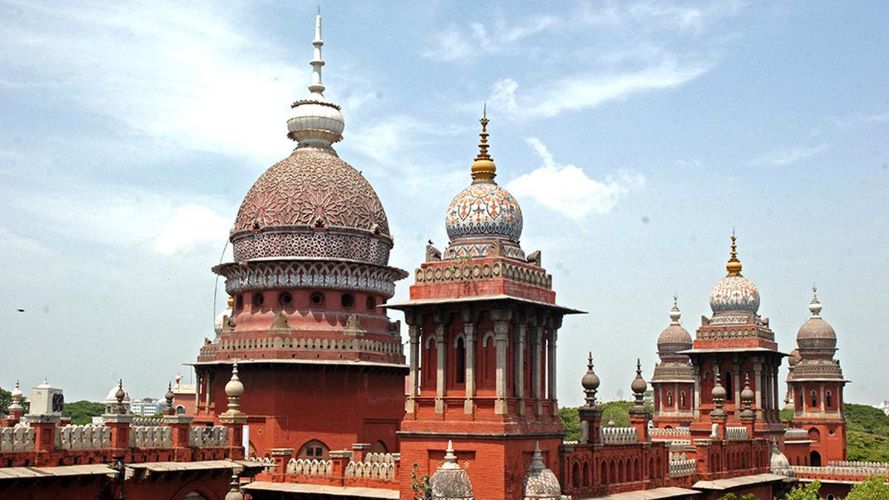
UPSC CURRENT AFFAIRS – 18th July 2025 Home / Temple Entry Discrimination and Madras High Court Intervention Why in News? The Madras High Court on July 17, 2025, directed authorities to prevent caste-based discrimination at the Puthukudi Ayyanar Temple in Tamil Nadu. Introduction In a significant ruling on July 17, 2025, the Madras High Court addressed caste-based discrimination at the Puthukudi Ayyanar Temple in Udayarpalayam taluk of Ariyalur district. The court upheld the constitutional principle of equality and religious freedom by directing authorities to ensure Scheduled Caste (SC) persons are not prevented from entering the temple and participating in religious activities. Court’s Observations and Directions Justice N. Anand Venkatesh observed that caste-based exclusion from religious places is impermissible in a country governed by the rule of law. He directed: The Ariyalur Superintendent of Police and the Revenue Divisional Officer (RDO) of Udayarpalayam to ensure that all persons, irrespective of caste, are allowed to enter the Puthukudi Ayyanar Temple. The officials must guarantee access to regular worship and festivals, including the ongoing temple car festival (July 16–31, 2025). If any individual or group attempts to prevent temple entry on caste grounds, legal action must be initiated. The Police and Revenue departments must maintain law and order without allowing fear of unrest to justify inaction. Legal Basis: Tamil Nadu Temple Entry Authorization Act, 1947 Justice Venkatesh invoked the Tamil Nadu Temple Entry Authorization Act, 1947, which was enacted after extensive social reform movements led by prominent leaders to end caste-based exclusion in temples. Section 3 of the Act states that every Hindu, regardless of caste or sect, is entitled to enter and worship in any Hindu temple. Any restriction based on caste constitutes an actionable wrong or offence, and the offender can be sued or prosecuted. Socio-Legal Significance This case is part of a broader pattern of caste-based discrimination in access to religious spaces across Tamil Nadu and other parts of India. It also recalls the long history of the Temple Entry Movement, which sought to democratize religious spaces and challenge the hierarchical norms entrenched by caste. Recent incidents, including the entry of Dalits into Amman temple in Tiruvannamalai after 70 years and the reopening of the Droupadi Amman Temple in Villupuram after years of closure, highlight both the persistence of discrimination and the ongoing struggle for equality. Conclusion The Madras High Court’s judgment reaffirms that constitutional values of equality and non-discrimination must prevail in all spheres of life, including religious worship. It places a clear responsibility on the State machinery to uphold the rights of Scheduled Caste persons and enforce laws like the 1947 Temple Entry Authorization Act in both letter and spirit. The verdict marks another important step in the legal and moral fight against caste-based exclusion in India’s socio-religious landscape. Economic Implications For Indian Exporters These reforms reduce transaction costs and compliance hurdles Encourage a more competitive and efficient export environment Promote value addition in key sectors like leather For Tamil Nadu The reforms particularly benefit the state’s leather industry, a major contributor to employment and exports Boost the marketability of GI-tagged E.I. leather, enhancing rural and traditional industries For Trade Policy These decisions indicate a shift from regulatory controls to policy facilitation Reinforce the goals of Make in India, Atmanirbhar Bharat, and India’s ambition to become a leading export power Recently, BVR Subrahmanyam, CEO of NITI Aayog, claimed that India has overtaken Japan to become the fourth-largest economy in the world, citing data from the International Monetary Fund (IMF). India’s rank as the world’s largest economy varies by measure—nominal GDP or purchasing power parity (PPP)—each with key implications for economic analysis. Significance and Applications
Universe and Matter-Antimatter Asymmetry

UPSC CURRENT AFFAIRS – 18th July 2025 Home / Universe and Matter-Antimatter Asymmetry Why in News? Scientists at CERN’s LHCb experiment have observed CP violation in baryon decays, offering insights into the matter-antimatter imbalance in the universe. Introduction An international team of scientists working at the Large Hadron Collider (LHC) in Europe reported a historic discovery in particle physics — the first-ever observation of CP violation in baryon decays. This finding could be a crucial step toward understanding why the universe is composed predominantly of matter, even though the Big Bang should have created equal amounts of matter and antimatter. The Matter-Antimatter Asymmetry Puzzle According to current cosmological models, the Big Bang, which occurred around 13.8 billion years ago, should have generated equal amounts of matter and antimatter. In theory, these should have annihilated each other, leaving behind a universe filled with radiation and no substantial matter. However, the observable universe today is overwhelmingly composed of matter — stars, galaxies, and living beings — with very little antimatter. This discrepancy is one of the biggest unsolved mysteries in physics. Physicists suspect that the answer lies in subtle differences in how matter and antimatter behave, a phenomenon known as CP violation. Understanding CP Violation CP stands for Charge Conjugation (C) and Parity (P): Charge Conjugation (C): Swapping a particle with its antiparticle, which has opposite electric charge. Parity (P): A mirror inversion of spatial coordinates — flipping left and right. If the universe treated matter and antimatter identically, CP symmetry would hold. However, several experiments have revealed that CP symmetry is violated, meaning matter and antimatter can behave differently under certain conditions. Importantly, CP violation is one of the Sakharov conditions, proposed by physicist Andrei Sakharov, necessary to explain the matter-dominated universe. Previous Observations of CP Violation Before this latest result, CP violation had only been observed in mesons — particles made of a quark and an antiquark. These included neutral K mesons (kaons) and B mesons. However, the dominant constituents of visible matter — protons and neutrons — are baryons, made of three quarks. Detecting CP violation in baryons was therefore a long-sought milestone. New Discovery in Λb⁰ Baryons The LHCb experiment at CERN studied the decay of a particular heavy baryon, the Λb⁰ (lambda-b-zero) particle. This particle is composed of three quarks: up, down, and bottom. Its antimatter counterpart, Λb⁰-bar, is made of the corresponding antiquarks. Researchers analyzed how these particles decayed into specific final products: Λb⁰ → proton + negative kaon + positive pion + negative pion Λb⁰-bar → antiproton + positive kaon + negative pion + positive pion If CP symmetry were conserved, the decay rates of Λb⁰ and Λb⁰-bar into their respective products would be identical. But any statistically significant difference in decay rates indicates CP violation. Methodology and Control Measures The experiment relied on data collected from billions of proton-proton collisions at the LHC, where Λb⁰ and Λb⁰-bar baryons were occasionally produced. Researchers used advanced machine learning techniques and statistical algorithms to identify rare decay events of interest. To ensure accuracy, scientists used a control channel — a similar decay process not expected to exhibit CP violation — to account for experimental biases such as: Slight differences in Λb⁰ and Λb⁰-bar production rates Detector sensitivity variations By subtracting any asymmetry observed in the control channel, they isolated the true CP asymmetry. Significant Findings The measured CP asymmetry in Λb⁰ decays was found to be approximately 2.45%, with a statistical significance of 5.2 sigma — exceeding the 5-sigma threshold required in particle physics to claim a discovery. This result constitutes the first confirmed observation of CP violation in baryons, offering a new perspective on the matter-antimatter imbalance in the universe. Implications and Future Directions While the observed CP violation is not yet large enough to fully account for the vast dominance of matter over antimatter, it is a crucial breakthrough. It opens the door to: Exploring CP violation in other baryon types Refining theoretical models of particle interactions Searching for new particles or forces beyond the Standard Model Providing constraints or guidance for cosmological theories on baryogenesis This discovery deepens our understanding of why the universe exists in its current form. Every atom, star, and living organism owes its existence to an imbalance that likely arose in the earliest moments of the cosmos. Understanding the mechanisms behind CP violation may eventually unravel the origin of this cosmic preference for matter. Conclusion The detection of CP violation in the decays of Λb⁰ baryons is a landmark achievement in the quest to solve the mystery of the matter-antimatter asymmetry. It adds an important piece to the puzzle of our universe’s origin and evolution, taking us one step closer to answering a fundamental question: Why is there something rather than nothing? Economic Implications For Indian Exporters These reforms reduce transaction costs and compliance hurdles Encourage a more competitive and efficient export environment Promote value addition in key sectors like leather For Tamil Nadu The reforms particularly benefit the state’s leather industry, a major contributor to employment and exports Boost the marketability of GI-tagged E.I. leather, enhancing rural and traditional industries For Trade Policy These decisions indicate a shift from regulatory controls to policy facilitation Reinforce the goals of Make in India, Atmanirbhar Bharat, and India’s ambition to become a leading export power Recently, BVR Subrahmanyam, CEO of NITI Aayog, claimed that India has overtaken Japan to become the fourth-largest economy in the world, citing data from the International Monetary Fund (IMF). India’s rank as the world’s largest economy varies by measure—nominal GDP or purchasing power parity (PPP)—each with key implications for economic analysis. Significance and Applications