Genome study: 180 million genetic variants found in 9,772 individuals

UPSC CURRENT AFFAIRS – 09th April 2025 Home / Genome study: 180 million genetic variants found in 9,772 individuals Why in News? Preliminary findings of the Genome India project, which genotyped 10,074 healthy and unrelated Indians from 85 populations — 32 tribal and 53 non-tribal populations — across India. Introduction The Genome India Project, a pan-India initiative aimed at cataloguing the genetic diversity of the Indian population, achieved a significant milestone with the preliminary findings published in Nature Genetics on April 8, 2025. This project marks a major step forward in India’s efforts to enable personalised medicine, improve disease diagnostics, and enhance our understanding of population genetics and genome-disease linkages. What is the GenomeIndia Project? The Genome India Project is a multi-institutional collaborative initiative launched by the Department of Biotechnology (DBT), Ministry of Science and Technology. The project involves 20 institutions across the country and is inspired by global efforts like the Human Genome Project. Objectives Catalogue the genetic diversity of India’s population. Identify rare and common genetic variants that influence susceptibility or resistance to diseases. Facilitate the development of low-cost diagnostics and precision medicine. Enable a national reference database for genomics-based healthcare. Preliminary Findings (April 2025) Sample Collection and Sequencing: Blood samples collected from ~20,000 individuals across India. Whole Genome Sequencing (WGS) done for 10,074 individuals from 85 populations (32 tribal and 53 non-tribal). Final dataset based on 9,772 individuals after data quality filtering: 4,696 male, 5,076 female participants. Sequencing done by premier institutions like IISc Bengaluru, CSIR-CCMB Hyderabad, IGIB Delhi, NIBMG Kolkata, and GBRC Gandhinagar. Data stored at the Indian Biological Data Centre (IBDC), Faridabad. Genetic Variants Identified: 180 million genetic variants found in total: 130 million in autosomes (non-sex chromosomes) 50 million in sex chromosomes (X and Y) These include: Disease-associated variants Rare variants India-specific and community-specific variants Population Coverage: Tribal Groups: Tibeto-Burman, Dravidian, Indo-European, Austro-Asiatic, and continentally admixed outgroup. Non-Tribal Groups: Tibeto-Burman, Dravidian, and Indo-European lineages. Applications and Significance Public Health and Diagnostics: Information on genetic predisposition to diseases (e.g., cardiovascular, diabetes, cancers). Enables low-cost diagnostic kits tailored to Indian genomes. Precision Medicine: Identification of gene-drug interactions. Predicts therapeutic responses and adverse drug reactions. Helps in crafting customised treatment regimens. Infectious Disease Research: Variants linked to susceptibility or resistance to infections (e.g., COVID-19, TB, malaria). Insights into immune response diversity among populations. Environmental Adaptation: Some variants suggest adaptation to high altitudes (e.g., in Himalayan tribes). Others may show adaptation to low oxygen or extreme environments. Rare Disease Identification: India’s high endogamy rate has led to unique disease-causing mutations in isolated populations. GenomeIndia helps in building a reference panel for rare diseases. Challenges and Way Ahead Ethical concerns regarding data privacy and genetic discrimination. Need for inclusive participation from all socio-cultural regions. Integration of genetic data with electronic health records for practical applications. Capacity-building in bioinformatics and genomic medicine. Launch of public awareness campaigns to encourage genome literacy. Conclusion The Genome India Project marks a transformative step for Indian biomedical research. By revealing the rich tapestry of India’s genetic heritage, it paves the way for revolutionising healthcare delivery, ensuring equity in health research, and establishing India as a leader in genomic science. As analyses continue and the final dataset expands, the project will form the backbone of a genomics-driven healthcare ecosystem in India.
RBI slashes repo- rate
UPSC CURRENT AFFAIRS – 10th April 2025 Home / RBI slashes repo- rate Why in News? RBI reduced the repo rate by 25 basis points (bps), bringing it down to 6 percent, marks the second consecutive rate cut by the RBI’s six-member MPC, indicating a shift in monetary policy stance from neutral to accommodative. Role of RBI and MPC RBI is India’s central bank and monetary authority responsible for managing inflation and promoting economic growth. The Monetary Policy Committee (MPC) is a six-member statutory body under the RBI Act, 1934 (amended in 2016). MPC includes 3 RBI officials (including the Governor) and 3 government-appointed external members. The MPC decides on the policy repo rate to achieve inflation targeting under India’s Flexible Inflation Targeting Framework. Repo Rate and Related Rates 🔹 Repo Rate The repo rate is the interest rate at which the Reserve Bank of India (RBI) lends short-term money to commercial banks against government securities.It is a key tool of monetary policy used to control liquidity, inflation, and economic growth. Current (April 2025): 6.00% (down from 6.25%). 🔹 Reverse Repo Rate The reverse repo rate is the rate at which banks park excess funds with the RBI.It helps RBI absorb excess liquidity from the banking system. Typically kept lower than the repo rate to maintain the liquidity adjustment facility (LAF) corridor. Implied range (April 2025): 3.35%–3.75% (exact value not specified). 🔹 Standing Deposit Facility (SDF) Rate The SDF rate is the floor of the LAF corridor, introduced to absorb liquidity without collateral. Usually 25 basis points below the repo rate. Implied SDF rate (April 2025): ~5.75%. 🔹 Marginal Standing Facility (MSF) Rate The MSF rate is the rate at which banks can borrow overnight funds from the RBI above their SLR limit in emergency situations.It acts as a ceiling for the interest rate corridor. Typically, 25 basis points above the repo rate. Implied MSF rate (April 2025): ~6.25%. 🔹 Bank Rate The bank rate is the long-term rate at which RBI lends to commercial banks without repurchase agreements (collateral).It aligns with the MSF rate and serves as a penal rate in some regulatory frameworks. Implied Bank Rate (April 2025): ~6.25%. 🔹 Repo-Linked Benchmark Lending Rate (RBLR) RBLR is the external benchmark-linked interest rate for loans that are directly tied to the repo rate. It ensures faster and transparent transmission of monetary policy to borrowers. With a 25-bps repo rate cut, RBLR-linked loans will become cheaper by 25 bps. 🔹 Marginal Cost of Funds-based Lending Rate (MCLR) MCLR is the internal benchmark lending rate based on a bank’s own cost of funds, CRR, and operating costs. Transmission of repo rate changes is slower and less direct in this system. Expected to decrease gradually but not necessarily by the full 25 bps Inflation and Growth Projections GDP growth forecast for FY 2025–26 has been revised down to 6.5% from 6.7%. Retail (CPI) inflation projected at 4% for FY 2025–26. January–February 2025 inflation tracked at 3.9%, below RBI’s Q4 estimate of 4.8%. Reasons for the Rate Cut Global economic uncertainty, including renewed trade tensions due to reciprocal tariffs by the US. Falling domestic inflation has provided room for monetary easing. Concerns about slowing domestic and global growth have pushed RBI toward a pro-growth approach. Impact of the Rate Cut Borrowers: EMI on home, auto, and personal loans to fall for those on RBLR-linked loans. Banks: Cheaper borrowing from RBI, but profit margins may shrink if deposit rates don’t fall proportionately. Depositors: Likely decline in fixed deposit interest rates. Consumers & Industry: Boost in demand, private consumption, and investment. Economy: Intended to stimulate economic activity amid sluggish global outlook.
What does a bear market mean for Wall Street?

What Does a Bear Market Mean for Wall Street? Home / UPSC CURRENT AFFAIRS – 10th April 2025 Why in News? Wall Street is facing the threat of another bear market due to rising global economic uncertainty caused by President Trump’s new round of tariffs on imports. Introduction The international economy is once again experiencing turmoil, as the aggressive tariffs of the Trump administration are poised to ignite another bear market on Wall Street. A bear market is an occurrence when major stock indices such as the S&P 500 or the Dow Jones Industrial Average decline by at least a 20% drop from their most recent peak. Wall Street, having endured a bear market during 2022 and the quick fall in the early part of 2020, is presently on high alert for another downward trend fueled by tariffs and their economic impact. Bear Market Definition: A bear market arises when stock indexes decline by more than 20% from their high for a prolonged period of time. Duration: Typically, bear markets last 13 months on average to reach the bottom and 27 months to breakeven. Average Decline: Historically, the S&P 500 index averages a 33% loss in bear markets. Fast Declines: Rapid plunges into bear markets usually result in less deep declines; a 28% average loss for quicker drops. Longest Bear Market: The longest bear market took 61 months, with a loss of 60%. Trump Tariff Blitz: A Fresh Economic Burden Recent Tariff Declaration: President Trump’s tariffs encompass a 10% standard duty on goods from every nation and more tariff charges for trade surplus nations that have surplus exports to the U.S. Global Market Reaction: The news ignited global market selloffs, as major plummeting took place in the S&P 500 index, which already downgraded by 17.6% since the February 2025 high. Tariff Effect Higher Prices: Import duties get transmitted to consumers, possibly raising inflation. Retaliation: Nations such as China have even imposed retaliatory tariffs, raising tensions further. Uncertainty: Tariffs lead to uncertainty among enterprises regarding investment, manufacturing, and international value chains. Bear Market Features under the Umbrella of Tariff Uncertainty Uncertainty and Apprehension: Apprehension regarding surging trade wars and tariff effects has heightened uncertainty, which can intensify a bear market. Tech Stocks: The Nasdaq Composite is already in a bear market, which is a sign of underlying market worries, particularly for technology-intensive industries. S&P 500 Decline: The S&P 500 declined by 17.6%, reflecting serious market pressure. Investor Strategies During Bear Markets Long-Term Mindset: Financial planners advise investors to hold on to a long-term investment approach and avoid panicking and selling. Historical Comeback: In spite of past bear markets, the S&P 500 has always come back, with robust increases in the long run. Liquidity Needs: If there is a need for investors to have access to money in the near term, limiting stock exposure can be prudent. Long-Term Investor Opportunities: Bear markets can provide opportunities for purchase for investors who do not need near-term liquidity. The Global Impact of Tariffs: A Delicate Balance Global Supply Chains: Tariffs are affecting global supply chains, and it is challenging for companies to select suppliers, factories, and price points. Economic Disturbances: Economic hurt spreads through inflation, increased costs of production, and decreased consumer demand, creating a negative feedback loop. Conclusion Market Resilience: Even with present-day uncertainties, markets have been known to recover in the long run, with bear markets eventually resulting in long-term gains for investors. Patience and Strategy: Patience and strategy are essential in order to navigate bear markets, particularly when tariffs and global tensions are fueling market volatility. For Short-Term Investors: If the need for current access to money is necessary, it might be wise to reduce exposure to equities when there is increased risk in the market.
Cabinet approves irrigation scheme for ‘modernising’ water management

UPSC CURRENT AFFAIRS – 10th April 2025 Home / Cabinet approves irrigation scheme for ‘modernising’ water management Why in News? The Modernisation of Command Area Development and Water Management (M-CADWM) scheme, approved in April 2024 under PMKSY. Introduction Recently, the Union Cabinet approved the Modernisation of Command Area Development and Water Management (M-CADWM) scheme as a sub-scheme under the Pradhan Mantri Krishi Sinchayee Yojana (PMKSY). With an initial outlay of ₹1,600 crore, the scheme will be implemented from 2025–26 and aims to transform irrigation infrastructure across India. Objectives and Scope The primary objective of the M-CADWM scheme is to modernise and strengthen the irrigation water supply networks, ensuring that water from canals and other sources reaches farm clusters efficiently. The scheme is tailored to benefit small and marginal farmers by improving Water Use Efficiency (WUE) through the integration of advanced technologies. Key Features Use of Modern Technologies: The scheme will adopt SCADA (Supervisory Control and Data Acquisition) systems and Internet of Things (IoT)-based solutions. These tools will enhance water accounting and real-time monitoring, thereby contributing to precise and efficient water management at the farm level. Pressurised Piped Irrigation System: A significant component is the development of underground, pressurised, piped irrigation systems. These systems will extend water supply up to 1 hectare per farm, thereby facilitating micro-irrigation practices. This approach is expected to lead to improved agricultural productivity and resource conservation. Sustainable Irrigation Management: The scheme promotes the Irrigation Management Transfer (IMT) model by handing over irrigation asset management to Water User Societies (WUS). These societies will be provided with support for five years, helping them link with Farmer Producer Organisations (FPOs) and Primary Agricultural Cooperative Societies (PACS). This is intended to ensure the long-term sustainability of irrigation systems and water usage. Youth Engagement in Agriculture: The adoption of modern irrigation techniques under M-CADWM aims to make agriculture more attractive to youth. It is expected to create employment opportunities, boost youth participation, and enhance overall agricultural innovation. Significance The scheme aligns with the overarching goals of PMKSY, which seeks to promote “Har Khet Ko Pani” and improve irrigation efficiency. By modernising water delivery systems and encouraging community participation, M-CADWM is expected to: Improve water availability at the root level. Reduce water losses. Encourage judicious use of water resources. Contribute to the climate-resilient agricultural practices. Conclusion The M-CADWM sub-scheme represents a crucial step towards modern, sustainable, and inclusive agricultural irrigation in India. By combining technology, community participation, and infrastructure development, it is poised to play a key role in achieving water security and enhanced agricultural productivity across the country.
India ends transshipment facility for Bangladesh exports, cites congestion
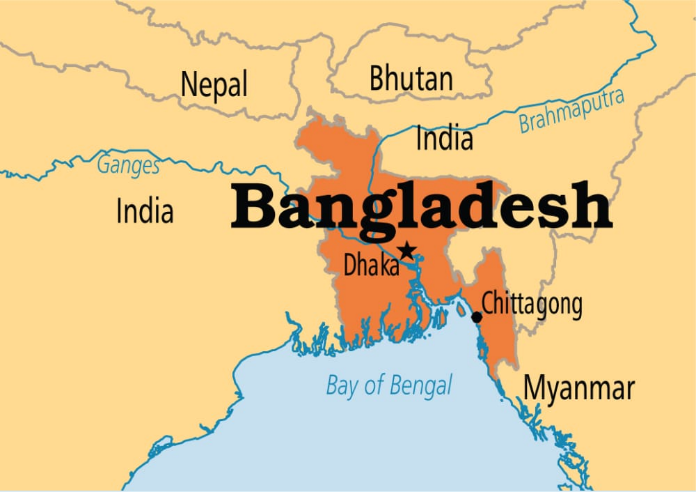
India ends transshipment facility for Bangladesh exports, cites congestion Home / UPSC CURRENT AFFAIRS – 10th April 2025 Why in News? India has withdrawn the transshipment facility it had extended to Bangladesh as it was creating “significant congestion” in Indian airports and ports Context India formally withdrew the transshipment facility on April 8, 2025, whereby Bangladesh could use Indian space—airports and ports—on Indian territory for trade with third nations like Bhutan, Nepal, and Myanmar. This was announced by the Ministry of External Affairs (MEA) in light of congestion in logistics and adverse effects on the efficiency of India’s exports. Background of the Transshipment Arrangement India had granted this facility to Bangladesh in June 2020, which allowed Bangladeshi cargo to be transported through Indian land customs stations to international airports and ports. The system helped export Bangladesh’s goods, especially ready-made garments, to Nepal, Bhutan, and Myanmar on the back of Indian logistical facilities. Reasons for Withdrawal The transshipment arrangement led to heavy congestion in Indian ports and airports. It caused delays in logistics and increased operational expenses, impacting India’s own exports. As a result, the facility has been revoked with effect from April 8, 2025. Significantly, the MEA clarified that Bangladesh’s trade with Nepal and Bhutan through trans-shipment by land through India will not be impacted. Political and Strategic Undercurrents The move comes against the background of provocative remarks made by Prof. Mohammed Yunus, Chief Adviser to the interim government of Bangladesh: On a trip to Beijing, Prof. Yunus promoted closer Bangladesh-China commercial relations, and proposed the utilization of Bangladesh’s ports to tap India’s northeast region, characterizing the northeast as an “extension of the Chinese economy.” This elicited criticism from Indian political leaders, including Assam Chief Minister Himanta Biswa Sarma, who labeled the remarks “offensive and condemnable.” While Indian authorities have not directly attributed the move to Yunus’s comments, the timing has been seen to fuel speculation of a geostrategic realignment. Implications for Bilateral Relations The revocation of transshipment rights can affect Bangladesh’s exports, particularly since the country is preparing to celebrate its New Year festivities. The action is also considered a setback to trade relations between Indo-Bangladesh, already strained by visa processing delays for the Bangladeshi business community. India has asserted that the action is solely logistical and not designed to upset regional trade cooperation. Strategic Takeaway The move underscores the need to reconcile regional connectivity ambitions with national economic efficiency. It also shows India’s delicacy regarding foreign engagement in the Northeast, a geopolitically important region. The incident highlights the intricate dance of diplomacy, infrastructure, and national interest in the changing trade dynamics of South Asia.
Centre approves ₹63,000-crore deal for procuring 26 Rafale-M jets from France

UPSC CURRENT AFFAIRS – 10th April 2025 Home / Centre approves ₹63,000-crore deal for procuring 26 Rafale-M jets from France Why in News? The Cabinet Committee on Security (CCS approved a nearly ₹63,000-crore deal for the procurement of 26 Rafale-M fighter jets from France for the Indian Navy, Introduction On April 9, 2025, the Cabinet Committee on Security (CCS) headed by Prime Minister Narendra Modi cleared a ₹63,000-crore contract for the procurement of 26 Rafale-M fighter aircraft from France for the Indian Navy. This major news is likely to strengthen India’s naval air combat capacity. Procurement Details Total Jets: 26 Rafale-M (Marine version) fighter planes. 22 single-seater carrier-capable fighter planes. 4 twin-seater training planes (not carrier-compatible). Mode of Acquisition: Government-to-Government (G2G) purchase from France. Approximate Cost: ₹63,000 crore. Anticipated Contract Signing: Towards the end of April 2025, during the French Defence Minister’s visit to India. Delivery Schedule Initial delivery anticipated 3.5 years from contract signing. Complete delivery anticipated within 6.5 years from the signing date. Strategic Significance The Rafale-M will be flying from India’s aircraft carriers, including: INS Vikramaditya (acquired from Russia) INS Vikrant (indigenously constructed and commissioned in 2022). Boosts India’s carrier-based air strike power in the Indian Ocean Region. Complementary to the Indian Air Force’s current 36 Rafale jets, which were bought under a ₹60,000-crore agreement in 2016. Background & Developments The Defence Acquisition Council (DAC), headed by Defence Minister Rajnath Singh, gave initial approval for procurement on July 13, 2023. The Indian Navy evaluated the performance of Rafale-M during the Varuna naval exercise with France, conducted on board the French aircraft carrier Charles de Gaulle. Associated Pending Defence Agreement The CCS is yet to give the green signal to another proposed agreement with France for the purchase of three more Scorpene-class diesel-electric submarines. Implication for India-France Defence Relations: The agreement enhances the strategic partnership between India and France, especially in the Indo-Pacific. Strengthens India’s pledge towards maritime security and indigenisation in defence. About Rafales Launched in 2001, it is a multirole twin-engine fighter plane created and constructed by Dassault Aviation produced for both carrier service with the French Navy as well as for service with the French Air Force. India signed a Rs 59,000-crore agreement in 2016 to buy 36 Rafale fighter aircraft from French aerospace behemoth Dassault Aviation following a near seven-year process of acquiring 126 Medium Multi-Role Combat Aircraft (MMRCA) for the Indian Air Force that failed to come through. The MMRCA acquisition was delayed as there were disagreements over the production of the jets in India. As compared to the previous deal i.e. MMRCA, Rafale has greater technological progress, lesser life cycle cost and specifications as per the warfare requirements of India. Specification Air Supremacy: Having a vast array of weapons, the Rafale is designed to carry out air supremacy, interdiction (act of interfering), aerial reconnaissance (observation to find an enemy), ground support, deep strike, anti-ship strike and nuclear deterrence missions. Wide Weapons Suite: Meteor missile, Scalp cruise missile and MICA weapons system will form the core of the weapons suite of the Rafale aircraft. Meteor: It is the next-generation Beyond Visual Range (BVR) air-to-air missile (BVRAAM) designed to transform air-to-air combat. The Meteor missile is capable of hitting enemy planes from 150 km. The Meteor missile can blast enemy planes before they even reach near the Indian aircraft. SCALP Cruise Missiles: It is capable of striking targets at 300 km distance. MICA Missile System: It is an extremely versatile air-to-air missile. It has a radar seeker and can be launched for the short-range to long-range as well up to 100 km. It’s already in service with the IAF i.e. Mirages and is Rafales’ main weapon system as well. Air to Air Target: With the capability of striking air-to-air targets from distances of up to 150 km and striking land targets safely from 300 km inside enemy lines, they are among the most lethal fighter planes operating in the world. Flight Hours: The aircraft have accumulated 30,000 flight hours in service.
Donald Trump raises taxes on Chinese imports to 125%, pauses tariffs on most nations for 90 days
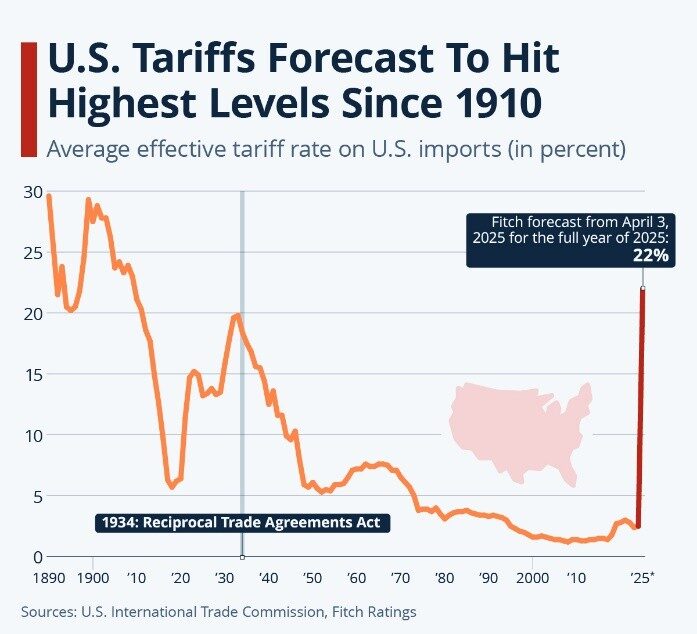
Donald Trump Raises Tariffs on Chinese Imports to 125%, Pauses Tariffs on Others Home / UPSC CURRENT AFFAIRS – 10th April 2025 Why in News? Recently, U.S. President Donald Trump paused global tariffs for 90 days amid market turmoil, while increasing tariffs on Chinese imports to 125%. Introduction Confronted with a global market sell-off and recession warnings, U.S. President Donald Trump changed direction on his tough tariff policy. He instituted a 90-day reprieve on higher tariffs on most countries, lowering the tariff level to 10%, while increasing tariffs on Chinese imports to 125%. It came as global investors flashed distress signals and nations called for negotiations. Key Developments Market Impact: S&P 500 jumped 9.5%; bond yields had been on the rise before stabilizing in the wake of the announcement. Negotiation Phase: Treasury Secretary Scott Bessent proclaimed “bespoke” country-by-country negotiations in the next 90 days. China Exception: Tariffs on Chinese imports were raised to 125%, isolating the trade war to a U.S.-China dispute. Political Narrative: The White House positioned the timeout as strategic, despite inconsistencies by Trump and cabinet officials. Geopolitical Consequences: WTO threatened long-term fragmentation of global trade on geopolitical grounds. Economic Responses Corporate level individuals such as Delta’s CEO threatened strategic disarray. Experts predicted concurrent economic shocks could lead the U.S. into a recession. Trump ally and hedge fund tycoon Bill Ackman termed the action as a strategic masterstroke. What are tariffs and how do they work? Tariffs are taxes charged on goods bought from other countries. Typically, they are a percentage of a product’s value. For example, a 25% tariff on a $10 (£7.59) product would mean an additional $2.50 (£1.90) charge. The 125% tariff on Chinese goods means that a $10 product would attract a $12.50 tax on top – driving the total cost up to $22.50. The companies that bring the foreign goods into the country have to pay the tax to the government. The money is collected when the imported goods clear US customs. Firms can choose to pass on some or all of the increased cost to customers. Why is Trump using tariffs? For decades, Trump has argued the US should use tariffs to boost its economy. He says they will encourage US consumers to buy more American-made goods, increase the amount of tax raised and lead to huge levels of investment in the country. Trump wants to reduce the gap between the value of goods the US buys from other countries and the value of those it sells to them. He argues that America has been taken advantage of by “cheaters” and “pillaged” by foreigners. The US president has also made other demands alongside tariffs. The first wave announced during his current term targeted China, Mexico and Canada, after he said he wanted them to do more to stop migrants and illegal drugs reaching the US. Trump has strongly defended his tariff policy but a growing number of influential voices within his Republican Party have joined opposition Democrats and foreign leaders in attacking the measures. What are Trump’s ‘reciprocal tariffs’? Trump introduced a minimum 10% tariff on all imports to the US on 5 April. The UK, Argentina, Australia, Brazil and Saudi Arabia are among the countries whose goods face this “baseline” charge. Much higher tariffs were initially introduced against 60 other countries on 9 April. These included 49% on Cambodian products, 46% on Vietnamese imports and 20% on goods from the EU. Chinese imports were initially due to face 54% tariffs (34% on top of the 20% rate already in place). Trump then increased the total to 104% after China vowed to “fight to the end” and refused to scrap its own retaliatory tariffs of 34% on the US. Hours after the 104% tariff took effect, China announced it would introduce a significantly higher 84% tax on all US imports from 10 April. Trump soon hit back, saying the US would increase tariffs on Chinese goods to 125% effective immediately. For now, Chinese manufacturers – and American consumers – still benefit from a tariff exemption for goods in small parcels sent from China worth less than $800 (£624). However that exemption will also end on 2 May. White House officials have described the higher tariffs as “reciprocal”. Reciprocal would mean they were based on the amount countries charge the US in the form of existing tariffs, plus the cost of meeting non-tariff barriers such as regulations. However, the White House used a different calculation – setting each tariff rate at a level that would eliminate the US’s trade deficit in goods with each country. And some countries, including the UK, have had tariffs applied even though they buy more from the US than they sell to it.
Union Cabinet approves ₹22,919 Cr scheme for promoting electronics component manufacturing
UPSC CURRENT AFFAIRS – 09th April 2025 Home / Union Cabinet approves ₹22,919 Cr scheme for promoting electronics component manufacturing Why in News? Recently, the Union Cabinet approved the ₹22,919 crore Electronics Component Manufacturing Scheme to boost domestic production of electronic components and reduce import dependence. Introduction The Government of India, in its big leap towards self-reliance in the electronics industry, sanctioned the Electronics Component Manufacturing Scheme (ECMS) on 28 March 2025 with a budget outlay of ₹22,919 crore to be spent over six years. The scheme is an important strategic transition from finished electronics products to building a strong component manufacturing ecosystem within the nation. Need for the Scheme India has witnessed tremendous growth in manufacturing electronics over the last few years, especially in the assembly of mobile handsets and the packaging of semiconductors. Yet, most of the components going into these finished products — including semiconductors, printed circuit boards, and lithium-ion batteries — are still imported. This has kept India’s domestic value addition at about 20%, while the developed world has reached 38–40% value addition after many decades of concerted effort. In order to fill this gap and minimize import reliance, there is an imperative to stimulate the domestic production of active and passive electronic components along with capital goods employed in their manufacture. Major Features of the Scheme Financial Outlay and Tenure: Total outlay: ₹22,919 crore. Scheme period: 6 years. Incentive Pattern: As opposed to previous schemes such as the Production Linked Incentive (PLI) scheme, ECMS provides no incentives based on incremental production. Instead, incentives will be tied to factory turnover and employment creation, making it more performance-oriented and inclusive. Targets: Induce investments of ₹59,350 crore. Attain production output of ₹4,56,500 crore. Generate approximately 91,600 direct jobs in the manufacturing of electronics components. Component Coverage: The scheme covers: Active components: Semiconductors and critical electronic components. Passive components: Resistors, capacitors, inductors, etc. Bare components: Printed circuit boards (PCBs), enclosures, lithium-ion batteries. Sub-assemblies: Controllers for display panels, camera modules, etc. Support for Capital Goods One of the focus areas of the scheme is manufacturing of capital goods, i.e., machinery employed in producing components. A number of clusters for such manufacturing already exist in cities such as Coimbatore, Bengaluru, Pune, Rajkot, and Vadodara. Importance of the Scheme: Boost to Value Addition: Seeks to double India’s domestic value addition in electronics from 20% to 40%. Atmanirbhar Bharat: Contributes to the objective of curbing import dependence and developing indigenous capabilities. Employment Generation: Will generate a substantial amount of direct and indirect employment in high-skill and semi-skill industry. Technology and Innovation: Promotes innovation in component design and domestic manufacturing procedures. Supply Chain Resilience: Minimizes vulnerability to global disruptions by localizing key parts of the electronics supply chain. Challenges Ahead Skilled Workforce: India will have to upskill a large workforce to match industry requirements. Technology Transfer: Technological partnerships and R&D investments will be needed to implement import substitution. Infrastructure: Power supply, logistics, and testing facilities need to be scaled up to enable manufacturing clusters. Coordination: Strong coordination among Central and State governments, and between public and private sectors, will be essential for effective implementation.
GPMI: The Future of Display and Data Ports
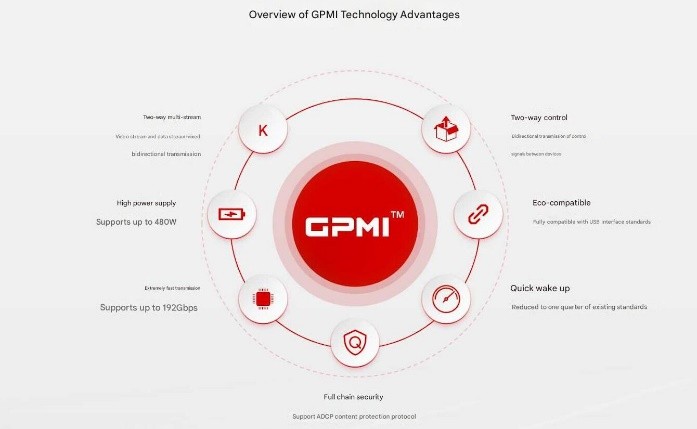
UPSC CURRENT AFFAIRS – 09th April 2025 Home / GPMI: The Future of Display and Data Ports Why in News? The Shenzhen 8K Ultra HD Video Industry Collaboration Alliance recently announced GPMI. What is GPMI? GPMI is a new audio and video wired interface that may make the widely known HDMI and DisplayPort interfaces a thing of the past. It is developed by a group of more than 50 Chinese tech companies including Hinsense, Skyworth, TCL and others, General Purpose Media Interface (GPMI) combines “video, audio, network connection, power supply and supply” into a single cable, The new wired media connector supports 8K video and reduces the number of cables required to stream data as well as power. GPMI comes in two variants – a Type-C cable that supports USB-C standard and offers 96 Gbps of bandwidth with 240W of power supply, and a Type-B wire with a proprietary connector that bumps up the bandwidth to 192 Gbps while providing 480W of power. How is GPMI better than DisplayPort, HDMI, Thunderbolt and USB? The GPMI Type-C cable may seem like it’s very slow compared to the proprietary Type-B GPMI, it is interesting to note that the 96 Gbps bandwidth is more than double the standard 40 Gbps speed a USB4 port with Extended Power Range offers under USB PD 3.1. GPMI also has a significant advantage over HDMI 2.1 and DisplayPort 2.1 UGBR20, which top out at 48 Gbps and 80 Gbps respectively while delivering no power. In case you are wondering, both Thunderbolt 4 and USB 4 offer 40 Gbps of bandwidth and deliver up to 100W and 240W power. Advantages GPMI offers seven advantages over current generation interface technologies like bidirectional multi-stream, bidirectional control, high power supply, ultra fast data transfer and full chain security. And since the GPMI Type-C interface also works with USB Type-C, you won’t have to worry about compatibility issues. The Shenzhen 8K Ultra HD Video Industry Collaboration Alliance also announced that the GPMI interface will be coming to upcoming Smart TV products, but it won;t be a surprise if monitor makers also adapt the technology. Application The only downside GPMI has is that it supports 8K streaming, which is less than HDMI 2.1 and DisplayPort 2.1, which can output images and videos in 10K and 16K respectively. This means that unlike HDMI and DisplayPort cables, which require a separate power supply, the GPMI standard can help reduce wire clutter and e-waste as well. Also, only Chinese companies will be adapting the new connector at the moment, and it is still unclear if popular brands like Sony, Intel, AMD and NVIDIA jump on the GPMI bandwagon.
Strengthening enforcement of judicial orders

UPSC CURRENT AFFAIRS – 09th April 2025 Home / Strengthening enforcement of judicial orders Why in News? Despite an NGT order limiting air horn usage in Jaipur, lack of enforcement highlights the systemic failures in judicial implementation, emphasizing the need for practical, accountable, and tech-driven compliance mechanisms. Introduction In spite of repeated judicial interventions, including the National Green Tribunal’s (NGT) directive restricting air horn use in central Jaipur at night, poor enforcement by concerned agencies has made such directives ineffective. This is a symptom of a deeper problem of systemic enforcement failures that erode the intent and authority of judicial pronouncements in India. The Problem of Enforcement Gaps India’s judicial system is strong in giving judgments, but enforcement is usually lacking. The NGT ruling on Jaipur’s air horns is still unenforced after over two years, revealing the enforcement agencies’ lack of interest and institutional failings. Some of the critical issues are Inadequate coordination among enforcement agencies like traffic police, pollution control boards, and transport departments. Neglect of “minor” offenses, resulting in gradual cumulative harm. Lack of accountability systems in administrative departments to implement court orders. This judicial-executive gap erodes public trust in the judiciary as well as in governance. Judicial Foresight Required Judicial rulings must anticipate enforcement hurdles to remain impactful. The State of Tamil Nadu v. K. Balu (2017) case, which prohibited liquor sales within 500 metres of highways to prevent drunk driving, is illustrative. While well-intentioned, the lack of foresight led to circumvention strategies like reclassification of roads and relocation of outlets, diluting the order’s effectiveness. Learning from Successful Enforcement A number of path-breaking judgments reflect that judicial clarification, administrative integration, and surveillance mechanisms are vital to effective implementation: Common Cause v. Union of India (2018): The Supreme Court legalized passive euthanasia but also established practical operational guidelines, such as mandates for medical boards, documentation guidelines, and institutional monitoring. Taj Trapezium Zone case: According to expert suggestions, the Court instructed the establishment of a green belt around Mathura refinery, in addition to continuous air quality monitoring and inter-agency compliance reporting. This is an example of integrated environmental governance by judicial initiative. Current Legal Framework: CPC Provisions Section 38, Code of Civil Procedure (CPC): Gives the court that granted the decree or to which it is transferred the power to enforce it. Order 21, CPC: Prescribes the process of execution of decrees but remains underutilized or delayed because of bureaucratic delays or lack of will. Even with these provisions, decree execution is usually tainted with uncertainty, particularly when there are several agencies involved or when there are jurisdictional overlaps. Global Example: Kathmandu’s Noise Control Success Kathmandu’s success in noise pollution reduction was gained through the synergy of strict enforcement and public awareness campaigns. This highlights that the enforcement process is not just a mechanical but a participatory process with community involvement, education, and collaborative governance. Way Forward In order to overcome systemic enforcement issues, the following reforms are necessary: Appointment of Dedicated Compliance Officers: Each government ministry must appoint a nodal officer to carry out court orders, audit, and report non-compliance. Technology-Driven Monitoring: AI-powered dashboards and GIS mapping software can assist courts in monitoring compliance by connecting judicial orders with the jurisdiction of certain government departments. Positive Reinforcement Mechanisms: Alongside punishments for non-execution, reward systems for timely and clear execution can encourage bureaucratic responsiveness. Transparency and Citizen Engagement: Public dashboards showing order status, grievance redressal systems, and awareness campaigns can fill the gap between judiciary and citizens. Inter-Agency Coordination Platforms: Multi-stakeholder task forces, led by a judicial monitoring cell, can avoid turf wars and provide synchronised action. Conclusion The transformative role of the judiciary in India cannot be achieved without strong enforcement mechanisms. Issuance of orders, no matter how well-intentioned, does not ensure justice. As evident in cases from noise pollution to environmental degradation and right to health, the true test of judicial power is in putting it into action on the ground. A well-rounded framework of accountable officers, intelligent technology, inter-agency coordination, and public engagement is essential to ensuring that judicial verdicts become sustained social impacts.