SC’s Intervention in Telangana Defections Case and the Growing Crisis of Legislative Impartiality
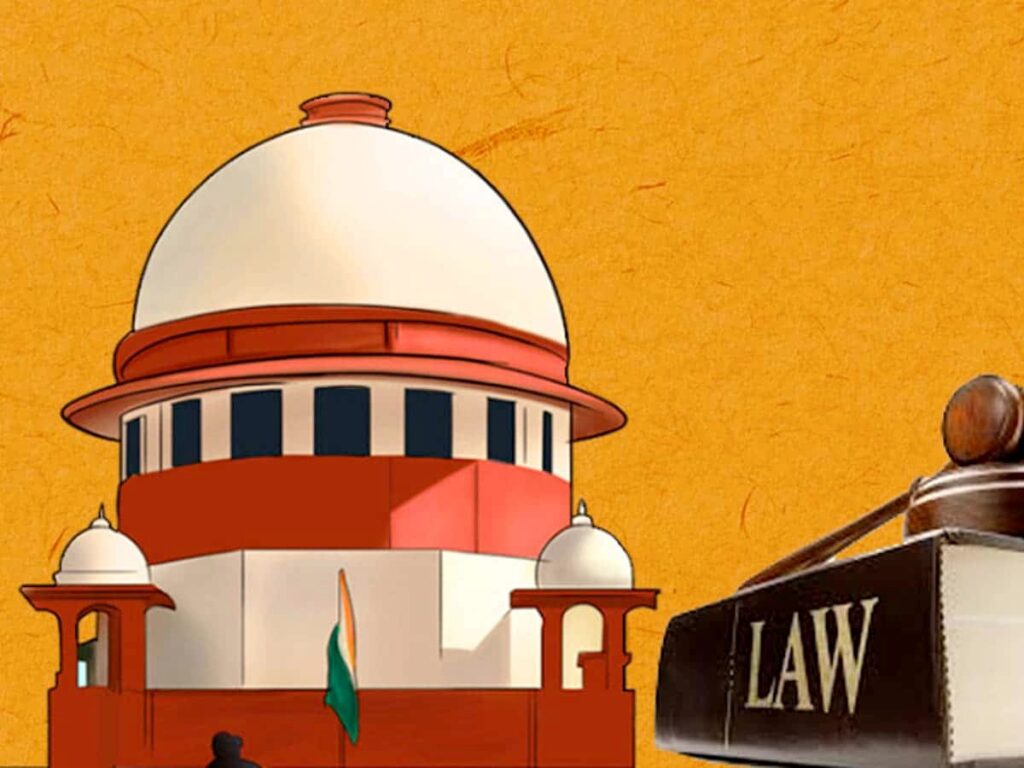
UPSC CURRENT AFFAIRS – 05th April 2025 Home / SC’s Intervention in Telangana Defections Case and the Growing Crisis of Legislative Impartiality Why in News? The Supreme Court of India has intervened in a case involving the delayed adjudication of disqualification petitions under the Tenth Schedule (Anti-Defection Law). The case pertains to 10 MLAs of the Bharat Rashtra Samithi (BRS) who defected to the Congress in March–April 2024, but the Telangana Speaker acted only in January 2025, triggering concerns over deliberate delay and partisan conduct. The Court reminded that, while it cannot instruct the Speaker on the decision’s content, it can and will demand timely action, upholding constitutional morality and democratic fairness. Key Highlights Telangana Case and the Supreme Court’s Stand The BRS approached the Court after facing months of inaction by the Speaker, despite their prompt filing of disqualification petitions. The Court emphasized that it is not powerless when constitutional authorities fail in their duties. Justice B.R. Gavai stated that the judiciary cannot interfere in the decision-making process of the Speaker, but it has the constitutional authority to enforce deadlines for adjudication. The Persistent Issue of Partisan Speakers The May 2023 Constitution Bench ruling had emphasized that Speakers must act “within a reasonable period” on disqualification matters. Despite this, delays remain common. In October 2023, the Court had to direct the Maharashtra Speaker to decide pending defection pleas, exposing the institutional bias of many Speakers. Since Speakers are often members of the ruling party, there is a conflict of interest, making them reluctant to act against their own party’s political convenience. Ignored Judicial Recommendations on Reform In 2020, the Supreme Court urged Parliament to amend the Constitution to: Remove the Speaker’s exclusive authority in defection cases. Set up an independent tribunal headed by a retired judge or external authority. These recommendations were intended to insulate the process from political influence, but no legislative progress has been made. The Recurring Pattern of Defections States like Manipur (2017–2019), Maharashtra (2022–2023), and now Telangana (2024–2025) have witnessed large-scale post-election defections. These defections are often strategically timed to help the ruling party consolidate power. Defectors are frequently rewarded with ministerial posts, while disqualification petitions are deliberately delayed, making a mockery of voters’ mandates and the spirit of democracy. Important Concepts and Legal Frameworks Tenth Schedule (Anti-Defection Law) Introduced by the 52nd Constitutional Amendment Act, 1985. Disqualifies legislators on grounds of: Voluntarily giving up party membership. Voting or abstaining against party direction (without permission). Exceptions include: Merger of 2/3rd members into another party. Role of the Speaker As per the Tenth Schedule, the Speaker of the House is the authority to decide on disqualification petitions. However, this has been controversial due to the Speaker’s party affiliations and the tendency to delay decisions for political gain. Judicial Review and Court’s Role In Kihoto Hollohan v. Zachillhu (1992), the SC upheld the Speaker’s authority but allowed judicial review of their decisions. Courts cannot decide the merits of a disqualification but can enforce procedural integrity — particularly when inaction violates constitutional duties. Constitution Bench Ruling (May 2023) Reaffirmed the expectation of impartiality from the Speaker. Clarified that delays in disqualification decisions violate the constitutional principle of fairness
India’s education system fails marginalised communities — and how to change it
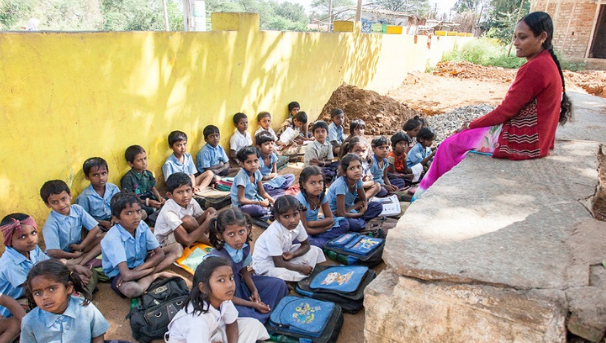
UPSC CURRENT AFFAIRS – 05th April 2025 Home / India’s education system fails marginalised communities — and how to change it Why in News? Despite decades of affirmative policies, India’s education system continues to fail marginalised communities such as SCs, STs, OBCs, and economically weaker sections, by ignoring structural inequalities and perpetuating social exclusion. The recent reflections from lived experiences expose how meritocracy, access, and campus culture are deeply skewed in favour of the privileged. Key Highlights Structural Barriers from School to College Students from marginalised communities face poor infrastructure, untrained teachers, and inconsistent electricity in rural schools, limiting early educational opportunities. The urban-rural education gap remains stark, with elite cities seen as distant and unaffordable for rural youth. Transitioning from village schools to urban colleges involves not only financial strain but also a cultural shock, leading to alienation and dropout risks. False Meritocracy and Systemic Exclusion The concept of ‘merit’ in India’s education system is biased, ignoring unequal access to resources like coaching, quality schools, and networks. Exams like JEE and NEET disproportionately favour urban, English-medium, and economically privileged students. Marginalised students who clear competitive exams are often labelled as “quota candidates” and face continued social stigma and academic doubt. Representation gaps remain severe: Only ~10% of PhD students in top IITs are SCs, and ~2% are STs. Over 90% of professors in these institutions belong to upper-caste backgrounds. Some institutes have zero SC/ST faculty, perpetuating the cycle of exclusion. Campus Discrimination and Mental Toll Students face microaggressions, caste-based segregation, and exclusion in hostels and dining halls. Many experience mental stress and isolation, leading to high dropout rates or disengagement from academic life. The job market replicates caste privilege through networks that block access to top opportunities for these communities. Important Concepts Merit vs Privilege: Merit, as currently defined by exam scores, overlooks contextual disadvantages, making it a proxy for privilege rather than actual potential. Caste Capital: The accumulated advantage that upper-caste individuals enjoy due to generational access to education, networks, and wealth. Systemic Inequality: Institutional practices that normalize exclusion and reproduce caste/class hierarchies across generations. Way Forward / Suggested Reforms Redefine merit to include contextual performance, acknowledging that a student succeeding in an under-resourced school may show more promise than one from a privileged background. Strengthen reservation policies, especially at PhD and faculty levels, to ensure true representation in academic spaces. Support first-generation learners through: Mentorship and peer programs Remedial classes Mental health services Inclusive campus policies Promote cultural sensitivity and anti-discrimination frameworks within institutions to dismantle ingrained casteist attitudes. Significance India’s demographic dividend cannot be realised unless the majority population, comprising Dalits, Adivasis, and OBCs, are given equitable access to quality education. True educational reform must liberate education from caste privilege, ensuring that talent from all sections is nurtured.
PM Modi Meets Bangladesh’s Chief Adviser Yunus
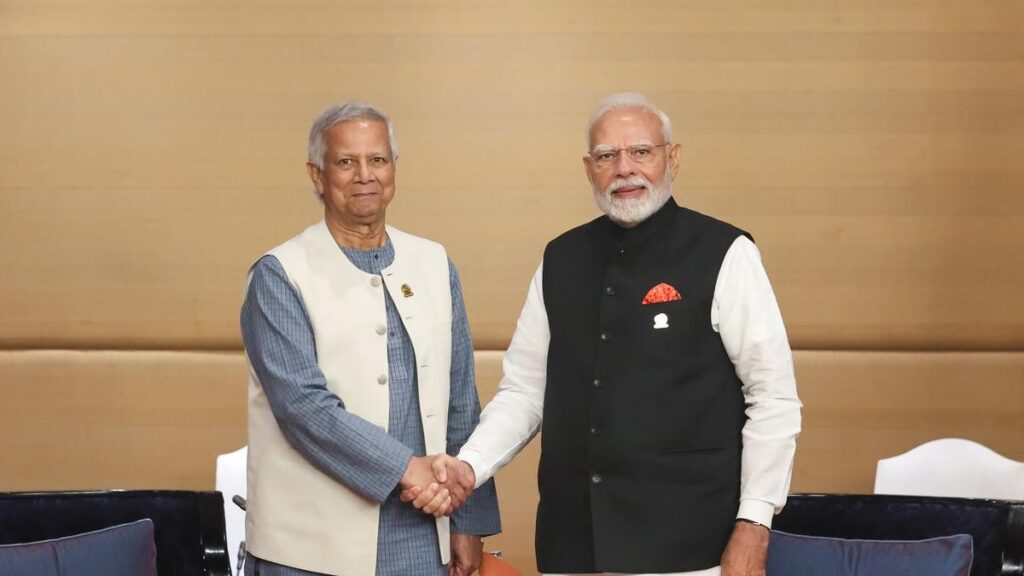
UPSC CURRENT AFFAIRS – 05th April 2025 Home / PM Modi Meets Bangladesh’s Chief Adviser Yunus Why in News? Prime Minister of India held a crucial meeting with Bangladesh’s Chief Adviser Muhammad Yunus on the sidelines of the 6th BIMSTEC Summit in Bangkok. This meeting marked the first high-level engagement since the ousting of former Bangladeshi Prime Minister Sheikh Hasina in August 2024. Key issues discussed included the safety of minority communities in Bangladesh, border security cooperation, and the extradition request concerning Hasina. Key Highlights Protection of Minorities in Bangladesh India raised strong concerns regarding violence and discrimination against Hindu minorities in Bangladesh. The Indian side urged for thorough investigations and stronger institutional safeguards for minority protection. Foreign Secretary Vikram Misri reiterated India’s expectation that Bangladesh ensures equal rights and justice for all communities. Extradition of Former PM Sheikh Hasina The Bangladeshi government formally requested the extradition of Sheikh Hasina, who is reportedly under asylum protection in India. India has not confirmed its stance, citing the political sensitivity and legal implications of the issue. The outcome of this request could significantly influence regional diplomacy and internal stability in Bangladesh. Border Security Cooperation India expressed concern over illegal cross-border movement, especially night-time infiltration, smuggling, and trafficking. The two sides discussed enhanced joint border enforcement and the need to strengthen bilateral border management protocols. The India–Bangladesh border, stretching over 4,000 km, remains one of the most porous yet sensitive frontiers in South Asia. Recalibrating India–Bangladesh Relations Post-Hasina India reiterated its commitment to a stable, democratic, and development-oriented Bangladesh, focusing on a people-centric approach. The aim is to ensure policy continuity in key sectors such as connectivity, energy, trade, and regional integration. The meeting reflects India’s cautious but proactive engagement with the transitional leadership in Dhaka. Important Concepts and Frameworks Minority Rights in South Asia: Central to India’s regional policy, especially where Hindus, Buddhists, and tribal communities reside in neighbouring countries. Extradition Protocols: Based on bilateral treaties, legal frameworks, and political discretion, balancing humanitarian and strategic concerns. BIMSTEC Framework: A platform connecting South and Southeast Asia focused on cooperation in trade, security, and connectivity — viewed by India as a functional alternative to SAARC. Timeline of Recent India–Bangladesh Developments Date Event Aug 2024 Former PM Sheikh Hasina ousted amid political unrest in Bangladesh. Sep–Oct 2024 India grants temporary asylum to Sheikh Hasina on humanitarian grounds. Dec 2024 Reports emerge of minority-targeted violence in Bangladesh post-coup. Jan 2025 India expresses concern over communal violence; urges investigations. Apr 2025 PM meets Chief Adviser Yunus at BIMSTEC Summit in Bangkok. Bangladesh–China vs Bangladesh–India Dynamics: A Comparison Aspect Bangladesh–India Bangladesh–China Geography Shared 4,000+ km land border No direct border Trade India is a top trading partner China is Bangladesh’s largest import source Security Cooperation Joint border patrols, anti-terror, maritime support China supplies arms, infrastructure surveillance Infrastructure Projects Roads, rail, energy grids, water-sharing dialogue Mega-projects: ports (e.g., Payra), Padma Bridge Diplomatic Engagement Regular summits, cultural ties, shared history Focused on economic diplomacy Strategic Concerns Cross-border infiltration, Rohingya crisis Debt diplomacy, dual-use infrastructure Significance This meeting marks a strategic recalibration in India–Bangladesh relations, navigating a sensitive political transition in Dhaka. India aims to protect its strategic interests, maintain border stability, and ensure minority safety, while avoiding overt interference in Bangladesh’s internal politics.
India at 6th BIMSTEC Summit: Reinforces Role in Regional Cooperation
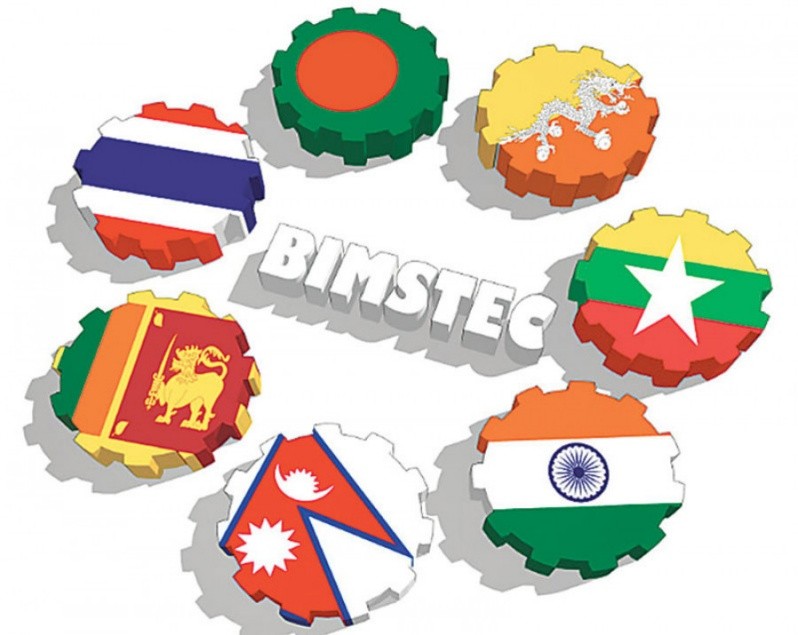
UPSC CURRENT AFFAIRS – 05th April 2025 Home / India at 6th BIMSTEC Summit: Reinforces Role in Regional Cooperation Why in News? At the 6th BIMSTEC Summit held in Bangkok in April 2025, India unveiled a broad set of initiatives to enhance cooperation across digital infrastructure, energy connectivity, trade in local currencies, maritime security, and human development. These initiatives reflect India’s deepening commitment to regionalism in the Bay of Bengal region, especially through multilateral platforms like BIMSTEC, in contrast to the limitations faced by SAARC. Historical Background of BIMSTEC BIMSTEC (Bay of Bengal Initiative for Multi-Sectoral Technical and Economic Cooperation) was established in 1997, originally as BIST-EC, comprising Bangladesh, India, Sri Lanka, and Thailand. It was renamed BIMST-EC with the inclusion of Myanmar in 1997, and later became BIMSTEC with the entry of Nepal and Bhutan in 2004. The grouping connects South Asia and Southeast Asia, and its focus areas include trade, connectivity, energy, environment, disaster management, public health, and agriculture. India–BIMSTEC Relations India has played a leading role in revitalising BIMSTEC, particularly after the suspension of SAARC activities post-2016 due to geopolitical tensions. India sees BIMSTEC as a vehicle to: Advance its Neighbourhood First and Act East policies. Promote regional integration and connectivity in the Bay of Bengal. Counterbalance China’s maritime and infrastructure presence in the Indian Ocean Region (IOR). Over the years, India has hosted and supported numerous BIMSTEC meetings, contributed significantly to institutional reforms, and pushed for charter finalisation, which came into force in 2024. Key Initiatives Announced at the 6th BIMSTEC Summit Digital and Financial Connectivity India proposed the interlinking of its Unified Payments Interface (UPI) with the payment systems of other BIMSTEC nations to boost cross-border trade and tourism. A feasibility study for local currency trade among member states was proposed to reduce reliance on external currencies. Energy and Infrastructure Accelerated work was proposed on regional electricity grid interconnection to facilitate power trade. Plans to set up a BIMSTEC Energy Centre and develop clean energy cooperation were discussed. Maritime Security and Transport India proposed a Sustainable Maritime Transport Centre to coordinate maritime policy, capacity building, and security cooperation in the Bay of Bengal. Disaster Management and Climate Resilience Proposal to establish a BIMSTEC Centre of Excellence for Disaster Management in India. India will host the fourth BIMSTEC disaster management joint exercise later this year. Public Health and Traditional Medicine India committed to training cancer care professionals and proposed a Centre of Excellence for Traditional Medicine for regional cooperation. Agriculture and Knowledge Exchange A Centre of Excellence in Agriculture was proposed to support capacity-building, knowledge sharing, and innovation in the farming sector. Trade and Industry Establishment of a BIMSTEC Chamber of Commerce and an annual Business Summit to enhance private sector engagement. Space and Education Cooperation Proposed satellite ground stations, nano-satellite development, and remote sensing data sharing. Expansion of scholarships at Indian institutions and annual training for young diplomats from BIMSTEC countries. Youth, Sports, and Culture Launch of the BODHI initiative for skill development (training 300 BIMSTEC youth annually). Hosting of a Traditional Music Festival, Young Leaders Summit, and BIMSTEC Hackathon. India will also host the BIMSTEC Athletics Meet in 2025 and the first BIMSTEC Games in 2027 to mark the group’s 30th anniversary. Challenges Facing BIMSTEC Inconsistent political will and slow implementation of decisions have hindered momentum. Resource constraints and lack of a permanent secretariat with strong capacity affect operational efficiency. Security concerns, especially regarding China’s rising influence in Myanmar and Sri Lanka, require a delicate balance among members. Differing development levels and priorities across member states make consensus-building complex. BIMSTEC vs SAARC: A Comparison Aspect BIMSTEC SAARC Established 1997 1985 Members 7 (Excludes Pakistan) 8 (Includes Pakistan) Focus Areas Connectivity, trade, energy, security Broad, but mostly economic and social India’s Role Proactive and leading Stalled due to tensions with Pakistan Meetings Held Increasing post-2016 Inactive since 2014 summit Geo-focus Bay of Bengal – South & Southeast Asia South Asia only Effectiveness Growing relevance Largely dormant India views BIMSTEC as a more action-oriented alternative to SAARC, free from political gridlock. Significance The summit reflected India’s strategic focus on functional regionalism, maritime cooperation, and digital integration. Through BIMSTEC, India aims to build a secure, connected, and prosperous Bay of Bengal region, reinforcing its role as a net security provider and development partner. India’s proposals signal an effort to institutionalise BIMSTEC mechanisms, make it a platform for inclusive growth, and ensure that connectivity is holistic – physical, digital, energy, and cultural.
Global South Urged to Lead UN Peacekeeping in Ukraine: A Case for Neutral Leadership
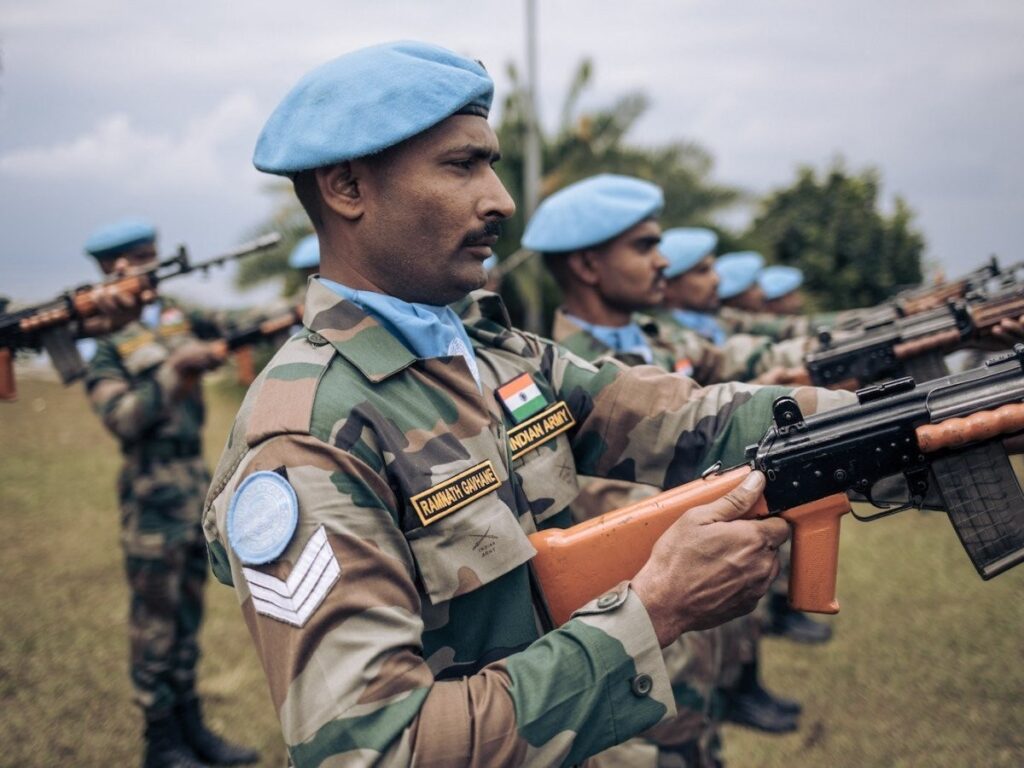
UPSC CURRENT AFFAIRS – 05th April 2025 Home / Global South Urged to Lead UN Peacekeeping in Ukraine: A Case for Neutral Leadership Why in News? As the Ukraine war enters its fourth year, a fragile ceasefire has emerged following recent maritime and energy truces brokered in Riyadh. While Western nations propose a European-led peacekeeping force, geopolitical sensitivities — especially Russia’s opposition to NATO presence — have made this option contentious. Key Highlights of the Argument Problems with a European-Led Peacekeeping Force NATO member-states are unacceptable to Russia as peacekeepers, given their perceived alignment with Ukraine and past confrontations. Public opinion in Europe (e.g., France and UK) is largely against troop deployments in Ukraine. Europe’s military capacity, especially without guaranteed U.S. support, is limited for a long-term peacekeeping mission. The presence of NATO troops may provoke rather than pacify the region, escalating tensions. Global South as a Credible Peacekeeper Nations in the Global South (Africa, Asia, Latin America) have largely maintained neutrality in the Ukraine conflict, giving them moral legitimacy. Their leaders have engaged with both Kyiv and Moscow, e.g., India’s outreach to both Zelenskyy and Putin, reflecting diplomatic balance. Countries such as Brazil, India, South Africa, Indonesia, and African Union (AU) members have strong peacekeeping experience, including in volatile regions like Sudan, Somalia, and Liberia. Smaller nations like Chile possess specialised skills (e.g., demining) vital for Ukraine’s reconstruction. India’s Legacy in Peacekeeping India has contributed over 2,90,000 personnel to 50+ UN missions — the largest contributor historically. It deployed the first all-women police contingent in Liberia (2007). With a neutral stance and ties to Russia, the West, and Ukraine, India is well-positioned to lead a UN peacekeeping mission in Ukraine. The article calls on India to overcome its traditional diplomatic reticence and take assertive global leadership. Conditions for a Global South-Led Mission Requires a clear and robust ceasefire agreement. Demarcation of frontlines through negotiations. Financial and logistical support from Europe and other stakeholders. UN Security Council authorisation and mutual consent from Kyiv and Moscow. Exclusion of NATO troops to preserve neutrality. Inclusion of female peacekeepers to enhance community trust and address gender-based violence. China’s Comparative Proactivity China has already positioned itself as a potential peacemaker, appointing a special envoy and maintaining visible diplomatic activity. India, despite its credentials, has not made a formal diplomatic initiative on the Ukraine peace process. Significance A Global South-led peacekeeping mission would be a watershed moment in reshaping the global order, demonstrating that the South is no longer a passive observer but an active player in global security. Such an initiative would reaffirm the role of the United Nations in maintaining peace and validate the multilateral system. For India, leading this mission would: Enhance its soft power and diplomatic stature, Strengthen its case for a permanent UNSC seat, and Position it as a non-aligned global stabilizer in a multipolar world.
Evolution of Waqf in India
UPSC CURRENT AFFAIRS – 05th April 2025 Home / Evolution of Waqf in India Why in News? The evolution of the Waqf system in India is being highlighted for its significance in religious, socio-economic, and political contexts across different historical periods—from the Delhi Sultanate to the British Raj. Waqf has functioned not only as a charitable and religious endowment system but also as a means of political assertion, urban development, and cultural integration over several centuries. Key Highlights Waqf During the Delhi Sultanate (13th–16th centuries) The earliest recorded Waqf in India was created in the late 12th century, when a ruler dedicated village revenue in Multan to support a mosque—symbolising both religious devotion and political dominance. Waqf institutions proliferated under the Delhi Sultanate, with rulers and nobles endowing mosques, madrasas, khanqahs, and other public welfare facilities. These institutions significantly contributed to urban development by funding the construction of tombs, water reservoirs, graveyards, sarais (rest houses), and roads. Trustees (mutawallis) were appointed to manage Waqf properties, reflecting a structured administrative approach. The reign of Iltutmish marked a notable expansion, with the construction of major structures like the Shamsi Masjid in Badayun through Waqf funding. Waqf During the Mughal Period (16th–18th centuries) The Mughal era saw further institutionalisation of Waqf. Large-scale endowments were created for the maintenance of monuments, most notably the Taj Mahal. Waqf revenues from villages and markets were used to pay for ceremonial activities, salaries of caretakers, and religious commemorations. Mughal emperors patronised Sufi shrines, showing the deep interlinkage between Waqf, religious institutions, and imperial legitimacy. Waqf grants were also extended to non-Muslim beneficiaries, including Hindu priests, Sanskrit scholars, and temples, demonstrating religious inclusivity. Waqf Under British Colonial Rule Regulation XIX (1810 – Bengal): First regulation to supervise revenues from religious lands, applied equally to Hindus and Muslims. Regulation VII (1817 – Madras): Similar supervision of endowments for temples, mosques, and public utilities. Religious Endowments Act (1863): Ended direct British management of religious trusts; control given to local committees. Charitable Endowments Act (1890): Introduced “Treasurer of Charitable Endowments” to manage trust properties. Charitable and Religious Trusts Act (1920): Allowed public access to trust information and judicial oversight. Waqf under British Rule Abdul Fata Case (1894): Declared family waqfs invalid unless truly charitable; applied English legal principles (e.g., rule against perpetuities). Mussalman Wakf Validating Act (1913): Legalized family waqfs (waqf-alal-aulad) with some charitable component. Advocated by M.A. Jinnah. Mussalman Wakf Act (1923) Required mutawallis to maintain accounts and publish waqf records. Empowered civil courts for supervision but lacked an independent regulatory body. Provincial amendments added region-specific improvements. Post-Independence Developments Wakf Act (1954) Established State Waqf Boards for centralized management. Repealed prior laws (1863, 1890, 1920, 1923) and pre-1954 state waqf laws. Linked to managing evacuee properties left post-Partition. Wakf (Amendment) Act (1984) Strengthened Waqf Boards and created Waqf Tribunals. Introduced committees and waqf commissioners for better oversight. Important Concepts Waqf is a perpetual charitable endowment under Islamic law, through which income or property is permanently dedicated for religious, educational, or social welfare purposes. A khanqah is a Sufi religious retreat or hospice, supported by Waqf, that provides spiritual guidance and hospitality. A madrasah is an Islamic educational institution, often funded by Waqf, where students receive both religious and secular instruction. The Tareekh-e-Firauz Shahi is a Persian historical chronicle that records the creation, preservation, and expansion of Waqf institutions during the Delhi Sultanate. Significance The Waqf system has played a crucial role in public service delivery, including education, health care, religious activity, and urban development. Waqf served as a tool of governance and legitimacy, helping rulers assert authority while fulfilling philanthropic objectives. The inclusion of non-Muslim communities as Waqf beneficiaries reflects the pluralistic and syncretic traditions of Indian society. The transformation of Waqf into a legally regulated institution under colonial rule shows how traditional systems adapted to modern administrative frameworks.
Dragon-Elephant duet: Xi Jinping’s congratulatory message to President Murmu on 75th anniversary of India-China ties
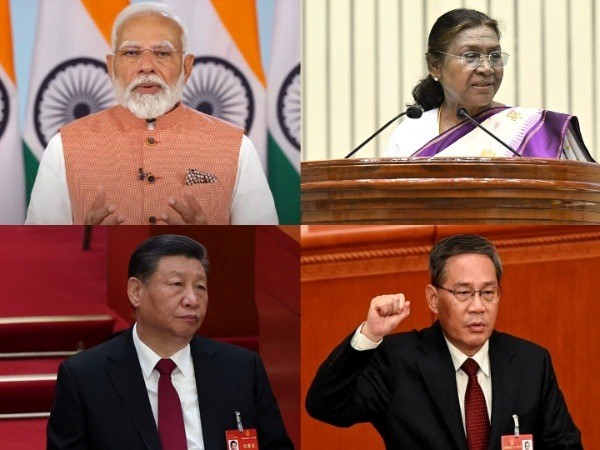
UPSC CURRENT AFFAIRS – 04th April 2025 Home / Dragon-Elephant duet: Xi Jinping’s congratulatory message to President Murmu on 75th anniversary of India-China ties Why in News? The 75th anniversary of India-China diplomatic relations highlights the importance of fostering closer ties, with President Xi Jinping describing the partnership as a “cooperative pas de deux of the dragon and the elephant.” Background 75th Anniversary of Diplomatic Relations: Marks a significant milestone in India-China bilateral ties. Xi Jinping’s Congratulatory Message: Emphasized the importance of fostering closer ties between the two nations. “Cooperative Pas de Deux”: Xi described the relationship as a “cooperative pas de deux of the dragon and the elephant,” symbolizing mutual benefit and cooperation. Historical and Cultural Ties: The metaphor highlights the deep-rooted historical and cultural connections between India and China. Strategic Significance: Reflects the growing importance of India-China relations in the global context. Key Points Strategic Importance of India-China Relations: President Xi emphasized the need for a “strategic and long-term perspective” in handling bilateral ties. Both nations should focus on mutual trust, mutual benefit, and common development to ensure the peaceful coexistence of neighboring major countries. India and China, as major developing countries and important members of the Global South, have a crucial role in shaping global affairs. Cultural and Civilizational Ties: Xi referred to both nations as “ancient civilizations” and highlighted their deep-rooted cultural connections. The relationship between India and China is built on centuries of shared history, which forms a strong foundation for cooperation. Bilateral Cooperation on Global Issues: The two countries are at a critical stage in their respective modernization drives and should cooperate to push for world multipolarization and democracy in international relations. Both nations should deepen communication and coordination on major international issues to foster a peaceful and prosperous global environment. Emphasis on Border Peace: Despite the ongoing border disputes, there is a renewed focus on peace and stability in the China-India border regions. The two nations have agreed to work together to safeguard peace and tranquility along their borders, which have been a point of tension, especially following the 2020 Galwan clashes. Recent Diplomatic Engagements: In March, India and China discussed resuming dialogue mechanisms in a “step-by-step” manner, focusing on priority areas of mutual concern. The meeting between Indian Joint Secretary (East Asia) Gourangalal Das and Chinese Director General Liu Jinsong in Beijing highlighted the progress made since the October 2024 meeting between PM Modi and President Xi in Kazan. India’s Optimism for Bilateral Relations: PM Modi, in a recent interview with American podcaster Lex Fridman, emphasized that normalcy is returning to the border. He expressed optimism about India’s relationship with China, emphasizing cultural and civilizational ties and the importance of mutual understanding. Opportunities and Challenges Opportunities: The 75th anniversary offers an opportunity to rebuild trust, strengthen strategic cooperation, and address bilateral concerns. There is potential for expanding cooperation in areas like trade, infrastructure development, and climate change, which will benefit both countries. Challenges: Despite positive rhetoric, the ongoing border disputes and differing national priorities continue to pose challenges to bilateral relations. The path forward will require careful handling of sensitive issues, with both countries prioritizing peace and stability in the region. This anniversary marks a significant moment for both nations to reflect on their shared history and future prospects while navigating the complexities of modern geopolitics.
Hungary welcomes Netanyahu and announces its quitting top war crimes court
UPSC CURRENT AFFAIRS – 04th April 2025 Home / Hungary welcomes Netanyahu and announces its quitting top war crimes court Why in News? Israeli Prime Minister Benjamin Netanyahu visited Hungary despite an arrest warrant issued by the International Criminal Court (ICC), with Hungary planning to withdraw from the ICC. Introduction Israeli Prime Minister Benjamin Netanyahu arrived in Budapest, Hungary, on an official visit, receiving a red carpet welcome despite an arrest warrant issued by the International Criminal Court (ICC). His visit comes amid growing international scrutiny over Israel’s actions in the ongoing Israel-Palestine conflict. Hungarian Prime Minister Viktor Orbán, a known ally of Netanyahu, used this occasion to announce that Hungary would begin the process of withdrawing from the ICC. Key Highlights of the Visit Warm Reception Despite ICC Warrant The ICC had issued an arrest warrant against Netanyahu for alleged war crimes, but Hungary, which does not recognize the ICC’s jurisdiction, welcomed him with full state honors. Hungary’s stance reflects its broader policy of opposing international legal interventions in sovereign state affairs. Hungary’s Withdrawal from the ICC The Hungarian government announced its decision to start the process of withdrawing from the ICC, citing concerns over politicization and selective justice. This move aligns Hungary with countries like the United States and Israel, which are not ICC members. Bilateral Talks and Diplomatic Engagements Netanyahu and Orbán discussed deepening economic, defense, and technological cooperation between Israel and Hungary. The Israeli leader also met Hungarian President Tamás Sulyok at the Presidential Palace. Geopolitical and Diplomatic Implications For Israel: Netanyahu’s ability to travel despite the ICC warrant signals continued diplomatic backing from key allies. Hungary’s support strengthens Israel’s diplomatic standing within the European Union, where many countries have been critical of Israel’s actions in Gaza. For Hungary: The decision to withdraw from the ICC highlights Hungary’s growing divergence from mainstream EU policies, reinforcing its stance as a nationalist, sovereign-first government. This move could strain Hungary’s relations with other EU members that support the ICC’s role in international justice. For the International Community: The ICC’s credibility is tested, as high-profile leaders like Netanyahu continue to travel freely despite arrest warrants. The visit raises questions about the enforcement of international law, particularly in politically sensitive cases. International Criminal Court (ICC) The International Criminal Court (ICC) is a permanent international tribunal established to prosecute individuals for serious offenses of international concern, such as genocide, war crimes, crimes against humanity, and the crime of aggression. The court’s mission is to ensure accountability for the gravest crimes and contribute to the prevention of impunity for such acts. Key Facts About the ICC: Establishment and Legal Framework: The ICC was established by the Rome Statute, which was adopted on July 17, 1998, and entered into force on July 1, 2002. The Rome Statute serves as the foundational legal document for the ICC’s operations and defines the crimes under its jurisdiction. Location: The ICC is located in The Hague, Netherlands, and operates independently from the United Nations, although it may collaborate with the UN in certain cases. Jurisdiction: The ICC has jurisdiction over genocide, war crimes, crimes against humanity, and the crime of aggression. The court can prosecute crimes committed within the territory of a state party to the Rome Statute, or if the UN Security Council refers a situation to the ICC, or if a non-member state agrees to allow the court to prosecute crimes on its territory. State Parties: The ICC operates with the support of countries that have ratified the Rome Statute. As of 2025, 123 countries are parties to the Rome Statute. Some countries, including the United States, China, and India, have not ratified the Rome Statute and are not members of the ICC. Structure of the ICC: The ICC is composed of four main organs: The Presidency: Overseeing the administration of the court. The Judicial Divisions: Comprising 18 judges, they are responsible for the judicial functions of the ICC. The Office of the Prosecutor (OTP): This office investigates and prosecutes alleged crimes within the ICC’s jurisdiction. The Registry: Handles the court’s administration and support functions Conclusion Netanyahu’s visit to Hungary underscores the complex intersection of diplomacy, international law, and political alliances. Hungary’s decision to withdraw from the ICC reflects broader debates about the role of international institutions in global governance. As geopolitical tensions rise, the visit highlights the shifting dynamics of global power and the challenges of enforcing international justice.
How Smoot-Hawley Tariff Act deepened the Great Depression
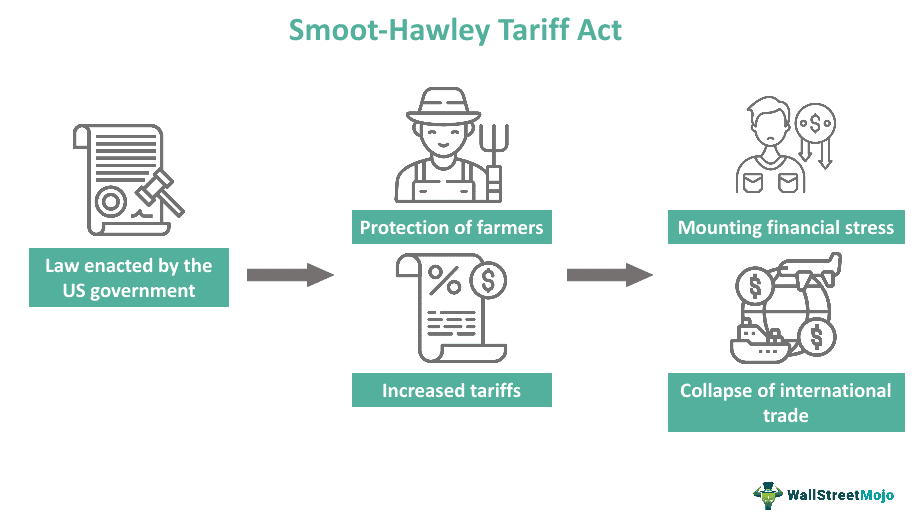
UPSC CURRENT AFFAIRS – 04th April 2025 Home / How Smoot-Hawley Tariff Act deepened the Great Depression Why in News? Impact of Trump’s tariffs on India-US trade relations amid comparisons to the Smoot-Hawley Tariff Act of 1930. Introduction US President Donald Trump’s recent tariff hikes, particularly the 10% blanket tariff on all countries and reciprocal higher tariffs on nations with large US trade deficits, have raised concerns about a potential global trade war. The move has drawn comparisons with the Smoot-Hawley Tariff Act of 1930, which deepened the Great Depression by triggering retaliatory tariffs worldwide. The Smoot-Hawley Tariff Act of 1930 Objective: Originally aimed at protecting American farmers and businesses from foreign competition amid falling agricultural prices. Provisions: Raised import duties on over 20,000 goods, imposing aggressive tariffs on approximately 25% of all US imports. Economic Impact: Prompted retaliatory tariffs from major trading partners, including Canada and European nations. US imports from Europe fell from $1.3 billion in 1929 to $390 million in 1932. US exports to Europe plummeted from $2.34 billion in 1929 to $784 million in 1932. Global trade declined by 66% between 1929 and 1934, exacerbating the Great Depression. Trump’s Tariff Strategy and the Smoot-Hawley Parallel Higher Reciprocal Tariffs: The 27% tariff on India, 34% on China, and 32% on Taiwan signal a return to protectionist trade policies. Market Impact: Announcements led to a 1,450-point drop in the Dow Jones Industrial Average, a 5.8% fall in the Nasdaq, and a 6% decline in oil prices. Potential for Retaliation: Countries affected by higher US tariffs may impose their own countermeasures, disrupting global trade and supply chains. Key Differences Between Smoot-Hawley and Trump’s Tariffs Aspect Smoot-Hawley (1930) Trump’s Tariffs (2025) Economic Context Great Depression aftermath Post-pandemic recovery and geopolitical tensions Tariff Scope 25% on 20,000 goods 10% blanket tariff + higher tariffs on trade-deficit countries Retaliation Risk Immediate global backlash Unfolding but likely due to trade deficits with key nations Trade Share in GDP US imports = 5% of GDP US imports = 14% of GDP (three times higher) Potential Impact on India-US Trade Relations Short-term Disruptions: Higher tariffs on Indian auto components, gems, and jewelry could impact export earnings. US concerns over India’s tariff structure and non-tariff barriers may strain trade negotiations. Opportunities for India: Tariffs on China (54%) and other Asian countries could shift supply chains in India’s favor, particularly in textiles and manufacturing. India could leverage bilateral trade agreements to secure tariff reductions for key exports. Long-term Implications: If retaliatory measures escalate, it may undermine global trade stability and slow economic growth. A strategic response, such as diversifying export markets and strengthening domestic manufacturing, will be crucial for India’s economic resilience. Conclusion Trump’s tariffs reflect a shift towards economic nationalism that could disrupt global trade patterns. While the Smoot-Hawley comparison underscores the risks of protectionism, India’s ability to capitalize on shifting supply chains and navigate trade negotiations will determine its position in the evolving global trade order.
India’s exports to US hit with 27% tariff, Asian rivals face higher tariffs; US markets in turmoil
UPSC CURRENT AFFAIRS – 04th April 2025 Home / India’s exports to US hit with 27% tariff, Asian rivals face higher tariffs; US markets in turmoil Why in News? The US has imposed reciprocal tariffs, setting India’s rate at 27%, impacting exports while creating opportunities in textiles and manufacturing. Introduction US President Donald Trump has imposed new reciprocal tariffs, setting India’s tariff rate at 27%, impacting key export sectors like gems & jewellery and auto components. The move is part of a broader trade policy aimed at reducing the US trade deficit and countering trade barriers imposed by other nations. Key Highlights of the Tariff Policy General Tariff Increase: A blanket 10% tariff has been imposed on all countries. Higher Tariffs for Trade-Deficit Countries: Countries with high trade deficits with the US face higher individual tariffs. Impact on China and Other Nations: China: 54% effective tariff (including previous duties). Other Asian countries: Thailand (36%), Indonesia (32%), Laos (48%). India: 27% tariff, lower than China but higher than Japan (24%) and South Korea (25%). Implications for India Impact on Indian Exports Sectors Affected: Gems & jewellery, auto components, chemicals, and telecom products. Higher costs for US buyers may reduce demand for Indian goods. Potential Opportunities Textile & Garment Exports: Higher US tariffs on China (54%) and Bangladesh (37%) create a market for Indian textiles. Manufacturing Shift: Companies may consider relocating to India as an alternative to China. Trade Negotiations and Market Dynamics India had signaled tariff reductions in ongoing trade talks, but US tariffs were still imposed. The US cited India’s non-tariff barriers (testing & certification rules) as trade restrictions. India’s Competitive Advantage India’s tariff rate (27%) is lower than many Asian competitors, making Indian goods more attractive compared to high-tariff nations like Vietnam (46%) and Thailand (36%). Potential for India to strengthen its position in global supply chains. US Perspective on India’s Trade Policy The US Trade Representative (USTR) report flagged India’s high tariffs on agricultural and industrial goods. India’s flexible tariff structure creates uncertainty for US exporters. US concerns include India’s agricultural subsidies and GM-free certification rules. Conclusion The US tariff hike poses challenges and opportunities for India. While it may impact key export sectors, it also presents an opportunity for India to expand its role in global trade and attract investments in sectors like textiles and manufacturing. The future trajectory will depend on India-US trade negotiations and India’s ability to capitalize on shifting global supply chains.