Why has X sued the government over SAHYOG?

UPSC CURRENT AFFAIRS – 30th March 2025 Home / Why has X sued the government over SAHYOG? Why in News? Social media platform X (formerly Twitter) has filed a petition in the Karnataka High Court challenging the Union Government’s SAHYOG portal, which it describes as a “censorship portal.” X argues that SAHYOG violates constitutional rights and the legal framework of content takedown under the Information Technology Act, 2000. What is the SAHYOG Portal? A government-run platform developed by the Ministry of Home Affairs (MHA) and MeitY to automate takedown notices to internet intermediaries. It enables law enforcement and government agencies to: Flag content under Section 79(3)(b) of the IT Act. Request removal or disabling of access to information allegedly used in committing “unlawful acts.” Originated from a Delhi High Court case demanding real-time cooperation between platforms and police in urgent cases (e.g., child safety). Legal Framework 🔹 Section 79 of the IT Act (Safe Harbour Provision) Section 79(1): Grants intermediaries (like X, Facebook, YouTube) immunity from liability for user-generated content. Section 79(3)(b): This immunity is revoked if: The intermediary fails to act on being informed by the government that certain content is being used unlawfully. ⚠️ Issue: No judicial or procedural safeguards are required before issuing takedown notices under this section. 🔹 Section 69A of the IT Act (Blocking Powers) Empowers the government to block public access to information under specific grounds: Sovereignty, national security, public order, etc. Requires adherence to IT Blocking Rules, 2009, including: Recorded reasons Opportunity for hearing Oversight by a committee Shreya Singhal Judgment (2015): Upheld Section 69A but struck down Section 66A; emphasized due process and user rights. What Is X Arguing? The government is bypassing the limited safeguards of Section 69A by using Section 79(3)(b) to issue de facto content removal orders. This transforms the “notice-based due diligence system” into a covert censorship mechanism. Claims SAHYOG enables arbitrary and opaque takedowns without legal basis or transparency. Notes that 30% of MHA’s takedown notices to X target posts involving Union Ministers and agencies — indicating potential abuse of power. Broader Concerns Raised by Civil Society and Legal Experts Internet Freedom Foundation (IFF): Section 79 was meant for liability regulation, not content governance. SAHYOG undermines basic safeguards and transparency norms. Legal scholars argue: Social media firms lack strong incentives to challenge vague or overbroad government orders. The system tilts power in favour of the state, threatening freedom of expression and digital rights. Government’s Response Denies that SAHYOG amounts to censorship. Argues: Takedown notices under Section 79 are not equivalent to blocking orders. Non-compliance only results in removal of safe harbour, not forced deletion. Asserts that most major platforms (Meta, Google) have cooperated with SAHYOG. Analytical Angle Governance vs. Free Speech Striking a balance between law enforcement needs and citizen’s right to free expression is crucial in a democracy. Lack of due process can lead to arbitrary censorship under the garb of legal compliance. Rule of Law and Due Process Content blocking should follow procedural fairness, judicial oversight, and user rights—principles affirmed in Shreya Singhal (2015). SAHYOG may be bypassing these safeguards, leading to a backdoor censorship regime. Digital Constitutionalism The case raises questions about how constitutional principles apply in the digital age, particularly: Right to freedom of speech (Article 19(1)(a)) Reasonable restrictions (Article 19(2)) Need for a Digital Bill of Rights? Conclusion The legal challenge to the SAHYOG portal marks a crucial test case in India’s evolving digital governance landscape. It brings into focus the tensions between security, state control, and fundamental rights in cyberspace. Upholding transparency, accountability, and constitutional safeguards is essential as India navigates content regulation in the era of algorithmic governance and platform power.
India to grow at 6.5% in FY26: EY Report
UPSC CURRENT AFFAIRS – 30th March 2025 Home / India to grow at 6.5% in FY26: EY Report Why in News? According to the March 2025 edition of EY Economy Watch, the Indian economy is projected to grow at 6.4% in FY25 and 6.5% in FY26, supported by private consumption and government investment. The report underlines the need for a well-calibrated fiscal strategy that prioritizes human capital development, regional equity, and fiscal prudence, especially in light of India’s goal of becoming a Viksit Bharat by 2047. Key Economic Estimates Real GDP Growth (as per NSO revised estimates): FY23: 7.6% FY24: 9.2% FY25: 6.5% (projected) FY26: 6.5% (EY projection) Q3 FY25 GDP growth: 6.2% Requires 7.6% growth in Q4 FY25 to achieve the 6.5% annual target. This would demand 9.9% growth in private final consumption expenditure (PFCE), which is seen as ambitious under current conditions. Analysis: Challenges in Meeting Growth Targets Pressure on Private Consumption The EY report notes that a near 10% growth in consumption is difficult, given ongoing geopolitical pressures, inflation risks, and global economic uncertainty. Therefore, a more feasible route to achieving targets could be enhancing investment expenditure, particularly government-led capital spending. Role of Fiscal Policy Fiscal deficit may expand due to supplementary demands for grants, but this could be cushioned by higher nominal GDP, which keeps the deficit-to-GDP ratio manageable. A balanced approach to fiscal stimulus is needed to sustain growth while avoiding inflationary and debt-related risks. Human Capital: Long-Term Growth Driver Need to Expand Education and Health Spending India needs to increase public spending on education and healthcare over the next two decades to fully leverage its demographic dividend. Sector Current (% of GDP) Target by FY2048 Education 4.6% 6.5% Health 1.1% 3.8% This is necessary to enhance productivity, employability, and human well-being, especially in low-income and demographically young states. Regional Equity through Equalisation Transfers The report recommends equalisation transfers to support fiscally weaker states in improving health and education access. These transfers are crucial to address inter-state disparities and ensure inclusive development. Revenue Mobilisation Strategy The report emphasizes the need to raise India’s revenue-to-GDP ratio from 21% to 29% over time. This would enable the government to sustainably fund social sector investments without breaching fiscal prudence. Demographics and Growth Cycle India’s changing age structure will increase the working-age population share. If supported by adequate investments in human capital and infrastructure, this can create a virtuous cycle of: Employment Savings Investment Growth Conclusion The EY report reaffirms India’s medium-term growth potential but also flags structural bottlenecks in consumption, fiscal capacity, and human capital. A phased, prudent fiscal strategy—focusing on education, health, and infrastructure, along with revenue mobilisation and regional equity mechanisms—will be key to sustaining momentum toward a Viksit Bharat. The real challenge lies not just in achieving 6.5% GDP growth, but in ensuring that growth is inclusive, resilient, and human development-oriented.
Findings of a new study about the long-term impact of deep-sea mining

UPSC CURRENT AFFAIRS – 30th March 2025 Home / Findings of a new study about the long-term impact of deep-sea mining Why in News? A new study published in the journal Nature has revealed that a strip of the Pacific Ocean seabed, mined for metals over 40 years ago, has still not recovered. The study highlights the long-term ecological damage caused by deep sea mining (DSM) and comes at a time of increasing global calls for a moratorium on such activity due to environmental concerns. Also Read: India needs to develop its deep-sea capabilities Key Findings of the Study The study titled “Long-term impact and biological recovery in a deep-sea mining track” was conducted by researchers led by the UK’s National Oceanography Centre. It focused on a site in the Clarion-Clipperton Zone (CCZ) of the Pacific Ocean that was mined for polymetallic nodules in the 1970s and 1980s. Key Observations: The seafloor still shows significant sediment disturbances even after four decades. Populations of large benthic organisms (such as sponges, sea cucumbers, and other bottom-dwelling life forms) remain dramatically reduced. Natural recovery in such deep-sea ecosystems is extremely slow due to low biological productivity and minimal sediment deposition rates. Environmental and Ecological Concerns Deep sea mining targets polymetallic nodules rich in cobalt, nickel, copper, and manganese — essential for electric vehicle batteries and green technologies. However, mining causes: Destruction of fragile habitats on the ocean floor. Sediment plumes that can smother marine organisms over large areas. Loss of undiscovered biodiversity, with many deep-sea species yet to be classified. The new study provides empirical evidence that even small-scale mining leaves long-lasting scars, raising questions about the sustainability of proposed commercial DSM operations. Global Context: Calls for a Moratorium The findings come amid rising international pressure to pause all deep sea mining activities until robust scientific understanding and regulatory frameworks are in place. Environmental groups, scientists, and some Pacific island nations have urged the International Seabed Authority (ISA) to implement a global moratorium. The United Nations Convention on the Law of the Sea (UNCLOS) governs seabed activities in international waters, but a final mining code is still under negotiation. Analytical Perspective Balance between Sustainability and Resource Needs While deep sea mining promises access to critical minerals vital for green transitions (e.g. EVs, solar panels), it may contradict global environmental commitments, including SDG 14 – Life Below Water. The debate reflects the sustainability paradox: extracting minerals for clean energy at the cost of marine ecosystems. Precautionary Principle in Environmental Governance The study strengthens the argument for applying the Precautionary Principle, which states that lack of full scientific certainty should not delay preventive environmental action. This principle is often cited in international environmental law, especially under Rio Declaration 1992. Conclusion The new study underscores the long-lasting and possibly irreversible damage caused by deep sea mining. As the world moves toward a cleaner energy future, it must also ensure that the means of achieving it do not compromise ecosystem integrity. A science-based, legally binding framework — possibly backed by a moratorium on DSM — is urgently needed to balance development with deep-sea conservation.
U.S. Defence Ties – India Must Safeguard Its Strategic Autonomy
UPSC CURRENT AFFAIRS – 29th March 2025 Home / U.S. Defence Ties – India Must Safeguard Its Strategic Autonomy Why in News? As India deepens its defence ties with the United States, it must remain vigilant to avoid strategic dependency. With increasing reliance on U.S.-made defence technologies and shifting geopolitical dynamics, India must balance partnerships with autonomy, especially in light of historical precedents and America’s transactional foreign policy under Trump 2.0. Key Issues in India–U.S. Defence Relations Import Dependency Persists As per SIPRI, India remains the second-largest arms importer globally (2020–24). Though imports fell by 9.3% from 2015–19, big-ticket items like aircraft, radars, and missiles will continue to be imported for years. India’s push for Aatmanirbhar Bharat has not yet resolved critical production bottlenecks, especially in the Indian Air Force (IAF) fleet. U.S.-Made Engines for Indigenous Jets The IAF’s future rests on indigenous fighter programs — Tejas Mk1A, Tejas Mk2, and AMCA — but all are powered by American engines. This could make India’s air superiority dependent on U.S. strategic calculations, limiting India’s operational autonomy if ties sour. Short Shelf-Life of U.S. Initiatives Past Indo-U.S. frameworks like the Defence Technology and Trade Initiative (DTTI) have yielded limited results. Recent agreements like the ‘Major Defence Partnership for the 21st Century’ risk suffering the same fate under a transactional Trump administration. Key Concepts Strategic Autonomy India’s ability to make independent defence and foreign policy decisions without being overly reliant on any one nation. A foundational pillar of Indian diplomacy since the Cold War era, still crucial in the age of multi-alignment. Partnership vs. Dependency Real strategic partnerships must be based on mutual indispensability, not one-sided reliance. As per U.S. defence scholars, a true partnership means both parties can: Be equals or interchangeable, Divide tasks effectively, Complement each other’s gaps. Current India-U.S. defence ties reflect asymmetry — especially in R&D and manufacturing — risking a dependency trap. Broader Strategic Reflections India’s Other Defence Ties Similar dependency concerns exist in India’s relationships with Russia, Israel, and France. India’s arsenal is still 36% Russian (e.g., Su-30 jets, S-400 missiles). The Russia–Ukraine war and U.S. sanctions regimes may force India to diversify defence sources further. What Makes a Partner ‘Indispensable’? A country becomes geopolitically indispensable when: It influences global supply chains, Provides irreplaceable tech/military support, Or carries political leverage in critical theatres. If India is not seen as indispensable by the U.S., it risks being dropped when priorities shift — just as Pakistan was. Looking Ahead: Key Recommendations India must ‘insure’ itself: Every strategic defence decision must account for possible U.S. policy reversals. Relying too heavily on any one partner could jeopardize India’s military readiness in critical moments. India needs parallel investment in: Indigenous R&D capacity, Supply chain resilience, Technological independence, even within cooperative frameworks. U.S. must do more to build real trust: If Washington seeks a genuine partnership, it must treat India as politically indispensable, not just a regional ally of convenience.
APAAR ID – A Transformational Vision Facing Legal and Privacy Hurdles

UPSC CURRENT AFFAIRS – 29th March 2025 Home / APAAR ID – A Transformational Vision Facing Legal and Privacy Hurdles Why in News? The Government of India is actively rolling out the APAAR ID (Automated Permanent Academic Account Registry) under the ‘One Nation, One Student ID’ initiative in alignment with the National Education Policy (NEP) 2020. While the project promises a lifelong digital academic identity, serious concerns over data privacy, legality, and rollout practices have emerged, especially involving minors’ data and the use of Aadhaar. What is APAAR ID? A unique 12-digit ID assigned to every student across India. Functions as a centralised academic account, tracking: Curricular scores and mark sheets Certificates (degrees, diplomas, trainings, etc.) Co-curricular and extracurricular achievements Credit transfers, internships, scholarships, job applications How APAAR Works Combines DigiLocker + Academic Bank of Credits (ABC) + National Academic Depository (NAD): DigiLocker: Stores official documents. ABC Passbook: Shows a lifelong portfolio of a student’s learning history. NAD: The backend where all verified learning data from institutions is stored. APAAR Dashboard: Allows students to share certified records directly with future employers or education providers, replacing paper-based submissions. Goals and Intended Benefits Create a single verified repository of each learner’s academic history. Make academic mobility and verification seamless, digital, and trustworthy. Enable the Ministry of Education to track national educational attainment trends in real time. Help reduce fraudulent certificates and administrative burdens. Support the NEP 2020 vision of holistic and lifelong learning. Key Concerns and Criticisms Aadhaar Linkage: A Backdoor Mandate? Though the Supreme Court (Puttaswamy Judgment) declared Aadhaar optional for school enrolment, APAAR mandates Aadhaar linkage. Critics argue this is a proxy mandate, violating the spirit of constitutional safeguards. Forced Implementation? MoE and CBSE have urged “100% saturation” of APAAR IDs across schools. This has led to what is viewed as a de facto compulsory rollout, despite it being positioned as “voluntary”. Data Privacy and Consent Issues Consent from parents is mandatory but possibly weak or poorly verified. There is limited clarity on data withdrawal rights, especially after Aadhaar is seeded. Under the Digital Personal Data Protection Act, 2023, this may violate Section 9(1) relating to consent and processing of children’s data. Cybersecurity and Data Misuse Risks APAAR connects to multiple digital systems storing highly sensitive academic data. There’s minimal public clarity on: How student data is stored or protected Who can access it What third-party use is permitted ABC’s website suggests data may be used by ed-tech platforms, test prep firms, and upskilling programs, raising fears of commercial misuse. No Legal Framework Before Rollout Much like the early Aadhaar rollout, APAAR is being implemented without a dedicated legal architecture, which critics say bypasses legislative oversight. Activists and experts warn this is repeating past mistakes that led to Aadhaar-related legal disputes. Institutional Context UDISE+ (Unified District Information System for Education) collects data on school infrastructure and enrolments but lacks individual academic achievement tracking. APAAR is intended to fill this gap, giving MoE a real-time educational dashboard. Unlike UDISE+, APAAR expands beyond schools into higher education and lifelong learning pathways. Support for APAAR – But With Caveats Digital governance experts broadly support the vision of APAAR as an e-governance enabler. However, the manner of rollout, lack of legal clarity, and weak privacy protocols, especially for minors, need urgent attention. Digital rights groups (e.g., Internet Freedom Foundation, Software Freedom Law Center) have called for a pause and redesign of the project with stronger data safeguards.
India’s Geopolitical Vision Must Expand in a Fragmenting World Order
UPSC CURRENT AFFAIRS – 29th March 2025 Home / India’s Geopolitical Vision Must Expand in a Fragmenting World Order Why in News? India must broaden its geopolitical engagement, particularly in a volatile international landscape shaped by the return of Donald Trump (Trump 2.0), growing global conflicts, and rising economic protectionism. India should not treat economic growth and geopolitical assertiveness as mutually exclusive, and must rise to its global expectations. Key Takeaways India’s Current Approach: A Reticent Global Player Despite being the world’s fifth-largest economy, India often chooses restraint in international conflicts. In recent history, India has played decisive roles: Bangladesh (1971): Helped end genocide and create a new nation. Maldives (1988): Stopped a coup attempt. Sri Lanka (2009): Assisted in the defeat of LTTE. Anti-piracy efforts and disaster response in the Indian Ocean region. India’s Contributions to Global Public Goods Vaccine Maitri during the COVID-19 pandemic. Leadership in climate initiatives (e.g., International Solar Alliance). Sharing of digital public infrastructure. First responder in natural disasters (e.g., Turkey, Nepal). Key Concepts Multi-Alignment Policy India maintains strong bilateral relations with diverse powers (U.S., Russia, EU, Gulf nations, etc.). However, unlike Non-Alignment, which was rooted in collective Global South advocacy, multi-alignment today is more inward-looking, focused on Indian interests. Global Expectations from India India aspires for a permanent UNSC seat, and to be seen as a key pole in a multipolar world. Its credibility as a democratic power and neutral actor gives it leverage in major conflicts (e.g., Ukraine–Russia). PM Modi’s statement to Putin — “this is not an era of war” — had global resonance. Challenges if India Remains Passive Ceding geopolitical space to players like: Türkiye: Brokered Russia–Ukraine talks in 2022. Saudi Arabia & Qatar: Hosted ceasefire and mediation efforts in West Asia and Africa. India was excluded from key forums like the Troika Plus talks on Afghanistan. In Bangladesh, India’s influence was bypassed in recent U.S. diplomatic interventions. Global Reset: Opportunities & Risks Shifting World Order U.S. disengagement in Europe and Asia may increase. Trump 2.0 could lead to more isolationism and tariff wars. Rising China–U.S. alignment risks the creation of spheres of influence, potentially sidelining India. India Must Pivot Strategically Strengthen outreach beyond the neighbourhood: Europe, Central Asia, East Asia. Reassess regional groupings: India’s downgraded engagement in the SCO and exit from RCEP have narrowed strategic options. Consider economic reforms to improve trade ties with the U.S., potentially leading to a bilateral trade agreement. Strategic Recommendations Develop regional policies, not just bilateral ties — e.g., a comprehensive West Asia strategy. Proactively signal willingness to engage in conflict resolution, even if not as a mediator. Use India’s historic credibility (e.g., Korean War, UNSC bridge-building in 2021–22) as a foundation for assertive diplomacy. View economic development and geopolitics as complementary, not conflicting. Highlights India’s geopolitical clout is rising, but remains underutilised. Trump 2.0 may force realignment; India should seize the opportunity to be a rule-shaping power, not just a rule-taker. The world expects more from India — credibility, balance, initiative — especially as conflicts and fragmentation grow. Practicing full-spectrum multi-alignment is now a necessity, not a choice.
PAC Report Calls for GST 2.0 & Fiscal Reforms
UPSC CURRENT AFFAIRS – 29th March 2025 Home / PAC Report Calls for GST 2.0 & Fiscal Reforms Why in News? The 19th report of the Public Accounts Committee (PAC) was tabled in Parliament on March 29, 2025. It criticizes the functioning of the GST regime and raises serious concerns about fiscal transparency and state compensation. The PAC has called for a “GST 2.0” reform model to ensure equitable revenue distribution and restored federal balance. Key Highlights from the PAC Report Revenue Drop: Nearly 2% decline in indirect tax revenue between FY18 and FY20 (pre-COVID years). No Audit of Compensation Fund: The States’ Compensation Fund has not been audited or finalized for 6+ years. The Centre did not submit accounts to the CAG, delaying disbursement to States. Revenue Mismatches: Audit of 10,667 cases revealed 2,447 inconsistencies, worth ₹32,577 crore. “Lackadaisical” Audit Approach: The PAC termed the Finance Ministry’s approach inefficient and negligent. Delayed Compensation: Many States have not received dues or faced serious delays, harming governance and development. Key Concepts GST (Goods and Services Tax): A unified indirect tax, destination-based, rolled out in July 2017 to simplify tax compliance. Destination-Based Taxation: Revenue accrues to the state where goods/services are consumed, not produced — hurts manufacturing States. Compensation to States Act, 2017: Promised 14% annual revenue growth (2017–22), based on FY16 as base year. Funded by cess on sin/luxury goods (tobacco, coal, etc.). CAG Audit: The Comptroller and Auditor General is responsible for auditing government accounts — without submission, no certification is possible. Concerns Raised by the PAC Centralisation of GST Regime: Major States feel the Centre dominates tax decisions, eroding State fiscal autonomy. Loss of State Revenues: Manufacturing states report sharp declines in revenue after GST rollout. Vertical Fiscal Imbalance: States have more responsibilities but fewer resources, increasing dependence on the Centre. Demand for Revenue Share Revision: Currently, GST revenue is shared 50:50 between Centre and States. States demand 70–80% share, citing rising expenditure burdens. PAC Recommendations Formal Audit Mechanism: Establish institutional coordination between Centre and CAG for timely audits. Transparency in Fund Management: Ensure regular submission and public availability of Compensation Fund records. Launch of GST 2.0: Comprehensive review of current GST structure. Reforms in compliance, compensation mechanism, revenue sharing, and audit accountability. Restore the spirit of cooperative federalism. Why It Matters Trust Deficit: Delays and opacity have strained Centre–State relations. Federal Principles Undermined: GST was meant to unify, but may now be weakening federal balance. Reform Opportunity: GST 2.0 can offer a more equitable, accountable, and efficient framework if implemented with consensus.
Lok Sabha Passes Carriage of Goods by Sea Bill, 2024
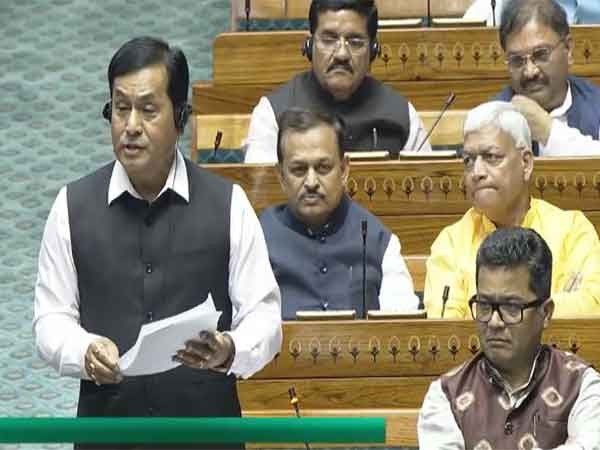
UPSC CURRENT AFFAIRS – 29th March 2025 Home / Lok Sabha Passes Carriage of Goods by Sea Bill, 2024 Why in News? On March 28, 2025, the Lok Sabha passed the Carriage of Goods by Sea Bill, 2024, which aims to modernise India’s maritime shipping laws by replacing the century-old Indian Carriage of Goods by Sea Act, 1925. The new Bill aligns Indian maritime law with international conventions and introduces clear provisions for responsibilities, liabilities, rights, and immunities of carriers involved in sea transport. What the New Law Proposes Replaces the outdated 1925 Act, which was based on British-era maritime practices. Brings Indian legislation in line with international maritime conventions such as the Hague Rules, Hague-Visby Rules, and other global standards on the carriage of goods by sea. The law applies to goods transported: From an Indian port to a foreign port Between two Indian ports (coastal shipping) Key Features of the Bill Provision Description Legal Clarity for Carriers Defines responsibilities, liabilities, rights, and immunities of shipping companies. Simplified Maritime Regulation Focuses on ease of doing business and clarity in legal procedures. Applies to both foreign and domestic routes Enhances regulatory scope to both international and coastal shipping. Stakeholder Consultations Minister stated the law was developed with inputs from key maritime stakeholders. Important Terms Carrier: A person or company that undertakes the transport of goods by sea. Consignee: The person or party to whom the goods are delivered. Immunities of Carriers: Legal protections from certain liabilities, like those caused by natural perils. International Conventions: Agreements between countries that set common rules (e.g., Hague-Visby Rules) for maritime transport and liability. Debate in Parliament: Support vs Criticism Government’s Stand The bill simplifies legal framework, making India’s shipping industry more globally competitive. Replacing colonial-era laws is part of ongoing efforts to modernise India’s legal architecture. Will help support India’s goal to become a shipping and logistics hub. Concerns Raised by Opposition Centralisation of power: Several MPs alleged the Bill grants excessive control to the Union government, sidelining state governments and local players. Privatisation worries: Critics claimed it promotes privatisation of ports and shipping under the garb of reform. Trader & farmer impact: MPs from Maharashtra and Bihar flagged lack of safeguards for fishermen, farmers, and small traders. Transparency issues: Allegations of benefiting select private companies and undermining public accountability. Federalism concerns: TMC’s Pratima Mondal said the Bill weakens the federal structure and marginalises states and small logistics firms. Why This Bill is Significant Maritime transport handles over 90% of India’s international trade by volume. India’s shipping and port infrastructure is crucial for ‘Make in India’, export growth, and logistics cost reduction. Modern laws improve investor confidence, dispute resolution, and compliance with international obligations. The Bill complements the government’s broader strategy to revamp colonial-era laws across sectors.
Cabinet Clears ₹22,919-Cr Scheme to Boost Electronics Components Manufacturing
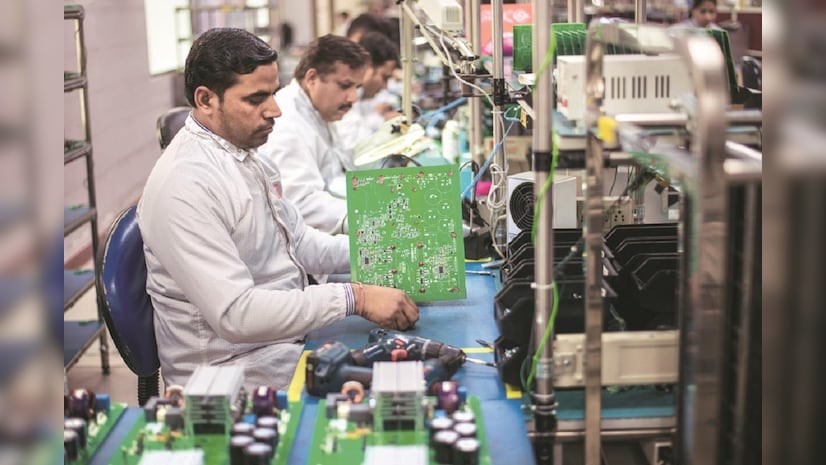
UPSC CURRENT AFFAIRS – 29th March 2025 Home / Cabinet Clears ₹22,919-Cr Scheme to Boost Electronics Components Manufacturing Why in News? On March 28, 2025, the Union Cabinet approved a new incentive scheme worth ₹22,919 crore for the domestic manufacturing of electronic components. Spread over six years, the scheme is expected to: Generate ₹4.56 lakh crore worth of production, Attract ₹59,350 crore in fresh investments, Create 91,600 direct jobs, with incentives directly linked to job creation. What the Scheme Aims to Do This scheme is part of a strategic push to build a self-reliant electronics ecosystem in India — a sector historically dominated by China and East Asia. Objectives: Strengthen domestic value chains in electronics. Reduce dependency on imported components. Enable export competitiveness through scale and quality. Encourage large-scale job creation. Targeted Components: Display modules Sub-assembly camera modules PCB (Printed Circuit Board) assemblies Lithium cell enclosures Resistors, capacitors, ferrites These are core components for devices like smartphones, laptops, TVs, microwave ovens, and other appliances. Key Concepts Domestic Value Addition Refers to the portion of value created within the country during the production of goods. India’s value addition in electronics is currently just 15–20%. The goal is to push this to 30–40%, by producing core components in-house, not just assembling imported parts. By contrast, China’s domestic value addition stands at around 38%. Import Substitution vs Export Orientation Import Substitution: Making at home what we currently import — a defensive approach. Export-Led Growth: Producing at scale for global markets — a proactive and sustainable strategy. Minister Ashwini Vaishnaw emphasized a shift away from import substitution and towards export promotion, as viability improves with scale. Investment-to-Turnover Ratio In smartphone assembly: ₹1 invested returns ₹20 in production. In component manufacturing: ₹1 invested yields only ₹2–₹4. Hence, component manufacturing is riskier and slower to yield profits, which is why government intervention is necessary to de-risk private investment. Why This Scheme is Crucial Now? India’s Heavy Import Dependency Electronics is India’s second-largest import category after oil. Imports of key components like integrated circuits rose from $29 billion (FY21) to $46.5 billion (FY23). In 2022–23, India’s component production was just $10.75 billion, while demand is expected to hit $160 billion by 2028–29. The Demand-Supply Gap Internal estimates show a $100 billion+ gap in domestic demand. To plug this, India needs component production growth of over 50% CAGR — not achievable without a structured incentive program. Policy Differentiation from Previous Schemes This is not a simple repeat of the earlier PLI (Production Linked Incentive) scheme. Here’s how it’s different: Feature PLI Scheme New Components Scheme Focus Finished products (e.g. phones) Core components Incentive Linkage Based on production/output Based on jobs, capex, production Value Addition Achieved 15–20% Targeting 30–40% Export Orientation Moderate Strong push towards exports Global Context and Geostrategic Relevance China dominates global component manufacturing but is facing pushback due to supply chain concerns, tariffs, and geopolitical tensions. Countries like the US, Japan, and EU are looking to diversify supply chains. India has a rare window of opportunity to position itself as a trusted alternative — but this requires scale, skill, and policy continuity.
Partial Solar Eclipse 2025

UPSC CURRENT AFFAIRS – 29th March 2025 Home / Partial Solar Eclipse 2025 Why in News? A partial solar eclipse occurred on Saturday, March 29, 2025, visible in parts of the US, Canada, Europe, Russia, and Africa. Although not visible in India, it provides an excellent opportunity to understand astronomical phenomena. What is a Partial Solar Eclipse? A solar eclipse takes place when the Moon moves between the Earth and the Sun, blocking the Sun’s light partially or completely, and casting a shadow on Earth. Depending on the degree of alignment between the three celestial bodies — the Sun, Moon, and Earth — different types of eclipses occur. In the case of a partial solar eclipse: The alignment is not perfect, so only a part of the Sun is obscured. The Moon’s shadow covers only a portion of the Sun, creating a “crescent” appearance of the Sun at the maximum phase of the eclipse. Unlike a total eclipse, the Sun’s corona is not visible, and daylight is not significantly dimmed. Types of Solar Eclipses There are four major types of solar eclipses, each depending on the position and distance of the Moon in its orbit: Partial Solar Eclipse Most common type of eclipse. Only a segment of the Sun is covered by the Moon. No corona is visible; safe viewing still requires special protection. Total Solar Eclipse Occurs when the Moon completely covers the Sun, as seen from Earth. The Sun’s corona (outer atmosphere) becomes visible. Causes dramatic dimming of daylight, resembling twilight. Annular Solar Eclipse Happens when the Moon is farther from Earth in its elliptical orbit. As a result, it appears smaller and doesn’t cover the Sun completely. A “ring of fire” or glowing ring of sunlight remains visible around the Moon. Hybrid Solar Eclipse Rarest type, occurring approximately once every 10 years. The eclipse shifts between total and annular depending on the observer’s location on Earth. The last hybrid eclipse occurred in April 2023. How Often Do Solar Eclipses Occur? Solar eclipses happen two to five times a year, but not all are visible from the same location. Total solar eclipses are rarer — visible from a specific location roughly once every 375 years. Solar and lunar eclipses often occur in pairs, separated by about two weeks, due to the Moon’s orbital cycle around the Earth. Key Terms and Concepts Umbra The darkest part of the Moon’s shadow. Observers in the umbra experience a total eclipse. Corona The outermost layer of the Sun’s atmosphere. Only visible during a total solar eclipse, appearing as a glowing halo. Annularity Refers to the phase during an annular eclipse when the rim of the Sun remains visible, forming a bright ring. Pinhole Projector A safe, indirect method to observe solar eclipses. Made using cardboard, aluminum foil, and paper. Projects an image of the Sun through a small hole onto a surface without directly viewing the Sun