India’s Nuclear Energy Push: 100 GW Target By 2047 With Private Sector Entry
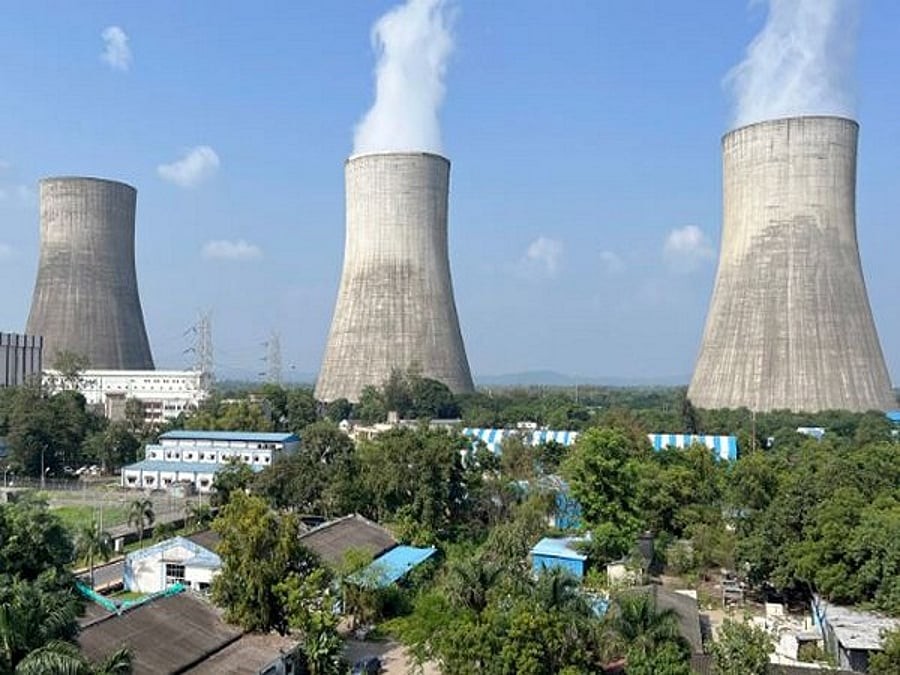
UPSC CURRENT AFFAIRS – 28th March 2025 Home / India’s Nuclear Energy Push: 100 GW Target By 2047 With Private Sector Entry Why in News? India has unveiled an ambitious plan to generate 100 GW (gigawatts) of nuclear energy by 2047, signaling a significant shift in its energy strategy. A key aspect of this initiative is the decision to open the nuclear sector to private players, a move that was previously unprecedented. Government Commitment and Policy Initiatives Union Minister of State for Science and Technology, Dr. Jitendra Singh, highlighted the strategic importance of nuclear mission in the Rajya Sabha. He emphasized that nuclear energy is projected to contribute 10% of India’s total energy needs by 2047. To support this goal, the government has significantly increased budgetary allocations for nuclear power, with a 170% rise in funding for the Department of Atomic Energy since 2014. The 2024-25 budget allocated ₹20,000 crore for the indigenous development of at least five Bharat Small Modular Reactors (SMRs). Role of Small Modular Reactors (SMRs) A crucial component of India’s nuclear energy expansion is the development of Small Modular Reactors (SMRs) with capacities ranging from 16 MW to 300 MW. These reactors offer several advantages, including: Suitability for remote and industrial areas Reduced construction time and cost Enhanced safety features compared to conventional reactors Lower environmental footprint By integrating SMRs into India’s energy infrastructure, the government aims to provide reliable and clean electricity to underserved regions while making significant strides toward the country’s net-zero carbon emissions target by 2070. International Collaborations and Indigenous Development India is strengthening its nuclear capabilities through strategic collaborations with countries like France and the United States. These partnerships aim to advance nuclear technology while ensuring a strong focus on indigenous research and development. The National Research Foundation, which receives 60-70% of its funding from non-government sources, is expected to play a pivotal role in accelerating nuclear research and innovation in the country. Thorium Utilization and Revitalization of Projects India holds 21% of the world’s thorium reserves, a resource that could significantly boost the country’s long-term nuclear energy potential. The government is actively working on: Expediting projects like the Bhavini reactor and Kudankulam nuclear plant Reviving stalled nuclear energy initiatives Promoting advanced research on thorium-based reactors These efforts reflect India’s commitment to enhancing energy security while leveraging indigenous resources for sustainable power generation. Private Sector Participation: A Paradigm Shift The decision to allow private sector involvement in nuclear energy marks a major departure from past policies. Historically, India’s nuclear program was tightly controlled by the government due to security and regulatory concerns. The inclusion of private players is expected to: Accelerate technological advancements Attract investments in nuclear infrastructure Foster competition and efficiency in the sector This transformation aligns with global trends where private enterprises contribute significantly to nuclear energy development. Conclusion India’s nuclear energy mission is set to play a transformative role in ensuring a stable and sustainable power supply for the future. With strong government backing, increased funding, strategic international collaborations, and private sector participation, the country is poised to achieve its 100 GW nuclear energy target by 2047. This initiative not only reinforces India’s position as a leader in clean energy solutions but also addresses the growing electricity demand in an environmentally responsible manner.
Bangladesh National Day: ‘Mutual sensitivity to each other’s interests and concerns’
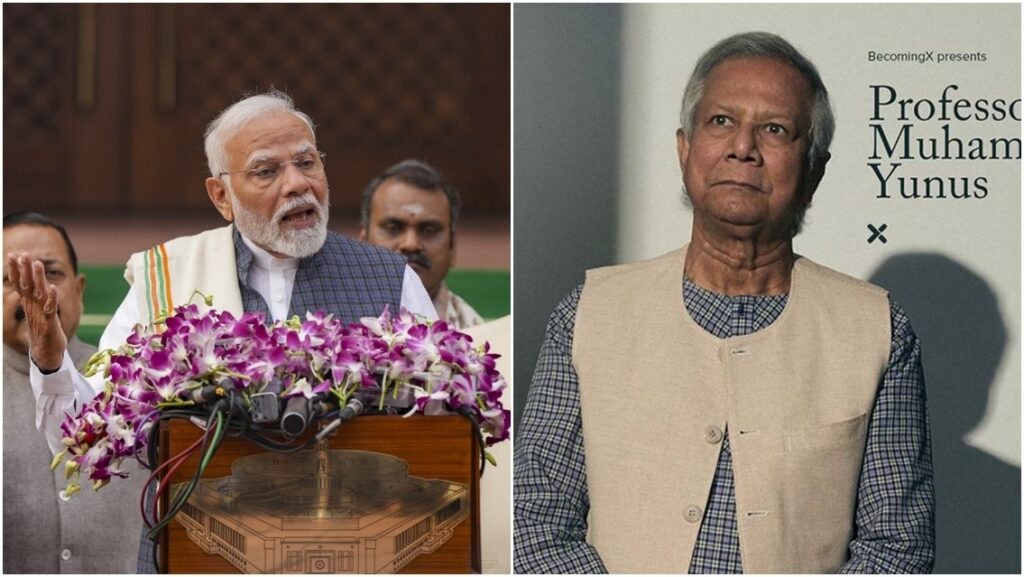
UPSC CURRENT AFFAIRS – 28th March 2025 Home / Bangladesh National Day: ‘Mutual sensitivity to each other’s interests and concerns’ Why in News? Amid the chill in Delhi-Dhaka ties over violence against minorities, Prime Minister Narendra Modi wrote to Bangladesh Chief Adviser Mohammad Yunus on March 26, the country’s National Day, and called for taking forward bilateral ties based on sensitivity to each others’ concerns. India and Bangladesh Relations Recent events have placed the traditionally strong relationship between India and Bangladesh under a degree of scrutiny. While both nations acknowledge their shared history and the sacrifices made during Bangladesh’s Liberation War, recent developments within Bangladesh have prompted India to express concerns. A Call for Mutual Sensitivity On the occasion of Bangladesh’s National Day (March 26th), Prime Minister Narendra Modi sent a letter to Muhammad Yunus, the Chief Advisor of Bangladesh’s interim government. The letter emphasized the importance of “mutual sensitivity to each other’s interests and concerns” in maintaining a strong bilateral relationship. Key Concerns for India: Violence Against Minorities: Following the ouster of Sheikh Hasina in August 2024, there have been reports of increased violence against Hindu minorities in Bangladesh. India has repeatedly condemned this violence and urged the Bangladeshi government to ensure the safety and security of its minority populations. Rise of Islamic Fundamentalism: Alongside the violence, there are concerns about the growing influence of hardline Islamist forces in Bangladesh. India is closely monitoring the situation and seeking assurances regarding border stability and the protection of minorities. Bangladesh-China Relations: Muhammad Yunus’s recent visit to China, coinciding with strains in India-Bangladesh ties, is seen as a significant development. China is seeking to increase its involvement in Bangladesh’s infrastructure and strategic projects, which could be a concern for India given Beijing’s expanding influence in the region. India’s Response and Future Outlook: India has engaged with the Bangladeshi government at various levels to address its concerns. While reaffirming its commitment to a democratic, stable, peaceful, and progressive Bangladesh, India is also closely watching developments within the country and its external engagements. The emphasis on “mutual sensitivity” highlights India’s desire to maintain a strong and stable relationship, but also its expectation that Bangladesh will address the concerns regarding minority safety and regional stability. The upcoming BIMSTEC summit in Bangkok, where both Modi and Yunus are expected to be present, could provide an opportunity for further dialogue and a potential reset in the relationship.
EU Unveils €800 Billion Defense Plan to Strengthen Military Preparedness

UPSC CURRENT AFFAIRS – 28th March 2025 Home / EU Unveils €800 Billion Defense Plan to Strengthen Military Preparedness Why in News? The EU’s €800 billion defence plan aims to strengthen European military preparedness by 2030, reduce reliance on the US, boost domestic defence industries, and counter Russian security threats. Introduction The European Union (EU) has unveiled an ambitious €800 billion defence initiative aimed at reducing reliance on the US and strengthening military capabilities to counter security threats, particularly from Russia. With a target of 2030 for military readiness, the plan focuses on enhancing Europe’s defence industry, strategic autonomy, and rapid response mechanisms. Key Components of the EU Defence Plan Increased Defence Spending & Loan Scheme €150 billion defence loan scheme to finance defence procurement, with strict conditions on sourcing. €650 billion in fiscal flexibility allowing EU nations to borrow for defence without breaching EU fiscal rules. At least 65% of defence funds must be spent on EU, Norwegian, or Ukrainian suppliers. Boosting Europe’s Defence Industry Prioritizing “Buy European” to support domestic manufacturers. Enhancing joint procurement of weapons, drones, and ammunition to ensure strategic self-reliance. Centralized EU-led defence procurement body proposed, similar to the COVID-19 vaccine procurement model. Addressing NATO and Geopolitical Concerns Growing skepticism over NATO’s ability to deter threats amid shifting US foreign policy. Danish intelligence warns that Russia could launch a large-scale war in Europe within five years if NATO appears weak. UK, US, and Turkey excluded from the EU defence fund unless they sign security agreements with the bloc. Challenges and Political Divisions Funding and Fiscal Constraints Wealthier EU nations like Germany and the Netherlands hesitant to back EU-wide defence loans. Southern European nations wary of accumulating more debt. Exclusion of Key Allies The UK, a major European defence partner, is not part of the EU scheme, raising concerns about interoperability. Uncertainty over the US’s commitment to European security amid changing political leadership. Balancing Industry Protection & Open Procurement Parliament pushes for an 80% European-sourced defence production rule (up from 65%). Restrictions on using components from third countries that do not align with EU security interests. Implications for Global Defence Strategy Shift towards European strategic autonomy, reducing over-dependence on US military support. Potential restructuring of NATO dynamics, with EU taking greater responsibility for its own defence. Strengthened EU-Ukraine defence cooperation, with Ukraine benefiting from EU-backed procurement. Conclusion The EU’s 2030 defence strategy aims to create a self-reliant military-industrial complex and enhance rapid response capabilities. However, political divisions over funding, industrial protection, and NATO’s role remain key challenges. The success of this initiative will determine Europe’s ability to independently counter future security threats while maintaining strong transatlantic alliances.
India needs to develop its deep-sea capabilities
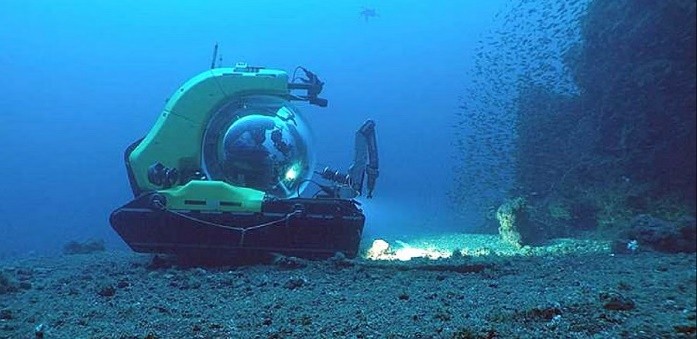
UPSC CURRENT AFFAIRS – 28th March 2025 Home / India needs to develop its deep-sea capabilities Why in News? India’s deep-sea exploration efforts, led by the Deep Ocean Mission (DOM) and Samudrayaan Project, are crucial for economic growth, strategic security, and scientific advancements, especially in light of global deep-sea developments. Introduction India’s focus on developing deep-sea capabilities has gained momentum with the Matsya-6000 submersible under the Samudrayaan Project, part of the Deep Ocean Mission (DOM). As deep-sea exploration becomes crucial for economic, strategic, and security reasons, India must enhance its underwater technology to compete with global leaders like China, the US, and Japan. Deep-Sea Exploration: Why It Matters Economic Potential The deep sea holds vast mineral resources, including polymetallic nodules, gas hydrates, and rare earth elements. These resources can fuel India’s blue economy, reducing dependence on imports. Strategic Importance Undersea cables carry 95% of the world’s internet and financial data. Securing them is vital for national security. The Exclusive Economic Zone (EEZ) extends 200 nautical miles (370 km) from India’s coastline, requiring surveillance and resource protection. China’s deep-sea fleet and cable-cutting technology pose potential threats to undersea infrastructure. Scientific Advancements Deep-sea mapping aids in climate change research and disaster prediction. Enhancing underwater domain awareness (UDA) helps in maritime security and exploration. Challenges in Deep-Sea Development Technological Constraints Extreme water pressure (380 times atmospheric pressure in India’s EEZ) necessitates advanced materials and submersible design. Low-frequency sound technologies like VLF and ELF require extensive research and funding. Financial and Institutional Gaps Unlike China, India lacks dedicated deep-sea research institutions and large-scale funding. Dependence on foreign technology hampers self-reliance in deep-sea exploration. Security and Infrastructure Challenges India lacks advanced submarine rescue and deep-sea combat capabilities. Underwater cable maintenance and protection mechanisms are still underdeveloped. India’s Deep-Sea Initiatives Deep Ocean Mission (DOM) Launched in 2018 under the Ministry of Earth Sciences. Focuses on resource exploration, biodiversity studies, and undersea infrastructure development. Samudrayaan Project Development of Matsya-6000, India’s first manned deep-sea submersible. Capable of diving 6,000 meters for mineral and biodiversity research. Strengthening Ocean Research and Defence Plans to upgrade the Department of Ocean Development to a full-fledged ministry. Need for a mission-mode approach with quick approvals and high accountability. Way Forward Boost R&D and Funding: Establish centres of excellence in deep-sea science and engineering. Strengthen Security Measures: Develop anti-submarine capabilities and real-time monitoring of deep-sea activities. Enhance Global Collaboration: Partner with France, Japan, and the US for technological expertise. Conclusion India’s deep-sea ambitions are vital for its economic security, scientific progress, and strategic defence. A well-funded, mission-driven approach will ensure India emerges as a global leader in underwater exploration and security.
Europe’s space agency retires Gaia, the cartographer of the cosmos: Its mission & significance

UPSC CURRENT AFFAIRS – 28th March 2025 Home / Europe’s space agency retires Gaia, the cartographer of the cosmos: Its mission & significance Why in News? The Gaia Mission (2013-2025) by the European Space Agency (ESA) revolutionized astrometry, creating a 3D map of the Milky Way. Introduction The European Space Agency’s (ESA) Gaia mission, launched in December 2013, was one of the most ambitious space observatories dedicated to astrometry—the precise measurement of celestial bodies. Over the past decade, Gaia revolutionized the understanding of the Milky Way, mapping its structure, motion, and evolution. The mission was officially shut down on March 27, 2025, after providing unprecedented astronomical data that will continue to shape scientific research for years to come. Gaia Mission: Objectives and Achievements Primary Goal: To create the most precise three-dimensional map of the Milky Way galaxy. Observational Data: Recorded 3 trillion observations of over 2 billion stars and celestial objects. Contributed to 13,000+ scientific publications. Provided insights into the shape, motion, and history of the galaxy. Position and Instruments Lagrange Point 2 (L2): Gaia was placed 1.5 million km behind Earth, away from planetary and solar interference, ensuring unobstructed cosmic observation. Twin Telescopes and Billion-Pixel Camera: Used a photometer, spectrometer, and astrometer to precisely analyze star positions and motions. Largest digital camera in space with nearly a billion pixels. Major Discoveries by Gaia Mapping the Milky Way’s Structure and Evolution Confirmed that the Milky Way has a central bar and spiral arms. Revealed that the galactic disc is warped and wobbles, likely due to collisions with smaller satellite galaxies. Helped reconstruct the past interactions and future evolution of the galaxy. Discovery of a New Type of Black Hole Unlike traditional black holes detected via radiation, Gaia identified “truly black” holes using gravitational effects. One of the black holes detected is the closest to Earth discovered so far. Tracking Asteroids and Planetary Defense Mapped the orbits of 150,000+ asteroids, including those potentially hazardous to Earth. Gaia’s End-of-Mission and Legacy On March 27, 2025, ESA deactivated Gaia by draining its energy sources and moving it into a retirement orbit around the Sun. A bulk of its data is still being processed and will be released in phases: First five-and-a-half years’ data will be published in 2026. Final dataset expected by the end of the decade. Future Prospects in Space Astrometry Despite its vast scope, Gaia mapped only about 2% of the estimated 100 billion stars in the Milky Way, highlighting the need for future missions. The data collected will aid upcoming astronomical projects and space missions focused on dark matter, exoplanet discovery, and galactic evolution. Conclusion Gaia’s contributions have transformed modern astronomy, setting new standards in precision space mapping. Its legacy will continue to drive scientific advancements, shaping humanity’s understanding of the cosmos and our place within it.
Army conducts tri-service Ex Prachand Prahaar in Arunachal

UPSC CURRENT AFFAIRS – 28th March 2025 Home / Army conducts Tri-service Ex Prachand Prahaar in Arunachal Why in News? Exercise Prachand Prahar was a tri-service integrated multi-domain military exercise conducted from 25-27 March 2025 in Arunachal Pradesh. Exercise Prachand Prahar The Indian Armed Forces conducted Exercise Prachand Prahar from 25-27 March 2025 in Arunachal Pradesh, under the Eastern Command of the Indian Army, to test joint warfighting capabilities. It was a continuation of Exercise Poorvi Prahar (November 2024) but expanded to multi-domain operations, integrating land, air, space, and electronic warfare. Key Objectives & Strategic Importance Enhancing Jointness: Synchronizing operations across the Army, Navy, and Air Force. Multi-Domain Warfare: Validating high-altitude combat in an electronically contested environment. Counter-Strike Capabilities: Simulating enemy aggression and retaliatory strikes using advanced weaponry. Surveillance & Reconnaissance: Deploying drones, space-based assets, and surveillance aircraft. Strategic Significance Strengthens India’s defensive preparedness along the India-China border. Enhances interoperability between the three services. Validates modern warfare techniques including electronic and drone warfare. Reinforces Eastern Command’s operational readiness in the LAC region. Other Tri-service military Exercise India conducts several tri-service military exercises to enhance joint operational capabilities across land, air, and maritime domains. Here are some notable ones: Exercise Kavach Conducted By: Indian Army, Navy, Air Force, and Coast Guard Location: Andaman and Nicobar Islands Objective: Enhancing joint warfighting capabilities in island territories and coastal defense strategies. Exercise Paschim Lehar Conducted By: Indian Army, Navy, and Air Force Location: Western Seaboard of India Objective: Strengthening joint operational preparedness in maritime warfare and coastal defense. Exercise Vayu Shakti Conducted By: Indian Army, Navy, and Air Force Location: Rajasthan Objective: Showcasing integrated strike capabilities, air dominance, and precision targeting in desert warfare. Exercise INDRA (Bilateral with Russia, but includes tri-service operations) Conducted By: Indian Army, Navy, and Air Force (in coordination with Russian forces) Location: India/Russia (alternating) Objective: Enhancing inter-service and bilateral coordination for counter-terrorism and large-scale combat operations. Exercise AMPHEX Conducted By: Indian Army, Navy, and Air Force Location: Andaman and Nicobar Islands Objective: Testing amphibious warfare capabilities, beach landings, and joint assault operations. Exercise Poorvi Prahar Conducted By: Indian Army, Navy, and Air Force Location: Eastern Sector (along the India-China border) Objective: Strengthening integrated application of aviation assets and countering threats in high-altitude areas. Conclusion Exercise Prachand Prahar stands as a testament to the Indian Armed Forces’ commitment to technological superiority, jointness, and operational readiness. By integrating land, air, and naval forces in a real-time combat scenario, the exercise enhanced India’s strategic posture along the LAC.
Mathematician Masaki Kashiwara awarded Abel Prize 2024
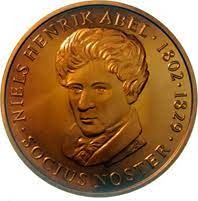
UPSC CURRENT AFFAIRS – 28th March 2025 Home / Mathematician Masaki Kashiwara awarded Abel Prize 2024 Why in News? DNA fingerprinting uniquely identifies individuals by analyzing genetic patterns inherited from both parents, making it a powerful tool for forensic investigations, paternity testing, and biological research. About the Abel Prize Established in 2002 by the Norwegian Parliament to honour pioneering achievements in mathematics. Named after Norwegian mathematician Niels Henrik Abel (1802-1829). First awarded in 2003, often considered the Nobel Prize equivalent in mathematics. Includes a monetary reward of 7.5 million Norwegian kroner (approx. $720,000) and a glass plaque designed by Henrik Haugan. Administered by the Norwegian Academy of Science and Letters, with winners selected by an expert committee advised by the International Mathematical Union (IMU) and the European Mathematical Society (EMS). Legacy of Niels Henrik Abel Best known for proving the impossibility of solving the general quintic equation in radicals, an open problem for over 250 years. Made groundbreaking contributions to elliptic functions and introduced the concept of Abelian functions. Worked under extreme poverty and died of tuberculosis at the age of 26. His work was so influential that French mathematician Charles Hermite remarked, “Abel has left mathematicians enough to keep them busy for five hundred years.” Masaki Kashiwara’s Contributions Recognized for reshaping and enriching the fields of representation theory and algebraic analysis. Developed the theory of D-modules, which provides a bridge between differential equations and algebraic geometry. Discovered crystal bases, simplifying complex mathematical calculations by replacing them with graphical representations of vertices and connections. His research has helped solve longstanding mathematical challenges and opened new avenues for interdisciplinary study. Significance of the Award Kashiwara’s recognition underscores the global impact of mathematical research, highlighting its role in advancing pure and applied sciences. The Abel Prize continues to celebrate mathematicians who pioneer fundamental theories, further strengthening the legacy of Niels Henrik Abel in modern mathematics.
Cubism the art movement in India

UPSC CURRENT AFFAIRS – 28th March 2025 Home / Cubism the art movement in India Why in News? Cubism in India evolved from its European origins, blending geometric abstraction with Indian artistic traditions, pioneered by artists like Gaganendranath Tagore, Ramkinkar Baij, and MF Husain. Background Cubism, one of the most influential art movements of the early 20th century, emerged as a radical departure from traditional artistic conventions. It emphasized geometric abstraction, multiple perspectives, and fragmentation of form, challenging the notion that art must realistically depict nature. While European artists Pablo Picasso and Georges Braque pioneered the movement, Cubism found a distinct identity in India, blending its avant-garde approach with Indian artistic traditions. Emergence and Global Influence of Cubism Origin: Developed in early 20th-century Europe, Cubism moved away from linear perspective and realistic depiction. Key Figures: Picasso and Braque formally established the style, inspired by Paul Cézanne’s geometric simplification and African tribal masks. Characteristics: Deconstructed forms, multiple viewpoints, and abstract representation of three-dimensional reality. Phases: Analytic Cubism (1907-1912) – Monochromatic color palette and fragmented forms. Synthetic Cubism (1912-1914) – Brighter colors, collage elements, and stylized textures. Arrival of Cubism in India Introduced in the 1910s, gaining prominence through the 1922 Indian Society of Oriental Art exhibition in Calcutta. Early Influences: Exposure to Bauhaus school artists like Wassily Kandinsky and Paul Klee. Artistic Discourse: American art historian Stella Kramrisch analyzed Indian Cubism, differentiating it from its European counterpart. Pioneers of Indian Cubism Gaganendranath Tagore (1867-1938) First Indian artist to experiment with Cubism; referred to his work as “Indian Cubism”. His paintings featured diagonal compositions, translucent cubes, and decorative abstraction. Art historian R Siva Kumar notes that Gaganendranath identified himself as a Cubist, as seen in his painted postcard to Roopkrishna (Victoria & Albert Museum, London). Ramkinkar Baij (1906-1980) and NS Bendre (1910-1992) Baij blended Cubist abstraction with Indian folk traditions, especially in sculpture. Bendre introduced Cubism in Baroda’s Faculty of Fine Arts (MS University) in 1950, shaping the next generation of artists. Progressive Artists’ Group (PAG) FN Souza (1924-2002), MF Husain (1915-2011), and Paritosh Sen (1918-2008) integrated Cubism into Indian modernist movements. Paritosh Sen studied under Andre Lhote in Paris and incorporated two-dimensional planes in his work. MF Husain earned the title “Picasso of India”, using bold brushstrokes, fractured forms, and dynamic color contrasts. Adaptation and Evolution of Indian Cubism Fluidity in Style: Indian Cubism retained lyricism and elegance, blending ancient aesthetics with avant-garde principles. Diverse Expressions: Rabin Mondal – Totemic abstraction, symbolizing collective memory. Devayani Krishna – Fractured geometries infused with lyrical textures. SK Bakre – Geometric abstraction with a focus on structural formality. Legacy: Unlike Western Cubism’s strict formalism, Indian artists used it as a tool for emotional depth and storytelling. Conclusion Cubism in India evolved beyond its European origins, adapting to regional traditions, folk motifs, and cultural expressions. The movement not only redefined modern Indian art but also influenced multiple generations of artists. As exhibitions like “Deconstructed Realms: India’s Tryst with Cubism” at DAG Art Gallery continue to celebrate its legacy, Indian Cubism remains a testament to artistic innovation and cross-cultural exchange.
What is DNA fingerprinting?

UPSC CURRENT AFFAIRS – 27th March 2025 Home / What is DNA fingerprinting? Why in News? DNA fingerprinting uniquely identifies individuals by analyzing genetic patterns inherited from both parents, making it a powerful tool for forensic investigations, paternity testing, and biological research. Introduction DNA Fingerprinting, also known as DNA profiling, is a scientific technique used to identify individuals based on their unique genetic patterns. Developed in 1984 by British geneticist Sir Alec Jeffreys, it examines specific regions of DNA that vary from person to person, making it a powerful tool in forensic science, paternity testing, and genetic research. Principle Behind DNA Fingerprinting Human DNA is 99.9% identical across all individuals, but certain Variable Number Tandem Repeats (VNTRs) and Short Tandem Repeats (STRs) are highly unique. These repeated DNA segments form the basis of DNA fingerprinting, allowing for personal identification. Polymerase Chain Reaction (PCR) is used to amplify these sequences, enabling scientists to generate a genetic profile. Process of DNA Fingerprinting Sample Collection – DNA is extracted from sources like blood, hair, bone, semen, or buccal swabs. DNA Extraction – The DNA is purified using chemical processes. PCR Amplification – Targeted STR regions are amplified for analysis. Separation – DNA fragments are sorted using gel electrophoresis based on size. Detection – DNA bands are visualized using fluorescent dyes. Profile Generation – The pattern of bands is analyzed to create a unique DNA profile. Matching – The DNA profile is compared with existing databases for identification. Applications of DNA Fingerprinting Forensic Investigations – Helps match crime scene evidence to suspects (e.g., Shraddha Walkar murder case). Paternity & Relationship Testing – Establishes biological relationships for legal and personal purposes. Disaster Victim Identification – Used in identifying remains from accidents, wars, and natural disasters. Wildlife Forensics – Assists in tracking poachers and conserving endangered species. Anthropology & Human Migration Studies – Traces ancient human lineages and genetic migrations. Agriculture & Livestock Breeding – Determines pedigree, disease resistance, and genetic modifications. Medical Diagnosis – Detects inherited disorders like Huntington’s disease, sickle cell anemia, thalassemia, and cystic fibrosis. Limitations of DNA Fingerprinting Not 100% Conclusive – While highly accurate, it requires corroborative evidence in legal cases. Risk of Contamination – DNA samples can be compromised at crime scenes or laboratories. Difficulty in Mixed Samples – Separating DNA from multiple individuals is challenging. High Cost & Infrastructure Requirements – Requires advanced lab equipment and trained personnel. Degradation of DNA – Environmental factors can damage DNA, leading to incomplete profiles. Government Initiatives in India To harness DNA technology, India has established various institutions and legal frameworks: Centre for DNA Fingerprinting & Diagnostics (CDFD), Hyderabad Central Forensic Science Laboratory (CFSL), Kolkata & Chandigarh Centre for Cellular and Molecular Biology (CCMB), Hyderabad National Bureau of Plant Genetic Resources (NBPGR), New Delhi Legislation & Policies DNA Technology (Use and Application) Regulation Bill, 2019 Aimed to regulate DNA usage for personal identification and forensic investigations. Proposed DNA Regulatory Board & DNA Data Banks at national and regional levels. Withdrawn by the government as its provisions were covered under The Criminal Procedure (Identification) Act, 2022. Faced opposition over privacy concerns related to DNA databases. Conclusion DNA Fingerprinting has revolutionized forensic science, criminal investigations, and medical research. Despite its challenges, continuous advancements and government initiatives are enhancing its accuracy and accessibility, making it a vital tool in ensuring justice, security, and scientific progress.
New data keeps search for rare subatomic mystery going

UPSC CURRENT AFFAIRS – 27th March 2025 Home / New data keeps search for rare subatomic mystery going Why in News? The AMoRE experiment in South Korea found no evidence of neutrinoless double beta decay (0νββ), reinforcing limits on neutrino mass and its potential as a Majorana particle. Introduction A recent experiment, AMoRE (Advanced Mo-based Rare Process Experiment) in South Korea, has reported no evidence of neutrinoless double beta decay (0νββ). While this result does not disprove the phenomenon’s existence, it has imposed stringent limits on its possibility, continuing the scientific quest for understanding neutrinos. Understanding Neutrinos Second-most abundant subatomic particle after photons. Produced in massive quantities during the Big Bang, radioactive decay, stellar explosions, and nuclear fusion (e.g., in the Sun). Hard to detect due to weak interactions with matter. Have three types (“flavours”), but their exact masses remain unknown. What is Neutrinoless Double Beta Decay (0νββ)? In normal beta decay, a nucleus sheds excess energy by converting a neutron into a proton, emitting an electron and an anti-neutrino. In rare double beta decay, two neutrons convert into protons simultaneously, releasing two electrons and two anti-neutrinos. 0νββ Hypothesis: If neutrinos are Majorana particles (i.e., their own anti-particles), the emitted anti-neutrino from one neutron could be absorbed by the second neutron—leading to a decay that emits only electrons and no neutrinos. Why is 0νββ Important? Proves whether neutrinos are Majorana particles. Helps determine neutrino mass. AMoRE estimated it to be less than 0.22-0.65 billionths of a proton—suggesting an extremely low mass. Challenges the Standard Model of Particle Physics. The current model assumes neutrinos are massless, so detecting 0νββ could expose theoretical gaps. Findings of the AMoRE Experiment Used molybdenum-100 (Mo-100) nuclei cooled to near absolute zero to detect 0νββ. No evidence was found, but physicists estimated that Mo-100 would take at least 10²⁴ years for half its atoms to decay via 0νββ. Future experiments will analyze 100 kg of Mo-100 to improve sensitivity. Conclusion The non-detection of 0νββ in AMoRE does not mean the phenomenon does not exist—it simply reinforces the rarity of the event. The pursuit of 0νββ remains crucial for understanding neutrino mass, matter-antimatter asymmetry, and potential beyond-Standard-Model physics.