What is Elon Musk’s Starlink all about?
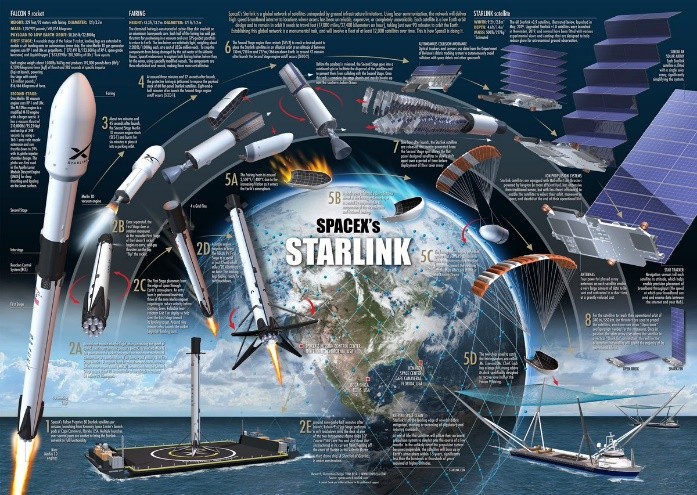
UPSC CURRENT AFFAIRS – 17 March 2025 Home / What is Elon Musk’s Starlink all about? Why in News: Bharti Airtel and Reliance Jio have signed distribution pacts with SpaceX Corp.’s Starlink service to bring satellite internet access to India. Introduction: The Indian telecom sector is witnessing a transformative development with Bharti Airtel and Reliance Jio signing distribution agreements with SpaceX’s Starlink to introduce satellite-based internet services in the country. This move represents a shift from the initial reluctance of telecom operators, who had previously advocated for auctioning of satellite spectrum before Starlink’s deployment. However, regulatory hurdles and policy uncertainties continue to shape the timeline for Starlink’s official entry into India. What is Starlink? Starlink is a low-earth orbit (LEO) satellite constellation developed by Elon Musk-owned SpaceX. It consists of over 7,000 satellites that provide internet access to ground users equipped with special terminals. The system is designed to offer global coverage, making it particularly useful in remote and underserved regions where traditional wired or wireless networks are inadequate. Key Features of Starlink Internet High-speed Connectivity: Provides speeds of up to 100 Mbps, comparable to home broadband. Global Coverage: Satellites orbit the Earth, ensuring coverage across the habitable world. Latency Considerations: Higher latency than fiber broadband but sufficient for general internet usage. Ground Station Dependence: Relies on terrestrial stations that link the network to the global internet. Potential in Rural India: More useful in remote and rural areas lacking 5G and fiber-optic infrastructure. Cost: These costs make Starlink substantially more expensive than traditional broadband and mobile data services in India. Timeline of Starlink’s Entry in India Starlink began accepting pre-orders in India before 2021, but regulatory objections led to cancellations in 2021. In 2024, the government revised its spectrum allocation policy, opening the door for Starlink’s potential entry pending regulatory approvals. Pre-2021: Starlink began accepting pre-orders in India, requiring a refundable deposit of ₹7,400. This created significant interest, especially in rural areas lacking reliable broadband services. 2021: The Telecom Regulatory Authority of India (TRAI) raised concerns about Starlink’s operations, stating that the company did not have the necessary licenses or regulatory approvals to provide satellite-based broadband services in India. By this time, Starlink had already secured around 7,000 pre-orders, but following government intervention, the company was forced to cancel all pre-orders and issue refunds. 2024: The Indian government introduced major policy changes to regulate satellite internet providers. The regulatory framework now allows administrative spectrum allocation instead of auctions, marking a shift from traditional methods. The government has indicated that it is open to granting a license to Starlink, provided that all security and regulatory conditions are met. Regulatory Challenges and Approval Process GMPCS Authorisation SpaceX must obtain a Global Mobile Personal Communications by Satellite (GMPCS) license under the Telecommunications Act, 2023. The revised regulatory framework is yet to be published, causing delays. Security Clearance Clearance from the Ministry of Home Affairs (MHA) is required due to national security concerns. The Indian government has demanded corporate ownership disclosure, a condition SpaceX initially resisted but later complied with. Ground Station Operations Telecom regulations mandate that law enforcement agencies must have real-time access to data through installed tapping equipment. It remains unclear whether Starlink’s Indian ground stations meet this requirement. Spectrum Allocation Debate Unlike traditional telecom spectrum, satellite spectrum consists of narrow beams that can be shared among providers. The Indian government has indicated that it will not auction satellite spectrum, in line with global practices. Reliance Jio had previously argued that spectrum allocation should follow the Supreme Court’s 2012 ruling in the 2G spectrum case, which mandated auctions for natural resources. However, Airtel and Jio’s recent agreements with Starlink suggest a shift in their stance. Geopolitical Influence Elon Musk’s increasing ties with the U.S. government and trade pressures from President Donald Trump’s administration could influence the Indian government’s stance on approving Starlink. The strategic push for India-U.S. cooperation in space and digital infrastructure may accelerate regulatory approvals. Implications of Starlink’s Entry in India Bridging the Digital Divide Rural and remote areas with poor fiber and 5G penetration stand to benefit from instant satellite connectivity. Can enhance e-governance, telemedicine, online education, and financial inclusion in underserved regions. Competition with Existing ISPs While Starlink is costlier, it provides connectivity in geographically challenging areas where traditional providers cannot reach. Indian telecom companies may leverage Starlink as a backup service in remote areas. Economic and Strategic Impact Encourages foreign investment in India’s satellite broadband sector. Enhances India’s space-tech ecosystem, complementing ISRO’s satellite initiatives. National Security Concerns Unlike terrestrial networks, Starlink’s decentralized infrastructure makes monitoring and interception more challenging. The government may enforce stricter compliance measures before granting full operational clearance. Conclusion Starlink’s entry into India could boost rural connectivity via satellite broadband. However, regulatory issues, spectrum allocation, and security concerns pose challenges. Partnerships with Airtel and Jio show commercial readiness, but government approval is still pending. India’s digital goals and geopolitical factors will influence Starlink’s launch timeline.
Centre has approved Chandrayaan-5 mission
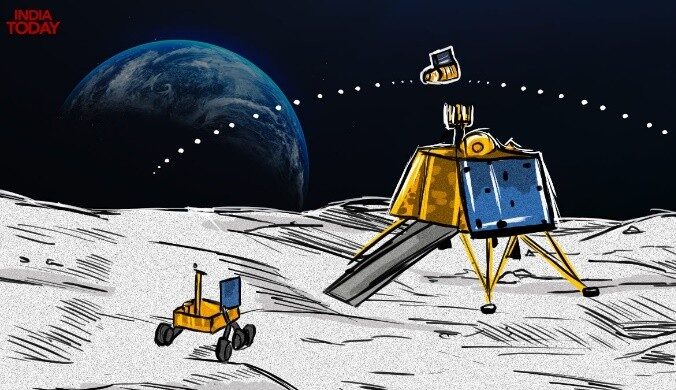
UPSC CURRENT AFFAIRS – 17 March 2025 Home / Centre has approved Chandrayaan-5 mission Why in News: The Centre has recently accorded approval for the ambitious Chandrayaan-5 mission to study the Moon. Introduction: The Indian Space Research Organisation (ISRO) has received approval from the central government for the ambitious Chandrayaan-5 mission, which aims to conduct advanced studies of the Moon. The announcement was made by ISRO Chairman V Narayanan on March 16, 2025, at an event held to felicitate him for taking over as the head of the space agency. Unlike the Chandrayaan-3 mission, which carried the 25-kg rover ‘Pragyaan’, the Chandrayaan-5 mission will be equipped with a significantly larger 250-kg rover. The mission will be undertaken in collaboration with Japan, marking a new phase in India’s international space partnerships. Evolution of India’s Lunar Exploration Program Chandrayaan-1 (2008): India’s First Lunar Mission: Launched in 2008, Chandrayaan-1 was India’s maiden mission to the Moon. It successfully conducted: Chemical and mineralogical mapping of the lunar surface High-resolution photo-geological mapping The discovery of water molecules on the Moon, a major breakthrough in planetary science Chandrayaan-2 (2019): A Major Step Forward: The Chandrayaan-2 mission, launched in 2019, was designed as a comprehensive exploration mission comprising: An orbiter (which continues to function) A lander (Vikram), which crash-landed due to technical issues A rover (Pragyaan), which could not be deployed Despite the partial failure of the lander, 98% of the mission objectives were achieved. The orbiter’s high-resolution camera continues to send valuable images of the Moon. Chandrayaan-3 (2023): A Historic Success: Chandrayaan-3 was launched as a follow-on mission to Chandrayaan-2, with the primary objective of demonstrating safe landing and roving on the lunar surface. The Vikram lander successfully soft-landed on the Moon’s south pole on August 23, 2023, making India the first country to achieve this feat. The Pragyaan rover explored the surface, analyzing lunar soil and rocks. This success solidified India’s position as a leading spacefaring nation. Chandrayaan-4 (Expected Launch: 2027) Chandrayaan-4 aims to collect lunar soil and rock samples and bring them back to Earth. If successful, India will join the US, Russia, and China in achieving a sample return mission. Chandrayaan-5: Objectives and Significance Larger and More Advanced Rover: The 250-kg rover on Chandrayaan-5 is significantly heavier than its predecessors and will be equipped with: Advanced scientific instruments for geological and mineralogical analysis Enhanced mobility and communication systems to traverse the lunar surface efficiently. International Collaboration with Japan Chandrayaan-5 will be conducted in partnership with Japan’s space agency (JAXA). Japan’s expertise in robotics and lunar exploration will complement ISRO’s capabilities, enhancing the mission’s scientific output. Potential Landing Site and Scientific Studies The mission is expected to explore previously uncharted regions of the Moon. It will focus on studying the Moon’s surface composition, seismic activity, and potential resources such as helium-3, which has applications in future nuclear fusion energy. Other Lunar Missions: A Global Overview Several countries and space agencies have been actively involved in lunar exploration, with missions aimed at studying the Moon’s surface, geology, atmosphere, and potential resources. Below is an overview of key past, present, and upcoming lunar missions by different nations. Past Lunar Missions Soviet Union (USSR) – Luna Program (1959-1976) Luna 2 (1959): First spacecraft to impact the Moon. Luna 9 (1966): First successful soft landing on the Moon. Luna 16 (1970): First robotic sample return. United States – Apollo Program (1961-1972) Apollo 11 (1969): First manned Moon landing, with Neil Armstrong and Buzz Aldrin. Apollo 17 (1972): Last Apollo mission, included longest stay and greatest amount of lunar samples collected. China – Chang’e Program (2007-Present) Chang’e 3 (2013): First Chinese rover (Yutu-1) landed on the Moon. Chang’e 4 (2019): First landing on the Moon’s far side, deploying Yutu-2 rover. Chang’e 5 (2020): Successful lunar sample return mission. Israel – Beresheet Mission (2019) Attempted private Moon landing but crash-landed. Ongoing and Upcoming Lunar Missions China – Chang’e 6, 7, and 8 (2024-2030) Chang’e 6 (2024): Aims to return samples from the Moon’s far side. Chang’e 7 (2026): Focused on searching for water ice at the lunar south pole. Chang’e 8 (2028-2030): Will test lunar base-building technologies. United States – Artemis Program (2022-Present) Artemis I (2022): Uncrewed test of Orion spacecraft around the Moon. Artemis II (2025, Planned): First crewed mission to orbit the Moon since Apollo. Artemis III (2026, Planned): Aims to land the first woman and first person of color on the Moon. Artemis IV & V (2027-2029): Focus on constructing Lunar Gateway, a Moon-orbiting space station. Russia – Luna Resurgence Missions (2023-Present) Luna 25 (2023): Attempted soft landing, but crashed. Luna 26 (2027, Planned): Orbiter for mapping lunar resources. Luna 27 (2028, Planned): Aims to study lunar ice deposits. India – Chandrayaan-4 & Chandrayaan-5 Chandrayaan-4 (2028): First sample return mission for ISRO. Chandrayaan-5 (2030, Planned): Joint mission with Japan’s JAXA to explore shadowed lunar regions. Japan – SLIM (Smart Lander for Investigating Moon, 2024) Aims for precision landing technology on lunar terrain. South Korea – KPLO (Korea Pathfinder Lunar Orbiter, 2022-Present) Successfully orbiting the Moon, mapping resources. European Space Agency (ESA) – HERACLES (2027-2030) Designed to land, collect samples, and return them via Lunar Gateway. United Arab Emirates – Rashid Rover (2024, Planned) UAE’s first lunar rover, focused on lunar dust and surface studies.
Forgone Care: The Blindspot of Our Health System

UPSC CURRENT AFFAIRS – 15 March 2025 Home / Forgone Care: The Blindspot of Our Health System Introduction: Neglecting or delaying medical care in the early stages of diseases leads to severe health complications and higher financial burdens later. Strengthening primary healthcare services is crucial for early detection, efficient referrals, and reducing the long-term impact of untreated conditions. Why in News: The issue of delayed healthcare has come into focus as health systems worldwide struggle with the consequences of neglected early-stage treatments. Insufficient primary care infrastructure, particularly in underserved regions, has worsened health outcomes, highlighting the urgent need for systemic reforms. Healthcare is India generally consists of Preventive healthcare – Problems Low Healthcare Spending – India allocates less than 2% of GDP to healthcare, limiting preventive initiatives. Regulatory Challenges – Complex clinical trial rules slow preventive healthcare innovations. Limited Awareness – Many people prioritize curative care over prevention. Access Gaps – Rural areas lack preventive healthcare infrastructure. Rising Lifestyle Diseases – Increasing cases of diabetes, hypertension, and obesity strain the system. Solutions- Increase Healthcare Budget – Allocate more funds to preventive healthcare programs and awareness campaigns. Regulatory Reforms – Simplify clinical trial processes to boost innovation in preventive healthcare. Public Awareness Campaigns – Promote preventive measures like vaccination, screenings, and healthy lifestyles. Improve Rural Access – Expand primary healthcare centers and digital health solutions. Encourage Healthy Living – Implement policies for better nutrition, fitness, and pollution control. Phcs and CHCs to create awareness. Integrating traditional medicinal Ayurvedic knowledge. Early diagnosis Problems Limited Awareness – Many people ignore early symptoms, delaying diagnosis and treatment. Poor Screening Infrastructure – Lack of widespread screening programs, especially in rural areas. High Costs – Diagnostic tests remain expensive and inaccessible for low-income populations. Shortage of Specialists – Few trained professionals for early detection of diseases like cancer and diabetes. Delayed Medical Attention – Patients often visit doctors at advanced disease stages due to lack of preventive culture. Solutions Increase Awareness – Conduct nationwide campaigns on the importance of regular health checkups. Expand Screening Programs – Strengthen government initiatives for free or affordable screenings, especially in rural areas. Reduce Diagnostic Costs – Subsidize essential tests and promote public-private partnerships for affordable healthcare. Train More Specialists – Increase medical training programs to produce more diagnostic professionals. Promote Digital Health – Use telemedicine and AI-driven diagnostics for early disease detection. Self diagnosing cancer kit, TB kit Curative healthcare system Problems Inadequate Healthcare Spending: India’s public health expenditure remains low, with government spending at 1.28% of GDP, leading to resource constraints in the healthcare sector. Shortage of Medical Professionals: India has approximately 60 doctors per 100,000 people, significantly lower than countries like Canada (209) and the United States (548), highlighting a critical shortage. Overburdened Public Hospitals: Public hospitals in India face challenges such as overcrowding and inadequate infrastructure, leading to compromised patient care. High Out-of-Pocket Expenditure: In India, 48.8% of healthcare expenses are paid out-of-pocket, placing a significant financial burden on households. Unequal Access to Healthcare: Rural areas in India often lack adequate healthcare facilities and specialists, resulting in disparities in healthcare access. Solutions Increase Healthcare Budget: Allocating more funds to healthcare can improve infrastructure, equipment, and staffing, addressing resource shortages. Strengthen Public-Private Partnerships: Encouraging collaboration between public and private sectors can enhance healthcare accessibility and quality. Expand Medical Education: Establishing more medical colleges and incentivizing service in rural areas can address the shortage of medical professionals. Improve Insurance Coverage: Expanding government healthcare programs, such as increasing free health coverage for citizens aged above 70, can reduce out-of-pocket expenses. Enhance Telemedicine Services: Implementing telemedicine services can bridge the healthcare gap in rural areas, providing remote consultations and reducing the need for travel. 4. Palliative healthcare system Challenges in Palliative Care in India Limited Access to Services- Palliative care services are scarce, especially in rural areas, leading to inadequate support for patients and families. Opioid Availability– Strict regulations and societal stigma limit access to essential pain-relief medications like morphine, resulting in inadequate pain management. Lack of Training- Many healthcare professionals lack training in palliative care, leading to unmet end-of-life care needS. Public Awareness- Limited awareness about palliative care among the public and healthcare providers leads to underutilization of available services. Policy Implementation- Despite national programs, inconsistent implementation at the state level hampers the reach and effectiveness of palliative care services. Solutions to Enhance Palliative Care in India Expand Services-Integrate palliative care into primary healthcare to ensure wider availability, especially in underserved regions. Improve Opioid Access- Simplify regulations and educate stakeholders to ensure the availability of essential pain-relief medications. Professional Training- Incorporate palliative care into medical and nursing curricula to equip healthcare professionals with necessary skills. Raise Awareness- Conduct public awareness campaigns to educate communities about the benefits and availability of palliative care services. Strengthen Policy – Implementation Ensure consistent application of national palliative care programs across all states to provide uniform care standards. 5. Mental healthcare Challenges in India’s Mental Healthcare High Prevalence of Mental Disorders: Approximately 15% of the Indian population suffers from mental health issues, including depression, anxiety, bipolar disorder, and schizophrenia. Treatment Gap– Nearly 85% of individuals with mental health disorders in India do not receive adequate treatment, leading to significant disability and caregiver burden. Shortage of Mental Health Professionals- There is a significant shortage of trained mental health professionals in India, contributing to the treatment gap. Stigma and Lack of Awareness- Social stigma and lack of awareness about mental health prevent individuals from seeking help, exacerbating the burden of mental disorders. Insufficient Integration into Primary Healthcare- Mental health services are not adequately integrated into primary healthcare, limiting accessibility, especially in rural areas. Solutions to Improve Mental Healthcare in India Enhance Mental Health Infrastructure- Investing in mental health infrastructure, including establishing more mental health facilities and integrating services into primary healthcare, can improve accessibility. Increase Mental Health Workforce- Expanding training programs for mental health professionals and utilizing community health workers can address the workforce shortage. Public Awareness Campaigns- Conducting nationwide campaigns can reduce stigma
China, Russia, and Iran Urge End to U.S. Sanctions Amid Nuclear Talks

UPSC CURRENT AFFAIRS – 15 March 2025 Home / China, Russia, and Iran Urge End to U.S. Sanctions Amid Nuclear Talks Introduction: Representatives from China, Russia, and Iran have urged the U.S. to lift sanctions on Iran, emphasizing the need for diplomatic dialogue and mutual respect. This appeal comes amid concerns over Iran’s advancing nuclear program and efforts to restart multinational negotiations. Why in News: The call for ending sanctions follows former U.S. President Donald Trump’s letter to Iran’s Supreme Leader, Ayatollah Khamenei, in an attempt to revive talks. The letter, whose contents remain unpublished, was sent as the U.S. imposed new sanctions under its “maximum pressure” campaign. Key Points 🔹 Joint Appeal: China, Russia, and Iran jointly demanded the removal of “illegal unilateral sanctions” imposed on Iran. 🔹 Nuclear Talks Revival: The nations emphasized the need to restart discussions on Iran’s nuclear program, which has seen rapid progress. 🔹 Trump’s Attempt: The U.S. reached out to Iran’s Supreme Leader to revive negotiations, despite Iran’s skepticism. 🔹 Iran’s Response: Ayatollah Khamenei dismissed Trump’s move, refusing to negotiate with a “bullying government.” 🔹 China’s Stand: Chinese Vice Foreign Minister Ma Zhaoxu emphasized that mutual respect and dialogue remain the only practical solutions. 🔹 Russia’s Position: Russia has backed Iran diplomatically and received military support, such as bomb-carrying drones from Iran. 🔹 Security Council Dynamics: China and Russia, as permanent UN Security Council members, oppose U.S. sanctions, aligning with Iran’s stance. 🔹 Iran’s Nuclear Advances: Iran is now enriching uranium to 60%, the highest level for a country without nuclear weapons. Positive Impacts of the Iran-USA Nuclear Deal on India Cheaper Oil Imports – Lifting sanctions on Iran would allow India to resume oil imports at lower costs, reducing its dependence on expensive Gulf oil. Energy Security & Diversification – India can diversify its energy sources, reducing reliance on OPEC countries and gaining more bargaining power in negotiations. Boost to Chabahar Port & Regional Connectivity – The deal would enable faster development of Chabahar Port, strengthening India’s trade routes to Afghanistan, Central Asia, and Europe while bypassing Pakistan. Expansion of India-Iran Trade – Removal of sanctions will allow Indian businesses to expand in Iran in sectors like pharmaceuticals, infrastructure, and technology. Stability in the Middle East – Reduced tensions between Iran and the US would help stabilize the Gulf region, benefiting India’s expatriate workforce and trade relations. Strategic Partnership with Iran – India can strengthen diplomatic and defense ties with Iran, countering China’s growing influence in West Asia. Negative Impacts of the Iran-USA Nuclear Deal on India US Pressure on India – The US may push India to limit its engagement with Iran, affecting India’s strategic autonomy. Pakistan-Iran Relations – A stable Iran may improve Iran-Pakistan ties, which could affect India’s influence in the region. Uncertainty in Oil Markets – If the deal collapses or faces renegotiations, global oil prices may fluctuate, impacting India’s economy. Competition from China – With lifted sanctions, China may increase its investments in Iran, limiting India’s economic influence Slow Progress on Chabahar Port – Even if sanctions are lifted, bureaucratic hurdles and Iran’s growing ties with China and Russia may slow down India’s projects. Potential Impact on India’s Ties with Israel & the Gulf – Strengthening ties with Iran might strain India’s relations with Israel, Saudi Arabia, and the UAE, key economic and strategic partners. Conclusion: China, Russia, and Iran’s joint demand for ending U.S. sanctions reflects their strategic alignment against Western policies. While the U.S. attempts to revive nuclear talks, Iran remains firm on resisting pressure. The situation continues to evolve as global powers navigate diplomatic challenges over Iran’s nuclear ambitions.
India’s Water Diplomacy – Regional Cooperation and Strategic Interests

UPSC CURRENT AFFAIRS – 15 March 2025 Home / India’s Water Diplomacy – Regional Cooperation and Strategic Interests Introduction: The article discusses India’s water diplomacy, focusing on its efforts to manage transboundary water resources through regional cooperation and strategic agreements. It highlights the importance of water diplomacy in addressing water scarcity, climate change, and geopolitical challenges in South Asia. Why in News: Water diplomacy has gained prominence due to increasing water stress, climate change impacts, and geopolitical tensions in South Asia. The topic is relevant for UPSC aspirants as it touches upon international relations, environmental issues, and strategic interests, making it important for GS Paper 2 (International Relations) and GS Paper 3 (Environment). Importance of Water Diplomacy: Transboundary Rivers: India shares 54 transboundary rivers with neighboring countries, including the Ganges, Brahmaputra, and Indus. Effective management of these rivers is crucial for regional stability and sustainable development. Climate Change: Climate change has exacerbated water scarcity and flood risks, making water diplomacy essential for disaster management and resource sharing. Geopolitical Tensions: Water disputes, such as those with Pakistan (Indus Waters Treaty) and China (Brahmaputra River), have significant geopolitical implications. Key Initiatives in India’s Water Diplomacy: Indus Waters Treaty (1960): A landmark agreement between India and Pakistan, mediated by the World Bank, to share the waters of the Indus River system. Despite political tensions, the treaty has largely remained intact, demonstrating the importance of water diplomacy. Ganges Water Sharing Treaty (1996): An agreement between India and Bangladesh to share the waters of the Ganges River at Farakka Barrage. The treaty has facilitated cooperation and trust-building between the two countries. Regional Cooperation: India has engaged in multilateral initiatives like the South Asia Water Initiative (SAWI) and Bay of Bengal Initiative for Multi-Sectoral Technical and Economic Cooperation (BIMSTEC) to promote regional water management. Hydropower Projects: India has developed hydropower projects on transboundary rivers, such as the Teesta River with Bangladesh, to enhance energy security and regional cooperation. Challenges in Water Diplomacy: Upstream-Downstream Disputes: Countries like China (upstream) and Bangladesh (downstream) have raised concerns over India’s water usage and hydropower projects. Climate Change: Erratic rainfall and glacial melt due to climate change have increased the complexity of water sharing agreements. Political Tensions: Bilateral tensions, such as those between India and Pakistan, often hinder effective water diplomacy. Data Sharing: Lack of real-time data sharing on river flows and water usage complicates negotiations and trust-building. Strategic Interests: National Security: Ensuring water security is vital for India’s agriculture, energy production, and domestic consumption. Regional Leadership: Effective water diplomacy enhances India’s role as a regional leader and fosters goodwill among neighboring countries. Sustainable Development: Collaborative water management supports Sustainable Development Goal (SDG) 6 (Clean Water and Sanitation) and promotes climate resilience. Conclusion: India’s water diplomacy plays a critical role in managing transboundary water resources, addressing climate change, and ensuring regional stability. While challenges like upstream-downstream disputes and political tensions persist, initiatives like the Indus Waters Treaty and Ganges Water Sharing Treaty demonstrate the potential for cooperation and trust-building.
Steel Tariffs as a Tool in Trade Wars

UPSC CURRENT AFFAIRS – 15 March 2025 Home / Steel Tariffs as a Tool in Trade Wars Introduction: The article explores the historical and contemporary significance of steel tariffs as a strategic tool in trade wars. It traces the use of steel tariffs from 1816 to the Trump administration, highlighting their role in protecting domestic industries and addressing trade imbalances. Why in News: Steel tariffs have been a contentious issue in global trade, particularly under the Trump administration, which imposed tariffs on steel imports to protect US industries. The topic is relevant for UPSC aspirants as it touches upon international trade, trade wars, and economic policies, making it important for GS Paper 2 (International Relations) and GS Paper 3 (Economy). Historical Context of Steel Tariffs: 1816 Tariff: The Tariff of 1816 was one of the first protective tariffs in the US, aimed at shielding nascent industries, including steel, from foreign competition after the War of 1812. 20th Century Tariffs: Throughout the 20th century, steel tariffs were used by various countries to protect domestic industries during periods of economic turmoil, such as the Great Depression and post-World War II reconstruction. Trump Administration (2018): In 2018, the Trump administration imposed 25% tariffs on steel imports under Section 232 of the Trade Expansion Act of 1962, citing national security concerns. Rationale for Steel Tariffs: Protecting Domestic Industries: Steel tariffs are used to protect domestic steel producers from cheap imports, ensuring the survival of a strategically important industry. National Security: Steel is a critical component for defense infrastructure, making its domestic production essential for national security. Addressing Trade Imbalances: Tariffs are often imposed to reduce trade deficits by making imports more expensive and encouraging domestic production. Political Tool: Steel tariffs can be used as a negotiating tool in trade discussions, leveraging economic pressure to achieve favorable terms. Impact of Steel Tariffs: Positive Impacts: Job Creation: Tariffs can protect jobs in the steel industry and related sectors. Industrial Growth: Encourages investment in domestic steel production and infrastructure. Negative Impacts: Trade Retaliation: Other countries may impose retaliatory tariffs, leading to trade wars and reduced global trade. Higher Costs: Increased steel prices can raise costs for industries reliant on steel, such as automobiles and construction. Inflation: Higher production costs can lead to inflation, affecting the broader economy. Global Reactions to Steel Tariffs: Retaliatory Measures: Countries like the European Union, China, and India imposed retaliatory tariffs on US goods in response to the 2018 steel tariffs. WTO Disputes: Several countries challenged the US steel tariffs at the World Trade Organization (WTO), arguing that they violated international trade rules. Bilateral Negotiations: The US used steel tariffs as leverage in bilateral trade negotiations, such as the USMCA (United States-Mexico-Canada Agreement). How India Can Deal with US Retaliatory Steel Tariffs Bilateral Negotiations & WTO Appeal – Engage in talks with the US for exemptions and dispute tariffs at the WTO. Diversify Export Markets – Expand steel exports to EU, ASEAN, and Middle East to reduce reliance on the US. Boost Domestic Demand – Increase steel use in infrastructure, railways, and defense projects. Invest in High-Value Steel – Focus on specialty and alloy steel to stay competitive globally. Strategic Counter-Tariffs – Impose targeted tariffs on US goods (agriculture, electronics, etc.) as leverage. Lower Production Costs – Reduce raw material, logistics, and electricity costs to improve global competitiveness. Conclusion: Steel tariffs have been a long-standing tool in trade policy, used to protect domestic industries, address trade imbalances, and serve as a negotiating tool in international trade. While they offer short-term benefits for domestic industries, their long-term impact can lead to trade wars, higher costs, and global economic instability.
India-US Trade Relations – Balancing Flexibility with Firmness

UPSC CURRENT AFFAIRS – 15 March 2025 Home / India-US Trade Relations – Balancing Flexibility with Firmness Introduction: The article discusses the evolving India-US trade relationship, emphasizing the need to balance flexibility with firmness to achieve mutual benefits. It highlights the strategic importance of this relationship in the context of global trade dynamics and geopolitical shifts. Why in News: India and the US are key trade partners, with bilateral trade exceeding $150 billion in 2024. The article is relevant for UPSC aspirants as it touches upon international trade, economic diplomacy, and India’s foreign policy, making it important for GS Paper 2 (International Relations) and GS Paper 3 (Economy). Current State of India-US Trade Relations: Trade Volume: Bilateral trade between India and the US has grown significantly, reaching $150 billion in 2024. The US is India’s largest trading partner, while India is the 9th largest trading partner for the US. Key Sectors: Information Technology (IT): Indian IT companies contribute significantly to the US economy. Pharmaceuticals: India is a major supplier of generic drugs to the US. Defense and Aerospace: Increasing collaboration in defense manufacturing and technology transfer. Challenges in India-US Trade: Trade Imbalance: The US has a trade deficit with India, which has been a point of contention in negotiations. Market Access Issues: US demands for greater market access in sectors like agriculture and dairy face resistance due to India’s domestic concerns. Intellectual Property Rights (IPR): The US has raised concerns about India’s IPR regime, particularly in the pharmaceutical sector. Tariffs and Non-Tariff Barriers: Both countries have imposed tariffs and non-tariff barriers on certain goods, leading to trade disputes. Opportunities for Collaboration: Supply Chain Diversification: The US and India can collaborate to diversify global supply chains, reducing dependence on China. Technology Transfer: Increased collaboration in emerging technologies like 5G, artificial intelligence (AI), and quantum computing. Renewable Energy: Joint efforts in solar energy, wind energy, and energy storage can strengthen trade ties. Defense and Strategic Partnership: The Indo-Pacific strategy and defense agreements like COMCASA and BECA provide a strong foundation for trade and strategic collaboration. Balancing Flexibility and Firmness: Flexibility: India should adopt a flexible approach in negotiations to address US concerns while protecting its domestic interests. For example, offering limited market access in agriculture and dairy in exchange for technology transfer and investment. Firmness: India must remain firm on issues like data localization, IPR, and tariffs to safeguard its economic sovereignty and domestic industries. Strategic Diplomacy: Leveraging the Quad alliance and other multilateral forums to strengthen trade ties and address geopolitical challenges. How India Can Deal with Trump’s Protectionism & ‘America First’ Policy Trade & Diplomatic Strategies Bilateral Trade Negotiations – Push for a fairer trade deal to reduce tariffs on Indian goods like steel, textiles, and pharmaceuticals. Leverage WTO & Trade Forums – Challenge unfair US tariffs through the WTO and seek global trade support. Expand Free Trade Agreements (FTAs) – Strengthen trade ties with EU, ASEAN, UK, and Middle East to reduce dependence on the US market. Use Geopolitical Leverage – Strengthen QUAD, I2U2 (India-Israel-UAE-USA), and Indo-Pacific alliances to negotiate better trade terms. Economic & Industrial Policies Boost Domestic Manufacturing – Strengthen the Make in India and PLI (Production Linked Incentive) schemes to reduce reliance on US imports. Enhance India’s Competitiveness – Lower corporate taxes, improve logistics, and cut red tape to attract global businesses. Strengthen the Rupee & Forex Reserves – Reduce external trade vulnerabilities by promoting exports and foreign investments. Sector-Specific Adjustments Expand IT & Digital Services – Focus on software exports, AI, and fintech, where India has an edge, avoiding tariff barriers on physical goods. Develop Alternate Markets for Pharma – Strengthen pharmaceutical exports to Latin America, Africa, and Europe to counter potential US trade barriers. Reduce Agricultural Dependence on the US – Expand agri-exports to Russia, UAE, and Southeast Asia to reduce risks from US restrictions. Countering US Trade Pressures Strategic Retaliatory Tariffs – Impose counter-tariffs on US products like almonds, apples, and medical devices to balance trade pressures. Attract US Companies to India – Offer incentives for US firms to set up manufacturing units in India, creating a win-win scenario. Strengthen Energy Ties with Iran & Russia – Reduce dependence on US oil and gas imports by securing stable energy sources elsewhere. Global Alliances & Alternative Strategies Strengthen BRICS & Global South Ties – Align with BRICS, ASEAN, and Africa to counterbalance US economic dominance. Leverage China-US Tensions – Position India as a stable alternative to China for supply chains and manufacturing. Conclusion: The India-US trade relationship is strategically important for both countries, offering opportunities for economic growth and technological collaboration. Balancing flexibility with firmness in trade negotiations is crucial to achieving mutual benefits and addressing challenges.
World’s First Supersolid Created from Light

UPSC CURRENT AFFAIRS – 15 March 2025 Home / World’s First Supersolid Created from Light Introduction: Scientists have achieved a groundbreaking discovery by creating the world’s first supersolid using light. A supersolid is a unique state of matter that exhibits both solid-like and superfluid-like properties simultaneously. This discovery opens new avenues for research in quantum physics and material science. Why in News: The creation of a supersolid from light is a significant milestone in physics, as it demonstrates the possibility of achieving exotic states of matter under controlled conditions. The topic is relevant for UPSC aspirants as it touches upon quantum mechanics, material science, and scientific innovations, making it important for GS Paper 3 (Science and Technology). What is a Supersolid? Definition: A supersolid is a state of matter that combines the crystalline structure of a solid with the frictionless flow of a superfluid. It exhibits rigidity (like a solid) and zero viscosity (like a superfluid) at the same time. Properties: Superfluidity: The ability to flow without friction or viscosity. Crystalline Order: A rigid, repeating structure typical of solids. The Experiment: Creating a Supersolid from Light Methodology: Scientists used ultracold atoms and laser light to create a supersolid state. The atoms were cooled to near absolute zero and trapped in an optical lattice created by intersecting laser beams. Key Observations: The atoms arranged themselves in a crystalline structure while simultaneously exhibiting superfluid behavior. This dual behavior confirmed the creation of a supersolid. Significance of the Discovery: Advancement in Quantum Physics: The discovery provides new insights into quantum states of matter and their properties. It validates theoretical predictions about supersolids, which were first proposed in the 1960s. Potential Applications: Quantum Computing: Supersolids could be used to develop more efficient quantum computers. Material Science: The discovery could lead to the development of new materials with unique properties. Energy Efficiency: Superfluids have potential applications in energy transmission and storage. Scientific Collaboration: The experiment involved collaboration between theoretical physicists and experimental scientists, highlighting the importance of interdisciplinary research. Conclusion: The creation of the world’s first supersolid from light is a landmark achievement in physics, demonstrating the potential of quantum research to unlock new states of matter. This discovery not only advances our understanding of quantum mechanics but also opens up possibilities for technological innovations in fields like quantum computing and material science.
Yamuna River’s Degradation in Delhi

UPSC CURRENT AFFAIRS – 15 March 2025 Home / Yamuna River’s Degradation in Delhi Introduction: A Parliamentary Panel has highlighted the alarming degradation of the Yamuna River in Delhi, stating that its capacity to sustain life is almost non-existent. The report underscores the severe pollution levels in the river, which have rendered it ecologically dead in the Delhi stretch. Why in News: The findings of the Parliamentary Panel have brought attention to the critical state of the Yamuna River, which is one of India’s most polluted rivers. Key Findings of the Parliamentary Panel: Pollution Levels: The Yamuna River in Delhi is highly polluted, with biochemical oxygen demand (BOD) levels exceeding permissible limits by 20-30 times. The river receives untreated sewage and industrial effluents, contributing to its degradation. Ecological Impact: The river’s capacity to sustain aquatic life is almost non-existent due to high pollution levels. The dissolved oxygen (DO) levels are critically low, making it impossible for most aquatic species to survive. Human Health Risks: The polluted water poses serious health risks to people living along the river, including waterborne diseases and exposure to toxic chemicals. Causes of Pollution: Untreated Sewage: Delhi’s sewage treatment plants (STPs) are inadequate and often non-functional, leading to the discharge of untreated sewage into the river. Industrial Effluents: Industries along the river discharge toxic chemicals and heavy metals without proper treatment. Solid Waste Dumping: The riverbanks are used as dumping grounds for solid waste, further contaminating the water. Encroachments: Illegal encroachments and construction activities have reduced the river’s flow capacity and natural cleansing ability. Government Initiatives and Challenges: Yamuna Action Plan (YAP): Launched in 1993, the YAP aims to reduce pollution in the Yamuna River through sewage treatment and riverfront development. However, the plan has seen limited success due to poor implementation and lack of coordination among stakeholders. Namami Gange Programme: The Yamuna River is a major tributary of the Ganga and is included in the Namami Gange Programme. Despite efforts, pollution levels in the Yamuna remain high due to inadequate funding and delayed projects. Judicial Interventions: The National Green Tribunal (NGT) and Supreme Court have issued several orders to address Yamuna’s pollution, but compliance remains a challenge. Recommendations by the Parliamentary Panel: Upgrading STPs: Increase the capacity and efficiency of sewage treatment plants to ensure that all sewage is treated before discharge. Strict Enforcement: Enforce stricter regulations on industrial effluents and solid waste disposal along the river. Public Awareness: Launch awareness campaigns to educate the public about the importance of river conservation and waste management. Riverfront Development: Develop the Yamuna riverfront to restore its ecological balance and aesthetic value. Advanced Technologies for River Pollution Treatment Biotechnology Solutions ✅ Bio-remediation – Use of bacteria, fungi, and algae to break down pollutants like oil spills and heavy metals. ✅ Bio-filters & Wetlands – Engineered wetlands with plants and microbes that absorb toxins and purify water. Nanotechnology Applications ✅ Nano-filters – Nano-membranes that remove microplastics, heavy metals, and pathogens from polluted water. ✅ Nano-adsorbents – Nanoparticles that trap and neutralize contaminants like arsenic and mercury. AI & IoT for Smart Monitoring ✅ IoT Sensors – Real-time detection of pollutants with AI-based data analysis for quick action. ✅ AI-Powered Water Treatment Plants – Adjust filtration processes dynamically based on pollution levels. Genetic Engineering for Pollution Control ✅ Modified Microbes – Genetically engineered bacteria that consume oil spills or break down toxins. ✅ Algae-Based Carbon Capture – Special algae that absorb carbon dioxide and pollutants from water. Photocatalysis & Advanced Oxidation ✅ Titanium Dioxide (TiO₂) Catalysts – Use of sunlight to break down pollutants through oxidation. ✅ Plasma-Based Purification – High-energy plasma that destroys toxic chemicals in water. Digital Twin & Smart River Models ✅ Virtual River Models – AI-driven simulations to predict pollution patterns and test cleanup strategies. ✅ Remote Sensing & Satellite Monitoring – Track pollution hotspots for targeted interventions. Conclusion: The Parliamentary Panel’s report highlights the urgent need to address the pollution in the Yamuna River to restore its ecological health and sustainability. Effective implementation of pollution control measures, public awareness campaigns, and judicial interventions are crucial to reviving the river.
Mission Saffron: Transforming Northeast India into a Saffron and Technology Hub

UPSC CURRENT AFFAIRS – 15 March 2025 Home / Mission Saffron: Transforming Northeast India into a Saffron and Technology Hub Introduction: Dr. Jitendra Singh, Union Minister of State for Science and Technology, highlighted the Mission Saffron initiative aimed at expanding saffron cultivation across the Northeast, with large-scale cultivation already underway in Arunachal Pradesh and Sikkim. He also laid the foundation stone for NECTAR’s new permanent campus in Shillong, emphasizing the government’s commitment to technological and agricultural advancements in the region. Why in News: The Mission Saffron initiative has successfully expanded saffron cultivation to Sikkim, Arunachal Pradesh, and Meghalaya, with plans to extend it to Nagaland and Manipur, making the Northeast a major saffron hub. Jitendra Singh inaugurated the new permanent campus of the North East Centre for Technology Application and Reach (NECTAR) in Shillong. The government is focusing on technology-driven agricultural and infrastructural advancements to integrate the Northeast into India’s economic growth story. Key Points 🔹 Mission Saffron Expansion: Since 2021, saffron cultivation has been introduced in the Northeast, leveraging unused land for large-scale production. 🔹 NECTAR’s Role: NECTAR, established in 2014, is playing a crucial role in technological and agricultural advancements, including saffron cultivation, drone mapping under Swamitva, and bamboo & honey production. 🔹 Infrastructure Development: Under PM Modi’s leadership, the Northeast has seen significant progress in road networks, railways, and air connectivity, improving accessibility and economic opportunities. 🔹 Government’s Commitment: The Minister emphasized that the Northeast is central to India’s growth vision, aligning with the goal of becoming a developed nation by 2047. 🔹 New NECTAR Campus: The permanent campus in Shillong will serve as a Centre of Excellence for technology demonstration and skill development. 🔹 Self-reliance and Innovation: The government is fostering scientific research, technological applications, and sustainable solutions to drive socio-economic growth in the region. 🔹 Comparative Development: The Minister highlighted the massive transformation of the Northeast since 2014, making it an integral part of India’s development journey. 🔹 Focus on Specialization: Dr. Jitendra Singh urged NECTAR to carve out a dedicated domain of expertise to gain national recognition, similar to IITs and other premier institutions. 🔹 Strategic Role in India’s Economy: The Minister stated that the Northeast will be a key contributor as India moves towards becoming the world’s third-largest economy. 🔹 Future Roadmap: The government remains committed to science, technology, and infrastructural reforms to ensure the Northeast is at par with the rest of the country. Roadmap for commercialisation of GI tagged products Strengthen Supply Chain & Production Organize Producers – Form cooperatives or producer groups to maintain quality and ensure fair pricing. Improve Quality Standards – Set up certification and quality control mechanisms to meet national and international standards. Branding & Marketing Strategy Create a Unique Brand Identity – Develop a logo, packaging, and storytelling around the product’s cultural heritage. Leverage Digital Marketing – Use social media, influencer marketing, and e-commerce platforms to increase visibility. Expanding Market Access Domestic Retail Channels – Collaborate with supermarkets, government-run stores, and GI-specific retail outlets. International Exports – Get certifications (like FDA, FSSAI, and organic labels) for export readiness. E-Commerce & Digital Integration Sell on Online Platforms – List products on Amazon, Flipkart, GeM, and specialized GI-product websites. Use Blockchain for Traceability – Ensure authenticity with QR codes that verify product origin. Policy & Government Support Leverage Government Schemes – Utilize initiatives like ODOP (One District One Product), MSME grants, and export subsidies. GI Tourism & Events – Promote products through fairs, exhibitions, and experiential tourism (e.g., silk weaving tours). Sustainable & Scalable Growth Attract Private Investment – Partner with startups, corporates, and venture funds for scaling up production. Innovate & Diversify – Develop value-added products (e.g., GI-tagged mangoes into jams, handicrafts into luxury goods). Conclusion: The Mission Saffron initiative and NECTAR’s expansion reflect the government’s vision to transform the Northeast into a major hub for agriculture, technology, and economic growth. The focus on scientific research, connectivity, and self-reliance will drive long-term development. As India aims for global economic leadership by 2047, the Northeast will play a crucial role in the country’s progress.