Airborne health risks near river mouths in coastal areas
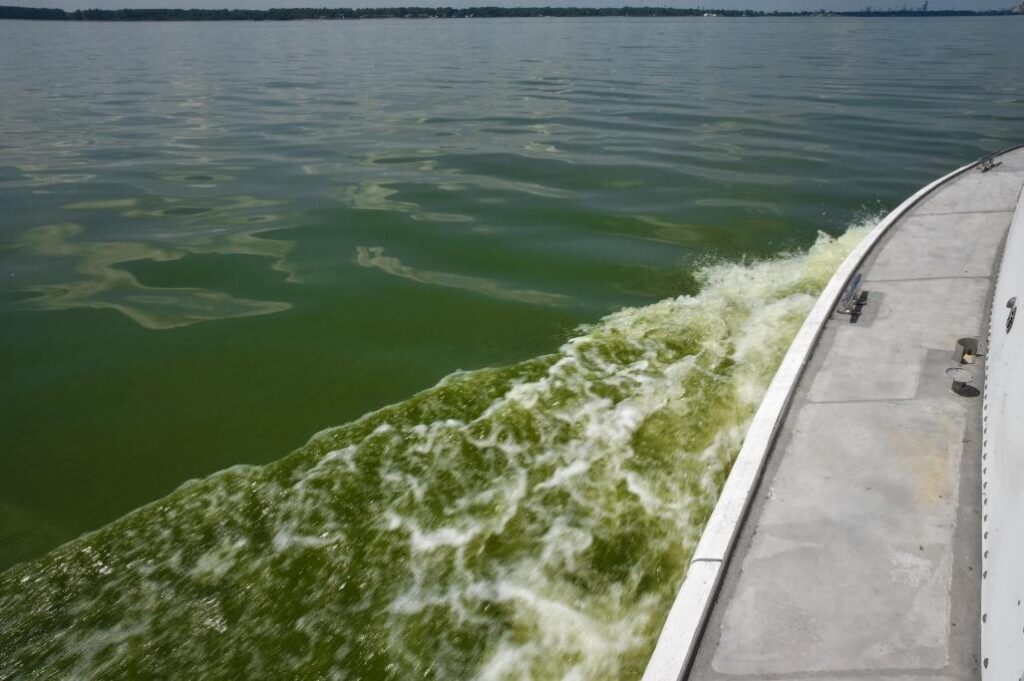
UPSC CURRENT AFFAIRS – 1st June 2025 Home / Airborne health risks near river mouths in coastal areas Why in News? A recent study published in Science Advances (May 28, 2025) has found that pollutants discharged by rivers into the sea can aerosolize and drift back inland, posing potential airborne health risks near river mouths and coastal zones. Key Highlights of the Study: Location: Tijuana River, U.S.-Mexico border, flowing into the Pacific Ocean. Study Period: January to March 2020. Methodology: Seawater and air sampling over 35 km of coastline using quartz-fibre filters and liquid-chromatography mass-spectrometry. Key Findings: 10 of 12 pollutants were more concentrated near river mouths. Detected substances included octinoxate (sunscreen), dibenzylamine (tire additive), methamphetamine, agricultural biocides, and benzoylecgonine (a cocaine metabolite). Pollutants aerosolized from seawater spray could drift inland and be inhaled by humans. Global Estimate: Approximately 40,000 tonnes of octinoxate and 50 tonnes of dibenzylamine may be released annually from polluted coastlines worldwide. Concepts: Aerosolization: The process by which particles from seawater become suspended in the air and travel inland. Benzoylecgonine: A stable metabolite of cocaine, used as a marker for raw sewage contamination in water. Octinoxate: A UV filter commonly found in sunscreens; linked to environmental persistence and potential hormonal disruption. Relevant Policies and Organizations: In the Indian context: National Water Policy (2012): Stresses prevention of pollution and treatment of wastewater before discharge. Coastal Regulation Zone (CRZ) Notification, 2011: Seeks to protect the coastal environment by restricting certain activities. Central Pollution Control Board (CPCB): Responsible for setting environmental standards and monitoring water and air quality. In the international context: MARPOL Convention: Regulates pollution from ships and marine sources. UNEP Global Programme of Action (GPA): Focuses on marine environment protection from land-based pollution. Constitutional Provisions (India): Article 21: Ensures the right to life, which includes the right to a clean environment. Article 48A: Directs the State to protect and improve the environment. Article 51A(g): Imposes a duty on citizens to safeguard the natural environment. Challenges Identified: Lack of integrated regulation of coastal air and water pollution. Absence of systematic air quality monitoring at beaches and river mouths. Limited research on long-term health impacts of aerosolized pollutant exposure. Disproportionate exposure risks for coastal and fishing communities. Weak enforcement of industrial and urban wastewater discharge norms. Way Forward: Strengthen Integrated Coastal Zone Management (ICZM) with focus on air-sea pollution interface. Incorporate aerosol pollutant monitoring into environmental surveillance frameworks. Conduct health impact assessments for populations living near polluted coasts. Apply the Polluter Pays Principle to enforce accountability for untreated discharges. Promote community participation and coastal awareness campaigns. For Indian Exporters These reforms reduce transaction costs and compliance hurdles Encourage a more competitive and efficient export environment Promote value addition in key sectors like leather For Tamil Nadu The reforms particularly benefit the state’s leather industry, a major contributor to employment and exports Boost the marketability of GI-tagged E.I. leather, enhancing rural and traditional industries For Trade Policy These decisions indicate a shift from regulatory controls to policy facilitation Reinforce the goals of Make in India, Atmanirbhar Bharat, and India’s ambition to become a leading export power Recently, BVR Subrahmanyam, CEO of NITI Aayog, claimed that India has overtaken Japan to become the fourth-largest economy in the world, citing data from the International Monetary Fund (IMF). India’s rank as the world’s largest economy varies by measure—nominal GDP or purchasing power parity (PPP)—each with key implications for economic analysis. Significance and Applications
Micronutrients and India’s Changing Nutritional Landscape

UPSC CURRENT AFFAIRS – 31th May 2025 Home / Micronutrients and India’s Changing Nutritional Landscape Why in News? While traditional concerns about undernutrition persist, newer challenges like micronutrient deficiencies and obesity have emerged Introduction India is undergoing a significant nutritional transition, with changing food habits across urban and rural populations over the past two decades. In this context, it is critical that discussions on nutrition go beyond calorie intake to include what may be missing from the plate — especially essential vitamins and minerals known as micronutrients. Understanding Nutrition: Macronutrients vs. Micronutrients As defined by health experts, nutrients are broadly classified into: Macronutrients: Carbohydrates, proteins, and fats — required in large quantities for energy and structural needs. Micronutrients: Vitamins, minerals, and trace elements — required in smaller amounts but vital for physiological functions such as immunity, enzyme activity, and hormone production. Micronutrients are further categorised into: Water-soluble vitamins: e.g., B-complex, Vitamin C Fat-soluble vitamins: e.g., Vitamins A, D, E, K Macrominerals: e.g., calcium, magnesium, phosphorus Trace elements: e.g., iron, zinc, selenium, iodine The Micronutrient Deficiency Challenge Global and National Burden According to the WHO, over 2 billion people worldwide suffer from micronutrient deficiencies, particularly in iron, vitamin A, iodine, and zinc. These “hidden hungers” have far-reaching consequences, including: Anaemia, particularly among children and pregnant women Impaired cognitive development Vision loss and increased infection susceptibility Poor birth outcomes due to folate and iron deficiency In India, despite dietary diversity in regions like the South, micronutrient intake remains suboptimal. This paradox highlights the mismatch between calorific sufficiency and nutritional adequacy. Micronutrients in Indian Public Health Policy Key Initiatives and Guidelines The Indian Council of Medical Research (ICMR) and WHO recommend a diet rich in fruits, vegetables, legumes, and whole grains. These are integrated into national schemes like Anaemia Mukt Bharat, Integrated Child Development Services (ICDS), and the Mid-Day Meal Scheme. Programmes such as free iron and calcium supplements for expectant mothers and fortified weaning blends like sattva maavu are examples of policy interventions targeting micronutrient gaps. Micronutrients and Health Outcomes Micronutrient deficiencies contribute to multiple morbidities: Iron, folate, and B12 deficiency → Anaemia Folate deficiency during pregnancy → Neural tube defects Vitamin A deficiency → Preventable blindness Vitamin D deficiency → Musculoskeletal issues, fatigue Zinc and selenium deficiency → Poor immune response Notably, Vitamin D is now reported as the most common deficiency among diabetics globally, with magnesium being the second most deficient micronutrient. Personalised Nutrition and At-Risk Populations Certain groups require targeted interventions: Children, pregnant women, elderly Post-surgical patients and those with gastrointestinal disorders Individuals with malabsorption or on restrictive diets Health experts stress that while dietary intake should ideally meet most needs, clinical supplementation based on biochemical assessments (e.g., blood tests) is essential in many cases. Lifestyle Factors and Misconceptions Modern Lifestyles Reduced sunlight exposure and sedentary indoor routines contribute to Vitamin D deficiency. Avoidance of dairy or non-vegetarian foods due to personal or cultural reasons limits intake of B12, iron, and zinc. Myths and Misconceptions Avoiding fruits due to natural sugar content deprives the body of essential fibre, antioxidants, and vitamins. Labeling fruits like papaya, jackfruit, and mango as “hot” foods during pregnancy lacks scientific basis and leads to unnecessary dietary exclusions. Caution Against Self-Supplementation The proliferation of supplements through social media and pharmacies has led to unregulated intake, often without medical advice. Overconsumption, especially of fat-soluble vitamins (A, D, E, K), can lead to toxicity. Even Vitamin C, if taken in excess, can cause issues like kidney stones. Healthcare professionals stress the importance of evidence-based and personalised supplementation, not influenced by anecdotal advice or commercial trends. Conclusion: Towards Preventive Health Through Nutrition India’s evolving health and nutrition landscape demands a shift in focus from calorie sufficiency to nutrient adequacy. Micronutrients, though needed in trace amounts, are central to long-term physical, cognitive, and metabolic health. Efforts must include: Strengthening dietary diversity and awareness at the community level Scaling up food fortification and maternal-child supplementation schemes Promoting culturally sensitive but evidence-backed nutrition education Avoiding unscientific restrictions and self-medication with supplements As India aspires to meet its SDG targets on health and nutrition, focusing on micronutrient sufficiency is not just timely but essential to building a healthier and more resilient population. For Indian Exporters These reforms reduce transaction costs and compliance hurdles Encourage a more competitive and efficient export environment Promote value addition in key sectors like leather For Tamil Nadu The reforms particularly benefit the state’s leather industry, a major contributor to employment and exports Boost the marketability of GI-tagged E.I. leather, enhancing rural and traditional industries For Trade Policy These decisions indicate a shift from regulatory controls to policy facilitation Reinforce the goals of Make in India, Atmanirbhar Bharat, and India’s ambition to become a leading export power Recently, BVR Subrahmanyam, CEO of NITI Aayog, claimed that India has overtaken Japan to become the fourth-largest economy in the world, citing data from the International Monetary Fund (IMF). India’s rank as the world’s largest economy varies by measure—nominal GDP or purchasing power parity (PPP)—each with key implications for economic analysis. Significance and Applications
India’s Economic Growth in FY25
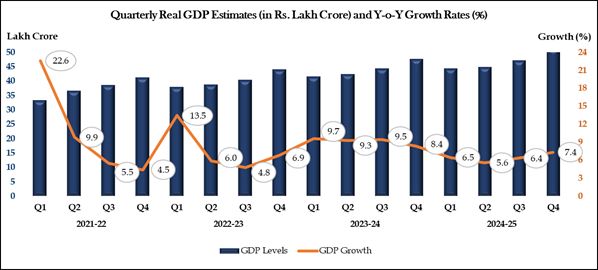
UPSC CURRENT AFFAIRS – 31th May 2025 Home / India’s Economic Growth in FY25 Why in News? The Ministry of Statistics and Programme Implementation (MoSPI) has released two critical datasets: the Provisional Estimates (PEs) of national income for FY25 and the GDP growth estimate for Q4 (January–March 2025). These figures provide vital insights into India’s economic performance and the sectoral dynamics shaping the broader growth narrative. Understanding National Income Estimation: GDP vs GVA India’s economic growth is measured using two complementary approaches: Gross Domestic Product (GDP) reflects the demand side of the economy by summing all expenditures—by individuals, businesses, and the government. Gross Value Added (GVA) represents the supply side, capturing the value created by all sectors by subtracting intermediate consumption from gross output. These two are related by the formula:GDP = GVA + (Taxes – Subsidies) MoSPI releases data in nominal terms (current prices) and real terms (inflation-adjusted). While nominal GDP is useful for assessing the economy’s size, real GDP offers a better measure of true growth by excluding inflationary effects. Why Are the Estimates Called “Provisional”? GDP estimates undergo multiple revisions: First Advance Estimates (FAEs) – January Second Advance Estimates (SAEs) – February Provisional Estimates (PEs) – May-end First Revised Estimates – Next year Final Estimates – Two years later The PEs are based on more comprehensive data, including the Q4 performance, but remain subject to revision. Key Highlights from FY25 Economic Data 1. Size and Growth of Nominal GDP Nominal GDP rose to ₹330.7 lakh crore in FY25, reflecting a 9.8% growth over FY24. In US dollar terms (using ₹85.559/USD), India’s economy stood at $3.87 trillion. This marks the third-slowest nominal growth since 2014 and the sixth-slowest since liberalization in 1991. The CAGR since 2014-15 is 10.3%, and 9.8% since 2019—indicating a slowdown in nominal growth momentum. 2. Real GDP Growth and Economic Momentum Real GDP grew by 6.5% in FY25, reaching ₹188 lakh crore. This is a marked decline from 9.2% growth in FY24, indicating a loss in growth momentum. The CAGR of real GDP since 2019 is just above 5%, down from over 6% since 2014. The widening gap between real and nominal GDP underscores inflation’s role in GDP expansion. Implication: The deceleration reflects structural issues and not just cyclical fluctuations. Sustained policy efforts are needed to revive real growth. 3. Sectoral Analysis: Real GVA Insights GVA growth in FY25 stood at 6.4%, down from 8.6% in FY24. Sector-wise breakdown: Sector CAGR (2019–2025) Observation Agriculture & Allied 4.72% Stronger than expected growth Manufacturing 4.04% Weakest among sectors Services Below 6% Slowing, yet dominant contributor GVA, by excluding taxes and subsidies, provides a cleaner picture of sectoral health. 4. Manufacturing Sector: A Cause for Concern Manufacturing GVA growth lags behind even agriculture, despite the push for Make in India since 2016. Weak manufacturing growth explains: Persistent urban youth unemployment Labour migration back to rural areas Increased dependence on agriculture for livelihoods Global Context: Manufacturing has emerged as a strategic sector worldwide, with advanced economies like the US and China safeguarding it through trade interventions. India’s underperformance in this domain weakens its global competitiveness. Conclusion: Recalibrating India’s Growth Strategy The provisional national income data for FY25 highlights a mixed picture: Macroeconomic stability has been maintained. But growth momentum, especially in manufacturing, remains a concern. The slowdown in real GDP growth and the lag in GVA from core sectors signal the need for structural reforms and investment incentives, particularly in industry. Way Forward Revitalize manufacturing through targeted incentives, infrastructure, and skilling programs. Improve rural employment opportunities to reduce disguised unemployment in agriculture. Enhance data reliability and timeliness to improve economic policymaking. As India targets becoming a $5 trillion economy, ensuring balanced, inclusive, and sustainable growth across all sectors remains paramount. For Indian Exporters These reforms reduce transaction costs and compliance hurdles Encourage a more competitive and efficient export environment Promote value addition in key sectors like leather For Tamil Nadu The reforms particularly benefit the state’s leather industry, a major contributor to employment and exports Boost the marketability of GI-tagged E.I. leather, enhancing rural and traditional industries For Trade Policy These decisions indicate a shift from regulatory controls to policy facilitation Reinforce the goals of Make in India, Atmanirbhar Bharat, and India’s ambition to become a leading export power Recently, BVR Subrahmanyam, CEO of NITI Aayog, claimed that India has overtaken Japan to become the fourth-largest economy in the world, citing data from the International Monetary Fund (IMF). India’s rank as the world’s largest economy varies by measure—nominal GDP or purchasing power parity (PPP)—each with key implications for economic analysis. Significance and Applications
Artificial Intelligence and the Future of Learning

UPSC CURRENT AFFAIRS – 31th May 2025 Home / Artificial Intelligence and the Future of Learning Why in News? The advent of Artificial Intelligence (AI) is driving a quiet yet profound revolution in the field of education. Introduction AI is not merely an add-on to traditional methods—it is fundamentally altering how students learn, how teachers teach, and how educational institutions operate. With a focus on personalization, adaptability, and efficiency, AI is redefining education to suit the diverse and dynamic needs of 21st-century learners. Rethinking Education in the Digital Age AI has moved beyond being a futuristic concept; it is now deeply embedded in today’s educational ecosystem. Its integration has led to: Personalized learning experiences Automated evaluations Predictive interventions Streamlined administration At its heart, AI in education aims to promote equity, engagement, and individualized growth—ensuring that no learner is left behind. 1. Personalized Learning: A Unique Path for Every Learner One of the most impactful uses of AI is the creation of individualized learning profiles. Machine learning algorithms analyze students’ performance patterns, identifying: Mistakes and misconceptions Behavioral cues like hesitation or repeated attempts Learning pace and style Tools like cognitive mapping and behavioral analytics distinguish between productive struggles and actual confusion. AI systems then adapt the content in real-time, ensuring students receive the right support at the right time. 2. Dynamic Curriculum Generation: Complexity with Precision AI goes a step further by dynamically generating curricula. It adjusts both: The sequence of content delivery The complexity of topics presented For example: If a student struggles with algebra, the system reverts to earlier foundational concepts and introduces simpler problems first. As mastery is built, the system incrementally increases the difficulty. Statistical benefits include: 40% reduction in cognitive overload 27% improvement in concept retention Reinforcement learning ensures the system learns from the learner, fine-tuning itself for greater accuracy over time. 3. Multi-Layered Learning Systems: Intelligence Beneath the Surface Modern AI-driven educational platforms operate on three core layers: i) Input Analysis Layer Processes learner inputs (text, time taken, behavior) Uses Natural Language Processing (NLP) to understand explanations Sentiment analysis detects emotions like frustration or disengagement ii) Inference Engine Builds student knowledge models using Bayesian networks and decision trees Predicts future performance and accounts for memory decay Suggests revision schedules and interventions iii) Content Delivery System Presents materials based on Cognitive Load Theory Segments content into manageable parts Increases efficiency, reducing learning time by 20% or more 4. Predictive Analytics: Prevention Before Intervention AI’s ability to predict academic risk is a breakthrough in student retention. Advanced models analyze: Academic records Engagement patterns Behavioral signals on learning platforms Ensemble models like random forests and gradient boosting achieve up to 92% accuracy in forecasting dropouts or performance dips—weeks in advance of traditional detection methods. This gives institutions time to: Intervene early Offer additional support Re-engage at-risk students 5. Administrative Automation: Giving Teachers Back Their Time AI is revolutionizing the administrative side of education, improving both accuracy and efficiency. Key advancements include: Automated Grading Handwriting recognition (up to 95% accuracy) Essay scoring aligned with human markers Smart Timetabling and Scheduling Conflict-free class schedules Optimal use of resources and classroom space Attendance and Engagement Tracking Face recognition and biometric tools Real-time student participation data Conclusion: Fnu Imran Ahamed highlights a compelling future where AI transforms education into a personalized, proactive, and precision-driven system. But this transformation does not diminish the role of educators. Instead, it enhances their impact, allowing them to focus on mentorship, creativity, and emotional connection. For Indian Exporters These reforms reduce transaction costs and compliance hurdles Encourage a more competitive and efficient export environment Promote value addition in key sectors like leather For Tamil Nadu The reforms particularly benefit the state’s leather industry, a major contributor to employment and exports Boost the marketability of GI-tagged E.I. leather, enhancing rural and traditional industries For Trade Policy These decisions indicate a shift from regulatory controls to policy facilitation Reinforce the goals of Make in India, Atmanirbhar Bharat, and India’s ambition to become a leading export power Recently, BVR Subrahmanyam, CEO of NITI Aayog, claimed that India has overtaken Japan to become the fourth-largest economy in the world, citing data from the International Monetary Fund (IMF). India’s rank as the world’s largest economy varies by measure—nominal GDP or purchasing power parity (PPP)—each with key implications for economic analysis. Significance and Applications
Project Kusha: India’s Indigenous S-400-Style Air Defence System
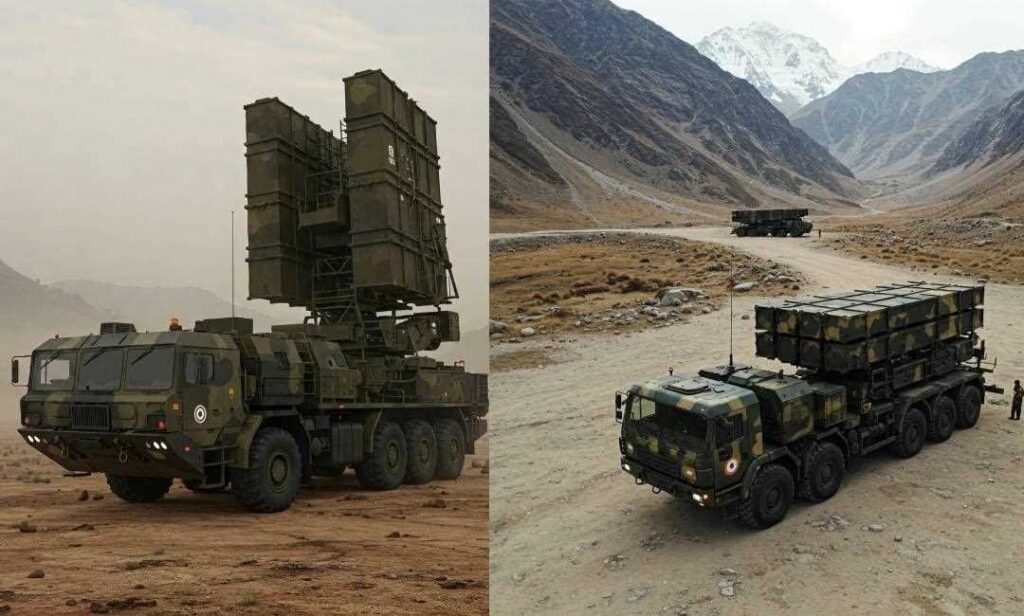
UPSC CURRENT AFFAIRS – 31th May 2025 Home / Project Kusha: India’s Indigenous S-400-Style Air Defence System Why in News? India is developing Project Kusha, a long-range surface-to-air missile system similar to Russia’s S-400, in collaboration with DRDO and BEL. Introduction India’s focus on achieving self-reliance in defence manufacturing has led to the development of several indigenous systems aimed at strengthening national security. One such ambitious initiative is Project Kusha, a long-range Surface-to-Air Missile (SAM) system inspired by the capabilities of the Russian S-400 Triumf. Led by the Defence Research and Development Organisation (DRDO) and supported by Bharat Electronics Limited (BEL), this project reflects India’s growing defence technological base. What is Project Kusha? Project Kusha is an indigenous long-range air defence missile system program aimed at countering multiple types of aerial threats including: Aircraft Missiles Unmanned Aerial Vehicles (UAVs)/drones It is comparable in intent and functionality to the Russian S-400 system but aims to be fully developed and produced within India. Key Features (Planned): Long-range interception capabilities Multi-target tracking and engagement Integration of advanced radar and control systems Designed to protect strategic assets and airspace Progress and Timeline As per BEL Chairman and MD, the prototype development is expected to be completed in 12–18 months, followed by user trials that could take 12–36 months. Prototype phase: Expected soon Full system integration: Awaiting decision on whether BEL will be the sole integrator or one of two system integrators. BEL is collaborating with DRDO to develop multiple subsystems, especially: Radars Command and control modules Significance of BEL’s Role BEL, a leading public sector unit under the Ministry of Defence, is not only a co-developer of Project Kusha but also plays a central role in: Developing radar technology Producing command and control infrastructure Providing expertise in sensor fusion and real-time monitoring Other Indigenous Air Defence Developments by BEL Quick Reaction Surface-to-Air Missile (QRSAM) Aimed at providing rapid response to low-altitude aerial threats. Designed for mobility and quick deployment. BEL is the production agency and expects an order worth ₹30,000 crore, jointly for the Army and Air Force. Order is expected by the end of the current fiscal year or early next. Akashteer Air Defence Control System A next-generation air defence command and reporting system. Enables real-time engagement of multiple aerial threats. Integrates various sensors and weapons into a unified command network. Already inducted and operational in forward areas. Existing Systems: The Role of S-400 Triumf While India continues to develop indigenous systems, it also operates the Russian S-400 Triumf, one of the most advanced air defence systems globally. Capabilities: Can track and intercept fighter jets, drones, cruise missiles, and ballistic missiles. Engagement range of up to 400 km. Offers layered air defence and early warning capability. Multiple S-400 units have been strategically deployed across the country. Strategic Relevance: Acts as a deterrent against aerial threats from adversaries. Has influenced the design and vision of Project Kusha. Provides a technological benchmark for indigenous systems. Akash Missile System: A Proven Indigenous Platform The Akash missile, India’s earlier indigenous medium-range SAM system, has shown high performance in trials: Successfully intercepted high-speed aerial targets Deployed in several regiments of the Army and Air Force Forms part of the layered air defence network Strategic Importance of Indigenous Air Defence Systems India’s efforts under Project Kusha, QRSAM, and Akashteer aim to: Reduce dependency on imports Strengthen Atmanirbhar Bharat in the defence sector Enhance rapid threat response capability Provide strategic depth in forward and border areas Challenges Ahead Technology gaps in propulsion and tracking systems compared to global counterparts Long timelines for trials and induction Need for seamless integration with existing systems (like Akash, S-400) Conclusion Project Kusha symbolizes India’s leap toward advanced and autonomous air defence capabilities. Backed by BEL and DRDO, and inspired by global benchmarks like the S-400, it has the potential to reshape the country’s defence preparedness. Coupled with systems like QRSAM and Akashteer, India is moving closer to building a multi-layered, integrated, and indigenous air defence shield, ensuring better national security and strategic autonomy. For Indian Exporters These reforms reduce transaction costs and compliance hurdles Encourage a more competitive and efficient export environment Promote value addition in key sectors like leather For Tamil Nadu The reforms particularly benefit the state’s leather industry, a major contributor to employment and exports Boost the marketability of GI-tagged E.I. leather, enhancing rural and traditional industries For Trade Policy These decisions indicate a shift from regulatory controls to policy facilitation Reinforce the goals of Make in India, Atmanirbhar Bharat, and India’s ambition to become a leading export power Recently, BVR Subrahmanyam, CEO of NITI Aayog, claimed that India has overtaken Japan to become the fourth-largest economy in the world, citing data from the International Monetary Fund (IMF). India’s rank as the world’s largest economy varies by measure—nominal GDP or purchasing power parity (PPP)—each with key implications for economic analysis. Significance and Applications
CBI’s Op Chakra V
UPSC CURRENT AFFAIRS – 31th May 2025 Home / CBI’s Op Chakra V Why in News? The Central Bureau of Investigation (CBI) has arrested six alleged members of a transnational cybercrime syndicate targeting Japanese nationals. This crackdown was part of Operation Chakra V, a concerted effort to combat cross-border cybercrime through inter-agency and international cooperation. Details of the Operation Arrests: Six individuals were apprehended from different parts of India — three from Varanasi, one from Ayodhya, and two others from Panipat. Locations Raided: The CBI conducted searches at 19 locations across Delhi, Haryana, and Uttar Pradesh on May 28, 2025. Nature of Crime: The syndicate operated illegal call centres impersonating customer service centres of reputed multinational firms like Microsoft, targeting foreign nationals, especially Japanese citizens. Modus Operandi Victims were tricked into believing that their electronic devices were compromised. Using social engineering and technical deception, callers manipulated the victims into transferring funds into mule accounts under the guise of technical support. This tech support scam represents a sophisticated form of cyber fraud leveraging psychological manipulation. Evidence and Investigation The CBI seized substantial digital and physical evidence indicating large-scale operations. A regular case was registered based on credible intelligence inputs regarding cybercriminal activities targeting foreign nationals. International Cooperation The investigation involved close collaboration with: National Police Agency of Japan Microsoft Corporation This international coordination was pivotal in identifying the syndicate members and dismantling their operational structure. Significance of Operation Chakra V Operation Chakra is a recurring anti-cybercrime initiative by the CBI to counter tech-enabled frauds. Chakra V highlights the CBI’s proactive approach in tackling cyber threats with global implications. It underlines the importance of inter-governmental cooperation and public-private partnerships in combating digital crimes. Cybersecurity Implications for India The Operation Chakra V case underscores India’s dual position as both a target and an origin point for transnational cybercrime activities. As India’s digital economy expands, the risk of being exploited by or hosting cybercriminal networks grows significantly. India as a Global Cybercrime Hub: The operation revealed how Indian-based networks are involved in defrauding foreign nationals, tarnishing India’s international cybersecurity image. Vulnerability of Foreign Nationals via Indian Infrastructure: Foreign victims are increasingly being targeted through infrastructure (servers, call centers) based in India, raising diplomatic concerns. Reputational and Diplomatic Risk: Incidents like these could affect India’s image as a trusted partner in global digital services and cybersecurity cooperation. Urgent Needs and Recommendations Advanced Cyber Policing Capabilities Dedicated cybercrime cells in all districts Specialized training for law enforcement personnel in cyber laws, forensics, and international protocols Real-time surveillance and threat intelligence sharing Cyber Forensics and Monitoring Tools Establish state-of-the-art Digital Forensics Labs Deploy AI and big data analytics for anomaly detection and fraud pattern analysis Integration of CERT-In, NCCC, and police databases for seamless case tracking Bilateral & Multilateral Legal Frameworks Strengthen bilateral cybercrime cooperation treaties (e.g., with Japan, US, EU) Consider joining the Budapest Convention on Cybercrime Develop standard extradition and evidence-sharing protocols Public–Private Collaboration Deeper partnerships with tech giants (e.g., Microsoft, Meta) for fraud detection Co-develop cybersecurity awareness programs and cyber hygiene training Digital Literacy and Citizen Awareness Promote safe digital practices through national campaigns (e.g., Cyber Surakshit Bharat) Encourage reporting via platforms like National Cyber Crime Reporting Portal Conclusion The CBI’s crackdown under Operation Chakra V reflects India’s evolving response to the challenges of transnational cybercrime. It also emphasizes the strategic role of international collaboration in ensuring cybersecurity and digital trust across borders. Such operations are vital for securing India’s reputation in the global digital economy and ensuring that it remains a responsible digital stakeholder. For Indian Exporters These reforms reduce transaction costs and compliance hurdles Encourage a more competitive and efficient export environment Promote value addition in key sectors like leather For Tamil Nadu The reforms particularly benefit the state’s leather industry, a major contributor to employment and exports Boost the marketability of GI-tagged E.I. leather, enhancing rural and traditional industries For Trade Policy These decisions indicate a shift from regulatory controls to policy facilitation Reinforce the goals of Make in India, Atmanirbhar Bharat, and India’s ambition to become a leading export power Recently, BVR Subrahmanyam, CEO of NITI Aayog, claimed that India has overtaken Japan to become the fourth-largest economy in the world, citing data from the International Monetary Fund (IMF). India’s rank as the world’s largest economy varies by measure—nominal GDP or purchasing power parity (PPP)—each with key implications for economic analysis. Significance and Applications
What is a bow echo, how did it signal Delhi’s fierce storm?

UPSC CURRENT AFFAIRS – 30th May 2025 Home / What is a bow echo, how did it signal Delhi’s fierce storm? Why in News? A bow echo was recently observed on weather radar during the severe thunderstorm that hit Delhi-NCR. Introduction Delhi witnessed an intense thunderstorm accompanied by wind speeds reaching up to 100 kmph. What intrigued meteorologists was the storm’s distinct shape on radar: a crescent or archer’s bow, technically known as a bow echo. This rare but significant meteorological event has implications for disaster preparedness, urban planning, and climate resilience. What is a Bow Echo? A bow echo is a radar signature of a mesoscale convective system (MCS) that takes the shape of a bow or crescent. It typically appears as a curved line of thunderstorms, called a squall line, and can extend anywhere from 20 km to 100 km, with a lifespan of 3 to 6 hours. Named by: The term was coined in the 1970s by Ted Fujita, a Japanese-American meteorologist who also developed the Fujita Scale to measure tornado intensity. Radar appearance: On Doppler radar, the bow shape is indicative of strong straight-line winds and sometimes even embedded tornadoes. How Does a Bow Echo Form? The formation of a bow echo is driven by interactions between rain-cooled air and warm moist surface air, resulting in the development and sustenance of thunderstorms. Key Processes: Downbursts and Gust Fronts: Rain-cooled air descends rapidly to the surface, forming a downburst. This air then spreads out horizontally, forming a gust front — a boundary between cool and warm air. Thunderstorm Regeneration: The gust front lifts the warm-moist air ahead of it, causing the formation of new thunderstorms. These in turn create more rain, continuing the cycle. Arching Effect: As air inflows from the rear (trailing edge), the line of storms bends into a bow, especially when upper-level winds are aligned. The bow shape indicates areas of strongest wind speeds, especially at the center of the bow. Why Are Bow Echoes Significant? Bow echoes are important for meteorologists because they are precursors to severe weather, particularly: Damaging straight-line winds (as seen in Delhi) Flash floods Tornado formation (rare in India but common in the U.S.) Widespread infrastructure damage As Umasankar Das, senior IMD scientist, noted, bow echoes are often associated with dangerous weather conditions and demand close monitoring. Occurrence in India Though more common in North America, bow echoes are not new to India. There have been several instances: May 31, 2022: A bow echo formed over Delhi and Noida, bringing winds up to 100 kmph. May 2025: The latest intense bow echo storm in Delhi. Odisha (May 2025): Similar squall lines were recorded during thunderstorms, according to Rahul Saxena, senior IMD scientist. These instances show that climate variability and increasing storm intensity may be making such phenomena more frequent and dangerous. Implications for India Urban Vulnerability Cities like Delhi with dense infrastructure are highly vulnerable to wind-related damage. Power cuts, uprooted trees, and collapsed structures are common outcomes. Disaster Preparedness Improved Doppler radar surveillance is needed to predict such events. Real-time alerts and public awareness can minimize casualties and damage. Climate Change Linkages Increasing frequency and intensity of such weather events may be linked to climate change. Warmer surface temperatures and higher humidity contribute to stronger convective systems. Conclusion The appearance of a bow echo over Delhi is not just a scientific curiosity — it is a wake-up call for improved urban meteorological planning, early warning systems, and public disaster education. With climate change making weather systems more unpredictable, such phenomena are likely to become more frequent, requiring a robust policy and infrastructure response. For Indian Exporters These reforms reduce transaction costs and compliance hurdles Encourage a more competitive and efficient export environment Promote value addition in key sectors like leather For Tamil Nadu The reforms particularly benefit the state’s leather industry, a major contributor to employment and exports Boost the marketability of GI-tagged E.I. leather, enhancing rural and traditional industries For Trade Policy These decisions indicate a shift from regulatory controls to policy facilitation Reinforce the goals of Make in India, Atmanirbhar Bharat, and India’s ambition to become a leading export power Recently, BVR Subrahmanyam, CEO of NITI Aayog, claimed that India has overtaken Japan to become the fourth-largest economy in the world, citing data from the International Monetary Fund (IMF). India’s rank as the world’s largest economy varies by measure—nominal GDP or purchasing power parity (PPP)—each with key implications for economic analysis. Significance and Applications
MSC ELSA 3 Sinks Off Kerala Coast

UPSC CURRENT AFFAIRS – 30th May 2025 Home / MSC ELSA 3 Sinks Off Kerala Coast Why in News? The sinking of MSC Elsa 3 off Kerala’s coast in May 2025 exposed gaps in hazardous cargo regulation and tested India’s maritime environmental disaster preparedness. Introduction On May 24, 2025, the cargo vessel MSC Elsa 3, carrying over 640 containers, tilted and eventually sank off the coast of Kochi. The ship, nearly 30 years old but reportedly seaworthy, succumbed to an operational failure. Despite efforts, the crew had to abandon the vessel, which now lies 50 metres beneath the Arabian Sea. This incident has raised serious concerns regarding marine pollution, hazardous cargo handling, and India’s maritime disaster preparedness. Environmental Fallout and Immediate Concerns According to the cargo manifest, 13 containers held hazardous goods—12 with calcium carbide, a highly reactive compound, and one with rubber solution. The interaction of the rubber solution with seawater is believed to have caused the spread of plastic pellets (nurdles) along the Kerala coast, posing a serious threat to marine biodiversity and coastal livelihoods. In addition: Five containers of calcium carbide remain on the seabed, risking chemical leakage. An estimated 365 tonnes of heavy fuel oil and 60 tonnes of diesel are still inside the sunken vessel’s tanks. Some oil sheen has already been observed, sparking fears of a larger marine oil spill, similar to the 2017 Chennai disaster when 250 tonnes of oil spilled after a tanker collision. India’s Disaster Response Framework: Strengths and Gaps India’s National Oil Spill Disaster Contingency Plan (NOS-DCP) designates the Indian Coast Guard as the nodal agency for oil spill responses. In the case of the Elsa 3, the Kerala government has taken proactive steps, including: Declaring the event a state-specific disaster. Coordinating with national agencies to begin salvage and containment operations. Engaging with international insurance protocols to finance cleanup and recovery. This contrasts with the delayed and poorly coordinated response seen in the Chennai incident, reflecting a learning curve in inter-agency collaboration. National Oil Spill Disaster Contingency Plan (NOS-DCP) The National Oil Spill Disaster Contingency Plan (NOS-DCP) was first developed in 1996 by the Indian Coast Guard, which was designated as the central coordinating authority for responding to oil spill disasters in India’s maritime zones. Indian Coast Guard (ICG) is the nodal agency under NOS-DCP. It is responsible for: Containment and recovery of spilled oil. Coordination with central and state agencies. Surveillance, assessment, and initiation of clean-up operations. Systemic Challenges in Container Oversight The MSC Elsa 3 episode also highlights a global regulatory blind spot—the lack of effective oversight on what each container carries. Containers change hands across ports, often without thorough inspection, increasing the risk of undisclosed or poorly documented hazardous materials entering national waters. As India aspires to become a global transshipment hub and expands its maritime logistics, risk assessment, cargo tracking, and regulatory oversight must be strengthened. Conclusion: A Test of India’s Maritime Governance The MSC Elsa 3 disaster is a wake-up call for India’s maritime administration. The containment and cleanup response in Kerala will be a litmus test for India’s readiness to handle complex maritime disasters. With increasing global shipping traffic and environmental stakes, proactive policy reform, institutional capacity building, and inter-agency coordination are the need of the hour. For Indian Exporters These reforms reduce transaction costs and compliance hurdles Encourage a more competitive and efficient export environment Promote value addition in key sectors like leather For Tamil Nadu The reforms particularly benefit the state’s leather industry, a major contributor to employment and exports Boost the marketability of GI-tagged E.I. leather, enhancing rural and traditional industries For Trade Policy These decisions indicate a shift from regulatory controls to policy facilitation Reinforce the goals of Make in India, Atmanirbhar Bharat, and India’s ambition to become a leading export power Recently, BVR Subrahmanyam, CEO of NITI Aayog, claimed that India has overtaken Japan to become the fourth-largest economy in the world, citing data from the International Monetary Fund (IMF). India’s rank as the world’s largest economy varies by measure—nominal GDP or purchasing power parity (PPP)—each with key implications for economic analysis. Significance and Applications
Government approves continuation of interest subvention scheme for farmers

UPSC CURRENT AFFAIRS – 30th May 2025 Home / Government approves continuation of interest subvention scheme for farmers Why in News? The Union Cabinet approved the continuation of the Modified Interest Subvention Scheme (MISS) for 2025–26. Introduction On May 28, 2025, the Union Cabinet approved the continuation of the Modified Interest Subvention Scheme (MISS) for the financial year 2025–26. The decision aims to provide short-term agricultural credit to farmers at subsidised interest rates via the Kisan Credit Card (KCC) mechanism, thereby reinforcing the government’s commitment to doubling farmers’ income and ensuring financial inclusion in rural India. Key Features of MISS Type of Scheme: Central Sector Scheme Purpose: To ensure availability of short-term credit for farmers at affordable interest rates. Coverage: Over 7.75 crore KCC accounts across the country. Interest Rate Benefits Short-term loans of up to ₹3 lakh are provided at 7% interest rate. A 1.5% interest subvention is given to lending institutions, reducing their lending cost. Farmers who repay promptly get an additional 3% Prompt Repayment Incentive (PRI), reducing the effective interest rate to 4%. For loans taken exclusively for animal husbandry or fisheries, benefits are available up to ₹2 lakh. Budget and Financial Implications Total Cost to Exchequer: ₹15,640 crore for FY 2025-26. No changes have been proposed to the existing structure of the scheme. Background and Trends Institutional Credit Flow via KCC: 2014: ₹4.26 lakh crore Dec 2024: ₹10.05 lakh crore Overall Agricultural Credit Flow: 2013–14: ₹7.3 lakh crore 2023–24: ₹25.49 lakh crore This sharp increase highlights the growing dependence of farmers on institutional credit, supported by subvention policies like MISS. Significance and Impact Strengthening Rural Credit Ecosystem: By keeping borrowing costs low, rural and cooperative banks can continue offering credit on favourable terms. Enhancing Productivity: Timely and affordable credit facilitates investment in quality seeds, fertilisers, machinery, and irrigation—improving agricultural output. Promoting Financial Inclusion: MISS targets small and marginal farmers, reducing their dependence on informal credit sources. Macroeconomic Relevance: As rural credit demand grows, MISS plays a vital role in aligning monetary policy instruments like repo rate and MCLR with inclusive agricultural financing. Conclusion The continuation of the Modified Interest Subvention Scheme (MISS) for FY 2025-26 reflects the government’s strategic commitment to boosting agricultural growth, enhancing credit access, and supporting rural livelihoods. In the context of rising input costs and financial vulnerability in rural areas, such targeted interventions are essential for ensuring the sustainability of agriculture and achieving the broader goal of inclusive development. For Indian Exporters These reforms reduce transaction costs and compliance hurdles Encourage a more competitive and efficient export environment Promote value addition in key sectors like leather For Tamil Nadu The reforms particularly benefit the state’s leather industry, a major contributor to employment and exports Boost the marketability of GI-tagged E.I. leather, enhancing rural and traditional industries For Trade Policy These decisions indicate a shift from regulatory controls to policy facilitation Reinforce the goals of Make in India, Atmanirbhar Bharat, and India’s ambition to become a leading export power Recently, BVR Subrahmanyam, CEO of NITI Aayog, claimed that India has overtaken Japan to become the fourth-largest economy in the world, citing data from the International Monetary Fund (IMF). India’s rank as the world’s largest economy varies by measure—nominal GDP or purchasing power parity (PPP)—each with key implications for economic analysis. Significance and Applications
e-Rupee Circulation and Cross-Border CBDC
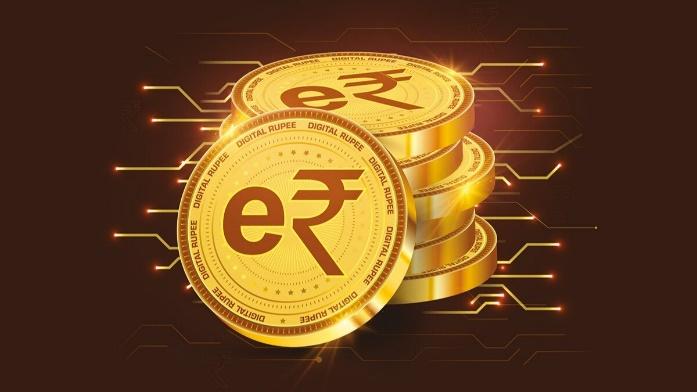
UPSC CURRENT AFFAIRS – 30th May 2025 Home / e-Rupee Circulation and Cross-Border CBDC Why in News? The Reserve Bank of India’s e-Rupee (CBDC) in circulation surged to ₹1,016 crore by March 2025. Introduction India’s Central Bank Digital Currency (CBDC), known as the e-Rupee, has seen a significant rise in circulation, reaching ₹1,016 crore by the end of March 2025, up from ₹234 crore a year earlier. Introduced as a response to the challenges posed by private virtual currencies like Bitcoin, the CBDC aims to modernize India’s monetary system, enhance financial inclusion, and simplify payments — both domestic and cross-border. What is e-Rupee? The e-Rupee is a digital form of fiat currency issued by the Reserve Bank of India (RBI). It is a liability of the central bank and is recognized as legal tender. There are two types of e-Rupee pilots: e-Rupee-Wholesale (CBDC-W): Primarily used for interbank settlements and financial transactions. e-Rupee-Retail (CBDC-R): Designed for use by the public in day-to-day transactions. Current Status and Growth As per the RBI Annual Report 2024-25, the e-Rupee’s circulation has surged: Total e-Rupee in circulation: ₹1,016 crore ₹500 denomination: ₹857 crore ₹200 denomination: ₹91 crore ₹100 denomination: ₹38 crore This growth reflects increased participation and experimentation across both wholesale and retail segments. Retail Pilot Expansion Key Developments: e-Rupee-Retail has expanded to 17 banks. Over 60 lakh users have adopted the e-Rupee. Non-bank entities have been permitted to distribute CBDC wallets, increasing accessibility. New Features Introduced: Offline Payments: Useful in remote areas with poor connectivity. Programmability: Enables funds to be used for specific purposes only. Innovative Use Cases of Programmability Programmable CBDC has opened up targeted and efficient use of government funds: Direct Benefit Transfers (DBT) linked to carbon credits and Kisan Credit Card (KCC) loans. Employee Allowances (fuel/meal) are being disbursed digitally. The Odisha Government transferred e-Rupee to 88,000 beneficiaries under the Subhadra Yojana. These use cases demonstrate how the e-Rupee can enhance transparency and traceability in public welfare schemes. Cross-Border Ambitions of CBDC One of the major goals of CBDC globally is to streamline cross-border payments, which are currently expensive, slow, and opaque. RBI’s Cross-Border Initiatives: Bilateral Pilots: Being actively explored with select countries to improve turnaround time, efficiency, and transparency. Multilateral Engagements: Participation under the Bank for International Settlements (BIS) Innovation Hub is being considered. Roadmap Finalization: Progress has been made in identifying technical requirements and defining use cases for cross-border pilots. Technological Enhancements The Account Aggregator Framework is being improved for better integration with CBDC for customer convenience, data transparency, and financial efficiency. Efforts are on to ensure interoperability between banks, wallets, and payment platforms. Challenges and Considerations While the e-Rupee holds immense potential, several issues require close attention: Cybersecurity and data privacy. Digital divide: Ensuring adoption in rural and low-income segments. Regulatory framework for programmable features. Cross-border legal harmonization. Conclusion The e-Rupee marks a bold step in India’s financial digitization journey. With increasing circulation, innovative domestic use cases, and upcoming cross-border pilots, the RBI is shaping the future of money and payment infrastructure. As the e-Rupee evolves, it promises to enhance efficiency, support welfare delivery, and position India as a leader in the global CBDC ecosystem. For Indian Exporters These reforms reduce transaction costs and compliance hurdles Encourage a more competitive and efficient export environment Promote value addition in key sectors like leather For Tamil Nadu The reforms particularly benefit the state’s leather industry, a major contributor to employment and exports Boost the marketability of GI-tagged E.I. leather, enhancing rural and traditional industries For Trade Policy These decisions indicate a shift from regulatory controls to policy facilitation Reinforce the goals of Make in India, Atmanirbhar Bharat, and India’s ambition to become a leading export power Recently, BVR Subrahmanyam, CEO of NITI Aayog, claimed that India has overtaken Japan to become the fourth-largest economy in the world, citing data from the International Monetary Fund (IMF). India’s rank as the world’s largest economy varies by measure—nominal GDP or purchasing power parity (PPP)—each with key implications for economic analysis. Significance and Applications