Extension of President’s Rule in Manipur
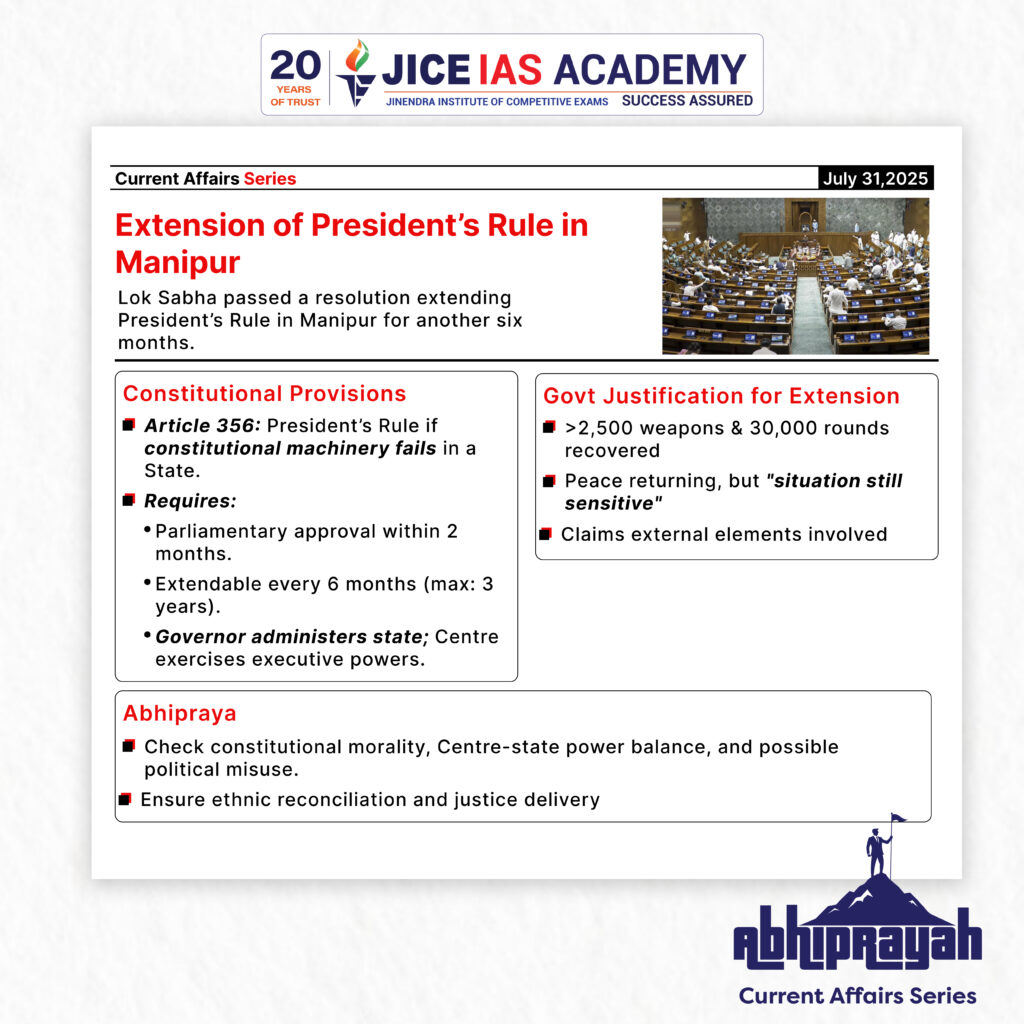
UPSC CURRENT AFFAIRS – 31st July 2025 Home / Extension of President’s Rule in Manipur Why in News? The Lok Sabha has passed a resolution to extend President’s Rule in Manipur for another six months. Introduction Manipur was placed under President’s Rule in February 2025 following the resignation of Chief Minister Biren Singh, amid ongoing ethnic violence between the Meitei community (primarily valley-based) and the Kuki-Zo tribal communities (inhabiting the hills). The conflict, which began in 2023, intensified to a level where the constitutional machinery was deemed to have failed. What is President’s Rule? Article 356 of the Indian Constitution empowers the President to impose President’s Rule in a State if: The Governor reports that the State cannot be governed as per constitutional provisions, or There is a failure of constitutional machinery. During President’s Rule: The State Legislature is either suspended or dissolved. The Governor administers the state on behalf of the President. Executive powers of the State are exercised by the Centre through the Governor. Approval process: The proclamation must be approved by both Houses of Parliament within two months. It can initially continue for six months and may be extended up to three years in phases with Parliamentary approval every six months. Current Development On July 30, 2025, the Lok Sabha passed a Statutory Resolution to extend President’s Rule in Manipur for another six months. For the extension to take effect, Rajya Sabha’s approval is also required. A notice has already been submitted for the same. Government’s Justification Since the imposition of President’s Rule: Significant recovery of arms: Over 2,500 weapons, 1,900 explosives, and 30,000 rounds of ammunition. Only one violent incident reported in 8 months, with no violence in the last four months. Peace and normalcy are reportedly returning, and thus, extension is necessary to sustain the positive trend. He stated that the violence originated from a High Court order relating to reservations. Emphasized that the conflict is ethnic in nature, not religious, countering Opposition claims. Alleged involvement of external elements in perpetuating violence. Key Constitutional and Governance Issues Raised Delayed Use of Article 356: Critics argue the Union government failed to invoke President’s Rule in 2023 when violence began, undermining federal principles. Democratic Mandate vs. Stability: Tension between administrative stability under President’s Rule vs. the need for fresh elections and representative governance. Ethnic Conflict and State Capacity: The Manipur crisis reveals deep ethnic fissures and the challenge of governance in conflict-ridden regions. Centre-State Relations: Accusations of misuse of constitutional provisions for political ends raise concerns about the impartial use of Article 356. Critical Analysis Ethical Governance and Constitutional Morality: The episode raises important questions about constitutional morality, executive responsibility, and public trust in institutions. Federalism in India: The use and misuse of President’s Rule historically has been a contentious federal issue. Sarkaria Commission and Punchhi Commission recommended restraint and rare use of Article 356. Conflict Resolution: While law and order fall under State List, prolonged violence may warrant central intervention. However, it must be timely, proportionate, and aimed at early restoration of democracy. Legislative Accountability: The debate in Parliament reveals deep political divisions over executive accountability and how crises should be resolved within a constitutional framework. Conclusion The extension of President’s Rule in Manipur reflects a complex interplay of governance, security, and constitutional concerns. While the government claims improvement in law and order, the opposition insists on restoration of democratic processes. The upcoming Rajya Sabha vote will be crucial in determining the continuation of Central rule in the State. This issue remains a critical case study for UPSC aspirants exploring Indian polity, federalism, and constitutional governance. Introduction Economic Implications For Indian Exporters These reforms reduce transaction costs and compliance hurdles Encourage a more competitive and efficient export environment Promote value addition in key sectors like leather For Tamil Nadu The reforms particularly benefit the state’s leather industry, a major contributor to employment and exports Boost the marketability of GI-tagged E.I. leather, enhancing rural and traditional industries For Trade Policy These decisions indicate a shift from regulatory controls to policy facilitation Reinforce the goals of Make in India, Atmanirbhar Bharat, and India’s ambition to become a leading export power Recently, BVR Subrahmanyam, CEO of NITI Aayog, claimed that India has overtaken Japan to become the fourth-largest economy in the world, citing data from the International Monetary Fund (IMF). India’s rank as the world’s largest economy varies by measure—nominal GDP or purchasing power parity (PPP)—each with key implications for economic analysis. Significance and Applications
NASA-ISRO NISAR Satellite Successfully Launched

UPSC CURRENT AFFAIRS – 31st July 2025 Home / NASA-ISRO NISAR Satellite Successfully Launched Why in News? Recently, the NASA-ISRO Synthetic Aperture Radar (NISAR) satellite was successfully launched by ISRO’s GSLV-F16 into a sun-synchronous orbit. Introduction The NASA-ISRO Synthetic Aperture Radar (NISAR) satellite was successfully launched from the Satish Dhawan Space Centre (SDSC), Sriharikota, Andhra Pradesh. The satellite was carried by the Geosynchronous Satellite Launch Vehicle (GSLV)-F16, marking a significant milestone as it is the first satellite developed jointly by the Indian Space Research Organisation (ISRO) and the National Aeronautics and Space Administration (NASA). Significance of NISAR NISAR is a dual-frequency Earth observation satellite employing advanced Synthetic Aperture Radar (SAR) It is designed to observe and understand complex Earth processes and natural hazards with unprecedented accuracy. Key Features: First dual-frequency SAR mission with: L-band SAR from NASA S-band SAR from ISRO Unfurlable 12-metre mesh reflector antenna, a first for both agencies. SweepSAR technique allows for wide-swath imaging of 242 km with high spatial resolution. Mission life: 5 years Applications of NISAR NISAR will generate all-weather, day-and-night data at 12-day intervals. Its ability to detect even minor ground movements makes it invaluable for: Disaster Management: Monitoring of earthquakes, floods, landslides, and cyclones. Agriculture: Mapping farmlands, monitoring crop health, and improving yield forecasts. Climate Studies: Tracking ice sheet movements, glacial melting, and vegetation dynamics. Water Resource Management: Mapping surface water bodies and monitoring soil moisture. Maritime Surveillance: Sea ice classification, ship detection, and shoreline change analysis. Technical Contributions NASA: Developed L-band SAR, radar antenna boom, 12-metre reflector, and engineering payload. Managed integration and testing at the Jet Propulsion Laboratory (JPL). ISRO: Provided the I3K satellite bus, S-band SAR, solar arrays, and the launch vehicle (GSLV-F16). This collaboration symbolizes technological synergy and international cooperation in space science. Strategic Importance First GSLV launch into a sun-synchronous orbit, showcasing ISRO’s evolving capabilities. Enhances India’s disaster resilience, climate governance, and geospatial intelligence. Strengthens India-US strategic partnership, particularly in space diplomacy and scientific collaboration. Conclusion The successful launch of NISAR marks a turning point in Earth observation science and international space partnerships. By combining cutting-edge radar technology from NASA and ISRO, the mission sets a new benchmark for remote sensing and planetary monitoring. NISAR’s multi-disciplinary applications are expected to benefit governance, environmental conservation, agriculture, and disaster management on a global scale. Introduction Economic Implications For Indian Exporters These reforms reduce transaction costs and compliance hurdles Encourage a more competitive and efficient export environment Promote value addition in key sectors like leather For Tamil Nadu The reforms particularly benefit the state’s leather industry, a major contributor to employment and exports Boost the marketability of GI-tagged E.I. leather, enhancing rural and traditional industries For Trade Policy These decisions indicate a shift from regulatory controls to policy facilitation Reinforce the goals of Make in India, Atmanirbhar Bharat, and India’s ambition to become a leading export power Recently, BVR Subrahmanyam, CEO of NITI Aayog, claimed that India has overtaken Japan to become the fourth-largest economy in the world, citing data from the International Monetary Fund (IMF). India’s rank as the world’s largest economy varies by measure—nominal GDP or purchasing power parity (PPP)—each with key implications for economic analysis. Significance and Applications
U.S. Imposes 25% Tariff on Indian Imports
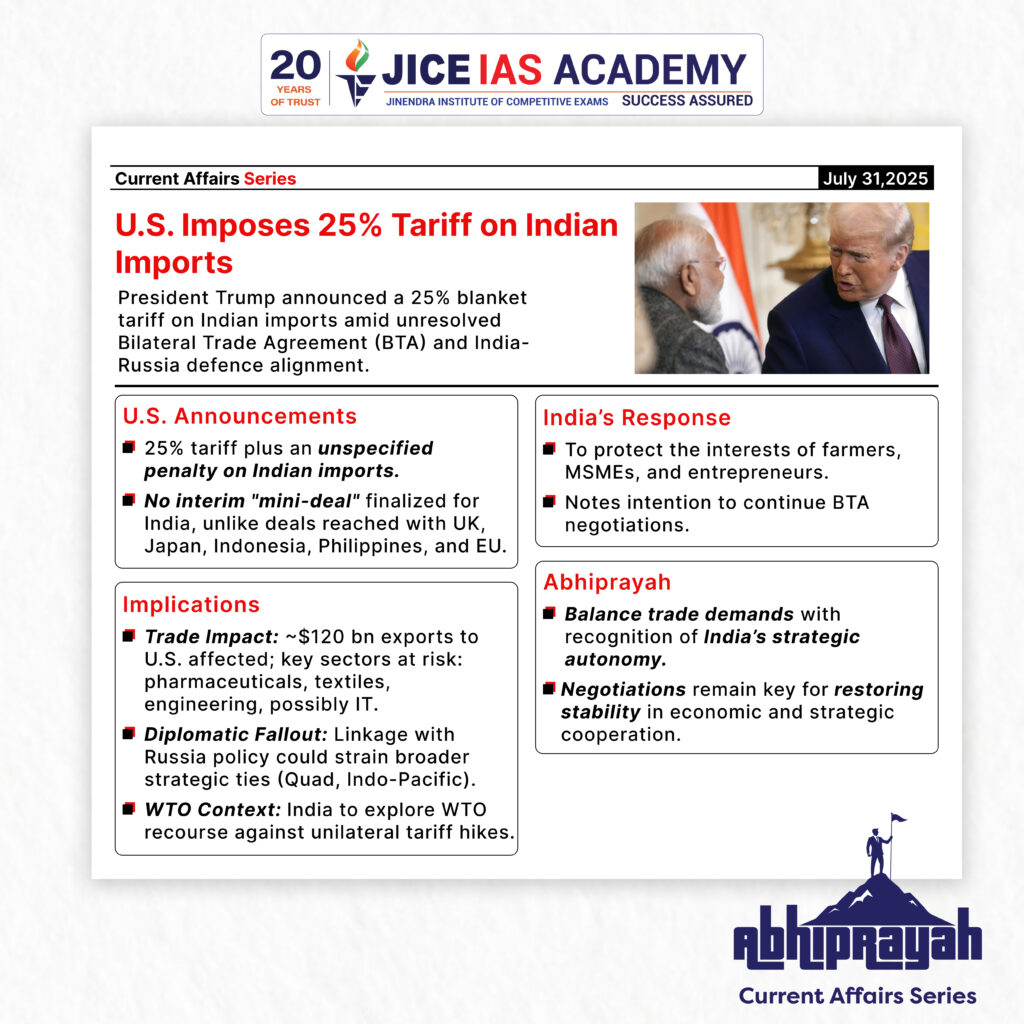
UPSC CURRENT AFFAIRS – 31st July 2025 Home / U.S. Imposes 25% Tariff on Indian Imports Why in News? The U.S. imposed a 25% tariff on Indian imports from August 1, 2025, citing India’s high trade barriers and defence ties with Russia. Introduction On July 30, 2025, U.S. President Donald Trump announced a 25% tariff on all imports from India, citing a range of strategic and trade-related concerns. This decision comes amidst ongoing but unresolved bilateral trade negotiations and follows a series of similar tariff moves against several U.S. trading partners. Background of U.S.-India Trade Relations Trade Tensions and Tariff Disputes: Trade relations between the two nations have seen fluctuating tensions over tariffs, market access, and regulatory barriers. India has been accused by the U.S. of high tariff rates and non-monetary trade barriers, particularly impacting American agricultural and pharmaceutical exports. Energy and Defence Dealings with Russia: President Trump criticized India’s continued military and energy procurement from Russia, especially at a time when the West is trying to isolate Russia over its actions in Ukraine. Bilateral Trade Agreement (BTA): Negotiations for a comprehensive BTA have been ongoing since February 2025, with leaders indicating a possible conclusion by Fall 2025. However, no mini-deal has been finalized. Key Announcements by the U.S. 25% Tariff + Additional Penalty Effective from August 1, 2025. The stated reasons: High Indian tariffs. Non-monetary trade barriers (“strenuous and obnoxious”). India’s major energy and military trade with Russia. The penalty component remains unspecified, adding uncertainty for Indian exporters. No “Mini-Deal” Finalized Despite negotiations, no interim relief has been agreed upon. Statements by U.S. Trade Representative Jamieson Greer on July 28 indicated that talks may extend beyond the August 1 deadline. India’s Response Ministry of Commerce and Industry Statement India is “studying the implications” of the U.S. announcement. Reaffirmed commitment to a balanced and mutually beneficial trade agreement. Stated intention to protect national interests, especially concerning: Farmers MSMEs Entrepreneurs Reference to UK Agreement Cited India’s successful negotiation of the Comprehensive Economic and Trade Agreement (CETA) with the UK as a model of how India secures its interests in trade pacts. Retaliatory Tariffs and Global Trade Context In April 2025, Trump had announced “Liberation Day tariffs” on several countries, citing trade imbalances. “Liberation Day Tariffs” is a term coined by U.S. President Donald Trump in April 2025 to describe a retaliatory trade measure taken by the United States. It refers to a blanket tariff policy where the U.S. imposed increased import duties on goods from countries that, according to the U.S., maintained unfair trade practices—especially high tariffs and non-tariff barriers on American products. A 90-day pause was initiated to allow for bilateral deals, later extended to August 1. Countries That Have Concluded Deals with the U.S. Country New Tariff Rate Earlier Rate Key Sector Benefits United Kingdom 10% (Cars) 27.5% Tariff removal on aerospace exports Japan 15% ~25% Broader tariff cuts Indonesia 19% ~25% Bilateral deal concluded Philippines 19% ~25% Equalized tariffs European Union 15% Varied Sectoral adjustments India is not among the countries that concluded a mini-deal, reflecting ongoing negotiation deadlocks. Major Issues in India-U.S. Trade Talks Issue U.S. Position Indian Position Agricultural Market Access Demands lower tariffs, especially on dairy Concerns over domestic farmers’ livelihoods Medical Devices Wants price de-regulation India prefers price caps to ensure affordability ICT Products Seeks removal of import duties India imposes duties for domestic production Defense and Strategic Trade Critical of India’s Russia ties India follows strategic autonomy Implications for India Trade Impact Indian exports to the U.S. (~$120 billion in 2024–25) may face increased costs and reduced competitiveness. Sectors likely to be affected: Pharmaceuticals Textiles Engineering goods IT services (if included in non-tariff measures) Diplomatic Fallout Risk of geopolitical tension due to linking tariffs with India’s Russia policy. Could complicate strategic alignment under the Quad or Indo-Pacific cooperation. WTO and Multilateralism Raises concerns about unilateral tariff actions by the U.S. India may consider filing a case at the WTO if the penalty is seen as violating trade norms. Way Forward For India Continue negotiations for a fair trade deal, safeguarding sensitive sectors. Seek clarity on the undefined “penalty”. Diversify export markets to reduce dependence on the U.S. For the U.S. Recognize India’s strategic autonomy in defense procurement. Balance trade concerns with geopolitical cooperation in Asia-Pacific. For Both Work towards resolving disputes through dialogue and mutual accommodation. Leverage ongoing strategic engagements to buffer trade tensions. Conclusion The imposition of a 25% tariff by the U.S. marks a critical moment in Indo-U.S. trade relations, with broader strategic and economic ramifications. While negotiations are expected to continue, both countries must strive to reconcile their economic interests with their strategic partnership to avoid long-term disruption. Introduction Economic Implications For Indian Exporters These reforms reduce transaction costs and compliance hurdles Encourage a more competitive and efficient export environment Promote value addition in key sectors like leather For Tamil Nadu The reforms particularly benefit the state’s leather industry, a major contributor to employment and exports Boost the marketability of GI-tagged E.I. leather, enhancing rural and traditional industries For Trade Policy These decisions indicate a shift from regulatory controls to policy facilitation Reinforce the goals of Make in India, Atmanirbhar Bharat, and India’s ambition to become a leading export power Recently, BVR Subrahmanyam, CEO of NITI Aayog, claimed that India has overtaken Japan to become the fourth-largest economy in the world, citing data from the International Monetary Fund (IMF). India’s rank as the world’s largest economy varies by measure—nominal GDP or purchasing power parity (PPP)—each with key implications for economic analysis. Significance and Applications
India–UAE Joint Defence Cooperation

UPSC CURRENT AFFAIRS – 31st July 2025 Home / India–UAE Joint Defence Cooperation Why in News? India and the UAE held the 13th Joint Defence Cooperation Committee (JDCC) meeting in New Delhi on July 30, 2025. Introduction The 13th meeting of the India-UAE Joint Defence Cooperation Committee (JDCC) was held in New Delhi on July 30, 2025, at the Secretary level for the first time, marking a significant milestone in bilateral defence engagement. The meeting underscores the deepening defence ties between the two countries under the broader framework of the Comprehensive Strategic Partnership established in 2015. Key Participants The Piplodi school building was not classified as “in poor condition”, suggesting that the monitoring and audit mechanisms are insufficient to detect latent structural vulnerabilities. Rajasthan has over 70,000 government schools catering to nearly 84 lakh students, primarily from poor and marginalised backgrounds. According to the UDISE 2023-24 data, around 8,000 schools were identified as being in poor condition. However, the Jhalawar school’s collapse shows that the real number may be higher or misdiagnosed. Though ₹650 crore was allocated over two budgets to improve school infrastructure, government inefficiencies and lack of execution meant that results on the ground were negligible. Systemic Issues in Government Schooling India: Defence Secretary Rajesh Kumar Singh UAE: Under Secretary of Defence Lieutenant-General Ibrahim Nasser M. Al Alawi, leading a high-level defence delegation Major Outcomes of the Meeting Elevation of Defence Cooperation Both sides reaffirmed their commitment to strengthen defence ties. Agreed to elevate defence cooperation to match the growing momentum in trade, investment, and social relations. Enhanced Military Training Cooperation India and UAE discussed respective training requirements. India offered customised training programmes based on UAE’s needs. Deliberations held to deepen military-to-military training exchanges. Maritime Security Collaboration Agreement to enhance real-time information sharing for maritime domain awareness. Aimed at ensuring maritime security and safety, especially in the Indian Ocean Region (IOR) and the Persian Gulf. Joint Manufacturing and Defence Industrial Collaboration Emphasis on joint defence manufacturing initiatives. Model highlighted: ICOMM (India)–CARACAL (UAE) collaboration for small arms production. Discussion on co-development of next-generation defence technologies, including in areas such as artificial intelligence (AI). Shipbuilding and Platform Maintenance Exploration of opportunities in shipbuilding, platform upgrades, refits, and maintenance of commonly used defence systems. Institutional Cooperation A Memorandum of Understanding (MoU) was signed between the: Indian Coast Guard (ICG) and UAE National Guard Command (UAE NGC) The MoU focuses on maritime safety and security cooperation. Strategic Importance of India-UAE Defence Ties Geostrategic Location: UAE’s position in the Gulf region and India’s presence in the Indian Ocean make both countries critical partners for regional maritime security. Energy and Trade Security: Defence cooperation complements economic ties and protects strategic interests, including energy transport routes and expanding trade corridors. Counterterrorism and Cybersecurity: Cooperation extends to emerging security threats like cyberwarfare, drones, and terrorism, especially in the West Asian context. Way Forward India’s participation in the Dubai Air Show in November 2025 will further consolidate defence diplomacy. Continued emphasis on technology co-development, training interoperability, and logistics sharing. Potential integration of private sector defence firms from both nations in collaborative projects. Introduction Economic Implications For Indian Exporters These reforms reduce transaction costs and compliance hurdles Encourage a more competitive and efficient export environment Promote value addition in key sectors like leather For Tamil Nadu The reforms particularly benefit the state’s leather industry, a major contributor to employment and exports Boost the marketability of GI-tagged E.I. leather, enhancing rural and traditional industries For Trade Policy These decisions indicate a shift from regulatory controls to policy facilitation Reinforce the goals of Make in India, Atmanirbhar Bharat, and India’s ambition to become a leading export power Recently, BVR Subrahmanyam, CEO of NITI Aayog, claimed that India has overtaken Japan to become the fourth-largest economy in the world, citing data from the International Monetary Fund (IMF). India’s rank as the world’s largest economy varies by measure—nominal GDP or purchasing power parity (PPP)—each with key implications for economic analysis. Significance and Applications
Jhalawar School Tragedy Highlights Public School Infrastructure Crisis

UPSC CURRENT AFFAIRS – 30th July 2025 Home / Jhalawar School Tragedy Highlights Public School Infrastructure Crisis Why in News? The collapse of a school building in Rajasthan’s Jhalawar district exposed the severe neglect of government school infrastructure. Introduction A tragic incident at the Piplodi Government School in Rajasthan’s Jhalawar district led to the death of seven students from Classes 6 and 7, mostly from tribal communities, after a part of the school building collapsed during morning assembly. A similar incident was narrowly avoided in Nagaur district the next day, only because it was a holiday. These incidents have thrown a sharp spotlight on the deteriorating infrastructure of government schools in India, especially in underserved and marginalised regions. Immediate Context and Structural Neglect The Piplodi school building was not classified as “in poor condition”, suggesting that the monitoring and audit mechanisms are insufficient to detect latent structural vulnerabilities. Rajasthan has over 70,000 government schools catering to nearly 84 lakh students, primarily from poor and marginalised backgrounds. According to the UDISE 2023-24 data, around 8,000 schools were identified as being in poor condition. However, the Jhalawar school’s collapse shows that the real number may be higher or misdiagnosed. Though ₹650 crore was allocated over two budgets to improve school infrastructure, government inefficiencies and lack of execution meant that results on the ground were negligible. Systemic Issues in Government Schooling Neglect of Infrastructure as a Core Priority Basic school infrastructure (safe buildings, toilets, classrooms, drinking water) is foundational to education. Yet, state governments and even the Centre have deprioritized such investment, focusing more on symbolic or high-visibility projects like “model schools” or digital initiatives. Failure of Monitoring and Accountability The collapse of a school not flagged as “poorly maintained” reflects failure in inspection protocols, lack of preventive maintenance, and weak accountability mechanisms in the bureaucracy. Demographic and Social Impact Most students affected were from tribal and disadvantaged communities, indicating how inequality of access and safety still persists. Poor school environments disproportionately affect children from Scheduled Tribes (STs), Scheduled Castes (SCs) and economically weaker sections, compounding intergenerational disadvantages. Policy Concerns: NEP 2020 and Ground Reality The National Education Policy (NEP) 2020 had envisioned increasing public investment in education from 4.6% to 6% of GDP, with one-time infrastructure investments being a priority. Five years after NEP, there has been little actual increase in education spending, and basic infrastructure remains neglected. Instead, policy direction has increasingly moved towards: Privatisation and Public-Private Partnerships (PPP) Self-financing models in higher education Reduced emphasis on public provisioning of basic schooling Critique: While privatisation may support higher education, basic school education is a public good — and must remain a constitutional duty of the State under Article 21A (Right to Education). Key Implications Safety and Dignity in Schools Education cannot be delivered meaningfully without providing safe physical spaces. Incidents like the Jhalawar tragedy directly violate children’s right to life and education. Foundational Learning at Risk Foundational Literacy and Numeracy (FLN), a central goal of the NIPUN Bharat Mission, cannot succeed without safe, functional, and well-resourced schools. Teacher motivation and student attendance are directly influenced by basic infrastructure. Loss of Trust in Public Education Such incidents erode parental trust in government schools, further encouraging migration to low-cost private schools — which may also be unregulated or unsafe. Reaping Demographic Dividend India’s demographic dividend is a time-sensitive opportunity. Without a robust public education system to harness young potential, this dividend could turn into a demographic burden. Way Forward Urgent Safety Audit of All Schools; Conduct third-party structural safety audits for all government schools, prioritising older and rural structures. Infrastructure Modernisation Mission: Launch a National School Infrastructure Renewal Mission on the lines of PMGSY or Jal Jeevan Mission, with dedicated funds, timelines, and transparent reporting. Increased Education Spending: Actualise NEP’s vision by increasing public spending to 6% of GDP, with earmarked funds for infrastructure, teacher recruitment, and maintenance. Community Monitoring and Decentralised Accountability: Empower School Management Committees (SMCs) to monitor infrastructure and escalate issues, with clear response timelines. Equity in Education: Focus on tribal, SC, and rural populations, ensuring equity in access to quality and safe education — aligning with SDG 4 (Quality Education). Introduction Economic Implications For Indian Exporters These reforms reduce transaction costs and compliance hurdles Encourage a more competitive and efficient export environment Promote value addition in key sectors like leather For Tamil Nadu The reforms particularly benefit the state’s leather industry, a major contributor to employment and exports Boost the marketability of GI-tagged E.I. leather, enhancing rural and traditional industries For Trade Policy These decisions indicate a shift from regulatory controls to policy facilitation Reinforce the goals of Make in India, Atmanirbhar Bharat, and India’s ambition to become a leading export power Recently, BVR Subrahmanyam, CEO of NITI Aayog, claimed that India has overtaken Japan to become the fourth-largest economy in the world, citing data from the International Monetary Fund (IMF). India’s rank as the world’s largest economy varies by measure—nominal GDP or purchasing power parity (PPP)—each with key implications for economic analysis. Significance and Applications
Rediscovery of world smallest snake- Barbados Threadsnake
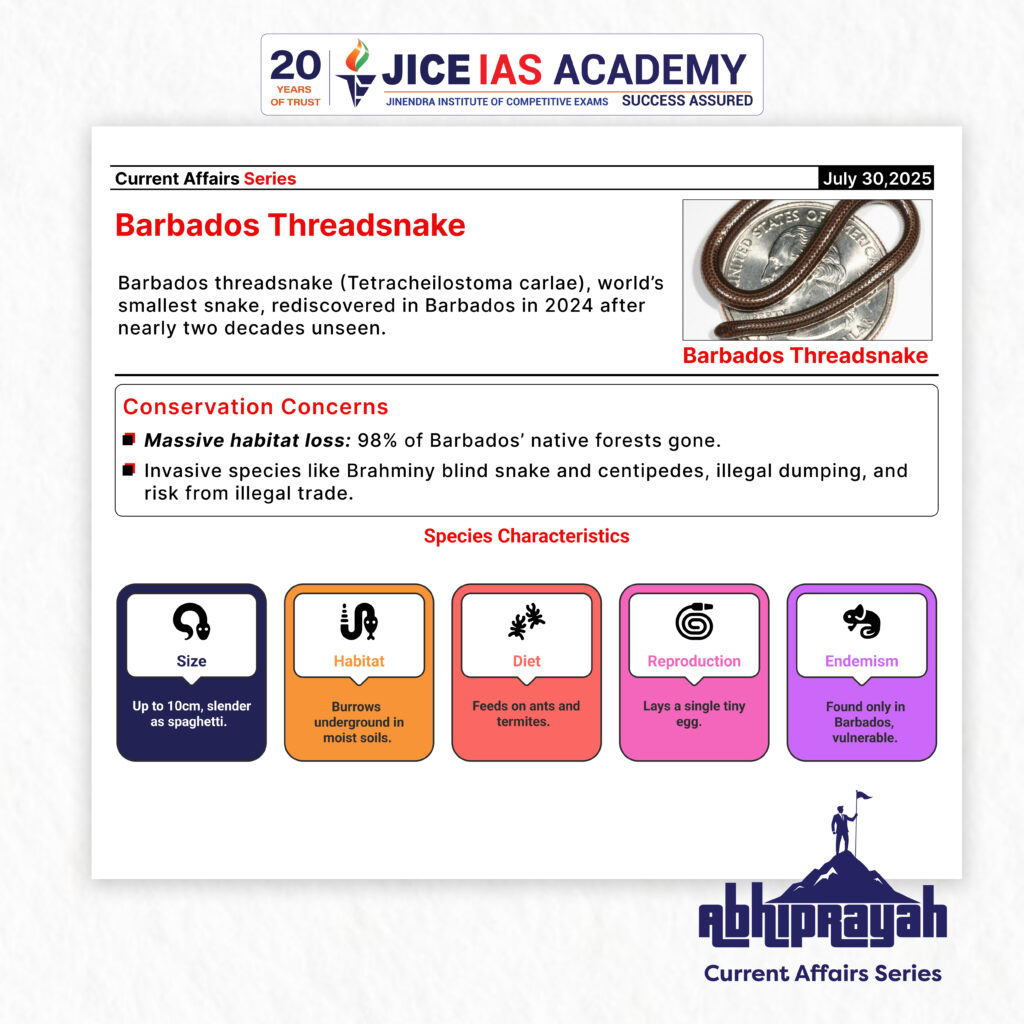
UPSC CURRENT AFFAIRS – 30th July 2025 Home / Rediscovery of world smallest snake- Barbados Threadsnake Why in News? The Barbados threadsnake, the world’s smallest-known snake, was rediscovered in 2024 in Barbados after being unspotted for nearly two decades. Introduction In a remarkable rediscovery that has excited conservationists worldwide, the Barbados threadsnake (Tetracheilostoma carlae) — the world’s smallest-known snake — has been found again in its native habitat in Barbados after being unseen for nearly two decades. The event marks a major victory for conservation biology and highlights the fragile nature of endemic island species. Background of the Species Scientific Name: Tetracheilostoma carlae Discovered: First identified and formally described in 2008 by S. Blair Hedges, a professor at Temple University. Named after: Carla, the wife of the discoverer. Size: Fully grown adults reach only up to 10 cm (4 inches) — small enough to rest on a coin. Habitat: Burrows underground, prefers moist soils with leaf litter. Diet: Feeds on ants and termites. Reproduction: Lays a single slender egg — unusual among snakes. Scientific and Conservation Significance Confirmation of Survival The snake was feared extinct, having not been seen in the wild since 2006. It was among 4,800 species listed by Re:wild as “lost to science”. Species Rarity and Challenges The Barbados threadsnake is blind, cryptic, and extremely elusive. It has been misidentified in the past, including confusion with the Brahminy blind snake (Indotyphlops braminus), a common invasive species. Ecological Role Plays a role in controlling ant and termite populations. Serves as an indicator species of soil health and forest ecosystem integrity. Endemism and Habitat Loss Found only in Barbados, making it critically vulnerable to habitat destruction. Barbados has lost most of its original forest cover — among the worst in the Caribbean, second only to Haiti. Introduction Economic Implications For Indian Exporters These reforms reduce transaction costs and compliance hurdles Encourage a more competitive and efficient export environment Promote value addition in key sectors like leather For Tamil Nadu The reforms particularly benefit the state’s leather industry, a major contributor to employment and exports Boost the marketability of GI-tagged E.I. leather, enhancing rural and traditional industries For Trade Policy These decisions indicate a shift from regulatory controls to policy facilitation Reinforce the goals of Make in India, Atmanirbhar Bharat, and India’s ambition to become a leading export power Recently, BVR Subrahmanyam, CEO of NITI Aayog, claimed that India has overtaken Japan to become the fourth-largest economy in the world, citing data from the International Monetary Fund (IMF). India’s rank as the world’s largest economy varies by measure—nominal GDP or purchasing power parity (PPP)—each with key implications for economic analysis. Significance and Applications
Assam’s ‘Hargila Army’ Model adopted in Cambodia’s Tonle Sap Biosphere Reserve
UPSC CURRENT AFFAIRS – 30th July 2025 Home / Assam’s ‘Hargila Army’ Model adopted in Cambodia’s Tonle Sap Biosphere Reserve Why in News? The Hargila Army has been adapted for community-led conservation in Cambodia’s Tonle Sap Biosphere Reserve. Introduction A unique, community-led conservation model from Assam, India—the Hargila Army, led by conservationist Purnima Devi Barman—is now inspiring global wetland conservation efforts. The model has been adapted for a transformative initiative in Cambodia’s Tonle Sap Biosphere Reserve, particularly in the Prek Toal Bird Sanctuary, a designated Ramsar site known for its rich birdlife. Background: The Hargila Army Model (Assam, India) What is the Hargila Army? A women-led grassroots conservation movement initiated in Assam to protect the endangered Greater Adjutant Stork (Leptoptilos dubius), locally known as Hargila. Founded by Purnima Devi Barman, a wildlife biologist at Aaranyak and UNEP Champion of the Earth. Key Features of the Assam Model: Women empowerment through conservation leadership. Community engagement—conservation integrated with cultural traditions, education, and livelihood support. Activities like folk songs, textile art, community events, and awareness campaigns used to destigmatize the bird and make it a source of pride. Impact in Assam: Significant increase in local nesting populations of the Greater Adjutant. Changed attitudes from viewing the bird as ominous to a revered species. Promoted women’s leadership in ecological protection. Cambodian Adaptation: Tonle Sap Biosphere Reserve Initiative About the Region: Tonle Sap Lake is Southeast Asia’s largest freshwater lake and a UNESCO Biosphere Reserve. Prek Toal Bird Sanctuary, part of the Ramsar site, is a vital habitat for large waterbirds including storks. The New Initiative: Hosted by the Wildlife Conservation Society (WCS) Cambodia. Involves training 20 Cambodian women conservationists and park rangers in the Hargila Army model. Focus: Build community-based, women-led conservation leadership. New Global Network: Sisters and Brothers of Storks A collaborative global network launched during the Cambodia training programme. Aims to: Facilitate cross-border knowledge sharing. Expand community-led conservation for all stork species globally. Support empowerment of local and indigenous communities, especially women. Significance and Implications Conservation Impact Demonstrates the replicability of successful local models across geographies. Promotes community ownership of conservation goals. Gender Empowerment Positions women not just as participants but as leaders and guardians of biodiversity. Merges ecological science with traditional knowledge and cultural values. Cultural Diplomacy and South-South Cooperation Highlights India’s soft power and leadership in sustainable development and biodiversity protection. Strengthens India-Cambodia environmental cooperation under South-South exchanges. Alignment with Global Goals Supports: UN SDG 5 (Gender Equality), SDG 13 (Climate Action), SDG 15 (Life on Land), Convention on Biological Diversity (CBD). Introduction Economic Implications For Indian Exporters These reforms reduce transaction costs and compliance hurdles Encourage a more competitive and efficient export environment Promote value addition in key sectors like leather For Tamil Nadu The reforms particularly benefit the state’s leather industry, a major contributor to employment and exports Boost the marketability of GI-tagged E.I. leather, enhancing rural and traditional industries For Trade Policy These decisions indicate a shift from regulatory controls to policy facilitation Reinforce the goals of Make in India, Atmanirbhar Bharat, and India’s ambition to become a leading export power Recently, BVR Subrahmanyam, CEO of NITI Aayog, claimed that India has overtaken Japan to become the fourth-largest economy in the world, citing data from the International Monetary Fund (IMF). India’s rank as the world’s largest economy varies by measure—nominal GDP or purchasing power parity (PPP)—each with key implications for economic analysis. Significance and Applications
Grassland Bird Census in Kaziranga

UPSC CURRENT AFFAIRS – 30th July 2025 Home / Grassland Bird Census in Kaziranga Why in News? The first-ever Grassland Bird Census in Kaziranga National Park (2025) used passive acoustic monitoring to document rare and endemic bird species. Introduction In his Mann Ki Baat address, Prime Minister Narendra Modi highlighted a significant conservation initiative—the first-ever Grassland Bird Census conducted in Kaziranga National Park, Assam. The census is notable for its application of acoustic technology and its focus on recording and understanding the distribution of grassland-dependent bird species, many of which are threatened or endemic. What is the Grassland Bird Census in Kaziranga? The census was conducted between March 18 and May 25, 2025, within the boundaries of Kaziranga National Park. It aimed to document the presence, diversity, and relative abundance of bird species that inhabit the park’s grassland ecosystems. The initiative was led by Chiranjib Bora, a doctoral scholar studying the Black-breasted Parrotbill, a threatened grassland species. Bora received the INSPIRE fellowship from the Department of Science and Technology, Government of India, which supported the use of passive acoustic monitoring technology in the field. Realizing the broader conservation potential, the research team expanded the effort to include a systematic survey of all grassland birds in the park. This was particularly relevant since approximately 70 percent of Kaziranga’s landscape consists of grasslands. Objectives of the Census: To establish a baseline inventory of grassland bird species inhabiting the park. To focus conservation attention on rare and vulnerable species, particularly that endemic to the Brahmaputra floodplain. To assess the ecological health of the park’s grassland ecosystems through the presence or absence of indicator bird species. The census prioritized ten species considered globally threatened or endemic to the floodplain, including the Bengal Florican, Swamp Francolin, Finn’s Weaver, Swamp Grass Babbler, Jerdon’s Babbler, Slender-billed Babbler, Black-breasted Parrotbill, Marsh Babbler, Bristled Grassbird, and Indian Grassbird. Key Findings: The survey documented 43 species of grassland birds, including: 1 Critically Endangered species (Bengal Florican) 2 Endangered species 6 Vulnerable species (as per the IUCN Red List) A particularly significant discovery was the identification of a breeding colony of over 85 nests of the Finn’s Weaver, a rare and endangered species endemic to the Brahmaputra floodplains. Prior to this survey, its nesting sites in the wild were largely undocumented. Ecological Significance: Grassland birds serve as bioindicators of habitat quality. Their presence or absence can reveal much about the health and integrity of ecosystems. The continued survival of these birds signifies that the habitat is still supporting species with highly specialized ecological niches. Conversely, their decline signals deterioration or transformation of grassland habitats. Threats to Grassland Birds and Their Habitats: Habitat Loss: Over the last four decades, Assam has lost nearly 70 percent of its grasslands. This is primarily due to: Overgrazing by domestic livestock Conversion of grasslands into agricultural fields Encroachment and land-use change Ecological Succession: In the absence of active management, grasslands tend to naturally transition into woodlands or scrub forests, a process known as ecological succession. While this is a natural phenomenon, it poses a direct threat to grassland specialist species, which cannot survive in altered habitats. Climate Change: Climate-related changes, including shifts in rainfall and temperature patterns, may be contributing to the decline of certain species. For instance, the Bengal Florican, once seen more frequently, was recorded only once or twice during this census. Further studies are required to determine the specific drivers of such population declines. Introduction Economic Implications For Indian Exporters These reforms reduce transaction costs and compliance hurdles Encourage a more competitive and efficient export environment Promote value addition in key sectors like leather For Tamil Nadu The reforms particularly benefit the state’s leather industry, a major contributor to employment and exports Boost the marketability of GI-tagged E.I. leather, enhancing rural and traditional industries For Trade Policy These decisions indicate a shift from regulatory controls to policy facilitation Reinforce the goals of Make in India, Atmanirbhar Bharat, and India’s ambition to become a leading export power Recently, BVR Subrahmanyam, CEO of NITI Aayog, claimed that India has overtaken Japan to become the fourth-largest economy in the world, citing data from the International Monetary Fund (IMF). India’s rank as the world’s largest economy varies by measure—nominal GDP or purchasing power parity (PPP)—each with key implications for economic analysis. Significance and Applications
Gini Index and India’s Equality Paradox
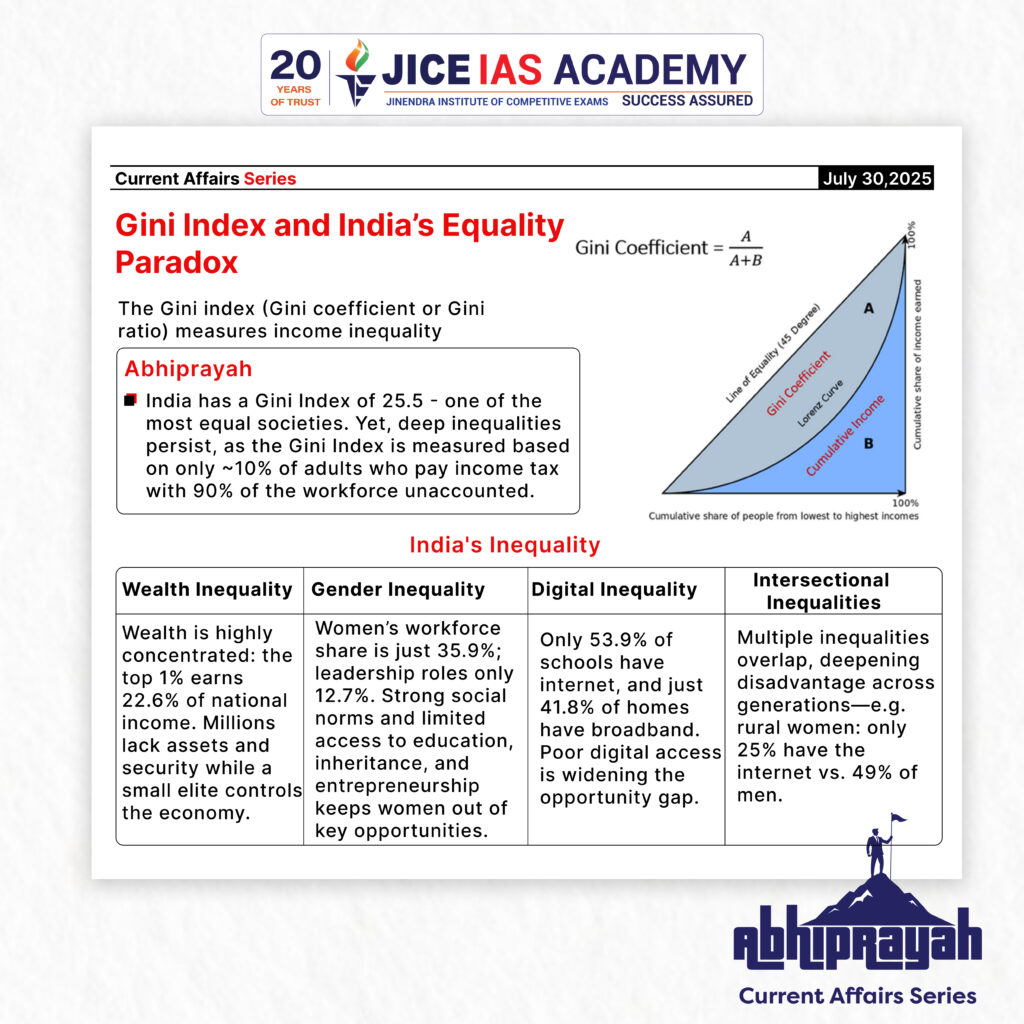
UPSC CURRENT AFFAIRS – 30th July 2025 Home / Gini Index and India’s Equality Paradox Why in News? Despite being ranked among the world’s most equal societies by the Gini Index, India continues to grapple with deep-rooted economic, gender, digital, and educational inequalities. Introduction The Gini Index has recently ranked India among the world’s most equal societies, assigning it a score of 5. This places India in the category of moderately low inequality, an assessment that, on the surface, may seem like an achievement worthy of celebration. However, when juxtaposed with the lived experiences of millions across India’s urban and rural landscapes, this statistical portrayal appears disconnected from reality. Despite the Gini Index’s implications of relative equality, Indian society remains deeply fractured by structural, economic, social, gender, and technological inequalities. These inequalities manifest not only in hard data but also in the everyday experiences of people, suggesting that equality on paper does not translate to equality in practice. Questioning the Gini Index: Methodological Limitations The Gini Index calculates inequality based primarily on income distribution, relying heavily on tax data. However, this methodology poses a fundamental limitation in the Indian context. A significant portion of India’s workforce is engaged in the informal sector, which remains outside the tax net. In fact, only around 10% of the adult population contributes to tax data used in such measurements. This limitation means that a large segment of the population — especially those earning below taxable thresholds or engaged in informal employment — is excluded from statistical measurement, leading to underreporting of real income disparities. Consequently, the apparent equality suggested by the Gini Index may be less a reflection of reality and more a by-product of flawed measurement. Wealth Inequality: One of the most glaring forms of inequality in India is wealth inequality. This is vividly illustrated by everyday scenes in Indian cities: a chauffeur earning ₹3 lakh annually drives a luxury car worth ₹30 lakh owned by a wealthy employer. This example illustrates how wealth is concentrated in the hands of a few, while a vast population struggles to meet basic needs. The ‘Income and Wealth Inequality in India, 1922–2023’ report highlights that in 2022–23, the top 1% of India’s population earned 22.6% of the national income. This concentration of wealth among the elite, combined with poor formal employment opportunities and low wage levels, indicates a deep-rooted structural imbalance. The lack of wealth data itself becomes a reflection of inequality, as those earning below the taxable threshold — often the poorest — are statistically invisible. Gender Inequality: Gender inequality in India continues to be a major obstacle to social justice and economic development. Women remain underrepresented in the workforce, with only 9% participation, and this figure drops dramatically at leadership levels — only 12.7% of leadership positions were held by women in 2024. Even in India’s thriving startup ecosystem, which is the third largest in the world, women-led ventures account for a mere 5% of active startups. Traditional social norms restrict women’s access to family resources, education, and inheritance, further limiting their upward mobility. Thus, gender inequality is not only a product of economic exclusion but also of entrenched social norms and cultural practices. Digital Inequality: As technology becomes increasingly essential to daily life — enabling access to banking, education, employment, and governance — digital inequality emerges as a critical concern. Despite improvements in digital infrastructure, access remains highly unequal. For instance, only 7% of schools in India have functional computers, and 53.9% have Internet connectivity. This digital gap severely affects students from marginalized socio-economic backgrounds, who are denied critical digital skills necessary for higher education and jobs. The digital divide also intersects with educational inequality. When schools switch to virtual modes, such as during periods of high pollution in Delhi, only students with broadband access — just 8% of households — can continue learning. Those without access are pushed into low-skill jobs, perpetuating a cycle of poverty and exclusion. Intersecting Inequalities Inequality in one area often exacerbates inequality in another. This phenomenon is especially evident when analyzing intersectional inequalities — the combined effect of multiple forms of disadvantage. For example, digital inequality disproportionately affects women, especially in rural areas. Only 25% of rural women have Internet access compared to 49% of rural men. The Internet is not just a tool for information — it is a gateway to empowerment. It facilitates access to financial services, job markets, education, and government schemes. Women who lack access to the Internet are systematically denied these opportunities, deepening both digital and gender inequalities. A Reality Check: Are We Truly an Equal Society? While international rankings may suggest that India is moving towards greater equality, these rankings must be interpreted with caution. The reality on the ground tells a different story. For a society to be genuinely equal, it must ensure equal access to opportunities, resources, and decision-making power for all its citizens. The existing forms of inequality — wealth, gender, educational, and digital — continue to intersect and reinforce each other, keeping large sections of the population trapped in poverty and exclusion. Unless these foundational inequalities are addressed, statistical claims of equality will remain hollow. Introduction Economic Implications For Indian Exporters These reforms reduce transaction costs and compliance hurdles Encourage a more competitive and efficient export environment Promote value addition in key sectors like leather For Tamil Nadu The reforms particularly benefit the state’s leather industry, a major contributor to employment and exports Boost the marketability of GI-tagged E.I. leather, enhancing rural and traditional industries For Trade Policy These decisions indicate a shift from regulatory controls to policy facilitation Reinforce the goals of Make in India, Atmanirbhar Bharat, and India’s ambition to become a leading export power Recently, BVR Subrahmanyam, CEO of NITI Aayog, claimed that India has overtaken Japan to become the fourth-largest economy in the world, citing data from the International Monetary Fund (IMF). India’s rank as the world’s largest economy varies by measure—nominal GDP or purchasing power parity (PPP)—each with key implications for
Delayed Famine Declaration in Gaza Amid Humanitarian Crisis
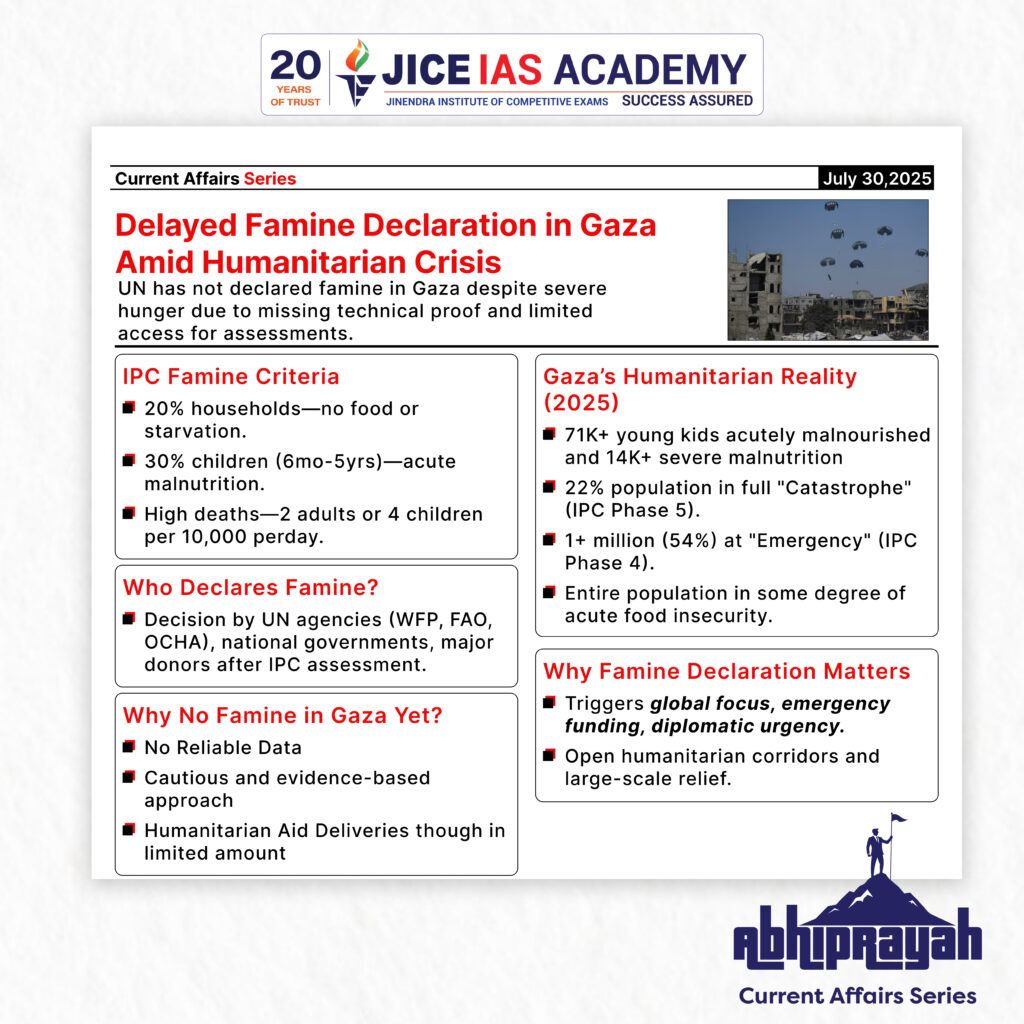
UPSC CURRENT AFFAIRS – 30th July 2025 Home / Delayed Famine Declaration in Gaza Amid Humanitarian Crisis Why in News? The United Nations has not declared a famine in Gaza, despite alarming food insecurity, due to unmet technical thresholds and lack of access for verification. Introduction Since early 2025, the humanitarian situation in the Gaza Strip has worsened dramatically. The region is witnessing widespread hunger, acute malnutrition, and rising civilian deaths. International concern is growing over the catastrophic food insecurity faced by the population. However, the United Nations has not yet formally declared a famine in Gaza. What Is a Famine and Who Declares It? Famine is not merely a condition of widespread hunger. It is an officially recognised humanitarian disaster that must meet specific, measurable criteria. The Integrated Food Security Phase Classification (IPC) is the global standard used to determine famine conditions. It was developed to bring consistency and technical rigour to the classification of food crises worldwide. Conditions Required for a Famine Declaration According to the IPC, all three of the following conditions must be confirmed for a famine to be declared: Extreme Food Shortages: At least 20 percent of households must be facing an extreme lack of food or effectively starving. High Levels of Acute Malnutrition: At least 30 percent of children aged between six months and five years must be suffering from acute malnutrition (also known as wasting, where children are dangerously underweight for their height). Elevated Mortality Rates: At least two adults or four children per 10,000 people must be dying every day due to starvation or the combined effects of malnutrition and disease. The IPC uses a five-phase scale to classify food security conditions: Phase 1 – Normal (Acceptable) Phase 2 – Stressed (Alert) Phase 3 – Crisis (Serious) Phase 4 – Emergency (Critical) Phase 5 – Catastrophe/Famine (Extremely Critical) Who Has the Authority to Declare a Famine? While the IPC provides the technical assessments, the actual declaration of famine usually involves a coordinated statement from multiple international actors, including: United Nations agencies such as the World Food Programme (WFP), the Food and Agriculture Organization (FAO), and the Office for the Coordination of Humanitarian Affairs (OCHA) National governments Major donor governments and international relief organisations Why a Famine Has Not Been Declared in Gaza? Despite compelling signs of a humanitarian catastrophe, Gaza has not yet been formally classified as being in a state of famine. This is due to several key factors: Lack of Access and Data Collection Due to the ongoing military conflict in Gaza, food security experts are unable to safely and comprehensively access large portions of the region. Critical infrastructure, including health clinics and monitoring systems, has been severely damaged. As a result, the data required to verify famine conditions cannot be reliably collected. The IPC demands strong evidence to justify such a grave declaration, and without verified data, the criteria for a formal famine declaration remain unmet. Caution in Issuing a Famine Declaration A famine declaration carries serious political, legal, and humanitarian consequences. It can shift the narrative of a conflict, invoke international intervention, and hold parties accountable. Therefore, the IPC follows a highly cautious and evidence-based approach to prevent the misuse or politicisation of the term. Declaring famine without robust, on-the-ground data could undermine the credibility of the system and complicate humanitarian operations. Ongoing but Limited Humanitarian Aid Deliveries Although highly restricted, some aid is still reaching Gaza. Approximately 4,500 aid trucks, facilitated by Israel and the UN, have entered the region since May 2025. In recent days, Israel has also allowed humanitarian air-drops and announced 10-hour pauses in military operations in some areas to enable aid distribution. While these measures are inadequate in scale, they indicate that there is not a complete absence of aid, which may affect the formal classification of famine. The Humanitarian Situation in Gaza Findings from IPC and UN Agencies The most recent analysis by the IPC and UN agencies paints a grim picture of Gaza’s food security: Approximately 71,000 children under the age of five are expected to be acutely malnourished between April 2025 and March 2026. Of these, around 14,100 children are projected to suffer from severe acute malnutrition. Nearly 17,000 pregnant and breastfeeding women will require treatment for acute malnutrition. Around 470,000 people—22 percent of Gaza’s population—are currently classified under IPC Phase 5 (Catastrophe). Over one million people, or 54 percent, are in IPC Phase 4 (Emergency). The remaining 24 percent of the population is in IPC Phase 3 (Crisis). This means the entire population of Gaza is projected to be in a state of acute food insecurity, ranging from Crisis to Catastrophe. Reports from UNRWA The United Nations Relief and Works Agency (UNRWA) has highlighted alarming details: One in every five children in Gaza City is suffering from malnutrition. UNRWA staff themselves are surviving on extremely limited food—sometimes only a bowl of lentils per day—causing many to faint while working. Over 6,000 aid trucks filled with food and medical supplies are waiting at the borders in Jordan and Egypt but are unable to enter due to access restrictions. Significance of Declaring Famine A formal declaration of famine has significant implications: It brings global attention and media focus to the crisis. It can unlock emergency funding and humanitarian aid from international donors. It forces international diplomatic engagement to open humanitarian corridors. It may lead to the deployment of relief teams and resources on a much larger scale. Despite the clear humanitarian emergency in Gaza, the absence of verified data and safe access for assessments has stalled this critical step. Current Obstacles to Humanitarian Relief From March to May 2025, Israel completely blocked all supplies into Gaza for 11 weeks. Since the blockade was partially lifted, aid trucks have resumed, but in limited numbers. As of July 2025, only about 250 trucks per week are entering Gaza, compared to 600 trucks per day during the ceasefire period before March. Over 900 Gazans have died while trying to access aid at distribution