Steel Tariffs as a Tool in Trade Wars

UPSC CURRENT AFFAIRS – 15 March 2025 Home / Steel Tariffs as a Tool in Trade Wars Introduction: The article explores the historical and contemporary significance of steel tariffs as a strategic tool in trade wars. It traces the use of steel tariffs from 1816 to the Trump administration, highlighting their role in protecting domestic industries and addressing trade imbalances. Why in News: Steel tariffs have been a contentious issue in global trade, particularly under the Trump administration, which imposed tariffs on steel imports to protect US industries. The topic is relevant for UPSC aspirants as it touches upon international trade, trade wars, and economic policies, making it important for GS Paper 2 (International Relations) and GS Paper 3 (Economy). Historical Context of Steel Tariffs: 1816 Tariff: The Tariff of 1816 was one of the first protective tariffs in the US, aimed at shielding nascent industries, including steel, from foreign competition after the War of 1812. 20th Century Tariffs: Throughout the 20th century, steel tariffs were used by various countries to protect domestic industries during periods of economic turmoil, such as the Great Depression and post-World War II reconstruction. Trump Administration (2018): In 2018, the Trump administration imposed 25% tariffs on steel imports under Section 232 of the Trade Expansion Act of 1962, citing national security concerns. Rationale for Steel Tariffs: Protecting Domestic Industries: Steel tariffs are used to protect domestic steel producers from cheap imports, ensuring the survival of a strategically important industry. National Security: Steel is a critical component for defense infrastructure, making its domestic production essential for national security. Addressing Trade Imbalances: Tariffs are often imposed to reduce trade deficits by making imports more expensive and encouraging domestic production. Political Tool: Steel tariffs can be used as a negotiating tool in trade discussions, leveraging economic pressure to achieve favorable terms. Impact of Steel Tariffs: Positive Impacts: Job Creation: Tariffs can protect jobs in the steel industry and related sectors. Industrial Growth: Encourages investment in domestic steel production and infrastructure. Negative Impacts: Trade Retaliation: Other countries may impose retaliatory tariffs, leading to trade wars and reduced global trade. Higher Costs: Increased steel prices can raise costs for industries reliant on steel, such as automobiles and construction. Inflation: Higher production costs can lead to inflation, affecting the broader economy. Global Reactions to Steel Tariffs: Retaliatory Measures: Countries like the European Union, China, and India imposed retaliatory tariffs on US goods in response to the 2018 steel tariffs. WTO Disputes: Several countries challenged the US steel tariffs at the World Trade Organization (WTO), arguing that they violated international trade rules. Bilateral Negotiations: The US used steel tariffs as leverage in bilateral trade negotiations, such as the USMCA (United States-Mexico-Canada Agreement). How India Can Deal with US Retaliatory Steel Tariffs Bilateral Negotiations & WTO Appeal – Engage in talks with the US for exemptions and dispute tariffs at the WTO. Diversify Export Markets – Expand steel exports to EU, ASEAN, and Middle East to reduce reliance on the US. Boost Domestic Demand – Increase steel use in infrastructure, railways, and defense projects. Invest in High-Value Steel – Focus on specialty and alloy steel to stay competitive globally. Strategic Counter-Tariffs – Impose targeted tariffs on US goods (agriculture, electronics, etc.) as leverage. Lower Production Costs – Reduce raw material, logistics, and electricity costs to improve global competitiveness. Conclusion: Steel tariffs have been a long-standing tool in trade policy, used to protect domestic industries, address trade imbalances, and serve as a negotiating tool in international trade. While they offer short-term benefits for domestic industries, their long-term impact can lead to trade wars, higher costs, and global economic instability.
India-US Trade Relations – Balancing Flexibility with Firmness

UPSC CURRENT AFFAIRS – 15 March 2025 Home / India-US Trade Relations – Balancing Flexibility with Firmness Introduction: The article discusses the evolving India-US trade relationship, emphasizing the need to balance flexibility with firmness to achieve mutual benefits. It highlights the strategic importance of this relationship in the context of global trade dynamics and geopolitical shifts. Why in News: India and the US are key trade partners, with bilateral trade exceeding $150 billion in 2024. The article is relevant for UPSC aspirants as it touches upon international trade, economic diplomacy, and India’s foreign policy, making it important for GS Paper 2 (International Relations) and GS Paper 3 (Economy). Current State of India-US Trade Relations: Trade Volume: Bilateral trade between India and the US has grown significantly, reaching $150 billion in 2024. The US is India’s largest trading partner, while India is the 9th largest trading partner for the US. Key Sectors: Information Technology (IT): Indian IT companies contribute significantly to the US economy. Pharmaceuticals: India is a major supplier of generic drugs to the US. Defense and Aerospace: Increasing collaboration in defense manufacturing and technology transfer. Challenges in India-US Trade: Trade Imbalance: The US has a trade deficit with India, which has been a point of contention in negotiations. Market Access Issues: US demands for greater market access in sectors like agriculture and dairy face resistance due to India’s domestic concerns. Intellectual Property Rights (IPR): The US has raised concerns about India’s IPR regime, particularly in the pharmaceutical sector. Tariffs and Non-Tariff Barriers: Both countries have imposed tariffs and non-tariff barriers on certain goods, leading to trade disputes. Opportunities for Collaboration: Supply Chain Diversification: The US and India can collaborate to diversify global supply chains, reducing dependence on China. Technology Transfer: Increased collaboration in emerging technologies like 5G, artificial intelligence (AI), and quantum computing. Renewable Energy: Joint efforts in solar energy, wind energy, and energy storage can strengthen trade ties. Defense and Strategic Partnership: The Indo-Pacific strategy and defense agreements like COMCASA and BECA provide a strong foundation for trade and strategic collaboration. Balancing Flexibility and Firmness: Flexibility: India should adopt a flexible approach in negotiations to address US concerns while protecting its domestic interests. For example, offering limited market access in agriculture and dairy in exchange for technology transfer and investment. Firmness: India must remain firm on issues like data localization, IPR, and tariffs to safeguard its economic sovereignty and domestic industries. Strategic Diplomacy: Leveraging the Quad alliance and other multilateral forums to strengthen trade ties and address geopolitical challenges. How India Can Deal with Trump’s Protectionism & ‘America First’ Policy Trade & Diplomatic Strategies Bilateral Trade Negotiations – Push for a fairer trade deal to reduce tariffs on Indian goods like steel, textiles, and pharmaceuticals. Leverage WTO & Trade Forums – Challenge unfair US tariffs through the WTO and seek global trade support. Expand Free Trade Agreements (FTAs) – Strengthen trade ties with EU, ASEAN, UK, and Middle East to reduce dependence on the US market. Use Geopolitical Leverage – Strengthen QUAD, I2U2 (India-Israel-UAE-USA), and Indo-Pacific alliances to negotiate better trade terms. Economic & Industrial Policies Boost Domestic Manufacturing – Strengthen the Make in India and PLI (Production Linked Incentive) schemes to reduce reliance on US imports. Enhance India’s Competitiveness – Lower corporate taxes, improve logistics, and cut red tape to attract global businesses. Strengthen the Rupee & Forex Reserves – Reduce external trade vulnerabilities by promoting exports and foreign investments. Sector-Specific Adjustments Expand IT & Digital Services – Focus on software exports, AI, and fintech, where India has an edge, avoiding tariff barriers on physical goods. Develop Alternate Markets for Pharma – Strengthen pharmaceutical exports to Latin America, Africa, and Europe to counter potential US trade barriers. Reduce Agricultural Dependence on the US – Expand agri-exports to Russia, UAE, and Southeast Asia to reduce risks from US restrictions. Countering US Trade Pressures Strategic Retaliatory Tariffs – Impose counter-tariffs on US products like almonds, apples, and medical devices to balance trade pressures. Attract US Companies to India – Offer incentives for US firms to set up manufacturing units in India, creating a win-win scenario. Strengthen Energy Ties with Iran & Russia – Reduce dependence on US oil and gas imports by securing stable energy sources elsewhere. Global Alliances & Alternative Strategies Strengthen BRICS & Global South Ties – Align with BRICS, ASEAN, and Africa to counterbalance US economic dominance. Leverage China-US Tensions – Position India as a stable alternative to China for supply chains and manufacturing. Conclusion: The India-US trade relationship is strategically important for both countries, offering opportunities for economic growth and technological collaboration. Balancing flexibility with firmness in trade negotiations is crucial to achieving mutual benefits and addressing challenges.
World’s First Supersolid Created from Light

UPSC CURRENT AFFAIRS – 15 March 2025 Home / World’s First Supersolid Created from Light Introduction: Scientists have achieved a groundbreaking discovery by creating the world’s first supersolid using light. A supersolid is a unique state of matter that exhibits both solid-like and superfluid-like properties simultaneously. This discovery opens new avenues for research in quantum physics and material science. Why in News: The creation of a supersolid from light is a significant milestone in physics, as it demonstrates the possibility of achieving exotic states of matter under controlled conditions. The topic is relevant for UPSC aspirants as it touches upon quantum mechanics, material science, and scientific innovations, making it important for GS Paper 3 (Science and Technology). What is a Supersolid? Definition: A supersolid is a state of matter that combines the crystalline structure of a solid with the frictionless flow of a superfluid. It exhibits rigidity (like a solid) and zero viscosity (like a superfluid) at the same time. Properties: Superfluidity: The ability to flow without friction or viscosity. Crystalline Order: A rigid, repeating structure typical of solids. The Experiment: Creating a Supersolid from Light Methodology: Scientists used ultracold atoms and laser light to create a supersolid state. The atoms were cooled to near absolute zero and trapped in an optical lattice created by intersecting laser beams. Key Observations: The atoms arranged themselves in a crystalline structure while simultaneously exhibiting superfluid behavior. This dual behavior confirmed the creation of a supersolid. Significance of the Discovery: Advancement in Quantum Physics: The discovery provides new insights into quantum states of matter and their properties. It validates theoretical predictions about supersolids, which were first proposed in the 1960s. Potential Applications: Quantum Computing: Supersolids could be used to develop more efficient quantum computers. Material Science: The discovery could lead to the development of new materials with unique properties. Energy Efficiency: Superfluids have potential applications in energy transmission and storage. Scientific Collaboration: The experiment involved collaboration between theoretical physicists and experimental scientists, highlighting the importance of interdisciplinary research. Conclusion: The creation of the world’s first supersolid from light is a landmark achievement in physics, demonstrating the potential of quantum research to unlock new states of matter. This discovery not only advances our understanding of quantum mechanics but also opens up possibilities for technological innovations in fields like quantum computing and material science.
Yamuna River’s Degradation in Delhi

UPSC CURRENT AFFAIRS – 15 March 2025 Home / Yamuna River’s Degradation in Delhi Introduction: A Parliamentary Panel has highlighted the alarming degradation of the Yamuna River in Delhi, stating that its capacity to sustain life is almost non-existent. The report underscores the severe pollution levels in the river, which have rendered it ecologically dead in the Delhi stretch. Why in News: The findings of the Parliamentary Panel have brought attention to the critical state of the Yamuna River, which is one of India’s most polluted rivers. Key Findings of the Parliamentary Panel: Pollution Levels: The Yamuna River in Delhi is highly polluted, with biochemical oxygen demand (BOD) levels exceeding permissible limits by 20-30 times. The river receives untreated sewage and industrial effluents, contributing to its degradation. Ecological Impact: The river’s capacity to sustain aquatic life is almost non-existent due to high pollution levels. The dissolved oxygen (DO) levels are critically low, making it impossible for most aquatic species to survive. Human Health Risks: The polluted water poses serious health risks to people living along the river, including waterborne diseases and exposure to toxic chemicals. Causes of Pollution: Untreated Sewage: Delhi’s sewage treatment plants (STPs) are inadequate and often non-functional, leading to the discharge of untreated sewage into the river. Industrial Effluents: Industries along the river discharge toxic chemicals and heavy metals without proper treatment. Solid Waste Dumping: The riverbanks are used as dumping grounds for solid waste, further contaminating the water. Encroachments: Illegal encroachments and construction activities have reduced the river’s flow capacity and natural cleansing ability. Government Initiatives and Challenges: Yamuna Action Plan (YAP): Launched in 1993, the YAP aims to reduce pollution in the Yamuna River through sewage treatment and riverfront development. However, the plan has seen limited success due to poor implementation and lack of coordination among stakeholders. Namami Gange Programme: The Yamuna River is a major tributary of the Ganga and is included in the Namami Gange Programme. Despite efforts, pollution levels in the Yamuna remain high due to inadequate funding and delayed projects. Judicial Interventions: The National Green Tribunal (NGT) and Supreme Court have issued several orders to address Yamuna’s pollution, but compliance remains a challenge. Recommendations by the Parliamentary Panel: Upgrading STPs: Increase the capacity and efficiency of sewage treatment plants to ensure that all sewage is treated before discharge. Strict Enforcement: Enforce stricter regulations on industrial effluents and solid waste disposal along the river. Public Awareness: Launch awareness campaigns to educate the public about the importance of river conservation and waste management. Riverfront Development: Develop the Yamuna riverfront to restore its ecological balance and aesthetic value. Advanced Technologies for River Pollution Treatment Biotechnology Solutions ✅ Bio-remediation – Use of bacteria, fungi, and algae to break down pollutants like oil spills and heavy metals. ✅ Bio-filters & Wetlands – Engineered wetlands with plants and microbes that absorb toxins and purify water. Nanotechnology Applications ✅ Nano-filters – Nano-membranes that remove microplastics, heavy metals, and pathogens from polluted water. ✅ Nano-adsorbents – Nanoparticles that trap and neutralize contaminants like arsenic and mercury. AI & IoT for Smart Monitoring ✅ IoT Sensors – Real-time detection of pollutants with AI-based data analysis for quick action. ✅ AI-Powered Water Treatment Plants – Adjust filtration processes dynamically based on pollution levels. Genetic Engineering for Pollution Control ✅ Modified Microbes – Genetically engineered bacteria that consume oil spills or break down toxins. ✅ Algae-Based Carbon Capture – Special algae that absorb carbon dioxide and pollutants from water. Photocatalysis & Advanced Oxidation ✅ Titanium Dioxide (TiO₂) Catalysts – Use of sunlight to break down pollutants through oxidation. ✅ Plasma-Based Purification – High-energy plasma that destroys toxic chemicals in water. Digital Twin & Smart River Models ✅ Virtual River Models – AI-driven simulations to predict pollution patterns and test cleanup strategies. ✅ Remote Sensing & Satellite Monitoring – Track pollution hotspots for targeted interventions. Conclusion: The Parliamentary Panel’s report highlights the urgent need to address the pollution in the Yamuna River to restore its ecological health and sustainability. Effective implementation of pollution control measures, public awareness campaigns, and judicial interventions are crucial to reviving the river.
Mission Saffron: Transforming Northeast India into a Saffron and Technology Hub

UPSC CURRENT AFFAIRS – 15 March 2025 Home / Mission Saffron: Transforming Northeast India into a Saffron and Technology Hub Introduction: Dr. Jitendra Singh, Union Minister of State for Science and Technology, highlighted the Mission Saffron initiative aimed at expanding saffron cultivation across the Northeast, with large-scale cultivation already underway in Arunachal Pradesh and Sikkim. He also laid the foundation stone for NECTAR’s new permanent campus in Shillong, emphasizing the government’s commitment to technological and agricultural advancements in the region. Why in News: The Mission Saffron initiative has successfully expanded saffron cultivation to Sikkim, Arunachal Pradesh, and Meghalaya, with plans to extend it to Nagaland and Manipur, making the Northeast a major saffron hub. Jitendra Singh inaugurated the new permanent campus of the North East Centre for Technology Application and Reach (NECTAR) in Shillong. The government is focusing on technology-driven agricultural and infrastructural advancements to integrate the Northeast into India’s economic growth story. Key Points 🔹 Mission Saffron Expansion: Since 2021, saffron cultivation has been introduced in the Northeast, leveraging unused land for large-scale production. 🔹 NECTAR’s Role: NECTAR, established in 2014, is playing a crucial role in technological and agricultural advancements, including saffron cultivation, drone mapping under Swamitva, and bamboo & honey production. 🔹 Infrastructure Development: Under PM Modi’s leadership, the Northeast has seen significant progress in road networks, railways, and air connectivity, improving accessibility and economic opportunities. 🔹 Government’s Commitment: The Minister emphasized that the Northeast is central to India’s growth vision, aligning with the goal of becoming a developed nation by 2047. 🔹 New NECTAR Campus: The permanent campus in Shillong will serve as a Centre of Excellence for technology demonstration and skill development. 🔹 Self-reliance and Innovation: The government is fostering scientific research, technological applications, and sustainable solutions to drive socio-economic growth in the region. 🔹 Comparative Development: The Minister highlighted the massive transformation of the Northeast since 2014, making it an integral part of India’s development journey. 🔹 Focus on Specialization: Dr. Jitendra Singh urged NECTAR to carve out a dedicated domain of expertise to gain national recognition, similar to IITs and other premier institutions. 🔹 Strategic Role in India’s Economy: The Minister stated that the Northeast will be a key contributor as India moves towards becoming the world’s third-largest economy. 🔹 Future Roadmap: The government remains committed to science, technology, and infrastructural reforms to ensure the Northeast is at par with the rest of the country. Roadmap for commercialisation of GI tagged products Strengthen Supply Chain & Production Organize Producers – Form cooperatives or producer groups to maintain quality and ensure fair pricing. Improve Quality Standards – Set up certification and quality control mechanisms to meet national and international standards. Branding & Marketing Strategy Create a Unique Brand Identity – Develop a logo, packaging, and storytelling around the product’s cultural heritage. Leverage Digital Marketing – Use social media, influencer marketing, and e-commerce platforms to increase visibility. Expanding Market Access Domestic Retail Channels – Collaborate with supermarkets, government-run stores, and GI-specific retail outlets. International Exports – Get certifications (like FDA, FSSAI, and organic labels) for export readiness. E-Commerce & Digital Integration Sell on Online Platforms – List products on Amazon, Flipkart, GeM, and specialized GI-product websites. Use Blockchain for Traceability – Ensure authenticity with QR codes that verify product origin. Policy & Government Support Leverage Government Schemes – Utilize initiatives like ODOP (One District One Product), MSME grants, and export subsidies. GI Tourism & Events – Promote products through fairs, exhibitions, and experiential tourism (e.g., silk weaving tours). Sustainable & Scalable Growth Attract Private Investment – Partner with startups, corporates, and venture funds for scaling up production. Innovate & Diversify – Develop value-added products (e.g., GI-tagged mangoes into jams, handicrafts into luxury goods). Conclusion: The Mission Saffron initiative and NECTAR’s expansion reflect the government’s vision to transform the Northeast into a major hub for agriculture, technology, and economic growth. The focus on scientific research, connectivity, and self-reliance will drive long-term development. As India aims for global economic leadership by 2047, the Northeast will play a crucial role in the country’s progress.
Legality of Replacing the Indian Rupee Symbol (₹)

UPSC CURRENT AFFAIRS – 15 March 2025 Home / Legality of Replacing the Indian Rupee Symbol (₹) Introduction: The article discusses the legality of replacing the Indian Rupee symbol (₹) with other symbols or abbreviations, particularly in the context of the Tamil Nadu government’s recent move. The issue has sparked a debate on whether such changes comply with the Indian legal framework and Reserve Bank of India (RBI) guidelines. Why in News: The Tamil Nadu government’s decision to replace the ₹ symbol with “Rs.” or “INR” in official documents has raised questions about its legality and adherence to national standards. Legal Framework for the Indian Rupee Symbol: Introduction of the ₹ Symbol: The ₹ symbol was adopted in 2010 following a national competition and approval by the Union Cabinet. It was incorporated into the Unicode Standard in 2010, making it a globally recognized symbol for the Indian Rupee. RBI Guidelines: The Reserve Bank of India (RBI) mandates the use of the ₹ symbol in all official communications, financial documents, and currency notes. The symbol is a legal tender and represents the sovereign identity of the Indian currency. Indian Standards (IS 15491): The Bureau of Indian Standards (BIS) has established guidelines (IS 15491) for the use of the ₹ symbol in digital and print media. Tamil Nadu Government’s Move: The Tamil Nadu government replaced the ₹ symbol with “Rs.” or “INR” in official documents, citing technical issues and compatibility challenges with older software systems. This move has been criticized for undermining national standards and creating confusion in financial transactions. Expert Opinion: Currency Expert Bhansali’s Views: Legality of the Move: According to currency expert Bhansali, the Tamil Nadu government’s decision is not legally tenable as it violates RBI guidelines and national standards. The ₹ symbol is a statutory requirement, and any deviation requires approval from the Central Government and RBI. Technical Challenges: While older systems may face compatibility issues, Bhansali emphasized that upgrading software is a more viable solution than replacing the symbol. Federal-State Dynamics: The move raises questions about federal-state relations and the uniformity of national symbols across states. Implications of Replacing the ₹ Symbol: Economic Impact: Replacing the symbol could lead to confusion in domestic and international financial transactions, affecting India’s economic credibility. Legal Consequences: Non-compliance with RBI guidelines and national standards could result in legal challenges and penalties. Cultural Significance: The ₹ symbol is a symbol of national pride, and replacing it could undermine its cultural and historical significance. Conclusion: The Tamil Nadu government’s decision to replace the ₹ symbol with “Rs.” or “INR” raises significant legal, economic, and cultural concerns. The move highlights the need for uniformity in national symbols and compliance with RBI guidelines to maintain India’s economic credibility and sovereign identity.
World Consumer Rights Day 2025 and Consumer Protection Initiatives
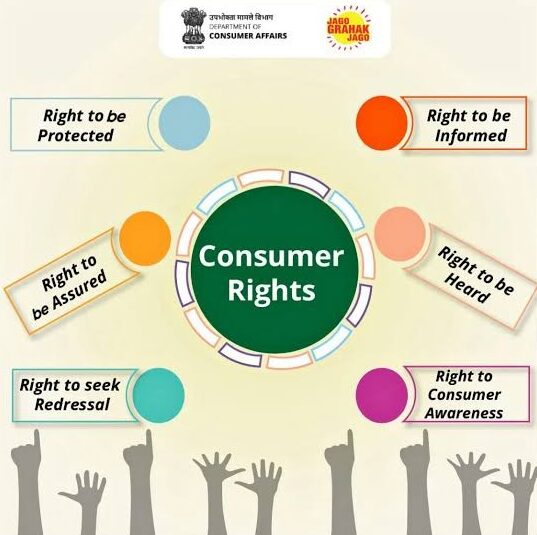
UPSC CURRENT AFFAIRS – 15 March 2025 Home / World Consumer Rights Day 2025 and Consumer Protection Initiatives Introduction: World Consumer Rights Day (WCRD) is observed annually on March 15 to promote and protect consumer rights globally. The day commemorates President John F. Kennedy’s 1962 address to the US Congress, where he formally recognized consumer rights. The theme for WCRD 2025 is “A Just Transition to Sustainable Lifestyles”, emphasizing the need for sustainable and healthy lifestyle choices that are accessible and affordable for all consumers. Why in News: The Department of Consumer Affairs, Government of India, has introduced several initiatives to strengthen consumer protection, enhance grievance redressal mechanisms, and promote sustainable consumption. These initiatives are aligned with the Consumer Protection Act, 2019, and aim to create a transparent, fair, and consumer-friendly marketplace. For UPSC aspirants, this topic is relevant for GS Paper 2 (Governance) and GS Paper 3 (Economy), as it covers consumer rights, e-commerce regulations, and sustainable development. Key Initiatives by the Department of Consumer Affairs: Consumer Protection Act, 2019: Replaced the Consumer Protection Act, 1986 to address challenges in the era of globalization, e-commerce, and digital transactions. Established a three-tier quasi-judicial mechanism (District, State, and National Consumer Commissions) for speedy redressal of consumer disputes. Mandates disposal of complaints within 3 months (if no testing is required) and 5 months (if testing is required). Consumer Welfare Fund (CWF): Provides financial assistance to promote consumer welfare and strengthen the consumer movement in India. Funds are allocated to states/UTs on a 75:25 basis (90:10 for Special Category states/UTs) to create a Consumer Welfare Corpus Fund. During 2024-25, ₹32.68 crore was released to 24 states and 1 UT for establishing/enhancing their corpus funds. E-Daakhil and E-Jagriti Portals: E-Daakhil: An online platform for filing consumer complaints, introduced during the COVID-19 pandemic to ensure hassle-free grievance redressal. E-Jagriti: Aims to streamline case filing, tracking, and management, ensuring faster resolution of disputes through automation and digitization. National Consumer Helpline (NCH) 2.0: Upgraded with AI-powered speech recognition, multilingual support, and a chatbot to enhance consumer grievance redressal. Integrated with regulatory bodies like FSSAI and BIS for swift resolution of complaints. Handled 1,55,138 calls in December 2024, compared to 12,553 calls in December 2015. Jaago Grahak Jaago Portal and Mobile App: Provides consumers with information about unsafe URLs and empowers them to make informed decisions during online transactions. E-Commerce Regulations: Consumer Protection (E-commerce) Rules, 2020: Safeguard consumers from unfair trade practices and outline responsibilities of e-commerce entities. Guidelines for Prevention and Regulation of Dark Patterns, 2023: Addresses 13 deceptive practices in e-commerce, such as hidden charges and misleading advertisements. BIS Draft Standard on E-Commerce Self-Governance: Aims to establish a transparent and ethical framework for online marketplaces, ensuring consumer rights and fair business practices. Conclusion: The initiatives by the Department of Consumer Affairs reflect the government’s commitment to empowering consumers, ensuring fair trade practices, and promoting sustainable consumption. These efforts align with the global theme of “A Just Transition to Sustainable Lifestyles” and contribute to building a safer, transparent, and consumer-friendly economy.
Nurturing Grasslands to Save the Indian Bustard
UPSC CURRENT AFFAIRS – 14 March 2025 Home / Nurturing Grasslands to Save the Indian Bustard Introduction: The editorial highlights the critical need to conserve grasslands to protect the Great Indian Bustard (GIB), one of India’s most endangered bird species. The GIB, often referred to as the “flagship species” of grasslands, is on the brink of extinction due to habitat loss, human activities, and infrastructure development. Why in News: The Great Indian Bustard is in the news due to its rapidly declining population, with fewer than 150 individuals left in the wild. The editorial emphasizes the importance of grassland conservation as a key strategy to save the species, making it relevant for environment and ecology, biodiversity conservation, and sustainable development. Importance of Grasslands: Ecosystem Services: Grasslands support biodiversity, provide grazing grounds for livestock, and play a role in carbon sequestration. They are also crucial for soil conservation and water regulation. Habitat for GIB: The Great Indian Bustard depends on arid and semi-arid grasslands for nesting, feeding, and breeding. These habitats are shrinking due to agricultural expansion, industrialization, and urbanization. Threats to Grasslands and GIB: Habitat Destruction: Conversion of grasslands into farmland, wind energy projects, and solar parks has severely impacted the GIB’s habitat. Power Lines: Collisions with power lines are a major cause of mortality for the GIB, as they have poor frontal vision and cannot detect the lines in time. Overgrazing and Land Degradation: Unsustainable grazing practices and land degradation have reduced the quality of grassland ecosystems. Climate Change: Changing weather patterns and desertification further threaten grassland habitats. Conservation Measures: Habitat Restoration: Restoring degraded grasslands and creating protected areas for the GIB. Mitigation of Power Lines: Underground cabling and marking power lines to prevent collisions. Community Involvement: Engaging local communities in conservation efforts and promoting sustainable land-use practices. Policy Interventions: Strengthening legal frameworks to protect grasslands and endangered species like the GIB. Role of Government and NGOs: The government has launched initiatives like the Species Recovery Programme for the GIB under the Integrated Development of Wildlife Habitats (IDWH) scheme. NGOs and conservation organizations are working on awareness campaigns, habitat restoration, and research to save the species. Conclusion: The survival of the Great Indian Bustard is closely linked to the health of India’s grasslands. Conserving these ecosystems is not only essential for protecting the GIB but also for maintaining biodiversity, ecological balance, and livelihoods of local communities.
RTI and Cooperative Societies in India
UPSC CURRENT AFFAIRS – 14 March 2025 Home / RTI and Cooperative Societies in India Introduction: The article discusses the applicability of the Right to Information Act (RTI), 2005, to cooperative societies in India. While cooperative societies are not directly covered under RTI, they are required to provide information under the Chief Information Officer (CIO) provision, ensuring transparency and accountability. Why in News: The topic is in the news due to ongoing debates about transparency and accountability in cooperative societies, which play a significant role in India’s rural economy and financial inclusion. For UPSC aspirants, this topic is relevant for governance, transparency mechanisms, and cooperative sector reforms, making it important for GS Paper 2 (Governance). RTI Act and Cooperative Societies: RTI Act, 2005: The RTI Act empowers citizens to seek information from public authorities to promote transparency and accountability. Applicability to Cooperatives: Cooperative societies are not directly covered under the RTI Act as they are not considered “public authorities.” Provision of Chief Information Officer (CIO): CIO Role: Cooperative societies are required to appoint a Chief Information Officer (CIO) to provide information to members and stakeholders. Scope of CIO: The CIO ensures that cooperative societies maintain transparency in their operations, financial dealings, and decision-making processes. Importance of Transparency in Cooperatives: Accountability: Transparency ensures that cooperative societies are accountable to their members and stakeholders. Trust Building: It helps build trust among members, which is crucial for the success of cooperatives. Good Governance: Transparent practices promote good governance and reduce the risk of corruption and mismanagement. Challenges in Ensuring Transparency: Lack of Awareness: Many members of cooperative societies are unaware of their right to information. Resistance from Management: Some cooperative societies resist transparency measures to avoid scrutiny. Implementation Gaps: The provision of CIO is not uniformly implemented across all cooperative societies. Government Initiatives: Cooperative Sector Reforms: The government has introduced reforms to improve the functioning of cooperative societies, including measures to enhance transparency. Digital Platforms: The use of digital platforms to provide information and ensure accountability in cooperative societies. Conclusion: While cooperative societies are not directly covered under the RTI Act, the provision of Chief Information Officer (CIO) ensures a level of transparency and accountability. Strengthening transparency mechanisms in cooperatives is essential for promoting good governance, trust, and sustainable development in the cooperative sector.
From Russia to UK: India’s Controversial Gold Trade Move
UPSC CURRENT AFFAIRS – 14 March 2025 Home / From Russia to UK: India’s Controversial Gold Trade Move Introduction: The article critiques the Indian government’s decision to shift its gold imports from Russia to the United Kingdom. This move is described as a “golden blunder” due to its economic and strategic implications, particularly in the context of global trade dynamics and India’s gold dependency. Why in News: The decision to shift gold imports from Russia to the UK has sparked debates about its economic viability, strategic foresight, and impact on India’s trade relations. The topic is relevant for UPSC aspirants as it touches upon international trade, economic policies, and India’s foreign relations, making it important for GS Paper 2 (Governance) and GS Paper 3 (Economy). Background: Gold Dependency: India is one of the largest consumers of gold globally, with significant imports to meet domestic demand, especially for jewelry and investment purposes. Russian Gold: Post the Ukraine conflict, India increased its gold imports from Russia to capitalize on discounted prices and diversify its sources. The Shift to the UK: Reasons for the Shift: Sanctions on Russia: Western sanctions on Russian gold made it difficult for India to continue imports without facing diplomatic and economic repercussions. Trade Agreements: The UK offered favorable terms under bilateral trade agreements, making it an attractive alternative. Economic Implications: Higher Costs: Gold imports from the UK are more expensive compared to Russian gold, increasing India’s trade deficit. Currency Outflow: The shift leads to higher foreign exchange outflows, putting pressure on the rupee. Strategic Implications: Dependency on the West: The move increases India’s reliance on Western nations for critical imports, potentially compromising its strategic autonomy. Missed Opportunities: India could have explored alternative sources or strengthened domestic gold production to reduce dependency. Criticism of the Decision: Lack of Foresight: Critics argue that the government failed to anticipate the long-term consequences of shifting gold imports. Impact on Domestic Industry: Higher import costs could negatively affect India’s jewelry industry and small-scale gold traders. Geopolitical Risks: Over-reliance on the UK for gold imports could make India vulnerable to geopolitical tensions and trade restrictions. Conclusion: The Indian government’s decision to shift gold imports from Russia to the UK highlights the complexities of global trade dynamics and the challenges of balancing economic interests with strategic autonomy. While the move may address immediate concerns related to sanctions, it raises questions about its long-term economic and strategic viability.