India’s Place as the World’s Third-Largest Economy
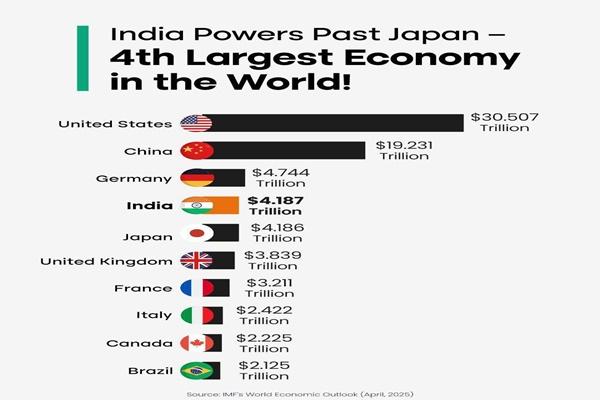
UPSC CURRENT AFFAIRS – 28th May 2025 Home / India’s Place as the World’s Third-Largest Economy Why in News? Recently, BVR Subrahmanyam, CEO of NITI Aayog, claimed that India has overtaken Japan to become the fourth-largest economy in the world, citing data from the International Monetary Fund (IMF). India’s rank as the world’s largest economy varies by measure—nominal GDP or purchasing power parity (PPP)—each with key implications for economic analysis. International Monetary Fund (IMF) Notably, the International Monetary Fund (IMF), in its World Economic Outlook (WEO) report released in April, said that India is expected to be the fourth-largest economy in the world, with a GDP of $4.19trn in 2025, surpassing Japan. The report also noted that India’s nominal GDP for 2025 (FY26) is expected to be $4.187trn marginally more than the GDP of Japan, which is estimated at $4.186trn. The IMF data also showed that India’s per capita income has doubled from $1,438 in 2013-14 to $2,880 in 2025. Selective Emphasis: Political leaders or commentators may selectively cite either nominal or PPP-based GDP figures, depending on the narrative they wish to project. Public Misunderstanding: Many people do not distinguish between different GDP measurements, leading to conflicting interpretations of economic rank. Methods of Measuring GDP The crux of the disagreement lies in the method of GDP calculation. There are two primary ways to measure and compare the Gross Domestic Product (GDP) of different countries: 1. GDP at Market Exchange Rates (Nominal GDP) Definition: The monetary value of all final goods and services produced within a country, converted into US dollars using prevailing exchange rates. Usage: This is the most commonly used method in international financial markets and media reporting. Current Ranking (IMF Estimates for 2024-25): United States – 1st China – 2nd Germany – 3rd Japan – 4th India – 5th Therefore, as per the latest available data, India is still ranked fifth in nominal terms, unless very recent exchange rate changes have caused a shift not yet reflected in official databases. 2. GDP at Purchasing Power Parity (PPP) Adjusts GDP to reflect differences in the cost of living and price levels across countries. It estimates how much a country’s currency can buy in its domestic market compared to other currencies. Usage: This method is widely used by economists and international organisations like the World Bank and IMF to assess real economic strength. Current Ranking (IMF PPP-based Estimates for 2024-25): China – 1st United States – 2nd India – 3rd Japan – 4th Germany – 5th India has been ranked as the third-largest economy by PPP since 2009, when it overtook Japan during the UPA government’s tenure. Understanding the Difference Between Nominal GDP and PPP To illustrate the difference, consider this example: Suppose two individuals have similar jobs. One earns ₹50,000 per month in Mumbai, and the other earns ₹45,000 per month in Patna. At first glance, the person in Mumbai appears to be doing better. However, due to the higher cost of living in Mumbai, the individual in Patna may actually enjoy a better standard of living. The concept of purchasing power explains this difference. Purchasing power changes across time and space. This is why economists use Purchasing Power Parity (PPP) to make more meaningful cross-country comparisons. While Nominal GDP is useful for measuring international financial weight, PPP-based GDP better reflects domestic economic well-being and real consumption power. Conclusion Both claims—that India is the 4th largest economy and that it is still 5th—can be valid depending on the metric used: By Nominal GDP, India is currently the 5th largest economy, possibly on the verge of overtaking Japan depending on currency trends. By PPP, India has consistently been the 3rd largest economy since 2009, a fact often under-acknowledged in mainstream discourse. Significance and Applications
States’ Demand for a Greater Share in Central Taxes

UPSC CURRENT AFFAIRS – 28th May 2025 Home / States’ Demand for a Greater Share in Central Taxes Why in News? The 10th Governing Council Meeting of NITI Aayog exposed the gap between the Centre’s rhetoric of “Team India” and the actual imbalance in Centre-State relations, particularly in fiscal and cooperative federalism. Introduction Prime Minister Narendra Modi’s recent appeal at the 10th Governing Council Meeting of NITI Aayog in New Delhi, urging States and the Centre to function together as “Team India,” underlines the importance of cooperative federalism. However, the current ground realities indicate a growing gap between this vision and the actual nature of Centre-State relations. What is the NITI Aayog Governing Council? The Governing Council is the highest policy-making body under NITI Aayog, comprising: The Prime Minister (Chairperson) Chief Ministers of all States and Union Territories with legislatures Lt. Governors of other UTs Primary Objective: To foster cooperative federalism and evolve a shared vision of national development priorities. However, it meets only once a year, which is insufficient to address the dynamic and often urgent challenges faced by States. Current Nature of Centre-State Relations: A One-Way Street While the “Team India” slogan promotes unity, in practice: The Centre increasingly uses top-down approaches. States are expected to comply with centrally designed schemes and mandates, often without adequate consultation. Federal forums like the NITI Aayog Governing Council and GST Council meet infrequently, limiting meaningful dialogue. Example: The GST Council, which is mandated to meet at least once every quarter, has not met for over five months. Challenges Faced by States Infrequent Forums for Dialogue: When opportunities arise, States often prioritize voicing local grievances or showcasing achievements rather than broader national coordination. Limited Fiscal Autonomy: After the implementation of GST, many State-level taxes were subsumed, reducing the States’ capacity to raise their own revenues. Compensation for GST revenue loss was only for five years, post which States are expected to manage on their own. Asymmetric Power Balance: There’s a perception that the Centre dominates policymaking, with little genuine accommodation for State concerns. Constructive Suggestions from States: Towards True Cooperative Federalism Despite limitations, some Chief Ministers proposed collaborative ideas: 1. Andhra Pradesh CM N. Chandrababu Naidu: Proposed formation of three sub-groups of States to work on: GDP growth & investments Demographic dividend Tech-enabled governance Why this matters: Smaller working groups can facilitate more focused and frequent cooperation than larger national bodies. The GST Conundrum: A Case for Fiscal Rebalancing Promise vs Reality: GST was envisioned as a “good and simple tax” that would improve compliance and boost revenue. However, it has only recently managed to surpass the pre-GST indirect tax levels. States Lost Autonomy: Many taxes like octroi, entry tax, entertainment tax, VAT on certain goods, etc., were removed. Demand for Higher Devolution: Since States surrendered part of their taxation power, they are rightfully asking for a greater share of the central pool. Way Forward: Institutionalising Regular Consultations: Make NITI Aayog and GST Council meetings quarterly or bi-annual events. Revisiting the Fiscal Federalism Framework: Consider higher devolution of taxes and review of Finance Commission recommendations in light of GST performance. Strengthen Bottom-Up Planning: Empower States to initiate policy innovations, and give them the freedom to adapt centrally sponsored schemes to local needs. Encourage Sub-Group Models: Form thematic working groups among States to share best practices and co-develop solutions with Centre’s support.
Why has the monsoon come early this year?

UPSC CURRENT AFFAIRS – 28th May 2025 Home / Why has the monsoon come early this year? Why in News? The 2025 southwest monsoon onset over Kerala was unusually early, but the reasons behind early or delayed monsoon onset remain uncertain due to complex natural variability and climate influences. Introduction The southwest monsoon arrived over Kerala on May 24, 2025, marking an onset a week earlier than normal. While early onset typically raises expectations of good rainfall, it does not guarantee a productive monsoon season. The complexities of monsoon dynamics — influenced by local, regional, and global climatic variables — make prediction and understanding a significant scientific challenge. Understanding the Onset of the Indian Monsoon Normal Onset Window The monsoon normally sets in around June 1, with slight variations each year. Since 1975, the earliest onset was recorded on May 19, 1990. Why Onset Prediction Is Difficult No single model or theory can comprehensively explain monsoon onset. Multiple climatic systems interact to affect onset — including: Low-pressure systems over the Bay of Bengal Westerlies and Easterlies Tropical Pacific Sea Surface Temperatures (SSTs) Cyclonic systems forming in the Arabian Sea and Pacific Role of El Niño, La Niña, and Global Warming Do ENSO Events Predict Onset? ENSO (El Niño-Southern Oscillation) phases, including El Niño and La Niña, do not offer systematic predictability of monsoon onset. For instance: 2009 had a mild El Niño and early monsoon, yet saw severe drought. 2023-24 experienced a strong El Niño, followed by a failed La Niña in 2024. SST anomalies in 2024 were unusual — warm in the far east and west Pacific, and cool in the center. Impact of Global Warming The planet has warmed by over 1.2°C above pre-industrial levels (as of 2025). Global warming is believed to alter traditional ENSO patterns, cyclogenesis, and monsoon variability. The combined effect of warming and decadal variability makes monsoon prediction harder. Is 2025 Similar to 2009? Key Comparisons 2009: Warm tropical oceans, early monsoon, drought year. 2025: Early onset, post-El Niño SST patterns, but currently neutral ENSO forecast. Differences In 2025, El Niño and Indian Ocean Dipole (IOD) are neutral, unlike 2009. However, decadal climate indicators suggest a possible El Niño development later in the year. Local and Remote Drivers of Monsoon Onset Influences on the Monsoon Trough The monsoon trough’s advance is influenced by: Pre-monsoon cyclones (increasing in frequency and intensity) Arabian Sea low-pressure systems Typhoons in the Pacific, which may siphon off moisture 2025 Case Study The northward pull on the trough this year suggests that a low-pressure system along the west coast played a role in early onset. Cyclones and Arctic Warming Increasing cyclone activity close to onset is potentially linked to Arctic warming and shifting wind patterns. Changing Patterns in Monsoon Withdrawal and Rainfall Withdrawal Patterns The withdrawal of the southwest monsoon is now merging with the northeast monsoon in some regions, altering regional climatic calendars. Erratic Intra-Seasonal Distribution Floods and droughts occur simultaneously across regions. The monsoon is increasingly uneven in both space and time due to: Local topography Land-use changes Anthropogenic emissions Shifts in oceanic and atmospheric currents What Does the Future Hold? Scientific Understanding Still Evolving Progress is being made, but no definitive model exists to: Predict the onset Forecast the seasonal spread Anticipate the withdrawal Need for Enhanced Research Key areas for deeper study: Impact of climate change on regional monsoon circulations Role of Arctic and polar processes Influence of decadal variability and teleconnections
Bharat Forecast System
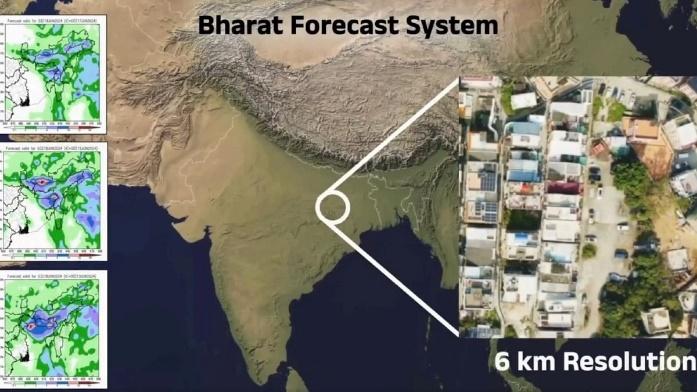
UPSC CURRENT AFFAIRS – 28th May 2025 Home / Bharat Forecast System Why in News? Bharat Forecast System (BFS) is India’s first indigenously developed high-resolution weather model with a 6-km grid, offering 64% improved accuracy over previous systems. Introduction In a significant scientific advancement, the India Meteorological Department (IMD) has operationalized the Bharat Forecast System (BFS)—the world’s first indigenously developed high-resolution weather prediction model. Launched by Union Minister of Earth Sciences Dr. Jitendra Singh at Vigyan Bhawan, BFS is poised to revolutionize weather forecasting in India and strengthen disaster preparedness. What is the Bharat Forecast System (BFS)? The Bharat Forecast System (BFS) is a next-generation numerical weather prediction model developed by the Indian Institute of Tropical Meteorology (IITM), Pune. It provides weather forecasts at a 6-kilometre spatial resolution, making it one of the most accurate and high-resolution models in the world. For comparison, forecasting models used by advanced nations like the United Kingdom, United States, and European Union generally operate at a 9–14 km resolution. Key Features of BFS Feature Description Spatial Resolution 6 km grid size – significantly finer than earlier 12-km model Indigenous Development Developed entirely within India under Atmanirbhar Bharat initiative Institutions Involved Indian Institute of Tropical Meteorology (IITM), IMD, and National Centre for Medium Range Weather Forecasting (NCMRWF) Computational Infrastructure Powered by high-performance computing systems ‘Arka’ and ‘Arunika’ Accuracy 64% improvement over earlier models; 30% better prediction of extreme weather events Operational Use Now in full-scale use at IMD for issuing real-time forecasts How Does BFS Work? The BFS utilizes powerful high-performance computing (HPC) infrastructure: ‘Arka’ at IITM Pune, and ‘Arunika’ at NCMRWF, Noida. These HPC systems enable real-time simulation of atmospheric processes, resulting in: Faster data processing, Timely generation of weather alerts, Improved spatial accuracy in predicting localized events like cyclones, heatwaves, floods, and heavy rainfall. Significance and Applications Improved Forecast Accuracy BFS offers 64% better accuracy than its predecessor. Specifically enhances forecasts of extreme weather, critical in India’s context where monsoon variability and climate disasters are common. Disaster Preparedness and Risk Reduction Accurate forecasts help minimize human and economic losses by enabling timely evacuation, agricultural planning, and resource mobilization. Sectoral Impact Agriculture: Helps farmers with precise rainfall and drought warnings. Water Management: Assists in reservoir and dam management. Urban Planning & Infrastructure: Guides planning for flood-prone and high-risk zones. Aviation & Marine: Improves navigation safety and scheduling. Climate Resilience BFS supports India’s climate adaptation strategies, offering crucial data to design policies for sustainable development and environmental management. Significance and Applications
Gaza Crisis and isolation of Israel
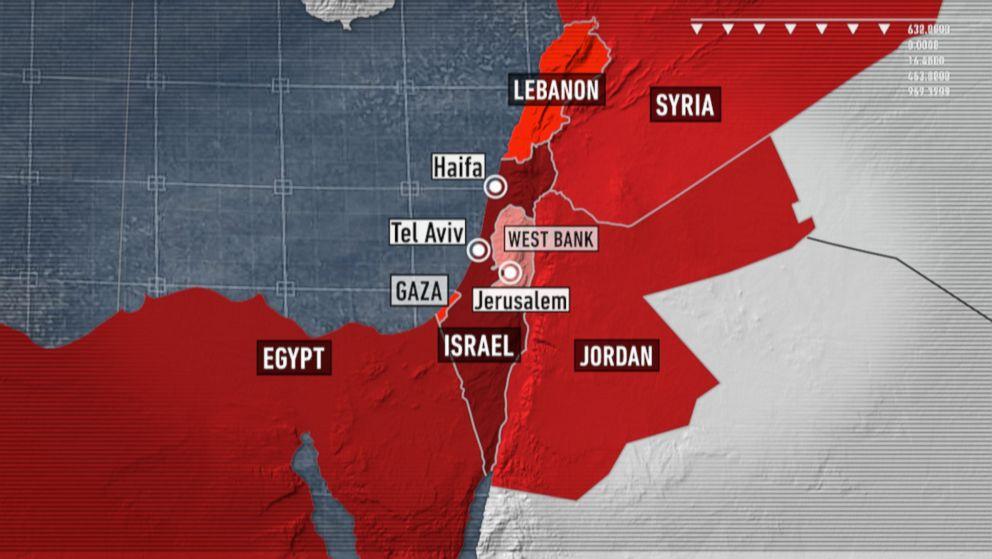
UPSC CURRENT AFFAIRS – 22th May 2025 Home / Gaza Crisis and isolation of Israel Why in News? The growing international criticism and diplomatic isolation of Israel over its military operations in Gaza reflect rising concerns over humanitarian law violations, prompting a renewed global call for a two-state solution. Background of the Gaza War The ongoing conflict between Israel and Hamas, which escalated following the October 7, 2023 attacks by Hamas, continues to draw intense global scrutiny. The Israeli military campaign, launched in response to the attacks, has resulted in widespread civilian casualties in the Gaza Strip. According to the Gaza Health Ministry, over 3,000 residents have been killed since the end of the temporary ceasefire on March 18, 2025. Humanitarian Crisis in Gaza The situation in Gaza has reached alarming proportions, with widespread shortages of food, medicine, and humanitarian supplies. Israel’s blockade on aid entry into Gaza has been described by multiple international organizations as a potential violation of humanitarian law. The continued bombardment in densely populated civilian areas has led to accusations of collective punishment, raising concerns of a possible genocide under international law. Israel’s Strategic Position and Military Objectives Prime Minister Benjamin Netanyahu has defended Israel’s actions as necessary for national security, stating the goal is the complete eradication of Hamas. He also announced intentions to re-establish full military control over the Gaza Strip, a territory from which Israeli forces had withdrawn in 2005. However, these actions have drawn criticism, as they have neither ensured the return of Israeli hostages nor eliminated Hamas’s presence entirely. Evolving Global Response and Diplomatic Isolation Initially, Western nations including the United Kingdom, France, and Canada expressed solidarity with Israel following the October 2023 attacks. However, with the scale of destruction and humanitarian suffering increasing, these same countries have now condemned the Israeli offensive as “disproportionate.” Leaders such as Keir Starmer (UK), Emmanuel Macron (France), and Mark Carney (Canada) have issued a joint statement criticising Israel’s continued operations, describing the human cost as “intolerable.” They have also reaffirmed their commitment to a two-state solution and signaled possible sanctions, marking a significant shift in diplomatic posture. U.S. Position and Strategic Nuances Former U.S. President Donald Trump’s recent visit to West Asia notably excluded Israel, which was interpreted as a symbolic expression of dissatisfaction with Prime Minister Netanyahu’s policies. While the United States continues to be a key ally of Israel, internal political discourse is increasingly critical of the humanitarian toll in Gaza. India’s Diplomatic Silence India has thus far not issued a statement on the recent escalation in Gaza. Analysts suggest this may be due to India’s strategic ties with Israel, especially after its public support during India’s Operation Sindoor, and its parallel security concerns involving Pakistan. However, the Israeli-Palestinian situation is a distinct geopolitical issue, and New Delhi’s continued silence may be interpreted as a deviation from its traditional stance supporting a two-state solution and respect for international law. Legal and Ethical Dimensions Multiple UN bodies and humanitarian agencies have warned that Israel’s actions may violate provisions of the Geneva Conventions. Allegations of targeting civilians and denying aid access may fall under definitions of war crimes or crimes against humanity. The concept of proportionality in armed conflict, a cornerstone of international humanitarian law, appears to be under strain in the current operations. Way Forward The growing diplomatic backlash against Israel, including the suspension of trade talks by the UK and EU, signals increasing global pressure. Prime Minister Netanyahu’s continued military escalation risks further isolating Israel and undermining long-term peace prospects. The international community, including emerging powers like India, must reassert support for a rules-based international order, uphold humanitarian norms, and encourage a sustainable resolution through dialogue and negotiation. The humanitarian crisis in Gaza is not just a regional issue but a test of the global commitment to human rights, international law, and the legitimacy of multilateral institutions.
Home Minister launches new OCI portal

UPSC CURRENT AFFAIRS – 20th May 2025 Home / Home Minister launches new OCI portal Why in News? Union Home Minister Amit Shah launched a revamped Overseas Citizen of India (OCI) portal on May 19, 2025. Introduction Recently, Union Home Minister Amit Shah officially launched a newly revamped Overseas Citizen of India (OCI) portal. This digital platform aims to simplify and modernize the registration process for Overseas Citizens of India, ensuring a smoother experience for persons of Indian origin when applying for or renewing OCI cards and interacting with Indian immigration services. Objective of the New OCI Portal The main purpose of launching the updated OCI portal is to: Simplify the application and renewal process for OCI cards. Provide a more user-friendly and accessible interface for Indian-origin residents across the globe. Ensure that overseas citizens do not face procedural difficulties when visiting or staying in India. Key Features of the Updated Portal a) Improved User Interface The new portal offers an intuitive and easy-to-navigate design. Forms and instructions have been simplified to make the application process less confusing, especially for elderly users or those unfamiliar with government websites. b) Enhanced Functionality It caters to both existing OCI cardholders and new applicants. The revamped features support efficient processing of applications and enable better tracking of status. c) Advanced Security Infrastructure Modern cybersecurity measures have been incorporated to ensure the safety of users’ personal and travel data. These updates are in line with global standards for digital identity management and government service portals. d) Broad Operational Coverage The OCI portal connects with over 180 Indian diplomatic missions abroad and 12 Foreigners Regional Registration Offices (FRROs) within India. It currently processes around 2,000 applications per day, and the upgraded system is expected to handle a significantly higher volume with improved speed and accuracy. Background: What is the OCI Scheme? The OCI scheme was introduced through an amendment to the Citizenship Act, 1955 in the year 2005. It was designed to formally recognize and engage the vast Indian diaspora by granting them certain benefits while maintaining India’s policy against dual citizenship. Eligibility Criteria: An individual can apply for registration as an OCI if: They were a citizen of India on or after January 26, 1950, or They were eligible to become a citizen of India on that date, or They are a child, grandchild, or great-grandchild of such a person. Ineligibility: Persons who are or have been citizens of Pakistan or Bangladesh are not eligible for the OCI card. This also applies if their parents, grandparents, or great-grandparents were citizens of either of those two countries. Nature of OCI: It is important to note that the OCI status does not equate to dual citizenship. Rather, it allows the holder: A lifelong visa to visit India multiple times. Exemption from registration with the local police authority for any length of stay in India. Limited rights in terms of property ownership and economic activities. However, OCI cardholders are not entitled to: Voting rights in Indian elections. Holding public office in India. Employment in Indian government services. Need for a New Portal The previous OCI services portal was developed in 2013. Over time, users reported several limitations, including technical glitches, outdated user experience, and limited compatibility with modern devices. Additionally, advancements in digital technologies and the increased volume of OCI applications demanded a more robust and modern platform. Based on feedback from users and government agencies, the Ministry of Home Affairs (MHA) decided to overhaul the portal to improve efficiency and transparency. Significance of the Revamp The revamped OCI portal holds importance for multiple reasons: It strengthens India’s relationship with its global diaspora, estimated to be over 32 million strong. It simplifies the process for over five million current OCI cardholders and makes it easier for new applicants to access the scheme. It is a part of India’s broader strategy to improve governance and service delivery through digital platforms. It addresses long-standing user concerns regarding delays, technical inefficiencies, and inadequate user support. It enhances security and privacy of sensitive data related to immigration and personal identity. Conclusion The launch of the new OCI portal represents a significant step in modernizing how India interacts with its diaspora. By streamlining the registration and services process, the Government of India has reaffirmed its commitment to making overseas Indians feel more connected to their roots. This initiative aligns with the country’s larger goals of fostering greater global engagement, improving digital governance, and delivering citizen-friendly services.
World’s most powerful solar storm

UPSC CURRENT AFFAIRS – 20th May 2025 Home / World’s most powerful solar storm Why in News? The discovery of a colossal solar storm that struck Earth 14,300 years ago represents a significant advancement in our understanding of ancient solar activity. What Was Discovered? A research team led by scientists from Finland, France, and Switzerland, including postdoctoral scientist Kseniia Golubenko, professor Ilya Usoskin (University of Oulu, Finland), and professor Edouard Bard (CEREGE, France), has identified the most powerful solar storm ever detected. Time period: ~12,350 BC, during the end of the last Ice Age. Evidence: A sharp spike in radiocarbon (C-14) found in tree rings from wood samples preserved in the French Alps. Classification: This spike is known as a Miyake Event — a sudden rise in atmospheric isotopes caused by solar particle storms (SPEs). What Are Solar Particle Storms (SPEs)? Solar Particle Storms are intense bursts of high-energy particles (mostly protons) ejected from the Sun, often during solar flares or coronal mass ejections (CMEs). These particles interact with Earth’s atmosphere, increasing levels of cosmogenic isotopes like: Carbon-14 (radiocarbon) Beryllium-10 Chlorine-36 They can cause: Geomagnetic storms Auroras Damage to satellites Radio and GPS blackouts Disruption of power grids How Was It Detected? Tree-Ring Analysis & Isotope Spikes Tree rings record annual growth and contain trace amounts of atmospheric isotopes absorbed during that year. Scientists analyzed ancient wood preserved in glacial areas of the French Alps. A sudden spike in radiocarbon levels indicated a massive solar particle storm around 12,350 BC. These anomalies are cross-referenced with known radiocarbon cycles to precisely date the event. Climate-Chemistry Model Researchers used a climate-chemistry model adapted for glacial atmospheric conditions to simulate the interaction of solar particles with Earth’s atmosphere. They validated the model against the known AD 775 solar storm, previously considered the strongest known. How Powerful Was the 12,350 BC Solar Storm? ~18% more intense than the AD 775 solar storm. Over 500 times stronger than the 2005 solar particle event — the largest in the modern satellite era. Stronger than: AD 994, 663 BC, 5259 BC, and 7176 BC events. The Carrington Event of 1859, though powerful, was not a particle storm but a different type of solar disturbance. Scientific Significance Expands the Timeline of Solar Activity First extreme event detected before the Holocene (which began ~11,700 years ago). Extends known limits of solar storm intensity and frequency into the Ice Age. Helps Pinpoint Historical Events Miyake Events serve as cosmic timestamps. These radiocarbon anomalies allow archaeologists to anchor floating chronologies (undated ancient events) to exact years. Advances Solar Storm Modeling The success of this model paves the way for detecting even older or more subtle events, improving solar storm forecasting. Why Does It Matter Today? While such super storms are extremely rare, their potential impact on our highly connected modern world is enormous. Possible Consequences: Satellite failure (GPS, weather monitoring, communications) Aviation risks due to increased radiation exposure at high altitudes Blackouts caused by damage to electrical infrastructure and transformers Internet disruption due to damaged undersea cables and satellites Increased health risk for astronauts and high-latitude air travel Growing Relevance: We are currently in Solar Cycle 25, with solar activity rising toward a predicted peak in 2025–2026. Understanding such ancient storms helps us prepare for worst-case space weather scenarios. Conclusion The 12,350 BC solar storm is now the strongest known solar particle event, offering a rare and powerful lens into our Sun’s volatile history. It: Redefines the scale of potential solar threats. Demonstrates the importance of tree-ring and isotopic research in tracking cosmic phenomena. Underlines the urgent need for space weather preparedness in the age of satellites and global digital infrastructure. Understanding these ancient cosmic events is not just a matter of scientific curiosity — it’s a matter of future resilience. Decreased oxygen-carrying capacity of RBCs. Increased fragility and cell stiffness. Vascular blockage, causing pain and organ injury. Increased susceptibility to infections, anemia, and stroke. Past Illegal Allotments Invalid
Supreme Court directs States, Union Territories to reclaim reserved forests allotted to private parties

UPSC CURRENT AFFAIRS – 20th May 2025 Home / Supreme Court directs States, Union Territories to reclaim reserved forests allotted to private parties Why in News? The Supreme Court of India has delivered a landmark judgment concerning the misuse and illegal allotment of forest lands by Revenue Departments across various States and Union Territories (UTs). Background of the Case The case centered on a specific instance of illegal forest land diversion in Kondhwa Budruk, Pune (Maharashtra): In 1998, 11.89 hectares of reserved forest land was illegally allotted for agricultural use. In 1999, the same land was sold to a builder. In 2007, the builder obtained an Environmental Clearance from the Ministry of Environment and Forests to use the land for construction. This was challenged and ultimately declared illegal by the Supreme Court. This case is seen as a representative example of the broader problem of politician–bureaucrat–builder nexus, resulting in the conversion of forest land into commercial properties. Key Supreme Court Directives Formation of Special Investigation Teams (SITs) All Chief Secretaries (States) and Administrators (UTs) must constitute SITs. Purpose: Examine whether forest lands under Revenue Department control have been illegally allotted to private individuals or institutions for non-forest use. Recovery and Restoration of Forest Land If forest land is found to have been wrongly allotted: Authorities must take back possession from private parties. The land must be handed over to the Forest Department. Exception – If Restoration is Against Public Interest In rare cases where taking back the land is not in larger public interest, the following applies: The government must recover the cost of the land from the private party. This amount must be used exclusively for forest development (e.g., afforestation). Deadline for Action All these actions—investigation, recovery, handover—must be completed within one year. Future Use of Land Hereafter, such forest lands should be used only for afforestation and no other purpose. Past Illegal Allotments Invalid The judgment invalidates any forest land allotments after 12 December 1996 that were made without prior approval from the Central Government. This is based on an earlier Supreme Court order (1996), which mandated that: “All ongoing activity within any forest in any State throughout the country, without the prior approval of the Central Government, must cease immediately.” Thus, any transfer or use of forest land for non-forest purposes after this date is unlawful. Issues Identified by the Court The judgment highlights a systemic problem: Large areas of land classified as ‘forest’ are still under the control of Revenue Departments. These lands were often allotted despite resistance from Forest Departments. Result: Depletion of green cover, violating environmental laws and Supreme Court orders. A Central Empowered Committee (CEC) report, presented by amicus curiae K. Parameshwar, showed widespread illegal allotments across India. Case Study: Telangana – Kancha Gachibowli The court warned the Telangana government in a related case involving tree-felling in Kancha Gachibowli. The SC ordered restoration of the forest, failing which officials would face jail. Broader Implications A significant step towards: Conservation of forest resources. Holding State officials accountable for illegal transfers. Strengthening environmental governance. Decreased oxygen-carrying capacity of RBCs. Increased fragility and cell stiffness. Vascular blockage, causing pain and organ injury. Increased susceptibility to infections, anemia, and stroke. Past Illegal Allotments Invalid
India–Bangladesh Trade Tensions and Political Fallout

UPSC CURRENT AFFAIRS – 21th May 2025 Home / India–Bangladesh Trade Tensions and Political Fallout Why in News? India has imposed trade restrictions on Bangladeshi garments and specific goods, signalling worsening bilateral relations following Dhaka’s increasing proximity to China and internal political instability. Key Highlights: Trade Restrictions: The Directorate General of Foreign Trade (DGFT) imposed curbs on Bangladeshi readymade garments and specific commodities. This move targets Bangladesh’s apparel export sector, a critical driver of its economy. India also blocked access to the northeast market, a key outlet for Bangladeshi trade. Political Background: The action followed interim Bangladeshi leader Mohammed Yunus’s March 2025 visit to China. Yunus described India’s northeast as “landlocked”, suggesting Chinese access through Bangladesh — viewed as strategically provocative by India. Internal Political Shifts in Bangladesh: Yunus’s interim government assumed power after anti-Awami League protests. Its decisions — including banning the Awami League and increasing engagement with Pakistan and China — have strained ties with New Delhi. India’s Strategic Dilemma: Trade restrictions may hurt Bangladeshi exports, but are unlikely to yield strategic gains. They risk fueling anti-India narratives and instability in the northeast. India must maintain functional ties with the interim government while pushing for democratic transition. Recommended Approach: India should encourage free and fair elections in Bangladesh, aligning with international norms. Political engagement, not economic coercion, is the sustainable way forward. Broader regional stability and connectivity are at stake. Background: India–Bangladesh Relations in Recent Years Strong Bilateral Ties Under Sheikh Hasina (2009–2024): India and Bangladesh witnessed a “golden era” in relations under Prime Minister Sheikh Hasina. Land Boundary Agreement (2015) and border management cooperation were landmark achievements. India supported Bangladesh’s development goals, supplying vaccines, power, and credit lines. Trade and Connectivity Boost: Bangladesh is India’s largest trading partner in South Asia. Bilateral trade crossed USD 18 billion in 2022–23. Key projects include: BBIN Motor Vehicles Agreement Maitree power projects Chattogram and Mongla port access for Indian goods Challenges Emerge (2024–2025): Political transition and instability in Dhaka post-Hasina created uncertainty. India’s perceived closeness to the Awami League has led to suspicion from the interim regime. China’s growing footprint in Bangladesh, including infrastructure and defense ties, has further complicated India’s strategic calculus. India’s Broader Concerns: Strategic Concern – Countering China’s Influence: Bangladesh’s growing proximity to China, especially proposals for Chinese access to India’s northeastern region via Bangladeshi territory, raises alarms for India. It threatens to undermine India’s Act East Policy, strategic depth, and regional balance of power in South Asia. China’s inroads into infrastructure, ports, and telecom in Bangladesh mirror its string-of-pearls strategy elsewhere. Security Concern – Border Stability and Internal Peace: India shares a 4,096-km border with Bangladesh — the longest land border it shares with any country. Political instability in Bangladesh could spill over into India’s northeast, fostering: Cross-border infiltration Radicalization and communal tensions Illicit trade and arms smuggling Maintaining a stable and cooperative border regime is critical for India’s internal security architecture. Diplomatic Concern – Navigating a Volatile Transition: With Bangladesh in political flux, India must avoid appearing partisan while preserving long-term goodwill. Overt pressure or punitive trade moves could backfire, strengthening anti-India narratives. India must balance firm signaling with constructive engagement, leveraging its regional leadership role, soft power, and track record of democratic support. Strategic Concern – Countering China’s Influence: Bangladesh’s growing proximity to China, especially proposals for Chinese access to India’s northeastern region via Bangladeshi territory, raises alarms for India. It threatens to undermine India’s Act East Policy, strategic depth, and regional balance of power in South Asia. China’s inroads into infrastructure, ports, and telecom in Bangladesh mirror its string-of-pearls strategy elsewhere. Security Concern – Border Stability and Internal Peace: India shares a 4,096-km border with Bangladesh — the longest land border it shares with any country. Political instability in Bangladesh could spill over into India’s northeast, fostering: Cross-border infiltration Radicalization and communal tensions Illicit trade and arms smuggling Maintaining a stable and cooperative border regime is critical for India’s internal security architecture. Diplomatic Concern – Navigating a Volatile Transition: With Bangladesh in political flux, India must avoid appearing partisan while preserving long-term goodwill. Overt pressure or punitive trade moves could backfire, strengthening anti-India narratives. India must balance firm signaling with constructive engagement, leveraging its regional leadership role, soft power, and track record of democratic support. Decreased oxygen-carrying capacity of RBCs. Increased fragility and cell stiffness. Vascular blockage, causing pain and organ injury. Increased susceptibility to infections, anemia, and stroke. Past Illegal Allotments Invalid
Supreme Court struck down the Centre’s orders on retrospective green clearances

UPSC CURRENT AFFAIRS – 19th May 2025 Home / Supreme Court struck down the Centre’s orders on retrospective green clearances Why in News? The Supreme Court struck down the 2017 MoEF&CC notification and 2021 SOP allowing post-facto environmental clearances, declaring them unconstitutional for violating the right to a healthy environment under Article 21. Key Highlights Recently, the Supreme Court of India struck down a 2017 notification issued by the Ministry of Environment, Forest and Climate Change (MoEF&CC), which allowed post facto environmental clearances for industrial projects that had commenced operations without prior approval. The Court also invalidated the 2021 office memorandum (OM) that institutionalized a standard operating procedure (SOP) for handling such cases. Background: The Environment Impact Assessment (EIA) Notification, 2006, mandates prior environmental clearance before the commencement of any project with potential environmental impacts. The clearance involves multi-stage scrutiny, including: Screening and scoping of the project Impact assessment Public hearing Expert Appraisal Committee (EAC) recommendations Despite this, in March 2017, the MoEF&CC issued a notification allowing a “one-time” six-month window for industries to obtain post facto clearance, even if they had already violated the EIA norms by beginning operations or modifying existing projects. Rationale Behind the 2017 Notification: Regulatory Compliance: The Centre argued that it was better to bring violators under the environmental regulatory net rather than leaving violations unregulated. Remediation Costs: Violators would be compelled to pay for remediation and pollution damage, nullifying any economic advantage gained through non-compliance. Centralized Appraisal: All violation cases, regardless of scale, were to be appraised centrally. Closure Clause: Only activities permissible at the site would be allowed to proceed; others faced closure. Supreme Court’s Judgment: A bench of Justice Abhay S. Oka and Justice Ujjal Bhuyan declared: The 2017 notification and 2021 OM are illegal and violative of Articles 14 and 21 of the Constitution. The right to a clean and pollution-free environment is part of the right to life under Article 21. Post facto clearance undermines environmental law and encourages illegal project execution. The Court restrained the Centre from issuing any future notifications or memoranda similar in intent or effect. Violation of Judicial Precedents: The Court cited two key judgments: Common Cause v. Union of India (2017) Alembic Pharmaceuticals v. Rohit Prajapati (2020) Both judgments held that ex-post facto clearances are contrary to environmental jurisprudence and cannot be allowed as they defeat the preventive intent of EIA norms. Criticism of the Centre’s Approach: The Court criticized the Centre for protecting violators instead of upholding environmental laws. It noted that in the Alembic case, even a one-time amnesty was considered illegal. The 2021 SOP, although not using the term post facto, was seen as an indirect attempt to regularize violations, which the Court found unacceptable. Key Constitutional Principles Upheld: Article 21: Right to life includes the right to a healthy environment. Article 14: Equal treatment under law; violators cannot be treated at par with law-abiding project proponents. Doctrine of Public Trust: The State has a duty to protect natural resources for present and future generations. Implications of the Judgment: Reinforces the principle of prior environmental clearance as a non-negotiable legal requirement. Acts as a deterrent against regulatory bypass and upholds environmental governance. Places greater responsibility on the MoEF&CC, State Authorities, and Pollution Control Boards to ensure compliance with EIA norms. May affect projects that had earlier obtained post facto clearance between 2017–2021. Conclusion: The Supreme Court’s decision reaffirms India’s commitment to environmental protection and constitutional rights, rejecting a compliance regime that favours industrial interests at the cost of ecological integrity. The judgment sets a landmark precedent in Indian environmental jurisprudence, ensuring that development does not override the fundamental right to a clean environment. Decreased oxygen-carrying capacity of RBCs. Increased fragility and cell stiffness. Vascular blockage, causing pain and organ injury. Increased susceptibility to infections, anemia, and stroke. Past Illegal Allotments Invalid