Scheme to produce electronic components

UPSC CURRENT AFFAIRS – 19th May 2025 Home / Scheme to produce electronic components Why in News? The ₹22,805-crore Electronics Component Manufacturing Scheme (ECMS) aims to reduce import dependence and bridge the demand-supply gap in electronic components by supporting domestic production, especially among SMEs. Introduction The Government of India launched the Electronics Component Manufacturing Scheme (ECMS) on May 1, 2025, with a financial outlay of ₹22,805 crore. The scheme is designed to strengthen India’s domestic capabilities in the manufacturing of electronic components and sub-assemblies, thereby reducing reliance on imports and supporting the goal of self-reliance under the Atmanirbhar Bharat initiative. Purpose of the Scheme India is rapidly growing as a global electronics manufacturing hub. However, there is a significant demand-supply deficit in the production of key electronic inputs. According to the Electronic Industries Association of India (Elcina): By the year 2030, the deficit in the supply of electronic components is projected to reach $248 billion (approximately ₹21 lakh crore). This shortfall is in the context of an anticipated $500 billion electronics production market in India. Without intervention, most of the required components would need to be imported, undermining the government’s efforts to promote domestic manufacturing. The ECMS aims to bridge this gap by encouraging the establishment and expansion of component and sub-assembly manufacturing facilities within India. Structure and Funding of the Scheme The total financial outlay of ₹22,805 crore is divided into two major categories: Category A – Sub-Assemblies Fund Allocation: ₹21,093 crore Focus: To support the manufacturing of high-value electronic sub-assemblies that go directly into final products. Eligible Products Include: Display modules (used in televisions, smartphones, and monitors) Camera modules (used in mobile phones, surveillance equipment) Multi-layered printed circuit boards (PCBs) Flexible PCBs Passive components (such as resistors and capacitors that are machine-mounted on PCBs) Category B – Bare Components and Capital Goods Fund Allocation: ₹1,712 crore Focus: To encourage the production of core components and machinery essential for electronics manufacturing. Eligible Products Include: Non-surface mount devices Bare multi-layered PCBs Lithium-ion cells (used in digital devices) IT hardware components and devices Capital goods and machinery used in the electronics manufacturing process Application Response Since applications opened on May 1, 2025, the scheme has received a strong response: Total Applications Received: 70 Duration: Within just 15 days Key Observation: According to Union Minister Ashwini Vaishnaw, 80 percent of the applications have come from small and medium enterprises (SMEs). While the minister did not disclose specific names, sources have indicated that large companies such as Tata Electronics, Dixon Technologies, and Foxconn have shown interest in the scheme. Significance of SME Participation The large share of applications from small and medium enterprises is particularly significant. It reflects: Strong interest in electronics manufacturing across the broader industry, beyond just large corporations. The potential for decentralized industrial growth, with opportunities in tier-2 and tier-3 cities. Increased scope for innovation, employment generation, and skill development. Expected Impact Development of a robust domestic ecosystem for electronics manufacturing. Reduction in import dependence, improving the country’s trade balance. Support for the Make in India and Digital India initiatives by ensuring the availability of locally manufactured, high-quality components. Decreased oxygen-carrying capacity of RBCs. Increased fragility and cell stiffness. Vascular blockage, causing pain and organ injury. Increased susceptibility to infections, anemia, and stroke. Past Illegal Allotments Invalid
RBI ‘surplus’ transfer to the government
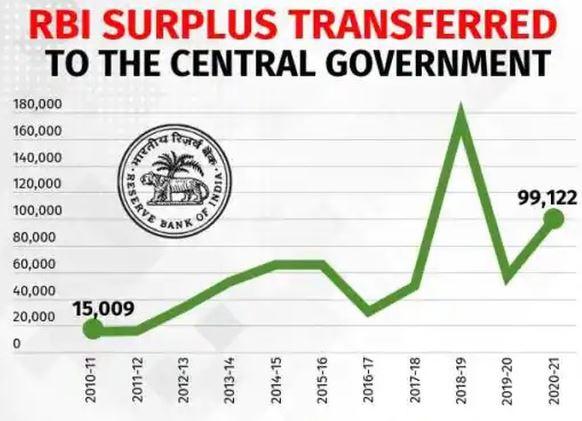
UPSC CURRENT AFFAIRS – 19th May 2025 Home / RBI ‘surplus’ transfer to the government Why in News? The RBI transfers its annual surplus to the central government based on the Economic Capital Framework, ensuring financial stability while supporting fiscal needs. Economic Capital Framework (ECF) The Economic Capital Framework (ECF) is a mechanism used by the RBI to determine how much risk provisioning it needs to maintain (to safeguard against potential financial shocks) and how much surplus (profit) it can transfer to the government. It ensures a balance between maintaining the RBI’s financial stability and meeting the fiscal needs of the government. Record Surplus Transfer in 2024-25 For the financial year 2024-25, the RBI is expected to transfer a record surplus in the range of Rs 2.5 lakh crore to Rs 3 lakh crore to the central government. This follows the highest-ever transfer of Rs 2.11 lakh crore in 2023-24. Although RBI doesn’t declare a “dividend” like commercial banks, it transfers the surplus (profits) to the government annually after meeting its reserve and operational requirements. How Does the RBI Earn Profits? The RBI earns income through the following operations: Foreign Currency Assets: The RBI invests in foreign currency assets like bonds, treasury bills of other central banks, and top-rated securities. The interest or returns earned from these are part of its income. Domestic Government Securities: It earns interest from its holdings of rupee-denominated government bonds and securities. Lending to Banks: It lends money to commercial banks for short durations (such as overnight) under liquidity adjustment facilities, earning interest in the process. Management Fees: It charges the central and state governments a fee for managing their borrowings. Expenditure:RBI’s main expenditures include: Printing and distribution of currency. Staff salaries and administrative expenses. Commissions paid to banks for government transactions and to primary dealers for underwriting bond issues. Legal Basis for Surplus Transfer According to Section 47 of the RBI Act, 1934, after making provisions for: Bad and doubtful debts Depreciation of assets Staff-related funds Other customary banking provisions …the remaining surplus is transferred to the Central Government. Does the RBI Pay Tax on its Profits? No. Under Section 48 of the RBI Act, 1934, the RBI is exempt from paying: Income tax Super-tax Wealth tax This exemption applies to all profits, income, or gains earned by the central bank. Is There a Fixed Policy for Surplus Distribution? There is no explicit policy, but various committees have guided the process: Malegam Committee (2013): Recommended higher surplus transfers to the government.After its recommendations, surplus transfer as a percentage of RBI’s gross income (less expenditure) rose significantly—from 53.40% in 2012-13 to 99.99% in 2013-14. Earlier, surplus was partly retained in: Contingency Fund (CF): For unforeseen financial emergencies. Asset Development Fund (ADF): For internal capital expenditure and investments in subsidiaries. These reserves were meant to maintain RBI’s financial resilience and credibility in times of crisis. Differences Between RBI and Government The Government of India has at times argued that the RBI holds excess reserves compared to global benchmarks and has suggested that the surplus could be used for purposes like recapitalising public sector banks. The RBI, on the other hand, has emphasized the need for large reserves to: Ensure financial stability Maintain market confidence Safeguard against macroeconomic and financial risks RBI views higher reserves as a critical element of its institutional independence. Despite these occasional differences, both sides usually reach a negotiated settlement, as noted by former RBI Governor Duvvuri Subbarao. How Do Other Central Banks Handle Surplus Transfers? United Kingdom and United States: The central bank and the government mutually decide the quantum of surplus transfer. Japan: The government unilaterally decides the amount of surplus transfer. On average, surplus transfers by central banks globally amount to around 0.5% of GDP, though this can vary by country and context. Decreased oxygen-carrying capacity of RBCs. Increased fragility and cell stiffness. Vascular blockage, causing pain and organ injury. Increased susceptibility to infections, anemia, and stroke. Past Illegal Allotments Invalid
1991 K. Veeraswami judgment in news
UPSC CURRENT AFFAIRS – 21th May 2025 Home / 1991 K. Veeraswami judgment in news Why in News? Vice President Jagdeep Dhankar has called for revisiting the 1991 K. Veeraswami vs Union of India judgment, citing it as the origin of judicial corruption and a hurdle to registering FIRs against High Court and Supreme Court judges. Key Highlights of the Case: Who was K. Veeraswami? Former Chief Justice of Madras High Court (1969–1976). FIR registered by the CBI in 1976 for possessing disproportionate assets under the Prevention of Corruption Act, 1947. Timeline of Legal Proceedings: 1976–1977: CBI filed FIR and chargesheet. 1978: Veeraswami challenged the prosecution in Madras High Court. 1979: Full Bench of Madras HC (2:1) rejected the plea. 1991: Supreme Court upheld the prosecution in a 4:1 majority decision. Supreme Court Judgment (1991): Judges of High Courts and the Supreme Court are covered under the definition of ‘public servant’ under the PC Act. Sanction required for prosecution of sitting judges. Consultation with the Chief Justice of India (CJI) is mandatory before: Filing an FIR. Granting sanction for prosecution. If CJI is accused, consult other senior judges of the SC. Dissenting Opinion (Justice J.S. Verma): Judges of higher judiciary should be excluded from the PC Act. Called for a new law for corruption cases involving constitutional authorities. Important Points: Prevention of Corruption Act, 1947 (now replaced by PC Act, 1988): A central anti-corruption law. Requires sanction to prosecute public servants. Public Servant under PC Act: Includes judges, making them liable for prosecution with procedural safeguards. Sanctioning Authority: The President of India is the authority, acting in consultation with the CJI. Judicial Immunity vs Accountability: The case raised critical questions about balancing judicial independence with legal accountability. Current Relevance (2025): The Delhi cash-on-fire case at the residence of Justice Yashwant Varma has reignited concerns over procedural hurdles in prosecuting judges. Issues & Challenges Identified in Implementing the Veeraswami Judgment Ambiguity in Sanctioning Authority The judgment designates the President as the competent authority to grant sanction for prosecution, but the President acts on the aid and advice of the Council of Ministers. This creates uncertainty and potential executive influence in matters concerning judicial accountability. Delay in FIR Registration The mandatory requirement to consult the Chief Justice of India (CJI) before even registering an FIR against a sitting judge leads to procedural delays. This may obstruct timely investigation and undermine public trust in judicial impartiality. Threat to Separation of Powers Involving the executive (through the President) in sanctioning prosecutions against judges risks interference with judicial independence, violating the doctrine of separation of powers. Lack of an Independent Oversight Mechanism India lacks a dedicated, independent body to examine corruption or misconduct complaints against judges of higher judiciary. The internal ‘in-house mechanism’ of the judiciary is non-statutory, opaque, and not subject to public scrutiny or external audit. Way Forward: Revisit 1991 Guidelines: As suggested by the Vice President, to ensure transparency and accountability without compromising judicial independence. New Legislation: May be needed for dealing with misconduct at the highest levels of the judiciary. Strengthen Internal Judicial Mechanisms: To handle corruption allegations without delay. Decreased oxygen-carrying capacity of RBCs. Increased fragility and cell stiffness. Vascular blockage, causing pain and organ injury. Increased susceptibility to infections, anemia, and stroke. Past Illegal Allotments Invalid
IMF Sets 11 New Conditions for Pakistan
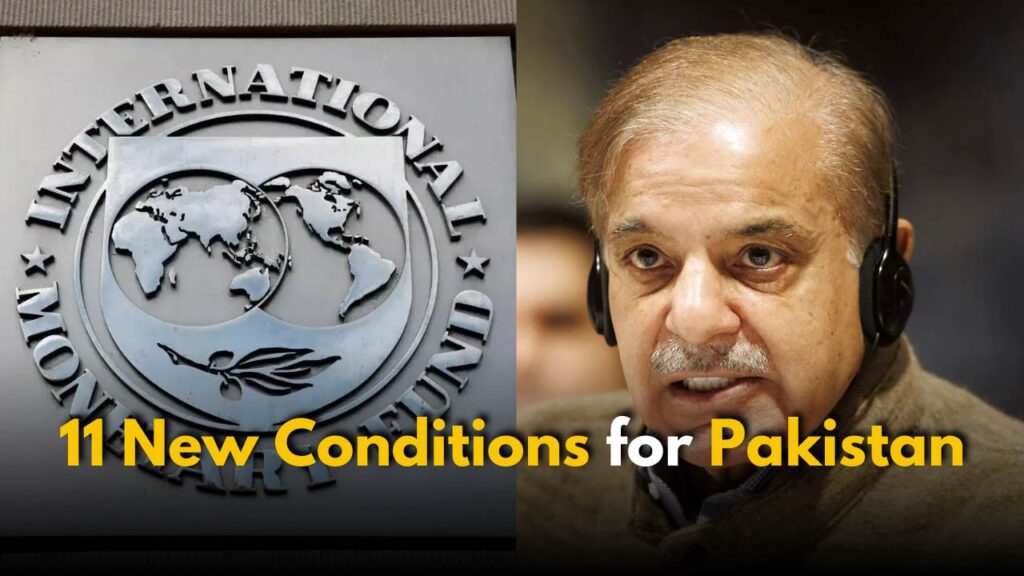
UPSC CURRENT AFFAIRS – 19th May 2025 Home / IMF Sets 11 New Conditions for Pakistan Why in News? The IMF has imposed 11 new conditions on Pakistan, raising the total to 50, linking further bailout disbursal to fiscal reforms, energy tariff hikes, and governance improvements amidst rising India-Pakistan tensions. Background Pakistan is currently under an IMF bailout programme due to its severe balance of payments crisis, low foreign exchange reserves, and unsustainable debt burden. The IMF provides financial support in tranches, but in return, it imposes strict conditions to ensure reforms that stabilize the economy and ensure debt repayment capacity. Recently, the IMF has imposed 11 new conditions, increasing the total to 50 conditions, as a requirement for the release of the next tranche of the bailout fund. IMF – Key Facts The International Monetary Fund (IMF) was established in 1944 at the Bretton Woods Conference to promote global monetary cooperation and financial stability. The IMF is headquartered in Washington, D.C., USA, and currently has 190 member countries (as of 2024), including India. India is a founding member of the IMF, having joined it in 1945. IMF provides short- to medium-term financial assistance to countries facing balance of payments crises, with conditional policy reform measures. IMF voting power is quota-based, and a country’s quota is determined using a formula that includes GDP, openness, economic variability, and foreign exchange reserves. Quotas determine three things: a country’s voting power, access to IMF resources, and allocation of Special Drawing Rights (SDRs). Special Drawing Rights (SDRs) are the IMF’s international reserve asset and unit of account, valued based on a basket of five major currencies (USD, EUR, CNY, JPY, GBP). India holds about 2.75% of total IMF voting power, ranking among the top 10 countries. The IMF conducts regular economic surveillance and publishes reports like the World Economic Outlook (WEO) and Global Financial Stability Report (GFSR). In India, the Department of Economic Affairs (Ministry of Finance) handles IMF relations. IMF reforms and quota realignment are ongoing demands from emerging economies like India to reflect current global economic realities. Unlike the World Bank, the IMF does not fund infrastructure projects; it focuses on macroeconomic stability and liquidity support. Key IMF Conditions Imposed on Pakistan Here is a breakdown of the 11 new IMF conditions: Parliamentary Approval of Budget (FY 2026) Pakistan must pass a ₹17.6 trillion federal budget in parliament. This includes ₹1.07 trillion for development spending. The budget must align with IMF programme targets by the end of June 2025. Increase in Electricity Surcharge The government must remove the cap of ₹3.21 per unit on the debt servicing surcharge on electricity bills. This means consumers may face higher electricity bills to compensate for inefficiencies in the power sector. The legislation for this must be passed by the end of June 2025. Import Policy Change – Used Cars The IMF wants Pakistan to lift the restriction on the import of used cars that are more than three years old. The government must allow commercial import of used vehicles up to five years old. All relevant legislation must be submitted to Parliament by the end of July 2025. Agriculture Income Tax by Provinces The four provinces must implement new Agriculture Income Tax laws through: An operational platform for processing returns Taxpayer identification and registration systems Public awareness campaign Compliance improvement measures Deadline: June 2025. Governance Action Plan The government must publish a governance reform plan based on the IMF’s Governance Diagnostic Assessment. The objective is to address weaknesses in public financial management and accountability. Financial Sector Strategy Post-2027 A new plan must be developed and published outlining the financial sector framework from 2028 onward, including: Regulatory environment Institutional arrangements Long-term reform goals Electricity Tariff Rebasing Government must issue notifications for annual rebasing of electricity tariffs by July 1, 2025. This ensures that energy prices reflect actual costs, discouraging losses in the sector. Gas Tariff Adjustment A semi-annual gas tariff adjustment must be implemented by February 15, 2026 to align tariffs with cost recovery. Captive Power Levy Legislation Parliament must pass legislation to make the captive power levy (currently imposed through ordinance) permanent by the end of May 2025. This measure pushes industries to shift from private generation to the national electricity grid. Removal of Industrial Zone Incentives The IMF has required Pakistan to phase out all tax and policy incentives for Special Technology Zones and Industrial Parks by 2035. A detailed plan for this must be prepared by the end of 2025. External Risk Warning – India-Pakistan Tensions The IMF report notes that rising tensions with India, especially following Operation Sindoor and missile exchanges, threaten the success of the IMF programme. Tensions could derail fiscal targets, external stability, and reform implementation. Defence Spending Context The IMF report lists Pakistan’s defence budget for the next fiscal year as ₹2.414 trillion (12% higher than previous year). However, government estimates show it could exceed ₹2.5 trillion (an 18% increase), especially after recent hostilities with India. Conclusion The IMF is pushing Pakistan for deep structural reforms, better governance, transparency, and fiscal discipline. However, the rising geopolitical tensions with India and the increased defence spending pose risks to the successful implementation of these reforms. The conditions also place heavy socio-economic burdens on the Pakistani public, especially in the energy and taxation sectors. Decreased oxygen-carrying capacity of RBCs. Increased fragility and cell stiffness. Vascular blockage, causing pain and organ injury. Increased susceptibility to infections, anemia, and stroke. Past Illegal Allotments Invalid
What is a Presidential reference?
UPSC CURRENT AFFAIRS – 20th May 2025 Home / What is a Presidential reference? Why in News? President Droupadi Murmu has referred constitutional questions to the Supreme Court under Article 143 regarding the powers and timelines for Presidential and Gubernatorial assent to State Bills. Historical Context of Article 143 The advisory jurisdiction of the Supreme Court under Article 143 is rooted in colonial-era constitutional law: Government of India Act, 1935: It allowed the Governor-General to refer questions of law to the Federal Court for its opinion. This was intended to provide legal clarity on matters of governance and public interest. Adopted in Indian Constitution: Post-Independence, Article 143 was included to provide a non-binding advisory role to the Supreme Court on matters of law or fact of public importance, as advised by the Council of Ministers. Comparative Perspectives: Canada: Similar provision exists in the Canadian Constitution. The Supreme Court of Canada can give advisory opinions on legal questions referred by federal or provincial governments. USA: The U.S. Supreme Court does not entertain advisory opinions, respecting the doctrine of strict separation of powers. Only actual “cases and controversies” are adjudicated. Provisions under Article 143 Article 143 – Advisory Jurisdiction It has two clauses: Article 143(1): The President may refer to the Supreme Court any question of law or fact of public importance for its opinion. Article 143(2): Specifically applies to disputes arising out of pre-constitutional treaties or agreements, mostly obsolete now. Article 145: Prescribes that a minimum five-judge bench hears such a reference. Nature of the Opinion: The opinion is not binding on the President or the executive. It does not create precedent for future cases, unlike judgments under Articles 32 or 136. However, it has high persuasive value and is generally respected and followed by both the executive and judiciary. Past Instances of Presidential References Since 1950, about 15 Presidential references have been made. Some important ones include: Case Year Significance Delhi Laws Act Case 1951 Laid down principles of delegated legislation. Kerala Education Bill 1958 Balanced Fundamental Rights vs Directive Principles; clarified minority rights under Article 30. Berubari Case 1960 Held that cession of territory requires constitutional amendment under Article 368. Keshav Singh Case 1965 Explained powers and privileges of State legislatures. Presidential Poll Reference 1974 Stated that elections can continue despite vacancies in State Assemblies. Special Courts Bill 1978 Established that the Court may decline vague references and must respect separation of powers. Cauvery Water Dispute 1992 Held that SC cannot sit in appeal over earlier judgments in advisory capacity. Third Judges Case 1998 Explained collegium system; laid down procedure for appointment of judges. Ram Janmabhoomi Reference 1993 Only instance where the Supreme Court declined to answer, citing lack of clarity and political sensitivity. The Current Reference (2024-25) Trigger for the Reference: The Supreme Court, in a recent judgment, set timelines for: The President and Governors to act on Bills passed by State legislatures. Held that their actions are justiciable and can be subject to judicial review. Government’s Concerns: The President, acting on the advice of the Union Cabinet, has referred 14 legal questions to the Supreme Court.These include: Can the court prescribe timelines for the President or Governors where the Constitution is silent? Is the President’s/Governor’s decision on a Bill justiciable before it becomes law? To what extent can the Supreme Court exercise powers under Article 142 (complete justice)? Whether the executive action during a pending Bill can be reviewed? Context of the Conflict: Increasing friction between the Union Government and Opposition-ruled State governments. Some Governors have delayed action on State Bills. SC criticized delays and adopted Home Ministry’s Office Memorandum to set a time limit. Objective of the Reference: To seek constitutional clarity on: The scope of judicial review over the President/Governor’s discretion. Whether courts can mandate timelines when none exist in the Constitution. Federal balance and coordination in a constitutional democracy. Importance of the Current Reference Clarification will determine: The boundaries of judicial intervention in executive discretion. The federal character of Indian polity. The principle of constitutional governance and accountability. The issue touches upon fundamental principles of: Separation of powers Democratic decision-making Judicial activism vs restraint Decreased oxygen-carrying capacity of RBCs. Increased fragility and cell stiffness. Vascular blockage, causing pain and organ injury. Increased susceptibility to infections, anemia, and stroke. Past Illegal Allotments Invalid
PM inaugurates 103 Amrit Bharat railway stations
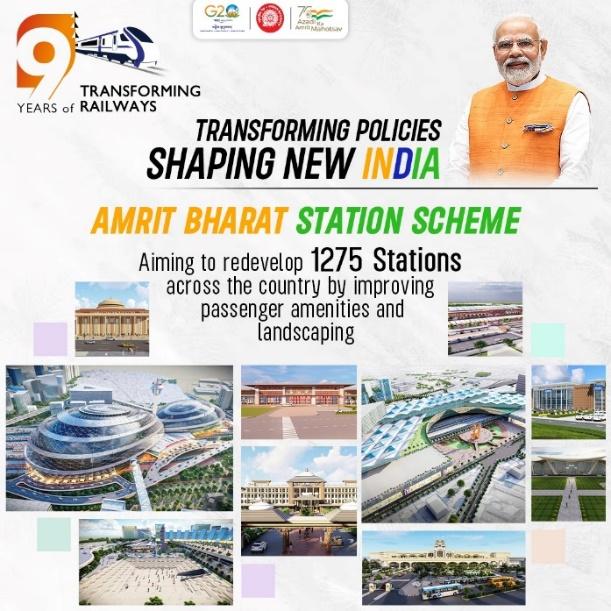
UPSC CURRENT AFFAIRS – 23th May 2025 Home / PM inaugurates 103 Amrit Bharat railway stations Why in News? Prime Minister Narendra Modi inaugurated 103 Amrit Bharat railway stations across 18 States/UTs to promote modern infrastructure and regional heritage under the Amrit Bharat Station Scheme (ABSS). Background 103 Amrit Bharat railway stations located in 86 districts across 18 States and Union Territories, have been redeveloped at a cost of over ₹1,100 crore under the Amrit Bharat Station Scheme (ABSS), aimed at transforming Indian Railways’ station infrastructure to enhance passenger experience. Key Highlights Amrit Bharat Station Scheme (ABSS): Part of Indian Railways’ long-term vision to modernise over 1,300 stations. Emphasises blending modern infrastructure with local heritage and art. Examples: Mandalgarh (Rajasthan): Showcases Rajput architectural traditions. Thawe (Bihar): Displays Madhubani art and devotion to Maa Thawewali. Orchha (Madhya Pradesh): Embodies the divinity of Lord Ram. Srirangam (Tamil Nadu): Inspired by Dravidian temple architecture. Dakor (Gujarat): Reflects reverence to Ranchhodrai ji. Tiruvannamalai (Tamil Nadu) and Begumpet (Telangana): Highlight regional architectural heritage. Railway Development in Rajasthan: PM Modi inaugurated projects worth ₹26,000 crore in Rajasthan and flagged off a new train service from Bikaner to Mumbai. The Central government plans to invest nearly ₹10,000 crore in Rajasthan’s railway development in FY 2025–26, a 15-fold increase over pre-2014 levels. Employment and Tourism Boost: Redeveloped stations serve as catalysts for tourism and employment generation, especially in heritage-rich locations. The PM urged citizens to ensure cleanliness and safety at the newly upgraded stations. Broader Railway Modernisation Efforts Vande Bharat, Amrit Bharat & Namo Bharat Trains: Introduction of modern, semi-high-speed trains to enhance rail travel quality and regional connectivity. 70 Vande Bharat routes are currently operational, connecting remote areas with faster, efficient transport. Infrastructure Achievements (2014–2025): Over 34,000 km of new railway tracks were laid. Unmanned level crossings on broad gauge lines eliminated. Construction of hundreds of road overbridges and underbridges for improved safety and mobility. Dedicated Freight Corridors (DFCs) under development for seamless cargo movement. Ongoing work on India’s first bullet train project between Mumbai and Ahmedabad. Significance and Implications Modernisation of railway stations under the Amrit Bharat Station Scheme (ABSS) is a key step toward building world-class infrastructure in India. Reflects a shift from routine maintenance to comprehensive redevelopment, improving functionality, aesthetics, and efficiency. Boost to Local Economies and Tourism- Stations are designed to reflect local art, architecture, and culture, creating regional identity and attracting tourists. Enhances the potential of heritage tourism Redevelopment projects are labour-intensive, providing short-term employment during construction and long-term jobs in hospitality, tourism, and maintenance sectors. Upgraded stations will offer better amenities such as clean waiting areas, improved lighting, digital displays, and enhanced safety features. Facilities will cater to the elderly, differently-abled, and women, improving inclusivity in public infrastructure. Conclusion The inauguration of Amrit Bharat stations and related railway development projects signify a paradigm shift in Indian Railways—from transport utility to economic catalyst and cultural symbol. These projects reflect India’s vision of building a modern, inclusive, and sustainable railway ecosystem that supports economic growth, social mobility, and national integration.
Why India needs stable urban forests
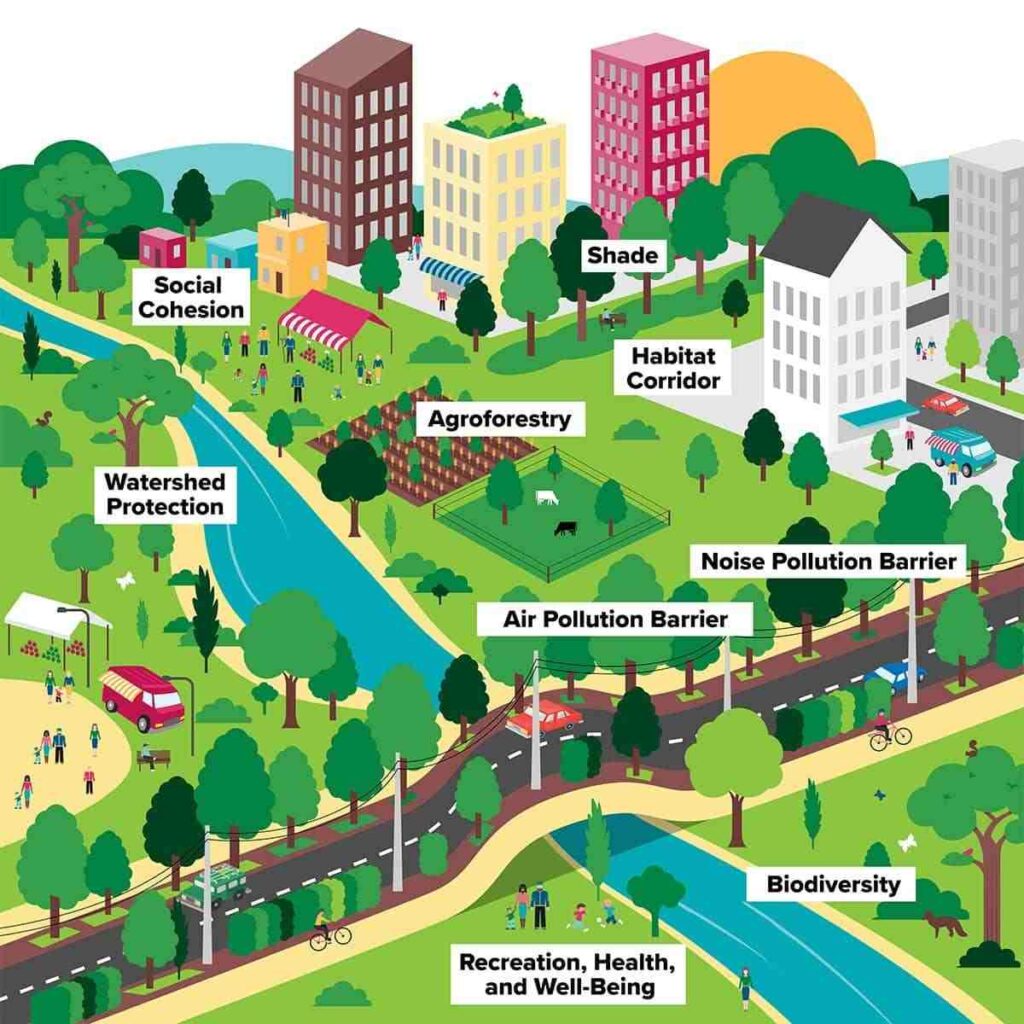
UPSC CURRENT AFFAIRS – 23th May 2025 Home / Why India needs stable urban forests Why in News? The Supreme Court intervened to protect Hyderabad’s Kancha Gachibowli urban forest, highlighting the critical role of urban forests in sustainable city development and environmental governance. Introduction Urban forests, often the last bastions of green cover in rapidly growing Indian cities, are facing an existential crisis. The recent case of Kancha Gachibowli in Hyderabad, where 400 acres were earmarked for industrial development, exemplifies the growing conflict between environmental conservation and urban expansion. The Supreme Court’s intervention, following the felling of 100 acres of trees, brought national attention to the importance of preserving urban forests amidst development pressures. Significance of Urban Forests Urban forests — such as Aarey in Mumbai, Turahalli in Bengaluru, Neela Hauz and the Delhi Ridge, and Dol Ka Baadh in Jaipur — play a pivotal role in sustaining urban ecosystems and enhancing the quality of urban life. They serve multiple environmental, health, and social functions: Environmental Protection: They reduce the urban heat island effect, mitigate climate change, absorb pollutants, and control stormwater runoff, erosion, and flooding. Air Quality Management: With urban AQI levels soaring — Delhi reported an AQI of 494 in November 2024 — green spaces act as natural air filters. As per a 2006 USDA study, one hectare of trees can remove up to one ton of air pollutants annually. Biodiversity Conservation: Urban forests provide crucial habitats for endangered flora and fauna, ensuring ecological balance within city limits. Cultural and Social Value: These forests offer spaces for recreation, relaxation, and community engagement, fostering a nature-sensitive urban culture. The Role of Judicial Interventions India’s judicial system has played a vital role in safeguarding urban forests: Godavarman Case (1996): Expanded the legal definition of forests, enabling protection of urban green spaces. Supreme Court Orders (2004): Directed all States to identify and map forested areas. Delhi Ridge Protection (2015): The Delhi High Court ordered notification and protection of the ecologically sensitive Aravalli wildlife corridor. Save Aarey Movement (2020): The apex court stayed tree felling in Mumbai following public outcry. Baran, Rajasthan (2024): The Rajasthan High Court took suo motu cognisance of illegal tree felling in biodiversity-rich areas. These rulings reinforce the constitutional provisions: Article 21: Right to life includes the right to a healthy environment. Article 48A: Mandates the State to protect and improve the environment. Article 51A(g): Places a fundamental duty on citizens to protect the natural environment. The Way Forward India’s urbanisation must not come at the cost of environmental degradation. The threat to urban forests signifies a larger crisis affecting our biomedical, social, and cultural well-being. Citizens, civil society, judiciary, and the State must work collaboratively to: Ensure legal protection of all identified urban forests. Integrate green cover targets in urban development plans. Promote public awareness and community stewardship. Strengthen implementation of environmental laws and urban forestry programmes.
Development without the savaging of urban biodiversity

UPSC CURRENT AFFAIRS – 23th May 2025 Home / Development without the savaging of urban biodiversity Why in News? International Day for Biological Diversity 2025 was observed on May 22 with the theme “Harmony with Nature and Sustainable Development,” highlighting the need to integrate biodiversity into sustainable development goals. Understanding Biodiversity and Its Importance Biodiversity refers to the variety and variability of living organisms on Earth. It plays a foundational role in maintaining ecosystem balance. It supports human well-being and sustainable economic growth. Approximately 25% of global species are currently threatened with extinction. The primary drivers of this loss include urbanisation, pollution, habitat destruction, and climate change. International Day for Biological Diversity The International Day for Biological Diversity is observed annually on May 22. It commemorates the adoption of the Convention on Biological Diversity (CBD) in 1992. The 2025 theme is “Harmony with Nature and Sustainable Development”. This theme underscores the need to align biodiversity protection with sustainability goals. Global Initiatives Kunming-Montreal Global Biodiversity Framework (GBF): Adopted under the Convention on Biological Diversity (CBD) in 2022. Aims to halt and reverse biodiversity loss through 4 overarching goals and 23 specific targets to be achieved by 2030. Key Target: 30×30 Goal – Conservation and effective management of at least 30% of the world’s terrestrial and marine areas. Urban Focus – Target 12 of Global Biodiversity Framework (GBF): Target 12 of the Kunming-Montreal GBF aims to significantly increase the area and quality of access to green and blue spaces in urban areas by 2030. Promotes ecosystem connectivity and human well-being through nature-based solutions. Supports biodiversity-inclusive urban planning. Linkage with Sustainable Development Goals (SDGs): Goal 11 (Sustainable Cities and Communities): Aims to make cities inclusive, safe, resilient, and sustainable. Encourages the integration of natural ecosystems into city planning and infrastructure. Both GBF and SDG frameworks converge on biodiversity mainstreaming in urban policy. Significance: Reflects a holistic approach linking biodiversity, climate resilience, and urban sustainability. Supports Nature-Based Solutions (NBS) to tackle climate change, urban heat islands, and pollution. The Challenge of Urban Biodiversity Urbanisation is occurring at a rapid pace worldwide. Nearly half of the global population resides in cities. This figure is expected to rise to 70% by 2050. Urban land is under intense pressure due to competing developmental needs. Green spaces are often neglected in urban planning due to perceived space constraints. However, it is possible to integrate greenery if its benefits are prioritised. Benefits of Urban Green Spaces Health Benefits Urban vegetation helps regulate ambient temperatures. It mitigates the urban heat island effect. It supports flood control and stormwater management. Trees absorb pollutants and sequester carbon dioxide. Vegetation conserves water and filters suspended particulate matter. Green belts in Frankfurt were found to lower city temperature by 3.5°C. These belts also increased relative humidity by 5%. Parks and green areas provide recreational and spiritual benefits. Economic Benefits Urban trees contribute significantly to ecosystem services. According to Theodore Endreny, mega-city trees provide services worth $967,000 (₹8 crore) per square kilometre annually. Green infrastructure enhances urban public health. It also contributes to economic sustainability by reducing healthcare and climate adaptation costs. Promoting parks, tree-lined avenues, and conserving rivers and lakes can offer long-term returns. Status of Urban Forest Cover in India The Forest Survey of India has assessed forest cover in major cities. The average urban forest cover is 10.26% of geographical area. City-wise data include: Mumbai: 25.43% New Delhi: 12.6% Hyderabad: 12.6% Bengaluru: 6.85% Chennai: 4.66% Ahmedabad: 3.27% Between 2021 and 2023, Chennai and Hyderabad lost 2.6 and 1.6 square kilometres of forest cover respectively. Frameworks for Urban Biodiversity Conservation The GBF offers guidelines for conserving urban biodiversity. It recommends protecting and enhancing green and blue spaces. It suggests improving native biodiversity and ecological connectivity. The UN Habitat proposes the 3-30-300 rule: Each home, workplace, or school should view at least three mature trees. Neighbourhoods should have a minimum of 30% tree canopy cover. A public green space of 0.5 to 1 hectare should be accessible within 300 metres. City Biodiversity Index and Local Planning The City Biodiversity Index evaluates biodiversity across three parameters: Native biodiversity Ecosystem services Governance mechanisms ICLEI South Asia has developed indices for cities like Kochi, Gangtok, and Nagpur using 23 indicators. Based on the assessment, a Local Biodiversity Strategy and Action Plan (LBSAP) is formulated. These strategies aim to improve biodiversity and ensure sustainable urban development. Urban Case Studies and Best Practices Urban areas can support rich biodiversity with proper planning. In Chennai, the greening of the Koyambedu market in 2021 promoted natural regeneration. Within two years, 141 higher plant species from 39 families were recorded. The site also attracted 35 bird and 27 butterfly species—key bioindicators. The model used mimics a three-layered forest and may be more effective than the Miyawaki method in small spaces. In 2018, Care Earth Trust developed a strategy to plant one million native trees in Chennai over five years. The Madras Race Club land is being converted into a water body to aid groundwater recharge. However, unregulated urban development has encroached upon many waterbodies in Chennai and Bengaluru. The Pallikaranai Marsh in Chennai, once considered a wasteland, has been partially restored and declared a Ramsar site. Most urban waterbodies suffer from pollution due to untreated sewage and solid waste. Ecological restoration should include waste management and sewage treatment. Legal protection is necessary to safeguard remaining urban lakes and waterbodies. Benefits of Urban Green Spaces
Tamil Nadu sues Centre in Supreme Court over non-disbursal of ₹2,000-crore education funds
UPSC CURRENT AFFAIRS – 23th May 2025 Home / Tamil Nadu sues Centre in Supreme Court over non-disbursal of ₹2,000-crore education funds Why in News? The State of Tamil Nadu has filed an original suit in the Supreme Court of India against the Union Government, accusing it of withholding over ₹2,000 crore in education funds under the Samagra Shiksha Scheme. Tamil Nadu alleges that this is being done to coerce the State into implementing the National Education Policy (NEP) 2020, which it has consistently opposed. Background of the Dispute Samagra Shiksha Scheme The Samagra Shiksha Scheme is a centrally sponsored programme aimed at improving school education from pre-primary to senior secondary levels (Class 12). It merges earlier schemes such as Sarva Shiksha Abhiyan (SSA), Rashtriya Madhyamik Shiksha Abhiyan (RMSA), and Teacher Education (TE). It follows a funding pattern, usually 60:40 between the Centre and the States. For 2025-26, the Project Approval Board allocated ₹3,585.99 crore for Tamil Nadu, of which the Centre was to provide ₹2,151.59 crore as its share. Tamil Nadu claims that the Centre has withheld this amount despite its approval, severely impacting the scheme’s implementation and affecting students, teachers, and staff. Tamil Nadu’s Allegations 1. Conditional Fund Disbursement Linked to NEP 2020 Tamil Nadu argues that the Central Government has made the disbursal of funds contingent upon the State’s acceptance of NEP 2020 and the implementation of the PM SHRI Schools Scheme. The State asserts that the Samagra Shiksha Scheme is independent of NEP 2020 and should not be linked to it in any manner. 2. Violation of Federal Principles The State contends that withholding the funds violates the principle of cooperative federalism. It alleges that the Centre is attempting to interfere with the State’s constitutional right to frame its own education policy, which falls under Entry 25 of the Concurrent List in the Seventh Schedule of the Constitution. 3. Adverse Impact on Education The lack of funds has significantly affected: Over 43.94 lakh students Around 2.21 lakh teachers Over 32,000 staff members The State also claims that this has obstructed its ability to implement provisions of the Right to Education Act, 2009, thereby affecting the fundamental right to education. Tamil Nadu’s Opposition to NEP 2020 Historical Background Tamil Nadu has a long history of opposing the three-language formula proposed by the Union Government. In 1968, the Tamil Nadu Legislative Assembly passed a resolution rejecting the Official Languages (Amendment) Act, 1967, and reaffirming its two-language policy of Tamil and English. Under the Official Languages Rules, 1976, Tamil Nadu was exempted from the implementation of the Official Languages Act, 1963. The Tamil Nadu Tamil Learning Act, 2006 This Act mandates the compulsory teaching of Tamil in all schools in the State from Class 1 to Class 10. The third language is optional and left to students whose mother tongue is neither Tamil nor English. Tamil Nadu views the NEP’s promotion of the three-language formula as a veiled imposition of Hindi, which is politically and culturally sensitive in the State. Legal Relief Sought by Tamil Nadu In its suit, Tamil Nadu has requested the Supreme Court to: Declare that NEP 2020 and the PM SHRI Schools Scheme are not binding on the State. Hold that linking Samagra Shiksha funds to the implementation of NEP 2020 is unconstitutional, illegal, arbitrary, and unreasonable. Direct the Union Government to release ₹2,291 crore (₹2,151 crore plus interest) with 6 percent annual interest from May 1, 2025, until the amount is paid. Constitutional and Legal Implications Cooperative Federalism: Tamil Nadu argues that the Centre’s actions violate the spirit of cooperative federalism, which requires collaboration rather than coercion between the Union and State governments. Concurrent List Authority: Education falls under the Concurrent List, where both the Centre and the States can legislate. However, the State claims its authority is being overridden unconstitutionally. Right to Education: The financial block is seen as undermining the State’s efforts to fulfill obligations under the Right to Education Act, which provides free and compulsory education to all children aged 6 to 14. Conclusion The case highlights a broader issue of Centre-State relations in India, particularly in areas where States have strong cultural and political positions, such as education. Tamil Nadu’s challenge to the Centre’s policies raises significant constitutional questions about federalism, the role of centrally-sponsored schemes, and the limits of Central influence over State policymaking. The Supreme Court’s decision in this matter could have far-reaching implications for the balance of power in India’s federal structure.
BRICS bank NDB admits Algeria as new member
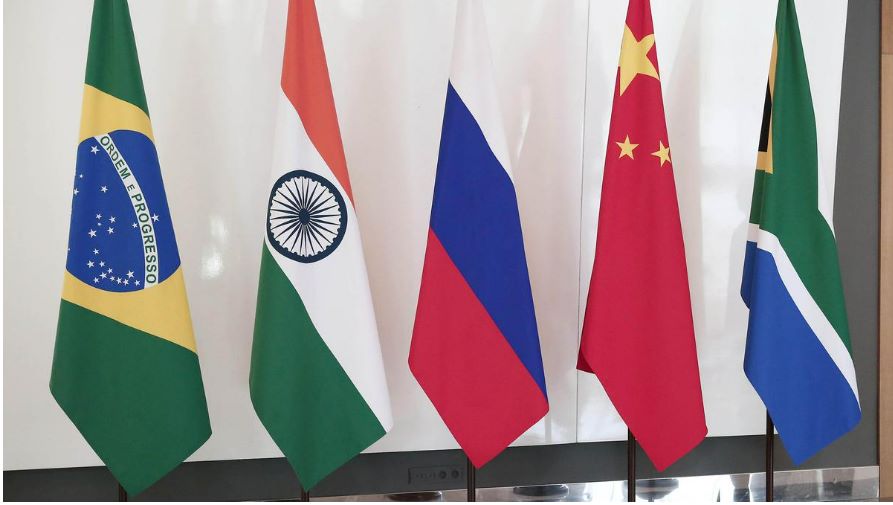
UPSC CURRENT AFFAIRS – 23th May 2025 Home / BRICS bank NDB admits Algeria as new member Why in News? Algeria became a full member of the New Development Bank (NDB) in May 2025, enhancing NDB’s outreach into North Africa and the Global South. Introduction Recently the New Development Bank (NDB), established by BRICS nations, formally admitted Algeria as a new member, marking a significant expansion of its global membership base. Algeria deposited its instrument of accession on May 19, 2025, in accordance with the Articles of Agreement of the NDB. About the New Development Bank (NDB) Established: 2015 Founding Members: Brazil, Russia, India, China, South Africa (BRICS) Headquarters: Shanghai, China Objective: To mobilise resources for infrastructure and sustainable development projects in member countries and other emerging economies. The bank has approved over 120 investment projects worth $40 billion, covering sectors such as: Clean energy and energy efficiency Transport infrastructure Environmental protection Water supply and sanitation Social and digital infrastructure The presidency and vice-presidency of the NDB are rotated among founding members. Algeria’s Admission and Significance Algeria: Plays an important role in the North African economy and the global financial system Has rich natural resources, a dynamic economy, and a strategic geographic location Possesses immense growth potential, making it a valuable addition to NDB’s mission NDB is committed to becoming a trustworthy partner in supporting Algeria’s sustainable development goals. Algeria’s Perspective The membership reflects Algeria’s confidence in NDB as a key institution in financing global development It showcases the potential of NDB to offer alternative and innovative solutions for the economic resilience and growth of its member nations Implications Strengthening of South-South cooperation: Algeria’s entry enhances the geographical diversity of the NDB, reinforcing its role as a global institution beyond BRICS. Strategic outreach into Africa: It deepens engagement with African economies, aligning with BRICS’ broader geopolitical and economic objectives. Alternative to Western-dominated financial systems: The expansion of NDB is seen as part of efforts to provide non-Western development financing models. Implications of Algeria Joining NDB on India Strengthening India–Africa Engagement Algeria’s entry into the NDB aligns with India’s strategic focus on Africa under initiatives such as the India-Africa Forum Summit and Voice of Global South Summit. Enhances India’s outreach in North Africa, a region with rich natural resources and strategic importance for India’s energy security and trade diversification. Boost to South–South Cooperation Reinforces India’s vision of multipolar global financial architecture, offering alternatives to Western-led institutions like the World Bank and IMF. India’s leadership in the Global South narrative is strengthened by expansion of multilateral banks like NDB. Economic and Trade Opportunities Algeria’s development needs, particularly in infrastructure, clean energy, and digital sectors, may open new avenues for Indian companies to participate in NDB-funded projects. Facilitates greater economic linkages between India and Algeria, potentially increasing trade and investment flows. Strategic Balancing in BRICS and NDB As a founding member, India plays a key role in shaping NDB’s policies. Expansion to include Algeria allows India to promote inclusive development while maintaining strategic influence. Helps counterbalance the growing influence of China within BRICS and the NDB framework by diversifying membership and promoting democratic multilateralism. Energy Security and Resource Access Algeria, a major producer of oil and natural gas, can become a strategic partner in India’s energy diversification strategy. NDB-backed cooperation in the energy sector could strengthen India’s access to cleaner and affordable energy sources. Enhanced Development Financing Options Algeria’s inclusion adds to the financial and political strength of NDB, which can mobilize more capital for projects in India and other developing nations. Strengthens NDB’s balance sheet and global reach, allowing it to become a more competitive source of infrastructure finance compared to institutions like the ADB or AIIB. Conclusion The inclusion of Algeria in the NDB signals the bank’s growing global relevance and commitment to inclusive, sustainable development. As the geopolitical landscape evolves, such institutions represent important platforms for multilateral collaboration, particularly for the Global South.