First Indian Epigraphical Reference to Halley’s Comet

UPSC CURRENT AFFAIRS – 21th June 2025 Home / First Indian Epigraphical Reference to Halley’s Comet Why in News? The Archaeological Survey of India (ASI) has discovered the first known Indian epigraphical reference to Halley’s Comet in a copper plate inscription dated 1456 CE, during the Vijayanagar period. The inscription, written in Sanskrit using the Nagari script, was found at the Sri Mallikarjunaswamy Temple in Srisailam, Andhra Pradesh. Key Highlights of the Discovery: Inscription Date: The copper plate is dated to Śaka 1378, Dhātru Āshāḍha ba. 11, which corresponds to Monday, June 28, 1456 CE. Ruler Mentioned: The inscription records a land grant issued by Vijayanagar ruler Mallikarjuna. Purpose of the Grant: The donation was made “to mitigate the great calamity” (mahōtpāta śāntyartham) believed to arise due to: The appearance of a comet (referred to as dhūmakētu), And an associated meteor shower (referred to as prakāśyāya mahōtpāta). Scientific Correlation: The date coincides with the 1456 appearance of Halley’s Comet, as recorded in global astronomical records, making this inscription historically and scientifically significant. Recipient of the Grant: A Vedic scholar named Limgaṇarya from Kaḍiyalapura (likely present-day Kaḍiyapulanka in Kadapa district, Andhra Pradesh) received a village named Simgapura in Kelajhasima of Hastinavati Vemṭhe as an agrahāra (Brahmin land grant). Cultural Beliefs and Astronomy: In Indian tradition, comets and meteor showers were considered inauspicious, often associated with natural disasters or misfortune. The inscription reflects the interplay of celestial events and royal policy, where astronomical phenomena influenced royal donations and rituals. Significance of the Discovery: This is the first known epigraphical reference (as opposed to textual references) in India to Halley’s Comet. Confirms the observational awareness of celestial events among 15th-century Indian scholars and rulers. Demonstrates how astronomical events were interpreted through religious and political lenses, often prompting donations and rituals to pacify perceived misfortunes. The discovery was made during the editing of 21 unpublished copper plate charters (comprising 78 copper leaves) held by the Srisailam temple. The edited collection is expected to be published soon. Broader Context: Astronomy in Indian Epigraphy: While ancient and medieval Indian texts have several mentions of dhumaketus (comets), this inscription is unique as a primary epigraphic source. Adds to the corpus of Indian astronomical heritage, showing India’s engagement with celestial phenomena not just for scientific curiosity, but also for their religious and socio-political implications. Conclusion: This discovery is a remarkable convergence of archaeology, astronomy, and historical linguistics. It enriches our understanding of how Indian rulers engaged with the cosmos and reflects the role of celestial interpretations in statecraft and temple culture during the Vijayanagar era. Economic Implications For Indian Exporters These reforms reduce transaction costs and compliance hurdles Encourage a more competitive and efficient export environment Promote value addition in key sectors like leather For Tamil Nadu The reforms particularly benefit the state’s leather industry, a major contributor to employment and exports Boost the marketability of GI-tagged E.I. leather, enhancing rural and traditional industries For Trade Policy These decisions indicate a shift from regulatory controls to policy facilitation Reinforce the goals of Make in India, Atmanirbhar Bharat, and India’s ambition to become a leading export power Recently, BVR Subrahmanyam, CEO of NITI Aayog, claimed that India has overtaken Japan to become the fourth-largest economy in the world, citing data from the International Monetary Fund (IMF). India’s rank as the world’s largest economy varies by measure—nominal GDP or purchasing power parity (PPP)—each with key implications for economic analysis. Significance and Applications
India to be world’s 4th largest electric car maker by 2030: Report
UPSC CURRENT AFFAIRS – 21th June 2025 Home / India to be world’s 4th largest electric car maker by 2030: Report Why in News? India is set to become the fourth-largest electric four-wheeler manufacturer globally by 2030, with a projected capacity of 2.5 million units. Background India is poised to become the fourth-largest global hub for electric four-wheeler manufacturing by 2030, following China, the European Union, and the United States. According to the Global Clean Investment Monitor report by the Rhodium Group, India’s production capacity is set to rise over tenfold — from a modest 0.2 million units in 2024 to a projected 2.5 million units by the end of the decade. This significant expansion reflects India’s strategic focus on electric mobility as part of its broader industrial and climate goals. However, the journey toward global competitiveness in this sector will require overcoming major challenges related to costs, exports, and infrastructure. Growth Trajectory: From Nascent to Global Player As of 2024, India’s operational electric car manufacturing capacity stands at just 0.2 million units. However, a wave of new investments and industrial announcements is expected to radically reshape this landscape. The cumulative manufacturing capacity by 2030 is projected at 2.5 million units, comprising: 0.2 million currently operational 0.3 million ready but not yet active 1.3 million under construction 0.7 million announced This exponential growth positions India ahead of South Korea and Japan in terms of anticipated capacity, marking a strategic shift in the global EV supply chain. Mismatch Between Production and Demand Despite this manufacturing boom, domestic demand for electric four-wheelers in India is projected to remain modest. Rhodium Group estimates that India’s E4W demand will grow from 0.1 million in 2024 to between 0.4 million and 1.4 million by 2030. This implies an electric vehicle penetration rate of just 7–23% in total car sales, which are projected to reach around 6 million units by 2030. This indicates a surplus production capacity of 1.1–2.1 million vehicles, highlighting a critical need for Indian manufacturers to explore export markets to fully utilize their capacity. Export Opportunity vs Cost Challenge The surplus production opens the door for “Make in India for the World”, aligning with the government’s industrial vision. However, tapping into global EV markets will not be easy. Indian companies must significantly reduce production costs to compete with dominant exporters, particularly China, which currently benefits from economies of scale, advanced battery technology, and strong global market integration. Without addressing cost structures and competitiveness, India’s manufacturing advantage could remain underutilized. Domestic Market Dynamics and Policy Support India’s domestic E4W market is currently dominated by homegrown and localized players: Tata Motors, MG Motor, and Mahindra together account for nearly 90% of market share in 2024–25. To support domestic production and promote localization, the government has implemented several policy tools: Consumer subsidies tied to local value addition Production-linked incentives (PLIs) for EVs and advanced battery manufacturing Tariffs of 70–100% on fully built imported EVs Investment in EV charging infrastructure These measures have helped create a robust domestic manufacturing base but have also led to higher consumer prices and limited variety, as almost 100% of EVs sold are produced locally. Comparative Perspective: India vs Global Players India’s E4W production capacity by 2030: 2.5 million units China: 29 million units EU: 9 million units US: 6 million units While India is far behind these EV giants, it surpasses Japan (1.4 million units) and South Korea (1.9 million units) in terms of projected capacity. However, both Japan and South Korea currently have higher operational bases but limited new capacity under construction. In terms of EV adoption, India lags: India’s EV penetration in 2024: ~2% Vietnam’s penetration rose from 3% (2022) to 17% (2024), largely driven by the domestic automaker VinFast Battery Manufacturing: Rapid Rise, But Delivery Risks On the battery front, India has emerged as a standout player, particularly in module assembly. It is projected to become the largest module producer outside of China, Europe, and the US, with several large-scale projects under development. However, when it comes to battery cell manufacturing, India still lags: China: 4,818 GWh US: 1,169 GWh EU: 997 GWh India and rest of world: 567 GWh Much of India’s projected growth in battery manufacturing depends on plants that are under construction or recently announced, raising questions about execution and timelines. Conclusion: India’s electric four-wheeler industry is undergoing a historic transformation, powered by proactive government policies, industrial investment, and localization incentives. By 2030, the country will have one of the world’s largest manufacturing capacities, setting the stage for potential export leadership. However, cost competitiveness, infrastructure readiness, and battery supply chain development remain critical. To fully realize this potential, India must not only scale up production but also integrate into the global EV value chain with high-quality, affordable, and innovative offerings. Economic Implications For Indian Exporters These reforms reduce transaction costs and compliance hurdles Encourage a more competitive and efficient export environment Promote value addition in key sectors like leather For Tamil Nadu The reforms particularly benefit the state’s leather industry, a major contributor to employment and exports Boost the marketability of GI-tagged E.I. leather, enhancing rural and traditional industries For Trade Policy These decisions indicate a shift from regulatory controls to policy facilitation Reinforce the goals of Make in India, Atmanirbhar Bharat, and India’s ambition to become a leading export power Recently, BVR Subrahmanyam, CEO of NITI Aayog, claimed that India has overtaken Japan to become the fourth-largest economy in the world, citing data from the International Monetary Fund (IMF). India’s rank as the world’s largest economy varies by measure—nominal GDP or purchasing power parity (PPP)—each with key implications for economic analysis. Significance and Applications
GENIUS Act Passed in US Senate
UPSC CURRENT AFFAIRS – 21th June 2025 Home / GENIUS Act Passed in US Senate Why in News? The United States Senate passed the GENIUS Act—short for Guiding and Establishing National Innovation for U.S. Stablecoins—with a 68-30 vote. This legislation marks a significant development in the global digital currency ecosystem, particularly in the formal regulation and endorsement of stablecoins—a class of cryptocurrencies backed by reserve assets such as the US Dollar. What are Stablecoins? Stablecoins are a form of cryptocurrency that maintain a stable value by being pegged to real-world assets, such as fiat currencies (USD) or commodities. The primary objective is to reduce the price volatility commonly associated with other cryptocurrencies like Bitcoin or Ethereum. Current Market Capitalisation (2025): USD 251.7 billion Growth in 2025: 22% increase Examples: USD Coin (USDC), Tether (USDT) Key Provisions of the GENIUS Act Full Reserve Backing: All stablecoins must be backed entirely by reserve assets. Monthly Audits: Issuers are required to undergo monthly independent audits to verify reserves. Anti-Money Laundering Compliance: Stringent measures to ensure that stablecoins are not misused for illegal activities. Support for US Treasuries: Encourages private sector investment in US government securities. Federal Oversight: Stablecoin activities will be monitored by federal financial institutions, including the Securities and Exchange Commission (SEC). GENIUS Act vs STABLE Act: Key Differences A separate version of the stablecoin regulation, known as the STABLE Act (Stablecoin Transparency and Accountability for a Better Ledger Economy), is being considered by the House of Representatives. Though similar in spirit, it differs in regulatory approach: Feature GENIUS Act STABLE Act Legislative Status Passed by Senate Yet to be passed by House Reserve Requirements Broad, including US Treasuries Limited to select asset classes Regulating Body SEC and US Treasury Office of the Comptroller of the Currency Issuer Eligibility More inclusive More restricted Exemptions Allows broad federal guidance Leaves scope for state-level oversight Legal experts have expressed concerns that the STABLE Act may not go far enough in ensuring uniformity and transparency, potentially allowing state-level regulators to decide which stablecoins can be listed by licensed intermediaries. Official Responses US Treasury Secretary Scott Bessent Predicted that the stablecoin market could grow to USD 3.7 trillion by 2030. Argued that stablecoins will reinforce the dominance of the US dollar, rather than weaken it. Highlighted that USD-backed stablecoins can be used even in developing countries such as Nigeria, increasing the reach of the US currency through digital platforms. Explained how the increased use of stablecoins will drive up demand for US Treasury securities, thereby strengthening the American financial system. US President Donald Trump Applauded the Senate’s approval of the GENIUS Act, calling it a major step toward making the United States the global leader in digital assets. Trump emphasized that digital assets are the future and that the legislation will attract “massive investment and big innovation.” During his first term, Trump had been skeptical of cryptocurrencies, but has since reversed his stance and actively supported their expansion. Economic Impacts Following the passage of the GENIUS Act: Circle Internet Group, the issuer of the USDC stablecoin, witnessed a 33.82 percent increase in its share price at market close. During pre-market trading, the stock further surged by 24.75 percent, reaching USD 211.87 per share. The Role of Stablecoins in Global Diplomacy and De-Dollarisation Cryptocurrency as a Geopolitical Tool A cyberattack by the hacker group Gonjeshke Darande (allegedly linked to Israeli entities) wiped out USD 90 million from Iran’s largest crypto exchange, Nobitex. The attack reflects how cryptocurrency is increasingly being used as a weapon in geopolitical confrontations. Crypto Diplomacy Trump-linked World Liberty Financial (WLF) recently signed an agreement with the Pakistan Crypto Council to promote digital assets. This agreement came shortly after the India-Pakistan ceasefire following Operation Sindoor, an Indian counterterror operation after a terror attack in Pahalgam. Reinforcing Dollar Supremacy In response to de-dollarisation efforts led by Russia and BRICS, stablecoins backed by the US dollar are being used as a strategic tool. The US sanctions against Russia (freezing USD 300 billion in reserves) led several countries to reduce dependency on the dollar. Russian President Vladimir Putin called for the use of national currencies within BRICS. Trump warned BRICS nations against de-dollarisation, threatening tariffs. President Trump’s Personal Involvement in Crypto Ventures According to public financial disclosures, President Trump has significant financial interests in cryptocurrency-related ventures: USD 320 million from $TRUMP Memecoin. USD 400 million from the World Liberty Financial platform. USD 57.35 million from the sale of WLF’s digital tokens. Ownership of 15 billion governance tokens in WLF. Investments in crypto-focused ETFs and mining companies such as American Bitcoin. Economic Implications For Indian Exporters These reforms reduce transaction costs and compliance hurdles Encourage a more competitive and efficient export environment Promote value addition in key sectors like leather For Tamil Nadu The reforms particularly benefit the state’s leather industry, a major contributor to employment and exports Boost the marketability of GI-tagged E.I. leather, enhancing rural and traditional industries For Trade Policy These decisions indicate a shift from regulatory controls to policy facilitation Reinforce the goals of Make in India, Atmanirbhar Bharat, and India’s ambition to become a leading export power Recently, BVR Subrahmanyam, CEO of NITI Aayog, claimed that India has overtaken Japan to become the fourth-largest economy in the world, citing data from the International Monetary Fund (IMF). India’s rank as the world’s largest economy varies by measure—nominal GDP or purchasing power parity (PPP)—each with key implications for economic analysis. Significance and Applications
State-Level Anti‑Rape Legislations in India

UPSC CURRENT AFFAIRS – 20th June 2025 Home / State-Level Anti‑Rape Legislations in India Why in News? Several Indian States have passed anti-rape Bills proposing stricter punishments, but many remain unenforced due to the requirement of Presidential assent and conflicts with central laws. Introduction As the monsoon session of legislative assemblies across India begins, a number of anti-rape Bills—some recently passed and others long pending—are awaiting implementation. While several State Assemblies have introduced and even passed stricter laws in response to brutal incidents of sexual violence, these have frequently failed to secure the President’s assent or have been returned for legal and constitutional review. This reflects the challenges in legislating criminal laws in India’s federal framework, where both the Centre and the States share jurisdiction over criminal matters. Background: The Nirbhaya Case as a Turning Point The brutal gang-rape and murder of a 22-year-old medical intern in Delhi in December 2012 ignited national outrage and triggered a re-evaluation of India’s criminal laws related to sexual violence. The Criminal Law (Amendment) Act, 2013 was passed in response, introducing several new offences and significantly enhancing punishments. Key changes under the 2013 law included: Raising the minimum sentence for rape to 20 years, extendable to life imprisonment. Permitting the death penalty for repeat rape offenders. Recognizing stalking, voyeurism, and acid attacks as separate crimes with stricter punishments. Strengthening provisions under the Protection of Children from Sexual Offences (POCSO) Act. This central legislation set a legislative benchmark and inspired States to propose additional reforms within their jurisdictions. Criminal Law and the Federal Structure Constitutional Position Criminal law falls under the Concurrent List (Entry 1, List III, Schedule VII) of the Indian Constitution. This means both Parliament and State legislatures are empowered to enact laws in this domain. However, Article 254(2) of the Constitution states that if a State law contradicts an existing Central law on the same subject, it can only come into effect after receiving the assent of the President of India. This has resulted in numerous State-passed anti-rape Bills awaiting Presidential approval for several years, due to overlaps or conflicts with national laws or constitutional concerns. Key Legislative Developments: Timeline and Analysis 1. Central Legislation: 2013 and 2018 Criminal Law (Amendment) Act, 2013Passed after the Nirbhaya case, this law overhauled provisions of the Indian Penal Code (IPC), the Code of Criminal Procedure (CrPC), and the Indian Evidence Act. It addressed: Rape, stalking, and acid attacks with enhanced penalties. Procedural safeguards for victims. A widened definition of sexual assault. 2. Criminal Law (Amendment) Act, 2018 This Act was passed in response to horrific cases such as the Kathua and Unnao rapes. Key provisions included: Minimum 20 years to life or death penalty for raping children under 12. Stricter punishment for raping girls below 16. Fast-track procedures for trial and investigation. This 2018 Act largely nullified the need for earlier State-level amendments on child rape. State-Level Legislative Actions Madhya Pradesh, Rajasthan, Haryana, Arunachal Pradesh (2017–2018) These States introduced amendments to the IPC to allow for the death penalty for rape of girls below the age of 12. However, once the Central law in 2018 addressed similar issues, these amendments became largely redundant, although they still demonstrated the urgency with which States were responding to local crimes. Andhra Pradesh (2019) Following the gang-rape and murder of a young veterinary doctor in Hyderabad, the Andhra Pradesh government introduced: The Andhra Pradesh Special Courts for Specified Offences Against Women and Children Act. The Andhra Pradesh Disha Act. Provisions included: 14-day limit for filing chargesheets. Death penalty for rape and murder. Establishment of special fast-track courts. Despite the political push, especially by the then Chief Minister, the Bills are still awaiting Presidential assent. Maharashtra (2021) After the gang-rape of a 15-year-old girl by multiple perpetrators, the Maharashtra government passed the Shakti Criminal Laws (Maharashtra Amendment) Bill. It proposed: Death penalty for rape, gang-rape, and severe acid attacks. Strict timelines: 30 days each for investigation, trial, and appeal. Penalties for filing false complaints and intimidation. The Bill was returned by the Centre due to concerns over judicial overreach and its conflict with Supreme Court guidelines. West Bengal (2024) Following the rape and murder of a female doctor, the West Bengal Assembly passed the Aparajita Woman and Child Bill, amending the Bharatiya Nyaya Sanhita (BNS), Bharatiya Nagarik Suraksha Sanhita (BNSS), and POCSO Act within the State. The Bill: Mandated life imprisonment without parole or death in aggravated rape cases. Introduced a 21-day investigation limit. Directed convicts to financially compensate victims for medical and rehabilitative expenses. The Bill awaits the President’s assent. Tamil Nadu (2025) The State Assembly passed the Criminal Laws (Tamil Nadu Amendment) Bill with the following provisions: Minimum 14 years of rigorous imprisonment for rape. 20 years minimum if the perpetrator is a police officer. Death penalty for raping girls below 12 years of age. This Bill, too, is pending central approval. Central Legal Overhaul: Bharatiya Nyaya Sanhita (2023) In 2023, Parliament repealed colonial-era criminal laws and introduced: Bharatiya Nyaya Sanhita (BNS), replacing IPC. Bharatiya Nagarik Suraksha Sanhita (BNSS), replacing CrPC. Bharatiya Sakshya Act (BSA), replacing the Indian Evidence Act. Changes introduced in BNS include: Age-specific classification of rape victims and corresponding punishments. Punishment for sexual intercourse through false promise or deceit. Recognition of sexual exploitation without requiring physical force. However, the law has been criticized for: Exclusion of marital rape from the definition of rape. Failing to include male and transgender victims, though future amendments have been indicated. These laws came into force on July 1, 2024. Key Issues and Challenges Federal Difficulties in Lawmaking State amendments to criminal law require Presidential assent when they overlap with Central laws. The delay or denial of assent highlights friction in Centre-State legislative coordination and undermines the urgency behind State legislative efforts. Legal Validity and Judicial Concerns Some State Bills, such as Maharashtra’s Shakti Bill, have been flagged for overstepping Supreme Court rulings and due process norms. Laws prescribing death penalty or extremely short trial deadlines have been questioned
Addressing India’s Propulsion Gap

UPSC CURRENT AFFAIRS – 20th June 2025 Home / Addressing India’s Propulsion Gap Why in News? India’s persistent propulsion gap continues to constrain its aerospace ambitions, despite advancements like the AMCA. Introduction India’s aspiration to emerge as a self-reliant global power in defence is evident in projects like the Advanced Medium Combat Aircraft (AMCA) — a fifth-generation stealth multirole fighter. However, a critical vulnerability continues to haunt the Indian aerospace and defence ecosystem: engine dependency. Despite multiple ambitious programmes since independence, the inability to design and produce indigenous jet engines has severely undermined India’s strategic autonomy. The HF-24 Marut: A Historical Cautionary Tale India’s tryst with fighter aircraft indigenisation began with the HF-24 Marut, developed in the 1950s by Hindustan Aeronautics Limited (HAL) under German engineer Kurt Tank. The Marut was advanced for its time but was crippled by an underpowered imported engine (British Orpheus 703), as the envisioned high-thrust engine never materialised. Performance: While Marut performed credibly during the 1971 India-Pakistan War, its operational ceiling and overall performance remained suboptimal. Outcome: Only 147 aircraft were produced, with the fleet phased out by 1990 — highlighting that even a well-designed airframe cannot compensate for weak propulsion. The Kaveri Engine Saga: Chronic Shortfalls In the 1980s, the Gas Turbine Research Establishment (GTRE) was tasked with developing the Kaveri GTX-35VS afterburning turbofan engine for the Light Combat Aircraft (LCA) project. Timeline and Cost: Despite 35 years of R&D and over ₹2,032 crore in expenditure (as of 2020), the engine failed to meet desired benchmarks. Technical Limitations: Poor thrust-to-weight ratio Thermal management issues Reliability under sustained conditions Revival Efforts and Failures Attempts to revive Kaveri with foreign partnerships — including Snecma (Safran) and later through Rafale offset clauses — collapsed due to disagreements over technology sharing and institutional rigidity. Current Dependence: A Matter of Strategic Concern Light Combat Aircraft (LCA) – Tejas The LCA Mk1 and Mk1A variants are powered by GE F404-IN20 engines. Mk2 and AMCA Mk1 plan to use the more powerful GE F414 engine. A $716 million contract for 99 F404 engines (signed in 2021) faced delays, with the first engine delivered only in April 2025, citing supply chain issues. Consequences Delay in commissioning LCA Mk1A squadrons Criticism from Air Chief Marshal A.P. Singh over HAL’s repeated delivery failures IAF’s combat squadron strength has plummeted to around 30, far below the sanctioned 42.5 Why Engine Technology Matters Jet engines are not mere components — they are the core enablers of aerospace sovereignty, defining a fighter’s: Thrust & Speed Maneuverability & Payload Mission Endurance Export potential Without engine autonomy, India remains vulnerable to geopolitical disruptions, cost escalations, and third-party export restrictions. Across the Armed Forces: A Universal Vulnerability India’s propulsion dependency is not limited to aircraft: Army Arjun Main Battle Tank: Powered by German MTU engines Zorawar Light Tank: Uses U.S. Cummins engine Navy Entire fleet — from frigates to fast attack crafts — depends on Russian, French, German, Ukrainian, or U.S. engines This blanket reliance on imported powerpacks for land, air, and sea platforms undercuts India’s ambitions for defence export leadership and strategic autonomy. Indigenous Engine Development: The Road Ahead Immediate Challenges Negotiation stalemate with GE over local manufacture of F414 (GE demands additional $500 million) GE is unwilling to share critical technologies: Single-crystal turbine blades Thermal barrier coatings Advanced cooling systems These are essential for developing high-thrust, long-life jet engines, but are closely guarded as strategic assets by OEMs. Strategic Implications of Propulsion Dependency Delayed Production and Induction: Delays in engine supply translate into delays in fighter induction — as seen with LCA Mk1A. Loss of Export Potential: Export of fighters like Tejas requires third-party clearance from engine OEMs. Strategic Vulnerability: Dependence on Western or Russian suppliers for propulsion opens India to supply-chain disruptions and foreign leverage. Stagnation in R&D: Failure to master propulsion sidelines core R&D innovation and leads to overinvestment in airframes without matching propulsion capacity. What Needs to Change? Long-Term Vision and Political Will Defence planning must transcend 5-year cycles and adopt a 20–30 year roadmap. Political and budgetary commitment must match rhetoric like Atmanirbhar Bharat. Structural Reform in R&D Consolidate and empower institutions like GTRE with stable leadership and clear deliverables. Encourage DRDO–private sector–academia collaboration in propulsion. International Collaboration with Safeguards Joint ventures with firms like Safran or Rolls-Royce must go beyond license production and include co-development with tech transfer. The government must be prepared to invest heavily in acquiring such capabilities. Private Sector Integration India’s private sector (e.g., Godrej, Tata Advanced Systems, L&T) must be incentivised to enter propulsion R&D. Promote competitive grants and incubation ecosystems around propulsion innovation. Conclusion India’s ambitions to become a global defence manufacturing hub and a net security provider in the Indo-Pacific rest heavily on one missing piece: a sovereign engine development capability. Without mastering propulsion technology — the heart of aerospace and defence — India risks repeating the tragedy of the Marut with every new platform it dreams of. Engine development is not just a technological or financial challenge; it is a strategic necessity. If India truly wishes to assert itself as a 21st-century power, it must treat propulsion as its national mission, with the same intensity and unity as space, nuclear, and missile programmes. Economic Implications For Indian Exporters These reforms reduce transaction costs and compliance hurdles Encourage a more competitive and efficient export environment Promote value addition in key sectors like leather For Tamil Nadu The reforms particularly benefit the state’s leather industry, a major contributor to employment and exports Boost the marketability of GI-tagged E.I. leather, enhancing rural and traditional industries For Trade Policy These decisions indicate a shift from regulatory controls to policy facilitation Reinforce the goals of Make in India, Atmanirbhar Bharat, and India’s ambition to become a leading export power Recently, BVR Subrahmanyam, CEO of NITI Aayog, claimed that India has overtaken Japan to become the fourth-largest economy in the world, citing data from the International Monetary Fund (IMF). India’s rank as the world’s largest economy varies by measure—nominal GDP or
Navy inducts INS Arnala

UPSC CURRENT AFFAIRS – 20th June 2025 Home / Navy inducts INS Arnala Why in News? Recently, INS Arnala, India’s first indigenously built Anti-Submarine Warfare Shallow Water Craft (ASW-SWC) was commissioned. Introduction On June 19, 2024, INS Arnala, the first ship of the indigenously built Anti-Submarine Warfare Shallow Water Craft (ASW-SWC) class, was commissioned into the Eastern Naval Command of the Indian Navy at Visakhapatnam. Designed by Garden Reach Shipbuilders & Engineers (GRSE) and built in collaboration with L&T Shipbuilding, INS Arnala represents a significant step in India’s efforts to modernise its naval capabilities and strengthen maritime security in coastal and shallow waters. Background and Need India’s coastline spans over 7,500 km, with strategic chokepoints, offshore assets, and critical shipping routes. The growing presence of foreign submarines, especially from China, in the Indian Ocean Region (IOR), poses a complex security challenge. The ageing Abhay-class corvettes, which have been in service for decades, are no longer adequate to address modern undersea threats. The ASW-SWC programme was conceptualised to fill this gap with next-generation shallow water platforms. Key Features of INS Arnala Design and Build Length: 77.6 metres Displacement: Approx. 1,490 tonnes Propulsion: Diesel Engine-Waterjet configuration — first of its kind in Indian Navy Named after: Arnala Fort near Vasai, Maharashtra Indigenisation and Industrial Participation 80% indigenous content Major partners: BEL, L&T, Mahindra Defence, MEIL Over 55 Micro, Small and Medium Enterprises (MSMEs) involved Aligns with the ‘Aatmanirbhar Bharat’ initiative and promotes defence self-reliance Operational Capabilities Primary Role: Anti-submarine warfare (ASW) in shallow coastal waters Secondary Roles: Subsurface surveillance Search and Rescue (SAR) Low-intensity maritime operations Mine-laying and area denial operations Weapon and Sensor Systems Hull Mounted Sonar (Abhay), Low Frequency Variable Depth Sonar (LFVDS), and Underwater Acoustic Communication System (UWACS) Single centreline-mounted rocket launcher (new design to reduce hardware and cost) Lightweight torpedoes, ASW rockets, mine-laying systems, and anti-torpedo decoys Integrated Combat Management System and ASW Complex (IAC) Strategic Significance 1. Coastal and Littoral Defence Operates efficiently in waters less than 30 metres deep Suitable for targeting small UUVs and midget submarines near the shore Enhances patrolling of India’s vulnerable coastal areas and offshore energy installations 2. Countering Submarine Threats in IOR Reinforces India’s deterrent posture against hostile undersea platforms Complements blue-water platforms like destroyers and frigates by filling the shallow water operational gap 3. Boost to Indigenisation and Employment Promotes domestic defence industry through indigenous design, electronics, weapons and MSME involvement Reduces dependency on foreign military hardware and improves India’s technological base Future Prospects 15 more ASW-SWC ships will be inducted progressively, standardising coastal ASW operations Will form a key component of India’s layered maritime security architecture Supports India’s aspirations to be a Net Security Provider in the Indian Ocean Region Conclusion INS Arnala is not just a naval platform, but a symbol of India’s evolving maritime doctrine that emphasises self-reliance, technological modernisation, and strategic coastal defence. With increasing underwater threats in the IOR, the induction of such shallow water combatants is critical for protecting national interests, securing sea lines of communication (SLOCs), and ensuring maritime dominance in the region. Economic Implications For Indian Exporters These reforms reduce transaction costs and compliance hurdles Encourage a more competitive and efficient export environment Promote value addition in key sectors like leather For Tamil Nadu The reforms particularly benefit the state’s leather industry, a major contributor to employment and exports Boost the marketability of GI-tagged E.I. leather, enhancing rural and traditional industries For Trade Policy These decisions indicate a shift from regulatory controls to policy facilitation Reinforce the goals of Make in India, Atmanirbhar Bharat, and India’s ambition to become a leading export power Recently, BVR Subrahmanyam, CEO of NITI Aayog, claimed that India has overtaken Japan to become the fourth-largest economy in the world, citing data from the International Monetary Fund (IMF). India’s rank as the world’s largest economy varies by measure—nominal GDP or purchasing power parity (PPP)—each with key implications for economic analysis. Significance and Applications
Revised Green India Mission to increase forest cover
UPSC CURRENT AFFAIRS – 20th June 2025 Home / Revised Green India Mission to increase forest cover Why in News? The revised Green India Mission (GIM), launched in June 2025, focuses on landscape-based ecological restoration in different areas. Introduction The Green India Mission (GIM), launched in 2014, is one of the eight core missions under India’s National Action Plan on Climate Change (NAPCC). On June 17, 2025, the Union Environment Ministry released a revised roadmap for GIM to realign its objectives with the growing ecological challenges such as climate change, land degradation, and deforestation, while incorporating feedback from scientific institutions and partner states. Objectives of the Green India Mission Increase forest and tree cover on 5 million hectares (mha). Improve forest quality by another 5 mha. Enhance ecosystem services such as: Carbon sequestration, Groundwater recharge, Biodiversity conservation. Strengthen livelihoods of forest-dependent communities. Achievements So Far (2015–2024) Parameter Achievement Land area covered under afforestation 11.22 mha Funds released to 18 states ₹624.71 crore Funds utilized ₹575.55 crore Carbon sink created (2005–2021) 2.29 billion tonnes CO₂-equivalent Activities are prioritized based on ecological vulnerability, carbon sequestration potential, and land degradation levels. Key Features of the Revised Roadmap (2025) 1. Region-Specific Focus The revised roadmap focuses on landscape-specific ecological restoration in: Aravalli Range (via the Aravalli Green Wall Project), Western Ghats (eco-restoration of mining areas), Himalayas (climate-vulnerable mountain ecosystems), Mangroves (coastal protection and biodiversity hotspots). 2. Aravalli Green Wall Project Restoration of 8 lakh hectares across 29 districts in 4 states. Estimated cost: ₹16,053 crore. Aim: Create a 5 km buffer green belt covering 6.45 mha. Addresses sandstorm control, desertification, and air pollution in Delhi-NCR and Punjab. 3. Western Ghats & Himalayas Measures include afforestation, groundwater recharge, and restoration of mining-degraded lands. Protecting biodiversity-rich, climate-sensitive zones. Addressing Land Degradation and Desertification As per ISRO’s Desertification and Land Degradation Atlas (2018–19): 97.85 mha (~30% of India’s geographical area) is degraded. India’s target (UNCCD commitment): Restore 26 mha of degraded land by 2030. GIM will play a crucial role through: Large-scale afforestation, Grassland and wetland restoration, Community-based eco-restoration efforts. Carbon Sequestration Potential According to the Forest Survey of India (FSI): Restoration of open forests can sequester 1.89 billion tonnes CO₂ over 15 mha. Intensified efforts under GIM could: Expand forest/tree cover to 24.7 mha, Achieve a carbon sink of 3.39 billion tonnes CO₂-equivalent by 2030. This aligns with India’s Nationally Determined Contribution (NDC) under the Paris Agreement, which commits to: Creating an additional carbon sink of 2.5–3 billion tonnes of CO₂-equivalent through forests and trees by 2030. Way Forward Convergence with other schemes: CAMPA, MGNREGA, PMKSY, Jal Shakti Abhiyan, and Namami Gange. Strengthening local governance: Empowering Joint Forest Management Committees (JFMCs). Technological support: Use of GIS, remote sensing, and mobile platforms for tracking progress. Community involvement: Ensuring tribal and local participation in afforestation and conservation. Conclusion The revised Green India Mission represents a strategic shift toward landscape-based restoration, climate resilience, and carbon sequestration. With region-specific interventions and stronger convergence with national climate goals, it is poised to play a transformational role in addressing climate change, desertification, and environmental degradation in India. Economic Implications For Indian Exporters These reforms reduce transaction costs and compliance hurdles Encourage a more competitive and efficient export environment Promote value addition in key sectors like leather For Tamil Nadu The reforms particularly benefit the state’s leather industry, a major contributor to employment and exports Boost the marketability of GI-tagged E.I. leather, enhancing rural and traditional industries For Trade Policy These decisions indicate a shift from regulatory controls to policy facilitation Reinforce the goals of Make in India, Atmanirbhar Bharat, and India’s ambition to become a leading export power Recently, BVR Subrahmanyam, CEO of NITI Aayog, claimed that India has overtaken Japan to become the fourth-largest economy in the world, citing data from the International Monetary Fund (IMF). India’s rank as the world’s largest economy varies by measure—nominal GDP or purchasing power parity (PPP)—each with key implications for economic analysis. Significance and Applications
Centre launches portal on gender budgeting
UPSC CURRENT AFFAIRS – 20th June 2025 Home / Centre launches portal on gender budgeting Why in News? The Government of India has increased Gender Budget allocations by 4.5 times in the past 11 years. Introduction Gender equality is not only a fundamental human right but a necessary foundation for a peaceful, prosperous, and sustainable world. In India, Gender Budgeting has evolved as a vital governance mechanism to promote women’s empowerment and gender equality through targeted public expenditure. The recent announcement by the Union Government on June 19, 2025, marks a significant milestone: Gender Budget allocations have increased from ₹0.98 lakh crore in 2014–15 to ₹4.49 lakh crore in 2025–26 — a 4.5-fold increase over 11 years. What is Gender Budgeting? Gender Budgeting refers to the application of gender mainstreaming in the budgetary process. It entails examining how financial allocations impact women and men differently and ensuring that public policies and expenditures contribute to gender equity. It is not a separate budget, but an assessment of the gender-specific impact of government budgets. It seeks to address gender-based inequalities through better targeted interventions. Evolution of Gender Budgeting in India Year Development 2005–06 Introduced in the Union Budget as a fiscal reporting mechanism. 2007 onwards Establishment of Gender Budget Cells in various ministries. 2014–15 Gender Budget: ₹0.98 lakh crore. 2025–26 Gender Budget: ₹4.49 lakh crore (37% increase over previous year). The approach has gradually shifted from being a technical budgeting tool to a strategic instrument for inclusive governance. Recent Initiatives and Announcements (2025) 1. National Consultation on Gender Budgeting First-of-its-kind event hosted by the Ministry of Women and Child Development (MoWCD). Participants: Senior officers from 40 Central Ministries/Departments and 19 States, representatives from UN Women, Asian Development Bank, and national-level institutions. Objectives: Strengthen gender budgeting across sectors. Share best practices and innovative models from States and Ministries. 2. Launch of the ‘Gender Budgeting Knowledge Hub’ A digital platform developed by MoWCD. Aims to serve as a central repository of: Policy briefs Scheme-level data Best practices Gender-disaggregated statistics Beneficiaries: Policymakers, researchers, state governments, and implementing agencies. 3. Draft Training Manual on Gender Budgeting A capacity-building tool to support officials in understanding: Gender impact assessments Budget planning with gender lens Monitoring and evaluation of outcomes Significance of the ₹4.49 Lakh Crore Gender Budget (2025–26) Reflects a 37% increase over 2024–25 allocation. Covers sectors like: Women’s safety Skilling and entrepreneurship Health and maternal care Education and nutrition Rural livelihoods Aligns with India’s commitments under SDG 5: Achieve Gender Equality and Empower All Women and Girls. Challenges in Gender Budgeting Implementation Despite significant budgetary allocations, the outcomes remain sub-optimal due to: Lack of Outcome Monitoring: Few schemes have gender-disaggregated performance indicators. Tokenism in Budgeting: Many ministries allocate funds without integrating gender concerns into scheme design. Underutilisation of Funds: Poor planning and lack of coordination often lead to funds lying unspent. Low Capacity at State Level: Absence of trained personnel and weak Gender Budget Cells in several states. Inadequate Gender Impact Assessment: Schemes lack pre- and post-implementation gender audits. Way Forward Institutional Strengthening: Activate and empower Gender Budget Cells in all ministries and departments. Make Gender Budgeting a core part of outcome budgeting and performance management. Capacity Building: Roll out the Training Manual across states. Regular training programs for officials at all levels. Robust Monitoring & Evaluation: Develop gender-sensitive indicators and conduct third-party audits. Integrate real-time dashboards with gender-disaggregated data. Digital Integration: Promote wider use of the Gender Budgeting Knowledge Hub. Encourage use of digital tools for planning, tracking, and reporting. Centre–State Coordination: Foster peer learning through sharing of best practices. Link gender budgeting performance with incentives and grants under centrally sponsored schemes. Conclusion Gender Budgeting has transitioned from a symbolic initiative to a substantive fiscal and governance reform tool in India. The significant rise in budgetary allocation reaffirms the government’s intent to promote gender equity. However, effective implementation, institutional commitment, and impact assessment are crucial to convert these financial inputs into meaningful outcomes for women and marginalized genders. As India moves forward, gender budgeting must be integrated into the mainstream policy framework, making equity not just a goal but a reality. Economic Implications For Indian Exporters These reforms reduce transaction costs and compliance hurdles Encourage a more competitive and efficient export environment Promote value addition in key sectors like leather For Tamil Nadu The reforms particularly benefit the state’s leather industry, a major contributor to employment and exports Boost the marketability of GI-tagged E.I. leather, enhancing rural and traditional industries For Trade Policy These decisions indicate a shift from regulatory controls to policy facilitation Reinforce the goals of Make in India, Atmanirbhar Bharat, and India’s ambition to become a leading export power Recently, BVR Subrahmanyam, CEO of NITI Aayog, claimed that India has overtaken Japan to become the fourth-largest economy in the world, citing data from the International Monetary Fund (IMF). India’s rank as the world’s largest economy varies by measure—nominal GDP or purchasing power parity (PPP)—each with key implications for economic analysis. Significance and Applications
From Refugee to Citizen: Restoring Rights and Dignity
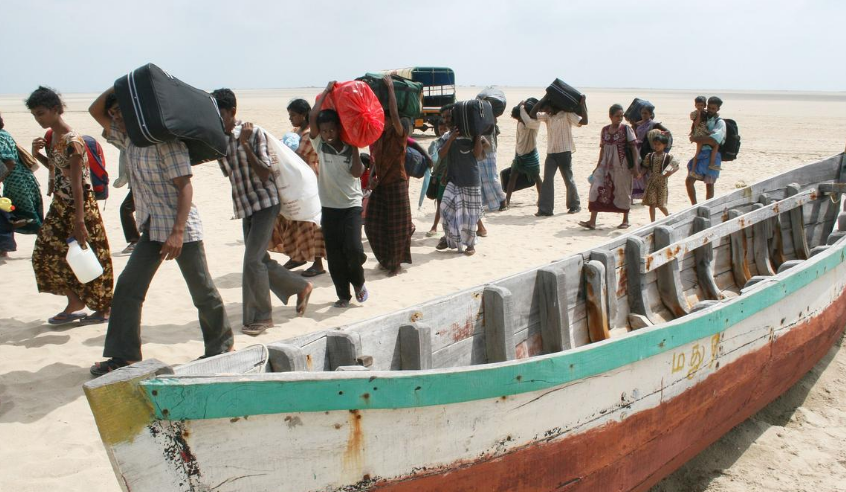
UPSC CURRENT AFFAIRS – 20th June 2025 Home / From Refugee to Citizen: Restoring Rights and Dignity Why in News? Recent legal and administrative developments in India and Sri Lanka have reignited debates on the repatriation and local integration of Sri Lankan Tamil refugees. Introduction Two unrelated developments—one in India and one in Sri Lanka—have renewed focus on the long-standing issues concerning Sri Lankan Tamil refugees in India. These refugees, primarily settled in Tamil Nadu, have been living in India for over three decades since the Sri Lankan civil war. Despite their prolonged stay, most lack citizenship or formal integration into Indian society. The recent incidents highlight both the limitations of India’s refugee framework and the challenges of repatriation. Development in India: Supreme Court Refusal A Sri Lankan Tamil refugee, convicted under the Unlawful Activities (Prevention) Act, had his sentence reduced by the Madras High Court from 10 to 7 years. Upon completing his sentence, he petitioned the Supreme Court seeking permission to remain in India, citing personal reasons. Earlier, he had given an undertaking to leave the country after completing his prison term. The Supreme Court refused to entertain his petition for residence in India. During the hearing, the Court made an oral remark stating that “India is not a dharamshala (free shelter)”. This remark was perceived as harsh and contrary to the judiciary’s traditionally humanitarian approach toward refugees. The comment caused concern within refugee communities and human rights advocates. Development in Sri Lanka: Detention of Returnee In a separate incident, a 70-year-old Sri Lankan Tamil refugee voluntarily returned from Tamil Nadu to Sri Lanka. He was detained upon arrival at Palaly airport in Jaffna for allegedly having left the country years ago through unauthorized means. His return had been facilitated by the Chennai office of the United Nations High Commissioner for Refugees (UNHCR). The detention led to public outrage in both countries. Sri Lanka’s Transport Minister clarified that the action was due to an automatic application of immigration law. The Minister promised swift steps to amend the law and ensure such cases are not repeated. This incident illustrated the bureaucratic and legal obstacles to voluntary repatriation. Different Treatment of Refugee Groups: Tibetans vs Sri Lankan Tamils India hosts multiple refugee groups, but their treatment by the state differs significantly. Tibetan refugees, numbering over 63,000, have been living in India since 1959 with relative legal security. The Union Government formalised their stay through the Tibetan Rehabilitation Policy (TRP), 2014. Under TRP, Tibetans have access to employment in both public and private sectors and welfare schemes like MGNREGA. They are settled across various Indian states including Karnataka, Himachal Pradesh, Uttarakhand, Arunachal Pradesh, and Ladakh. By contrast, Sri Lankan Tamil refugees, around 90,000 in number, remain concentrated mostly in Tamil Nadu. The Union Government has not formulated any refugee-specific policy for them. Tamil Nadu has shouldered the welfare burden, providing food, shelter, and education in state-run camps. The Union Home Ministry still defines the ultimate goal for this group as “repatriation”, unlike in the case of Tibetans. Annual reports of the Home Ministry emphasize repatriation for Sri Lankan Tamils but make no such mention for Tibetans. This reveals a clear inconsistency in policy and a lack of equity between different refugee groups. Ongoing Challenges Faced by Sri Lankan Tamil Refugees Most Sri Lankan Tamil refugees in India lack formal legal status such as citizenship or long-term visas. Without documentation, they face severe restrictions in employment, property ownership, and higher education access. Although Tamil Nadu’s education schemes have enabled many to pursue professional degrees, job placement remains a serious issue. For instance, around 500 young refugees have completed engineering degrees, but fewer than 5% are employed in their field. Private companies, particularly in the IT sector, hesitate to hire refugees due to legal uncertainties. The lack of a national refugee policy keeps this community in a perpetual state of legal and social limbo. Approximately two-thirds of the refugee population in Tamil Nadu still live in government-run rehabilitation camps. Although these camps provide essential services, they perpetuate a sense of marginalisation and impermanence. The tag of “refugee” continues to carry a stigma, preventing full participation in Indian society. The Need for Policy Reform and Durable Solutions Given that Sri Lankan Tamil refugees have been in India for over four decades, a reassessment of policy is urgently required. Durable solutions should include options for voluntary repatriation, local integration, or third-country resettlement. These strategies must be implemented in consultation with the Sri Lankan government, the UNHCR, and refugee representatives. The Union government can maintain its official stance on repatriation while still creating a structured integration policy. A policy akin to the Tibetan Rehabilitation Policy could help Sri Lankan refugees access jobs, welfare schemes, and secure residency. Such a policy would provide dignity and legal identity without necessarily conferring citizenship. It would also unlock the human capital of this community, allowing them to contribute to India’s economy and society. Welfare without rights is insufficient; the time has come for a legal framework that acknowledges the reality of long-term displacement. Constitutional and Ethical Dimensions India is not a signatory to the 1951 UN Refugee Convention or its 1967 Protocol. However, the Indian Constitution and judiciary have often extended certain fundamental rights to non-citizens, including refugees. Article 21 of the Constitution, which guarantees the right to life and dignity, applies to all individuals, not just citizens. Indian courts have, in the past, used this provision to protect refugees from forced deportation and to ensure humane treatment. The ethical imperative lies in moving from ad hoc humanitarianism to a rule-based rights framework. Refugees, especially those born and raised in India, should not be denied the opportunity to live dignified lives. World Refugee Day 2025: Solidarity in Practice The theme of World Refugee Day 2025 is “Solidarity with Refugees”. Solidarity must not remain limited to symbolic gestures or statements. It must be reflected in policy decisions, legal frameworks, and social inclusion efforts. True solidarity means providing refugees with opportunities
Social Justice: QS World Rankings 2025

UPSC CURRENT AFFAIRS – 19th June 2025 Home / Social Justice: QS World Rankings 2025 Why in News? For the first time in eight years, IIT Delhi emerged as the highest-ranked Indian institution in the QS World University Rankings 2026, surpassing IIT Bombay. Introduction The QS World University Rankings 2026, released by QS Quacquarelli Symonds, brought a significant reshuffle among India’s top institutions. For the first time in eight years, IIT Delhi emerged as the highest-ranked Indian institution, overtaking IIT Bombay, which had largely dominated Indian rankings over the past decade. Top-Ranked Indian Institutions Institution 2026 Rank 2025 Rank Rank Change IIT Delhi 123 150 +27 IIT Bombay 129 118 -11 IIT Madras 180 227 +47 IISc Bangalore 219 211 -8 IIT Kharagpur 215 – – IIT Kanpur 222 – – Delhi University 328 328 0 IIT Guwahati 334 – – IIT Roorkee 339 – – Anna University 465 383 -82 Only IIT Delhi, IIT Bombay, and IIT Madras are in the global top 200. IIT Madras made it to the top 200 for the first time. India’s Global Standing India is the 4th highest contributor to the QS rankings with 54 institutions, following: USA: 192 institutions UK: 90 institutions China: 72 institutions In 2015, only 11 Indian institutions were ranked; the figure has increased by 390% to 54 in 2026. Performance Metrics: IIT Delhi vs. IIT Bombay Metric IIT Delhi IIT Bombay Citations per Faculty 93.1 82.9 International Student Ratio 6.3 1.5 International Research Network 66.9 46.6 Sustainability 79.9 75.2 Academic Reputation Lower Higher Employer Reputation +23 ranks Higher Employment Outcomes 50.5 72.6 Note: Sustainability saw a major improvement for IIT Delhi, rising by 252 places. Emerging Trends 1. Rise of New Indian Institutions Eight new Indian universities entered the rankings in 2026: IIT Gandhinagar (801–850) — the only public entrant Private Entrants: Ashoka University, Shiv Nadar University (1201–1400), Lovely Professional University (901–950), Christ University (1401+), KIIT (1001–1200) 2. Top Performers by Metric Faculty Citations: IISc ranked 15 globally, Anna University at 23, IIT BHU at 47. Employer Reputation: IIT Bombay ranked 39 globally (best among Indian institutions). Employment Outcomes: Only University of Delhi and University of Mumbai made it to the global top 100. Academic Reputation: No Indian institution in the global top 100. Institutional Improvement: Case of IIT Delhi Prof. Vivek Buwa, Dean (Planning) at IIT Delhi, attributed the rank rise to: Improved research facilities via the Institute of Eminence funding (₹200–300 crore for equipment). International collaborations and joint publications with global institutions. Strategic focus on citations, research network, and sustainability. QS Ranking Methodology: Key Weightages Metric Weightage Academic Reputation 30% Employer Reputation 15% Faculty/Student Ratio 10% Citations per Faculty 20% International Faculty 5% International Students 5% Employment Outcomes 5% International Research Network 5% Sustainability (New metric, evolving) Sustainability is the newest metric, involving over 50 indicators sourced from university data, public data, and bibliometric databases. Analysis: Implications for India Positive Trends: India’s global academic visibility is rising steadily. IIT Delhi’s rank improvement shows that targeted investment and data transparency can yield measurable improvements. Private universities are making inroads into global rankings. Challenges: India still lacks representation in the top 100 globally. Poor performance in academic reputation, despite high-quality output. Need for greater internationalization — low foreign student/faculty ratios. Conclusion The QS World University Rankings 2026 showcase both India’s progress and persistent gaps in global higher education. IIT Delhi’s rise to the top among Indian institutions after eight years highlights the impact of sustained funding, infrastructure development, and global partnerships. However, to break into the global top 100, Indian universities must strengthen their academic reputation, diversify their faculty and student body, and enhance global engagement. Economic Implications For Indian Exporters These reforms reduce transaction costs and compliance hurdles Encourage a more competitive and efficient export environment Promote value addition in key sectors like leather For Tamil Nadu The reforms particularly benefit the state’s leather industry, a major contributor to employment and exports Boost the marketability of GI-tagged E.I. leather, enhancing rural and traditional industries For Trade Policy These decisions indicate a shift from regulatory controls to policy facilitation Reinforce the goals of Make in India, Atmanirbhar Bharat, and India’s ambition to become a leading export power Recently, BVR Subrahmanyam, CEO of NITI Aayog, claimed that India has overtaken Japan to become the fourth-largest economy in the world, citing data from the International Monetary Fund (IMF). India’s rank as the world’s largest economy varies by measure—nominal GDP or purchasing power parity (PPP)—each with key implications for economic analysis. Significance and Applications