India’s boycott of the ruling of Court of Arbitration on Indus Waters Treaty
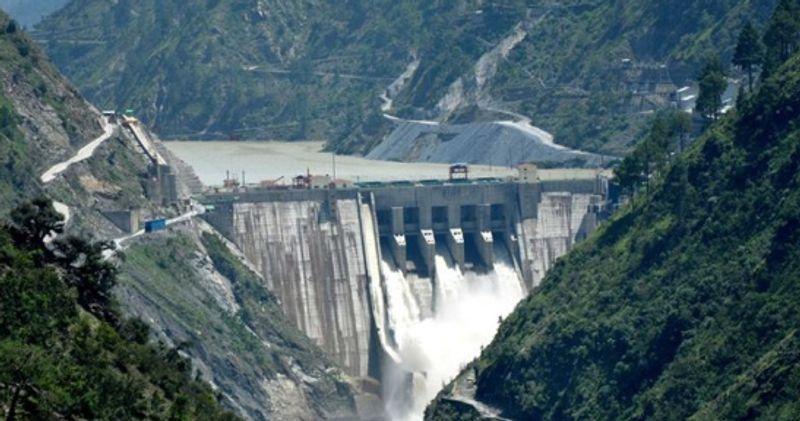
UPSC CURRENT AFFAIRS – 13th July 2025 Home / India’s boycott of the ruling of Court of Arbitration on Indus Waters Treaty Why in News? The Court of Arbitration (CoA) issued a “supplemental award” on June 27, 2025, asserting its jurisdiction over disputes raised unilaterally by Pakistan in 2016 about India’s hydroelectric projects (HEPs) on Indus basin rivers. India has boycotted the CoA proceedings, arguing that the tribunal is illegally constituted and infringes the dispute resolution mechanism laid down under the Indus Waters Treaty (IWT), 1960. India’s Ministry of External Affairs rejected the ruling, calling it “per se void” as it violates the Treaty’s exclusive mandate for certain disputes to be handled by a neutral expert first. Background & Treaty Provisions. The IWT (1960), brokered by the World Bank, governs water sharing between India and Pakistan for the Indus River system. Under Article IX (1), any disputes about interpretation or application of the Treaty must first be addressed by the Permanent Indus Commission (PIC). If unresolved, a “difference” arises which must be handled by a neutral expert Appointed by WB for issues listed under Annexure F, Part I — including design and operation of India’s HEPs. Only if the neutral expert refers to the issue for arbitration can a CoA be constituted under Article IX (5) — making the neutral expert’s role exclusive and primary for such technical matters. India’s Position. India argues that the CoA is ultra vires because the differences Pakistan raised on HEP design must be resolved by the neutral expert alone. Pakistan initially sought a neutral expert but withdrew the request in 2016 and directly filed for arbitration. The World Bank has since appointed a neutral expert (October 2022) who confirmed in January 2023 that the disputes fall within Annexure F’s scope — India is participating in these proceedings. Proceeding with a parallel CoA undermines the sole jurisdiction clause for neutral experts, violating the party autonomy principle that is foundational in any arbitral regime. Legal Aspect. Under the New York Convention (NYC) and India’s Arbitration Act, an arbitral award can be refused enforcement if: The award deals with issues beyond the scope of submission to arbitration. The arbitral tribunal was not constituted per the agreement between the parties. India can invoke these grounds if an unfavourable CoA award is ever sought to be enforced internationally. Implications for India-Pakistan Water Diplomacy. The dispute highlights deeper tensions between treaty obligations and allegations of cross-border terrorism, which India cited as grounds for suspending the IWT in 2023. India’s stand signals that it expects strict adherence to treaty mechanisms and will resist parallel or conflicting dispute resolution paths. The case reiterates the importance of respecting party consent and mutual agreement in international arbitration, a principle that protects state sovereignty in transboundary water governance. Conclusion India’s boycott underscores that the source of all arbitral competence is party consent, embedded in the treaty text. Circumventing the agreed framework by misusing overlapping jurisdictions threatens the stability of a landmark water-sharing treaty. For India, the legal position preserves its rights under the IWT, upholds the neutral expert’s role, and sets a precedent for rule-based treaty interpretation in other international water or resource-sharing arrangements. Economic Implications For Indian Exporters These reforms reduce transaction costs and compliance hurdles Encourage a more competitive and efficient export environment Promote value addition in key sectors like leather For Tamil Nadu The reforms particularly benefit the state’s leather industry, a major contributor to employment and exports Boost the marketability of GI-tagged E.I. leather, enhancing rural and traditional industries For Trade Policy These decisions indicate a shift from regulatory controls to policy facilitation Reinforce the goals of Make in India, Atmanirbhar Bharat, and India’s ambition to become a leading export power Recently, BVR Subrahmanyam, CEO of NITI Aayog, claimed that India has overtaken Japan to become the fourth-largest economy in the world, citing data from the International Monetary Fund (IMF). India’s rank as the world’s largest economy varies by measure—nominal GDP or purchasing power parity (PPP)—each with key implications for economic analysis. Significance and Applications
India’s AYUSH Innovations Featured in WHO’s Landmark Brief on AI in Traditional Medicine

UPSC CURRENT AFFAIRS – 13th July 2025 Home / India’s AYUSH Innovations Featured in WHO’s Landmark Brief on AI in Traditional Medicine Why in News? The World Health Organization (WHO) has released its first-ever technical brief titled “Mapping the Application of Artificial Intelligence in Traditional Medicine,” prominently highlighting India’s pioneering efforts. India is the first country to launch a Traditional Knowledge Digital Library (TKDL) to systematically document and protect traditional medical knowledge from biopiracy. This recognition aligns with the vision of Azadi Ka Amrit Mahotsav, showcasing India’s commitment to preserving its heritage and promoting innovation through AI in traditional medicine. Key Concepts & Initiatives. AYUSH Sector: AYUSH stands for Ayurveda, Yoga & Naturopathy, Unani, Siddha, and Homeopathy, India’s officially recognised traditional and alternative systems of medicine. It focuses on holistic, preventive, and lifestyle-based healthcare, forming an integral part of India’s intangible cultural heritage. AI Applications: Include predictive diagnostics, diagnosis support systems, and Prakriti-based machine learning models for personalised treatment. Ayurgenomics: Combines Ayurveda’s concept of body constitution with modern genomics to identify disease markers and customize healthcare. Traditional Knowledge Digital Library (TKDL): A globally acclaimed CSIR initiative to protect India’s traditional knowledge from misuse and wrongful patents. Ayush Grid: A comprehensive digital health platform launched in 2018 to integrate AYUSH with mainstream digital health services. SAHI and NAMASTE Portals: Citizen-centric digital platforms for online consultations and collaborative AYUSH research. Constitutional Aspect. Directive Principles of State Policy (Part IV): Article 47 directs the State to improve public health and nutrition levels, which includes promoting indigenous systems like AYUSH. Fundamental Duties (Article 51A(f)): Requires citizens to value and preserve India’s rich heritage, including traditional medicine. Federal Context: Health is primarily a State Subject (Entry 6, State List) but overlaps with concurrent aspects like education, research, and medical professions (Entry 25 & 26, Concurrent List). Legal & Policy Framework. Ministry of Ayush: Nodal body for education, research, and promotion of India’s traditional medicine systems. National Ayush Mission (NAM): Strengthens AYUSH infrastructure and access to services. TKDL (CSIR): Legally protects traditional medical knowledge under national and international intellectual property frameworks. Information Technology Act, 2000: Provides a legal basis for secure digital health data and governance. NITI Aayog’s National Strategy for AI (2018): Guides inclusive AI applications in healthcare and traditional systems. Global Partnership on Artificial Intelligence (GPAI): India is a founding member promoting responsible, human-centric AI. Conclusion / Summary India’s recognition by the WHO reinforces its leadership in blending centuries-old traditional knowledge with cutting-edge AI, positioning the AYUSH sector — Ayurveda, Yoga & Naturopathy, Unani, Siddha, and Homeopathy — as an evidence-based, globally relevant healthcare system. AYUSH reflects India’s strength in delivering holistic, natural, and preventive care, now modernised through digital platforms and scientific validation. Organisations like the WHO, Ministry of Ayush, CSIR-TKDL, NITI Aayog, and AYUSH Research Councils have enabled this milestone. Together, they demonstrate India’s commitment to ‘AI for All’, digital health transformation, and safeguarding bio-cultural heritage — aligning with constitutional values of health promotion, affordable access, and preserving traditional wisdom. Economic Implications For Indian Exporters These reforms reduce transaction costs and compliance hurdles Encourage a more competitive and efficient export environment Promote value addition in key sectors like leather For Tamil Nadu The reforms particularly benefit the state’s leather industry, a major contributor to employment and exports Boost the marketability of GI-tagged E.I. leather, enhancing rural and traditional industries For Trade Policy These decisions indicate a shift from regulatory controls to policy facilitation Reinforce the goals of Make in India, Atmanirbhar Bharat, and India’s ambition to become a leading export power Recently, BVR Subrahmanyam, CEO of NITI Aayog, claimed that India has overtaken Japan to become the fourth-largest economy in the world, citing data from the International Monetary Fund (IMF). India’s rank as the world’s largest economy varies by measure—nominal GDP or purchasing power parity (PPP)—each with key implications for economic analysis. Significance and Applications
India’s Energy Transition: 4,000% Solar Growth and Renewable Energy Milestones at IESW 2025

UPSC CURRENT AFFAIRS – 12th July 2025 Home / India’s Energy Transition: 4,000% Solar Growth and Renewable Energy Milestones at IESW 2025 Why in News? India showcased its clean energy progress at India Energy Storage Week (IESW) 2025, highlighting a 4,000% rise in solar capacity and its near-achievement of the 50% renewable energy target. Key Developments in Renewable Energy Over the past ten years, India has recorded a 4,000 percent growth in installed solar capacity. The country’s solar photovoltaic (PV) module manufacturing capacity has increased by 38 times, and PV cell manufacturing capacity has expanded 21-fold. As of June 2025, India’s total installed power capacity stands at 476 gigawatts (GW), out of which 235.7 GW, or 49 percent, is from non-fossil fuel sources. Renewable energy: 226.9 GW Nuclear energy: 8.8 GW India aims to achieve 500 GW of non-fossil fuel-based capacity by 2030 as part of its Nationally Determined Contributions (NDCs) under the Paris Agreement. Energy Storage and Pumped Hydro Initiatives Battery Energy Storage Systems (BESS) Presently, India has only 205 megawatts (MW), or approximately 506 megawatt-hours (MWh), of installed battery energy storage capacity. The Central Electricity Authority has set a target of scaling this up to 74 GW by 2031-32. In the current year (2025), the government plans to add approximately 3,000 MW through hydro pumped storage projects. Hydro Pumped Storage Projects (PSPs) The current hydro pumped storage capacity stands at 5 GW. The government aims to increase this to 50 GW within the next 5 to 6 years, which would provide critical support for grid balancing and ensure reliable renewable power delivery. Green Hydrogen Mission India has announced ambitious targets for green hydrogen as part of its clean energy transition. Key goals include: Producing 10 million tonnes of green hydrogen Developing electrolyser capacity between 60 GW and 100 GW These efforts are supported by the Rs 19,744 crore National Green Hydrogen Mission, which aims to reduce dependence on fossil fuels and support industrial decarbonization. Alignment with Climate Goals India’s current trajectory is closely aligned with its international climate obligations. Under the Paris Agreement, India’s NDCs include: Achieving 500 GW of non-fossil fuel capacity by 2030 Reducing emissions intensity of GDP Promoting climate resilience and sustainable development Challenges and Way Forward Key Challenges Government Response and Strategy Insufficient energy storage infrastructure Accelerated development of BESS and PSPs High dependence on imported critical minerals Strengthening domestic exploration and diversified sourcing Intermittency of renewable sources Promotion of grid-scale storage and green hydrogen Need for robust manufacturing ecosystem Scaling domestic manufacturing of solar and energy storage components India’s strategy now focuses on creating an integrated clean energy ecosystem that supports sustainability, energy security, and economic growth. Economic Implications For Indian Exporters These reforms reduce transaction costs and compliance hurdles Encourage a more competitive and efficient export environment Promote value addition in key sectors like leather For Tamil Nadu The reforms particularly benefit the state’s leather industry, a major contributor to employment and exports Boost the marketability of GI-tagged E.I. leather, enhancing rural and traditional industries For Trade Policy These decisions indicate a shift from regulatory controls to policy facilitation Reinforce the goals of Make in India, Atmanirbhar Bharat, and India’s ambition to become a leading export power Recently, BVR Subrahmanyam, CEO of NITI Aayog, claimed that India has overtaken Japan to become the fourth-largest economy in the world, citing data from the International Monetary Fund (IMF). India’s rank as the world’s largest economy varies by measure—nominal GDP or purchasing power parity (PPP)—each with key implications for economic analysis. Significance and Applications
India’s First Electric Truck Incentive Scheme under PM E-DRIVE

UPSC CURRENT AFFAIRS – 12th July 2025 Home / India’s First Electric Truck Incentive Scheme under PM E-DRIVE Why in News? India has launched its first-ever electric truck incentive scheme under the PM E-DRIVE initiative to promote green freight mobility and reduce transport-related emissions. Introduction In a historic move to accelerate green mobility in the freight transport sector, the Ministry of Heavy Industries (MHI) has launched India’s first incentive scheme for electric trucks (e-trucks) under the PM E-DRIVE initiative. Spearheaded by Union Minister H.D. Kumaraswamy, under the leadership of Prime Minister Narendra Modi, this scheme aligns with India’s long-term objectives of achieving net-zero carbon emissions by 2070 and building a developed India (Viksit Bharat) by 2047. Need for the Scheme The freight transport sector plays a crucial role in India’s economy, but it is also a major contributor to greenhouse gas (GHG) emissions. Diesel trucks, though making up only 3% of the total vehicle population, are responsible for nearly 42% of transport-related emissions. This poses serious challenges for air quality, public health, and climate change mitigation. The e-truck incentive scheme is designed to address these challenges by: Reducing the carbon footprint of freight movement. Encouraging adoption of clean energy alternatives. Promoting indigenous manufacturing in the electric vehicle sector. Coverage and Eligibility under the Scheme Vehicle Categories Covered The scheme covers electric trucks in the N2 and N3 categories, as per Central Motor Vehicle Rules (CMVR): N2 Category: Trucks with a Gross Vehicle Weight (GVW) of more than 3.5 tonnes and up to 12 tonnes. N3 Category: Trucks with GVW exceeding 12 tonnes and up to 55 tonnes. In the case of articulated vehicles, only the puller tractor of N3 category will be eligible. Manufacturer-Backed Warranty Requirements To ensure the durability and reliability of electric trucks, the scheme mandates: A battery warranty of five years or 5 lakh kilometres, whichever is earlier. A vehicle and motor warranty of five years or 2.5 lakh kilometres, whichever is earlier. Incentive Amount and Distribution A maximum incentive of ₹9.6 lakh per electric truck will be offered. The incentive will be provided as an upfront discount on the purchase price and later reimbursed to OEMs through the PM E-DRIVE online portal. Incentive allocation will be on a first-come, first-served basis. Scrappage Mandate One of the significant features of the scheme is the mandatory scrapping of old, polluting trucks to avail the incentive. This dual approach serves to: Modernise vehicle fleets. Immediately reduce emissions from outdated diesel vehicles. Scale of Implementation and Budget Allocation The scheme targets the deployment of approximately 5,600 electric trucks across India. A special provision for 1,100 e-trucks in Delhi has been made with a budget outlay of ₹100 crore, given the city’s severe air quality issues. Targeted Sectors for Adoption Key sectors that will benefit from the deployment of e-trucks include: Cement industry Steel industry Port operations Logistics and warehousing These industries rely heavily on freight transport and can significantly reduce their environmental impact through electrification. Expected Benefits and Long-Term Impact Environmental Benefits Substantial reduction in carbon dioxide and particulate matter emissions from the transport sector. Improved urban air quality, especially in industrial and densely populated areas. Economic Benefits Lower operating costs for fleet operators due to reduced fuel consumption and maintenance needs. Long-term cost savings and improved profitability for logistics companies. Strategic and Policy Alignment The scheme supports key national missions and goals, including: National Electric Mobility Mission Plan (NEMMP) Faster Adoption and Manufacturing of Hybrid and Electric Vehicles (FAME) National Action Plan on Climate Change (NAPCC) India’s international commitments under the Paris Climate Agreement Economic Implications For Indian Exporters These reforms reduce transaction costs and compliance hurdles Encourage a more competitive and efficient export environment Promote value addition in key sectors like leather For Tamil Nadu The reforms particularly benefit the state’s leather industry, a major contributor to employment and exports Boost the marketability of GI-tagged E.I. leather, enhancing rural and traditional industries For Trade Policy These decisions indicate a shift from regulatory controls to policy facilitation Reinforce the goals of Make in India, Atmanirbhar Bharat, and India’s ambition to become a leading export power Recently, BVR Subrahmanyam, CEO of NITI Aayog, claimed that India has overtaken Japan to become the fourth-largest economy in the world, citing data from the International Monetary Fund (IMF). India’s rank as the world’s largest economy varies by measure—nominal GDP or purchasing power parity (PPP)—each with key implications for economic analysis. Significance and Applications
Maratha Military Landscapes of India Inscribed in the UNESCO World Heritage List (2025)

UPSC CURRENT AFFAIRS – 12th July 2025 Home / Maratha Military Landscapes of India Inscribed in the UNESCO World Heritage List (2025) Why in News? The Maratha Military Landscapes of India were inscribed as India’s 44th UNESCO World Heritage Site in July 2025, recognizing their strategic and architectural significance from the 17th–19th centuries. Introduction The Maratha Military Landscapes of India were inscribed into the UNESCO World Heritage List during the 47th session of the World Heritage Committee held in Paris, France. This became India’s 44th entry on the list and highlights the global recognition of India’s cultural and architectural heritage. World Heritage List: Overview The World Heritage List is maintained by UNESCO under the World Heritage Convention, 1972. Its purpose is to identify and protect cultural, natural, and mixed properties of Outstanding Universal Value (OUV) to humanity. India ratified the Convention in 1977. Each member state is allowed to nominate one site per year for inscription. India is a member of the World Heritage Committee for the term 2021–2025. As of 2025, India ranks sixth globally and second in the Asia-Pacific region in terms of the number of inscribed sites. Historical Background The Maratha Military Landscapes comprise a network of twelve forts that represent the military vision, architectural ingenuity, and administrative capabilities of the Maratha Empire, which rose to prominence during the 17th to 19th centuries CE. These forts exemplify the Maratha Empire’s ability to strategically harness local geography for defense, surveillance, and regional control. The military landscapes collectively narrate a significant chapter in the history of pre-colonial India. List of Forts and Geographical Classification Fort Name State Classification/Type of fortifications Salher Maharashtra Hill Fort Shivneri Maharashtra Hill Fort Lohgad Maharashtra Hill Fort Khanderi Maharashtra Island Fort Raigad Maharashtra Hill Fort Rajgad Maharashtra Hill Fort Pratapgad Maharashtra Hill-Forest Fort Suvarnadurg Maharashtra Island Fort Panhala Maharashtra Hill-Plateau Fort Vijaydurg Maharashtra Coastal Fort Sindhudurg Maharashtra Island Fort Gingee Tamil Nadu Hill Fort These forts are located across a variety of terrains including hills, plateaus, coastal areas, islands, and forested regions. They reflect a deep understanding of military strategy, defensive planning, and resource management. Types of Fortifications Hill Forts: Salher, Shivneri, Lohgad, Raigad, Rajgad, and Gingee Hill-Forest Fort: Pratapgad Hill-Plateau Fort: Panhala Coastal Fort: Vijaydurg Island Forts: Khanderi, Suvarnadurg, Sindhudurg Heritage Status and Protection The Archaeological Survey of India (ASI) protects eight of the twelve forts: Shivneri, Lohgad, Raigad, Suvarnadurg, Panhala, Vijaydurg, Sindhudurg, and Gingee. The Directorate of Archaeology and Museums, Government of Maharashtra, protects the remaining four: Salher, Rajgad, Khanderi, and Pratapgad. UNESCO Recognition: Criteria for Inscription The site was inscribed under the following criteria: Criterion (iv): Recognizes an outstanding example of a type of building or architectural ensemble that illustrates a significant stage in human history. Criterion (vi): Acknowledges the site’s direct association with events, living traditions, and historical developments of universal significance. The Maratha forts were selected for their representation of a living cultural tradition, their technological and strategic ingenuity, and their association with major historical events, particularly those related to the Maratha resistance and expansion under Chhatrapati Shivaji Maharaj and his successors. During the 47th session of the World Heritage Committee, 18 out of 20 State Parties supported the nomination. Significance of the Inscription Cultural Recognition: The inscription affirms the cultural, historical, and architectural significance of the Maratha legacy on a global platform. Boost to Heritage Tourism: The inclusion in the UNESCO list is likely to attract greater tourism, generate employment, and promote local economies. Preservation and Conservation: Enhanced global recognition helps secure funding and expert support for long-term conservation. International Prestige: Strengthens India’s profile as a custodian of global heritage and cultural diversity. Academic and Public Awareness: Encourages further study, documentation, and dissemination of Maratha history and military strategy. India’s World Heritage Progress Category Number (2025) Total World Heritage Sites 44 Tentative List Sites 62 Global Rank 6th Asia-Pacific Rank 2nd Recent Additions to the World Heritage List Year Site State 2024 Moidams of Charaideo Assam 2025 Maratha Military Landscapes Maharashtra and Tamil Nadu Institutional Roles and Responsibilities Archaeological Survey of India (ASI) is the nodal agency for all World Heritage-related matters in India. It is responsible for the identification, protection, conservation, and management of cultural heritage sites, including sites nominated for the UNESCO World Heritage List. UNESCO (United Nations Educational, Scientific and Cultural Organization) oversees the World Heritage Convention (1972). Its advisory bodies — such as ICOMOS (International Council on Monuments and Sites) and IUCN (International Union for Conservation of Nature) — provide technical evaluations, recommend sites for inscription, and monitor the conservation status of World Heritage properties worldwide. Economic Implications For Indian Exporters These reforms reduce transaction costs and compliance hurdles Encourage a more competitive and efficient export environment Promote value addition in key sectors like leather For Tamil Nadu The reforms particularly benefit the state’s leather industry, a major contributor to employment and exports Boost the marketability of GI-tagged E.I. leather, enhancing rural and traditional industries For Trade Policy These decisions indicate a shift from regulatory controls to policy facilitation Reinforce the goals of Make in India, Atmanirbhar Bharat, and India’s ambition to become a leading export power Recently, BVR Subrahmanyam, CEO of NITI Aayog, claimed that India has overtaken Japan to become the fourth-largest economy in the world, citing data from the International Monetary Fund (IMF). India’s rank as the world’s largest economy varies by measure—nominal GDP or purchasing power parity (PPP)—each with key implications for economic analysis. Significance and Applications
India’s Revised Proposal for Retaliatory Tariffs Against the U.S. Under WTO Norms
UPSC CURRENT AFFAIRS – 12th July 2025 Home / India’s Revised Proposal for Retaliatory Tariffs Against the U.S. Under WTO Norms Why in News? India has revised its WTO notification to impose higher retaliatory tariffs on U.S. goods following the U.S.’s hike in duties on steel and aluminium imports to 50%. Background India has submitted a revised notification to the World Trade Organisation (WTO) regarding the imposition of retaliatory tariffs against the United States. This revision follows the U.S. decision to further increase tariffs on steel and aluminium imports from 25 percent to 50 percent. The proposal assumes importance as both countries are in the process of negotiating a Bilateral Trade Agreement (BTA), and India’s move aims to assert its rights under international trade rules while protecting domestic interests. Background of U.S. Tariffs and India’s Initial Response In March 2018, the United States invoked Section 232 of the Trade Expansion Act of 1962 to impose: A 25 percent tariff on steel imports A 10 percent tariff on aluminium imports The justification offered was “national security,” which several trading partners, including India, viewed as unjustified and protectionist. These measures were later extended to include derivative products, and the tariffs were further raised in June 2025 to 50 percent on certain items. In response, India had imposed retaliatory tariffs in June 2019 on 28 U.S. products, including almonds, walnuts, and apples. India also filed a formal complaint at the WTO, asserting that the U.S. measures violated trade norms under GATT 1994 and the WTO Agreement on Safeguards. Details of India’s Revised Proposal (2025) WTO Notification India, through a communication circulated among WTO members, has stated that it reserves the right to adjust the list of products and tariff rates in response to the increase in U.S. tariffs from 25 percent to 50 percent. This step is being taken without prejudice to the earlier notification India submitted on May 12. The revised proposal is based on the provisions of: Article 8 of the WTO Agreement on Safeguards, which permits suspension of concessions in case of unjustified safeguard measures Article 22 of the Dispute Settlement Understanding (DSU), which allows a WTO member to retaliate if the offending country fails to comply with dispute settlement recommendations Key Financial Aspects According to India’s communication to WTO : The safeguard measures by the United States impact approximately $7.6 billion worth of Indian exports India proposes to impose retaliatory tariffs that would recover approximately $3.82 billion in duties This is an increase from the earlier May 12 notification, where India had proposed to collect $1.91 billion India’s move reflects its intent to maintain trade balance and assert legal rights under WTO rules. Legal Justifications Under WTO Rules India’s proposal relies on internationally accepted trade dispute mechanisms: Agreement on Safeguards Permits a country to retaliate or seek compensation if another member imposes safeguard measures that are not in accordance with WTO obligations. Dispute Settlement Understanding (DSU) Allows affected members to suspend concessions if the offending member does not bring its measures into conformity with WTO rules. Principle of Reciprocity and Retaliation Ensures that no country gains unfair advantage by breaching WTO norms, and that affected members can seek compensation or retaliatory relief. Significance of the Proposal Strengthening India’s Trade Negotiation Position India’s formal communication to the WTO strengthens its position in ongoing bilateral trade negotiations with the U.S. It sends a message that while India is open to dialogue, it will not hesitate to defend its economic interests if required. Reinforcing Multilateral Trade Mechanisms By using WTO frameworks, India is also reinforcing the importance of rules-based multilateralism, which is critical in the face of rising unilateral protectionist measures by major economies. Protecting Domestic Industries Steel and aluminium producers in India have been affected by the U.S. tariff hikes. By proposing equivalent tariffs, India seeks to ensure a level playing field and prevent further injury to its domestic industries. Potential Implications Positive Outcomes: Helps safeguard India’s export interests and domestic industries. Demonstrates India’s commitment to using international legal frameworks. Enhances India’s credibility in future trade disputes. Possible Challenges: May escalate trade tensions with the United States. Could impact the progress of the proposed Bilateral Trade Agreement. U.S. may retaliate using non-tariff measures, including stricter regulations or restrictions on other Indian exports. Economic Implications For Indian Exporters These reforms reduce transaction costs and compliance hurdles Encourage a more competitive and efficient export environment Promote value addition in key sectors like leather For Tamil Nadu The reforms particularly benefit the state’s leather industry, a major contributor to employment and exports Boost the marketability of GI-tagged E.I. leather, enhancing rural and traditional industries For Trade Policy These decisions indicate a shift from regulatory controls to policy facilitation Reinforce the goals of Make in India, Atmanirbhar Bharat, and India’s ambition to become a leading export power Recently, BVR Subrahmanyam, CEO of NITI Aayog, claimed that India has overtaken Japan to become the fourth-largest economy in the world, citing data from the International Monetary Fund (IMF). India’s rank as the world’s largest economy varies by measure—nominal GDP or purchasing power parity (PPP)—each with key implications for economic analysis. Significance and Applications
Astra BVRAAM with Indigenous RF Seeker Successfully Flight-Tested by DRDO and IAF
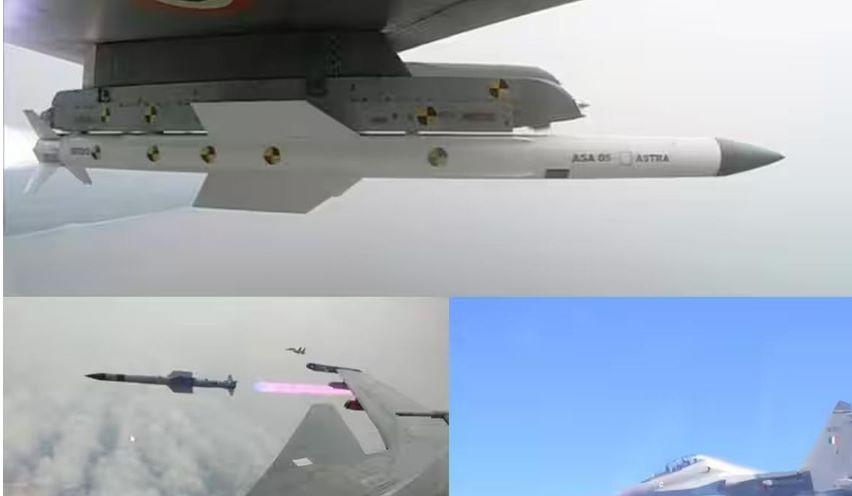
UPSC CURRENT AFFAIRS – 12th July 2025 Home / Astra BVRAAM with Indigenous RF Seeker Successfully Flight-Tested by DRDO and IAF Why in News? DRDO and IAF successfully flight-tested the indigenous Astra BVRAAM with an indigenous Radio Frequency seeker, marking a major milestone in India’s air-to-air missile capability. Introduction Defence Research and Development Organisation (DRDO) and the Indian Air Force (IAF) successfully conducted a major flight test of the indigenous Astra Beyond Visual Range Air-to-Air Missile (BVRAAM). About Astra BVRAAM Feature Details Type Beyond Visual Range Air-to-Air Missile (BVRAAM) Range Over 100 km Speed Supersonic Platform Su-30MKI (with plans for integration with other aircraft) Guidance System Inertial Navigation System (INS) + Mid-course updates + Active RF Seeker Seeker Type Indigenously developed Radio Frequency (RF) seeker Capabilities High agility, excellent target tracking, and lock-on after launch capability Purpose To engage and destroy highly maneuvering supersonic aerial targets at long ranges Significance of the Indigenous RF Seeker Critical Technology: The RF seeker is one of the most complex and critical components in modern air-to-air missiles. It enables precision homing on moving targets by detecting and locking onto the radio signals emitted by enemy aircraft. Indigenous Development: The seeker was designed and developed entirely by DRDO, marking a breakthrough in strategic defence technology. Import Substitution: Replacing imported RF seekers with an indigenous version strengthens India’s Atmanirbhar Bharat initiative and reduces foreign dependency. Strategic Implications Enhanced Air Superiority: With a range exceeding 100 km, Astra provides the IAF with a significant edge in Beyond Visual Range combat, enabling first-shot, first-kill capability. Indigenous Capability Building: The successful test reinforces India’s ability to design, develop, and deploy state-of-the-art missile systems independently. Export Potential: Astra’s success paves the way for defence exports to friendly nations, contributing to India’s growing stature as a global defence supplier. Other AAMs and related systems Novator KS-172 (K-100): This is a medium-range AAM, jointly developed with Russia. It uses inertial navigation and active radar homing for guidance, with a range of 300–400 km and a speed of Mach 3.3. MICA: While primarily a medium-range, multi-platform missile, the MBDA MICA is also available in an air-to-air configuration, utilizing either infrared or active radar guidance. It has a range of 500 m to 60 km. Meteor: India is also integrating the MBDA Meteor, a long-range active radar-guided AAM, on its Rafale fighter jets. Economic Implications For Indian Exporters These reforms reduce transaction costs and compliance hurdles Encourage a more competitive and efficient export environment Promote value addition in key sectors like leather For Tamil Nadu The reforms particularly benefit the state’s leather industry, a major contributor to employment and exports Boost the marketability of GI-tagged E.I. leather, enhancing rural and traditional industries For Trade Policy These decisions indicate a shift from regulatory controls to policy facilitation Reinforce the goals of Make in India, Atmanirbhar Bharat, and India’s ambition to become a leading export power Recently, BVR Subrahmanyam, CEO of NITI Aayog, claimed that India has overtaken Japan to become the fourth-largest economy in the world, citing data from the International Monetary Fund (IMF). India’s rank as the world’s largest economy varies by measure—nominal GDP or purchasing power parity (PPP)—each with key implications for economic analysis. Significance and Applications
Varsha Deshpande Wins 2025 United Nations Population Award
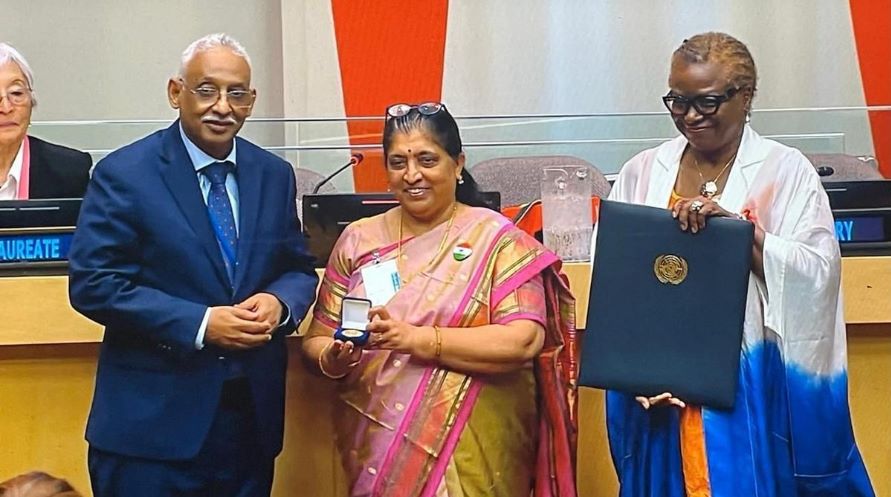
UPSC CURRENT AFFAIRS – 12th July 2025 Home / Varsha Deshpande Wins 2025 United Nations Population Award Why in News? Indian women’s rights activist Varsha Deshpande received the 2025 United Nations Population Award for her pioneering work in promoting gender equality and combating gender-biased sex selection in India. Background Indian women’s rights activist Varsha Deshpande has been awarded the 2025 United Nations Population Award in the individual category for her outstanding contributions to gender equality and reproductive rights. Deshpande was recognised for her decades-long legal and social activism, particularly her pioneering efforts to combat gender-biased sex selection and to promote the rights of marginalised women in India. She has been at the forefront of community-led initiatives aimed at ending discriminatory practices and strengthening the implementation of relevant legal frameworks. About the United Nations Population Award Establishment: The award was instituted in 1981 by the United Nations General Assembly. Objective: It honours individuals and institutions for exceptional contributions in the fields of population and reproductive health, family planning, gender equality, and related developmental concerns. Components of the Award: The award includes a gold medal, a diploma, and a monetary prize. Awardees: The award is presented annually and includes both individual and institutional categories. Key Areas of Work and Impact Legal Reform and Gender Justice Deshpande has utilised the legal system as a strategic tool to advance gender equality. She has worked extensively to ensure joint property ownership for women, advocated for gender-sensitive implementation of personal laws, and provided legal aid to vulnerable groups. Combating Gender-Biased Sex Selection A central focus of her activism has been the campaign against gender-biased sex selection. She has played a vital role in strengthening the implementation of the Pre-Conception and Pre-Natal Diagnostic Techniques (PCPNDT) Act of 1994. Prevention of Child Marriage Deshpande has been actively involved in community-level efforts to prevent child marriage. Her initiatives have empowered girls to continue their education and resist social pressure to marry early. Support for Women in the Informal Sector Through her organisation, she has worked to promote the rights and welfare of women in the informal economy. This includes advocating for maternity benefits, fair wages, and safe working conditions for domestic workers, agricultural labourers, and other unorganised sector workers. Grassroots Mobilisation and Legal Awareness Deshpande has led numerous campaigns to educate rural communities about women’s rights, legal remedies, and the value of girl children. Her work has involved organising workshops, legal literacy camps, and community meetings, especially in remote regions of Maharashtra. Note: The keywords can be referred for measures to address gender-bias problem in the society Role of Civil Society in Governance The recognition of Varsha Deshpande underscores the vital role of civil society organisations in supplementing governmental efforts. Her work with the Dalit Mahila Vikas Mandal demonstrates how grassroots activism can influence policy enforcement and catalyse social change. Economic Implications For Indian Exporters These reforms reduce transaction costs and compliance hurdles Encourage a more competitive and efficient export environment Promote value addition in key sectors like leather For Tamil Nadu The reforms particularly benefit the state’s leather industry, a major contributor to employment and exports Boost the marketability of GI-tagged E.I. leather, enhancing rural and traditional industries For Trade Policy These decisions indicate a shift from regulatory controls to policy facilitation Reinforce the goals of Make in India, Atmanirbhar Bharat, and India’s ambition to become a leading export power Recently, BVR Subrahmanyam, CEO of NITI Aayog, claimed that India has overtaken Japan to become the fourth-largest economy in the world, citing data from the International Monetary Fund (IMF). India’s rank as the world’s largest economy varies by measure—nominal GDP or purchasing power parity (PPP)—each with key implications for economic analysis. Significance and Applications
Himachal Pradesh floods and their climate change linkage

UPSC CURRENT AFFAIRS – 11th July 2025 Home / Himachal Pradesh floods and their climate change linkage Why in News? The recent floods in Himachal Pradesh illustrate the growing vulnerability of the Himalayan region to climate change-induced extreme weather events like cloudbursts, landslides, and flash floods. Introduction The recent floods in Himachal Pradesh have once again exposed the fragile state of the Himalayan ecosystem. With cloudbursts, landslides, and flash floods causing widespread devastation across Mandi, Kullu, and Chamba districts, the episode underscores the intensifying impact of climate change on India’s mountainous regions. Over ₹700 crore in economic damages and significant human and ecological loss demand urgent policy and adaptive responses. The Immediate Disaster: Heavy Rainfall and Cloudbursts During the early phase of the monsoon, Himachal Pradesh received torrential rainfall — over 71 mm within a few hours — triggering multiple cloudbursts. These sudden, localized downpours led to: Landslides and road blockages, disrupting connectivity and emergency response. Flash floods, sweeping through valleys and settlements. Loss of lives, homes, and farmland, displacing thousands and destroying infrastructure. This event is not isolated but is part of a growing pattern in the Himalayan region. Structural Vulnerability of the Himalayan Region The Himalayas are particularly sensitive to extreme events due to: Steep terrain, which accelerates runoff. Unstable slopes, prone to landslides. Unplanned development, such as road cutting, hydroelectric projects, and deforestation. The Climate Connection: Science Behind the Extremes Increased Atmospheric Moisture A direct effect of global warming is the increase in atmospheric water vapour. For every 1°C rise in temperature, the atmosphere can hold 7% more moisture, leading to heavier rainfall when precipitation occurs. Frequent and Severe Cloudbursts Cloudbursts — intense rainfall events within a short duration — have become more common. In the Himalayas, steep slopes channel water rapidly into rivers, making even short bursts of rain deadly. Glacier Melting and River Swelling Glaciers in the Himalayas are melting at an alarming rate, with some losing up to 30 meters of thickness annually. This increases river flow during summers, amplifying the flood risk when coupled with monsoonal rainfall. Erratic MonsoonsClimate models show changing monsoon behaviour: Earlier onset and uneven distribution. Shorter but more intense rainy spells, increasing the risk of both floods and droughts. Environmental and Economic Consequences Environmental Toll Soil erosion and sedimentation degrade land quality. Agricultural land is inundated, impacting food production. Forests and ecosystems suffer irreversible damage due to landslides and debris flow. Economic and Livelihood Loss Estimated ₹700 crore+ in losses. Road and bridge destruction cut off access to remote villages. Livelihoods disrupted in tourism, agriculture, and small businesses. Social Consequences Thousands displaced with food and shelter insecurity. Increased poverty and vulnerability in already fragile regions. Strain on state disaster management capacity and public finances. Adaptive Strategies for Climate Resilience Climate-Resilient Infrastructure Reinforced roads and bridges to withstand flash floods. Flood protection structures, like embankments and levees. Slope stabilization techniques in landslide-prone areas. Community-Based Disaster Preparedness Awareness campaigns to educate locals on flood risks. Training for emergency response and first aid. Local resource mapping for evacuation and relief. Early Warning Systems Invest in satellite-based forecasting and automated weather stations. Disseminate alerts via SMS, radio, and community networks. Sustainable Land and Water Management Afforestation and reforestation to bind soil and slow runoff. Rainwater harvesting to regulate water flow and store excess. Avoiding construction in vulnerable flood plains and steep slopes. Climate-Smart Agriculture Promotion of flood-resistant crop varieties. Shifting cropping patterns and schedules to suit changing monsoons. Soil conservation techniques, such as contour ploughing and cover cropping. Broader Policy Imperatives Climate Policy Reform Integrate climate resilience into state planning and disaster budgeting. Encourage renewable energy to mitigate further climate change. Ecosystem-Based Adaptation Wetland restoration, which absorbs excess rainfall. Forest conservation, which stabilizes slopes and reduces runoff. Interstate and International CoordinationGiven the Himalayan watershed spans India, Nepal, and Bhutan, coordinated planning on: River basin management, Data sharing on weather and glaciers, Joint infrastructure and disaster planning is critical. Conclusion The Himachal Pradesh floods are not merely a natural calamity but a climate emergency warning. They highlight the need for systemic adaptation, sustainable development, and community involvement to protect lives, livelihoods, and ecosystems in the Himalayan belt. A multi-pronged strategy — combining technology, traditional knowledge, infrastructure upgrades, and ecological preservation — is essential to build long-term resilience in the face of an uncertain climate future. Economic Implications For Indian Exporters These reforms reduce transaction costs and compliance hurdles Encourage a more competitive and efficient export environment Promote value addition in key sectors like leather For Tamil Nadu The reforms particularly benefit the state’s leather industry, a major contributor to employment and exports Boost the marketability of GI-tagged E.I. leather, enhancing rural and traditional industries For Trade Policy These decisions indicate a shift from regulatory controls to policy facilitation Reinforce the goals of Make in India, Atmanirbhar Bharat, and India’s ambition to become a leading export power Recently, BVR Subrahmanyam, CEO of NITI Aayog, claimed that India has overtaken Japan to become the fourth-largest economy in the world, citing data from the International Monetary Fund (IMF). India’s rank as the world’s largest economy varies by measure—nominal GDP or purchasing power parity (PPP)—each with key implications for economic analysis. Significance and Applications
NITI Aayog suggests reduced ‘core’ grant support for State S&T bodies
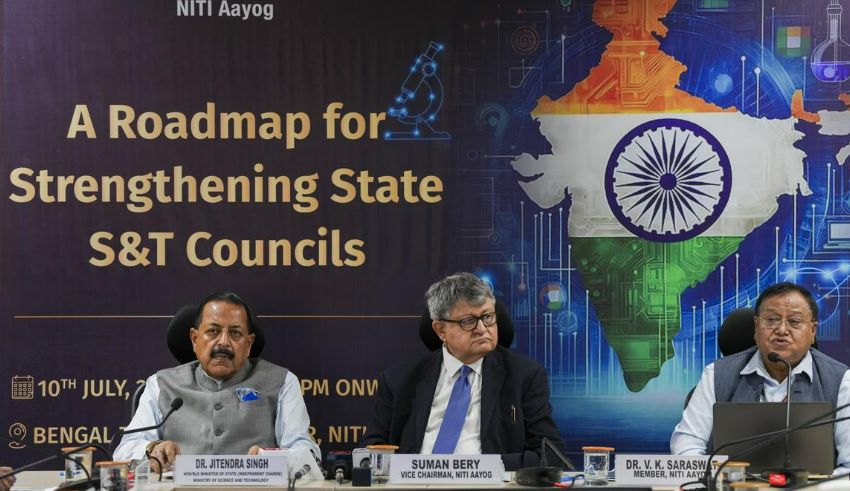
UPSC CURRENT AFFAIRS – 11th July 2025 Home / NITI Aayog suggests reduced ‘core’ grant support for State S&T bodies Why in News? NITI Aayog’s 2025 report recommends shifting State Science & Technology Councils from core grant support to project-based funding to enhance accountability and innovation at the state level. Introduction The NITI Aayog released a report titled “Roadmap for Strengthening State Science and Technology Councils”, recommending key reforms to enhance the performance and impact of State S&T Councils. The report urges the Department of Science and Technology (DST) to discontinue ‘core grant support’ and move towards a ‘project-based funding’ model. This recommendation comes amid concerns over the limited contributions of State S&T Councils to India’s overall scientific productivity and the need to revamp their governance and funding mechanisms. Background: What are State S&T Councils? Established in the 1970s, State Science and Technology Councils were created to decentralise scientific research and governance in India. They serve as nodal agencies for promoting science, technology, and innovation (STI) in States. Key functions include: Supporting scientific research and innovation Science popularisation at the grassroots level Supporting patent filing Formulating State-specific S&T policies While these Councils were envisioned to cater to the socioeconomic context of individual states, over the years, their effectiveness has varied widely. Key Findings of the NITI Aayog Report 1) Declining Role and Limited Output India’s major scientific advances and R&D outputs are still largely driven by Centrally funded institutions such as IITs, CSIR labs, and Central universities. The State S&T Councils have not significantly contributed to national S&T output, facing challenges in keeping up with the rapidly evolving R&D ecosystem. 2) Funding Disparities Funding from the Central Government (DST) is negligible. Example: Gujarat’s Council has a budget of ₹ 300 crore, but only ₹ 1.07 crore comes from the DST. Kerala, with ₹ 150 crore annual budget, received zero funding from the DST. Between 2023-24 and 2024-25, there was a 17.65% increase in overall S&T funding at the State level, showing rising interest. However, regional disparities in allocation are stark: Increased Budgets: Maharashtra (+130%), Kerala (₹ 173.34 crore), Uttar Pradesh (₹140 crore) Decreased Budgets: Sikkim (-16.16%), Tamil Nadu (-4%), Uttarakhand (-5%) 3) Overdependence on Core Grants Councils are heavily dependent on core grants from DST, with limited success in attracting project-based funds from other Central agencies like MoEFCC, MNRE, DBT, etc. Lack of linkages with industry, public sector units, and State universities is a major drawback. Major Recommendations of the Report 1) Shift from Core Grant to Project-Based Funding Replace unconditional core support with competitive, merit-based project funding. Encourage Councils to actively seek funds from various Central ministries and schemes. Improve Governance and Institutional Capacity Reform governance structures of State S&T Councils to increase autonomy, efficiency, and responsiveness. Strengthen internal monitoring, evaluation, and performance tracking. Strengthen Linkages with Industry and PSUs Councils should collaborate with private industry and State-based PSUs for research funding and technology transfer. 2) Focus on State-Funded Universities Direct support towards State-funded universities and colleges, instead of focusing predominantly on Centrally funded research institutions. This will boost grassroots innovation and regional academic ecosystems. 3) Address Regional Imbalances Create regionally balanced funding mechanisms to ensure smaller and hilly States are not left behind in S&T development. Promote inter-State collaborations to share best practices. Significance of the Reform India’s ambition to become a global innovation hub requires leveraging State institutions, not just Central ones. Revamping State S&T Councils can lead to: Localized innovation ecosystems Better alignment of research with regional needs More inclusive and balanced national S&T growth Project-based funding ensures accountability, performance-based outcomes, and efficient utilisation of public funds. Challenges Ahead Capacity constraints in some State Councils may hamper their ability to formulate and implement quality projects. Political interference and poor coordination between State and Central agencies can dilute impact. The transition period from core to project-based support needs to be carefully managed to avoid disruption. Way Forward Provide handholding support and training to weaker Councils to build proposal writing and project management capabilities. Foster collaborative platforms where Central institutions mentor State bodies. Encourage States to frame their own STI policies aligned with national missions like National Mission on Interdisciplinary Cyber-Physical Systems (NM-ICPS), National Research Foundation (NRF), etc. Conclusion The NITI Aayog’s report is a timely call to revamp India’s decentralised science governance by empowering State S&T Councils through performance-linked funding, institutional reform, and strategic partnerships. For India to realize its goal of becoming an innovation-driven economy, the potential of these Councils must be unlocked, not neglected. Economic Implications For Indian Exporters These reforms reduce transaction costs and compliance hurdles Encourage a more competitive and efficient export environment Promote value addition in key sectors like leather For Tamil Nadu The reforms particularly benefit the state’s leather industry, a major contributor to employment and exports Boost the marketability of GI-tagged E.I. leather, enhancing rural and traditional industries For Trade Policy These decisions indicate a shift from regulatory controls to policy facilitation Reinforce the goals of Make in India, Atmanirbhar Bharat, and India’s ambition to become a leading export power Recently, BVR Subrahmanyam, CEO of NITI Aayog, claimed that India has overtaken Japan to become the fourth-largest economy in the world, citing data from the International Monetary Fund (IMF). India’s rank as the world’s largest economy varies by measure—nominal GDP or purchasing power parity (PPP)—each with key implications for economic analysis. Significance and Applications