UK House of Commons Passes Assisted Dying Bill for Terminally Ill Adults
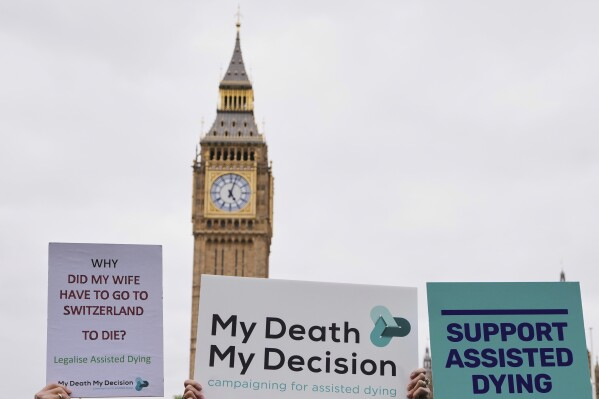
UPSC CURRENT AFFAIRS – 21th June 2025 Home / UK House of Commons Passes Assisted Dying Bill for Terminally Ill Adults Why in News? The UK House of Commons passed the Assisted Dying Bill on June 20, 2025, allowing terminally ill adults in England and Wales to legally end their lives under strict safeguards. Background The UK House of Commons narrowly passed the Terminally Ill Adults (End of Life) Bill, commonly known as the Assisted Dying Bill, with 314 votes in favour and 291 against. The bill permits terminally ill individuals in England and Wales to legally choose to end their lives under strict medical and legal safeguards. The bill now proceeds to the House of Lords for consideration. Key Features of the Assisted Dying Bill Applicability: Restricted to patients diagnosed with a terminal illness and having a life expectancy of less than six months. Eligibility Criteria: The individual must be of sound and competent mind. The decision must be voluntary and free from external pressure. Safeguards: Approval from two doctors, a psychiatrist, a senior lawyer, and a social worker is mandatory before assisted dying is permitted. Scope: Applies only in England and Wales; Scotland and Northern Ireland are not covered under this legislation. Parliamentary Debate and Vote The bill was introduced by Kim Leadbeater, a Labour MP, who argued that the legislation was about giving terminally ill people a choice over how they die, not whether they live or die. MPs were allowed a free vote, i.e., they voted based on personal conscience rather than party positions. UK Prime Minister Keir Starmer supported the bill, while Opposition leader Kemi Badenoch opposed it. Public and Political Reactions The bill sparked intense public and parliamentary debate, drawing attention from disability rights groups, religious organisations, legal experts, and healthcare professionals. Proponents’ Arguments: Emphasised personal autonomy, dignity in death, and relief from unbearable suffering. Cited international precedents such as Canada, Switzerland, some U.S. States, New Zealand, Australia, and Belgium, which have similar legislation. Opponents’ Concerns: Risk of coercion or misinformed decisions, especially for the disabled and elderly. Ethical concerns over sanctioning suicide. Potential burden on the NHS, legal complexities, and psychological pressures on vulnerable individuals. Religious Perspective: The Bishop of London, Sarah Mullaly, expressed concerns over the bill’s implications for the most vulnerable, warning of ethical and moral risks. Disability Rights Viewpoint: Labour MP Vicky Foxcroft withheld support, citing insufficient consensus among disabled individuals and calling for improvements in the NHS and social care first. Global Context of Assisted Dying Laws Countries with legal assisted dying frameworks include: Switzerland: Home to the Dignitas clinic, which has aided several Britons, including 37 individuals in 2024 alone. Canada, Australia, New Zealand, Belgium, and some U.S. states (e.g., Oregon, California). These countries follow varied models, often with safeguards similar to or more stringent than those proposed in the UK bill. Ethical, Legal, and Sociological Implications Bioethical Concerns: The bill raises profound questions about the value of life, patient autonomy, and the limits of state-sanctioned medical intervention. Sociological Angle: Reflects changing societal attitudes towards death, dignity, and individual rights, while highlighting persistent tensions around medical ethics and religion. Legal Safeguards vs Vulnerability: Balancing compassion with the risk of abuse remains a central policy challenge. Conclusion The Assisted Dying Bill marks a historic moment in the UK’s healthcare and legal policy landscape, reflecting evolving attitudes toward end-of-life choices. As the bill advances to the House of Lords, the debate will likely deepen around how best to protect the rights of terminally ill individuals while ensuring vulnerable populations are not exposed to unintended harm. Economic Implications For Indian Exporters These reforms reduce transaction costs and compliance hurdles Encourage a more competitive and efficient export environment Promote value addition in key sectors like leather For Tamil Nadu The reforms particularly benefit the state’s leather industry, a major contributor to employment and exports Boost the marketability of GI-tagged E.I. leather, enhancing rural and traditional industries For Trade Policy These decisions indicate a shift from regulatory controls to policy facilitation Reinforce the goals of Make in India, Atmanirbhar Bharat, and India’s ambition to become a leading export power Recently, BVR Subrahmanyam, CEO of NITI Aayog, claimed that India has overtaken Japan to become the fourth-largest economy in the world, citing data from the International Monetary Fund (IMF). India’s rank as the world’s largest economy varies by measure—nominal GDP or purchasing power parity (PPP)—each with key implications for economic analysis. Significance and Applications
Expert Panel Formed to Curb Coaching Dependence and Reform Exams
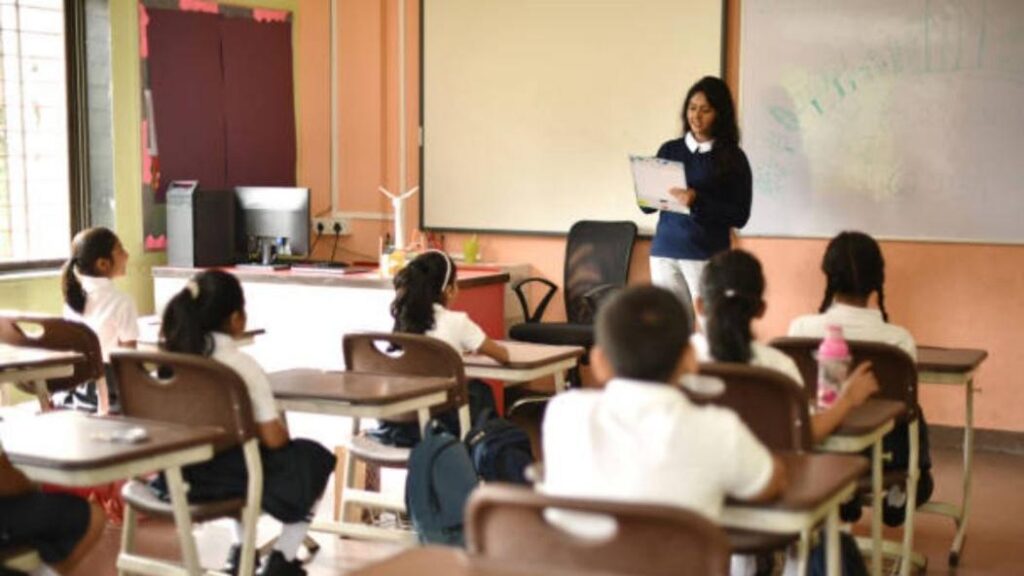
UPSC CURRENT AFFAIRS – 21th June 2025 Home / Expert Panel Formed to Curb Coaching Dependence and Reform Exams Why in News? The Union Education Ministry has constituted a high-level panel to address students’ overdependence on coaching centres and recommend reforms in entrance examinations and school education. Background In light of the growing concerns about the excessive dependence of students on private coaching centres, the Union Education Ministry has constituted a high-level panel chaired by Higher Education Secretary Vineet Joshi. The committee has been tasked with recommending systemic reforms to reduce the coaching culture, enhance the quality of school education, and evaluate the fairness and impact of competitive entrance examinations. Key Members of the Committee The committee is a multidisciplinary body comprising: Chairperson: Vineet Joshi, Secretary, Department of Higher Education Members: Chairman, Central Board of Secondary Education (CBSE) Joint Secretary (Institutions), Department of School Education and Literacy Representatives from premier institutions like IIT Madras, IIT Kanpur, and NIT Trichy Representative from the National Council of Educational Research and Training (NCERT) Three school principals (from Kendriya Vidyalaya, Navodaya Vidyalaya, and a Private School nominated by the Centre) Member Secretary: Joint Secretary from the Department of Higher Education Terms of Reference (ToR) of the Committee The committee has been given a broad and crucial mandate to address systemic challenges and recommend reforms across the following areas: 1. Curbing Coaching Centre Dependence Identify root causes behind the rise of private coaching centres. Examine the phenomenon of “dummy schools”, where students enroll formally but attend full-time coaching, bypassing regular schooling. Recommend policy interventions to strengthen formal schooling and reduce coaching dependency. 2. Reforming School Education Pedagogy Address the gaps in critical thinking, logical reasoning, analytical ability, and innovation in current school curricula. Suggest ways to reduce the dominance of rote learning practices. Assess the role and impact of formative assessments in both school and higher education and their influence on conceptual understanding. 3. Review of Competitive Entrance Exams Evaluate the effectiveness and fairness of competitive entrance exams in relation to school education outcomes. Assess their role in promoting the coaching industry and influencing academic stress. 4. Addressing Demand-Supply Gaps in Higher Education Study the rising demand for quality higher education and limited availability of seats in elite institutions such as IITs and NITs. Analyze how this imbalance fuels the growth of coaching centres. 5. Career Awareness and Guidance Evaluate the level of awareness among students and parents about diverse career pathways beyond a few elite institutions. Recommend strategies to strengthen career counselling services in schools and colleges. 6. Regulating EdTech and Coaching Practices Examine the advertising practices of coaching centres, especially: Misleading success claims Selective promotion of toppers Propose a regulatory framework to ensure ethical practices in educational advertising. Significance of the Panel This initiative comes at a time when India is witnessing: Surge in mental health issues among aspirants due to academic pressure. Reports of student suicides in coaching hubs like Kota. Rapid commercialisation of education through EdTech platforms and coaching chains. The panel’s recommendations are expected to have far-reaching implications on: Curriculum reform under NEP 2020 Policy regulation of the coaching industry Equitable access to quality education Student well-being and academic integrity Way Forward This panel reflects the government’s commitment to restoring the primacy of formal schooling and making education student-centric rather than exam-centric. Its findings and suggestions could lead to: Revamping of entrance exam structure Strengthened schooling system Increased emphasis on holistic development Reduction in the exploitative coaching culture The committee’s work aligns with the goals of the National Education Policy (NEP) 2020, particularly the emphasis on conceptual learning, equity, and universal access to quality education. Economic Implications For Indian Exporters These reforms reduce transaction costs and compliance hurdles Encourage a more competitive and efficient export environment Promote value addition in key sectors like leather For Tamil Nadu The reforms particularly benefit the state’s leather industry, a major contributor to employment and exports Boost the marketability of GI-tagged E.I. leather, enhancing rural and traditional industries For Trade Policy These decisions indicate a shift from regulatory controls to policy facilitation Reinforce the goals of Make in India, Atmanirbhar Bharat, and India’s ambition to become a leading export power Recently, BVR Subrahmanyam, CEO of NITI Aayog, claimed that India has overtaken Japan to become the fourth-largest economy in the world, citing data from the International Monetary Fund (IMF). India’s rank as the world’s largest economy varies by measure—nominal GDP or purchasing power parity (PPP)—each with key implications for economic analysis. Significance and Applications
First Indian Epigraphical Reference to Halley’s Comet

UPSC CURRENT AFFAIRS – 21th June 2025 Home / First Indian Epigraphical Reference to Halley’s Comet Why in News? The Archaeological Survey of India (ASI) has discovered the first known Indian epigraphical reference to Halley’s Comet in a copper plate inscription dated 1456 CE, during the Vijayanagar period. The inscription, written in Sanskrit using the Nagari script, was found at the Sri Mallikarjunaswamy Temple in Srisailam, Andhra Pradesh. Key Highlights of the Discovery: Inscription Date: The copper plate is dated to Śaka 1378, Dhātru Āshāḍha ba. 11, which corresponds to Monday, June 28, 1456 CE. Ruler Mentioned: The inscription records a land grant issued by Vijayanagar ruler Mallikarjuna. Purpose of the Grant: The donation was made “to mitigate the great calamity” (mahōtpāta śāntyartham) believed to arise due to: The appearance of a comet (referred to as dhūmakētu), And an associated meteor shower (referred to as prakāśyāya mahōtpāta). Scientific Correlation: The date coincides with the 1456 appearance of Halley’s Comet, as recorded in global astronomical records, making this inscription historically and scientifically significant. Recipient of the Grant: A Vedic scholar named Limgaṇarya from Kaḍiyalapura (likely present-day Kaḍiyapulanka in Kadapa district, Andhra Pradesh) received a village named Simgapura in Kelajhasima of Hastinavati Vemṭhe as an agrahāra (Brahmin land grant). Cultural Beliefs and Astronomy: In Indian tradition, comets and meteor showers were considered inauspicious, often associated with natural disasters or misfortune. The inscription reflects the interplay of celestial events and royal policy, where astronomical phenomena influenced royal donations and rituals. Significance of the Discovery: This is the first known epigraphical reference (as opposed to textual references) in India to Halley’s Comet. Confirms the observational awareness of celestial events among 15th-century Indian scholars and rulers. Demonstrates how astronomical events were interpreted through religious and political lenses, often prompting donations and rituals to pacify perceived misfortunes. The discovery was made during the editing of 21 unpublished copper plate charters (comprising 78 copper leaves) held by the Srisailam temple. The edited collection is expected to be published soon. Broader Context: Astronomy in Indian Epigraphy: While ancient and medieval Indian texts have several mentions of dhumaketus (comets), this inscription is unique as a primary epigraphic source. Adds to the corpus of Indian astronomical heritage, showing India’s engagement with celestial phenomena not just for scientific curiosity, but also for their religious and socio-political implications. Conclusion: This discovery is a remarkable convergence of archaeology, astronomy, and historical linguistics. It enriches our understanding of how Indian rulers engaged with the cosmos and reflects the role of celestial interpretations in statecraft and temple culture during the Vijayanagar era. Economic Implications For Indian Exporters These reforms reduce transaction costs and compliance hurdles Encourage a more competitive and efficient export environment Promote value addition in key sectors like leather For Tamil Nadu The reforms particularly benefit the state’s leather industry, a major contributor to employment and exports Boost the marketability of GI-tagged E.I. leather, enhancing rural and traditional industries For Trade Policy These decisions indicate a shift from regulatory controls to policy facilitation Reinforce the goals of Make in India, Atmanirbhar Bharat, and India’s ambition to become a leading export power Recently, BVR Subrahmanyam, CEO of NITI Aayog, claimed that India has overtaken Japan to become the fourth-largest economy in the world, citing data from the International Monetary Fund (IMF). India’s rank as the world’s largest economy varies by measure—nominal GDP or purchasing power parity (PPP)—each with key implications for economic analysis. Significance and Applications
India to be world’s 4th largest electric car maker by 2030: Report
UPSC CURRENT AFFAIRS – 21th June 2025 Home / India to be world’s 4th largest electric car maker by 2030: Report Why in News? India is set to become the fourth-largest electric four-wheeler manufacturer globally by 2030, with a projected capacity of 2.5 million units. Background India is poised to become the fourth-largest global hub for electric four-wheeler manufacturing by 2030, following China, the European Union, and the United States. According to the Global Clean Investment Monitor report by the Rhodium Group, India’s production capacity is set to rise over tenfold — from a modest 0.2 million units in 2024 to a projected 2.5 million units by the end of the decade. This significant expansion reflects India’s strategic focus on electric mobility as part of its broader industrial and climate goals. However, the journey toward global competitiveness in this sector will require overcoming major challenges related to costs, exports, and infrastructure. Growth Trajectory: From Nascent to Global Player As of 2024, India’s operational electric car manufacturing capacity stands at just 0.2 million units. However, a wave of new investments and industrial announcements is expected to radically reshape this landscape. The cumulative manufacturing capacity by 2030 is projected at 2.5 million units, comprising: 0.2 million currently operational 0.3 million ready but not yet active 1.3 million under construction 0.7 million announced This exponential growth positions India ahead of South Korea and Japan in terms of anticipated capacity, marking a strategic shift in the global EV supply chain. Mismatch Between Production and Demand Despite this manufacturing boom, domestic demand for electric four-wheelers in India is projected to remain modest. Rhodium Group estimates that India’s E4W demand will grow from 0.1 million in 2024 to between 0.4 million and 1.4 million by 2030. This implies an electric vehicle penetration rate of just 7–23% in total car sales, which are projected to reach around 6 million units by 2030. This indicates a surplus production capacity of 1.1–2.1 million vehicles, highlighting a critical need for Indian manufacturers to explore export markets to fully utilize their capacity. Export Opportunity vs Cost Challenge The surplus production opens the door for “Make in India for the World”, aligning with the government’s industrial vision. However, tapping into global EV markets will not be easy. Indian companies must significantly reduce production costs to compete with dominant exporters, particularly China, which currently benefits from economies of scale, advanced battery technology, and strong global market integration. Without addressing cost structures and competitiveness, India’s manufacturing advantage could remain underutilized. Domestic Market Dynamics and Policy Support India’s domestic E4W market is currently dominated by homegrown and localized players: Tata Motors, MG Motor, and Mahindra together account for nearly 90% of market share in 2024–25. To support domestic production and promote localization, the government has implemented several policy tools: Consumer subsidies tied to local value addition Production-linked incentives (PLIs) for EVs and advanced battery manufacturing Tariffs of 70–100% on fully built imported EVs Investment in EV charging infrastructure These measures have helped create a robust domestic manufacturing base but have also led to higher consumer prices and limited variety, as almost 100% of EVs sold are produced locally. Comparative Perspective: India vs Global Players India’s E4W production capacity by 2030: 2.5 million units China: 29 million units EU: 9 million units US: 6 million units While India is far behind these EV giants, it surpasses Japan (1.4 million units) and South Korea (1.9 million units) in terms of projected capacity. However, both Japan and South Korea currently have higher operational bases but limited new capacity under construction. In terms of EV adoption, India lags: India’s EV penetration in 2024: ~2% Vietnam’s penetration rose from 3% (2022) to 17% (2024), largely driven by the domestic automaker VinFast Battery Manufacturing: Rapid Rise, But Delivery Risks On the battery front, India has emerged as a standout player, particularly in module assembly. It is projected to become the largest module producer outside of China, Europe, and the US, with several large-scale projects under development. However, when it comes to battery cell manufacturing, India still lags: China: 4,818 GWh US: 1,169 GWh EU: 997 GWh India and rest of world: 567 GWh Much of India’s projected growth in battery manufacturing depends on plants that are under construction or recently announced, raising questions about execution and timelines. Conclusion: India’s electric four-wheeler industry is undergoing a historic transformation, powered by proactive government policies, industrial investment, and localization incentives. By 2030, the country will have one of the world’s largest manufacturing capacities, setting the stage for potential export leadership. However, cost competitiveness, infrastructure readiness, and battery supply chain development remain critical. To fully realize this potential, India must not only scale up production but also integrate into the global EV value chain with high-quality, affordable, and innovative offerings. Economic Implications For Indian Exporters These reforms reduce transaction costs and compliance hurdles Encourage a more competitive and efficient export environment Promote value addition in key sectors like leather For Tamil Nadu The reforms particularly benefit the state’s leather industry, a major contributor to employment and exports Boost the marketability of GI-tagged E.I. leather, enhancing rural and traditional industries For Trade Policy These decisions indicate a shift from regulatory controls to policy facilitation Reinforce the goals of Make in India, Atmanirbhar Bharat, and India’s ambition to become a leading export power Recently, BVR Subrahmanyam, CEO of NITI Aayog, claimed that India has overtaken Japan to become the fourth-largest economy in the world, citing data from the International Monetary Fund (IMF). India’s rank as the world’s largest economy varies by measure—nominal GDP or purchasing power parity (PPP)—each with key implications for economic analysis. Significance and Applications
GENIUS Act Passed in US Senate
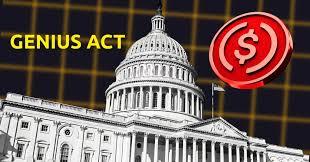
UPSC CURRENT AFFAIRS – 21th June 2025 Home / GENIUS Act Passed in US Senate Why in News? The United States Senate passed the GENIUS Act—short for Guiding and Establishing National Innovation for U.S. Stablecoins—with a 68-30 vote. This legislation marks a significant development in the global digital currency ecosystem, particularly in the formal regulation and endorsement of stablecoins—a class of cryptocurrencies backed by reserve assets such as the US Dollar. What are Stablecoins? Stablecoins are a form of cryptocurrency that maintain a stable value by being pegged to real-world assets, such as fiat currencies (USD) or commodities. The primary objective is to reduce the price volatility commonly associated with other cryptocurrencies like Bitcoin or Ethereum. Current Market Capitalisation (2025): USD 251.7 billion Growth in 2025: 22% increase Examples: USD Coin (USDC), Tether (USDT) Key Provisions of the GENIUS Act Full Reserve Backing: All stablecoins must be backed entirely by reserve assets. Monthly Audits: Issuers are required to undergo monthly independent audits to verify reserves. Anti-Money Laundering Compliance: Stringent measures to ensure that stablecoins are not misused for illegal activities. Support for US Treasuries: Encourages private sector investment in US government securities. Federal Oversight: Stablecoin activities will be monitored by federal financial institutions, including the Securities and Exchange Commission (SEC). GENIUS Act vs STABLE Act: Key Differences A separate version of the stablecoin regulation, known as the STABLE Act (Stablecoin Transparency and Accountability for a Better Ledger Economy), is being considered by the House of Representatives. Though similar in spirit, it differs in regulatory approach: Feature GENIUS Act STABLE Act Legislative Status Passed by Senate Yet to be passed by House Reserve Requirements Broad, including US Treasuries Limited to select asset classes Regulating Body SEC and US Treasury Office of the Comptroller of the Currency Issuer Eligibility More inclusive More restricted Exemptions Allows broad federal guidance Leaves scope for state-level oversight Legal experts have expressed concerns that the STABLE Act may not go far enough in ensuring uniformity and transparency, potentially allowing state-level regulators to decide which stablecoins can be listed by licensed intermediaries. Official Responses US Treasury Secretary Scott Bessent Predicted that the stablecoin market could grow to USD 3.7 trillion by 2030. Argued that stablecoins will reinforce the dominance of the US dollar, rather than weaken it. Highlighted that USD-backed stablecoins can be used even in developing countries such as Nigeria, increasing the reach of the US currency through digital platforms. Explained how the increased use of stablecoins will drive up demand for US Treasury securities, thereby strengthening the American financial system. US President Donald Trump Applauded the Senate’s approval of the GENIUS Act, calling it a major step toward making the United States the global leader in digital assets. Trump emphasized that digital assets are the future and that the legislation will attract “massive investment and big innovation.” During his first term, Trump had been skeptical of cryptocurrencies, but has since reversed his stance and actively supported their expansion. Economic Impacts Following the passage of the GENIUS Act: Circle Internet Group, the issuer of the USDC stablecoin, witnessed a 33.82 percent increase in its share price at market close. During pre-market trading, the stock further surged by 24.75 percent, reaching USD 211.87 per share. The Role of Stablecoins in Global Diplomacy and De-Dollarisation Cryptocurrency as a Geopolitical Tool A cyberattack by the hacker group Gonjeshke Darande (allegedly linked to Israeli entities) wiped out USD 90 million from Iran’s largest crypto exchange, Nobitex. The attack reflects how cryptocurrency is increasingly being used as a weapon in geopolitical confrontations. Crypto Diplomacy Trump-linked World Liberty Financial (WLF) recently signed an agreement with the Pakistan Crypto Council to promote digital assets. This agreement came shortly after the India-Pakistan ceasefire following Operation Sindoor, an Indian counterterror operation after a terror attack in Pahalgam. Reinforcing Dollar Supremacy In response to de-dollarisation efforts led by Russia and BRICS, stablecoins backed by the US dollar are being used as a strategic tool. The US sanctions against Russia (freezing USD 300 billion in reserves) led several countries to reduce dependency on the dollar. Russian President Vladimir Putin called for the use of national currencies within BRICS. Trump warned BRICS nations against de-dollarisation, threatening tariffs. President Trump’s Personal Involvement in Crypto Ventures According to public financial disclosures, President Trump has significant financial interests in cryptocurrency-related ventures: USD 320 million from $TRUMP Memecoin. USD 400 million from the World Liberty Financial platform. USD 57.35 million from the sale of WLF’s digital tokens. Ownership of 15 billion governance tokens in WLF. Investments in crypto-focused ETFs and mining companies such as American Bitcoin. Economic Implications For Indian Exporters These reforms reduce transaction costs and compliance hurdles Encourage a more competitive and efficient export environment Promote value addition in key sectors like leather For Tamil Nadu The reforms particularly benefit the state’s leather industry, a major contributor to employment and exports Boost the marketability of GI-tagged E.I. leather, enhancing rural and traditional industries For Trade Policy These decisions indicate a shift from regulatory controls to policy facilitation Reinforce the goals of Make in India, Atmanirbhar Bharat, and India’s ambition to become a leading export power Recently, BVR Subrahmanyam, CEO of NITI Aayog, claimed that India has overtaken Japan to become the fourth-largest economy in the world, citing data from the International Monetary Fund (IMF). India’s rank as the world’s largest economy varies by measure—nominal GDP or purchasing power parity (PPP)—each with key implications for economic analysis. Significance and Applications
How to Crack the KPSC KAS Exam in First Attempt (2025 Guide)

The Karnataka Public Service Commission, or KPSC, administers the KPSC KAS exam to choose candidates for high-level government positions in Karnataka. It is one of the state’s most prestigious and competitive tests. Thousands of students apply each year, but only a small number of students are chosen. For this reason, having the right KPSC strategy 2025 is important to succeed. In this blog, we will give you a comprehensive strategy on how to prepare for the KPSC exam and pass the KAS exam in your first attempt. This will walk you through each step of the exam’s preliminary, main and interview phases. Understand the KPSC KAS Exam Structure There are three phases to the KPSC KAS exam: preliminary, main and interview. Eligibility If you’re looking for KAS preparation tips, understanding this exam structure is the first step toward smart planning. Step-by-Step Strategy to Crack KPSC KAS in First Attempt Step 1 – Analyse the Syllabus Thoroughly If you are wondering how to prepare for the KPSC exam, understanding the syllabus is the first and most important step. First, go to the KPSC website and download and read the official KPSC syllabus. Examine each subject in detail. Check previous years’ papers to see which subjects are more important. Make your own micro-syllabus—a detailed topic-wise list. This will help you study smartly without wasting time on less important topics. Step 2 – Choose the Right Books and Resources For history, geography, and economics, use the trusted books of NCERTs (Class 6–12). For Polity, read Laxmikanth. These books are very useful for the Prelims. One of the best KAS preparation tips is to use high-quality Kannada versions of these books when writing in Kannada. For Mains, use standard books like IGNOU notes, Ethics by Subba Rao, and History by B.L. Grover. You can also use JICE’s study materials, which are designed specially for KPSC aspirants. Step 3 – Create a Realistic Daily Study Plan Create a study schedule that is time-based. Give three to four hours a day if you are employed. Study for 6–8 hours if you are not working. Allocate time for both the preliminary and main exams. For example, study for the preliminary exams in the morning and write your mains answers in the evening. These KAS preparation tips will help you stay focused and manage your time well. Step 4 – Practice Regular Mock Tests If you want to crack KPSC in the first attempt, solving papers regularly will help a lot. You’ll be able to understand the pattern and increase your speed. Think back on your mistakes after every test. After each test, analyze your mistakes. Find your weak areas and revise them. Step 5 – Strengthen Kannada Language Skills In particular, Kannada is important for the Mains. Get comfortable writing Kannada essays, letters and responses. Try to get better at vocabulary and grammar while reading Kannada newspapers. Make use of writing manuals and Kannada grammar books. Step 6 – Build Interview Confidence Early preparation is key for the interview. Practice speaking clearly, read the news every day and keep up with current events. Common questions include “Why KAS?”, “Your strengths and weaknesses” and “State issues”. Attend mock interviews at JICE to improve your confidence and speaking style. If you want to succeed, follow a good KPSC strategy 2025 that covers all these points carefully. Mistakes to Avoid During KPSC KAS Preparation Why Coaching Helps – Especially in the First Attempt If you’re wondering how to prepare for the KPSC exam, coaching gives you a clear direction and saves time. With the structured learning that coaching provides, you can avoid wasting time and study in the proper order. It helps in adequately covering the entire syllabus. Additionally, you interact with other students, which motivates the student groups. You stay motivated and focused when you study with serious aspirants. The most significant advantage is mentoring. Good teachers help you check your responses and offer helpful advice. Good teachers guide you, check your answers, and give useful tips. JICE coaching is known for its expert faculty, Kannada-friendly study material, and mock tests. They also provide regular answer-writing practice and mock interviews, which help a lot. Success Stories of First-Attempt Toppers A large number of JICE students passed the KPSC KAS exam in their first attempt. They practised writing answers, concentrated on Kannada, used a clever study schedule and took guidance from mentors. According to one JICE student, “He was able to maintain his focus thanks to the test series and interview advice at JICE”. Their regular doubt sessions and notes were very beneficial. If you want to crack KPSC on the first attempt, learning from such success stories can be very motivating. On the official JICE website or YouTube channel, you can read more success stories like these and view videos of top performers. Final Tips and Motivation Remain constant each day. Make sure to study every day, even if your study time is limited. Stay updated even if you’re exhausted or the syllabus seems overwhelming. Focus on the KPSC strategy 2025 by paying more attention to the process rather than just the outcome. Take good care of yourself. To reduce stress, eat healthily, get enough sleep, and take short breaks. Just as important is the hard work is a positive mindset. Don’t give up even though there will be difficult days. Stay focused, and you can crack KPSC in your first attempt with smart efforts and the right mindset. Ready to Begin Your KPSC KAS Journey? With the correct plan and help, your KPSC KAS dream can become a reality. It is best to start now if you are serious about passing the exam. Enroll in professional coaching to receive appropriate direction right away. For more information about our classes, study guides, and test series, click the link below to access our KPSC Coaching Page. To get your journey off to a smart start, you can also download a free preparation planner or schedule a free counselling session
State-Level Anti‑Rape Legislations in India

UPSC CURRENT AFFAIRS – 20th June 2025 Home / State-Level Anti‑Rape Legislations in India Why in News? Several Indian States have passed anti-rape Bills proposing stricter punishments, but many remain unenforced due to the requirement of Presidential assent and conflicts with central laws. Introduction As the monsoon session of legislative assemblies across India begins, a number of anti-rape Bills—some recently passed and others long pending—are awaiting implementation. While several State Assemblies have introduced and even passed stricter laws in response to brutal incidents of sexual violence, these have frequently failed to secure the President’s assent or have been returned for legal and constitutional review. This reflects the challenges in legislating criminal laws in India’s federal framework, where both the Centre and the States share jurisdiction over criminal matters. Background: The Nirbhaya Case as a Turning Point The brutal gang-rape and murder of a 22-year-old medical intern in Delhi in December 2012 ignited national outrage and triggered a re-evaluation of India’s criminal laws related to sexual violence. The Criminal Law (Amendment) Act, 2013 was passed in response, introducing several new offences and significantly enhancing punishments. Key changes under the 2013 law included: Raising the minimum sentence for rape to 20 years, extendable to life imprisonment. Permitting the death penalty for repeat rape offenders. Recognizing stalking, voyeurism, and acid attacks as separate crimes with stricter punishments. Strengthening provisions under the Protection of Children from Sexual Offences (POCSO) Act. This central legislation set a legislative benchmark and inspired States to propose additional reforms within their jurisdictions. Criminal Law and the Federal Structure Constitutional Position Criminal law falls under the Concurrent List (Entry 1, List III, Schedule VII) of the Indian Constitution. This means both Parliament and State legislatures are empowered to enact laws in this domain. However, Article 254(2) of the Constitution states that if a State law contradicts an existing Central law on the same subject, it can only come into effect after receiving the assent of the President of India. This has resulted in numerous State-passed anti-rape Bills awaiting Presidential approval for several years, due to overlaps or conflicts with national laws or constitutional concerns. Key Legislative Developments: Timeline and Analysis 1. Central Legislation: 2013 and 2018 Criminal Law (Amendment) Act, 2013Passed after the Nirbhaya case, this law overhauled provisions of the Indian Penal Code (IPC), the Code of Criminal Procedure (CrPC), and the Indian Evidence Act. It addressed: Rape, stalking, and acid attacks with enhanced penalties. Procedural safeguards for victims. A widened definition of sexual assault. 2. Criminal Law (Amendment) Act, 2018 This Act was passed in response to horrific cases such as the Kathua and Unnao rapes. Key provisions included: Minimum 20 years to life or death penalty for raping children under 12. Stricter punishment for raping girls below 16. Fast-track procedures for trial and investigation. This 2018 Act largely nullified the need for earlier State-level amendments on child rape. State-Level Legislative Actions Madhya Pradesh, Rajasthan, Haryana, Arunachal Pradesh (2017–2018) These States introduced amendments to the IPC to allow for the death penalty for rape of girls below the age of 12. However, once the Central law in 2018 addressed similar issues, these amendments became largely redundant, although they still demonstrated the urgency with which States were responding to local crimes. Andhra Pradesh (2019) Following the gang-rape and murder of a young veterinary doctor in Hyderabad, the Andhra Pradesh government introduced: The Andhra Pradesh Special Courts for Specified Offences Against Women and Children Act. The Andhra Pradesh Disha Act. Provisions included: 14-day limit for filing chargesheets. Death penalty for rape and murder. Establishment of special fast-track courts. Despite the political push, especially by the then Chief Minister, the Bills are still awaiting Presidential assent. Maharashtra (2021) After the gang-rape of a 15-year-old girl by multiple perpetrators, the Maharashtra government passed the Shakti Criminal Laws (Maharashtra Amendment) Bill. It proposed: Death penalty for rape, gang-rape, and severe acid attacks. Strict timelines: 30 days each for investigation, trial, and appeal. Penalties for filing false complaints and intimidation. The Bill was returned by the Centre due to concerns over judicial overreach and its conflict with Supreme Court guidelines. West Bengal (2024) Following the rape and murder of a female doctor, the West Bengal Assembly passed the Aparajita Woman and Child Bill, amending the Bharatiya Nyaya Sanhita (BNS), Bharatiya Nagarik Suraksha Sanhita (BNSS), and POCSO Act within the State. The Bill: Mandated life imprisonment without parole or death in aggravated rape cases. Introduced a 21-day investigation limit. Directed convicts to financially compensate victims for medical and rehabilitative expenses. The Bill awaits the President’s assent. Tamil Nadu (2025) The State Assembly passed the Criminal Laws (Tamil Nadu Amendment) Bill with the following provisions: Minimum 14 years of rigorous imprisonment for rape. 20 years minimum if the perpetrator is a police officer. Death penalty for raping girls below 12 years of age. This Bill, too, is pending central approval. Central Legal Overhaul: Bharatiya Nyaya Sanhita (2023) In 2023, Parliament repealed colonial-era criminal laws and introduced: Bharatiya Nyaya Sanhita (BNS), replacing IPC. Bharatiya Nagarik Suraksha Sanhita (BNSS), replacing CrPC. Bharatiya Sakshya Act (BSA), replacing the Indian Evidence Act. Changes introduced in BNS include: Age-specific classification of rape victims and corresponding punishments. Punishment for sexual intercourse through false promise or deceit. Recognition of sexual exploitation without requiring physical force. However, the law has been criticized for: Exclusion of marital rape from the definition of rape. Failing to include male and transgender victims, though future amendments have been indicated. These laws came into force on July 1, 2024. Key Issues and Challenges Federal Difficulties in Lawmaking State amendments to criminal law require Presidential assent when they overlap with Central laws. The delay or denial of assent highlights friction in Centre-State legislative coordination and undermines the urgency behind State legislative efforts. Legal Validity and Judicial Concerns Some State Bills, such as Maharashtra’s Shakti Bill, have been flagged for overstepping Supreme Court rulings and due process norms. Laws prescribing death penalty or extremely short trial deadlines have been questioned
Addressing India’s Propulsion Gap

UPSC CURRENT AFFAIRS – 20th June 2025 Home / Addressing India’s Propulsion Gap Why in News? India’s persistent propulsion gap continues to constrain its aerospace ambitions, despite advancements like the AMCA. Introduction India’s aspiration to emerge as a self-reliant global power in defence is evident in projects like the Advanced Medium Combat Aircraft (AMCA) — a fifth-generation stealth multirole fighter. However, a critical vulnerability continues to haunt the Indian aerospace and defence ecosystem: engine dependency. Despite multiple ambitious programmes since independence, the inability to design and produce indigenous jet engines has severely undermined India’s strategic autonomy. The HF-24 Marut: A Historical Cautionary Tale India’s tryst with fighter aircraft indigenisation began with the HF-24 Marut, developed in the 1950s by Hindustan Aeronautics Limited (HAL) under German engineer Kurt Tank. The Marut was advanced for its time but was crippled by an underpowered imported engine (British Orpheus 703), as the envisioned high-thrust engine never materialised. Performance: While Marut performed credibly during the 1971 India-Pakistan War, its operational ceiling and overall performance remained suboptimal. Outcome: Only 147 aircraft were produced, with the fleet phased out by 1990 — highlighting that even a well-designed airframe cannot compensate for weak propulsion. The Kaveri Engine Saga: Chronic Shortfalls In the 1980s, the Gas Turbine Research Establishment (GTRE) was tasked with developing the Kaveri GTX-35VS afterburning turbofan engine for the Light Combat Aircraft (LCA) project. Timeline and Cost: Despite 35 years of R&D and over ₹2,032 crore in expenditure (as of 2020), the engine failed to meet desired benchmarks. Technical Limitations: Poor thrust-to-weight ratio Thermal management issues Reliability under sustained conditions Revival Efforts and Failures Attempts to revive Kaveri with foreign partnerships — including Snecma (Safran) and later through Rafale offset clauses — collapsed due to disagreements over technology sharing and institutional rigidity. Current Dependence: A Matter of Strategic Concern Light Combat Aircraft (LCA) – Tejas The LCA Mk1 and Mk1A variants are powered by GE F404-IN20 engines. Mk2 and AMCA Mk1 plan to use the more powerful GE F414 engine. A $716 million contract for 99 F404 engines (signed in 2021) faced delays, with the first engine delivered only in April 2025, citing supply chain issues. Consequences Delay in commissioning LCA Mk1A squadrons Criticism from Air Chief Marshal A.P. Singh over HAL’s repeated delivery failures IAF’s combat squadron strength has plummeted to around 30, far below the sanctioned 42.5 Why Engine Technology Matters Jet engines are not mere components — they are the core enablers of aerospace sovereignty, defining a fighter’s: Thrust & Speed Maneuverability & Payload Mission Endurance Export potential Without engine autonomy, India remains vulnerable to geopolitical disruptions, cost escalations, and third-party export restrictions. Across the Armed Forces: A Universal Vulnerability India’s propulsion dependency is not limited to aircraft: Army Arjun Main Battle Tank: Powered by German MTU engines Zorawar Light Tank: Uses U.S. Cummins engine Navy Entire fleet — from frigates to fast attack crafts — depends on Russian, French, German, Ukrainian, or U.S. engines This blanket reliance on imported powerpacks for land, air, and sea platforms undercuts India’s ambitions for defence export leadership and strategic autonomy. Indigenous Engine Development: The Road Ahead Immediate Challenges Negotiation stalemate with GE over local manufacture of F414 (GE demands additional $500 million) GE is unwilling to share critical technologies: Single-crystal turbine blades Thermal barrier coatings Advanced cooling systems These are essential for developing high-thrust, long-life jet engines, but are closely guarded as strategic assets by OEMs. Strategic Implications of Propulsion Dependency Delayed Production and Induction: Delays in engine supply translate into delays in fighter induction — as seen with LCA Mk1A. Loss of Export Potential: Export of fighters like Tejas requires third-party clearance from engine OEMs. Strategic Vulnerability: Dependence on Western or Russian suppliers for propulsion opens India to supply-chain disruptions and foreign leverage. Stagnation in R&D: Failure to master propulsion sidelines core R&D innovation and leads to overinvestment in airframes without matching propulsion capacity. What Needs to Change? Long-Term Vision and Political Will Defence planning must transcend 5-year cycles and adopt a 20–30 year roadmap. Political and budgetary commitment must match rhetoric like Atmanirbhar Bharat. Structural Reform in R&D Consolidate and empower institutions like GTRE with stable leadership and clear deliverables. Encourage DRDO–private sector–academia collaboration in propulsion. International Collaboration with Safeguards Joint ventures with firms like Safran or Rolls-Royce must go beyond license production and include co-development with tech transfer. The government must be prepared to invest heavily in acquiring such capabilities. Private Sector Integration India’s private sector (e.g., Godrej, Tata Advanced Systems, L&T) must be incentivised to enter propulsion R&D. Promote competitive grants and incubation ecosystems around propulsion innovation. Conclusion India’s ambitions to become a global defence manufacturing hub and a net security provider in the Indo-Pacific rest heavily on one missing piece: a sovereign engine development capability. Without mastering propulsion technology — the heart of aerospace and defence — India risks repeating the tragedy of the Marut with every new platform it dreams of. Engine development is not just a technological or financial challenge; it is a strategic necessity. If India truly wishes to assert itself as a 21st-century power, it must treat propulsion as its national mission, with the same intensity and unity as space, nuclear, and missile programmes. Economic Implications For Indian Exporters These reforms reduce transaction costs and compliance hurdles Encourage a more competitive and efficient export environment Promote value addition in key sectors like leather For Tamil Nadu The reforms particularly benefit the state’s leather industry, a major contributor to employment and exports Boost the marketability of GI-tagged E.I. leather, enhancing rural and traditional industries For Trade Policy These decisions indicate a shift from regulatory controls to policy facilitation Reinforce the goals of Make in India, Atmanirbhar Bharat, and India’s ambition to become a leading export power Recently, BVR Subrahmanyam, CEO of NITI Aayog, claimed that India has overtaken Japan to become the fourth-largest economy in the world, citing data from the International Monetary Fund (IMF). India’s rank as the world’s largest economy varies by measure—nominal GDP or
Navy inducts INS Arnala

UPSC CURRENT AFFAIRS – 20th June 2025 Home / Navy inducts INS Arnala Why in News? Recently, INS Arnala, India’s first indigenously built Anti-Submarine Warfare Shallow Water Craft (ASW-SWC) was commissioned. Introduction On June 19, 2024, INS Arnala, the first ship of the indigenously built Anti-Submarine Warfare Shallow Water Craft (ASW-SWC) class, was commissioned into the Eastern Naval Command of the Indian Navy at Visakhapatnam. Designed by Garden Reach Shipbuilders & Engineers (GRSE) and built in collaboration with L&T Shipbuilding, INS Arnala represents a significant step in India’s efforts to modernise its naval capabilities and strengthen maritime security in coastal and shallow waters. Background and Need India’s coastline spans over 7,500 km, with strategic chokepoints, offshore assets, and critical shipping routes. The growing presence of foreign submarines, especially from China, in the Indian Ocean Region (IOR), poses a complex security challenge. The ageing Abhay-class corvettes, which have been in service for decades, are no longer adequate to address modern undersea threats. The ASW-SWC programme was conceptualised to fill this gap with next-generation shallow water platforms. Key Features of INS Arnala Design and Build Length: 77.6 metres Displacement: Approx. 1,490 tonnes Propulsion: Diesel Engine-Waterjet configuration — first of its kind in Indian Navy Named after: Arnala Fort near Vasai, Maharashtra Indigenisation and Industrial Participation 80% indigenous content Major partners: BEL, L&T, Mahindra Defence, MEIL Over 55 Micro, Small and Medium Enterprises (MSMEs) involved Aligns with the ‘Aatmanirbhar Bharat’ initiative and promotes defence self-reliance Operational Capabilities Primary Role: Anti-submarine warfare (ASW) in shallow coastal waters Secondary Roles: Subsurface surveillance Search and Rescue (SAR) Low-intensity maritime operations Mine-laying and area denial operations Weapon and Sensor Systems Hull Mounted Sonar (Abhay), Low Frequency Variable Depth Sonar (LFVDS), and Underwater Acoustic Communication System (UWACS) Single centreline-mounted rocket launcher (new design to reduce hardware and cost) Lightweight torpedoes, ASW rockets, mine-laying systems, and anti-torpedo decoys Integrated Combat Management System and ASW Complex (IAC) Strategic Significance 1. Coastal and Littoral Defence Operates efficiently in waters less than 30 metres deep Suitable for targeting small UUVs and midget submarines near the shore Enhances patrolling of India’s vulnerable coastal areas and offshore energy installations 2. Countering Submarine Threats in IOR Reinforces India’s deterrent posture against hostile undersea platforms Complements blue-water platforms like destroyers and frigates by filling the shallow water operational gap 3. Boost to Indigenisation and Employment Promotes domestic defence industry through indigenous design, electronics, weapons and MSME involvement Reduces dependency on foreign military hardware and improves India’s technological base Future Prospects 15 more ASW-SWC ships will be inducted progressively, standardising coastal ASW operations Will form a key component of India’s layered maritime security architecture Supports India’s aspirations to be a Net Security Provider in the Indian Ocean Region Conclusion INS Arnala is not just a naval platform, but a symbol of India’s evolving maritime doctrine that emphasises self-reliance, technological modernisation, and strategic coastal defence. With increasing underwater threats in the IOR, the induction of such shallow water combatants is critical for protecting national interests, securing sea lines of communication (SLOCs), and ensuring maritime dominance in the region. Economic Implications For Indian Exporters These reforms reduce transaction costs and compliance hurdles Encourage a more competitive and efficient export environment Promote value addition in key sectors like leather For Tamil Nadu The reforms particularly benefit the state’s leather industry, a major contributor to employment and exports Boost the marketability of GI-tagged E.I. leather, enhancing rural and traditional industries For Trade Policy These decisions indicate a shift from regulatory controls to policy facilitation Reinforce the goals of Make in India, Atmanirbhar Bharat, and India’s ambition to become a leading export power Recently, BVR Subrahmanyam, CEO of NITI Aayog, claimed that India has overtaken Japan to become the fourth-largest economy in the world, citing data from the International Monetary Fund (IMF). India’s rank as the world’s largest economy varies by measure—nominal GDP or purchasing power parity (PPP)—each with key implications for economic analysis. Significance and Applications
Revised Green India Mission to increase forest cover
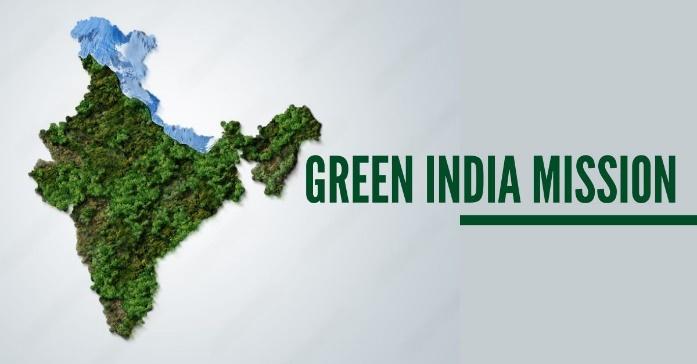
UPSC CURRENT AFFAIRS – 20th June 2025 Home / Revised Green India Mission to increase forest cover Why in News? The revised Green India Mission (GIM), launched in June 2025, focuses on landscape-based ecological restoration in different areas. Introduction The Green India Mission (GIM), launched in 2014, is one of the eight core missions under India’s National Action Plan on Climate Change (NAPCC). On June 17, 2025, the Union Environment Ministry released a revised roadmap for GIM to realign its objectives with the growing ecological challenges such as climate change, land degradation, and deforestation, while incorporating feedback from scientific institutions and partner states. Objectives of the Green India Mission Increase forest and tree cover on 5 million hectares (mha). Improve forest quality by another 5 mha. Enhance ecosystem services such as: Carbon sequestration, Groundwater recharge, Biodiversity conservation. Strengthen livelihoods of forest-dependent communities. Achievements So Far (2015–2024) Parameter Achievement Land area covered under afforestation 11.22 mha Funds released to 18 states ₹624.71 crore Funds utilized ₹575.55 crore Carbon sink created (2005–2021) 2.29 billion tonnes CO₂-equivalent Activities are prioritized based on ecological vulnerability, carbon sequestration potential, and land degradation levels. Key Features of the Revised Roadmap (2025) 1. Region-Specific Focus The revised roadmap focuses on landscape-specific ecological restoration in: Aravalli Range (via the Aravalli Green Wall Project), Western Ghats (eco-restoration of mining areas), Himalayas (climate-vulnerable mountain ecosystems), Mangroves (coastal protection and biodiversity hotspots). 2. Aravalli Green Wall Project Restoration of 8 lakh hectares across 29 districts in 4 states. Estimated cost: ₹16,053 crore. Aim: Create a 5 km buffer green belt covering 6.45 mha. Addresses sandstorm control, desertification, and air pollution in Delhi-NCR and Punjab. 3. Western Ghats & Himalayas Measures include afforestation, groundwater recharge, and restoration of mining-degraded lands. Protecting biodiversity-rich, climate-sensitive zones. Addressing Land Degradation and Desertification As per ISRO’s Desertification and Land Degradation Atlas (2018–19): 97.85 mha (~30% of India’s geographical area) is degraded. India’s target (UNCCD commitment): Restore 26 mha of degraded land by 2030. GIM will play a crucial role through: Large-scale afforestation, Grassland and wetland restoration, Community-based eco-restoration efforts. Carbon Sequestration Potential According to the Forest Survey of India (FSI): Restoration of open forests can sequester 1.89 billion tonnes CO₂ over 15 mha. Intensified efforts under GIM could: Expand forest/tree cover to 24.7 mha, Achieve a carbon sink of 3.39 billion tonnes CO₂-equivalent by 2030. This aligns with India’s Nationally Determined Contribution (NDC) under the Paris Agreement, which commits to: Creating an additional carbon sink of 2.5–3 billion tonnes of CO₂-equivalent through forests and trees by 2030. Way Forward Convergence with other schemes: CAMPA, MGNREGA, PMKSY, Jal Shakti Abhiyan, and Namami Gange. Strengthening local governance: Empowering Joint Forest Management Committees (JFMCs). Technological support: Use of GIS, remote sensing, and mobile platforms for tracking progress. Community involvement: Ensuring tribal and local participation in afforestation and conservation. Conclusion The revised Green India Mission represents a strategic shift toward landscape-based restoration, climate resilience, and carbon sequestration. With region-specific interventions and stronger convergence with national climate goals, it is poised to play a transformational role in addressing climate change, desertification, and environmental degradation in India. Economic Implications For Indian Exporters These reforms reduce transaction costs and compliance hurdles Encourage a more competitive and efficient export environment Promote value addition in key sectors like leather For Tamil Nadu The reforms particularly benefit the state’s leather industry, a major contributor to employment and exports Boost the marketability of GI-tagged E.I. leather, enhancing rural and traditional industries For Trade Policy These decisions indicate a shift from regulatory controls to policy facilitation Reinforce the goals of Make in India, Atmanirbhar Bharat, and India’s ambition to become a leading export power Recently, BVR Subrahmanyam, CEO of NITI Aayog, claimed that India has overtaken Japan to become the fourth-largest economy in the world, citing data from the International Monetary Fund (IMF). India’s rank as the world’s largest economy varies by measure—nominal GDP or purchasing power parity (PPP)—each with key implications for economic analysis. Significance and Applications