U.S.–E.U. Tariff Deal and Global Trade Crisis

UPSC CURRENT AFFAIRS – 29th July 2025 Home / U.S.–E.U. Tariff Deal and Global Trade Crisis Why in News? The United States and European Union reached a last-minute tariff agreement, averting a potential transatlantic trade war. Introduction The United States and the European Union reached a landmark tariff agreement just days before a White House-imposed deadline for sweeping import taxes on EU goods. The announcement came after a high-stakes meeting between S. President Donald Trump and European Commission President Ursula von der Leyen at Trump’s golf course in Scotland. Background: The U.S. and the E.U. together represent the largest bilateral trade volume globally, involving hundreds of millions of people and trillions of dollars in goods and services. The Trump administration had threatened to impose 30% tariffs on EU imports by August 1, 2025, unless a new agreement was reached. Key Highlights of the Agreement: Described as an “across-the-board” deal, though specific tariff terms remain undisclosed. Trump emphasized a model similar to the 15% tariff agreement with Japan, indicating his unwillingness to accept lower rates. Von der Leyen acknowledged the magnitude of the deal, calling it possibly the biggest ever for both parties. Negotiation Dynamics: Talks were held privately in Scotland and lasted briefly before both leaders announced an agreement. Implications of the Agreement: For Global Trade Stability: Averted a major transatlantic trade war, which could have triggered retaliatory tariffs on hundreds of U.S. products, including: Beef, Beer, Auto parts and Boeing aircraft For Consumers and Businesses: Prevented the rise in prices of EU exports such as: French cheese, Italian leather, German electronics and Spanish pharmaceuticals Provided market clarity and stability for transatlantic companies and investors. Implications for India: Stability in Global Trade Environment Avoiding a U.S.–EU tariff escalation brings predictability to global trade flows, which is crucial for India’s export-dependent sectors like engineering goods, auto components, and IT services. A trade war could have weakened global demand and disrupted supply chains. Opportunity for Strategic Trade Diversification Had tariffs been reimposed, the U.S. and EU may have looked for alternative trade partners to fill market gaps. India could position itself as a reliable exporter of steel, aluminum, pharmaceuticals, and textiles. India can explore new bilateral trade agreements in this atmosphere of relative calm. Steel & Aluminum Export Prospects India exports both steel and aluminum to the U.S. and EU. While the deal focuses on internal tariff adjustments, reduced trade tension among developed countries may result in lower global tariffs or relaxed quotas, benefiting Indian producers. WTO Reforms and Multilateralism The U.S.–EU deal emphasized rules-based trade. India, a strong advocate for WTO reforms, can leverage this to press for fair treatment for developing nations and resist protectionist pressures. Challenges and Cautions: Preferential treatment between U.S.–EU may exclude India and lead to trade diversion. India must closely monitor evolving trade alliances and ensure it is not sidelined by plurilateral agreements like the Indo-Pacific Economic Framework (IPEF) or TTC (Trade and Tech Council). Conclusion: The tariff agreement between the U.S. and the E.U. underscores the delicate balance of economic diplomacy and domestic politics in shaping global trade. Introduction Economic Implications For Indian Exporters These reforms reduce transaction costs and compliance hurdles Encourage a more competitive and efficient export environment Promote value addition in key sectors like leather For Tamil Nadu The reforms particularly benefit the state’s leather industry, a major contributor to employment and exports Boost the marketability of GI-tagged E.I. leather, enhancing rural and traditional industries For Trade Policy These decisions indicate a shift from regulatory controls to policy facilitation Reinforce the goals of Make in India, Atmanirbhar Bharat, and India’s ambition to become a leading export power Recently, BVR Subrahmanyam, CEO of NITI Aayog, claimed that India has overtaken Japan to become the fourth-largest economy in the world, citing data from the International Monetary Fund (IMF). India’s rank as the world’s largest economy varies by measure—nominal GDP or purchasing power parity (PPP)—each with key implications for economic analysis. Significance and Applications
Flood Risk and Informal Settlements in the Global South
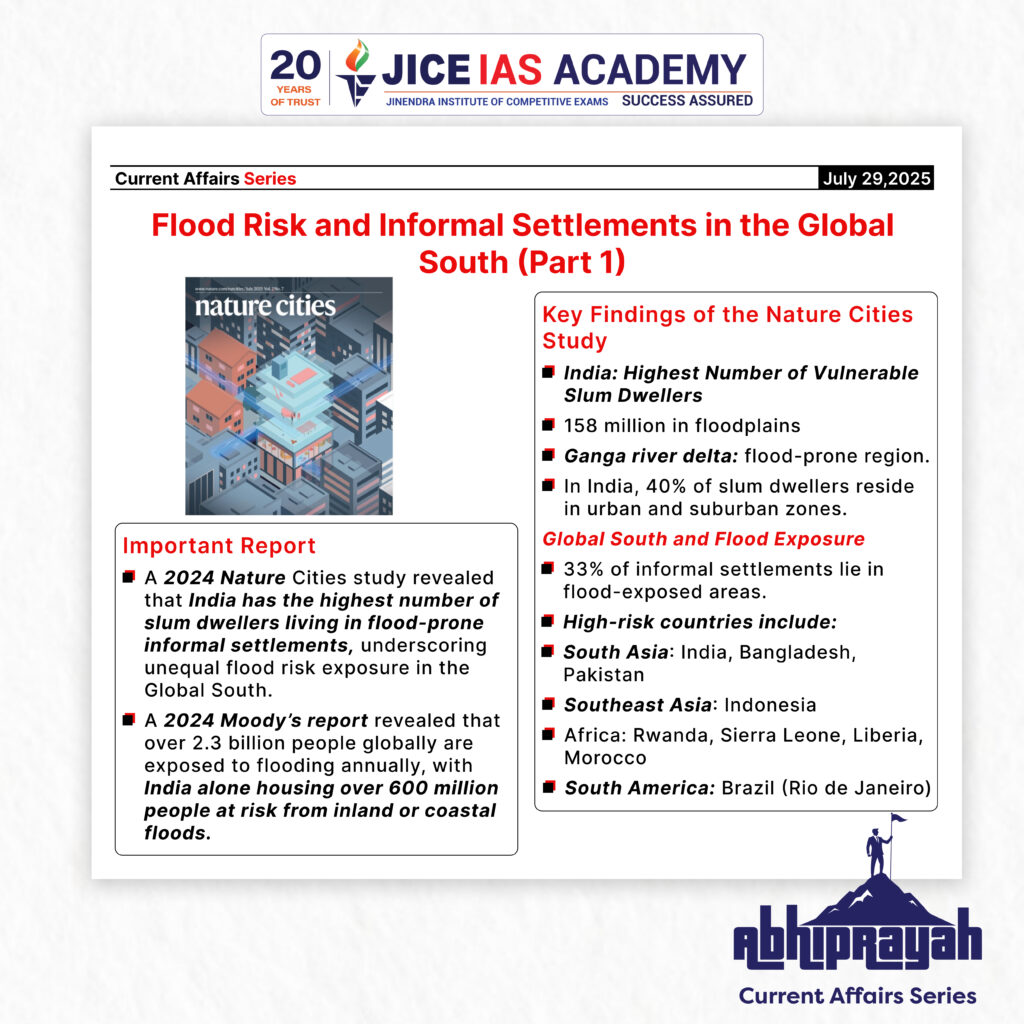
UPSC CURRENT AFFAIRS – 29th July 2025 Home / Flood Risk and Informal Settlements in the Global South Why in News? A 2024 Nature Cities study revealed that India has the highest number of slum dwellers living in flood-prone informal settlements, underscoring unequal flood risk exposure in the Global South. Introduction A 2024 Moody’s report revealed that over 3 billion people globally are exposed to flooding annually, with India alone housing over 600 million people at risk from inland or coastal floods. Despite this alarming reality, vulnerable communities in the Global South remain underrepresented in flood risk data. A new study published in Nature Cities (July 2024) fills this critical data gap by combining satellite imagery of informal settlements with maps of 343 major floods, spanning 129 low- and middle-income countries. Key Findings of the Nature Cities Study: India: Highest Number of Vulnerable Slum Dwellers 158 million slum dwellers in India live in floodplains — more than the population of Russia. Most are concentrated in the Ganga river delta, a naturally flood-prone region. India’s cities are rapidly expanding into vulnerable areas, particularly floodplains. Global South and Flood Exposure 33% of informal settlements (445 million people in 908,077 households) lie in flood-exposed areas. High-risk countries include: South Asia: India, Bangladesh, Pakistan Southeast Asia: Indonesia Africa: Rwanda, Sierra Leone, Liberia, Morocco South America: Brazil (Rio de Janeiro) Slum dwellers are 32% more likely to settle in floodplains than in safer zones due to lower land prices. Urbanisation and Settlement Patterns Latin America: 80% urbanisation; 60% of informal settlements are in urban areas. Sub-Saharan Africa: 63% of such settlements are rural. In India, 40% of slum dwellers reside in urban and suburban zones. Drivers of Settlement in Floodplains Economic constraints and job accessibility Lack of affordable housing Social vulnerability and forced displacement In contrast to the Global North, where flood insurance and protective infrastructure (e.g., levees) allow affluent residents to reside in flood-prone scenic areas, in the Global South, floodplains equate to affordability for the poor. Case Study: Bengaluru Identified as India’s most vulnerable city to urban flooding (IMD data). Informal settlements are widespread in low-lying, flood-prone areas where developers avoid investing, making these areas more accessible to migrant and low-income workers. Housing types: Tin-sheet, tarp, or tent housing, typically on rent via middlemen (thekedars). Policy Implications and Gaps Lack of Inclusive Risk Management Most national policies focus on population-level flood risk, not localized vulnerabilities. Absence of targeted policies for slum-dwellers or repeat flood victims. Infrastructure & Governance Failure Inadequate drainage, sanitation, and waste management increases flood impacts. Urban gentrification pushes poor communities further into high-risk zones. Development vs Equity Real estate drives land-use decisions, often ignoring long-term environmental hazards. Gated communities are often developed on safer lands, increasing spatial inequality. Recommendations: SDG Community-led governance and co-creation of flood-resilience strategies. Strengthen local infrastructure: Drainage, sanitation, early-warning systems. Create urban housing policies that discourage settlement in high-risk zones. Skill development in flood-risk management for local employment generation. Use of AI and machine learning to map and predict vulnerable areas dynamically. Conclusion The study underscores a critical truth: Flood risk is not just about geography but about inequality. India and other countries in the Global South need to integrate spatial data, socioeconomic indicators, and community participation to build resilient, inclusive cities — especially as climate change intensifies flood risks. Introduction Economic Implications For Indian Exporters These reforms reduce transaction costs and compliance hurdles Encourage a more competitive and efficient export environment Promote value addition in key sectors like leather For Tamil Nadu The reforms particularly benefit the state’s leather industry, a major contributor to employment and exports Boost the marketability of GI-tagged E.I. leather, enhancing rural and traditional industries For Trade Policy These decisions indicate a shift from regulatory controls to policy facilitation Reinforce the goals of Make in India, Atmanirbhar Bharat, and India’s ambition to become a leading export power Recently, BVR Subrahmanyam, CEO of NITI Aayog, claimed that India has overtaken Japan to become the fourth-largest economy in the world, citing data from the International Monetary Fund (IMF). India’s rank as the world’s largest economy varies by measure—nominal GDP or purchasing power parity (PPP)—each with key implications for economic analysis. Significance and Applications
India’s Multidimensional War on Poverty
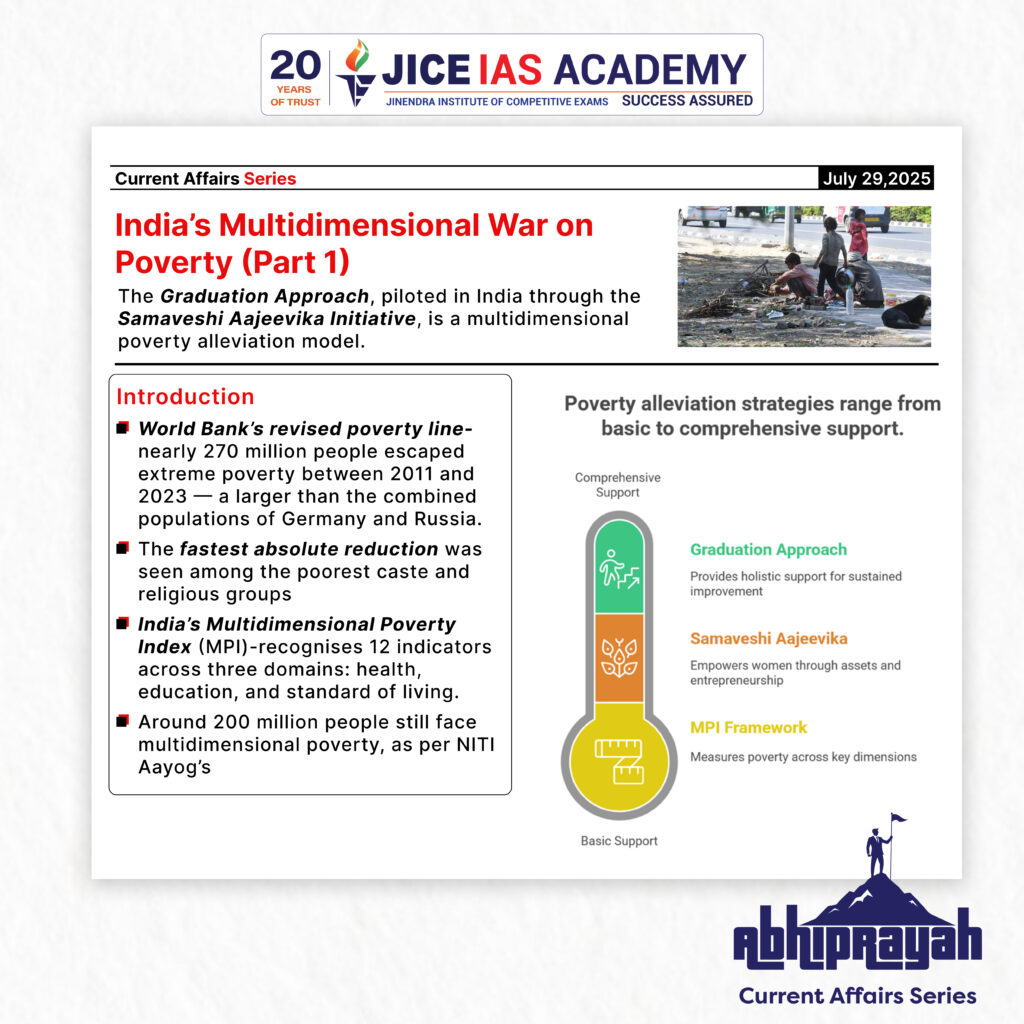
UPSC CURRENT AFFAIRS – 29th July 2025 Home / India’s Multidimensional War on Poverty Why in News? The Graduation Approach, piloted in India through the Samaveshi Aajeevika Initiative, is a multidimensional poverty alleviation model. Introduction India has made commendable progress in reducing poverty over the past decade. According to the World Bank’s revised poverty line, nearly 270 million people escaped extreme poverty between 2011 and 2023 — a number larger than the combined populations of Germany and Russia. Notably, the fastest absolute reduction was seen among the poorest caste and religious groups, reflecting the inclusive nature of recent anti-poverty efforts. However, poverty today is no longer understood merely as the lack of income. It is increasingly seen as multidimensional, involving simultaneous deprivations across various aspects of human development such as health, education, housing, sanitation, and nutrition. Measuring Poverty the Right Way: India’s MPI Framework India’s Multidimensional Poverty Index (MPI), developed in line with global best practices, recognises 12 indicators across three domains: health, education, and standard of living. A person is identified as poor if they are deprived in at least one-third of these indicators. Despite progress, around 200 million people still face multidimensional poverty, as per NITI Aayog’s recent discussion paper. These individuals often live in inadequate housing, without access to clean water or sanitation, and frequently skip meals. They remain vulnerable to shocks such as illness or job loss, which can push them back into poverty. Understanding Poverty as Bundled Deprivation The MPI approach also uncovers interconnected deprivations. For example, a child deprived of both nutrition and sanitation is more likely to suffer from infections, compounding the effects of poverty. Recognising such deprivation bundles is essential for designing effective policy interventions. A particularly common bundle in India includes four deprivations: nutrition, housing, sanitation, and access to clean cooking fuel. Over 34 million people lack access to these basic needs. Towards a New Policy Paradigm: The Graduation Approach To address poverty in its full complexity, a multi-pronged and sequenced intervention strategy is needed. One such evidence-based approach is the Graduation Model, pioneered by Bangladesh-based NGO BRAC. Core Components of the Graduation Approach: Provision of a productive asset (e.g. livestock, shop materials) Training to manage the asset Temporary financial support to meet daily needs Mentorship and support in savings and income management This holistic support enables the ultra-poor to “graduate” out of poverty through sustained improvements in their standard of living, health, and education. Evidence from India and Abroad Randomised evaluations by J-PAL researchers, including Nobel Laureates Abhijit Banerjee and Esther Duflo, have demonstrated the model’s success across 43 countries. Key Outcomes: Standard of Living: Improved expenditure on food, fuel, and household assets. In India and Bangladesh, households acquired land and shops, signalling upward mobility. Health: Better food security and lower incidence of disease. In Afghanistan, child diarrhoea fell by 8 percentage points. Education: Increased school enrolment. In Afghanistan, enrolment rose by 7 percentage points for boys and 5 for girls. In India, pilot programmes showed that 99% of participating households did not skip meals, and reliance on informal credit declined significantly. India’s Policy Response: Samaveshi Aajeevika Initiative Recognising the potential of the Graduation Model, the Ministry of Rural Development in 2024 launched the Samaveshi Aajeevika Initiative (Inclusive Development Programme) across 11 States. This initiative aims to empower rural women by: Providing productive assets Facilitating entrepreneurship Offering mentoring and financial inclusion tools Implemented in collaboration with BRAC, The Nudge Institute, and J-PAL South Asia, the programme offers a blueprint for scalable, multidimensional poverty reduction. Way Forward: Strengthening Cooperative Federalism The success of such initiatives requires strong centre-state collaboration. States must: Identify vulnerability hotspots using MPI data Adopt integrated approaches like the Graduation Model Coordinate across ministries and schemes (e.g., Poshan Abhiyaan, PM Awas Yojana) By integrating efforts, governments can tackle interlinked deprivations more effectively. Conclusion: India’s fight against poverty is at a critical juncture. As the country aspires to become a developed, high-income economy by 2047, it must shift from siloed welfare approaches to evidence-based, multidimensional strategies. The Graduation Approach and programmes like Samaveshi Aajeevika offer powerful tools to fulfil Prime Minister Narendra Modi’s vision of “leaving no one behind”. Introduction Economic Implications For Indian Exporters These reforms reduce transaction costs and compliance hurdles Encourage a more competitive and efficient export environment Promote value addition in key sectors like leather For Tamil Nadu The reforms particularly benefit the state’s leather industry, a major contributor to employment and exports Boost the marketability of GI-tagged E.I. leather, enhancing rural and traditional industries For Trade Policy These decisions indicate a shift from regulatory controls to policy facilitation Reinforce the goals of Make in India, Atmanirbhar Bharat, and India’s ambition to become a leading export power Recently, BVR Subrahmanyam, CEO of NITI Aayog, claimed that India has overtaken Japan to become the fourth-largest economy in the world, citing data from the International Monetary Fund (IMF). India’s rank as the world’s largest economy varies by measure—nominal GDP or purchasing power parity (PPP)—each with key implications for economic analysis. Significance and Applications
India’s Heatstroke Crisis and the Need for Resilient Public Health Systems
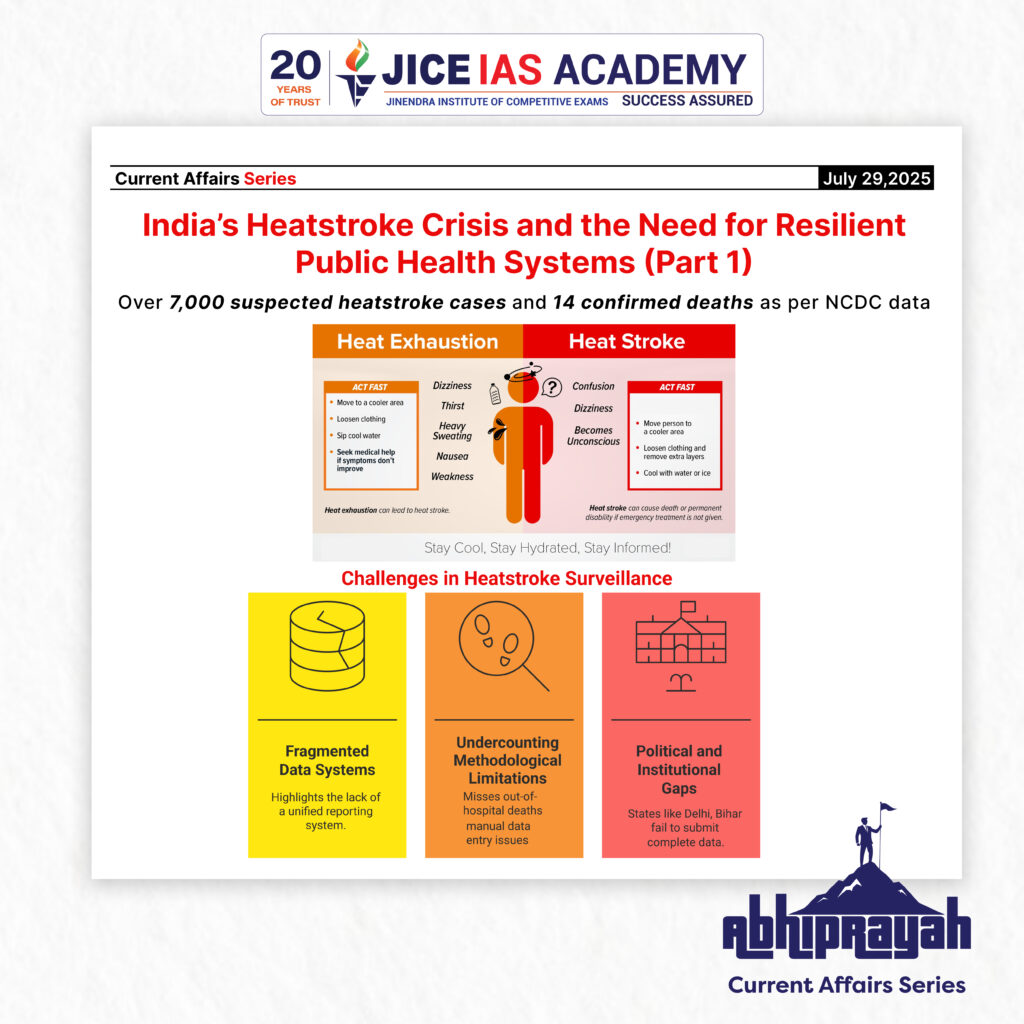
UPSC CURRENT AFFAIRS – 29th July 2025 Home / India’s Heatstroke Crisis and the Need for Resilient Public Health Systems Why in News? India reported over 7,000 suspected heatstroke cases and only 14 confirmed deaths between March and June 2025. Introduction India is grappling with rising temperatures and an escalating health crisis due to extreme heat events. According to data shared by the National Centre for Disease Control (NCDC) under the Right to Information (RTI) Act, between March 1 and June 24, 2025, India reported 7,192 suspected heatstroke cases and only 14 confirmed deaths. However, other figures indicate a much higher toll — nearly 48,000 suspected cases and 159 deaths in 2024, making it the warmest year on record since 1901. Challenges in Heatstroke Surveillance and Reporting Fragmented Data Systems Multiple agencies provide conflicting figures: NCDC (2015–2022): 3,812 deaths NCRB: 8,171 deaths IMD: 3,436 deaths This discrepancy underscores the absence of a unified reporting mechanism. Undercounting Due to Methodological Limitations The current surveillance system — the Integrated Disease Surveillance Programme (IDSP) — relies on hospital-based reporting. It often: Misses out-of-hospital deaths Fails to attribute heat as the primary cause (often misclassified as heart attacks, strokes) Suffers from manual data entry issues and staff shortages Political and Institutional Gaps Several states like Delhi, Bihar, UP, Punjab, Karnataka, and others have failed to submit complete data in recent years. Allegations of data suppression to avoid compensation claims have further eroded trust. Drivers of Settlement in Floodplains Economic constraints and job accessibility Lack of affordable housing Social vulnerability and forced displacement In contrast to the Global North, where flood insurance and protective infrastructure (e.g., levees) allow affluent residents to reside in flood-prone scenic areas, in the Global South, floodplains equate to affordability for the poor. Policy Recommendations Integrated National Heat Illness Registry Establish a centralized and digital heat illness and mortality registry involving NCDC, IMD, NCRB, and health ministries. Mandatory Reporting Protocols Enforce standardized heatstroke diagnosis and mortality protocols at both public and private healthcare facilities. Use of Excess Mortality Modelling Adopt models used globally to assess the excess death burden during heatwaves. Public Awareness and Emergency Preparedness Expand awareness campaigns (e.g. Heat Action Plans) and develop early warning systems using satellite data, especially in heat-prone regions. Inter-Agency Coordination Create a climate-health task force under the Ministry of Health to coordinate data collection, reporting, and heat adaptation strategies. Conclusion The rising frequency and intensity of heatwaves in India underscore the urgent need for accurate data collection, robust public health infrastructure, and coordinated institutional mechanisms. Without these, the country remains ill-prepared to mitigate the devastating impacts of extreme heat on human health and productivity. Climate resilience must become a public health priority. Introduction Economic Implications For Indian Exporters These reforms reduce transaction costs and compliance hurdles Encourage a more competitive and efficient export environment Promote value addition in key sectors like leather For Tamil Nadu The reforms particularly benefit the state’s leather industry, a major contributor to employment and exports Boost the marketability of GI-tagged E.I. leather, enhancing rural and traditional industries For Trade Policy These decisions indicate a shift from regulatory controls to policy facilitation Reinforce the goals of Make in India, Atmanirbhar Bharat, and India’s ambition to become a leading export power Recently, BVR Subrahmanyam, CEO of NITI Aayog, claimed that India has overtaken Japan to become the fourth-largest economy in the world, citing data from the International Monetary Fund (IMF). India’s rank as the world’s largest economy varies by measure—nominal GDP or purchasing power parity (PPP)—each with key implications for economic analysis. Significance and Applications
Glacial Lake Outburst Floods (GLOFs) and Emerging Transboundary Risk in the Himalayas
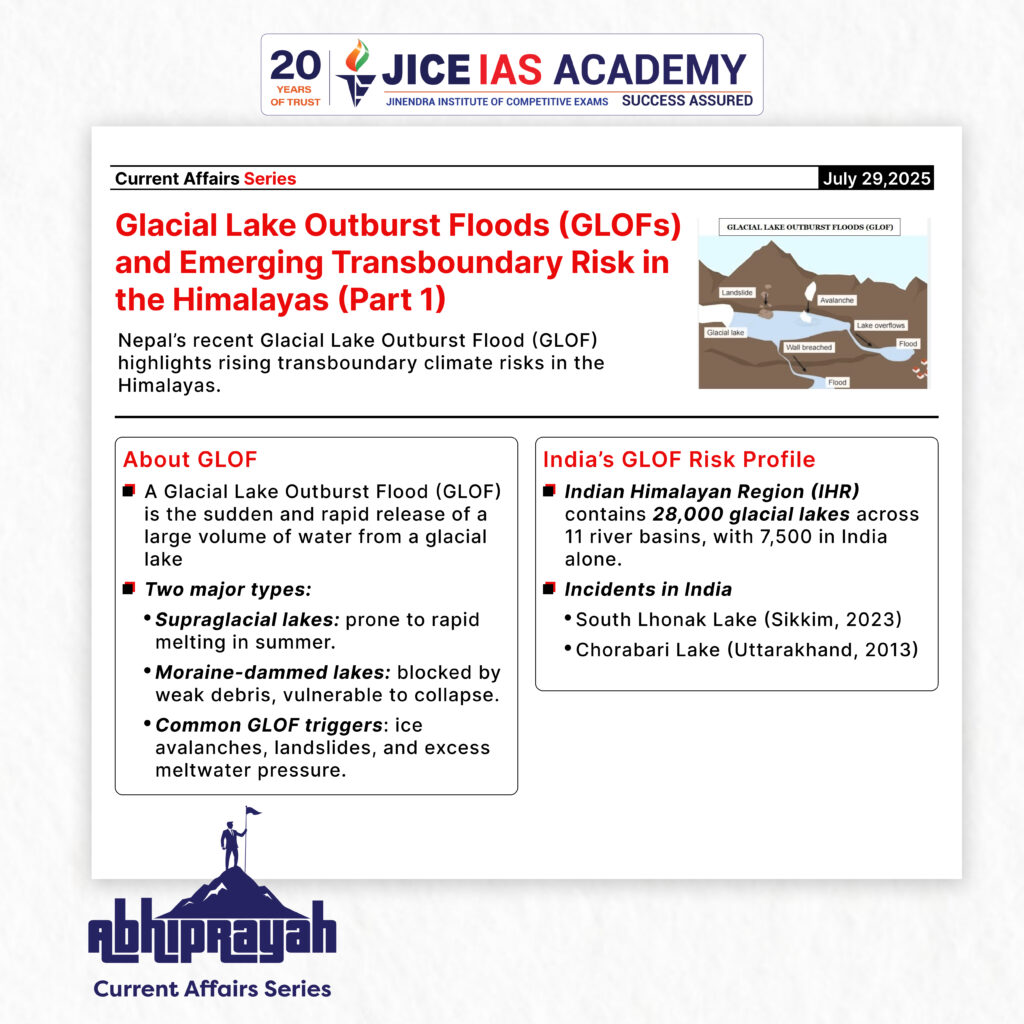
UPSC CURRENT AFFAIRS – 29th July 2025 Home / Glacial Lake Outburst Floods (GLOFs) and Emerging Transboundary Risk in the Himalayas Why in News? Nepal’s recent Glacial Lake Outburst Flood (GLOF) highlights rising transboundary climate risks in the Himalayas. Introduction A Glacial Lake Outburst Flood (GLOF) is the sudden and rapid release of a large volume of water from a glacial lake, typically caused by the failure of a natural dam of ice or moraine, leading to catastrophic downstream flooding Glacial Lake Outburst Floods (GLOFs) have become a recurring hazard in the Himalayan region, with rising global temperatures exacerbating glacial melt and threatening lives, infrastructure, and ecosystems across national borders. The recent GLOF in Nepal on July 8, 2025, and multiple similar events in previous years underscore the urgent need for early warning systems and cross-border collaboration, especially between China, Nepal, and India. Recent GLOF Event in Nepal On July 8, 2025, a supra-glacial lake in Tibet burst, causing a GLOF along the Lende River, destroying a China-built friendship bridge and affecting the inland container port at Rasuwagadhi. The flood rendered four hydropower plants along the Bhote Koshi River inoperable, wiping out 8% of Nepal’s power supply. A second GLOF occurred the same day in Mustang district, and earlier events had affected Humla (2025) and Solukhumbu (2024). These incidents highlight Nepal’s vulnerability and the lack of early warnings from upstream countries, notably China. The Challenge of Transboundary Watersheds The GLOF originated in Tibet but devastated downstream areas in Nepal. Despite rising numbers of supra-glacial lakes in Tibet, no formal early warning mechanism exists between China and Nepal. Nepalese scientists confirmed the lake’s surface area dropped from 63 ha to 43 ha a day before the flood, but this data was not shared proactively. Lack of coordination between riparian nations hinders timely responses to such disasters. History of GLOF Events in Nepal Cirenma Co (Tibet, 1981) raised Bhote Koshi’s water level by 30 metres. Digi Tsho (1985) and Tama Pokhari (1998) were other major GLOFs. Nepal has attempted mitigation by artificially lowering water levels in lakes like Imja Tsho and Tsho Rolpa, though such operations at 5,000+ m altitudes remain extremely challenging. India’s GLOF Risk Profile The Indian Himalayan Region (IHR) contains 28,000 glacial lakes across 11 river basins, with 7,500 in India alone. Two major types: Supraglacial lakes: prone to rapid melting in summer. Moraine-dammed lakes: blocked by weak debris, vulnerable to collapse. Common GLOF triggers: ice avalanches, landslides, and excess meltwater pressure. Incidents in India South Lhonak Lake (Sikkim, 2023): destroyed the Chungthang dam (₹16,000 crore/$2B loss). Chorabari Lake (Uttarakhand, 2013): caused the Kedarnath disaster, killing hundreds and damaging infrastructure. Challenges in Monitoring Most lakes lie above 4,500 metres, limiting field surveys to short summer windows. Few weather/water monitoring stations exist in high-altitude regions. Current monitoring relies heavily on remote sensing, which provides post-event data, not early warnings. India’s Mitigation Efforts NDMA’s National GLOF Mitigation Programme Launched with an initial budget of $20 million, targeting 56 high-risk glacial lakes (later expanded to 195). Focus Areas: Hazard assessment of glacial lakes. Installation of Automated Weather and Water Stations (AWWS). Setting up Early Warning Systems (EWS) downstream. Risk mitigation: water drawdown/retention structures. Community engagement in high-risk zones. Expeditions in 2024 assessed 40 high-risk lakes across J&K, Ladakh, Himachal Pradesh, Uttarakhand, Sikkim, Arunachal Pradesh. Technological Innovations and Gaps Encouragement of Indian tech such as SAR Interferometry for monitoring slope stability and pre-disaster prediction. Use of bathymetry, Electrical Resistivity Tomography (ERT), UAV surveys, and real-time weather & water data systems. Example: Sikkim now has real-time lake monitoring systems that transmit data and photographs every 10 minutes. Identified Gaps: Absence of Indian tech firms and foundations in GLOF-risk management. Under-utilisation of advanced satellite imagery for predictive purposes. Need for Community Engagement Cultural sensitivities: Expedition members in Sikkim had to respect local customs, e.g., not entering sacred lakes. Highlights the need for: Local community participation. Building trust in scientific missions. Ensuring sustainable and culturally sensitive interventions. Way Forward Strengthening transboundary cooperation with China and Nepal for early warning sharing. Expanding real-time monitoring infrastructure and remote sensing analytics. Institutionalising the use of indigenous technology for glacial risk mapping and prediction. Building local capacities through community engagement, education, and preparedness exercises. Scaling up under the upcoming 16th Finance Commission (FY2027–31) to cover more lakes and risk zones. Introduction Economic Implications For Indian Exporters These reforms reduce transaction costs and compliance hurdles Encourage a more competitive and efficient export environment Promote value addition in key sectors like leather For Tamil Nadu The reforms particularly benefit the state’s leather industry, a major contributor to employment and exports Boost the marketability of GI-tagged E.I. leather, enhancing rural and traditional industries For Trade Policy These decisions indicate a shift from regulatory controls to policy facilitation Reinforce the goals of Make in India, Atmanirbhar Bharat, and India’s ambition to become a leading export power Recently, BVR Subrahmanyam, CEO of NITI Aayog, claimed that India has overtaken Japan to become the fourth-largest economy in the world, citing data from the International Monetary Fund (IMF). India’s rank as the world’s largest economy varies by measure—nominal GDP or purchasing power parity (PPP)—each with key implications for economic analysis. Significance and Applications
Rudra all-arms brigades will make Army future-ready
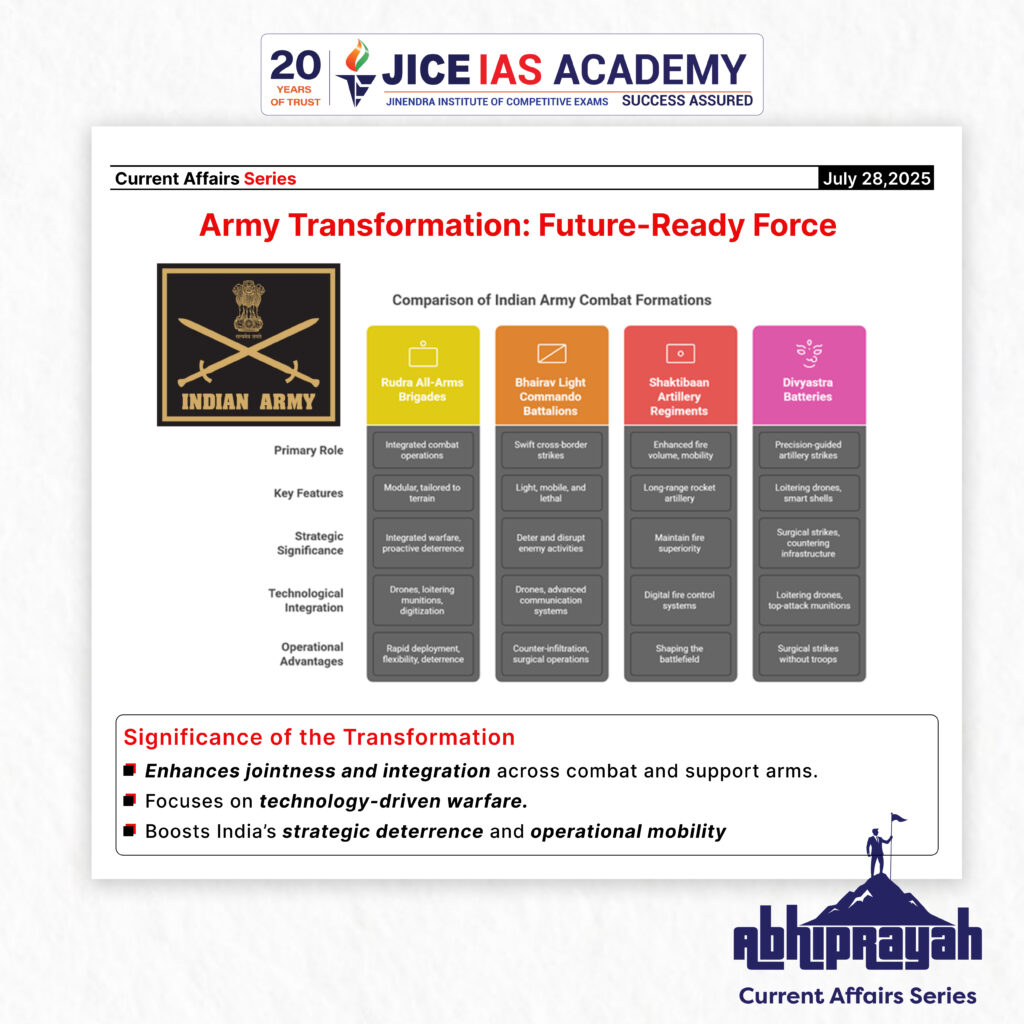
UPSC CURRENT AFFAIRS – 28th July 2025 Home / Rudra all-arms brigades will make Army future-ready Why in News? Announced by Army Chief Gen. Upendra Dwivedi during Kargil Vijay Diwas, the Rudra Brigades are the cornerstone of a broader Integrated Battle Group (IBG) initiative aimed at modernizing the force structure Introduction On the occasion of the 26th Vijay Diwas (Kargil Victory Day) on July 26, 2025, Chief of Army Staff (COAS) General Upendra Dwivedi visited Drass, Kargil, to honour the sacrifice of soldiers in the 1999 Kargil War. He used the platform to: Outline the Indian Army’s future-ready transformation strategy. Highlight the successful cross-border counter-terror operation, Operation Sindoor, launched after the Pahalgam attack. Transforming the Indian Army: Towards a Future-Ready Force General Dwivedi announced a major restructuring and modernization drive aimed at creating a highly integrated, technologically advanced, and responsive fighting force. Key New Units and Capabilities Introduced New Unit/Initiative Description Rudra All Arms Brigades Integrated formations combining infantry, mechanised infantry, armour, artillery, special forces, and unmanned aerial units for synergised combat and logistics support. Bhairav Light Commando Battalions Light, agile, quick-response commando units trained for high-altitude, anti-terror, and special operations. Shaktibaan Artillery Regiments Enhanced precision artillery formations, likely equipped with long-range and smart artillery systems. Divyastra Batteries Units focused on drone warfare and counter-drone operations, integrated within infantry battalions. Indigenous Air Defence Systems Deployment of made-in-India air defence platforms, promoting Atmanirbhar Bharat in defence. Rudra All Arms Brigades: Background and Strategic Need The Rudra Brigades are a new combat formation initiative by the Indian Army to address modern battlefield challenges. They are being formed as part of the Indian Army’s transformation towards a lean, agile, and technology-driven force. The concept evolved from lessons learned in recent operations and reflects India’s growing focus on integrated warfare and proactive deterrence against adversaries on both western and northern borders. Organizational Structure These brigades integrate multiple combat arms and support elements under a single unified command. Composition includes: Infantry Mechanised Infantry Armoured Units Artillery Special Forces components Drone platoons and air defence elements Combat engineers and logistics teams The structure is modular and tailored to operational terrain: Plains: Emphasis on mechanised and armoured elements. Mountains: Light infantry, drones, and artillery support. LoC: Infantry, Special Forces, and surveillance capabilities. Technological Integration Each brigade will be equipped with: Drone platoons for surveillance and attack roles. Loitering munitions and precision-guided artillery. Advanced air defence systems and real-time battlefield communication tools. The transformation includes digitization, real-time ISR (Intelligence, Surveillance, Reconnaissance), and AI-supported targeting. Operational Advantages Rapid Deployment: Units can respond within 12–48 hours across multiple fronts. Flexibility: Can be reconfigured for various missions and geographies. Enhanced Deterrence: Offers credible offensive and defensive capabilities in a compact format. Efficient Resource Use: Instead of expanding the force size, existing brigades are being reorganized for higher effectiveness. Bhairav Light Commando Battalions Overview Newly raised light, mobile, and lethal commando units designed for swift cross-border strikes, surveillance, and special missions. Named “Bhairav”, symbolizing destruction of evil and tactical surprise. Key Features Highly agile units, lighter than traditional Special Forces. Equipped with drones, loitering munitions, and advanced communication systems. Trained for terrain-specific warfare—mountains, deserts, jungles, and urban areas. Operate close to the border for quick retaliation and offensive strikes. Ideal for counter-infiltration, surgical operations, and shock actions against enemy posts. Strategic Significance Designed to deter and disrupt enemy activities along LoC and LAC. Complements Special Forces without overlapping their strategic roles. Enables the Army to launch quick-reaction missions without large-scale mobilization. Shaktibaan Artillery Regiments Overview These are upgraded artillery units with enhanced volume-of-fire capability and mobility. “Shaktibaan” (meaning powerful) symbolizes massive firepower in battlefield operations. Key Features Equipped with long-range rocket artillery, 155mm howitzers, and multi-barrel rocket launchers. Designed for area saturation, suppression of enemy fire, and support to advancing infantry/mechanised units. Improved target acquisition through digital fire control systems and satellite mapping. Strategic Significance Helps maintain fire superiority in both offensive and defensive scenarios. Plays a crucial role in shaping the battlefield before ground assault. Forms part of the Army’s effort to counter massed Chinese artillery and precision Pakistani strikes. Divyastra Batteries Overview “Divyastra” (meaning divine weapon) Batteries are specialized precision-guided artillery detachments. Focused on deep-strike capabilities using loitering munitions and smart ammunition. Key Features Equipped with loitering drones, top-attack munitions, and smart shells. Designed to pinpoint high-value enemy targets like command posts, air defences, and logistics hubs. Can operate independently or in support of Rudra Brigades and Bhairav units. Strategic Significance Enhances India’s capability to conduct surgical strikes without deploying troops. Key to countering entrenched enemy infrastructure in forward positions. Reduces collateral damage while increasing battlefield effectiveness. Significance of the Transformation Enhances jointness and integration across combat and support arms. Focuses on technology-driven warfare, including use of UAVs, drones, and real-time intelligence. Boosts India’s strategic deterrence and operational mobility, especially along sensitive borders. Introduction Economic Implications For Indian Exporters These reforms reduce transaction costs and compliance hurdles Encourage a more competitive and efficient export environment Promote value addition in key sectors like leather For Tamil Nadu The reforms particularly benefit the state’s leather industry, a major contributor to employment and exports Boost the marketability of GI-tagged E.I. leather, enhancing rural and traditional industries For Trade Policy These decisions indicate a shift from regulatory controls to policy facilitation Reinforce the goals of Make in India, Atmanirbhar Bharat, and India’s ambition to become a leading export power Recently, BVR Subrahmanyam, CEO of NITI Aayog, claimed that India has overtaken Japan to become the fourth-largest economy in the world, citing data from the International Monetary Fund (IMF). India’s rank as the world’s largest economy varies by measure—nominal GDP or purchasing power parity (PPP)—each with key implications for economic analysis. Significance and Applications
ZSI scientists discover a wolf spider, and four wasp species from West Bengal

UPSC CURRENT AFFAIRS – 28th July 2025 Home / ZSI scientists discover a wolf spider, and four wasp species from West Bengal Why in News? Zoological Survey of India (ZSI) scientists discovered a new species of wolf spider (Piratula acuminata) from Sagar Island and four new parasitoid wasp species (Idris genus) from West Bengal. Introduction In July 2025, scientists from the Zoological Survey of India (ZSI) made significant contributions to India’s biodiversity documentation by announcing the discovery of: One new species of wolf spider, and Four new species of parasitoid wasps. These discoveries, made in West Bengal, not only expand India’s faunal records but also underscore the need for focused biodiversity surveys in ecologically sensitive zones and agroecosystems. Zoological Survey of India (ZSI) The Zoological Survey of India (ZSI) is the premier Indian organization responsible for the survey, exploration, and research on animal biodiversity in the country. It operates under the Ministry of Environment, Forest and Climate Change (MoEFCC). Established: 1916 at Calcutta (now Kolkata) Discovery of Piratula acuminata: A New Wolf Spider Species First Record of Genus Piratula in India The newly described species, Piratula acuminata, is the first-ever record of the genus Piratula (Family: Lycosidae) from India. It was discovered in Sagar Island, situated in the Sundarbans delta, an ecologically fragile and biodiversity-rich region shaped by the Ganga’s alluvial deposits. Key Features of Piratula acuminata Medium-sized, measuring 8–10 mm. Characterised by a creamy-white body with brown and chalk-white spots. Exhibits distinct genital morphology, which helped researchers confirm it as a new species. Nocturnal and ground-dwelling; does not weave webs but ambushes prey — a typical behaviour of wolf spiders. Ecological Significance The spider’s presence in the estuarine mudflats highlights the Sundarbans as a unique habitat with underexplored faunal diversity. Its discovery emphasizes the role of systematic morphological analysis in identifying cryptic species. Discovery of Four New Idris Wasp Species The Genus Idris (Family: Scelionidae, Order: Hymenoptera) Tiny wasps that are parasitoids of spider eggs, specifically those of jumping spiders (Family: Salticidae). Newly discovered species: Idris bianor Idris furvus Idris hyllus Idris longiscapus Unique Behaviour: Gregarious Parasitism These wasps exhibit gregarious parasitism, where multiple individuals emerge from a single spider egg sac. This is a rare reproductive strategy among parasitoid insects. Broader Significance of the Discoveries Biodiversity Conservation These findings underscore that even in well-inhabited regions like West Bengal, new and undocumented species exist. Sheds light on understudied habitats such as estuarine mudflats and semi-natural agricultural zones. Ecological Roles Wolf spiders like acuminata act as natural pest controllers. Parasitoid wasps of genus Idris play a role in regulating spider populations, thus maintaining ecological balance in arthropod communities. Strengthening Biodiversity Missions Aligns with India’s broader national mission to document biodiversity, especially in the face of climate change and habitat loss. Emphasizes the role of institutions like ZSI in advancing systematic taxonomy, species conservation, and ecological monitoring. Introduction Economic Implications For Indian Exporters These reforms reduce transaction costs and compliance hurdles Encourage a more competitive and efficient export environment Promote value addition in key sectors like leather For Tamil Nadu The reforms particularly benefit the state’s leather industry, a major contributor to employment and exports Boost the marketability of GI-tagged E.I. leather, enhancing rural and traditional industries For Trade Policy These decisions indicate a shift from regulatory controls to policy facilitation Reinforce the goals of Make in India, Atmanirbhar Bharat, and India’s ambition to become a leading export power Recently, BVR Subrahmanyam, CEO of NITI Aayog, claimed that India has overtaken Japan to become the fourth-largest economy in the world, citing data from the International Monetary Fund (IMF). India’s rank as the world’s largest economy varies by measure—nominal GDP or purchasing power parity (PPP)—each with key implications for economic analysis. Significance and Applications
SC-named panel proposes ‘power corridors’ through Great Indian Bustard habitats

UPSC CURRENT AFFAIRS – 28th July 2025 Home / SC-named panel proposes ‘power corridors’ through Great Indian Bustard habitats Why in News? The Supreme Court-appointed expert committee has proposed designated power corridors and revised conservation zones in Rajasthan and Gujarat. Introduction A Supreme Court-appointed expert committee has proposed the creation of designated “power corridors” in the habitats of the Great Indian Bustard (GIB) in Rajasthan and Gujarat. This recommendation aims to resolve the ongoing conflict between renewable energy development and wildlife conservation, specifically the protection of the critically endangered GIB from fatal collisions with overhead power lines. Background: The GIB and the Threat of Power Infrastructure The Great Indian Bustard is one of the heaviest flying birds in the world and is critically endangered, with fewer than 150 individuals remaining, primarily in the Thar Desert landscape of Rajasthan and parts of Gujarat. Due to its poor frontal vision, the GIB is highly susceptible to collisions with overhead high-voltage power lines that crisscross its habitat. The issue has grown more complex with the proliferation of renewable energy infrastructure—especially solar and wind power projects, and associated transmission lines—in the same arid regions where the GIB survives. Supreme Court’s Intervention In 2021, the Supreme Court had ordered the undergrounding of all power lines in GIB habitats. However, in March 2024, a bench led by Chief Justice D.Y. Chandrachud recalled this order due to technical and economic challenges. The Court instead tasked an expert committee with designing a balanced mitigation plan to protect the GIB while ensuring that renewable energy projects are not unreasonably obstructed. Key Recommendations of the Expert Committee Designated Power Corridors To reduce the risk of bird collisions, the committee has proposed dedicated corridors through which all permissible overhead lines must pass. In Rajasthan, the power corridors will be 5 kilometers wide. In Gujarat, two separate corridors of 1 to 2 kilometers width each have been proposed. These corridors aim to minimize the scattering of transmission lines and reduce the density of aerial obstacles in critical habitats, especially in regions like Jaisalmer and Kutch. Revision of GIB Conservation Zones The committee revised the demarcation of GIB conservation zones, previously classified into three categories: Priority Areas: Known breeding and habitation zones Additional Important Areas: Less frequently used, but still ecologically relevant Potential Areas: Large open landscapes where GIBs may thrive in the future Revised Priority Area: In Rajasthan, the area increased from 13,163 square kilometers to 14,013 square kilometers by incorporating 850 sq km from the additional important areas. In Gujarat, the priority area has been revised from 500 square kilometers to 740 square kilometers. Key focus regions in Rajasthan include Desert National Park, Pokhran Field Firing Range, Ramdevra, Salkha-Kuchri, and Sanu-Mokla-Parewar zones. Voltage-Based Mitigation Measures The committee recommended a differentiated approach based on voltage levels: Voltage Level Mitigation Approach Below 11 kV Permitted within designated corridors in priority areas 11 kV – 33 kV Select lines to be buried underground (e.g., 80 km in Rajasthan, 79 km in Gujarat) 220 kV and above To be assessed individually for rerouting or insulation In Gujarat, 79 kilometers of existing lines have been identified for rerouting or burial. Restrictions in Priority Areas Within the revised priority areas of Rajasthan and Gujarat: No new overhead lines, wind turbines, or solar power plants larger than 2 MW are permitted. No expansion of existing renewable energy facilities is allowed. Only overhead lines of 11 kV or lower capacity will be permitted, and only through designated power corridors. Outside these areas, no restrictions have been imposed on the laying of new power lines or renewable energy projects. Gujarat-Specific Measures To address the declining GIB population in Gujarat, the committee recommended: The use of the “jump-start method”, where eggs from Rajasthan’s conservation breeding centres will be incubated by wild GIB females in Gujarat. Tagging and monitoring of the remaining GIBs in Gujarat to gather movement and habitat usage data. Conclusion The expert committee’s proposal represents a pragmatic shift from earlier blanket prohibitions to a more zoned, voltage-sensitive, and scientifically informed approach. While conservationists have raised concerns about areas left out of the revised boundaries and exemption of certain high-voltage lines, the committee’s approach could form a model for balancing infrastructure development with species conservation in ecologically sensitive zones. Effective implementation will require strict compliance, continuous monitoring, and collaboration between state governments, renewable energy companies, conservation scientists, and local communities. Introduction Economic Implications For Indian Exporters These reforms reduce transaction costs and compliance hurdles Encourage a more competitive and efficient export environment Promote value addition in key sectors like leather For Tamil Nadu The reforms particularly benefit the state’s leather industry, a major contributor to employment and exports Boost the marketability of GI-tagged E.I. leather, enhancing rural and traditional industries For Trade Policy These decisions indicate a shift from regulatory controls to policy facilitation Reinforce the goals of Make in India, Atmanirbhar Bharat, and India’s ambition to become a leading export power Recently, BVR Subrahmanyam, CEO of NITI Aayog, claimed that India has overtaken Japan to become the fourth-largest economy in the world, citing data from the International Monetary Fund (IMF). India’s rank as the world’s largest economy varies by measure—nominal GDP or purchasing power parity (PPP)—each with key implications for economic analysis. Significance and Applications
The Chola Legacy of Local Self-Governance and Ancient Voting System
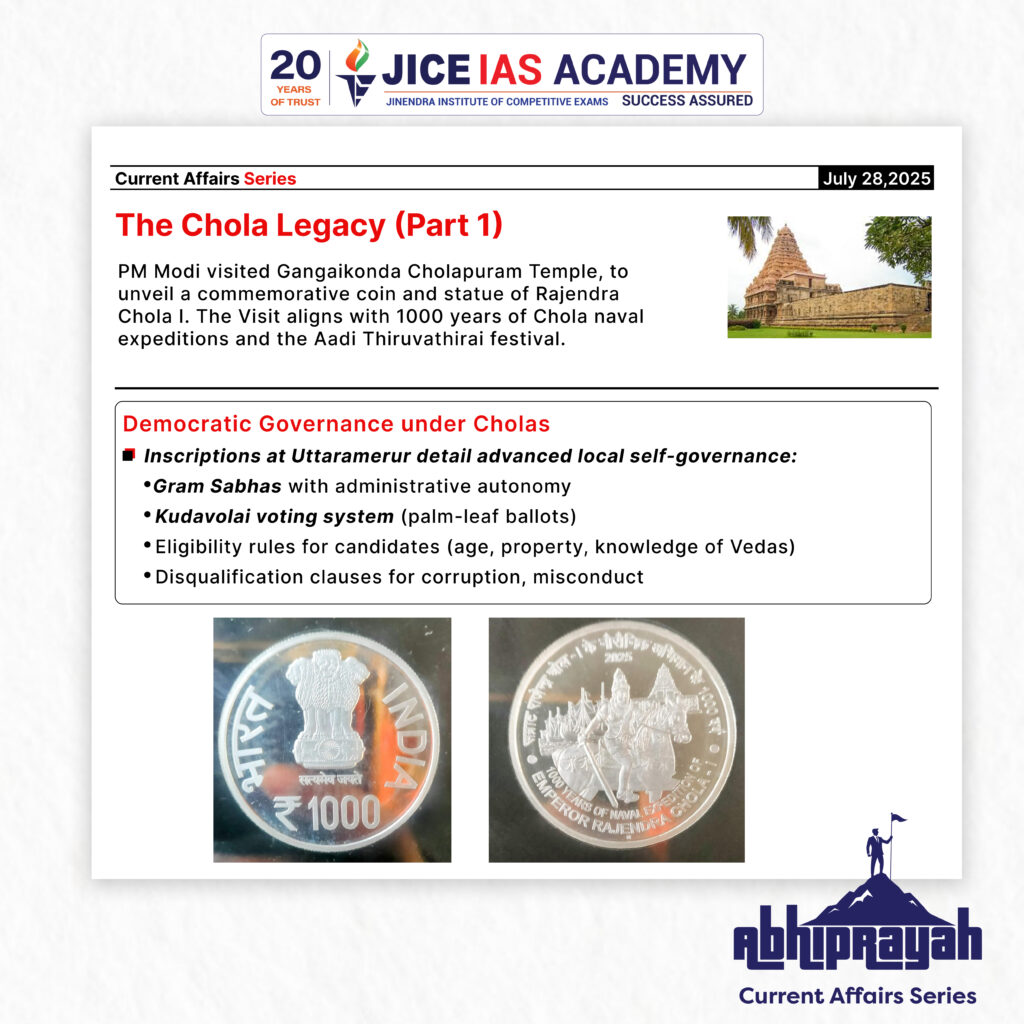
UPSC CURRENT AFFAIRS – 28th July 2025 Home / The Chola Legacy of Local Self-Governance and Ancient Voting System Why in News? PM Modi visited Gangaikonda Cholapuram Temple, to unveil a commemorative coin and statue of Rajendra Chola I. The Visit aligns with 1000 years of Chola naval expeditions and the Aadi Thiruvathirai festival. Introduction Recently, Prime Minister Narendra Modi visited the ancient Shiva temple at Gangaikonda Cholapuram, Tamil Nadu — a monumental site built by the Chola dynasty. His visit was not just a spiritual offering but also a reaffirmation of India’s deep-rooted democratic and architectural legacy. This ancient temple, recognized as a UNESCO World Heritage Site, is a symbol of India’s civilizational grandeur and cultural diplomacy. A Tribute to Chola Legacy The Prime Minister unveiled a commemorative coin to honour Rajendra Chola I (r. 1014–1044 AD), calling him one of the “greatest emperors in Indian history.” PM Modi declared that grand statues of Rajaraja Chola I and Rajendra Chola I would be erected in Tamil Nadu. Rajendra Chola I, son of the illustrious Rajaraja Chola, had extended the empire’s reach from the banks of the Ganga in Bengal to Sumatra, Malaysia, and Myanmar, establishing the Cholas as a formidable naval power. Historical Significance of Gangaikonda Cholapuram Built by Rajendra Chola I in the early 11th century CE, the temple was constructed to commemorate his victorious expedition to the Ganga river.Z The city and temple name, “Gangaikonda Cholapuram”, literally means “The Chola who conquered the Ganga.” It was established as the new imperial capital of the Chola dynasty after Rajendra’s northern conquests. Architecturally, it is inspired by and rivals the Brihadisvara Temple at Thanjavur, built by Rajendra’s father, Rajaraja Chola I. Architectural Brilliance The temple exemplifies Dravidian architecture at its peak. Constructed entirely in granite, it stands 182 feet tall and houses intricate carvings, sculptures, and a massive Shivalinga. The Vimana (temple tower) is slightly shorter than that of Thanjavur but more elaborate. Symbolizes the political power, religious devotion, and artistic excellence of the Chola empire. UNESCO World Heritage Site Gangaikonda Cholapuram is part of the “Great Living Chola Temples” along with Brihadisvara Temple (Thanjavur) and Airavatesvara Temple (Darasuram). It was inscribed as a World Heritage Site in 2004. It remains an active place of worship while also serving as a historical and cultural landmark. Gangaikonda Cholapuram: A Symbol of Power and Artistry Rajendra Chola I established Gangaikonda Cholapuram as the new capital after a victorious northern campaign, bringing waters from the Ganga to fill the sacred tank Cholagangam — a “liquid pillar of victory.” He commissioned the temple to rival his father’s Brihadeeswara Temple in Thanjavur. According to historian A. Nilakanta Sastri, the temple’s name, meaning “the town of the Chola who brought the Ganga”, was a political statement of southern dominance. The temple stands as an architectural marvel — softer, more elegant, and more elaborate than its predecessor, showcasing the Cholas’ artistic evolution and affluence. Aadi Thiruvathirai Festival and Contemporary Politics The Aadi Thiruvathirai Festival, aligned with the Thiruvadhirai star (believed to be Rajendra Chola’s birth star), is celebrated with great fervour, including therukoothu (folk dramas) depicting the emperor’s achievements. His idol is adorned with silk robes in ceremonial homage. This year, the festival also commemorates the 1000th year of Rajendra’s Southeast Asian naval expeditions, enhancing the symbolism of the PM’s presence. Democratic Traditions in Chola Rule Chola inscriptions from Uttaramerur and elsewhere show the existence of Gram Sabhas, which had: Eligibility criteria for candidates, Elections through Kudavolai (palm leaf ballot system), Defined terms, qualifications, and disqualification rules. These administrative innovations reveal that the Cholas practiced a proto-democratic governance structure at the local level. Cultural Diplomacy and National Identity PM Modi’s visit can also be seen as a part of India’s effort to: Revive interest in civilizational heritage. Promote national integration through acknowledgment of southern dynasties. Boost cultural tourism and UNESCO-linked heritage diplomacy. Introduction Economic Implications For Indian Exporters These reforms reduce transaction costs and compliance hurdles Encourage a more competitive and efficient export environment Promote value addition in key sectors like leather For Tamil Nadu The reforms particularly benefit the state’s leather industry, a major contributor to employment and exports Boost the marketability of GI-tagged E.I. leather, enhancing rural and traditional industries For Trade Policy These decisions indicate a shift from regulatory controls to policy facilitation Reinforce the goals of Make in India, Atmanirbhar Bharat, and India’s ambition to become a leading export power Recently, BVR Subrahmanyam, CEO of NITI Aayog, claimed that India has overtaken Japan to become the fourth-largest economy in the world, citing data from the International Monetary Fund (IMF). India’s rank as the world’s largest economy varies by measure—nominal GDP or purchasing power parity (PPP)—each with key implications for economic analysis. Significance and Applications
Revisiting the Age of Consent under POCSO for Protection of Adolescent Autonomy

UPSC CURRENT AFFAIRS – 28th July 2025 Home / Revisiting the Age of Consent under POCSO for Protection of Adolescent Autonomy Why in News? Courts and legal experts have urged a review of the POCSO Act to avoid criminalising consensual sexual relationships between adolescents aged 16–18 years. Introduction The Protection of Children from Sexual Offences (POCSO) Act, 2012 was enacted to protect children below 18 years from sexual offences. However, recent judicial observations and advocacy inputs have flagged its unintended consequences, especially regarding consensual relationships between adolescents aged 16–18 years. Key Issue Under current law, any sexual activity involving a person below 18 years is criminalised, even if it is consensual and non-exploitative. The POCSO Act, along with the Bharatiya Nyaya Sanhita (BNS) provisions, treats consensual adolescent relationships as criminal, ignoring the complexities of adolescent development and autonomy. Judicial Developments & Expert Intervention Indira Jaising, appointed as amicus curiae in a petition filed by Nipun Saxena, submitted to the Supreme Court that: The law must recognize that consensual sex between adolescents aged 16–18 years is not “abuse”. She proposed that an exception be read into the POCSO Act and Section 63 of the BNS. Such an exception would protect adolescents from punitive action in non-exploitative relationships, without diluting the protective spirit of the law. The Madras High Court (2021) in Vijayalakshmi vs State Rep observed: Criminal law should not disrupt consensual adolescent relationships. Recommended a maximum five-year age difference to ensure the younger party is not exploited. The Law Commission of India (2023): Opposed lowering the age of consent. Recommended “guided judicial discretion” while sentencing in consensual cases involving adolescents. Challenges Legal Rigidity vs Social Reality: The law’s blanket criminalisation does not align with adolescent behaviour patterns and sexual maturity. Misuse of POCSO: Increasing cases where consensual teenage relationships are prosecuted due to parental complaints. Lack of Adolescent Awareness: Many are unaware of the legal consequences of consensual intimacy. Gendered Impact: Adolescent boys are often disproportionately criminalised. Parental and Societal Control: Law is sometimes weaponised to enforce caste, religious, or social boundaries in young relationships. Way Forward Legislative Amendment or Judicial Interpretation: Introduce a “close-in-age” exception (e.g., 16–18 years with ≤5-year age gap) into the POCSO Act. Use of Judicial Discretion: In line with Law Commission suggestions, allow judges to differentiate exploitative and non-exploitative cases. Comprehensive Sexuality Education: Educate adolescents about bodily autonomy, legal boundaries, and consent. Sensitisation of Police and Judiciary: Train stakeholders to handle such cases with sensitivity and nuance. Safeguard Against Exploitation: Retain strict penalties for genuinely exploitative relationships or abuse of power dynamics. Conclusion The POCSO Act was enacted with the noble intent of safeguarding children from abuse, but it must evolve with societal realities and developmental science. Recognising consensual adolescent relationships, within a protective framework, is not diluting protection—it is ensuring justice. Introduction Economic Implications For Indian Exporters These reforms reduce transaction costs and compliance hurdles Encourage a more competitive and efficient export environment Promote value addition in key sectors like leather For Tamil Nadu The reforms particularly benefit the state’s leather industry, a major contributor to employment and exports Boost the marketability of GI-tagged E.I. leather, enhancing rural and traditional industries For Trade Policy These decisions indicate a shift from regulatory controls to policy facilitation Reinforce the goals of Make in India, Atmanirbhar Bharat, and India’s ambition to become a leading export power Recently, BVR Subrahmanyam, CEO of NITI Aayog, claimed that India has overtaken Japan to become the fourth-largest economy in the world, citing data from the International Monetary Fund (IMF). India’s rank as the world’s largest economy varies by measure—nominal GDP or purchasing power parity (PPP)—each with key implications for economic analysis. Significance and Applications